Category Archives: Inspiration
Pearls from artists* # 38
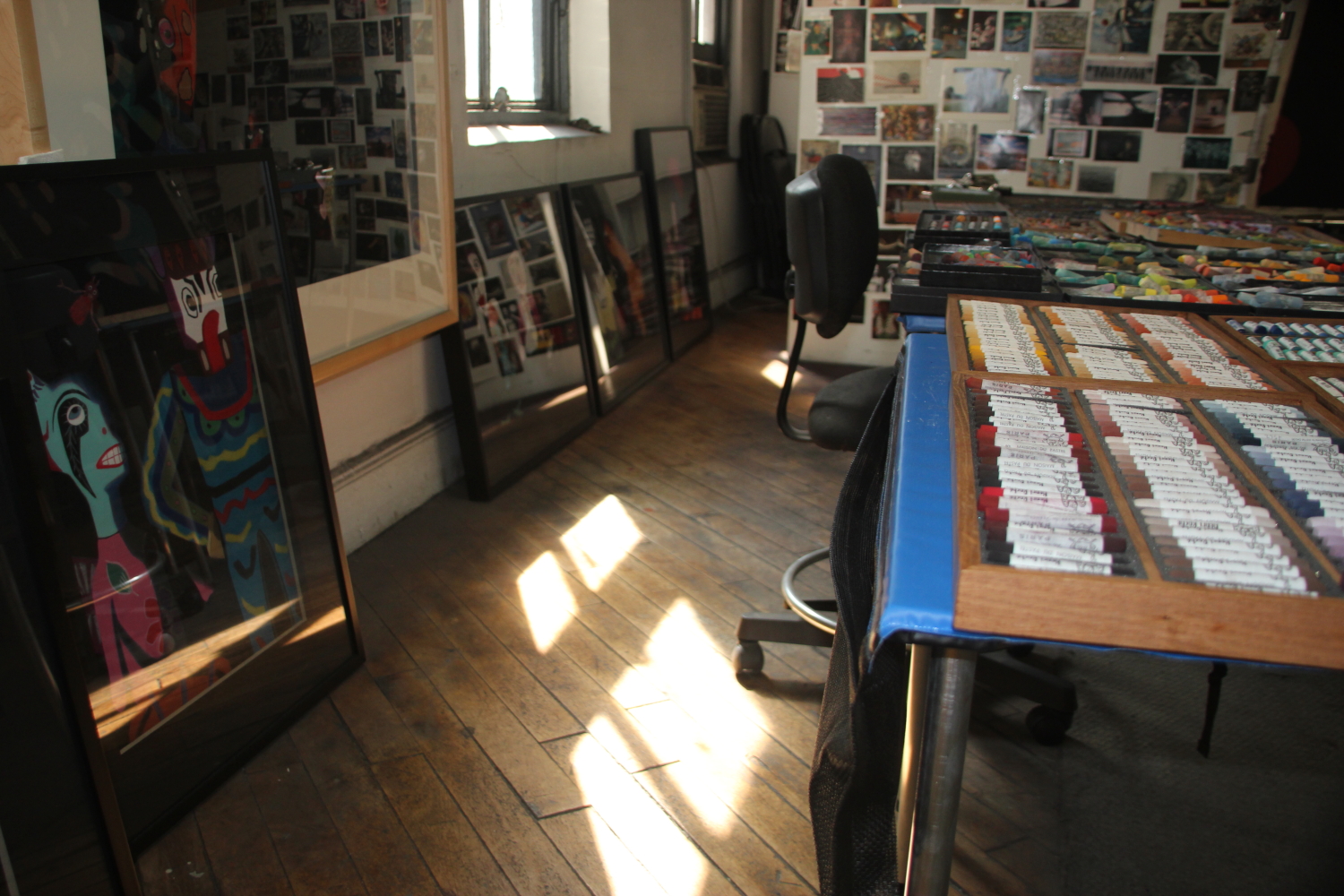
Morning sun at the studio
* an ongoing series of quotations – mostly from artists, to artists – that offers wisdom, inspiration, and advice for the sometimes lonely road we are on.
It’s one thing to be intelligent and it’s another to enjoy thinking, to relish the time spent alone with one’s thoughts, to happily muse, imagine, and analyze. Artists, who are introspective by nature, typically enjoy spending time in this fashion and may even prefer solitude to the company of others. Able to work by themselves, artists are often lost in a state of dreamy thoughtfulness of the sort described by the painter Hans Hofmann when he wrote, ” The first red spot on a white canvas may at once suggest to me the meaning of ‘morning redness,’ and from there I dream further with my color.” Artists are not introspective, thoughtful, lost in time and space because they wish to ignore the world. They’re introspective because out of that attitude artistic answers flow.
Eric Maisel in A Life in the Arts
Comments are welcome!
Pearls from artists* # 36
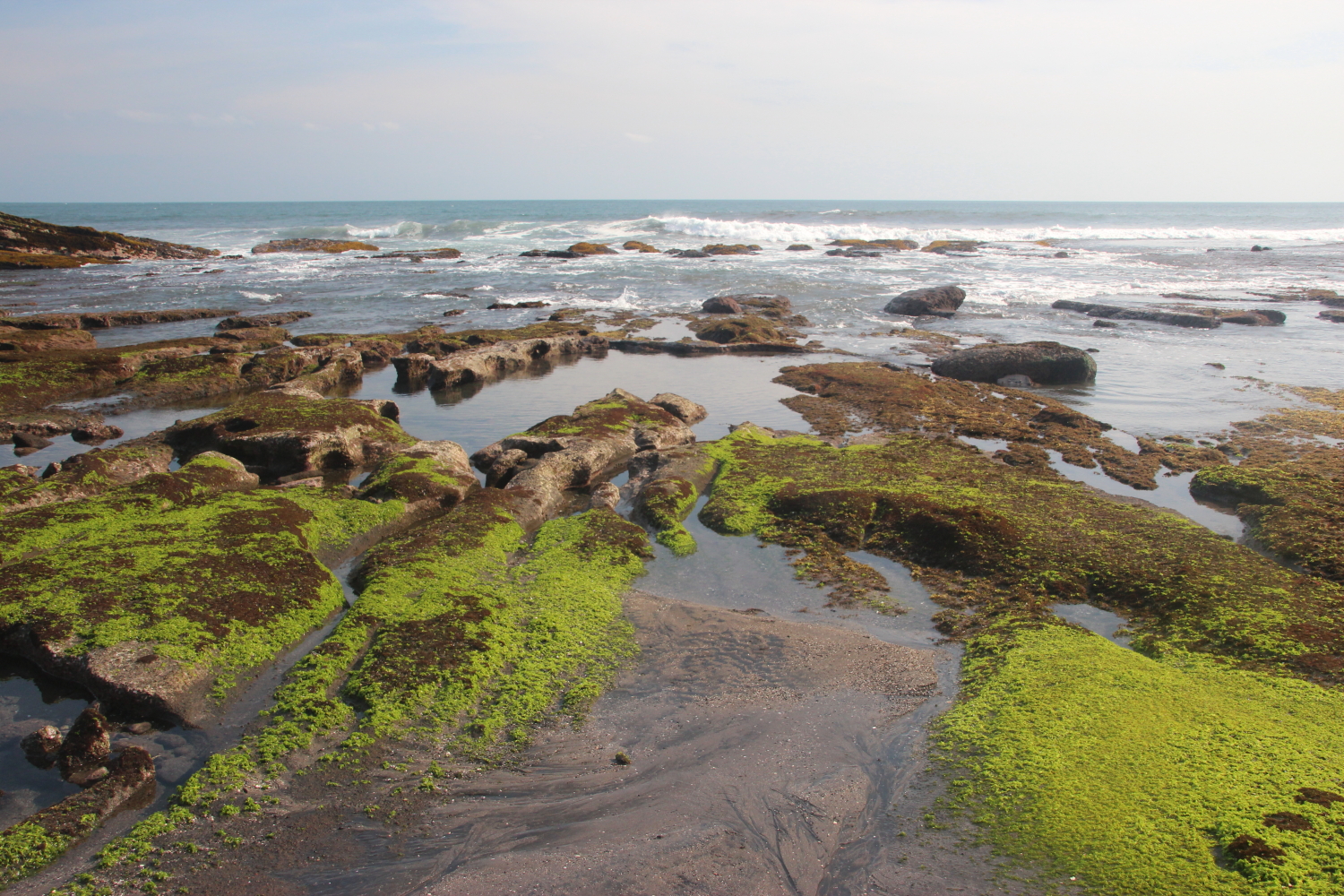
Indian Ocean, Tanah Lot, Bali
* an ongoing series of quotations – mostly from artists, to artists – that offers wisdom, inspiration, and advice for the sometimes lonely road we are on.
… don’t wait for things to change, the hour of man is now and, whether you are working at the bottom of the pile or on top, if you are a creative individual you will go on producing, come hell or high water. And this is the most you can hope to do. One has to go on believing in himself, whether recognized or not, whether heeded or not. The world may seem like hell on wheels – and we are doing our best, are we not, to make it so? – but there is always room, if only in one’s own soul, to create a spot of Paradise, crazy though it may sound.
Henry Miller in Stand Still Like the Hummingbird
Comments are welcome!
Pearls from artists* # 35
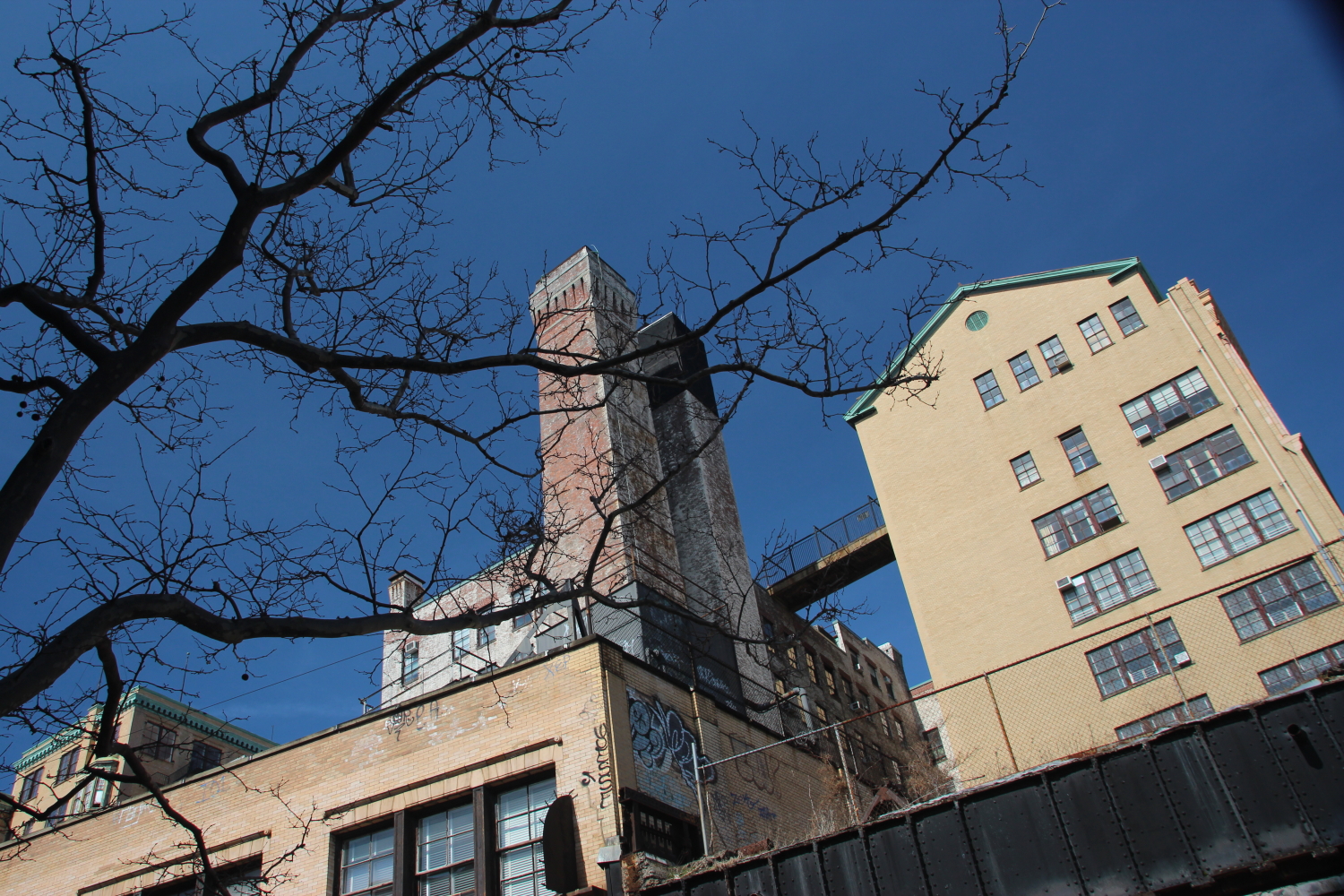
Westbeth, NYC
* an ongoing series of quotations – mostly from artists, to artists – that offers wisdom, inspiration, and advice for the sometimes lonely road we are on.
An individual who has committed himself to art and now wrestles within it, having given up everything else, has also become strict, you see. Such a person is more likely to warn off others rather than to beckon them to enter into a realm of the most tremendous demands and indescribable sacrifices. And for someone sitting at his desk, behind closed doors, matters are still relatively simple: at least he has to deal only with himself. But an actor, even when his work originates in the purest experiences of his being, stands in the open and performs his work in the open where he is exposed to all the influences, detractions, disturbances, and even hostilities that originate in his colleagues and his audience and that interrupt, distract, and split him off. For him things are more difficult than for anyone else; above all, he needs to lure success and to base his actions on it. And yet what misery results if this new alignment leads him to abandon the inner direction that had driven him into art in the first place. He seems to have no self; his job consists in letting others dictate selves to him. And the audience, once it has accepted him, wants to preserve him within the limits where it finds entertainment; and yet his achievement depends entirely upon his capacity to maintain an interior constancy through all kinds of changes, blindly, like a madman. Any momentary weakness toward success is as sure to doom him as giving in and drawing on applause as a precondition for their creation spells doom for the painter or poet.
Ulrich Baer in The Wisdom of Rilke
Comments are welcome!
Pearls from artists* # 34

On the High Line
* an ongoing series of quotations – mostly from artists, to artists – that offers wisdom, inspiration, and advice for the sometimes lonely road we are on.
To collect photographs is to collect the world. Movies and television programs light up walls, flicker, and go out; but with still photographs the image is also an object, lightweight, cheap to produce, easy to carry about, accumulate, store.
In Godard’s Les Carabiniers (1963), two sluggish lumpen-peasants are lured into joining the king’s army by the promise that they will be able to loot, rape, kill, or do whatever else they please to the enemy, and get rich. But the suitcase of booty that Michel-Ange and Ulysse triumphantly bring home, years later, to their wives turns out to contain only picture postcards, hundreds of them, of monuments, department stores, mammals, wonders of nature, methods of transport, works of art, and other classified treasures from around the globe.
Godard’s gag vividly parodies the equivocal magic of the photographic image. Photographs are perhaps the most mysterious of all the objects that make up, and thicken, the environment we recognize as modern.
Photographs really are experience captured, and the camera is the ideal arm of consciousness in its acquisitive mood.
Susan Sontag in On Photography
Comments are welcome!
Q: Your new work explores relationships to figures through the medium of soft pastel. What prompted this departure from photography?
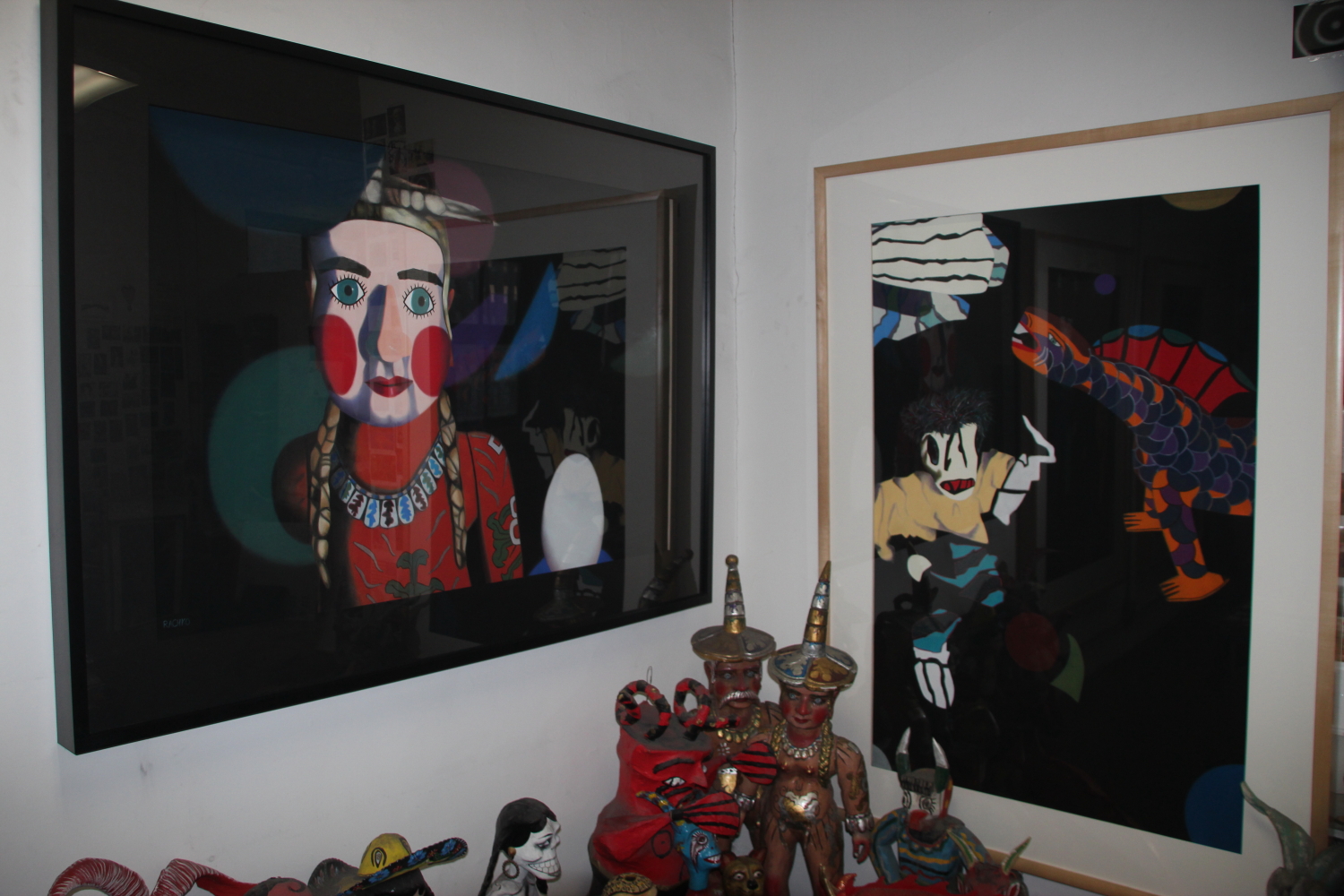
A corner of the studio
A: Actually it was the other way around. As I’ve mentioned, I was a maker of pastel-on-sandpaper paintings long before I became a photographer (1986 vs. 2002). However, the photos in the “Gods and Monsters” series were meant to be photographs in their own right, i.e., they were not made to be reference material for paintings. in an interesting turn of events, in 2007 I started a new series, “Black Paintings,” which uses the “Gods and Monsters” photographs as source material. Collectors who have been following my work for years tell me the new series is the strongest yet. For now I’m enjoying where this work is leading. The last three paintings are the most minimal yet and I’ve begun thinking of them as the “Big Heads.” There is usually a single figure (“Stalemate” has two) that is much larger than life size. “Epiphany” (above, left) is an example. All of them are quite dramatic when seen in person, especially with their black wooden frames and mats.
Comments are welcome!
Pearls from artists* # 33

Botanical, Bali
* an ongoing series of quotations – mostly from artists, to artists – that offers wisdom, inspiration, and advice for the sometimes lonely road we are on.
I am vitally interested in the man who today has the misfortune of being an artist and a human being. By the same token I am as much interested in the maneuvers of the gangster as I am in those of the financier or the military man. They are all part and parcel of society; some are lauded for their efforts, some reviled, some persecuted and hunted like beasts. In our society the artist is not encouraged, not lauded, not rewarded, unless he makes use of a weapon more powerful than those employed by his adversaries. Such a weapon is not to be found in shops or arsenals: it has to be forged by the artist himself out of his own tissue. When he releases it he also destroys himself. It is the only method he has found to preserve his own kind. From the outset his life is mortgaged. He is a martyr whether he chooses to be or not. He no longer seeks to generate warmth, he seeks for a virus with which society must allow itself to be injected or perish. It does not matter whether he preaches love or hate, freedom or slavery; he must create room to be heard, ears that will hear. He must create, by the sacrifice of his own being, the awareness of a value and a dignity which the word human once connoted. This is not the time to analyze and criticize works of art. This is not the time to see the flowers of genius, differentiate between them, label and categorize. This is the time to accept what is offered and be thankful that something other than mass intolerance, mass suicide, can preoccupy the human intellect.
Henry Miller in Stand Still Like the Hummingbird
Comments are welcome!
Q: Is there an overarching narrative in your photographs with Mexican and Guatemalan figures?
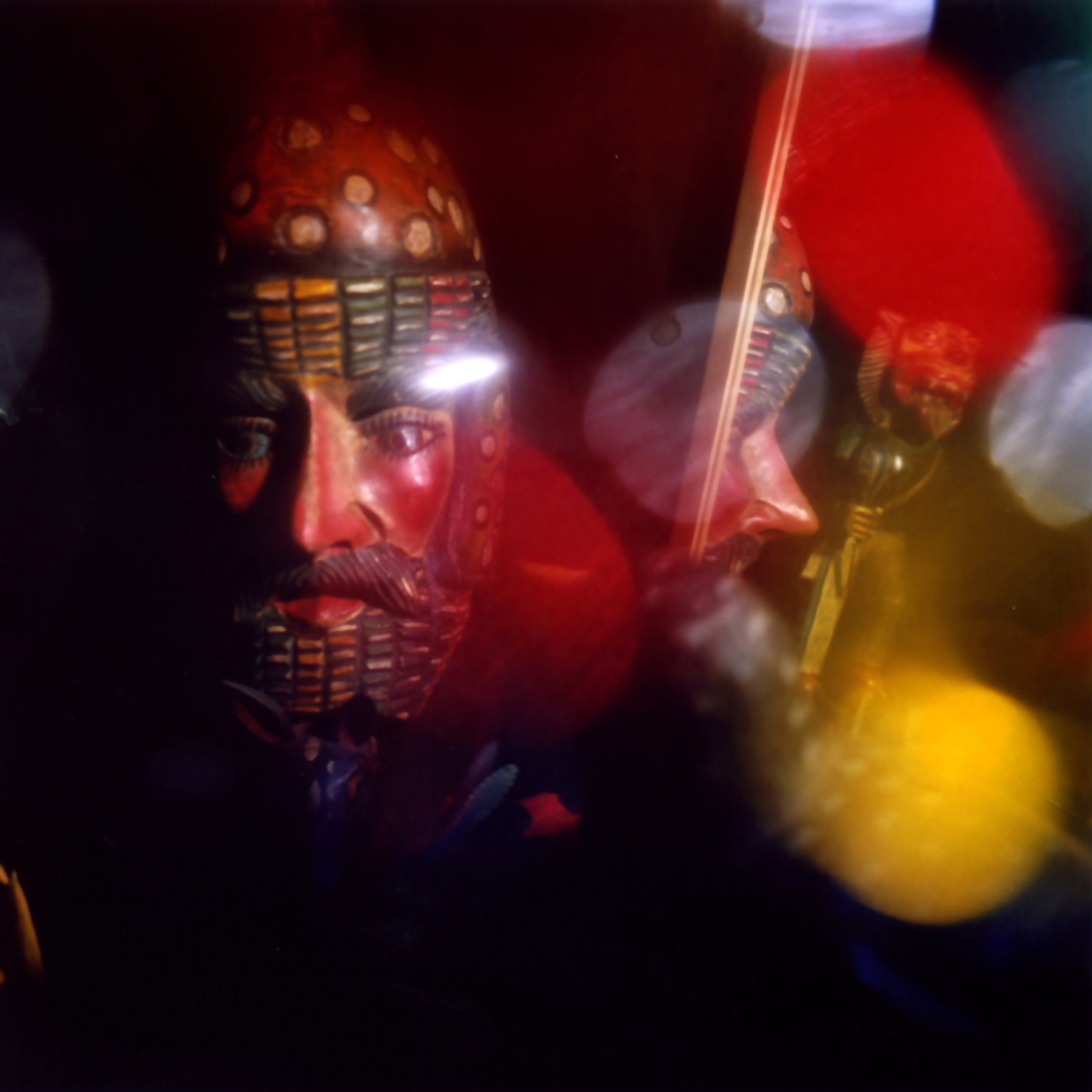
Untitled chromogenic print, 24″ x 24,” edition of 5
A: Maybe, but that’s something for the viewer to judge. I never specify exactly what my work is about for a couple of reasons: my thinking about the meaning of my work constantly evolves, plus I wouldn’t want to cut off other people’s interpretations. Everything is equally valid. I heard Annie Leibovitz interviewed some time ago on the radio. She said that after 40 years as a photographer, everything just gets richer. It doesn’t get easier, it just gets richer. I’ve been a painter for 27 years, a photographer for 11, and I agree completely. Creating this work is an endlessly fascinating intellectual journey. I realize that I am only one voice in a vast art world, but I hope that through the ongoing series of questions and answers on my blog, I am conveying some sense of how artists work and think.
Comments are welcome!
Pearls from artists* # 32
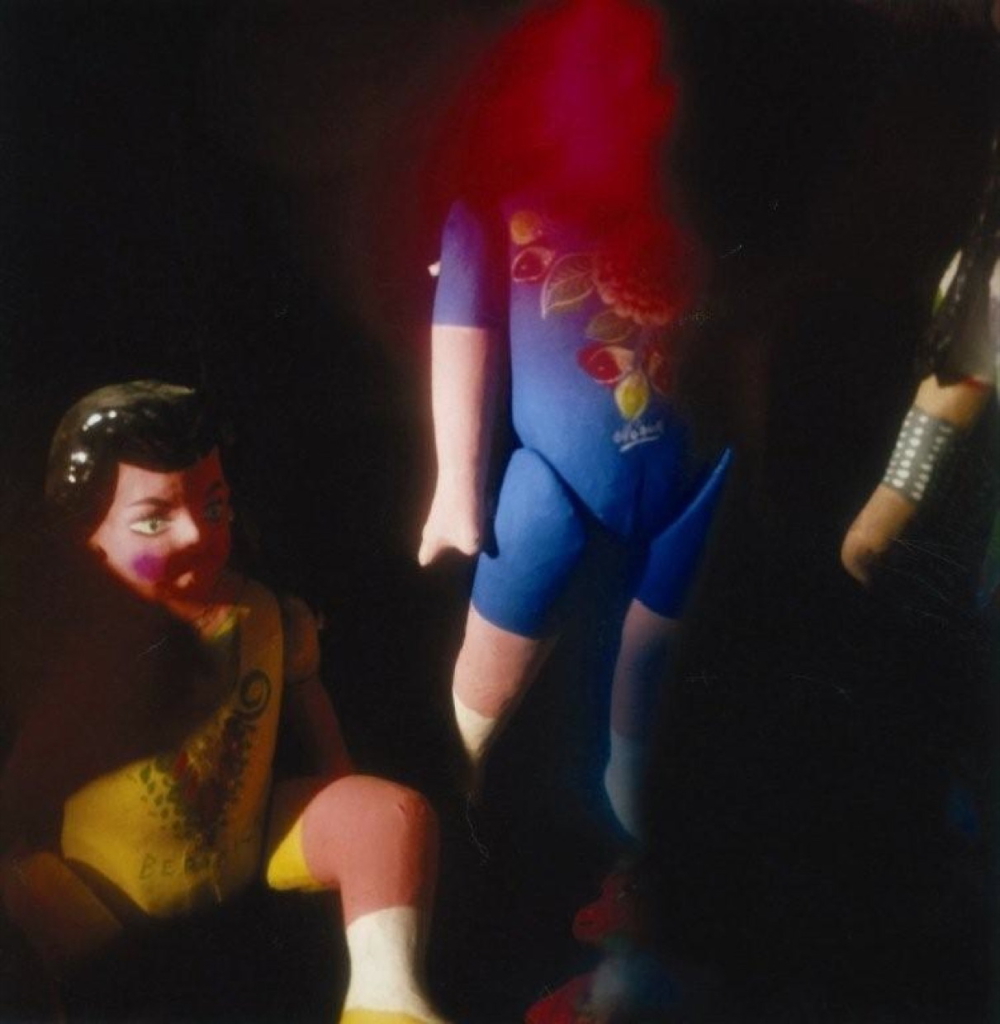
Untitled, 24″ x 24″ chromogenic print, edition of 5
* an ongoing series of quotations – mostly from artists, to artists – that offers wisdom, inspiration, and advice for the sometimes lonely road we are on.
We most certainly need to test ourselves against the most extreme possibilities, just as we are probably obligated not to express, share, and impart the most extreme possibility before it has entered the work of art. As something unique that no other person would and should understand, as one’s personal madness, so to speak, it has to enter into the work to attain its validity and to reveal there an internal law, like primary patterns that become visible only in the transparency of artistic creation. There exist nonetheless two freedoms to express oneself that seem to me the ultimate possibilities: one in the presence of the created object, and the other within one’s actual daily life where one can show another person what one has become through work, and where one may in this way mutually support and help and (here understood humbly) admire one another. In either case, however, it is necessary to show results, and it is neither lack of confidence nor lack of intimacy nor a gesture of exclusion if on does not reveal the tools of one’s personal becoming that are marked by so many confusing and tortuous traits, which are valid only for one’s own use.
Ulrich Baer, editor, The Wisdom of Rilke
Comments are welcome!
Q: Your “Gods and Monsters” series consists of tableaux of Mexican and Guatemalan figures that are photographed in a way that blurs certain elements to abstraction while others are in clear focus. Can you please speak more about this work?

Untitled chromogenic print, 24″ x 24″, edition of 5
A: When I depict the Mexican and, more recently, Guatemalan figures in my pastel-on-sandpaper paintings, they are hard-edged, vibrant, and in-your-face. That’s a result of the way I work in pastel. I slowly and meticulously build up layers of pigment, blend them with my fingers, continually refine and try to find the best, most eye-popping colors. It’s a very slow process that takes months of hard work. An aside… One frustration I have as an artist – I am hardly unique in this – is that my audience only sees the finished piece and they look at it for perhaps ten seconds. They rarely think about how their ten-second experience took me months to create!
In 2002 when I began photographing these figures, I wanted to take the same subject matter and give it an entirely different treatment. So these images are deliberately soft focus, dreamy, and mysterious. I use a medium format camera and shoot film. I choose a narrow depth of field. I hold gels in front of the scene to blur it and to provide unexpected areas of color. Even as a photographer I am a colorist.
I want this work to surprise me and it does, since I don’t usually know what images I will get. Often I don’t even look through the viewfinder as I position the camera and the gels and click the shutter. I only know what I’ve shot after I’ve seen a contact sheet, usually the next day.
The “Gods and Monsters” series began entirely as a reaction to my pastel paintings. The latter are extremely meticulous and labor intensive. At a certain point in the process I know more or less what the finished painting will look like, but there are still weeks of slow, laborious detail work ahead. So my photographic work is spontaneous, serendipitous, and provides me with much-needed instant gratification. I find it endlessly intriguing to have two diametrically opposed ways of working with the same subject.
Comments are welcome!
Pearls from artists* # 31
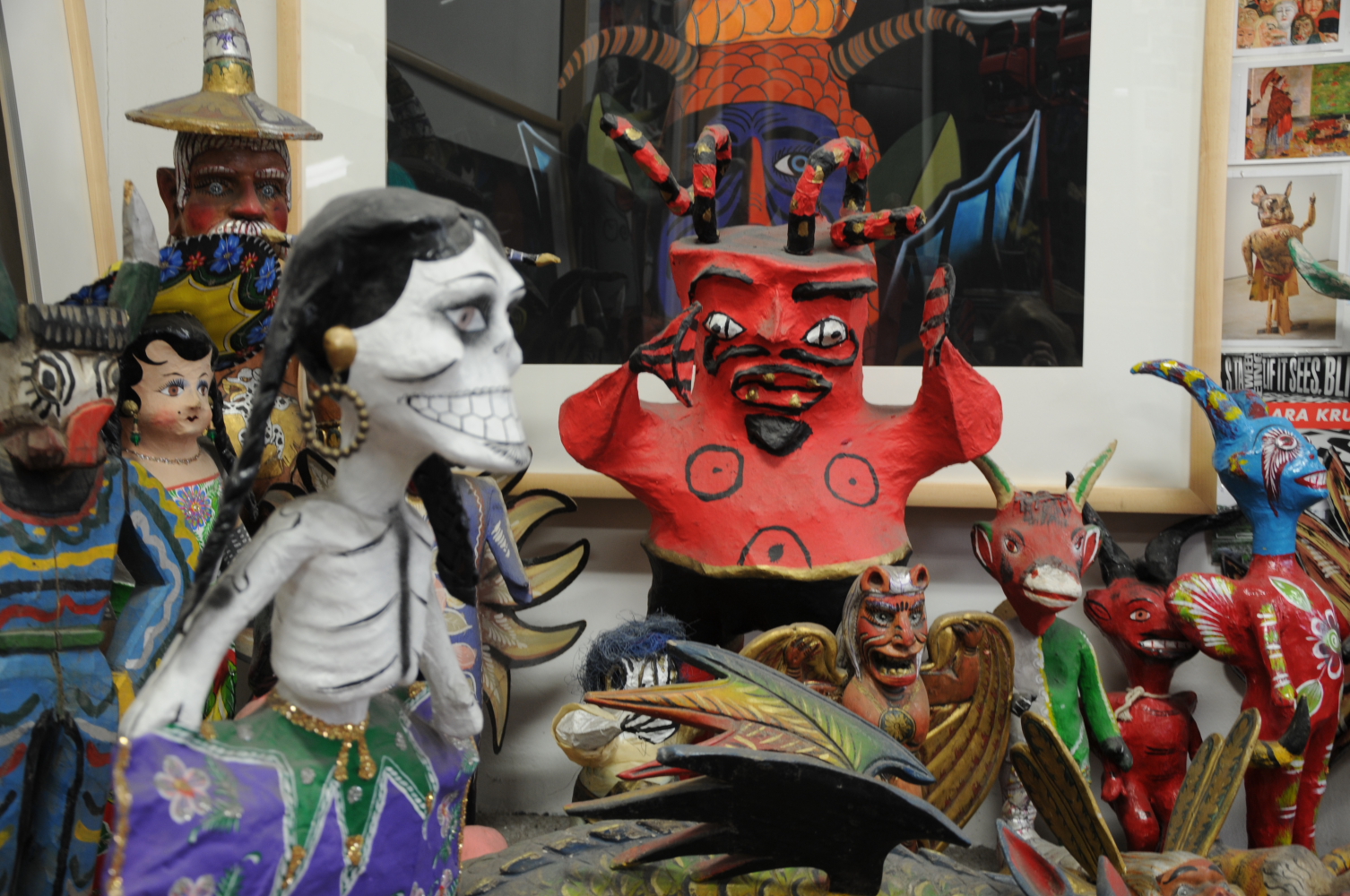
A corner of Barbara’s studio
* an ongoing series of quotations – mostly from artists, to artists – that offers wisdom, inspiration, and advice for the sometimes lonely road we are on.
When we are children we unquestioningly see the objects around us as alive; we speak to them, give them names, breathe life into them. The imagination knows no bounds. As we grow up, we gradually lose this facility, until we finally arrive in an utterly “demystified” world that draws clear boundaries between what is alive and what is not, between subjective and objective perception. According to Sigmund Freud, culture is the only domain in our modern society that gives a measure of legitimacy to the persistence of this infantile desire to see things as animate. In the field of art, imagination is the precondition on which fiction of any sort rests; in art, mental states can be projected onto objects and images, but not in social reality or the sciences.
Dietrich Karner in Animism: Modernity Through the Looking Glass
Comments are welcome!



