Category Archives: An Artist’s Life
Pearls from artists* # 547
*an ongoing series of quotations – mostly from artists, to artists – that offers wisdom, inspiration, and advice for the sometimes lonely road we are on.
Because solitude provides artists with a safe haven, fits their personality, and offers them a kind of communal contact with other human beings through their work, it can also serve as a breeding ground for stagnation. Without ever quite realizing it, artists can grow flaccid in isolation and begin to experience their solitude as deadening. The studio can become too easy and unchallenging a place.
The world outside the studio offers unmatched opportunities for growth and for the expression of authentic and courageous behavior. Artists often miss these opportunities and, remaining relatively untested, handle themselves poorly when they do venture out.
Eric Maisel in A Life in the Arts: Practical Guidance and Inspiration for Creative and Performing Artists
Comments are welcome!
Pearls from artists* # 546
*an ongoing series of quotations – mostly from artists, to artists – that offers wisdom, inspiration, and advice for the sometimes lonely road we are on.
Of a thousand years of joys and sorrows
Not a trace can be found
You who are living, live the best life you can
Don’t count on the earth to preserve memory
Ai Weiwei quoting lines written by his father in 1000 Years of Joys and Sorrows
Comments are welcome!
Pearls from artists* # 545

*an ongoing series of quotations – mostly from artists, to artists – that offers wisdom, inspiration, and advice for the sometimes lonely road we are on.
… in the pursuit of better behavior and moral action, we’ve cut ourselves off from instinct. But it’s gone too far. Today, we know that we’re in our heads too much. It’s not hard to see that something has been lost by placing so much of our attention into devices. Our overstimulated culture is a bird that feels like it has nowhere to land. Many people feel like, or operate as though, they’ve lost feeling for life.
Gary Bobroff in Carl Jung: Knowledge in a Nutshell
Comments are welcome!
Q: How do you determine what size to make your pastel paintings? (Question from Prince North via Facebook)

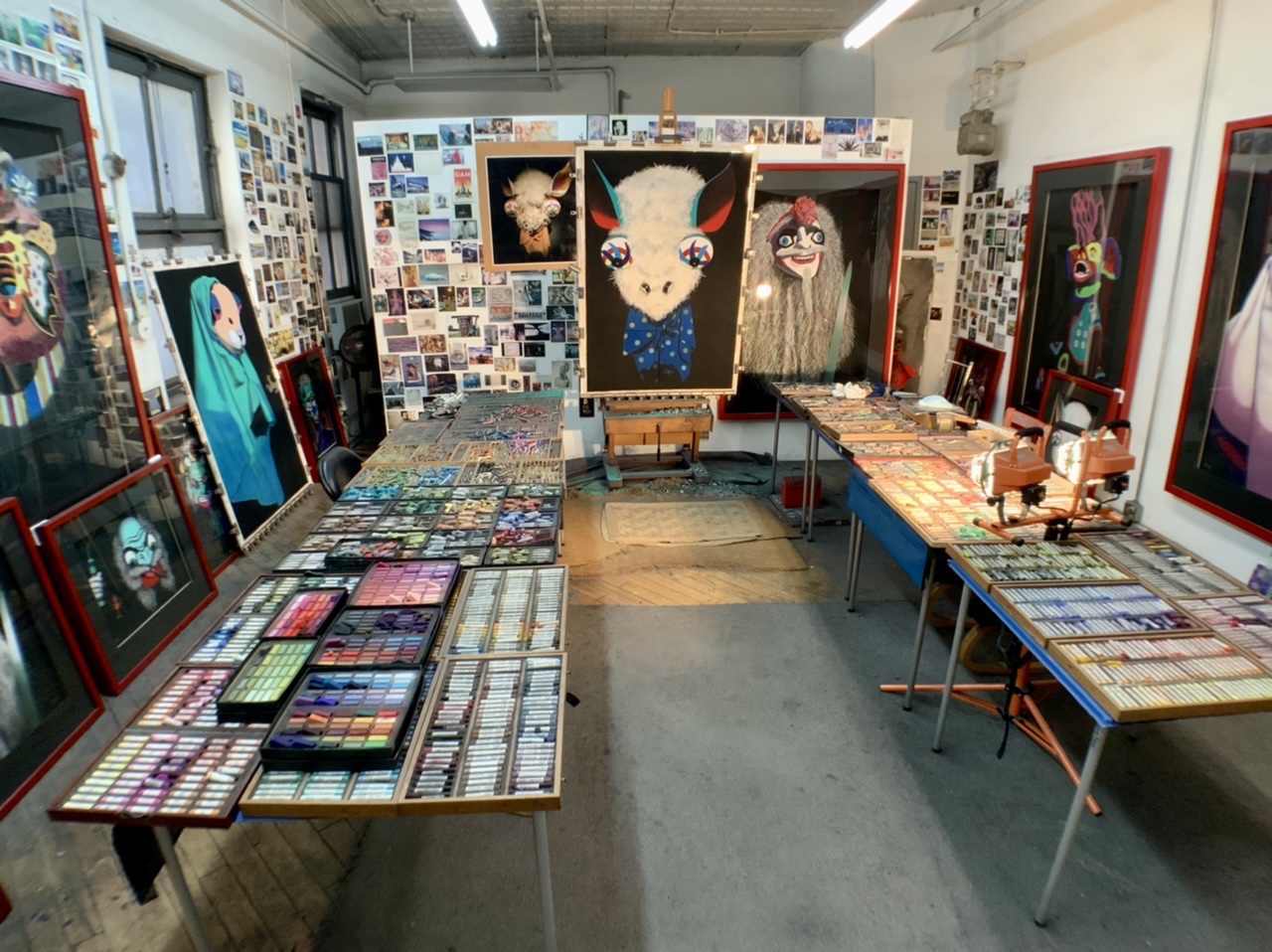
A: For three decades I have been making pastel paintings in two sizes: 26” x 20” and 58” x 38.” These sizes are dictated by practical considerations.
The smaller ones are because 28” x 22” sheets of acid-free sandpaper are what’s available. (I mask off an inch all around for mats so the paintings are 20″ x 26″). For large paintings I buy rolls of acid-free sandpaper that measure 54 inches wide by 30 feet. I cut this down to 40″ x 60″ for paintings and mask off an inch all around on these, too.
And why specifically make them 58” x 38”? This is the absolute largest size I can make and I prefer making big paintings!
Again, practical factors come into play: the size of my truck, the cost and size of mat board, and the weight of the frames.
My pastel paintings need to lie flat when they are moved. Framed paintings are 70” x 50,” the largest size that can fit flat in the back of my Ford F-150. 58” x 38” is the largest size that will fit in a 8 feet by 4 feet sheet of mat board. (60 inch wide mat board is available, but the cost goes up considerably). Lastly, I’ve never weighed them but my large framed paintings are already rather heavy. It takes two people to carry them.
Comments are welcome!
Pearls from artists* # 544
*an ongoing series of quotations – mostly from artists, to artists – that offers wisdom, inspiration, and advice for the sometimes lonely road we are on.
Creativity is human potential made manifest. But what is talent? The dictionary (in this case Webster’s New World Dictionary) informs us that talent is any natural ability, power, or endowment, and especially a superior, apparently natural ability in the arts or sciences or in the learning or doing of anything.
This definition is revealing on several counts. First of all, it defines talent in terms of abilities and powers. It suggests that an artist can answer the question “Am I talented?” In the affirmative if he can point to certain endowments that he possesses.
But which ones should be point to? What are the important ones in his art discipline? How many of them does he need to do good work? Do they all matter equally? Which, if any, are absolutely necessary? How much of a desired ability does he need – how great a vocal range, how long a leap, how fine a hand as a draftsman?
Eric Maisel in A Life in the Arts: Practical Guidance and Inspiration for Creative and Performing Artists
Comments are welcome!
Pearls from artists* # 543

*an ongoing series of quotations – mostly from artists, to artists – that offers wisdom, inspiration, and advice for the sometimes lonely road we are on.
Although the struggles that I faced involved me as an individual, I didn’t feel alone. I was forbidden to travel, but this forced immobility didn’t adversely affect my work; instead it gave me sustenance. For me, inspiration comes from resistance – without that, my efforts would be fruitless. Having a real – and powerful – adversary was my good fortune, making freedom all the more tangible – freedom comes from all the sacrifices you make to achieve it. Limitations come only from a fear inside the heart, and art is the antidote to fear. I did not need sympathy, for courage itself is an aesthetic feeling, and it’s only when true feeling is transformed into something broadly understood that art can avoid drying up.
Ai Weiwei in 1000 Years of Joys and Sorrows
Comments are welcome!
Pearls from artists* # 542

*an ongoing series of quotations – mostly from artists, to artists – that offers wisdom, inspiration, and advice for the sometimes lonely road we are on.
Observing these objects and imagining their history broadened my perspective. In China, we were still living in a culturally impoverished era, but art had not abandoned us – its roots were deeply planted in the weathered soil. The stubborn survival of this indigenous artistic tradition demonstrated that our narrow-minded authoritarian state would never be able to remake our culture in its own image. From then on, when I wasn’t spending time with my parents, I was immersing myself in the world of antiques. The dealers found me perplexing, for I followed no prevailing tastes or conventional wisdom. Instead I was taken with obscure objects, and made a point of buying things that seemed to have little or no value; my hungry spirit was nourished as I imagined the stories lurking behind each piece. The observations and insights that came to me from the distant past spurred me on to make art of my own.
– Ai Weiwei in 1000 Years of Joys and Sorrows
This is exactly my experience with the folk art I collect!
Comments are welcome!
Travel photo of the month*
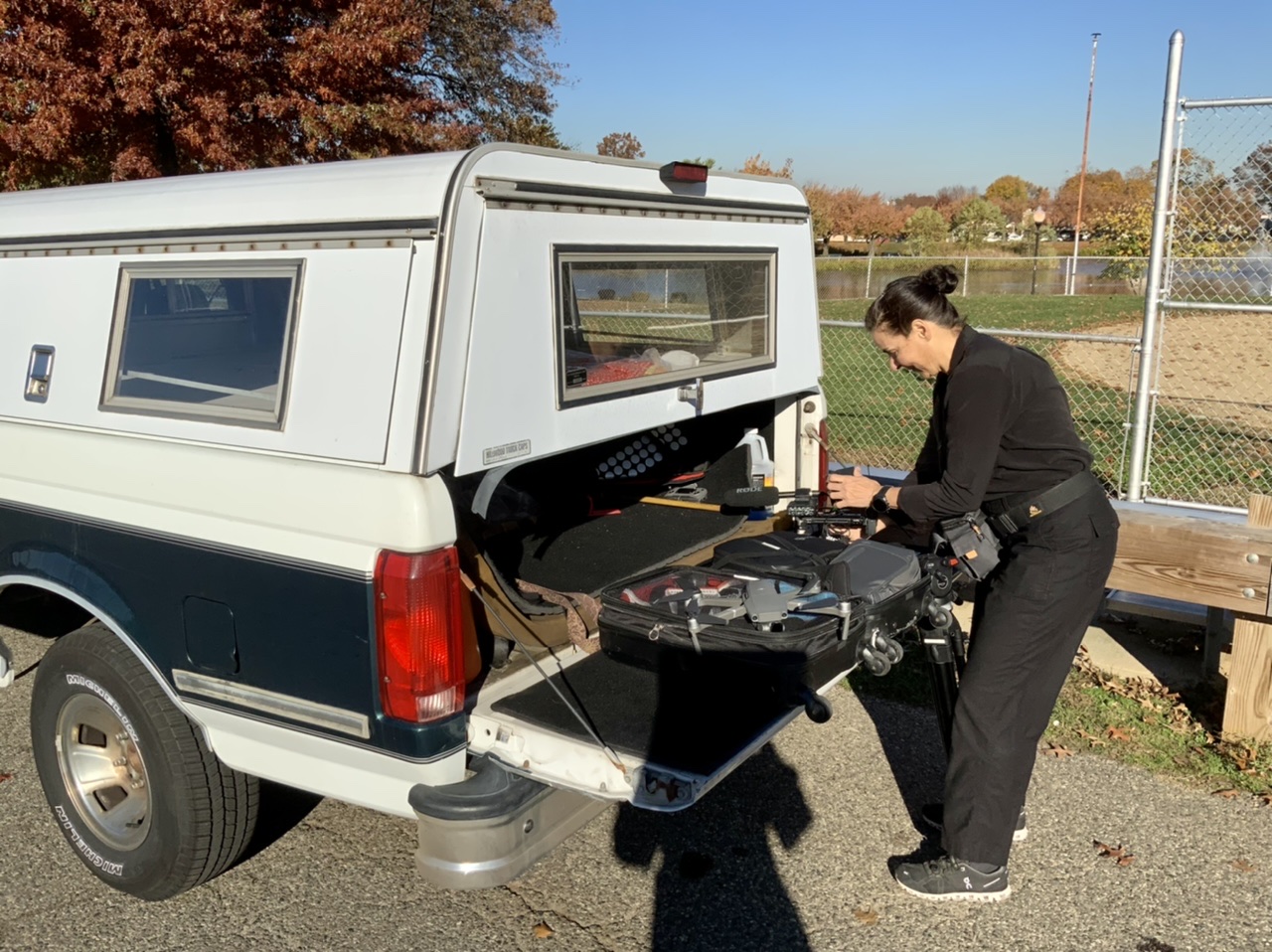
With Jennifer Cox on a film shoot for our upcoming documentary, Clifton, NJ
*favorite travel photos that have not yet appeared in this blog
Comments are welcome!
Pearls from artists* # 541
*an ongoing series of quotations – mostly from artists, to artists – that offers wisdom, inspiration, and advice for the sometimes lonely road we are on.
The artist has to make the viewer understand that his world is too narrow. To do this is a task for the humanist.
– Anthony Tapies
Comments are welcome!
Pearls from artists* # 539
*an ongoing series of quotations – mostly from artists, to artists – that offers wisdom, inspiration, and advice for the sometimes lonely road we are on.
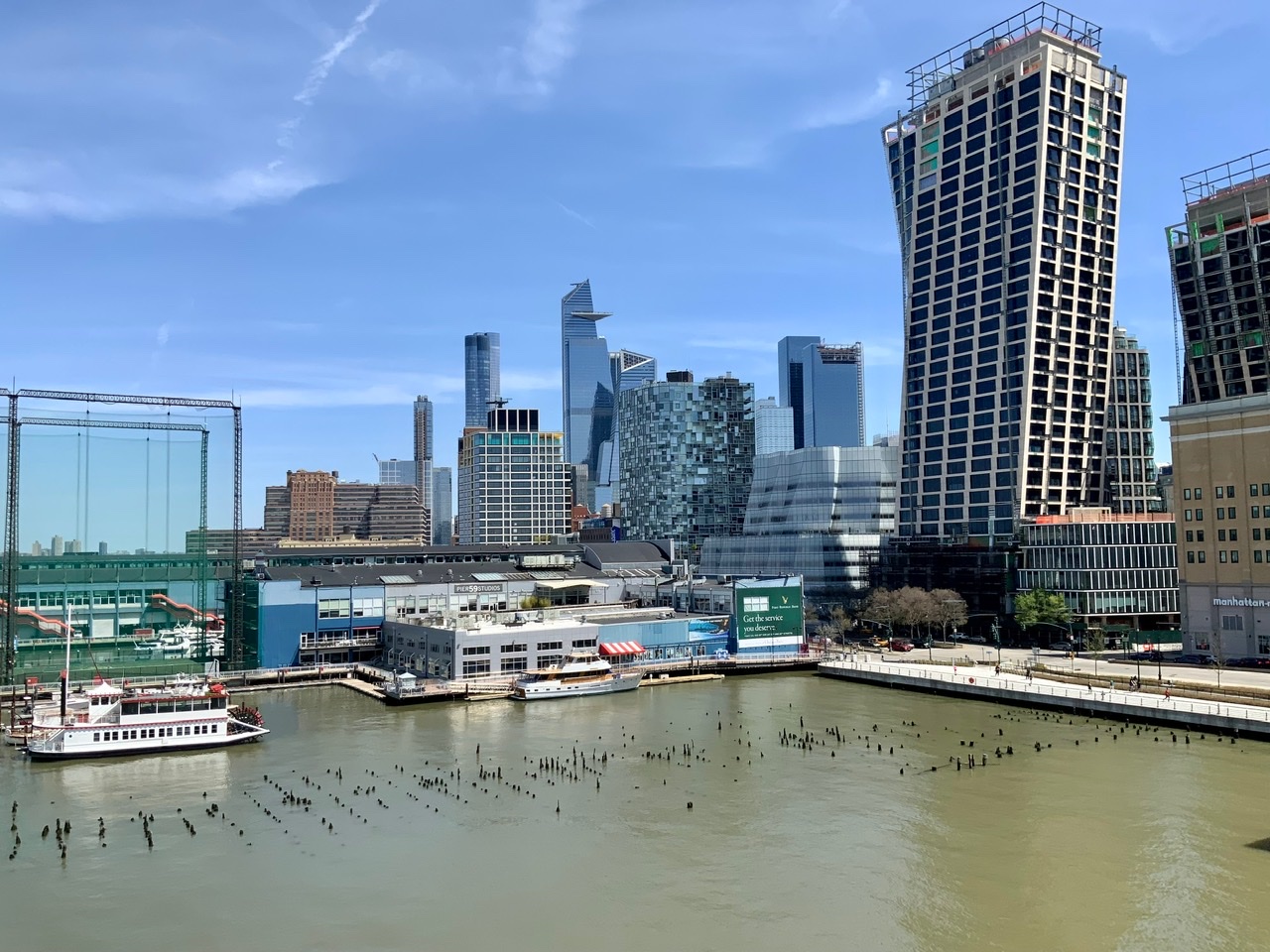
It is important to consider, when cities like New York continue a process of gentrification that make them unlivable for most artists and intellectuals, that the community Schloss describes was to some extent brought into being by a number of radically different circumstances: first, immigration – in some cases, such as de Kooning, illegal, and in others, such as Schloss, forced by war and politics – and second, the existence in post-Great Depression New York of cheap rents for run-down spaces that no one other than artists would consider or would be able to make not just livable but eventually fashionable.
Mira Schor in The Loft Generation: From the de Koonings to Twombly, Portraits and Sketches 1942-2011 edited by Mary Venturini
Comments are welcome!


 barbararachkoscoloreddust.com