Blog Archives
Pearls from artists* # 162

“The Sovereign,” soft pastel on sandpaper, 58″ x 38″
* an ongoing series of quotations – mostly from artists, to artists – that offers wisdom, inspiration, and advice for the sometimes lonely road we are on.
Particle after particle of the living self is transferred into the creation, until at last it is an external world that corresponds to the inner world and has the power of outlasting the author’s life.
I suspect that some such dream is shared by many authors, but among those interviewed it is Faulkner who has come closest to achieving it, and he is also the author who reveals it most candidly. “Beginning with Sartoris,” he says, I discovered that my own little postage stamp of native soil was worth writing about and that I would never live long enough to exhaust it, and that by sublimating the actual into the apocryphal I would have complete liberty to use whatever talent I might have to its absolute top. It opened up a mine of other people, so I created a cosmos of my own. I can move these people around like God, not only in space but in time.” And then he says, looking back on his work as if on the seventh day, “I like to think of the world I created as being a kind of keystone in the universe; that, small as that keystone is, if it were ever taken away the universe itself would collapse. My last book will be the Doomsday Book, the Golden Book, of Yoknapatawpha County. Then I shall break the pencil and I’ll have to stop.”
Malcolm Cowley in Writers at Work: The Paris Review Interviews, First Series
Comments are welcome!
Pearls from artists* # 159
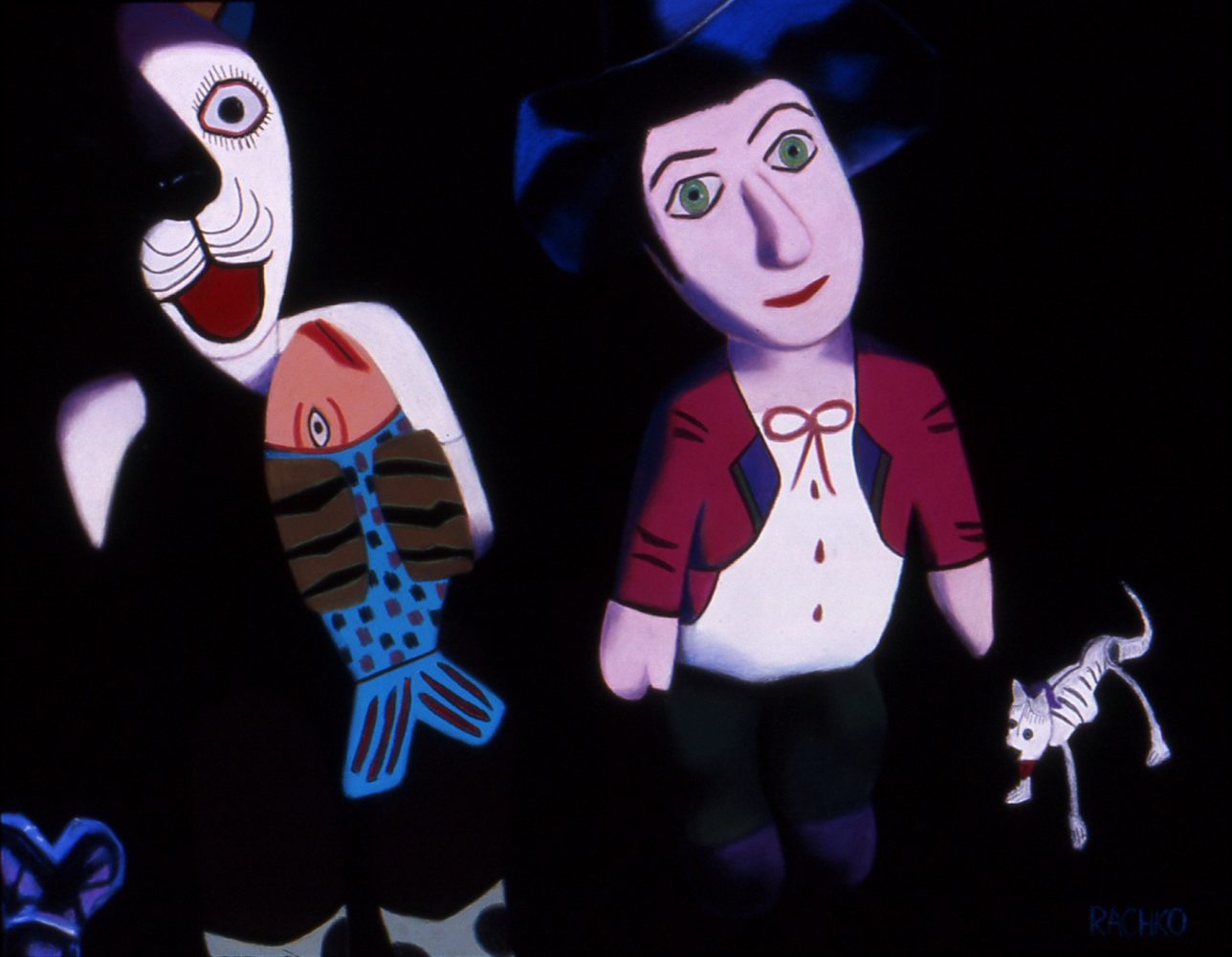
“Offering,” soft pastel on sandpaper, 20″ x 26″
* an ongoing series of quotations – mostly from artists, to artists – that offers wisdom, inspiration, and advice for the sometimes lonely road we are on.
We, the artists who are meant to provide art and teach the importance of beauty, have not yet been able to educate the public to know the difference between beauty and ugliness. .. It’s time to make sure artists with good intentions are ready to be taken seriously and to gain back their noble respectful place in culture. We should be ready with our own high standard of art for the new era, in which art patrons and a society that are more informed than ever will be thoughtfully critical and will expect everything from artists they support – talent, knowledge, skill and experience.
Samuel Adoquei in Origin of Inspiration: Seven Short Essays for Creative People
Comments are welcome!
Pearls from artists* # 156
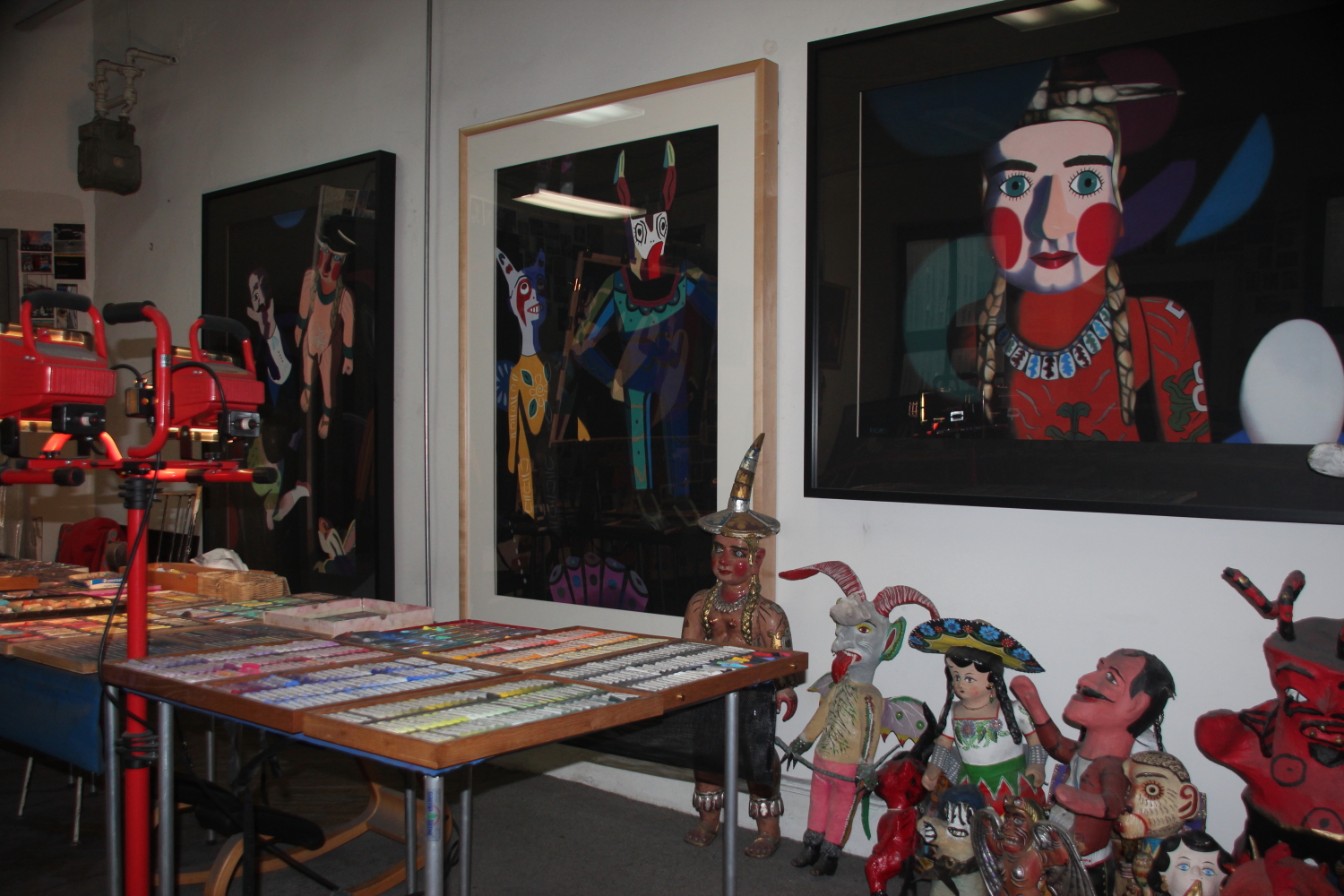
Barbara’s studio
Our vision is what makes us unique and special. Literally, vision means an artist’s unique way of seeing the world, the special and specific choices the artist makes when observing the world around him. It is also what the artist imagines and sees with his unique mind’s eye and brings out by way of his art. Vision is like a lighthouse, it guides the artist to a specific area of nature or life or to a subject that is personal to the artist, one that others might have overlooked. Vision also includes that which the artist’s conscience tells him the world ought to be – or what the world is lacking. Vision is that unique and special contribution we bring and add to life; it is that which no one can provide but us. Passion, inspiration, talent and skill all have to come together so that our vision can be achieved.
Samuel Adoquei in Origin of Inspiration: Seven Short Essays for Creative People
Comments are welcome!
Pearls from artists* # 92
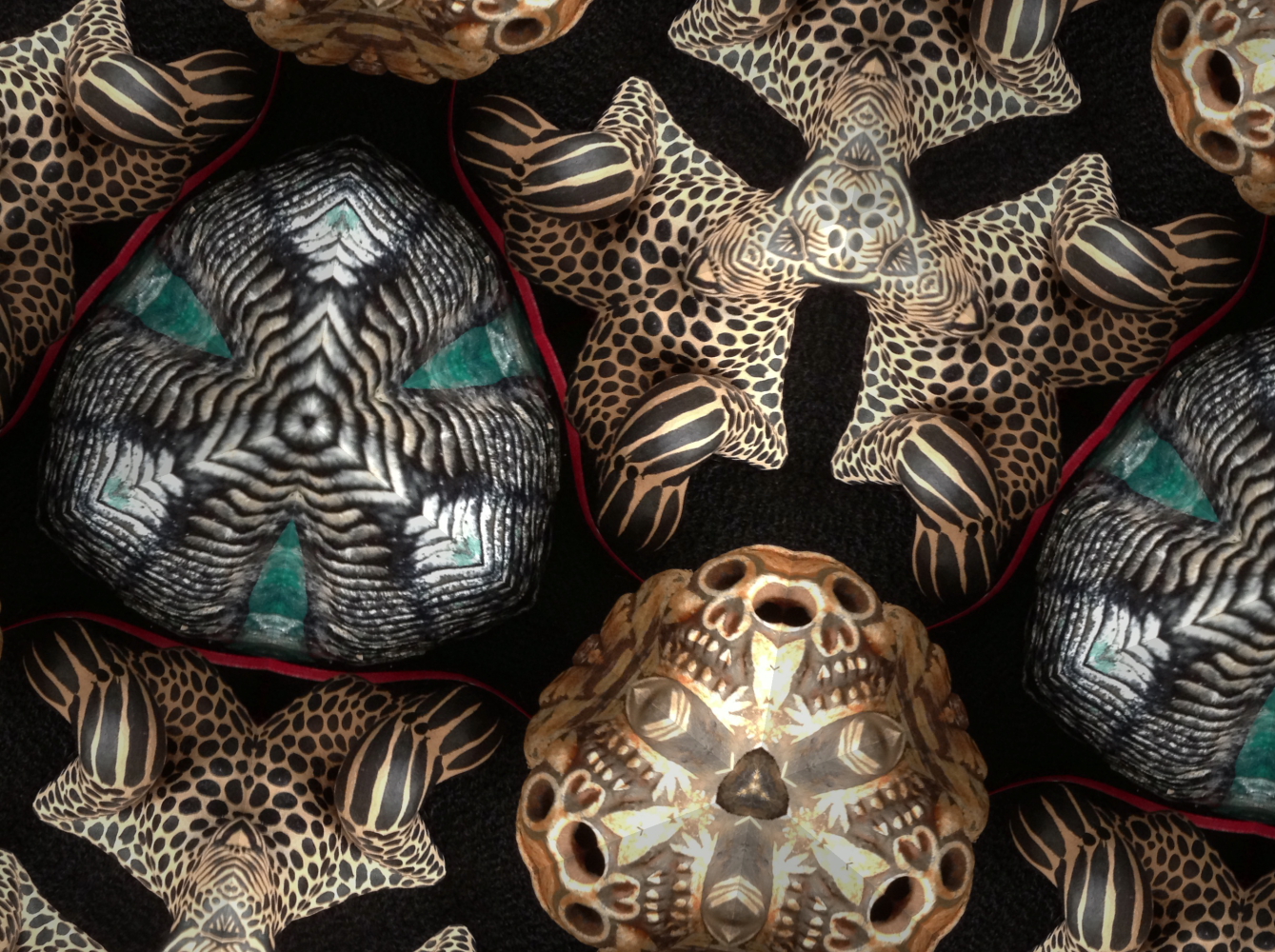
Untitled iPad photo
* an ongoing series of quotations – mostly from artists, to artists – that offers wisdom, inspiration, and advice for the sometimes lonely road we are on.
To avoid disappointment in art, one mustn’t treat it as a career. Despite whatever great artistic sense and talent a man might possess, he ought to seek money and power elsewhere to avoid forsaking his art when he fails to receive proper compensation for his gifts and efforts.
My Name is Red by Orhan Pamuk
Comments are welcome!
Q: I just got home from my first painting experience… three hours and I am exhausted! Yet you, Barbara, build up as many as 30 layers of pastel, concentrate on such intricate detail, and work on a single painting for months. How do you do it?
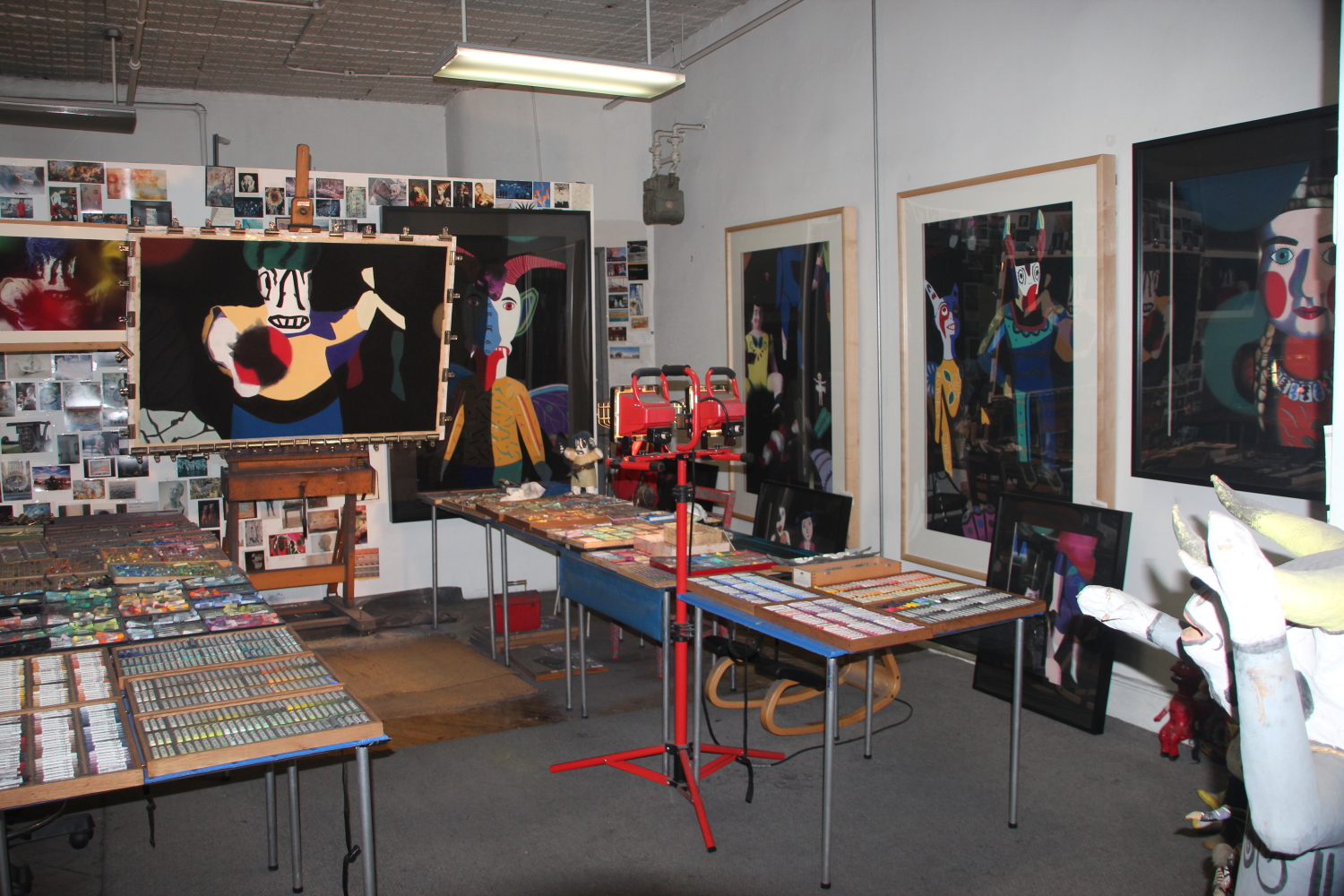
Barbara’s studio
A: The short answer is that I absolutely love making art in my studio and on the best days I barely even notice time going by!
Admittedly, it’s a hard road. Pursuing life as an artist takes a very special and rare sort of person. Talent and having innate gifts are a given, merely the starting point. We must possess a whole cluster of characteristics and be unwavering in displaying them. We are passionate, hard-working, smart, devoted, sensitive, self-starting, creative, hard-headed, resilient, curious, persistent, disciplined, stubborn, inner-directed, tireless, strong, and on and on. Into the mix add these facts. We need to be good business people. Even if we are, we are unlikely to make much money. We are not respected as a profession. People often misunderstand us: at best they ignore us, at worst they insult our work and us, saying we are lazy, crazy, and more.
The odds are stacked against any one individual having the necessary skills and stamina to withstand it all. So many artists give up, deciding it’s too tough and just not worth it, and who can blame them? This is why I believe artists who persevere over a lifetime are true heroes. It’s why I do all I can to help my peers. Ours is an extremely difficult life – it’s impossible to overstate this – and each of us finds our own intrinsic rewards in the work itself. Otherwise there is no reason to stick with it. Art is a calling and for those of us who are called, the work is paramount. We build our lives around the work until all else becomes secondary and falls away. We are in this for the duration.
In my younger days everything I tried in the way of a career eventually became boring. Now with nearly thirty years behind me as a working artist, I can still say, “I am never bored in the studio!” It’s difficult to put into words why this is true, but I know that I would not want to spend my time on this earth doing anything else. How very fortunate that I do not have to do so!
Comments are welcome!
Pearls from artists* # 77
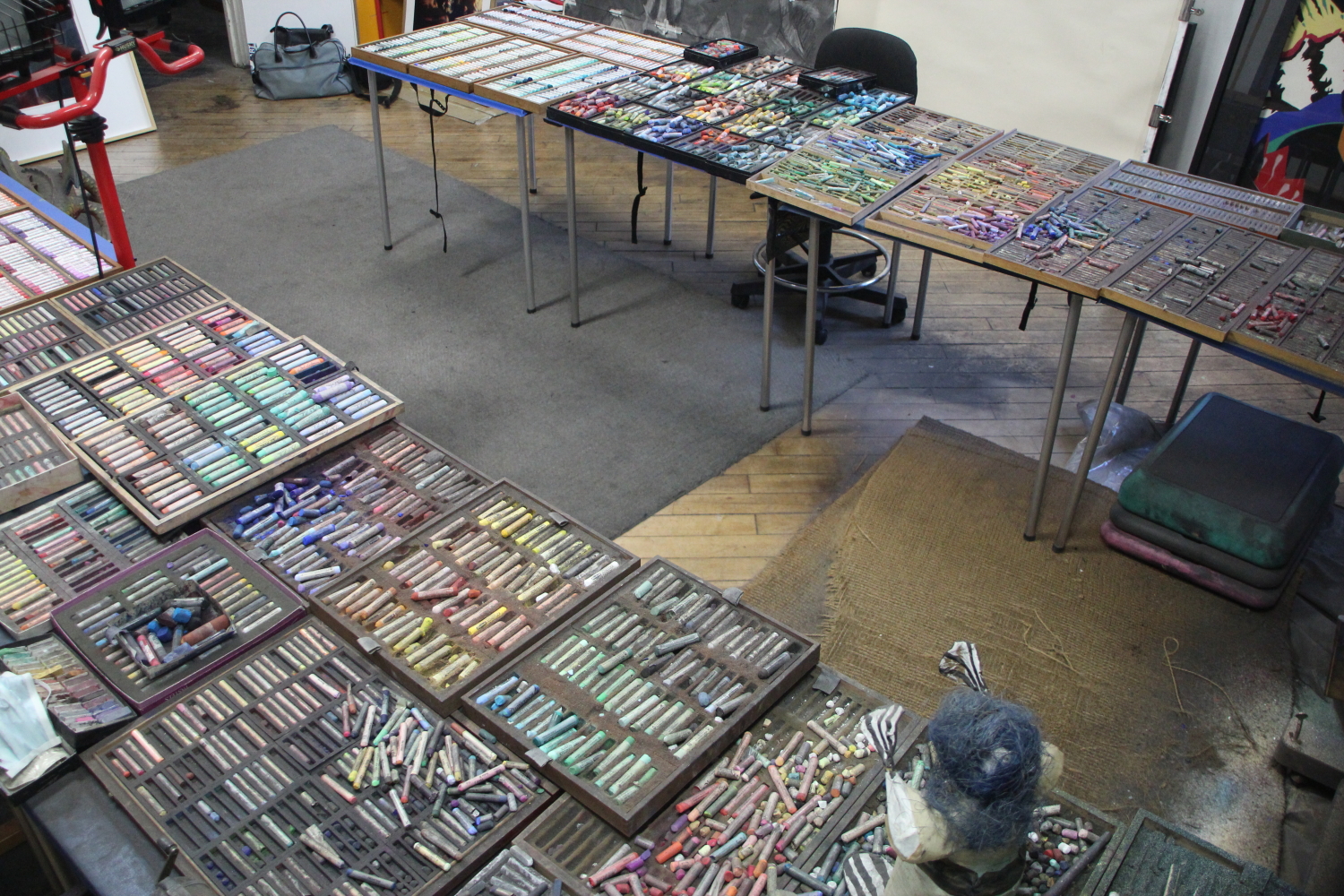
Barbara’s studio
* an ongoing series of quotations – mostly from artists, to artists – that offers wisdom, inspiration, and advice for the sometimes lonely road we are on.
Current possibilities far exceed any single artist’s capacity to engage them. Indeed, every known way of making art ever undertaken in all of history is included in today’s inventory of creative options. Thus, choices must be made. This has had a profound effect upon the quantity and diversity of skills needed to become an artist today. In addition to such conventional forms of artistic talent as visual acuity, manual dexterity, sensitivity, intelligence, ingenuity, and perseverance, contemporary artists must also be able to make judicious choices from a limitless inventory of alternatives. A decisive aspect of the creative act involves choosing a place amid possibilities that are as bountiful as they are eclectic and chaotic. Even this process entail choices. In staking the territory they wish to occupy, artists may be gluttons or ascetics, connoisseurs or commoners. Relationships between artists and their career choices may be lifelong and monogamous, or sequentially monogamous, polygamous, or promiscuous. But artists’ options even exceed selecting precedents. Free access to the past is amplified by freedom to augment the catalogue of creative options by contributing something new.
In the Making: Creative Options for Contemporary Art by Linda Weintraub
Comments are welcome!
Q: In light of the realities you discussed last week (see blog post of Aug. 24), what keeps you motivated to make art?

A favorite book
A: In essence it’s that I have always worked much harder for love than for money. I absolutely love my work, my creative process, and my chosen life. I have experienced much tragedy – no doubt there is more to come – but through it all, my journey as an artist is a continual adventure that gives me the ultimate freedom to spend my time on this earth as I want. In my work I make the rules, set my own tasks, and resolve them on my own timetable. What could be better than that?
Furthermore, I know that I have a gift and with that comes a profound responsibility, an obligation to develop and use it to the best of my ability, regardless of what it may cost. And when I say “cost,” I do not mean only money. Art is a calling and all self-respecting artists do whatever is necessary to use and express our gifts.
In “The Gift” Lewis Hyde says, “A gift is a thing we do not get by our own efforts. We cannot buy it, we cannot acquire it through an act of will. It is bestowed upon us. Thus we rightly speak of “talent” as a “gift” for although a talent can be perfected through an act of will, no effort in the world can cause its initial appearance. Mozart, composing on the harpsichord at the age of four, had a gift.”
Comments are welcome!
Q: Would you talk about some of your early experiences with art?
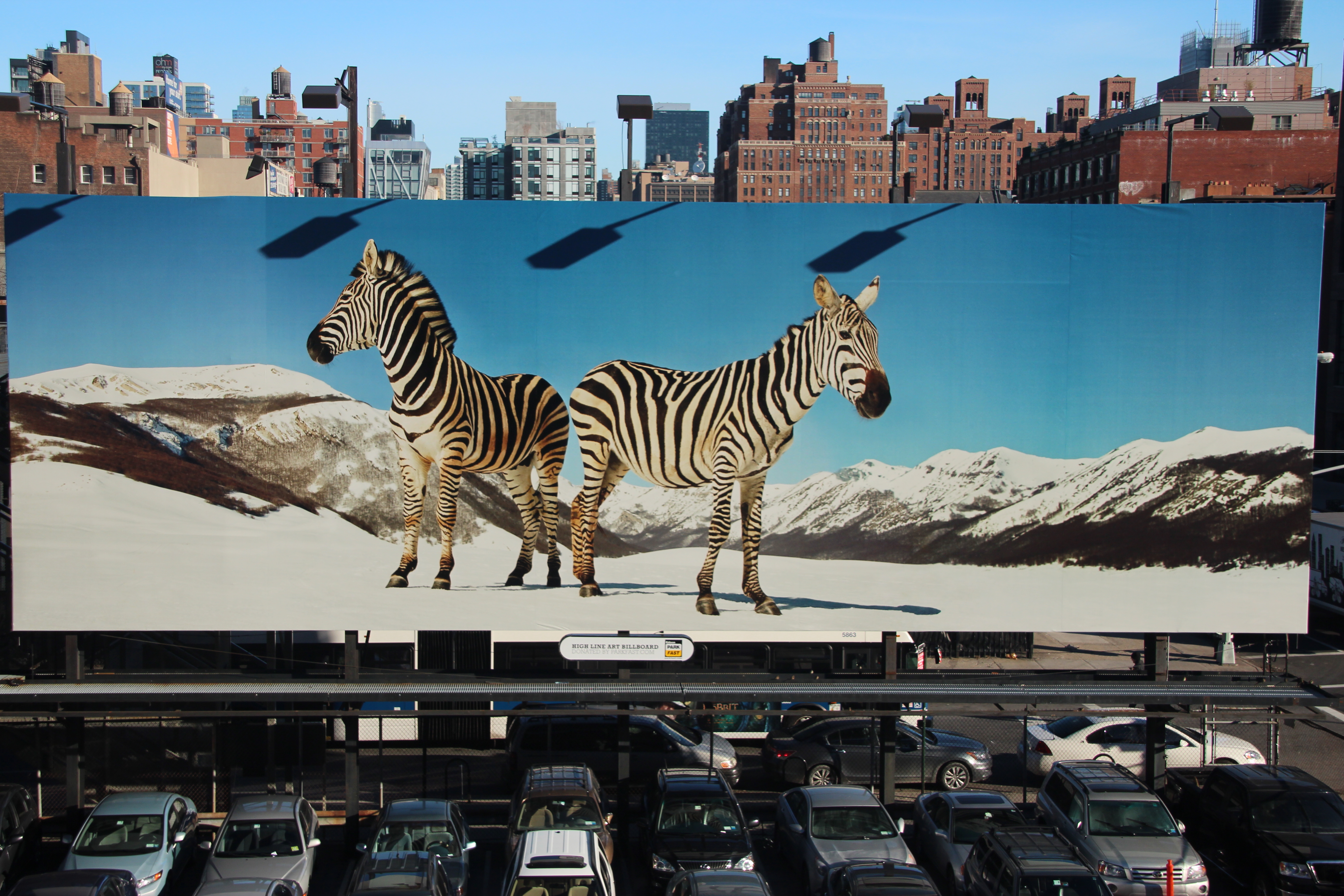
Zebras in Chelsea
A: I grew up in a blue collar family in suburban New Jersey. My father was a television repairman for RCA. For awhile my mother worked as a sewing machine operator in a factory that made women’s undergarments, but mostly she stayed home to raise my sister and me (at the time I had only one sister, Denise; Michele was born much later). My parents were both first-generation Americans and in those days no one in my extended family had gone to college. I was a smart kid and showed some artistic talent in kindergarten or earlier. I have always been able to draw anything, as long as I can see it (i.e., I require a visual reference as opposed to drawing from memory). I remember copying the Sunday comics, which in those days appeared in all the newspapers. At the age of 6 my mother enrolled Denise and me in Saturday morning painting classes at the studio of an artist named Frances Hulmes in Rutherford, NJ. I continued the classes for about 8 years and became a fairly adept oil painter. Living just 12 miles from New York City in Clifton, New jersey, my mother often took us to museums, particularly the Museum of Modern Art, the Metropolitan Museum of Art, and the Museum of Natural History. I remember falling in love with Rousseau’s “The Sleeping Gypsy” and being astonished by the violence and scale of Picasso’s “Guernica,” when it was on long-term loan to MoMA. I have fond memories of studying the dioramas at the Museum of Natural History. They are still my favorite part of the museum. I suppose it goes without saying that there were not any artists in my family so I had no role models. At the age of 15 my father decided that art was not a serious pursuit – he said it was a hobby, not a profession – so he abruptly stopped paying for my Saturday morning lessons. With no financial or moral support to pursue art, I turned my attention to other interests (ex. I learned to fly airplanes, becoming a commercial pilot and Boeing 727 flight engineer) and let my artistic abilities lie dormant.
Comments are welcome!
Pearls from artists # 19
View from the balcony
* an ongoing series of quotations – mostly from artists, to artists – that offers wisdom, inspiration, and advice for the sometimes lonely road we are on.
What one writes at twenty-one is a cry, does one think of a cry that it ought to have been cried differently? The language is still so thin about one in these years, the cry pierces through and just takes along what is left clinging to it. The development will always be this, that one makes one’s language fuller, thicker, firmer (heavier), and of course there is sense in that only for one who is sure that the the cry too is growing in him ceaselessly, irresistibly, so that later, under the pressure of countless atmospheres, it will issue evenly from every pore of the almost impenetrable medium…
Talent, you understand, scarcely has significance any more in our day, since a certain dexterity of expression has become general, where is it not? Hence succeeding still means something only where the highest, utmost is achieved, and then one is again liable to think that just this unsurpassable something, once it appears in person, is in itself successful.
And so there is no real ground for concern, only that we want never to remain behind our heart and never to be in advance of it: that is probably needful. Thus we arrive at everything, each at what is his.
Jane Bannard Greene and M.D. Herter Norton editors, Letters of Rainer Maria Rilke 1910 – 1926
Comments are welcome!


 barbararachkoscoloreddust.com