Blog Archives

Pearls from artists* # 598
*an ongoing series of quotations – mostly from artists, to artists – that offers wisdom, inspiration, and advice for the sometimes lonely road we are on.
For art to appear, we have to disappear. This may sound strange, but in fact it is a common appearance. The elementary case, for most people, is when our eye or ear is “caught” by something: a tree, a rock, a cloud, a beautiful person, a baby’s gurgling, spatters of sunlight reflected off some wet mud in the forest, the sound of a guitar wafting unexpectedly out of a window. Mind and sense are arrested for a moment, fully in the experience. Nothing else exists. When we “disappear” in this way, everything around us becomes a surprise, new and fresh. Self and environment unite. Attention and intention fuse. We see things just as we and they are, yet we are able to guide and direct them to be one just the way we want them. This lively and vigorous state of mind is the most favorable to the germination of original work of any kind. It has its roots in child’s play, and its ultimate flowering in full-blown artistic creativity.
Stephen Nachmanovitch in Free Play: Improvisation in Life and Art
Comments are welcome!
Q: What’s on the easel today?
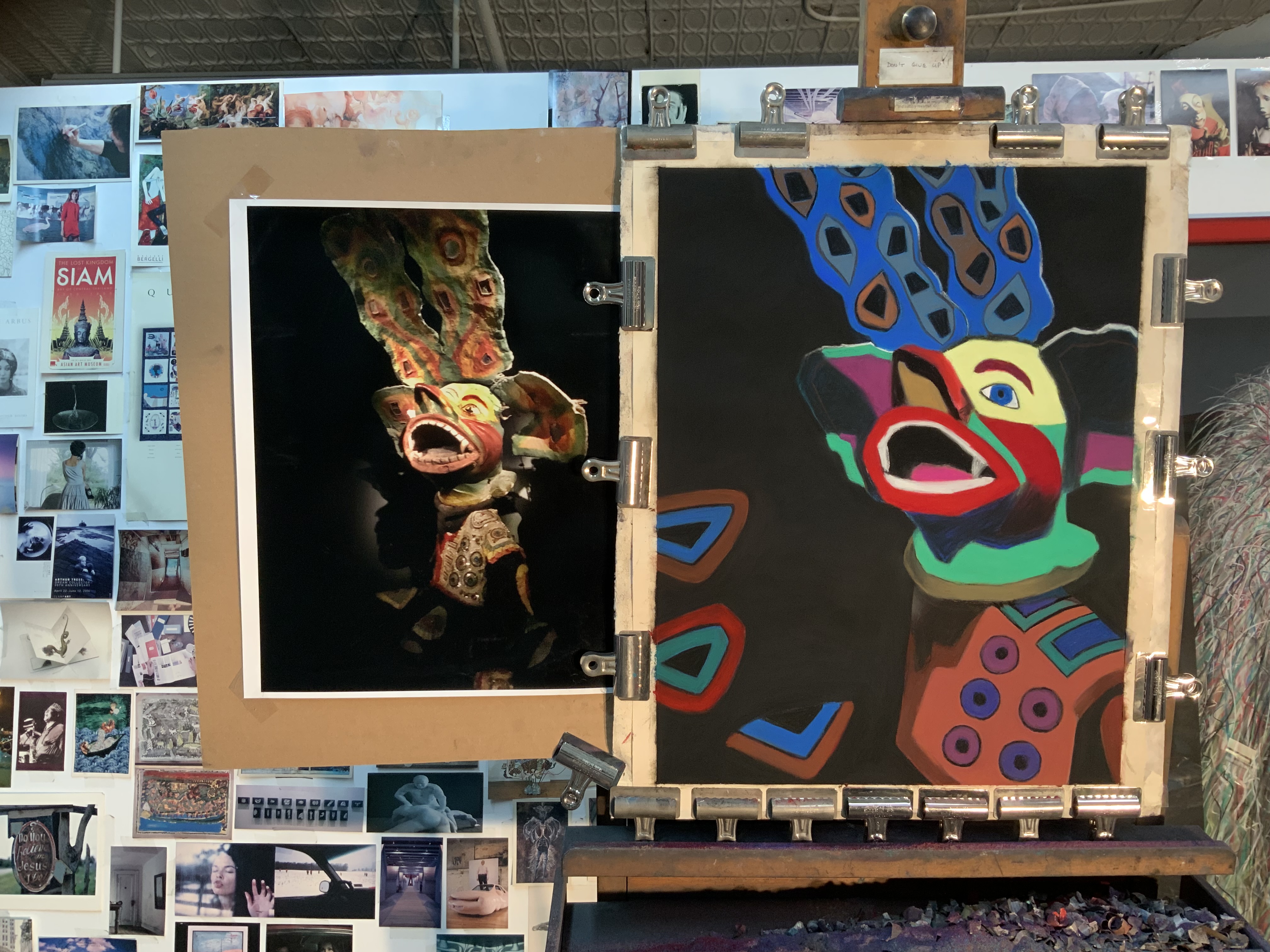
Work in progress
A: I continue working on “Maestro,” soft pastel on sandpaper, 26” x 20.”
Comments are welcome!
Start/Finish of “The Moralist,” soft pastel on sandpaper, 26” x 20”
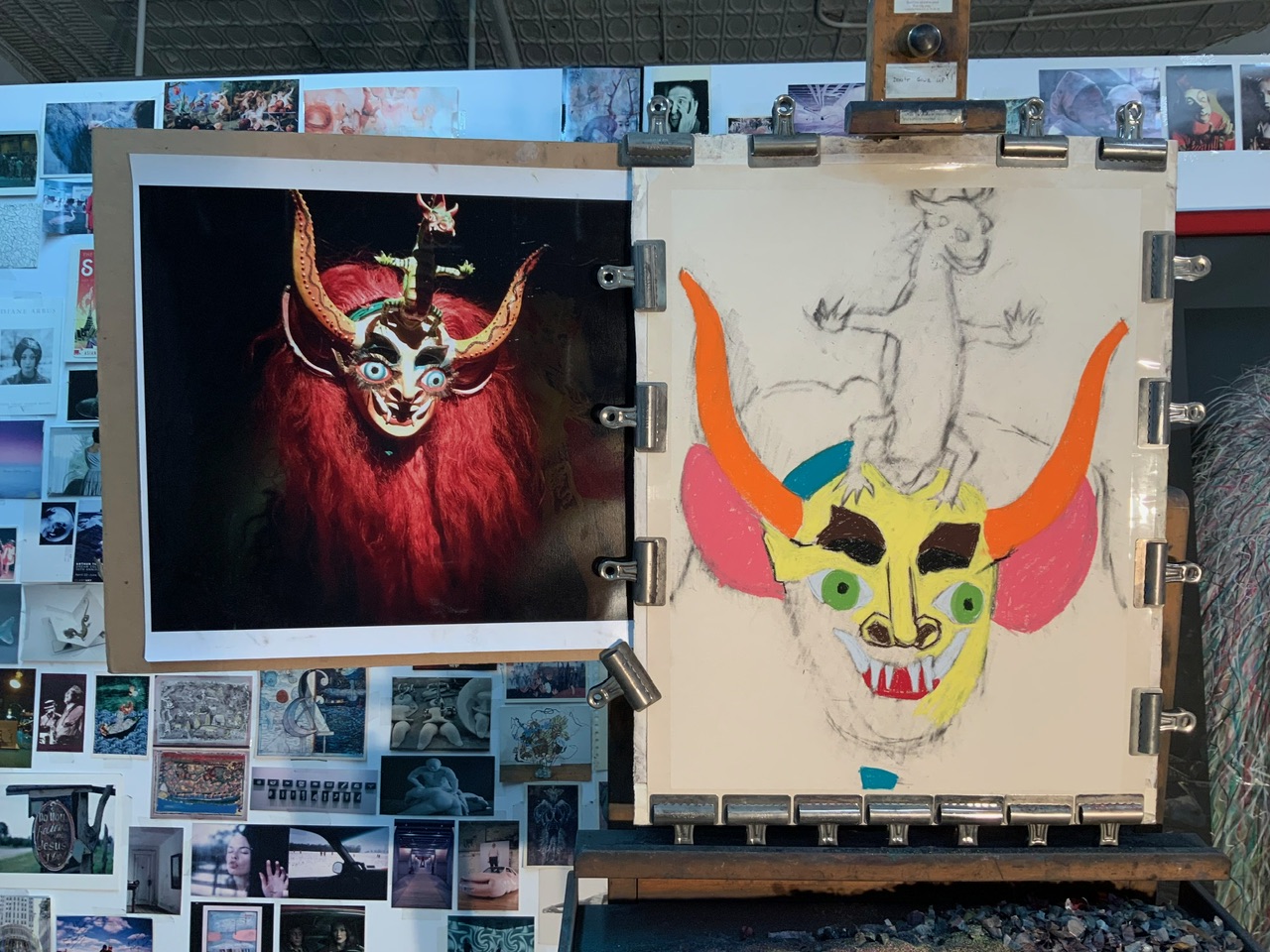
Start
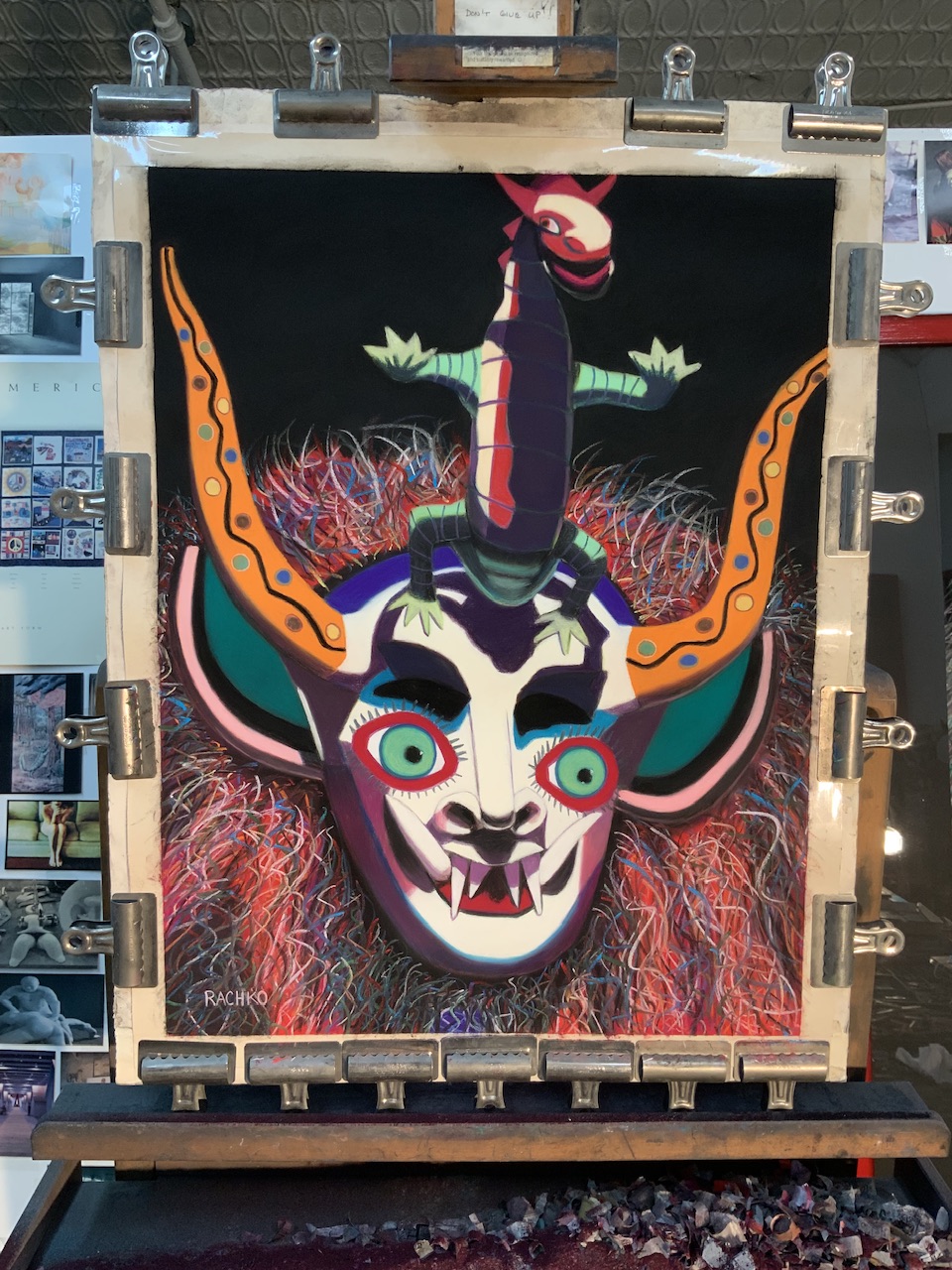
Finish
Comments are welcome!
Q: What’s on the easel today?

Work in progress
A: I continue working on “Narcissist,” soft pastel on sandpaper, 20” x 26”.
Comments are welcome!
Q: This portrait has an interesting story. Can you explain? (Question from Anna Rybat via Facebook)
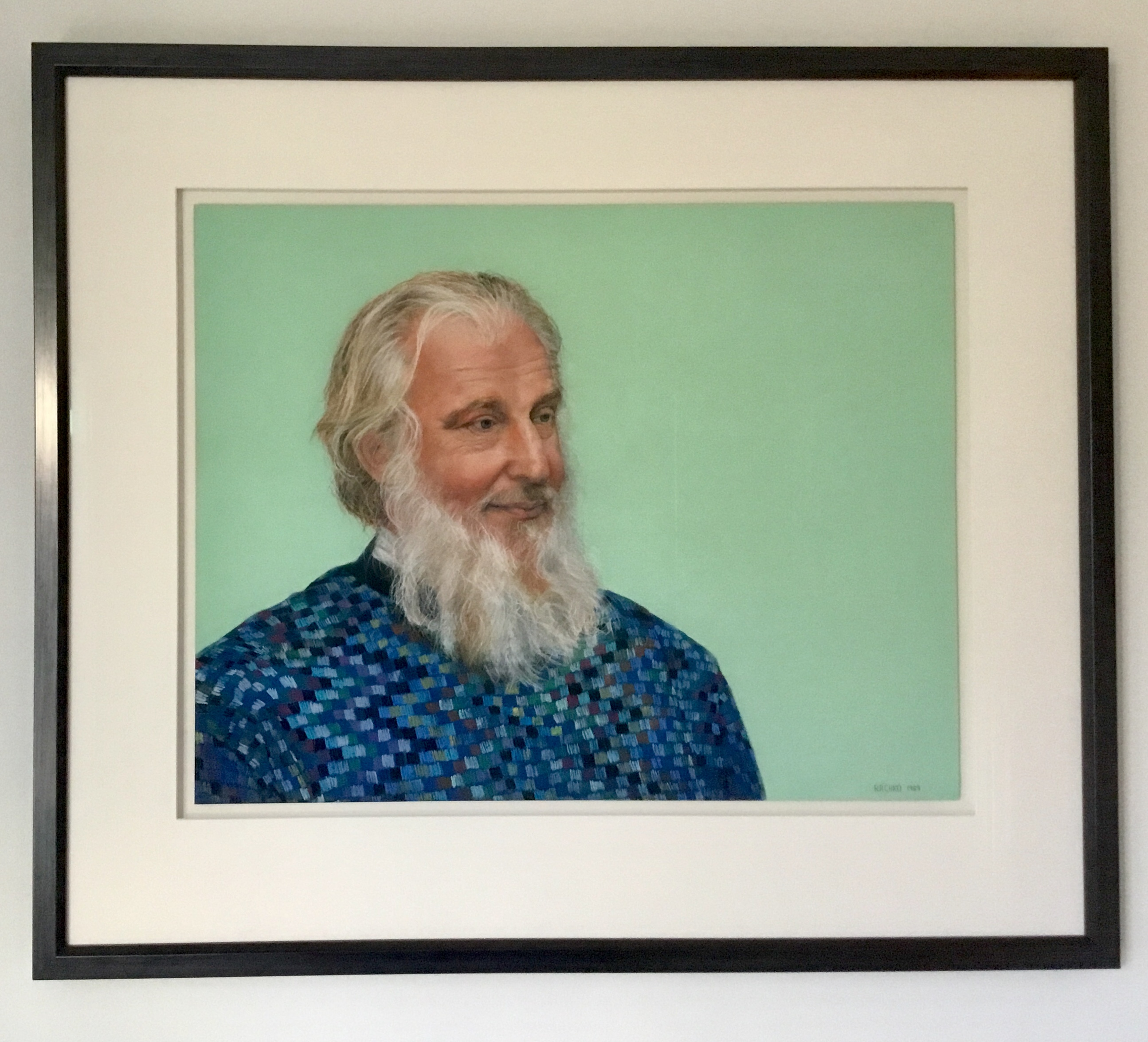
A: “John” was one of several portraits I made of friends in 1988-90 to build up my portfolio for the portrait company I worked for when I left the active duty Navy. I had gifted it to John Breeskin, the psychologist/friend pictured.
When he died, someone sent it back to me. (I hadn’t known he died). I must have not been working that day so for some reason, it was delivered to a print studio on another floor in my building. When the printer moved out, he found it and got in touch with me. By that time he had had “John” for more than a year and never bothered to tell me! The packaging had been removed so I have no idea who sent it or where exactly it came from.
Comments are welcome!
Q: What’s on the easel today?
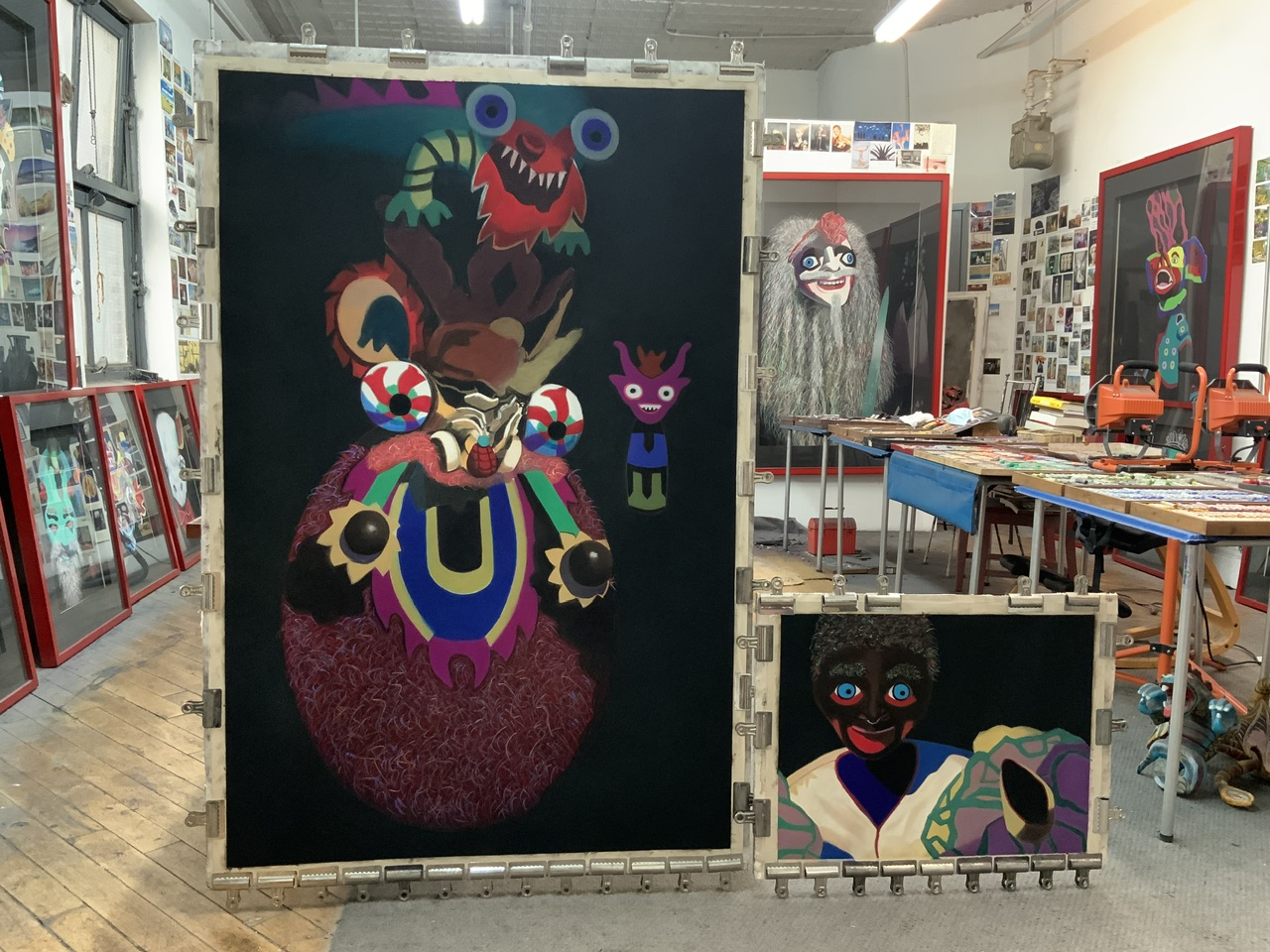
Work in progress
A: I continue working on “Apparition,” soft pastel on sandpaper, 58” x 38” (left) and “Narcissist,” 20” x 26,” soft pastel on sandpaper (right).
Comments are welcome!
Pearls from artists* # 576
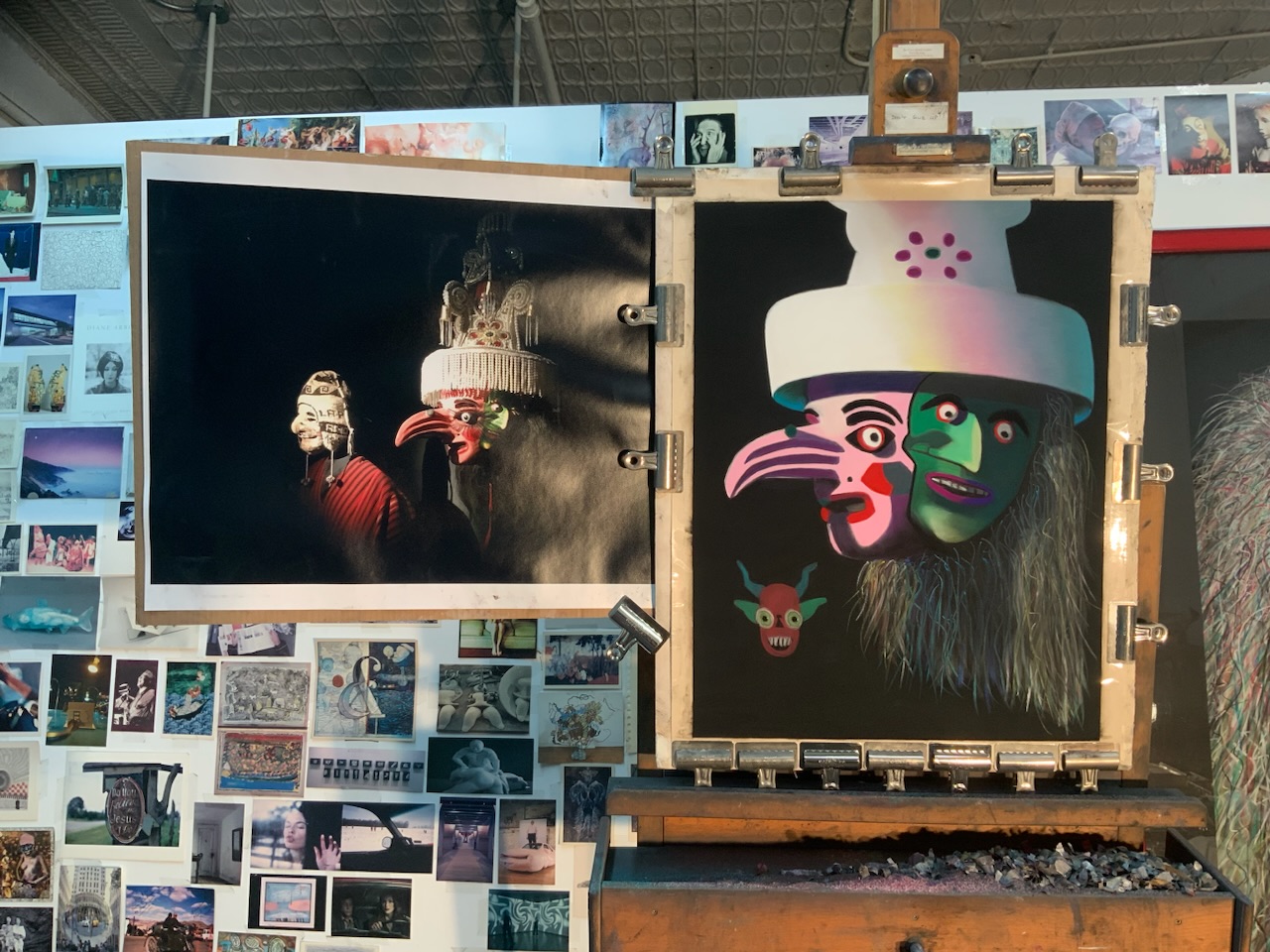
In progress: “Shadow,” soft pastel on sandpaper, 26” x 20”
*an ongoing series of quotations – mostly from artists, to artists – that offers wisdom, inspiration, and advice for the sometimes lonely road we are on.
A word derived from Latin, persona, originally referred to the masks worn by actors in ancient classical theatre. In Jungian psychology, this term refers to the inner character that we use to face the world. Drawn from societal expectations, cultural norms, and natural attributes, it is the person we want others to think we really are. Our persona is our brave face, our false front. It is the ongoing project of building our ideal self.
… the persona is our somewhat embellished view of ourselves, the shiny face that we want the world to see. It’s opposite, everything we reject about ourselves, is called the shadow.
… our shadow is the pain we’ve forgotten about. It is a complex within us, a split-off part our consciousness loaded with emotional weight. Our persona is what we want to be seen to be; shadow is what we least want to be.
Gary Bobroff in Carl Jung: Knowledge in a Nutshell
Comments are welcome!
Q: How do you get such fine detail with soft pastel? Do they make pencil-size pastels? (Question from Lucia Sommer via Facebook)

A: After 37 years as a pastel artist, I have learned all sorts of techniques and can do whatever I want with it. I used regular Rembrandt white pastels for the sweater in “Sam and Bobo,” above.
There are several brands of pastel pencils that are made especially for drawing fine details. Sam’s face, hair, and hands are mostly pastel pencil. (Now I probably would not use pastel pencils as much. These days I only use them to draw lines and sign my name).
Another technique for making fine lines is to break a pastel stick and work with an edge.
Years ago I used to sharpen my pastels into a point with a small handheld sharpener (I still have one that allows me to change the blades). Sometimes I rub a pastel stick against a sandpaper pad until I get a somewhat sharp point. The problem with both of these methods is they waste so much pastel and pastels are not cheap! For example, my favorite French brand is nearly $20 per stick. I would never think of sharpening those!
Comments are welcome!
Q: What’s on the easel today?
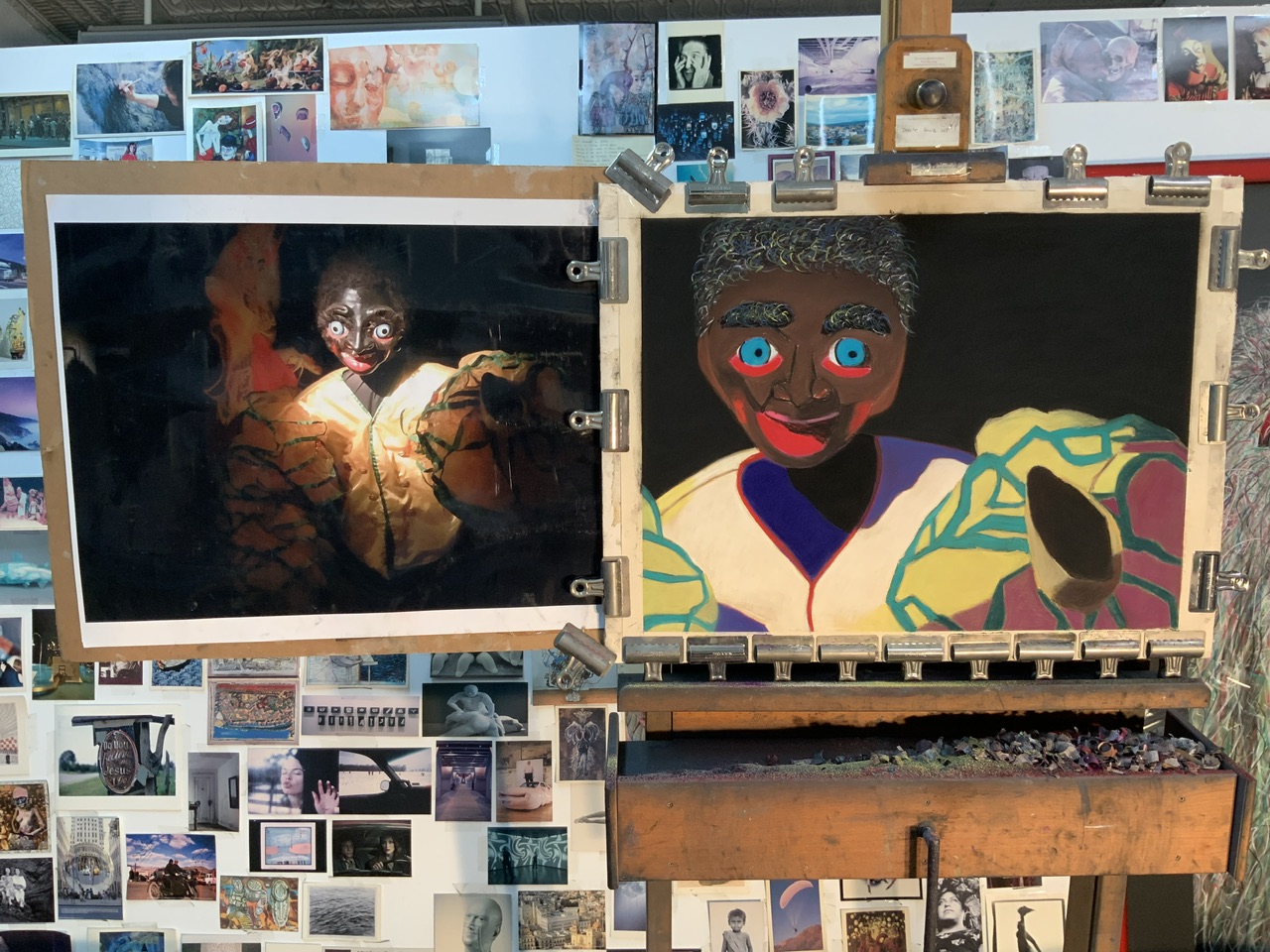
Work in progress
A: I started working on “Narcissist,” 20”x 26”, a few days ago.
Comments are welcome!


 barbararachkoscoloreddust.com