Blog Archives
Q: What’s on the easel today?
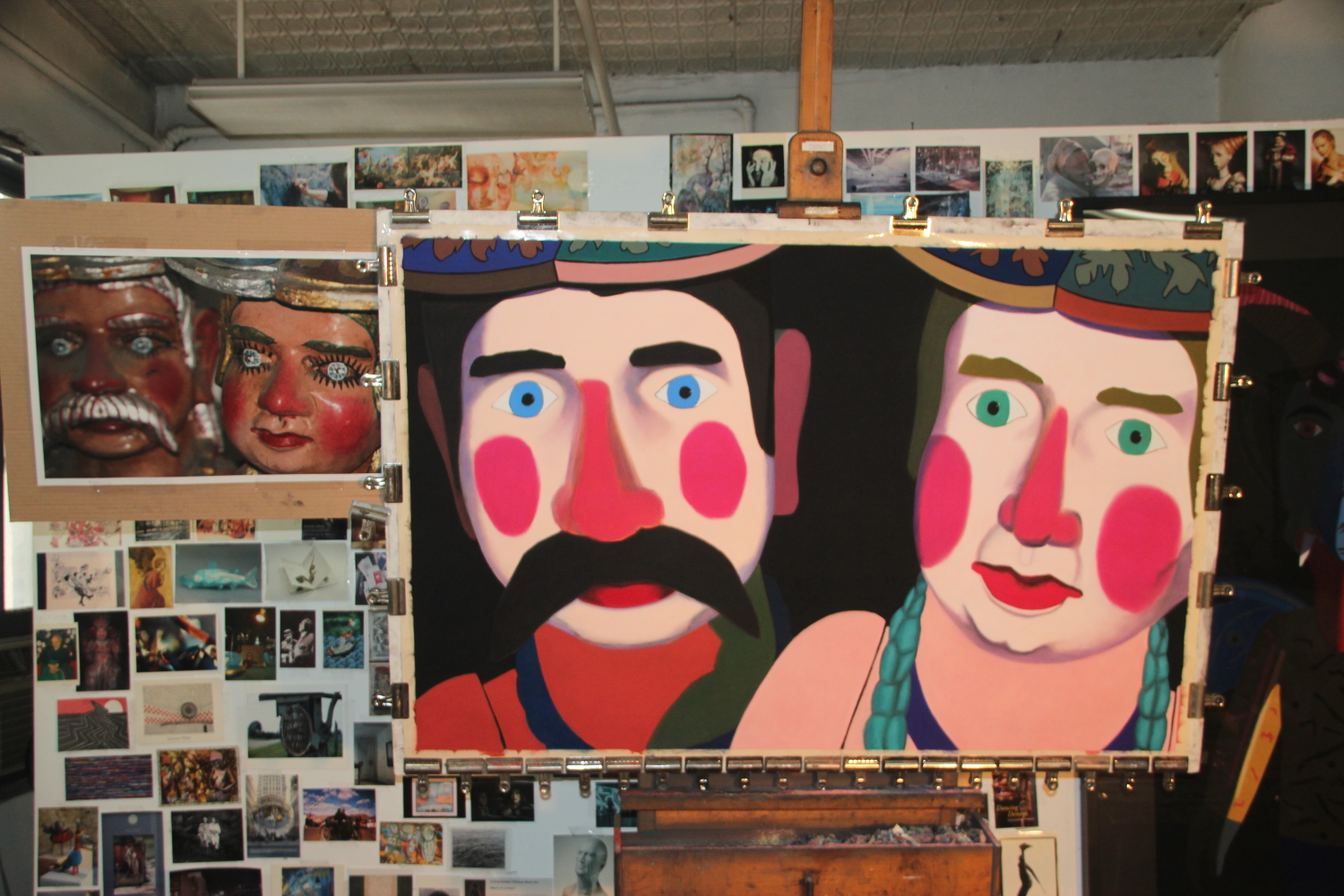
“Duality,” soft pastel on sandpaper, 38″ x 58″
A: I continue working on a large pastel painting called, “Duality.” This one is taking longer than usual, perhaps because the large heads are a departure from anything I’ve made before. I am having to find my way more slowly.
Comments are welcome!
Pearls from artists* # 64

High Line, New York, NY
* an ongoing series of quotations – mostly from artists, to artists – that offers wisdom, inspiration, and advice for the sometimes lonely road we are on.
As soon as an artist has located the vital center of his activities, nothing will be more important than for him to remain within this center and never move further away from it (which is, of course, also the center of his nature, of his world) than the interior walls of his quietly and steadily expanding achievement. His place is not, never, not even for a moment, next to the beholder and critic (at least no longer in an environment where all that is visible becomes ambiguous and preliminary, an auxiliary construction and temporary scaffolding for something else). And one basically needs to be an acrobat to leap back safely and unharmed from this point of view into one’s inner center (the distances are too great and all the spots too destabilized to risk such an entirely inquisitive feat). Most artists today use up their strength in this back-and-forth, and in addition to wasting their energy they get terribly confused and lose a part of their essential innocence to the sin of having taken their work from the outside by surprise, to have tasted it, to have joined others in enjoying it!
Ulrich Baer, editor, The Wisdom of Rilke
Comments are welcome!
Q: At the end of last Saturday’s (September 28th) post you mentioned something called, “Esala Perahera.” What is that?
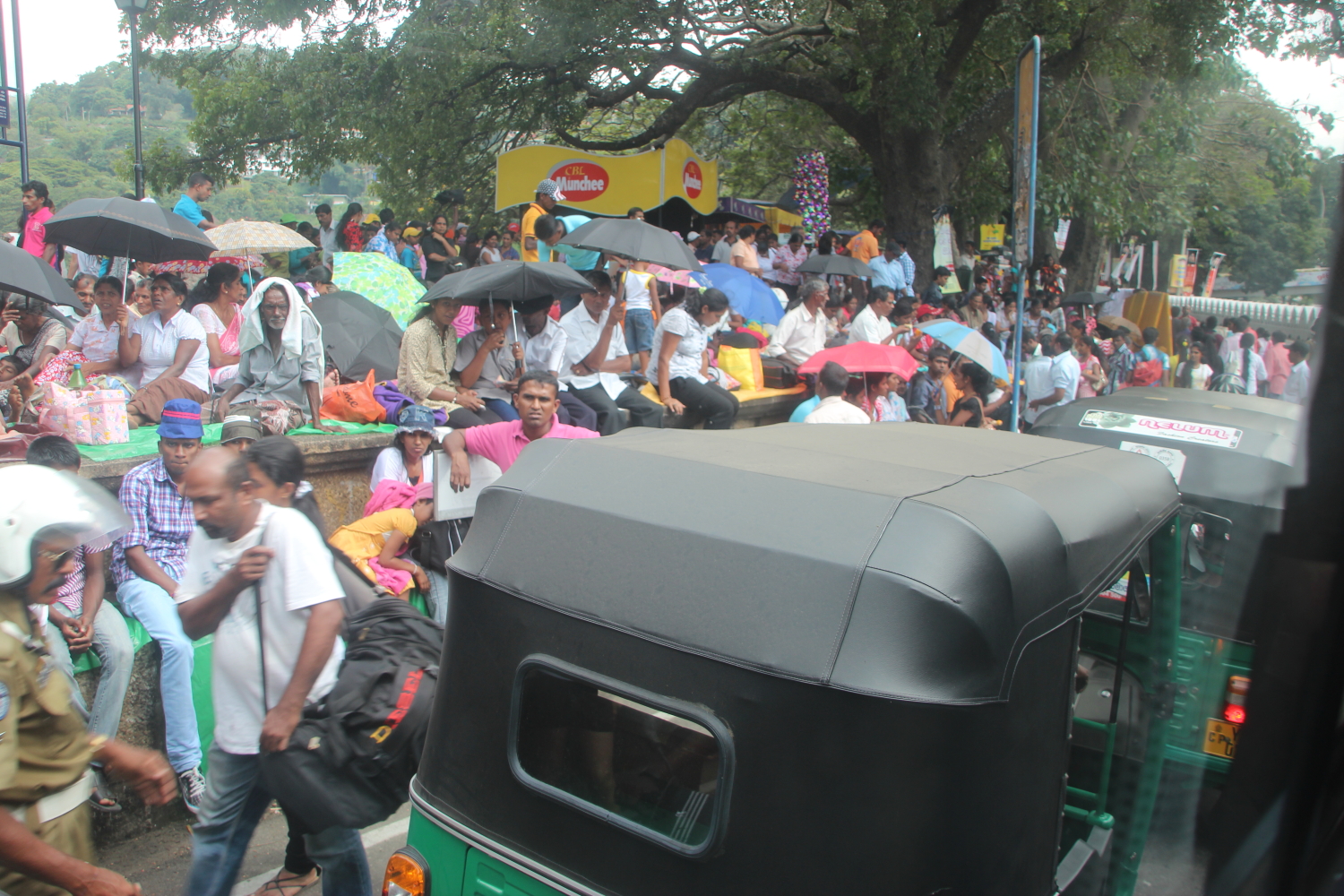
Waiting for the Perahera to start, Kandy, Sri Lanka
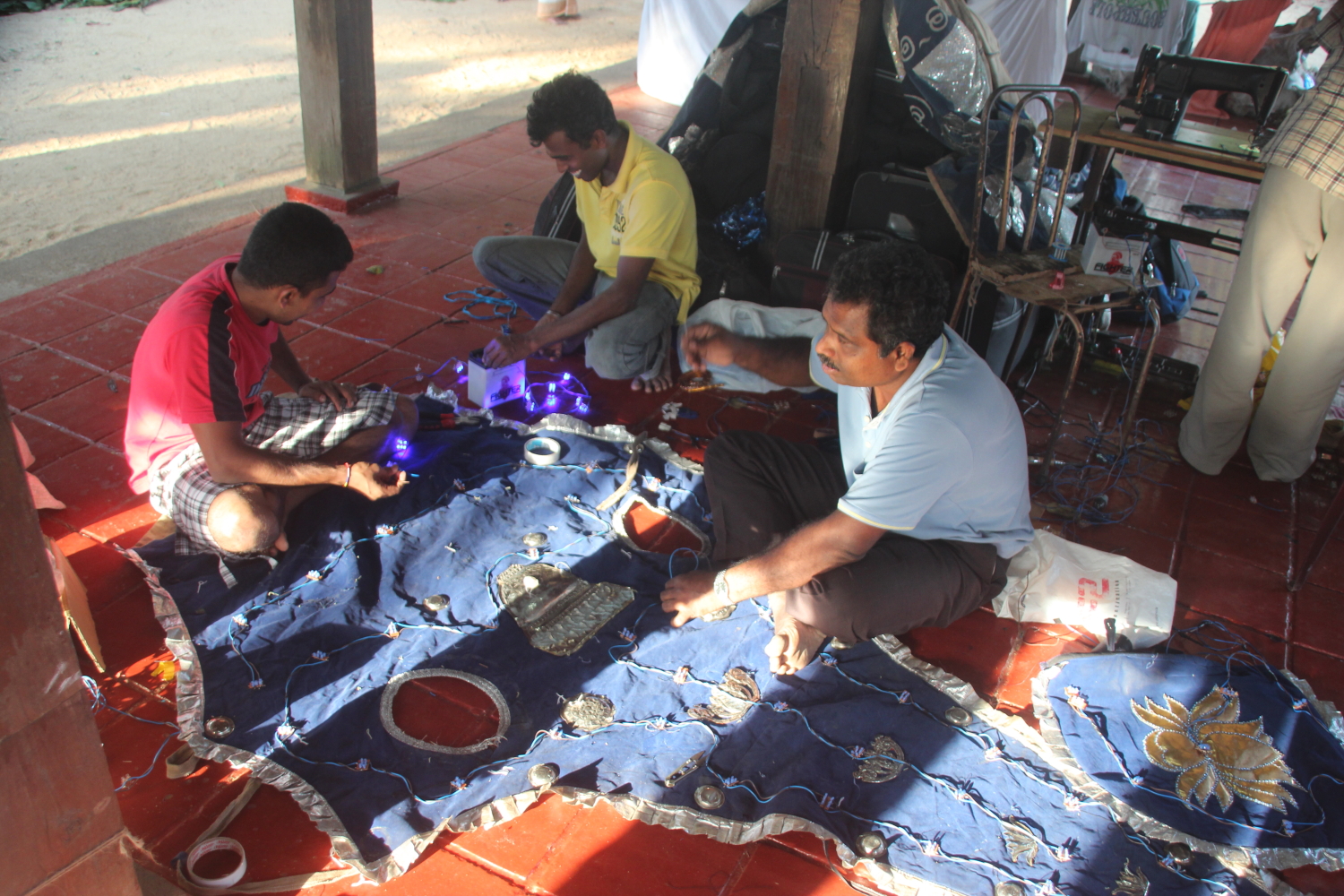
Mending an elephant’s headdress, Kandy, Sri Lanka
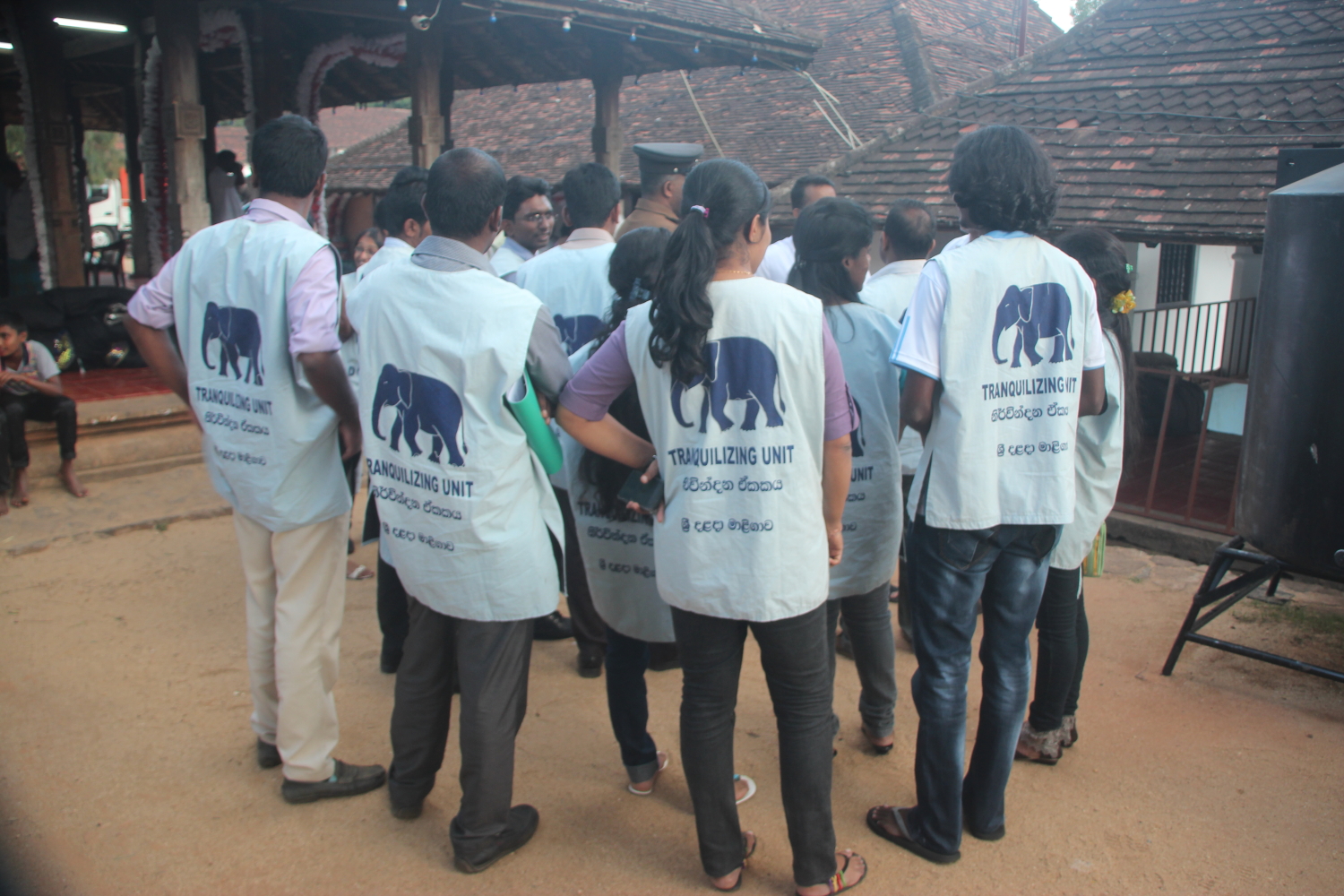
Preparations – planning what to do in case an elephant charges
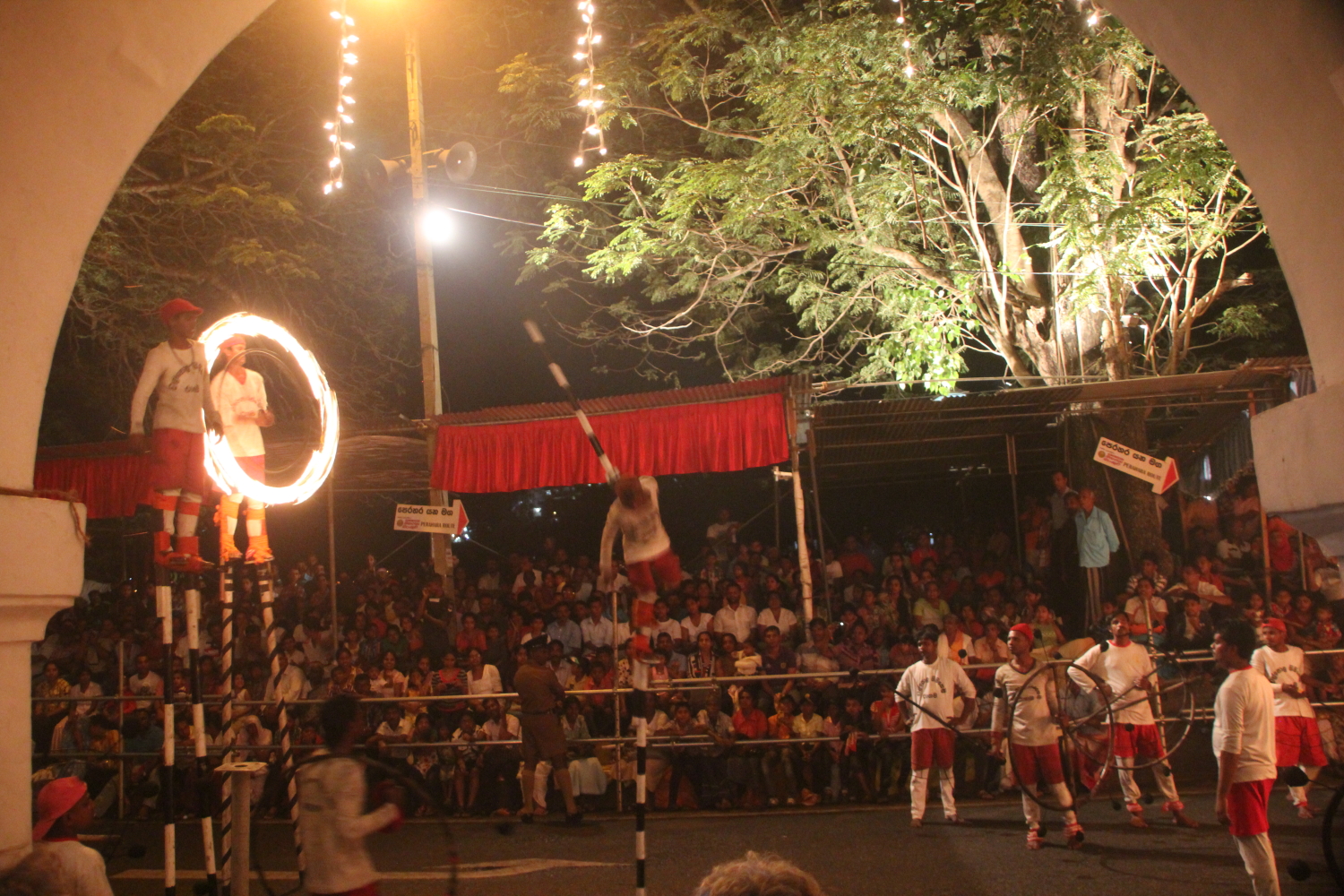
Flame throwers watching a man balancing on one stilt
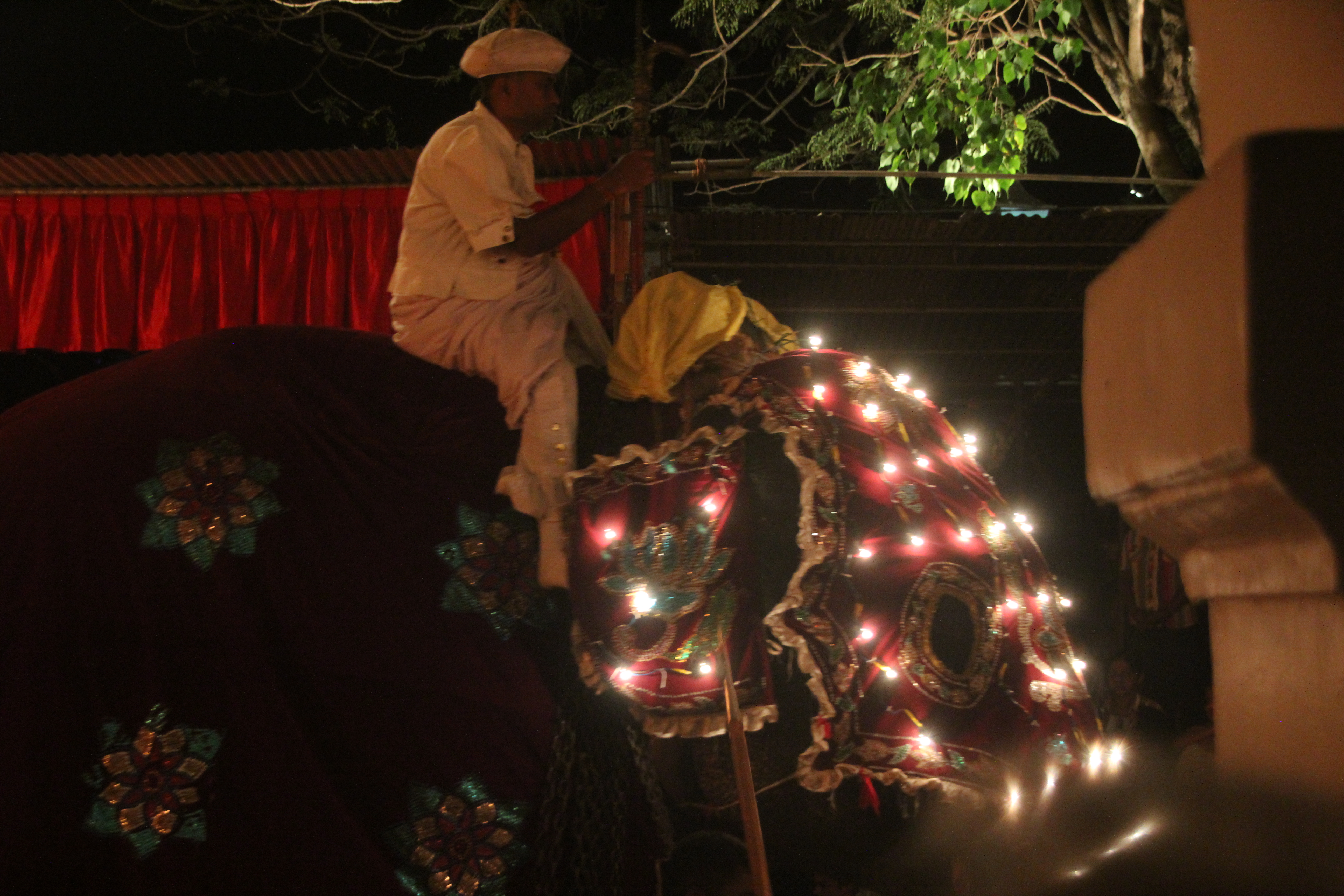
First elephant in the procession
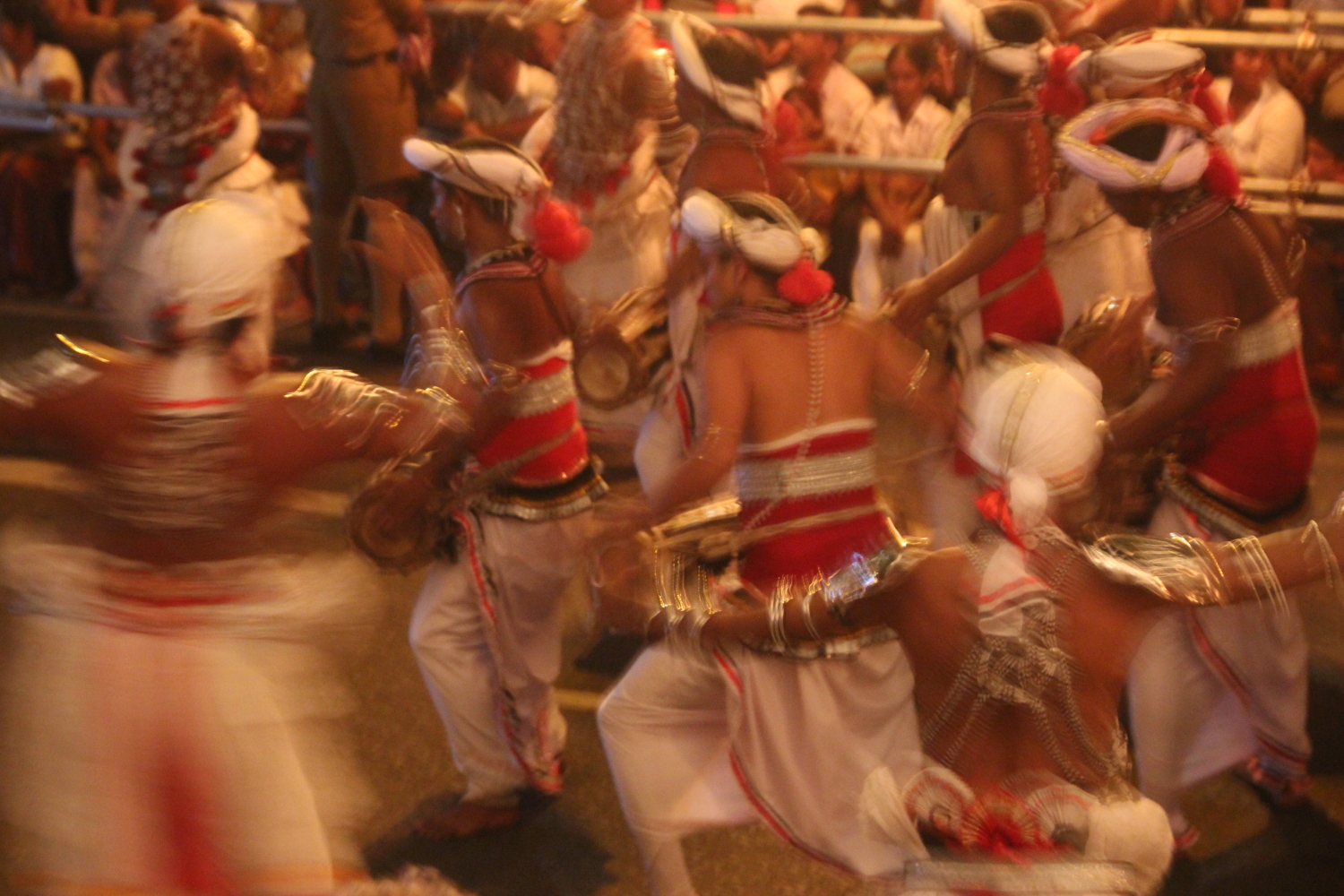
Drummers, Kandy, Sri Lanka
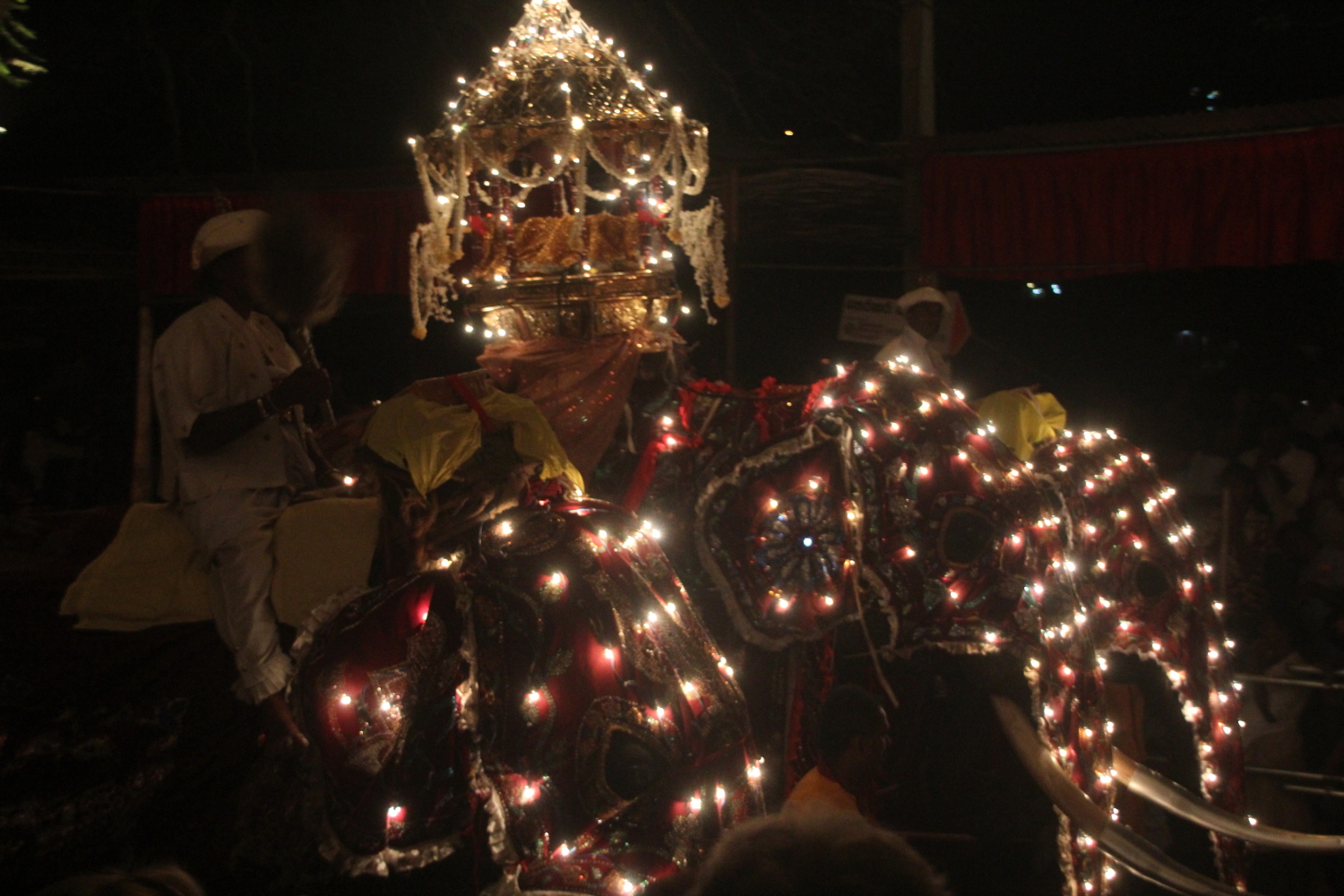
Three elephants, Kandy, Sri Lanka
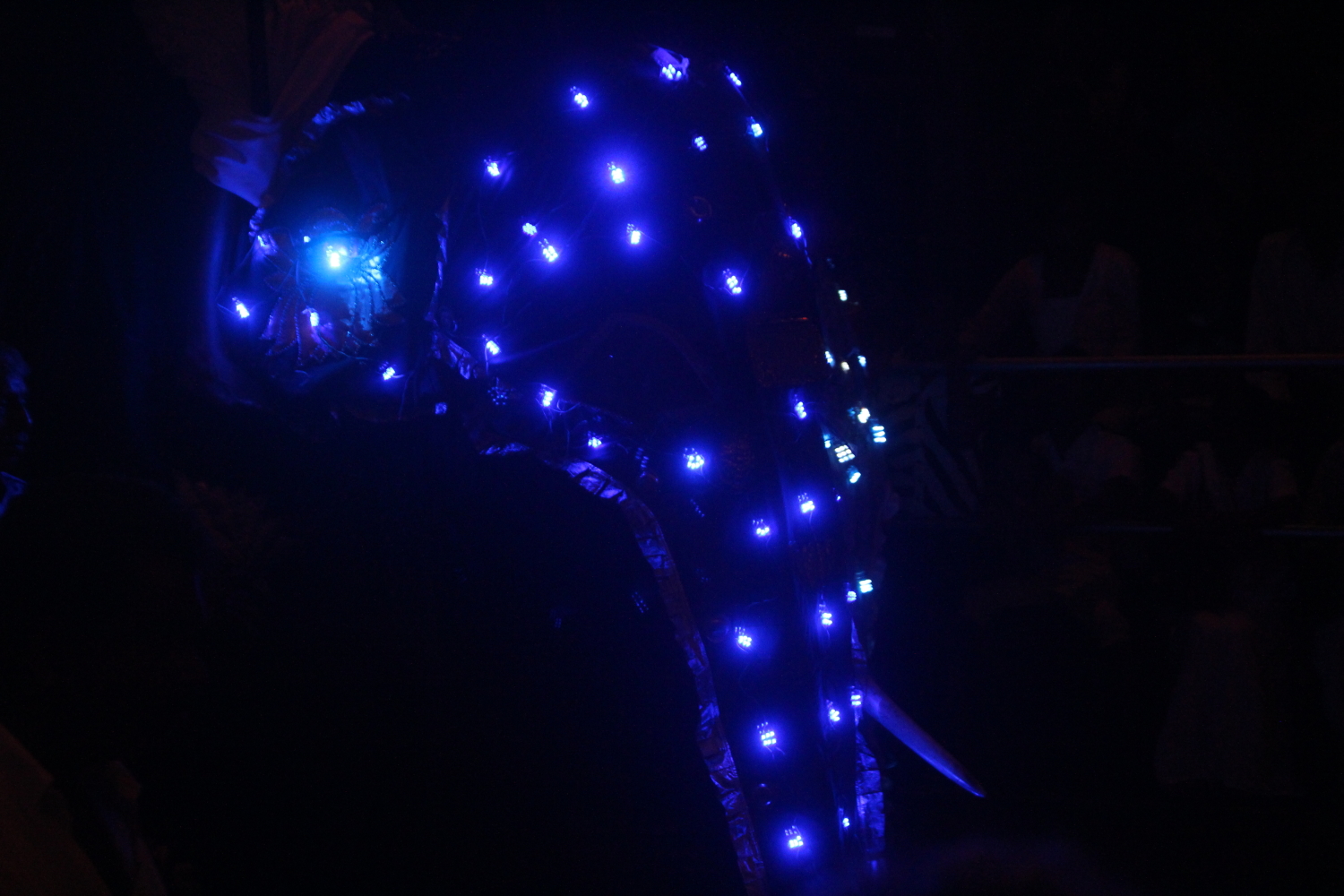
A single “tusker,” Kandy, Sri Lanka
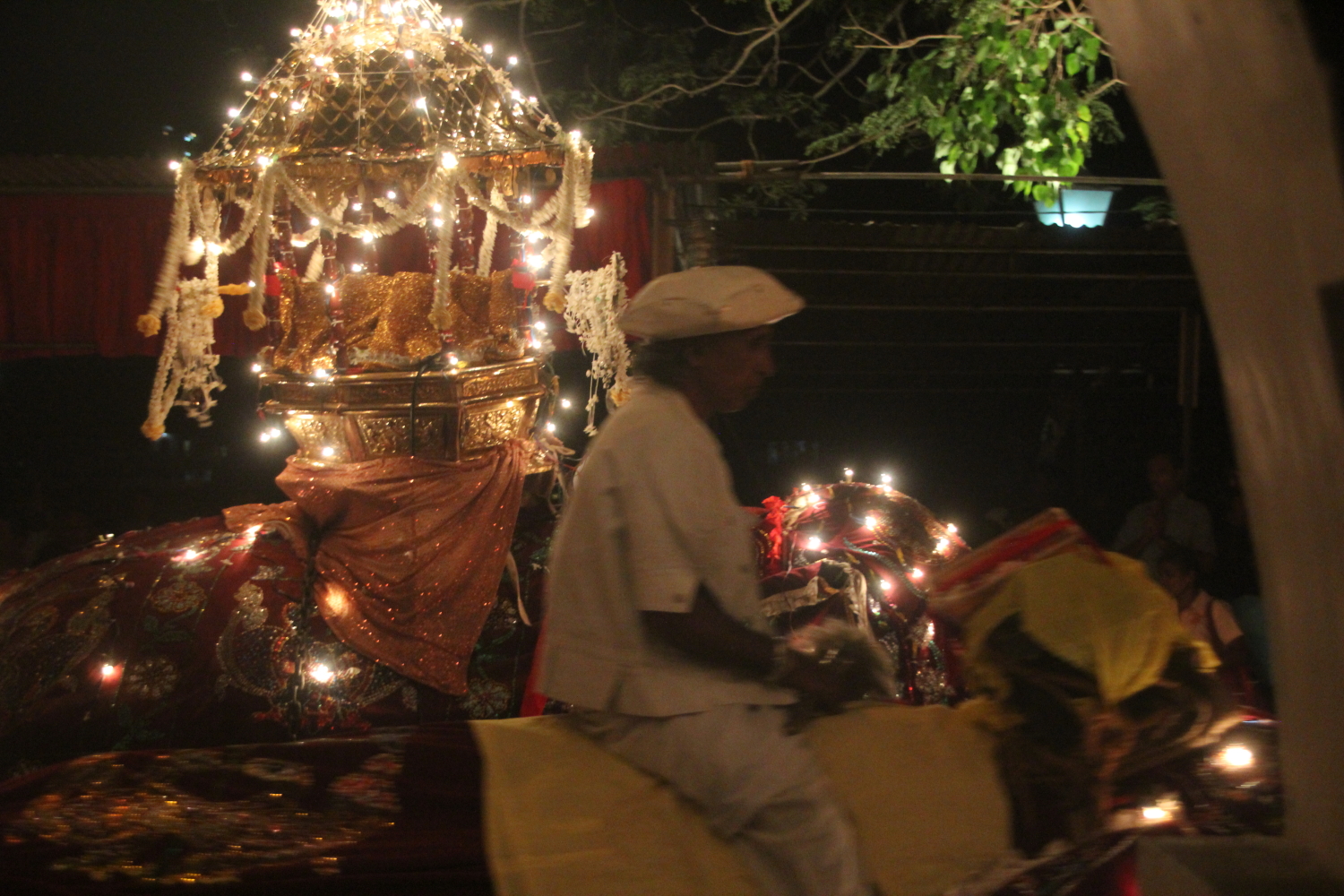
Esala Perahera, Kandy, Sri Lanka
After the festival
A: My trip to Sri Lanka was timed so that I could observe it first hand. Here is a description from the “Insight Guide to Sri Lanka:”
The lunar month of Esala is a month for festivals and peraheras all around the island. Easily the finest and the most famous is the Esala Perahera held at Kandy over the ten days leading up to the Esala Poya (full moon) day (late July or early August). The festival dates back to ancient Anuradhapura, when the Tooth Relic (of the Buddha) was taken through the city in procession, and the pattern continues to this day, with the relic carried at the head of an enormous procession which winds its way round and round the city by night. The perahera becomes gradually longer and more lavish over the 10 days of the festival, until by the final night it has swollen to include a cast of hundreds of elephants and thousands of dancers, drummers, fire-eaters, acrobats, and many others – an extraordinary sight without parallel anywhere else in Sri Lanka, if not the whole of Asia.
I would go further and add that the Esala Perahera is one of the world’s great festivals. Who could ever imagine such a spectacle? It may be a cliché to say it, but travel is ultimately the best education.
Comments are welcome!
Pearls from artists* # 33

Botanical, Bali
* an ongoing series of quotations – mostly from artists, to artists – that offers wisdom, inspiration, and advice for the sometimes lonely road we are on.
I am vitally interested in the man who today has the misfortune of being an artist and a human being. By the same token I am as much interested in the maneuvers of the gangster as I am in those of the financier or the military man. They are all part and parcel of society; some are lauded for their efforts, some reviled, some persecuted and hunted like beasts. In our society the artist is not encouraged, not lauded, not rewarded, unless he makes use of a weapon more powerful than those employed by his adversaries. Such a weapon is not to be found in shops or arsenals: it has to be forged by the artist himself out of his own tissue. When he releases it he also destroys himself. It is the only method he has found to preserve his own kind. From the outset his life is mortgaged. He is a martyr whether he chooses to be or not. He no longer seeks to generate warmth, he seeks for a virus with which society must allow itself to be injected or perish. It does not matter whether he preaches love or hate, freedom or slavery; he must create room to be heard, ears that will hear. He must create, by the sacrifice of his own being, the awareness of a value and a dignity which the word human once connoted. This is not the time to analyze and criticize works of art. This is not the time to see the flowers of genius, differentiate between them, label and categorize. This is the time to accept what is offered and be thankful that something other than mass intolerance, mass suicide, can preoccupy the human intellect.
Henry Miller in Stand Still Like the Hummingbird
Comments are welcome!


 barbararachkoscoloreddust.com