Blog Archives
Pearls from artists* # 626

With “Narcissist,” soft pastel on sandpaper, 28.5” x 35” framed
*an ongoing series of quotations – mostly from artists, to artists – that offers wisdom, inspiration, and advice for the sometimes lonely road we are on.
Being an artist and a woman has never been easy. In the sixteenth and seventeenth centuries, leading male artists – tackling five-meter-high marble sculptures and covering entire chapels with frescoes – were often termed ‘virtuosi,’ while women, simply by virtue of their gender, received neither the acclaim nor the opportunities. As time progressed, attitudes did not: it took until the end of the nineteenth century for women to be allowed to study the nude from life. Linda Nochlin has described this deprivation as though a medical student was denied the opportunity to dissect or even examine the naked human body.’ Even today, the contribution of women artists tends to be missing from history books and museum collections. It wasn’t until 1976, when feminist art historian Nochlin and Ann Sutherland Harris’s touring exhibition, Women Artists 1550 – 1950, opened at the Los Angeles County Museum of Art, that women were even acknowledged as having contributed to 400 years of art. This show kick-started the scholarship, still scant, that we have on these twentieth-century artists.
Katy Hessel in The Story of Art Without Men
Comments are welcome!
Pearls from artists* # 515

*an ongoing series of quotations – mostly from artists, to artists – that offers wisdom, inspiration, and advice for the sometimes lonely road we are on.
“Under [General Francisco] Franco,” he said, “attendance at Catholic holidays was obligatory and much Catalan folklore was banned. People avoided the religious processions and, once they were no longer mandatory, ignored them… Marvesa’s [Spain] festive license of demons and dragons is no longer of darkness. If Franco claimed the mantle of Catholic light, then to party as Catalan devils is a happy celebration of freedom.
Demons and dragons are a customary feature of saints’ days and Corpus-Christi festivals throughout Spain and its former empire. They are also common in Carnivals. Indeed, it is partly because of the presence of demons, dragons, and other masked transgressive figures that Carnival has been so often designated – by defenders and detractors alike – as a pagan or devilish season, a time of unrestrained indulgence before the ascetic penances of Lent.
Julio Caro Baroja, the father of Spanish Carnival studies, scorned the antiquarian notion that the masked figures and seasonal inversions of Carnival were “a mere survival” of ancient pagan rituals. Carnival, he argued, was first nurtured by the dualistic oppositions of Christianity. Where it survives – for when he wrote it had been banned by Franco – it still enacts these old antagonisms. “Carnival,” he concluded, “is the representation of paganism itself face-to-face with Christianity.”
... Peter Burke, one of the more lucid historians of popular culture, has proposed that “there is a sense in which every festival [in early modern Europe] was a miniature Carnival because it was an excuse for disorder and because it drew from the same repertoire of traditional forms.
Max Harris in Carnival and Other Christian Festivals: Folk Theology and Folk Performance
Comments are welcome!
Pearls from artists* # 74
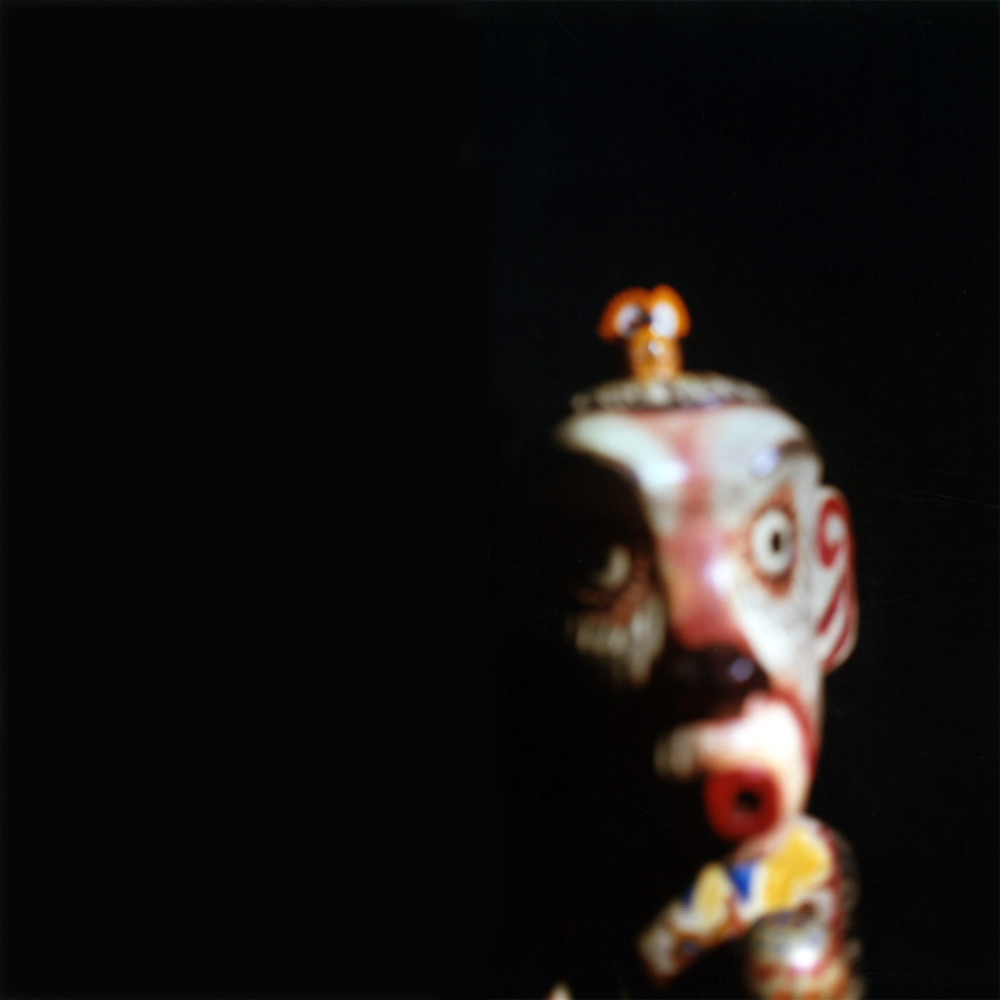
Untitled, chromogenic print, 24″ x 24,” edition of 5
* an ongoing series of quotations – mostly from artists, to artists – that offers wisdom, inspiration, and advice for the sometimes lonely road we are on.
An artist is known by his or her works. But how often do we consider that much of what we know depends on factors that were beyond the artist’s control? A few that come to mind are value on the art market, the knowledge and forethought of the artist’s survivors as they decide to keep or discard works, research interests of art and photo historians and the ways in which these change over time, willingness of dealers, collectors, and museum curators to provide information about the existence of works, the state of printing technology, and the availability of financing for exhibitions and publications.
Laszlo Moholy-Nagy: Color in Transparency, edited by Jeannine Fiedler and Hattula Maholy-Nagy for the Bauhaus-Archive Berlin
Comments are welcome!


 barbararachkoscoloreddust.com