Category Archives: Studio

Q: How do you start your day?

Working

Working

A:  (Note: this is my pre-pandemic answer).

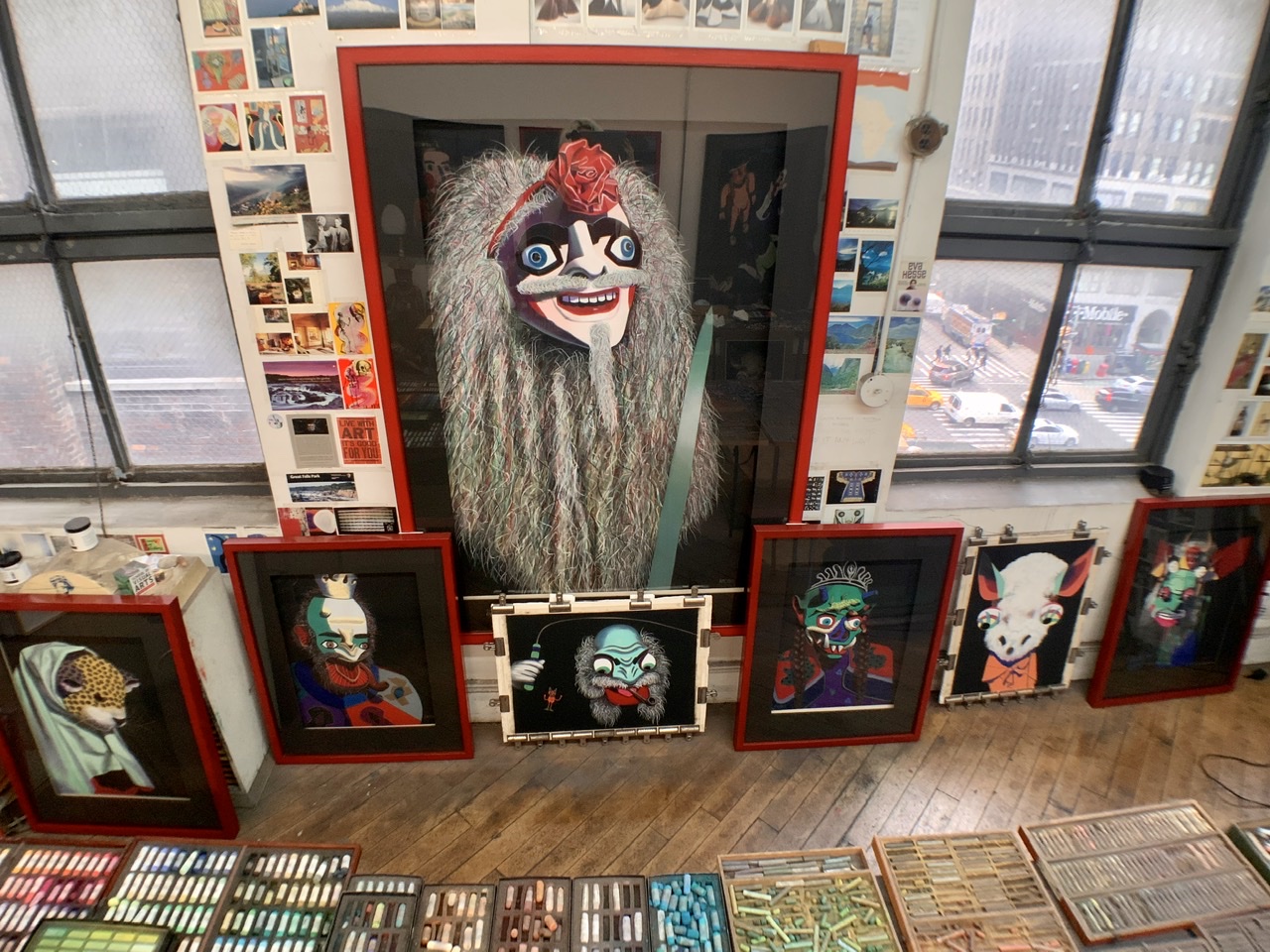
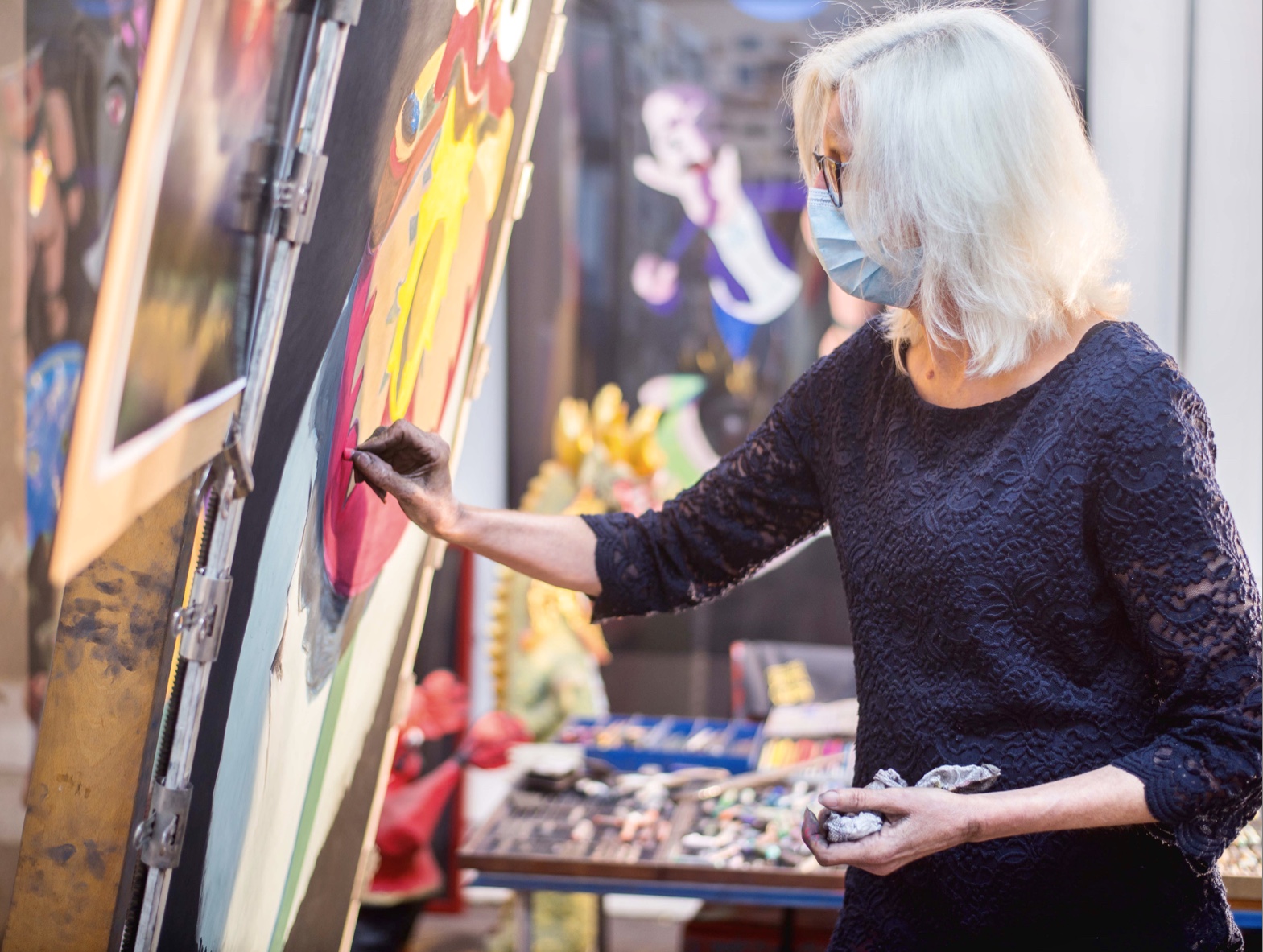
I have always been a morning person. I wake up about 6:00, make breakfast, and spend about an hour online checking email, monitoring and responding to social media (my two assistants devote their efforts to social media marketing of my work), catching up on news (art sites like Hyperallergic, The New York Times, the BBC, etc.). I swim three or four times a week. On those days I leave my apartment by 7:30, walk to the pool, swim for an hour, and arrive at the studio about 11. On days when I don’t swim, I generally arrive at the studio between 9:30 and 10.

Comments are welcome!


Pearls from artists* # 418

A Remedios Varo Plate from “Science and Surrealism”

A Remedios Varo Plate from “Science and Surrealism”

*an ongoing series of quotations – mostly from artists, to artists – that offers wisdom, inspiration, and advice for the sometimes lonely road we are on.

… both Surrealism’s birth and infancy coincided with probably the most momentous period in the history of physics.  The first Surrealist text, written by Andre Breton and Philippe Soupault and titled Magnetic Fields, deployed the spontaneous technique of ‘automatic writing,’ which supposedly allowed direct access to unconscious material.  It appeared in 1920 but was written in the previous year, coinciding with the expedition led by the English astrophysicist, Arthur Eddington, to observe the solar eclipse from the island of Principe off the west coast of Africa.  It was this journey that proved predictions set out in Einstein’s General Theory of Relativity (1916) about the gravitational deflection of light by the sun.  Eddington’s experiment led not only to Einstein’s instant, mythic status as the ‘new Copernicus’ and the swift popularization of Relativity, but more specifically its appearance in the early theoretical writings of Surrealism’s principle spokesman, Breton, which helped lay the foundations of the movement.  Breton’s subsequent manifesto texts of 1924 and 1929, extending his discussion of what he deemed the narrow, restrictive logic of Western though, can be situated within the same historical context that bore the revolutionary discoveries of quantum mechanics, culminating in 1927.       

Sibylline Strangeness:  Surrealism and Modern Physics,” by Gavin Parkinson in Science in Surrealism, published by Gallery Wendy Norris

Comments are welcome!

Pearls from artsts* # 417

With “Sentinels,” soft pastel on sandpaper, 38” x 58” image, 50” x 70” framed

With “Sentinels,” soft pastel on sandpaper, 38” x 58” image, 50” x 70” framed

*an ongoing series of quotations – mostly from artists, to artists – that offers wisdom, inspiration, and advice for the sometimes lonely road we are on.

As we all know deep down, it is not by submission, coolness, remoteness, apathy, and boredom that great art is created, no matter what the cynics might tell us, the secret ingredient of great art is what is most difficult to learn:  it is courage.    

Boris Lurie quoted in Ninth Street Women by Mary Gabriel

Comments are welcome!

Q: What’s on the easel today?

Work in progress

Work in progress

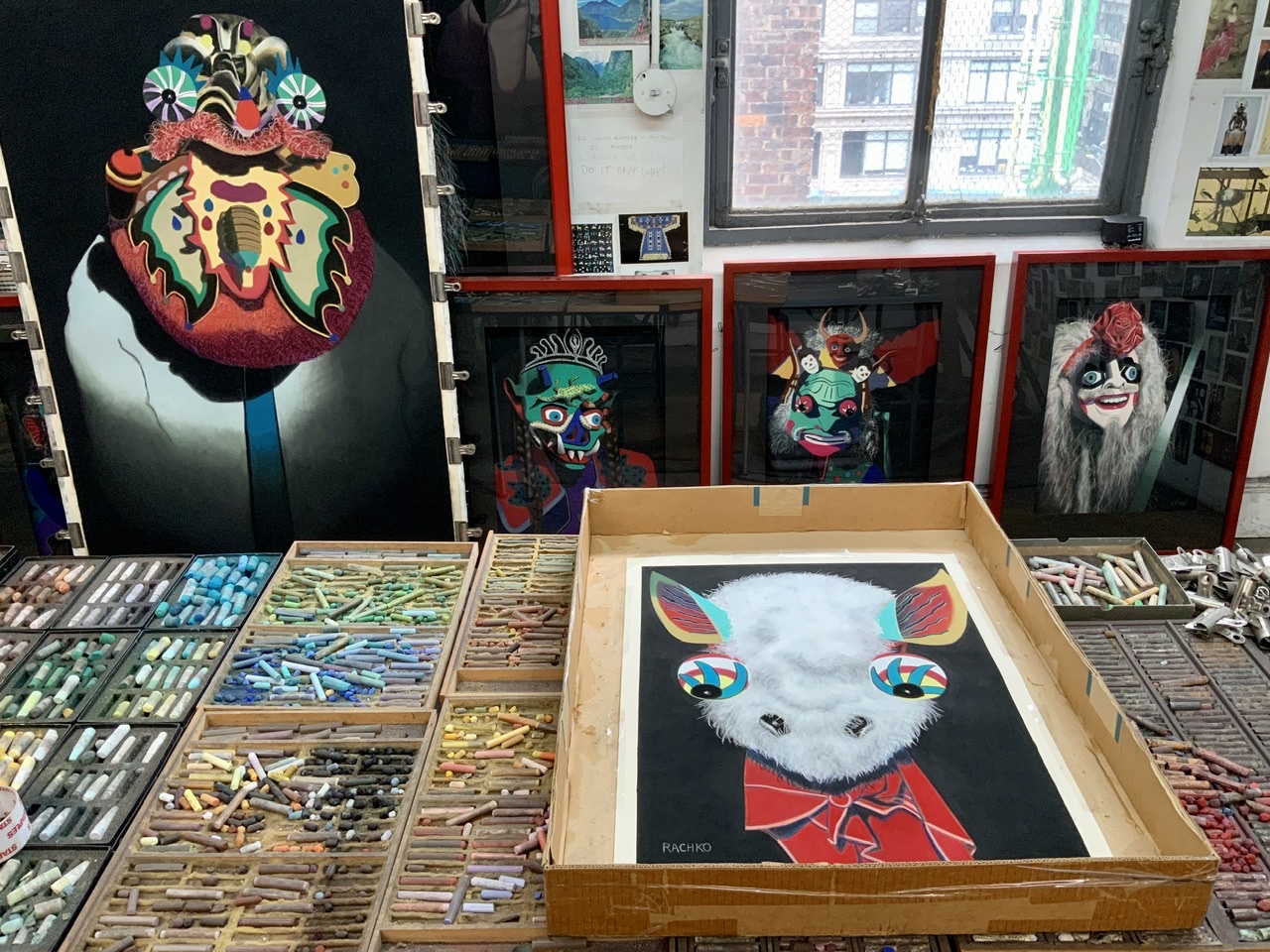
A:  I recently started a new 26” x 20” pastel painting that is number 16 in the “Bolivianos” series.  More about this work at

https://barbararachko.art/en/paintings/bolivianos

Comments are welcome!

Q: Is the relationship to your studio about a HABIT you created for working – the sequence of reading, looking, then working? (Question from Nancy Nikkal)

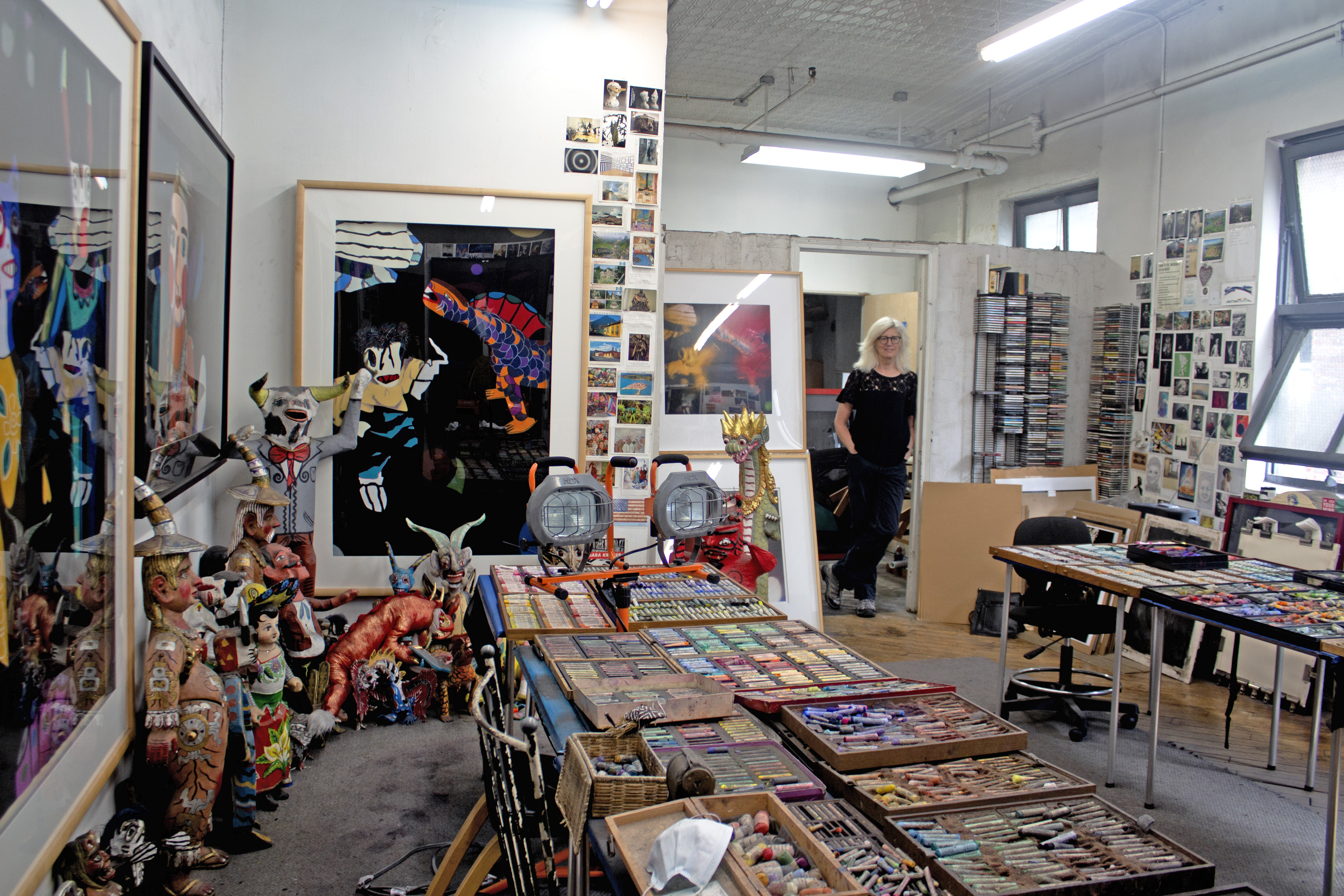
Barbara’s studio

Barbara’s studio

A:  Yes, I suppose you could say that reading, looking, and then working are habits that get me started on what I will be doing for the day.  If I may quote from my blog:  

https://barbararachkoscoloreddust.com/2012/09/15/q-you-seem-very-disciplined-do-you-ever-have-a-day-when-you-just-cant-get-excited-about-working/

Comments are welcome!

Q: What’s on the easel today?

Work in progress

Work in progress

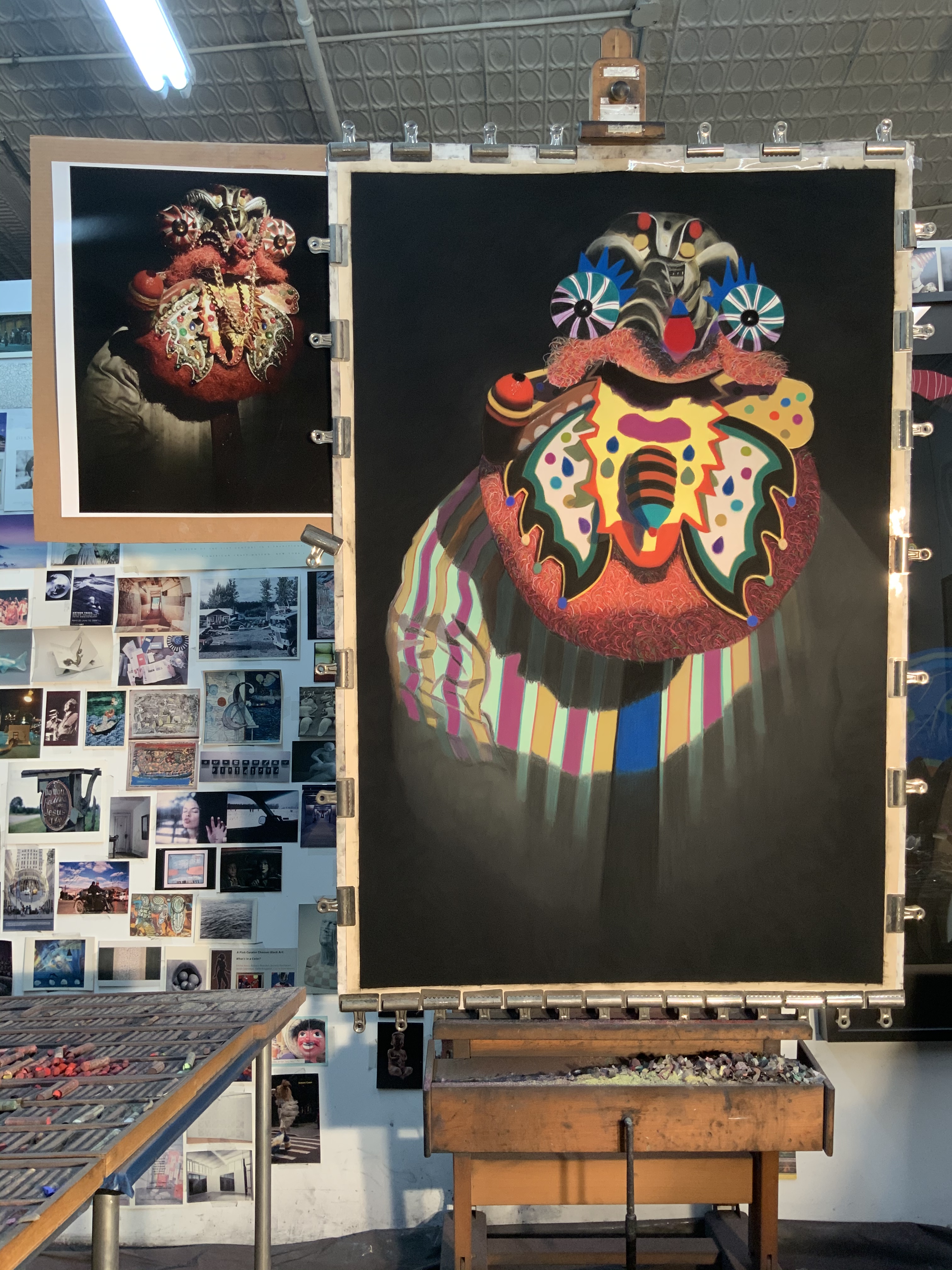
A:  Amidst the noisy construction happening next door,  I continue slowly working on “Jokester” (tentative title), soft pastel on sandpaper, 58” x 38.”  I’ve just begun to add stripes into the shirt.

It is the fifteenth piece in the “Bolivianos” series.  Read more about this work at https://barbararachko.art/en/paintings/bolivianos

Comments are welcome!

Pearls from artists* # 412

Barbara’s studio

Barbara’s studio

*an ongoing series of quotations – mostly from artists, to artists – that offers wisdom, inspiration, and advice for the sometimes lonely road we are on.

The obstacles faced by women who hoped to leave a mark on humankind have, through the millennium, varied in height but not in stubborn persistence.  And yet, a great many women have stubbornly ignored them. The desire to put words on a page or marks on a canvas was greater than the accrued social forces that told them they had no right to do so, that they were excluded by their gender from that priestly class called artist.  The reason, according to Western tradition, was as old as creation itself:  For many, God was the original artist and society had assigned its creator a gender – He.  The woman who dared to declare herself an artist in defiance of centuries of such unwavering belief required monstrous strength, to fight not for equal recognition and reward but for something at once more basic and vital:  her very life.  Her art was her life.  Without it, she was nothing.  Having no faith that society would broaden its views on artists by dethroning men and accommodating women, in 1928 [Virginia] Woolf offered her fellow writers and painters a formula for survival that allowed them to create, if not with acceptance, then at least unimpeded.  A woman artist, she said, needed but two possessions:  “money and a room of her own.”          

Mary Gabriel in Ninth Street Women

Comments are welcome!

Pearls from artists* # 409

Recent works in progress

Recent works in progress

*an ongoing series of quotations – mostly from artists, to artists – that offers wisdom, inspiration, and advice for the sometimes lonely road we are on.

Poets can look at a painting and understand it without having it spelled out [and] painters can read poetry… People say, I don’t understand what it means, about John Ashbery’s poetry.  Painters would never say that… The idea of “I don’t understand what it means,” looking at abstract painting and saying, “Explain it to me, what does it mean?”  You don’t say that, and you don’t ask people to explain music.  And so, poets, painters, composers don’t need explanations.  Explanations are for other people… burdened by logic.

Elaine de Kooning quoted in Mary Gabriel in Ninth Street Women

Comments are welcome!

Q: What’s on the easel today?

Finished and signed lower left

Finished and signed lower left

A:  At last!  I’ve finished and signed “Trickster,” soft pastel on sandpaper, 26” x 20.” 

Comments are welcome!

Start/Finish of “Majordomo,” soft pastel on sandpaper, 20” x 26”

Start

Start

Finish

Finish

Comments are welcome!