Category Archives: Quotes
Pearls from artists* #498

*an ongoing series of quotations – mostly from artists, to artists – that offers wisdom, inspiration, and advice for the sometimes lonely road we are on.
“The first time I ever went to a meeting where they discussed any of my books academically,” she chuckled, “a Canadian Scholar was going to discuss The Left Hand of Darkness. He didn’t know that I was going to be there. When I walked in, he was appalled. He looked at me with a savage look on his face and said, ‘Just don’t tell me you didn’t know what you were doing.’ That’s a basic thing, actually, between scholars and artists. I think, ‘Oh, is that what I was doing? Or Is that why I did that? and it’s very revealing. But the fact is, you cannot know that while you’re doing it. The dancer can’t think, Now I’m going to take a step to the left. That ain’t the way you dance.”
Ursula K. Le Guin: The Last Interview and other Conversations, edited and with an introduction by David Streitfeld
Comments are welcome!
Pearls from artists* # 497
*an ongoing series of quotations – mostly from artists, to artists – that offers wisdom, inspiration, and advice for the sometimes lonely road we are on.
Peter Jensen: Would you say there’s any kind of statement you’re making in the things which you write?
Ursula K. LeGuin: Of course, I suppose in everything I write I am making some sort of statement, but I don’t know just what the statement is. Which I can’t say I feel guilty about. If you can say exactly what you mean by a story, then why not just say it in so many words? Why go to all the fuss and feathers and make up a plot and characters? You say it that way, because it’s the only way you can say it.
Ursula K. LeGuin: The Last Interview and Other Conversations, edited and with an introduction by David Streitfeld
Comments are welcome!
Pearls from artists* # 496

*an ongoing series of quotations – mostly from artists, to artists – that offers wisdom, inspiration, and advice for the sometimes lonely road we are on.
In reading a novel, any novel, we have to know that the whole thing is nonsense, and then, while reading, believe every word of it. Finally, when we’re done with it, we may find – if it’s a good novel – that we’re a bit different from what we were before we read it, that we have been changed a little bit, as if by having met a new face, crossed a street we never crossed before. But it’s very hard to say just what we’ve learned, how we were changed.
The artist deals with what cannot be said in words.
The artist whose medium is fiction does this in words.
Author’s Note, Ursula K. LeGuin in The Left Hand of Darkness
Comments are welcome!
Pearls from artists* # 494
*an ongoing series of quotations – mostly from artists, to artists – that offers wisdom, inspiration, and advice for the sometimes lonely road we are on.
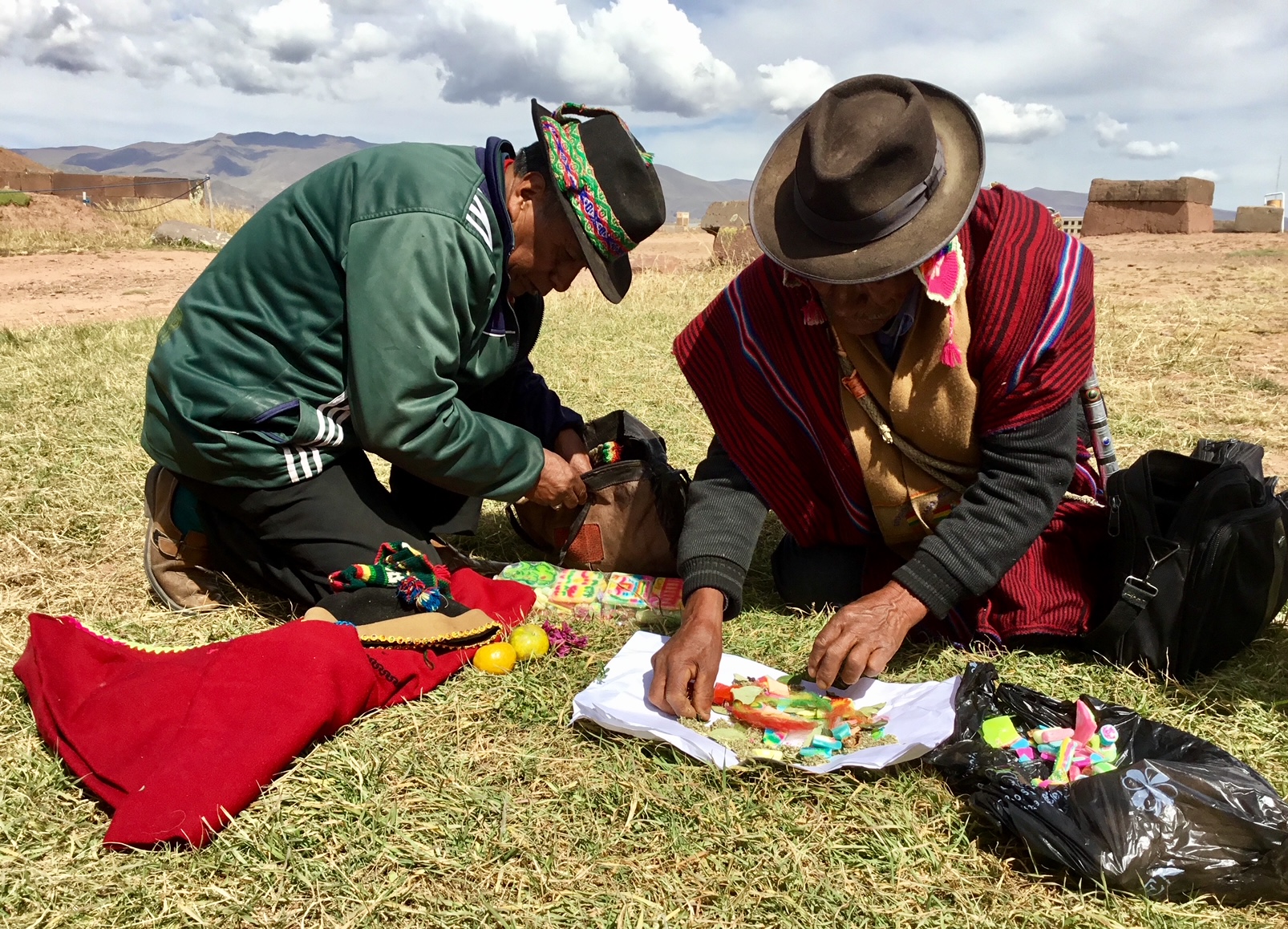
Emile Cartailhac was a man who could admit when he was wrong. This was fortunate, because in 1902 the French prehistorian found himself writing an article for L’Anthropolgie in which he did just that. In “Mea culpa d’un sceptique” he recanted the views he had spent the previous 20 years forcefully and scornfully maintaining: that prehistoric man was incapable of fine artistic expression and that the cave paintings found in Altmira, northern Spain, were forgeries.
The Paleothithic paintings at Altamira, which were produced around 14,000 B.C., were the first examples of prehistoric cave art to be officially discovered. It happened by chance in 1879, when a local landowner and amateur archaeologist was busily brushing away at the floor of the caves, searching for prehistoric tools. His nine-year-old daughter, Maria Sanz de Sautuola – a grave little thing with cropped hair and lace-up booties – was exploring farther on when she suddenly looked up, exclaiming, “Look, Papa, bison!” She was quite right: a veritable herd, subtly colored with black charcoal and ocher, ranged over the ceiling. When her father published the finding in 1880, he was met with ridicule. The experts scoffed at the very idea that prehistoric man – savages really – could have produced sophisticated polychrome paintings. The esteemed Monsieur Cartailhac and the majority of his fellow experts, without troubling to go and see the cave for themselves, dismissed the whole thing as a fraud. Maria’s father died, a broken and dishonored man, in 1888, four years before Cartailhac admitted his error.
After the discovery of many more caves and hundreds of lions, handprints, horses, women, hyenas, and bison, the artistic abilities of prehistoric man are no longer in doubt. It is thought that these caves were painted by shamans trying to charm a steady supply of food for their tribes. Many were painted using the pigment most readily available in the caves at the time: the charred stick remnants of their fires. At its simplest, charcoal is the carbon-rich by-product of organic matter – usually wood – and fire. It is purest and least ashy when oxygen has been restricted during it’s heating.
In The Secret Lives of Color by Kassia St. Clair
Comments are welcome!
Pearls from artists* # 493
*an ongoing series of quotations – mostly from artists, to artists – that offers wisdom, inspiration, and advice for the sometimes lonely road we are on.
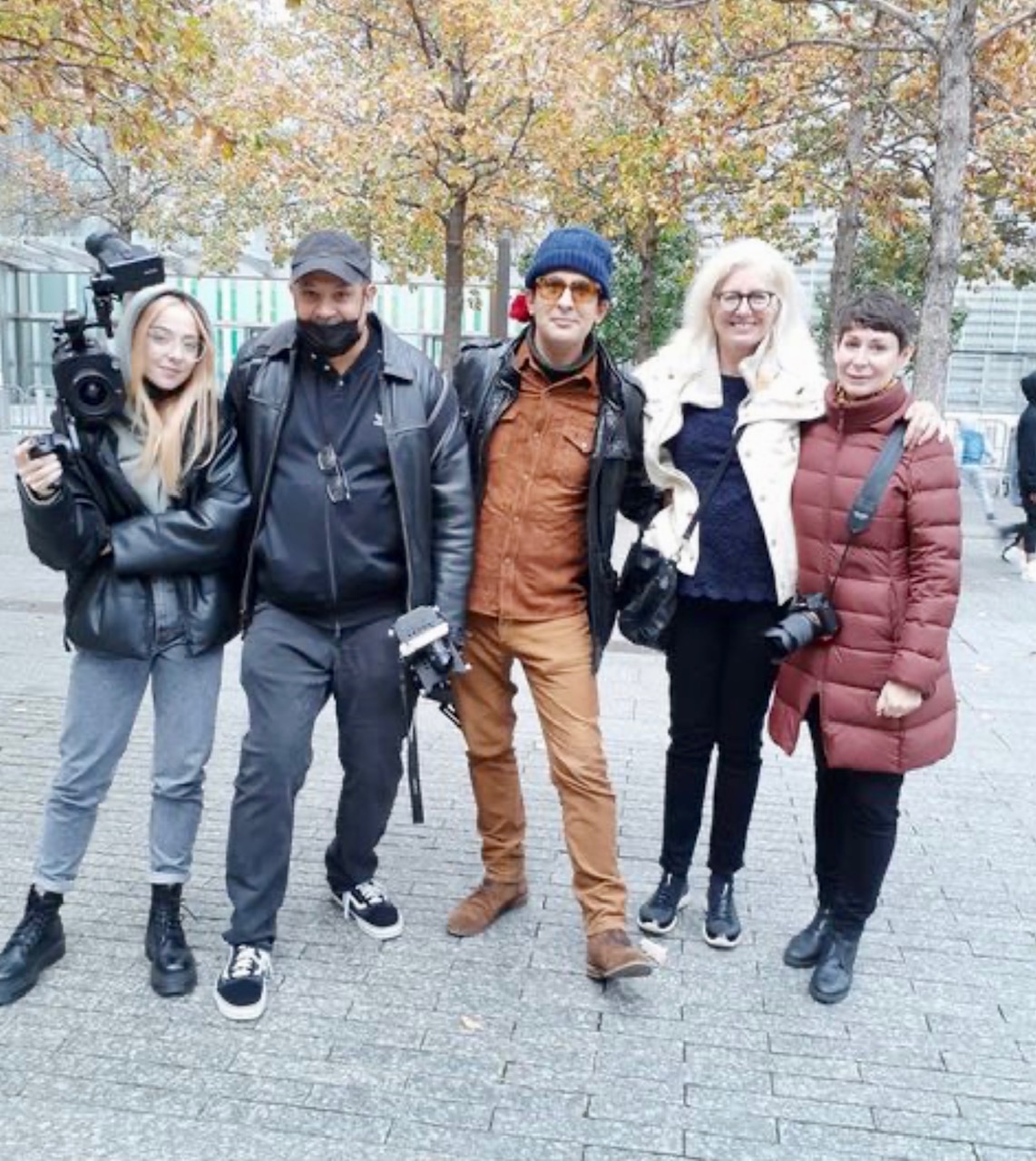
Professional opportunities in the art world almost always come out of personal connections, and community – almost by definition – is the way to make them. That’s not a prescription for superficial networking or obnoxious self-promotion, neither of which will get you anywhere. It means realizing that the chance to get a piece into a group show or meet a gallerist will probably come through someone you know and rspect, who knows and respects you.
Depending on your temperament, building community can feel daunting, artificial, or fun. There’s no need to subject yourself to awkward conversation at stuffy cocktail parties. Just keep in touch with your friends and professors from art school, attend local openings, and be open to meeting new people at events. If you’re shy, bring a friend along. It’s easier to break your way into conversation when you have a sidekick, and then you can talk about each other’s work instead of your own.
In Art/Work: Everything You Need to Know (and Do) As You Pursue Your Art Career by Heather Darcy Bhandari and Jonathan Melber
Comments are welcome!
Pearls from artists* # 492
*an ongoing series of quotations – mostly from artists, to artists – that offers wisdom, inspiration, and advice for the sometimes lonely road we are on.
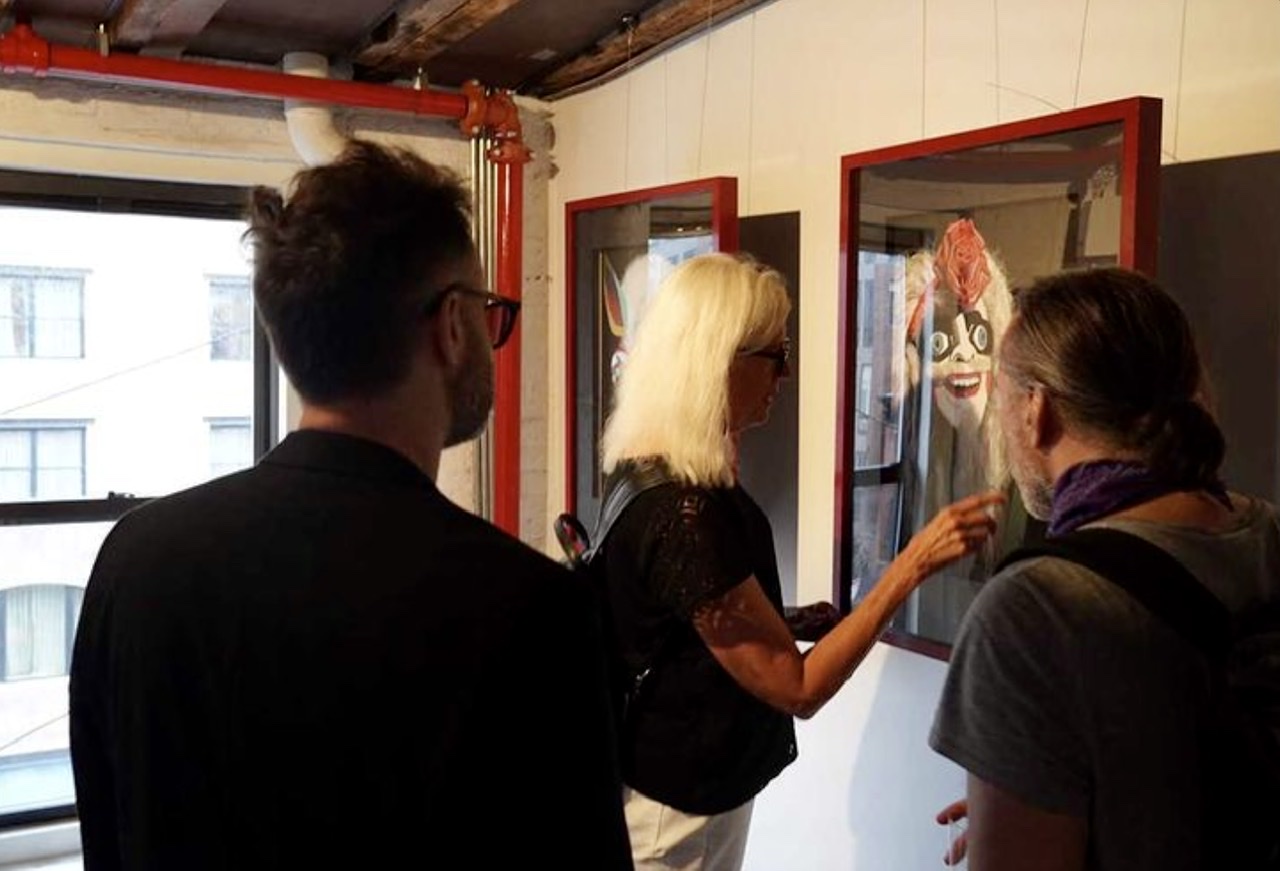
Start with the community you know, who knows you. who’s interested in whatever it is that you’ve put together with your work or your gallery space or your magazine or your brand or your performance series. Start with who you know and build from there.
I think it’s about working in a way that’s true to yourself and that allows things to happen naturally, with bits of prodding to bring new people into contact with what you do.
Peter Eleey, curator, in Art/Work: Everything You Need to Know (and Do) As You Pursue Your Art Career by Heather Darcy Bhandari and Jonathan Melber
Comments are welcome!
Pearls from artists* # 491
*an ongoing series of quotations – mostly from artists, to artists – that offers wisdom, inspiration, and advice for the sometimes lonely road we are on.
We look at ancient Egyptian painting today and may find it slightly comic, but what the Egyptians were trying to do with the figure was reveal the various aspects of the person’s body in the most characteristic aspect. The face is in profile because that reveals the most about the person’s face, but the shoulders are not in profile, they’re facing the viewer, because that’s the most revealing angle for the shoulders. The hips are not in profile, but the feet are. It gives a strange, twisted effect, but it was natural to the Egyptians. They were painting essences, and in order to paint an essence you have to paint it from its most characteristic angle. So they would simply combine the various characteristic essences of the human body. This was a piece of spiritual art. It wasn’t trying to reproduce photographic reality, it was trying to reproduce and combine all the essential features of a person within one figure.
Walter Murch in The Conversations: Walter Murch and the Art of Editing Film by Michael Ondaatje
Comments are welcome!
Pearls from artists* # 490
*an ongoing series of quotations – mostly from artists, to artists – that offers wisdom, inspiration, and advice for the sometimes lonely road we are on.
Wherever apathy reigns supreme, the “strong” are those who can boast that nothing affects them. Numbness and dumbness become positive qualities, and any passionate engagement with life becomes a cause for embarrassment. How many hipsters out there consider passionate commitment of any kind to be a sign that one has been duped? Fortunately this attitude can only go so far, because everything in actual experience suggests to the contrary that passion and sensibility are necessary for anything meaningful to happen to anyone. They are the vital signs that make the difference between an existence that is truly lived out and one that is merely observed from a stifling security of a castellated self that falsely imagines that it can remain detached from the rest of the universe.
JF Martel in Reclaiming Art in the Age of Artifice: A Treatise, Critique, and Call to Action
Comments are welcome!
Pearls from artists* # 489

*an ongoing series of quotations – mostly from artists, to artists – that offers wisdom, inspiration, and advice for the sometimes lonely road we are on.
Murch: …The only time one is able to exercise control over the film is in the editing. The images themselves are not sufficient. They’re very important, but they’re only images. What’s essential is the duration of each image: the whole eloquence of cinema is that it’s achieved in the editing room.
In The Conversations: Walter Murch and the Art of Editing Film by Michael Ondaatje
Comments are welcome!


 barbararachkoscoloreddust.com