Category Archives: 2023
Travel photo of the month*

Claude Monet’s house and gardens in Giverny, France
*favorite travel photos that have not yet appeared in this blog
Comments are welcome!
Pearls from artists* # 569
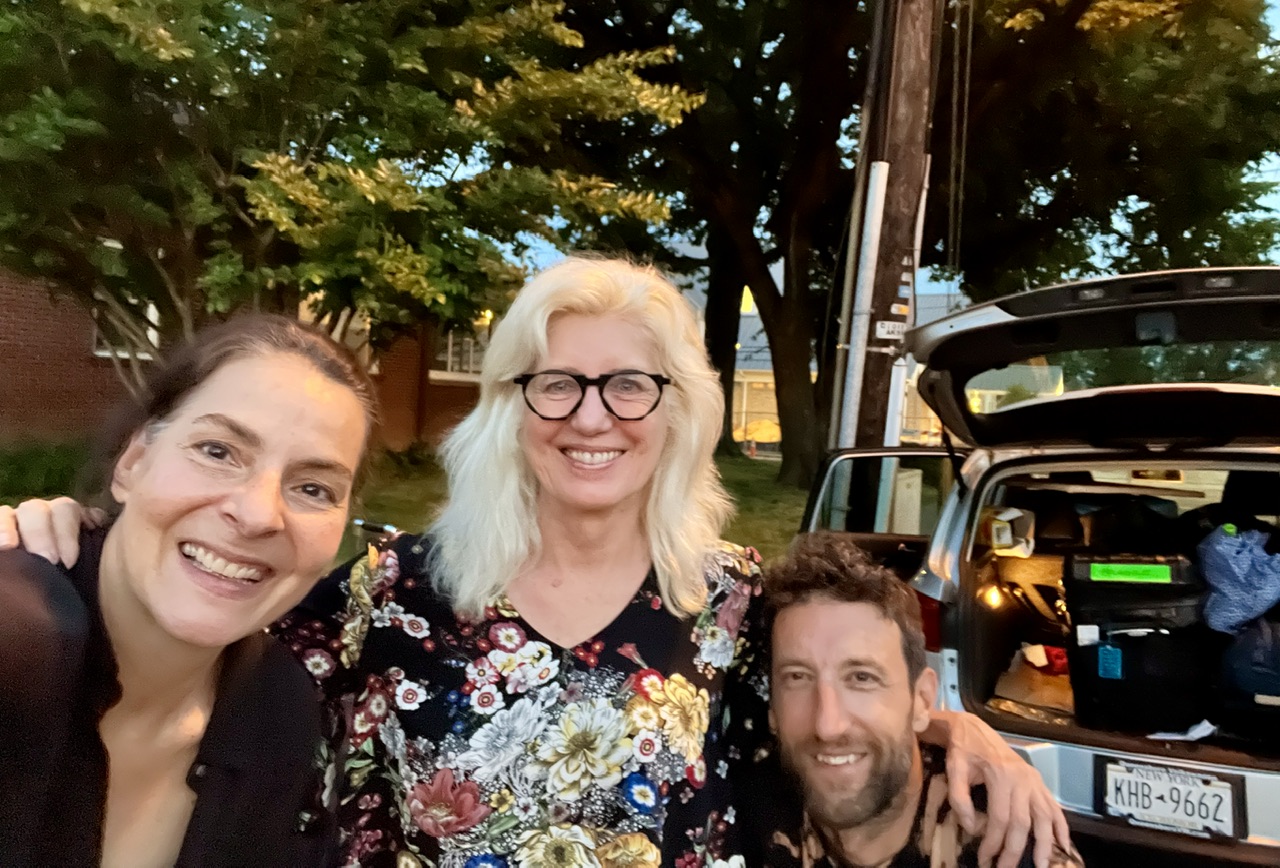
With Jennifer and Dmitri after our film shoot in Alexandria, VA
*an ongoing series of quotations – mostly from artists, to artists – that offers wisdom, inspiration, and advice for the sometimes lonely road we are on.
Artists consider themselves to be independent people. But the artist’s independent, rebellious, nonconforming nature, coupled with his introspective habits of mind, also make him wary of social interactions. Whereas the fireman, for example, has no reason to believe keeping company with other firemen will diminish his ability to fight fires, the artist, keenly aware that his journey is a personal and independent one, often fears that contact with his peers will slow him down, detour him, limit him, or unduly influence him.
Eric Maisel in A Life in the Arts: Practical Guidance and Inspiration for Creative and Performing Artists
Comments are welcome!
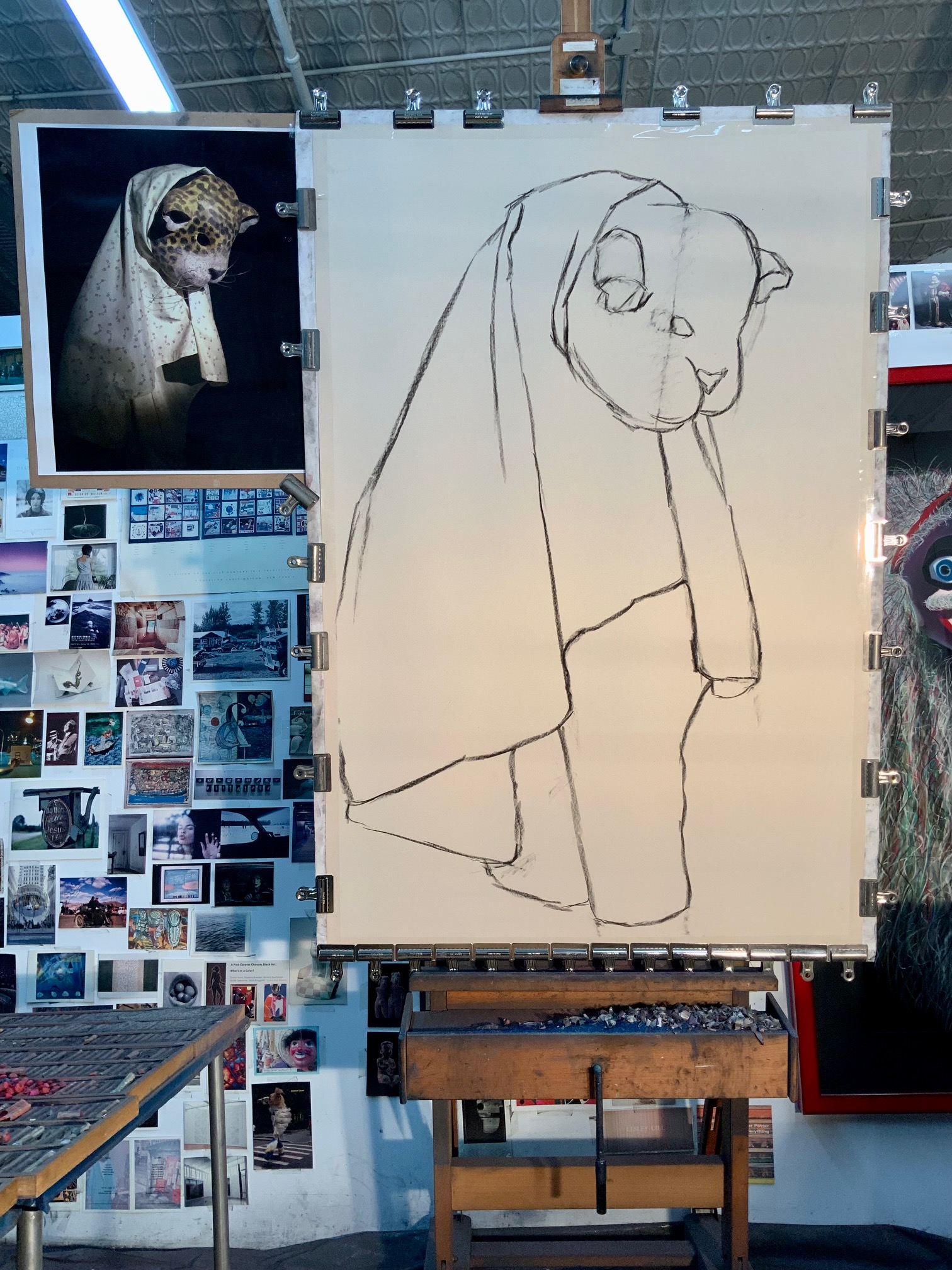
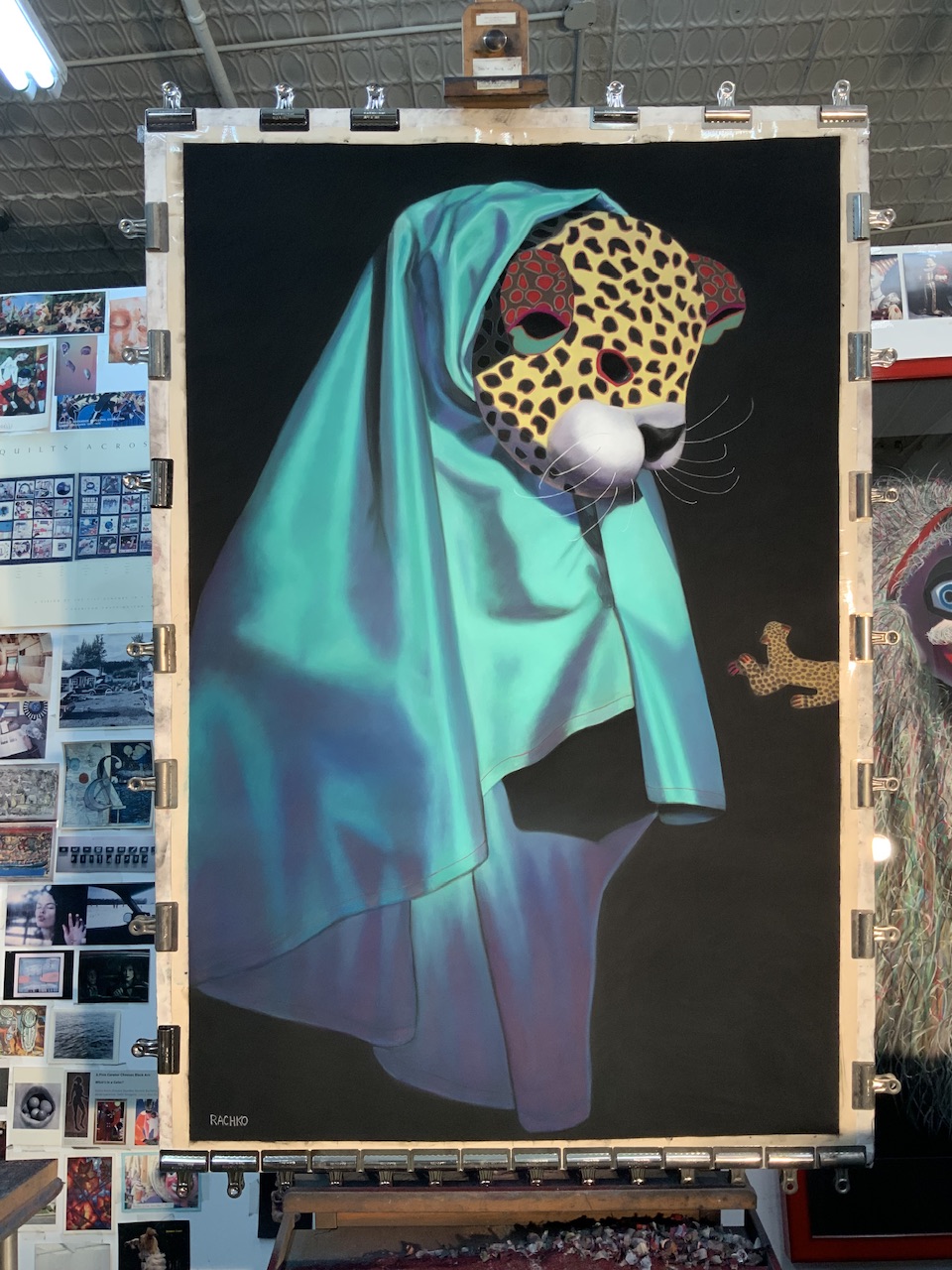
Pearls from artists* # 568

*an ongoing series of quotations – mostly from artists, to artists – that offers wisdom, inspiration, and advice for the sometimes lonely road we are on.
Some people say they work best under pressure, but working under pressure is a bit of a fallacy. It’s not waiting till the last minute that gives you the good work; it’s the focus that’s required when you wait till the last minute that brings about the good work. So think of it this way: your focus is the center of your brilliance; why not avail yourself of that brilliance on a regular basis? Everyone has her own rhythm, but if you don’t like the fact that you procrastinate, one way to get out of it is to think what the alternative is. The alternative is, instead of trying to do a month’s work in a few intense days in the studio, to give yourself the pleasure of yourself in flow, in focus, on a regular basis.
Anna Deavere Smith in Letters to a Young Artist: Straight-Up Advice on Making a Life in the Arts for Actors, Performers, Writers, and Artists of Every Kind
Comments are welcome!

Pearls from artists* # 567
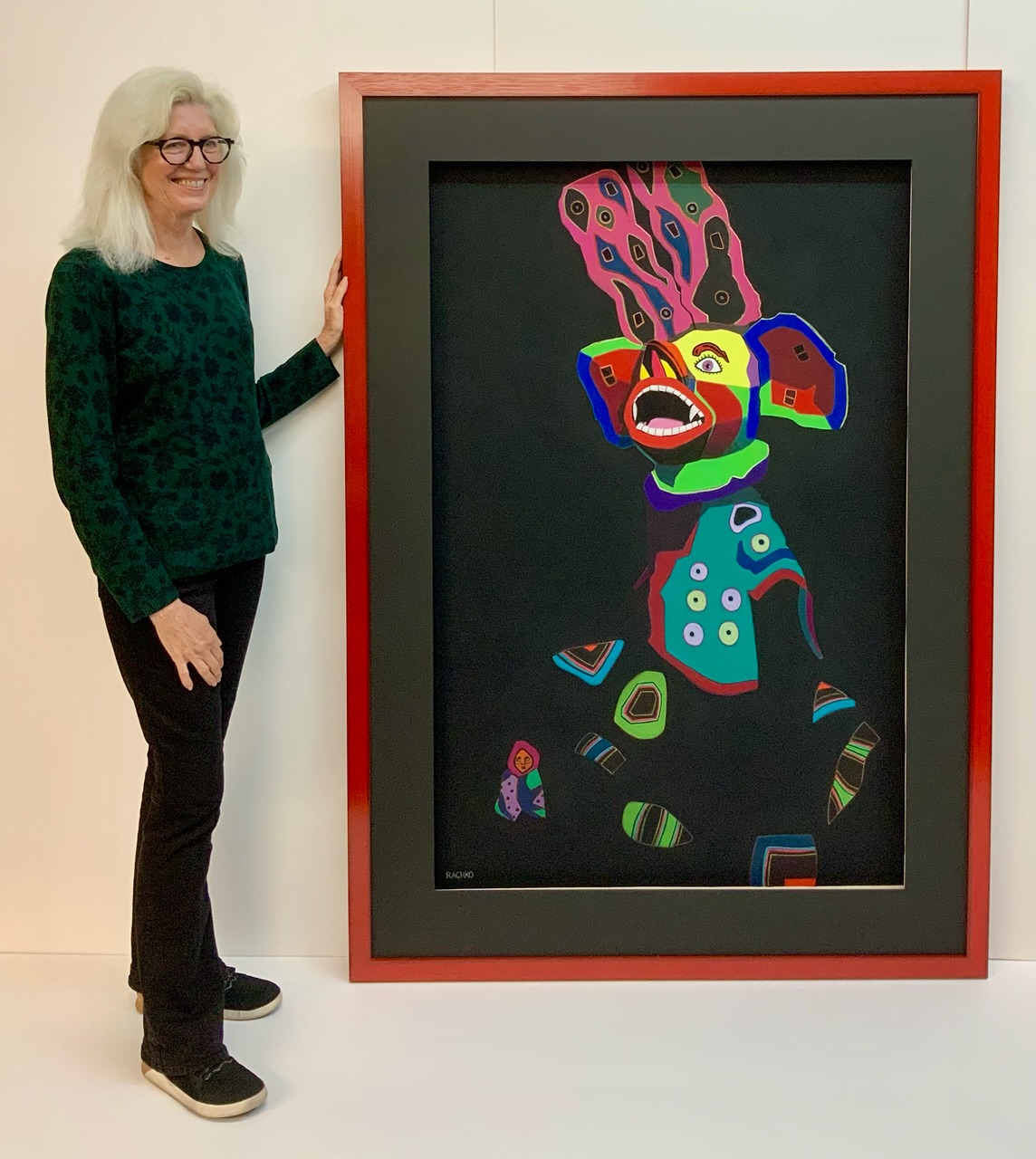
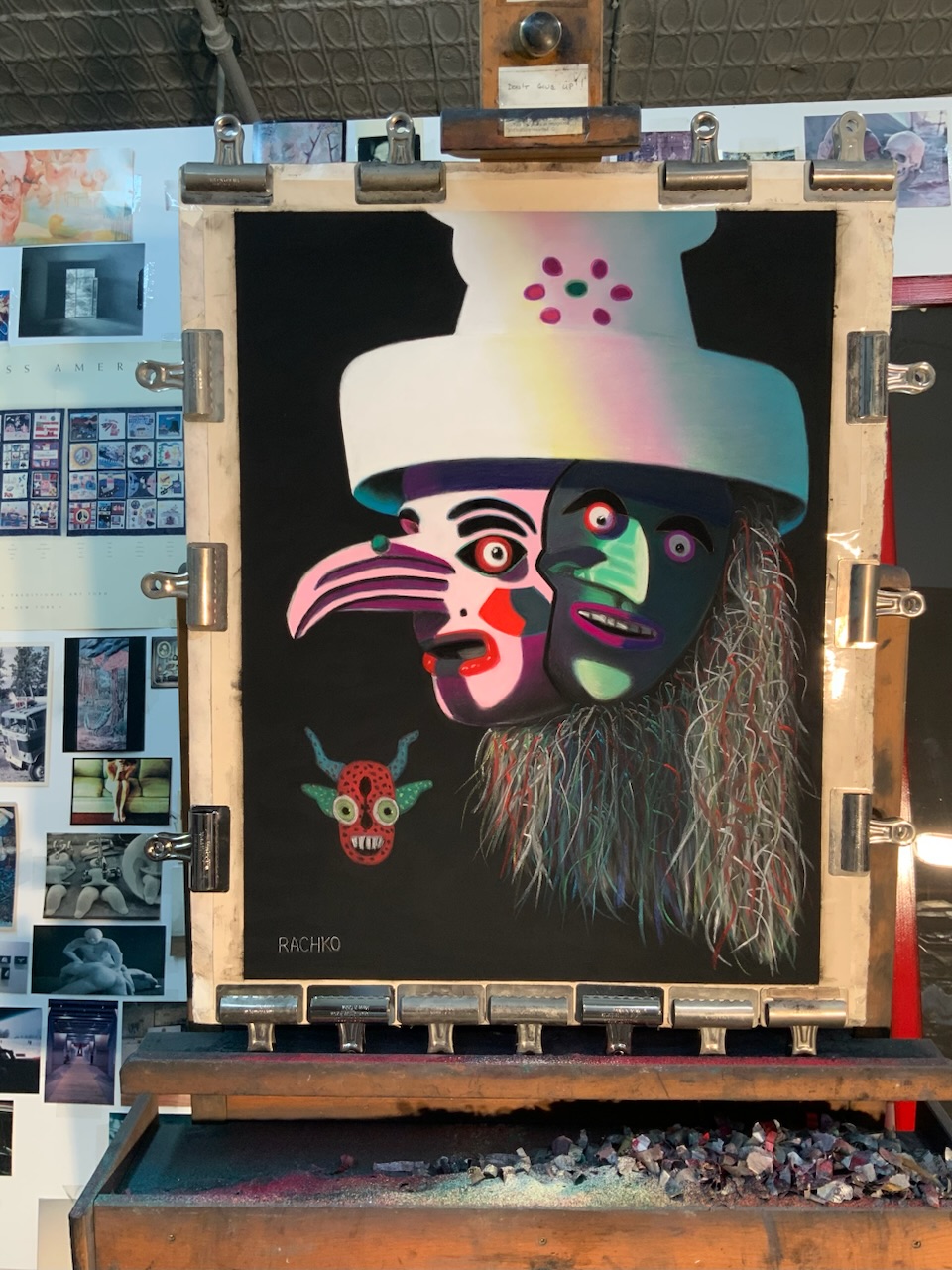
With “Impresario,” 70” x 50” framed, soft pastel on sandpaper
*an ongoing series of quotations – mostly from artists, to artists – that offers wisdom, inspiration, and advice for the sometimes lonely road we are on.
Almost every artist seems to meet someone at the beginning of his career who profoundly and often inexplicably affects later decisions and attitudes, someone whose personal expression is identified with the peculiar glamour of art that hits certain people so hard that they are caught up with it for the rest of their lives.
Mary Gabriel in Ninth Street Women
Comments are welcome!
Q: Many of the world’s cultures have a mask tradition. Is there something special about Bolivian masks that first attracted you to them?

Bolivian Carnival Mask
A: My subject matter emerges directly from my travels. I visited Bolivia in 2017. What I especially liked then – and now – about Bolivian Carnival masks, is that they include additional textures – feathers, fur, costume jewelry, sequins, fabric, etc. that add to their physical presence. Masks from most of the other countries I’ve visited tend to be made of wood and/or paper mache and nothing else. In my view such masks are not as dramatic nor do they offer much expressive potential. They feel dead. They lack a certain “soulfulness.”
Furthermore, textures are challenging to render in soft pastel. For more than three decades I have been striving to improve my pastel techniques. By now I have a vast repertoire from which to select. As was true in my earlier series, with “Bolivianos” an important personal goal is to keep adding to the repertoire.
It takes months to create a pastel painting, which means I need masks that will hold my attention every day over the course of three or four months. I never want to be bored in the studio. If I am bored while making the work, those feelings will be directly transferred and I will make a boring pastel painting, something I hope never to do! The masks need to have a really strong ‘presence.’ Then as I slowly make a pastel painting, one that is exciting to work on from start to finish, I can transform my subject into something surprising and powerful that has never existed before!
Comments are welcome!
Pearls from artists* # 566

With “Sacrificial” (left), 70” x 50” framed and “Disruptor,” 35” x 28.5” framed; both are soft pastel on sandpaper
*an ongoing series of quotations – mostly from artists, to artists – that offers wisdom, inspiration, and advice for the sometimes lonely road we are on.
Money, fame. It was funny, it was confusing. It was the end. The purity was gone. “I vividly experienced the change of climate with the financial boom in the art world,” Mercedes [Matter] said. “The change from taking poverty and obscurity for granted to competing for a place in the spotlight. At the Cedar [Tavern] one began hearing many talking about galleries over their bourbons instead… [of] about art as before over their beers.” Artists had become entertainers, selling themselves and their gifts for a piece of paper, the almighty dollar, emblazoned with a new motto, “In God We Trust.” Paul Brach said 1957 was the last year that artists made other artists’ reputations. From then on, they were made by a machine called “the art establishment.” “Career, the nemesis of our past, had crept up on all of us,” Larry [Rivers] said. It was like a virus, something all of them had but none of them wanted. At least in the abstract.
Mary Gabriel in Ninth Street Women
Comments are welcome!
Travel photo of the month*
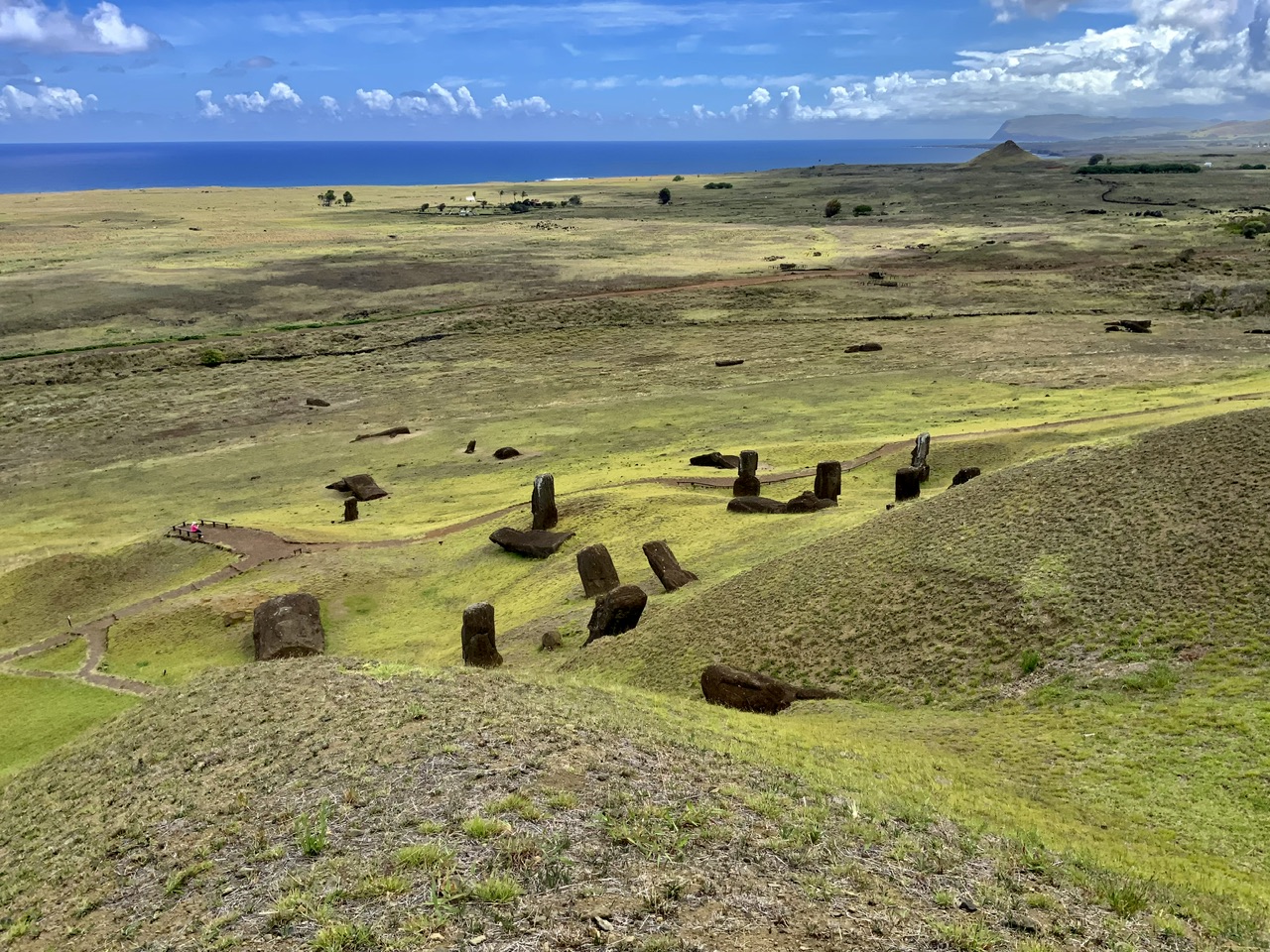
Quarry, Rapa Nui (Easter Island)
* favorite travel photos that have not yet appeared in this blog
Comments are welcome!
Pearls from artists* # 565

*an ongoing series of quotations – mostly from artists, to artists – that offers wisdom, inspiration, and advice for the sometimes lonely road we are on.
Jung and Freud both observed that much of what ails us today is a product of being cut off from our inner life. Healing that division requires us to speak the language of symbol, and that necessitates a kind of thinking which is not easy for many of us. This kind of approach is particularly challenging in our culture, which has a bias in favor of the too bright, daylight awareness of the conscious mind, and privileges literal thinking and mechanistic ways of understanding the world.
Gary Bobroff in Carl Jung: Knowledge in a Nutshell
Comments are welcome!


 barbararachkoscoloreddust.com