Category Archives: An Artist’s Life
Pearls from artists* # 316
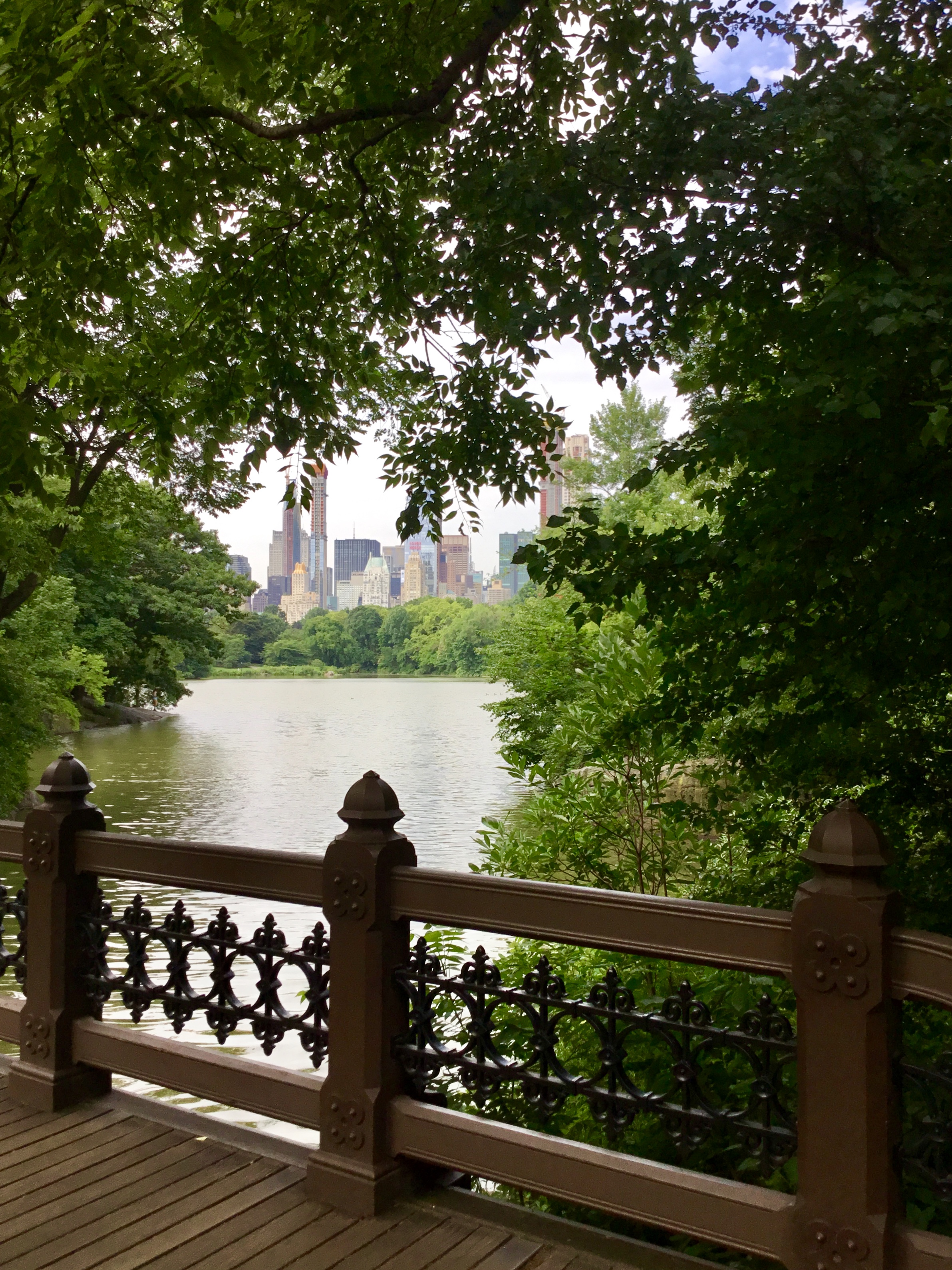
Central Park, NYC
*an ongoing series of quotations – mostly from artists, to artists – that offers wisdom, inspiration, and advice for the sometimes lonely road we are on.
Works of art are of an infinite loneliness and with nothing so little to be reached as with criticism. Only love can grasp and hold and be just toward them. Consider yourself and your feeling right every time with regard to every such argumentation, discussion, or introduction; if you are wrong after all, the natural growth of your inner life will lead you slowly and with time to other insights. Leave to your opinions their own quiet undisturbed development, which, like all progress, must come from deep within and cannot be pressed or hurried into anything. Everything is gestation and then bringing forth. To let each impression and each germ of a feeling come to completion wholly in itself, in the dark, in the inexpressible, the unconscious, beyond the reach of one’s own intelligence, and await with deep humility and patience the birth-hour of a new clarity: that alone is living the artist’s life: in understanding as in creating.
There is also no measuring with time, no year matters, and ten years are nothing. Being an artist means not reckoning and counting, but ripening like the tree which does not force its sap and stands confident in the storms of spring without the fear that after them may come no summer. It does come. But it comes only to the patient, who are there as though eternity lay before them, so unconcernedly still and wide. I learn it daily, learn it with pain to which I am grateful: patience is everything!
Rainer Maria Rilke, Letters to a Young Poet, Translation by M.D. Herter Norton
Comments are welcome!
Pearls from artists* # 315

“The Champ,” soft pastel on sandpaper, 26″ x 20″
*an ongoing series of quotations – mostly from artists, to artists – that offers wisdom, inspiration, and advice for the sometimes lonely road we are on.
A work of art is good if it has sprung from necessity. In this nature of its origin lies the judgment of it: there is no other. Therefore, my dear sir, I know of no advice for you save this: to go into yourself and test the deeps in which your life takes rise; at its source you will find the answer to the question whether you must create. Accept it, just as it sounds, without inquiring into it. Perhaps it will turn out that you are called to be an artist. Then take that destiny upon yourself and bear it, its burden and its greatness, without ever asking what recompense might come from outside. For the creator must be a world unto himself and find everything in himself and in Nature to whom he has attached himself.
Rainer Maria Rilke, Letters to a Young Poet, Translated by M.D. Herter Norton
Comments are welcome!
Q: Why did you first decide to depict Mexican folk art in your work?
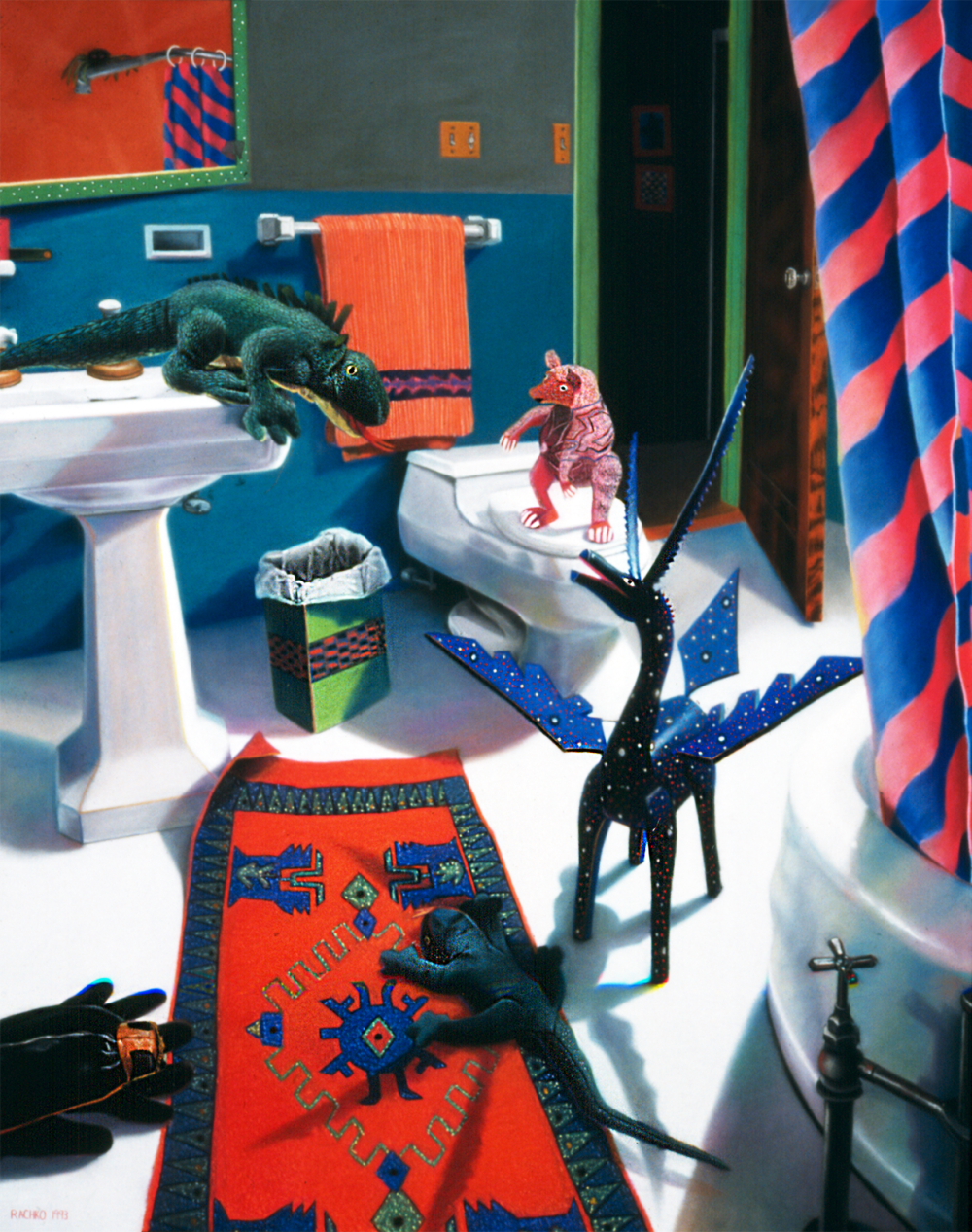
“Myth Meets Dream,” soft pastel on sandpaper, 47″ x 38″
A: As a Christmas present in 1991 my future sister-in-law sent me two brightly painted wooden animal figures from Oaxaca, Mexico. One was a blue polka-dotted winged horse. The other was a red, white, and black bear-like figure. See the two Mexican figures in “Myth Meets Dream” above.
I was enthralled with this gift and the timing was fortuitous because I had been searching for new subject matter to paint. Soon I started asking artist-friends about Oaxaca and learned that it was an important art hub. Two well-known Mexican painters, Rufino Tamayo and Francisco Toledo, had gotten their start there, as had master photographer Manual Alvarez Bravo. There was a “Oaxacan School of Painting” (‘school’ meaning a style, not an actual building) and Alvarez Bravo had established a photography school there (the building/institution kind). I began reading everything I could find. At the time I had only been to Mexico very briefly, in 1975, having made a road trip to Ensenada with my cousin and best friend from college.
The following autumn my then-boyfriend, Bryan, and I planned a two-week trip to visit Mexico. We timed it to see Day of the Dead celebrations in Oaxaca. (In my reading I had become fascinated with this unique festival). We spent one week in Oaxaca followed by one week in Mexico City. My interest in collecting Mexican folk art was off and running!
Comments are welcome!
Pearls from artists* # 314
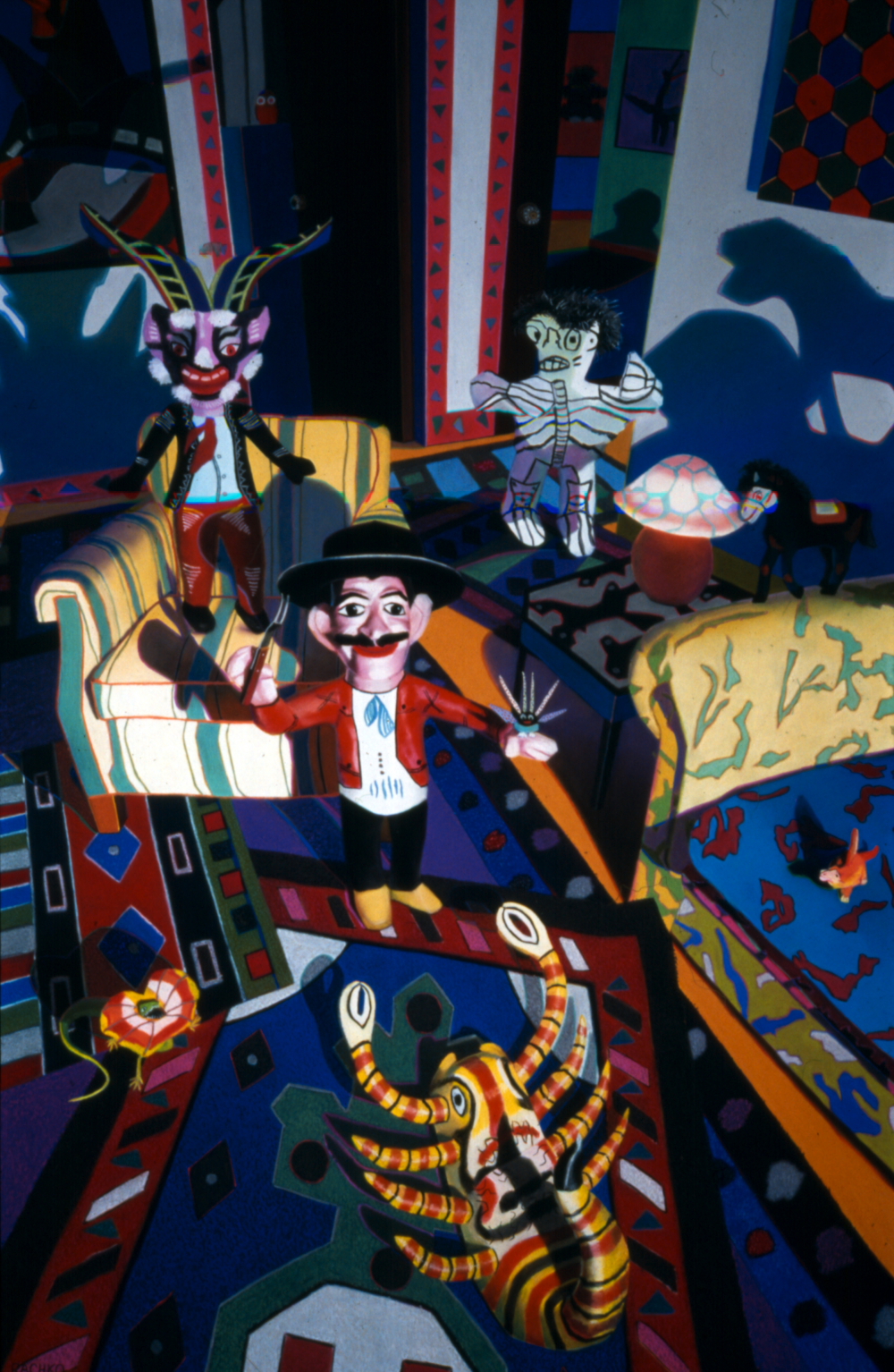
“He Just Stood There Grinning,” soft pastel on sandpaper, 58″ x 38″
*an ongoing series of quotations – mostly from artists, to artists – that offers wisdom, inspiration, and advice for the sometimes lonely road we are on.
For Leonora Carrington and many of her ‘sister’ surrealists, surrealism provided the intellectual, political and artistic milieu that enabled them to come into their own as artists and writers, and to gain recognition for their work in the wider world. Although some of these women had accepted their roles as muses in the lives of male artists, none believed that life as a muse trumped life as an artist. Asked in 1983 how she felt about the male surrealists’ view of women as muses, Leonora offered her testy, if retrospective rejoinder: ‘I thought it was bullshit… I didn’t have time to be anyone’s muse… I was too busy rebelling against my family and learning to be an artist.’ It is as artists and friends that we remember the women of surrealism today.
Whitney Chadwick in The Militant Muse: Love, War, and the Women of Surrealism
Comments are welcome!
Q: How do you feel about donating your work to auctions?
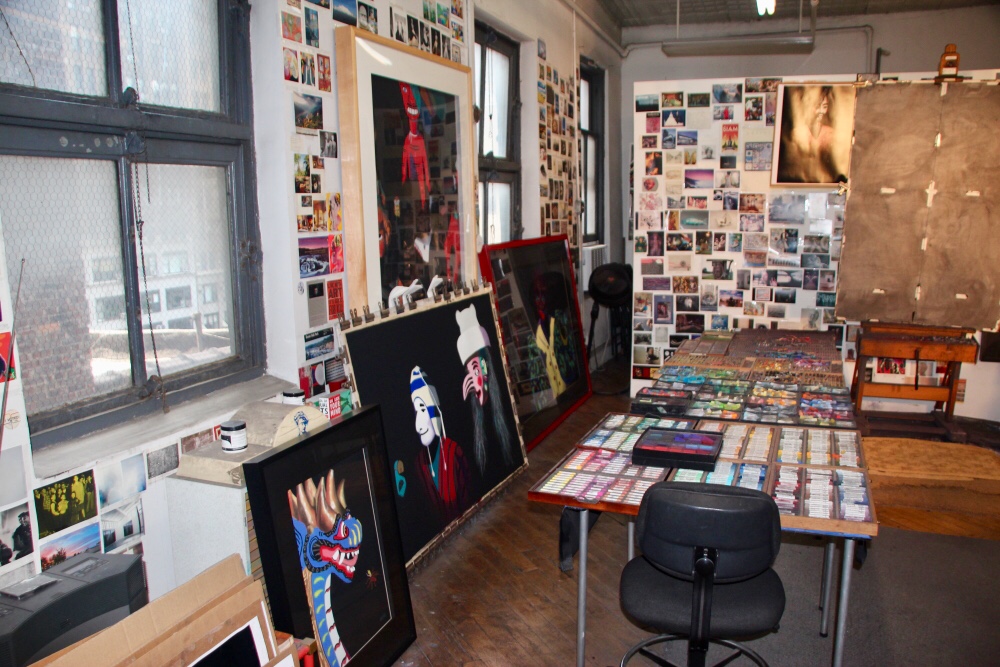
Studio with work in progress
A: Generally, it depends on who is doing the asking. If it’s an organization that has been supportive of my work, I am pleased to help with fundraising. If the organization and I have never connnected before, their out-of-the-blue request sometimes feels disrespectful. Artists invest decades, vast amounts of money, and plenty of blood, sweat, and tears to become the skilled creators that we are. And a New York artist’s overhead is considerable. I know of no artists who create their hard-fought work only to give it away.
Under certain conditions, however, I will participate. Here is my response to a recent donation request.
Dear…
Thank you for contacting me. Certainly your organization sounds worthwhile.
However, you may be unaware that artists may deduct ONLY the cost of materials when we give our work to auctions. I suggest that you ask one of your supporters to buy a pastel painting and donate it next year (there is a one-year waiting period for collectors to take this tax deduction). Then we have a win-win-win! I get paid, the collector/donor gets to enjoy owning my beautiful work for a year AND take a tax deduction for the full amount that he/she paid for it. Plus, your organization gets to sell my painting at next year’s auction.
Don’t you agree this is a better approach for everyone involved?
Sincerely…
Comments are welcome!
Q: How much of your work is autobiographical?
“The Champ,” soft pastel on sandpaper, 26″ x 20″
A: I suppose all of it is, in the sense that often I can look at a particular pastel painting and remember what was happening in my life when I made it. As I get older, however, it’s becoming more difficult to remember the circumstances surrounding my earliest work. Certainly, the cultures of an ever-expanding number of countries – Bolivia last year – are influencing my imagery for the better.
Comments are welcome!
Q: Do you have a favorite painting among all the work you have created?
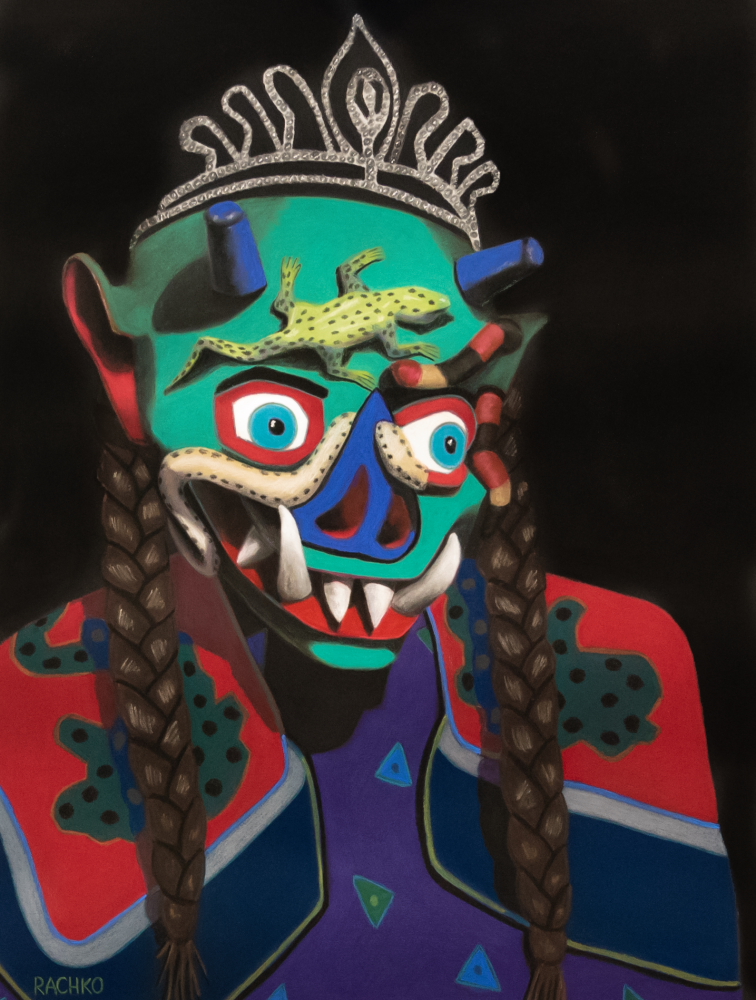
”Shamanic,” soft pastel on sandpaper, 26” x 20”
A: Generally, it’s the last one I completed, perhaps because it encapsulates everything I’m currently thinking about. At the moment my favorite is “Shamanic.”
I believe all of my prior experience in and out of the studio has contributed to making me a better artist and also a better person. So whichever work I finished last, seems the best somehow, and it’s also my favorite.
I wonder, do other artists feel this way, too?
Comments are welcome!
Pearls from artists* # 306

New York, NY
* an ongoing series of quotations – mostly from artists, to artists – that offers wisdom, inspiration, and advice for the sometimes lonely road we are on.
It is the responsibility of artists to pay attention to the world, pleasant or otherwise, and to help us live respectfully in it.
Artists do this by keeping their curiosity and moral sense alive, and by sharing with us their gift for metaphor. Often this means finding similarities between observable fact and inner experience – between birds in a vacant lot, say, and an intuition worthy of Genesis.
More than anything else, beauty is what distinguishes art. Beauty is never less than mystery, but it has within it a promise.
In this way, art encourages us to gratitude and engagement, and is of both personal and civic consequence.
Robert Adams in Art Can Help
Comments are welcome!
A: Would you agree that there are more opportunities for women artists these days?
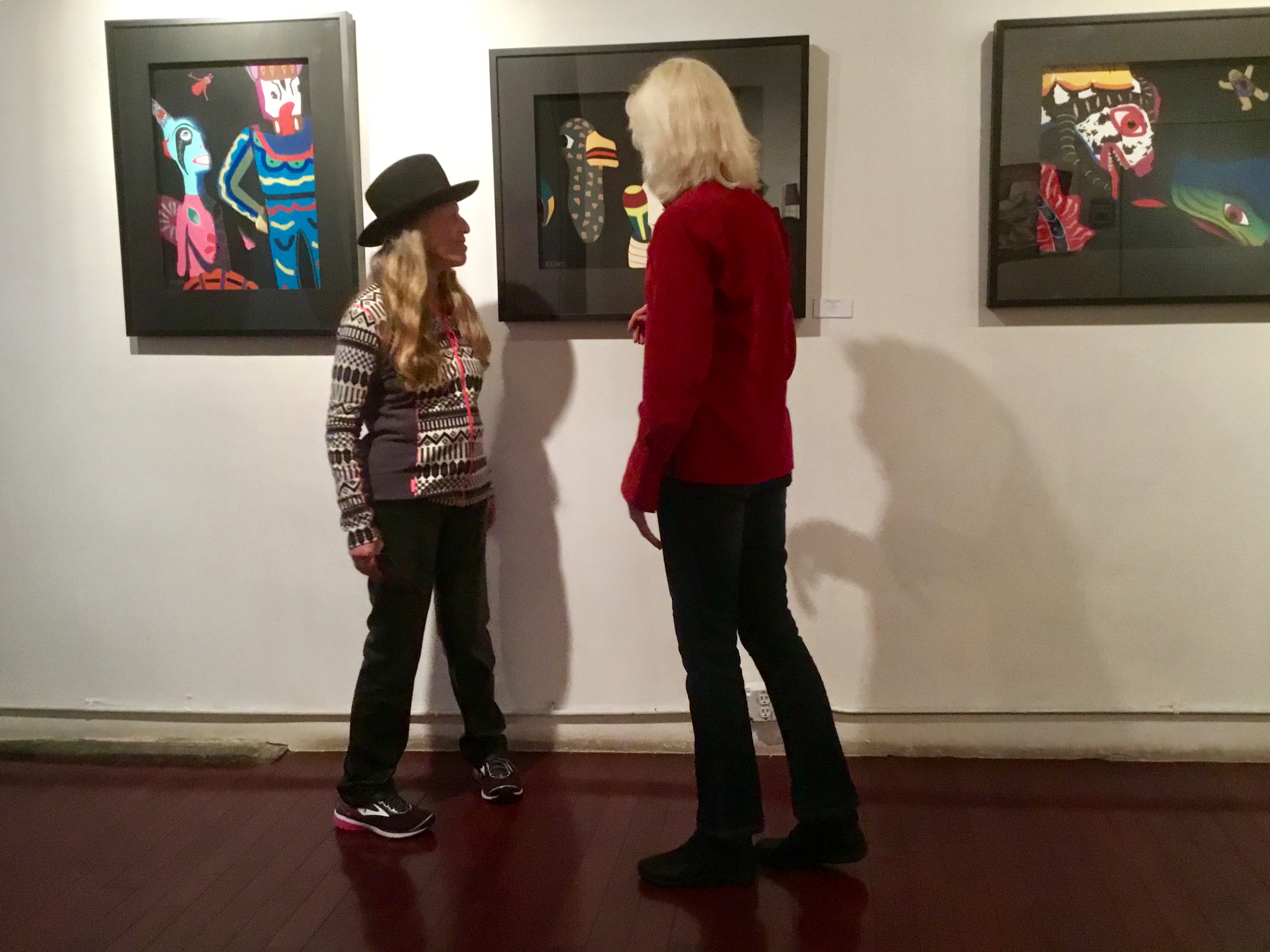
At Salomon Arts in Tribeca
A: It’s true that there are more opportunities now for women artists. Indeed, there are more opportunities for ALL artists. Social media has helped immensely in that it allows artists to take charge of our own careers, making us less dependent on the approval, largesse, and/or validation of art world gatekeepers.
However, at the highest levels of our profession, there are many inequities. As more women become art museum directors, collectors of contemporary art, and leaders whose taste matters, the status of all female artists is bound to improve to become more aligned with that of males.
Comments are welcome!
Pearls from artists* # 305
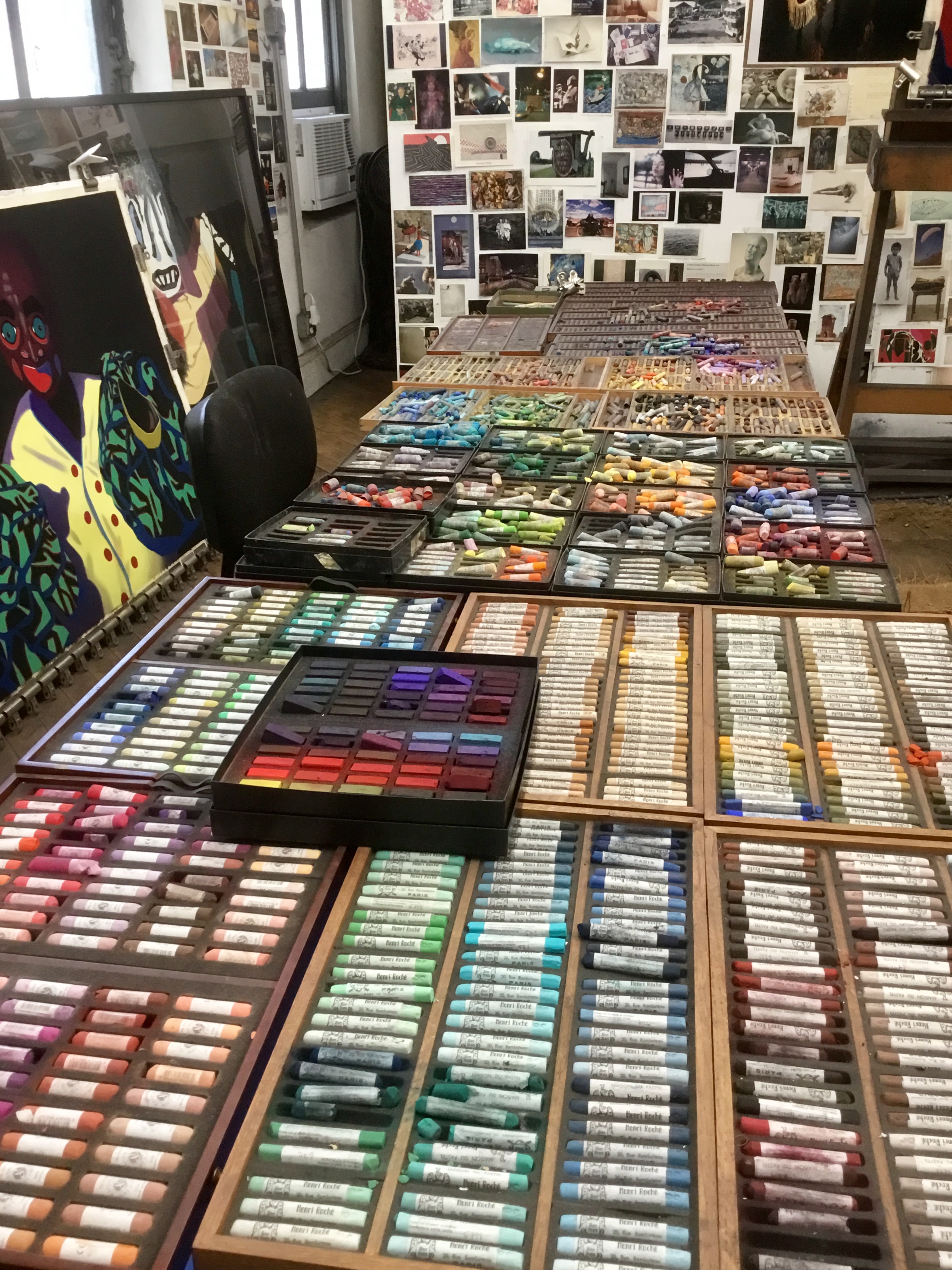
About half of Barbara’s pastels
* an ongoing series of quotations – mostly from artists, to artists – that offers wisdom, inspiration, and advice for the sometimes lonely road we are on.
When asked to talk about what I do, I’ve often compared writing with handicrafts – weaving, pot-making, woodworking. I see my fascination with the word as very like, say, the fascination with wood common to carvers, cabinetmakers – people who find a fine piece of old chestnut with delight, and study it, and learn the grain of it, and handle it with sensuous pleasure, and consider what’s been done with chestnut and what you can do with it, loving the wood itself, the mere material, the stuff of their craft.
Ursula K. Le Guin in No Time to Spare: Thinking About What Matters
Comments are welcome!


 barbararachkoscoloreddust.com