Blog Archives
Pearls from artists* # 612
New York, NY
*an ongoing series of quotations – mostly from artists, to artists – that offers wisdom, inspiration, and advice for the sometimes lonely road we are on.
It is the poet and philosopher who provide the community of objectives in which the artist participates. Their chief preoccupation, like the artist, is the expression in concrete form of their notions of reality. Like him, they deal with verities of time and space, life and death, and the heights of exaltation as well as the depths of despair. The preoccupation with these external problems creates a common ground which transcends the disparity of the means used to achieve them. And it is in the language of the philosopher and poet or, for that matter, of other arts which share the same objective that we must speak if we are to establish some verbal equivalent of the significance of art.
Let us not for a moment conceive that the language of one is interchangeable with that of the other: that one can duplicate the sense of a picture by the sense of words or sounds, or that one can translate the truth of words by means of pictorial delineations. Not all odes of Pindar, framed and embroidered, could duplicate the portrayal by Apelles’ brush of the Hero of the Palaestra. The Pandemonium of Milton or Dante’s Inferno can never replace the vision of the Last Judgment by either Michelangelo or Signorelli. No more so than the Pastoral Symphony of Beethoven can be apprehended through the reading of idyllic poems, augmented by descriptions of woodland and fields, of torrents and streams, the study of ornithological sounds, and the laws of harmonics. Neither books on jurisprudence, nor costume plates, can possibly reconstruct Raphael’s School of Athens. And the man who knows a book or a picture through its critics, whatever his experience, has no experience of the art itself. The truth, the reality of each, is confined within its own boundaries and must be perceived in terms of the means generic to itself.
In speaking of art here, there is no thought of recreating the experience of the picture. If we compare one art to another, it is not with the intention of contrasting their actuality, but to speak rather of the motivations and properties such as are admissible to the world of verbal ideas. And if… we are partial to the philosopher – at the expense of those others who share with the artist his common objectives, it is not because we divine in his effort a greater sympathy to the artist, but because philosophy shares with art it’s preoccupation with ideas in the terms of logic.
Mark Rothko in The Artist’s Reality: Philosophies of Art
Comments are welcome!
Pearls from artists* # 530
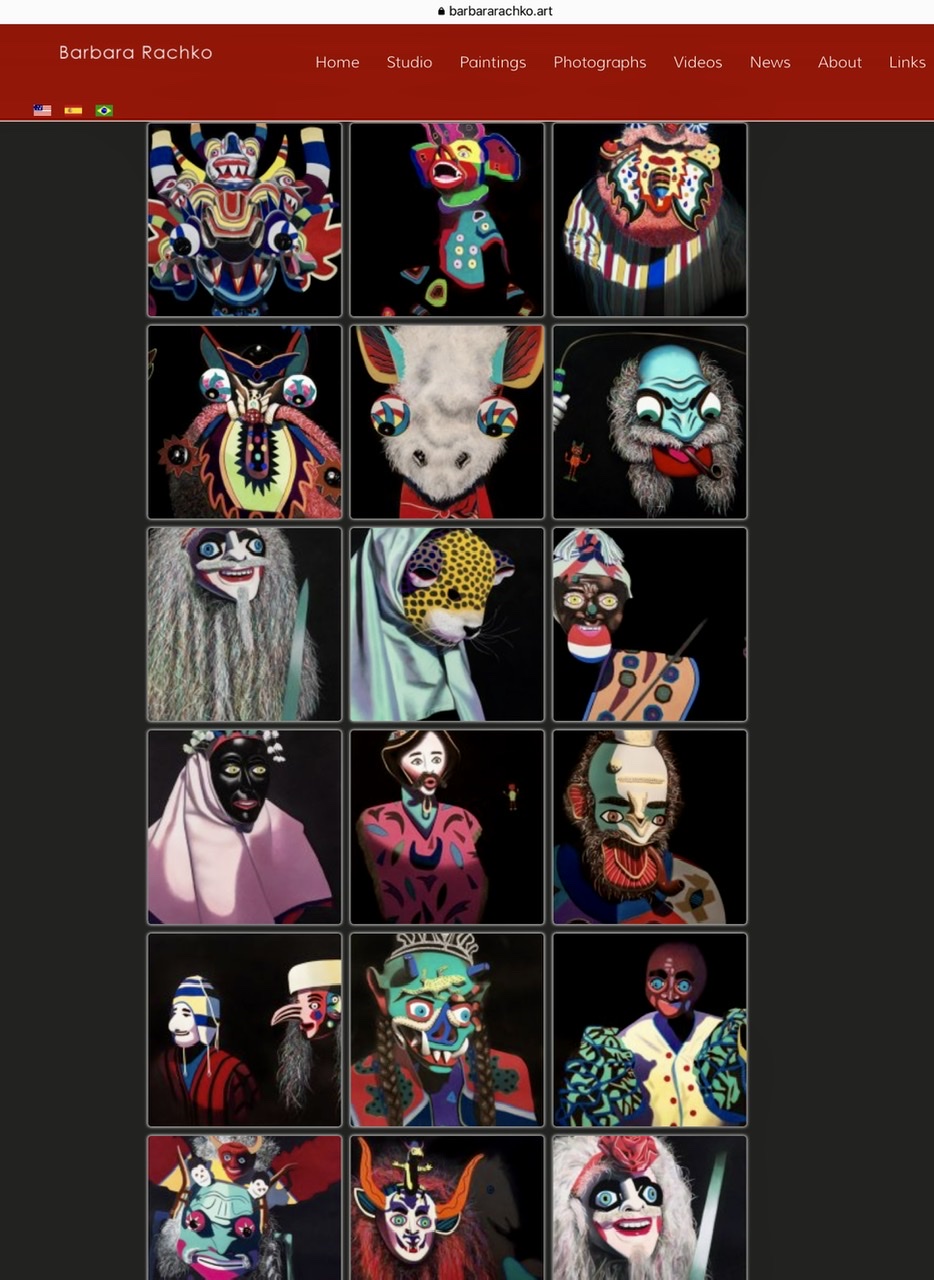
* an ongoing series of quotations – mostly from artists to artists – that offers wisdom, inspiration, and advice for the sometimes lonely road we are on.
Samuel Coleridge described the imagination as “the living power and prime agent of all human perception.” It achieves its fullest potential in artistic expression because it is there that it transcends mere representation to bring forth unprecedented images of the world.
JF Martel in Reclaiming Art in the Age of Artifice: A Treatise, Critique, and Call to Action
Comments are welcome!
Pearls from artists* # 423

“Epiphany,” soft pastel on sandpaper, 38″ x 58″
* an ongoing series of quotations – mostly from artists, to artists – that offers wisdom, inspiration, and advice for the sometimes lonely road we are on.
I’ve mentioned that Kenneth Clark, the British art historian, said you could take the four best paintings of any artist in history and destroy the rest and the artist’s reputation would still be intact. This is because in any artist’s life there are moments when everything goes right. The artist is so in tune with his or her inner vision that there is no restriction. The divine is being expressed. Each mark becomes like a note of music in a divine order.
That experience, that prayer of expression, transcends its material and becomes spiritual. The experience is overwhelming, the joys it communicates explosive.
When on another occasion we can’t find that spiritual level of experience, and so can’t repeat it, the frustration can be cruel and the separation painful. Here lies the myth of the suffering artist. It isn’t the art making when it goes well that has any suffering in it. That is the union with the beloved. It’s the loss that causes the suffering. And the problem isn’t something we can necessarily control. We are instruments, conduits for that expression. It comes through us by grace.
The idea that we “make” art is perhaps a bit misleading. The final product is at its best the result of a collaboration with spirit. We may be separated from a flow within our spirit for weeks. We continue to paint because there is no knowing at what precise moment it will return. And when it does we need our faculties alert and our skills honed. Then the poetry is everywhere.
Ian Roberts in Creative Authenticity: 16 Principles to Clarify and Deepen Your Artistic Vision
Comments are welcome!
Pearls from artists* # 351

Barbara at work on “The Orator”
*an ongoing series of quotations – mostly from artists, to artists – that offers wisdom, inspiration, and advice for the sometimes lonely road we are on.
That art is apolitical does not mean that artists themselves can be excused from the political responsibilities that fall on others. It means rather that as a manifestation of eternal psychic force, each work of art goes farther and deeper than the limited perspective of any individual mind, including that of its author.
No artist can predict how his work will affect the world… The artist invests his entire personality into the work, but he does so as a means of expressing a vision that is transpersonal. Everything that makes him what he is informs the work, but the final result transcends all personal contingencies.
J.F. Martel in Reclaiming Art in the Age of Artifice: A Treatise, Critique, and Call to Action
Comments are welcome!
Pearls from artists* # 341
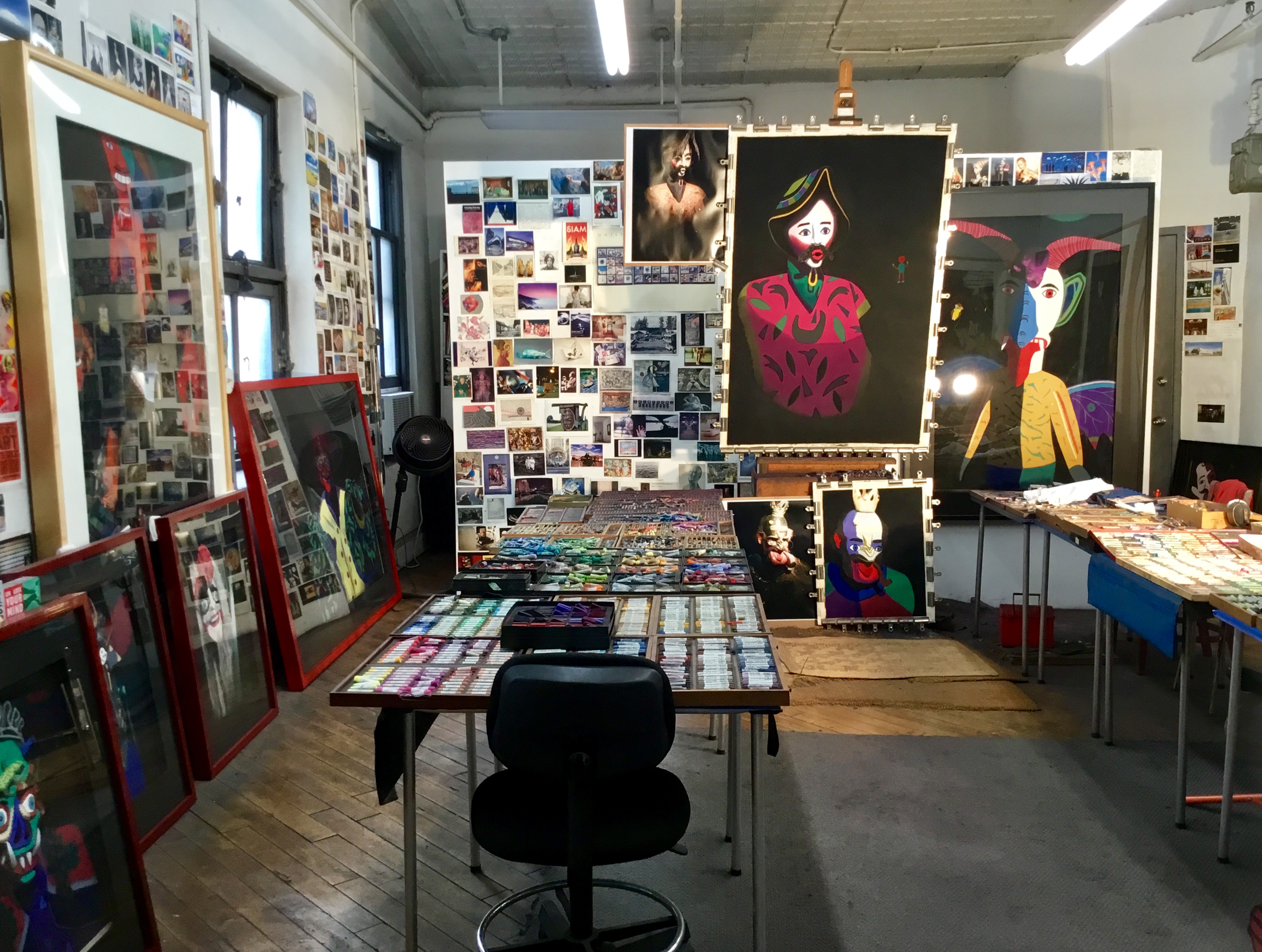
Barbara’s studio
*an ongoing series of quotations – mostly from artists, to artists – that offers wisdom, inspiration, and advice for the sometimes lonely road we are on.
The classic work of art is a form of life with its own bizarre consciousness. In the performing arts – theater, dance, music – this consciousness is not reducible to the minds of the performers onstage. The participants are parts of a spiritual organism that includes and transcends them. In our modern materialist mindset we naturally attribute the impression that a work speaks in its own voice to the intention of the author, who used it as a vehicle for her own ideas. But… works of art express much that their authors never intended to say: they exceed the limited views of those who bring them into being.
J.F. Martel in Reclaiming Art in the Age of Artifice: A Treatise, Critique, and Call to Action
Comments are welcome!


 barbararachkoscoloreddust.com