Blog Archives
Pearls from artists* # 302

“Epiphany,” soft pastel on sandpaper, 38″ x 58″
*an ongoing series of quotations – mostly from artists, to artists – that offers wisdom, inspiration, and advice for the sometimes lonely road we are on.
Regardless of personal convictions or professional concerns, an artist’s power comes down to two things: her sensitivity to the radical mystery of existence, and the artistry and craft with which she can channel that mystery into an object or performance. Neither existential awe nor a given metaphysical outlook need to serve as an explicit motivation. Simply, the emergence of artistic vision – and the need to express the vision without distorting or conceptualizing it – is contingent upon the underlying wonderment at being itself, a wonderment without which there would be no art.
J.F. Martel in Reclaiming Art in the Age of Artifice: A Treatise, Critique, and Call to Action
Comments are welcome!
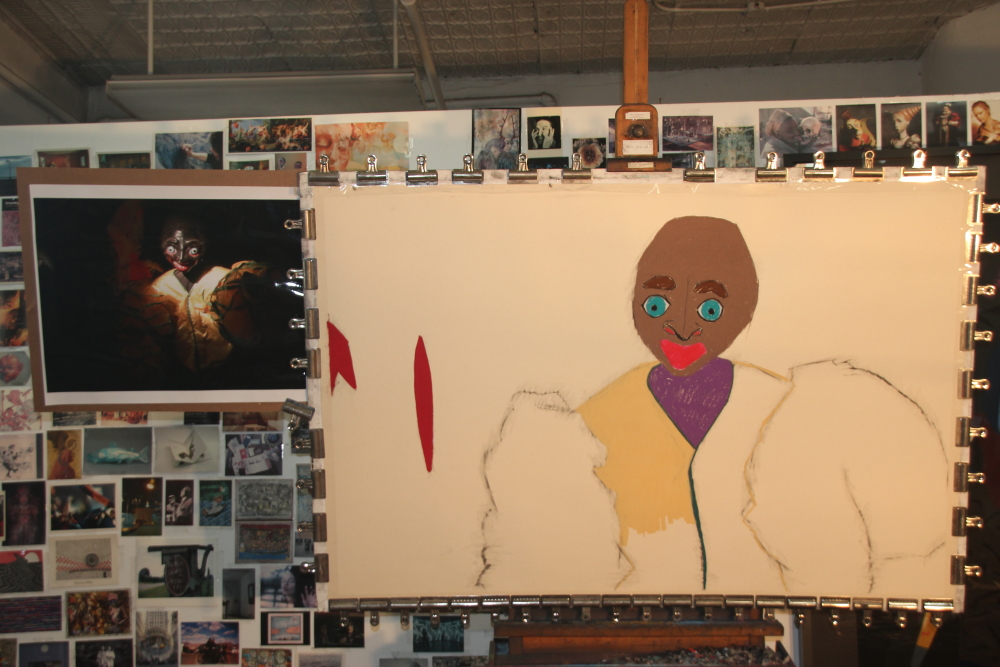
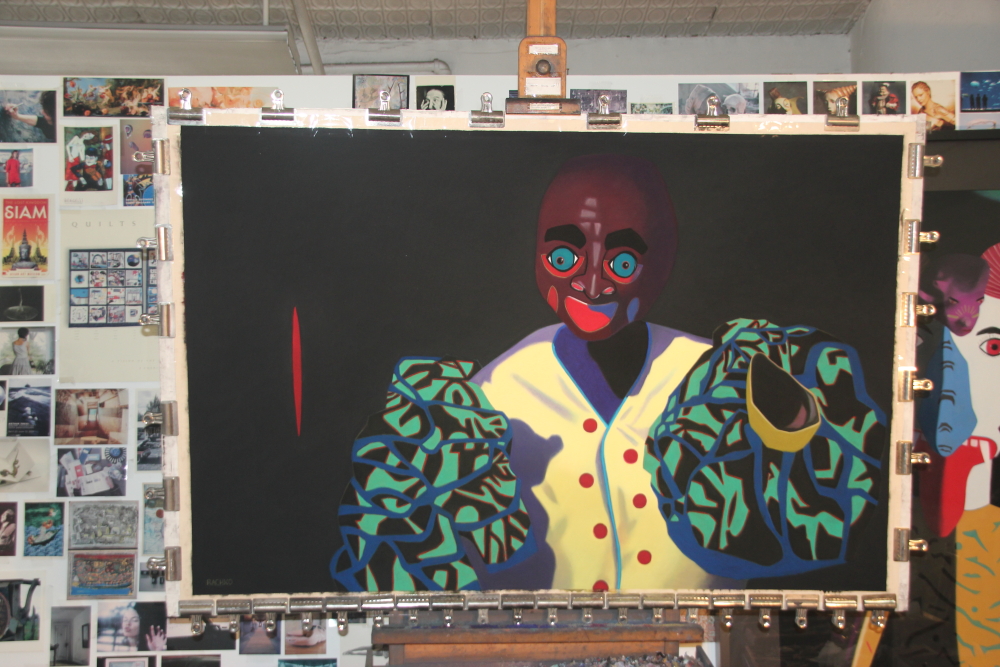
Start/Finish of “Shamanic,” soft pastel on sandpaper, 26″ x 20”
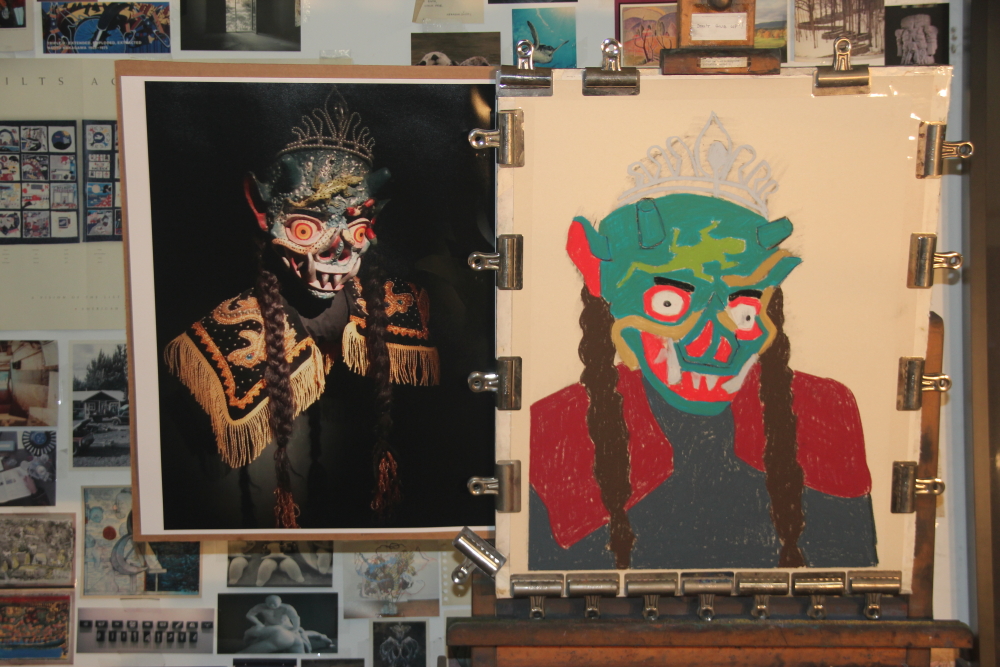
Start
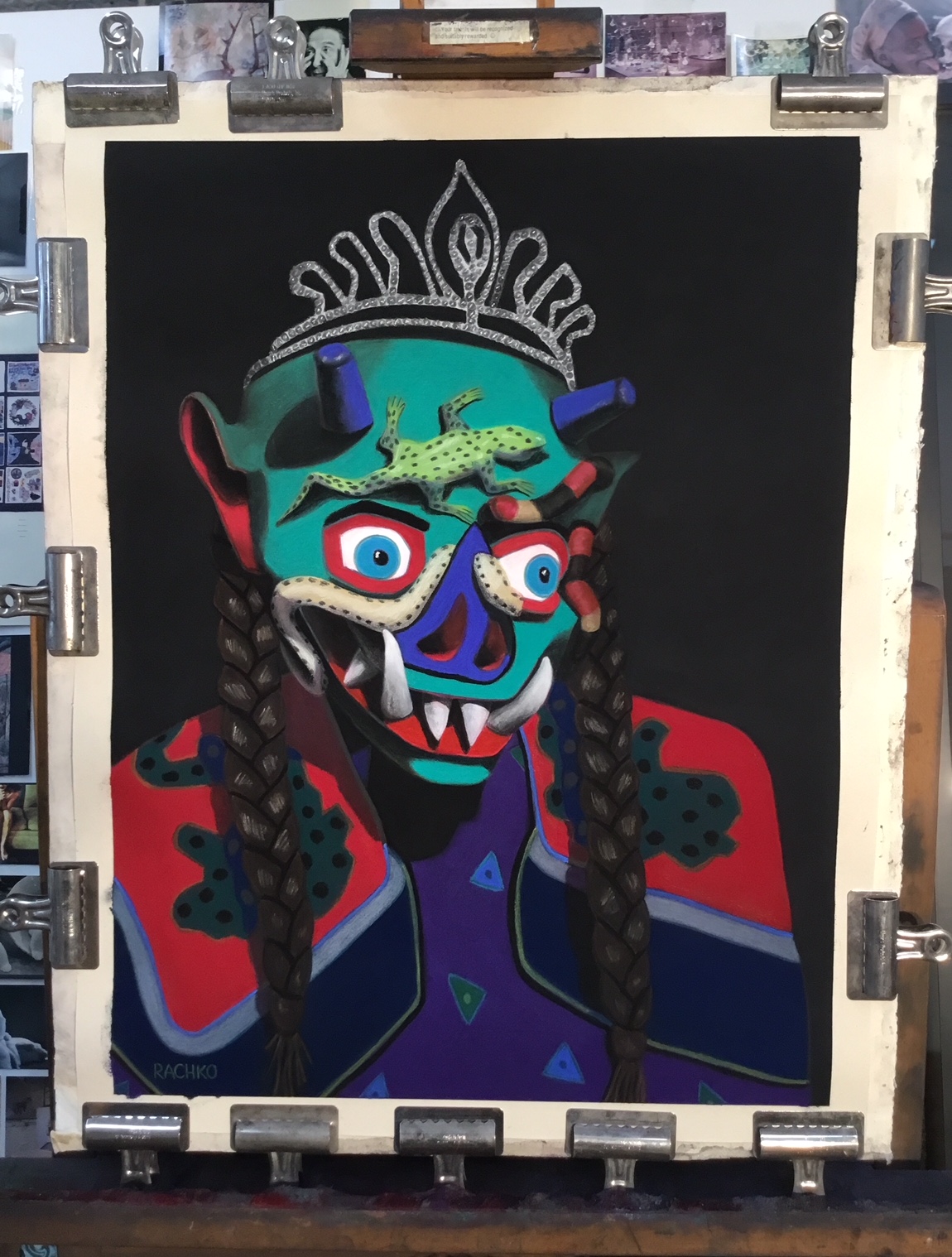
Finish
This one was tough going, but finally it’s ready for the framer!
Comments are welcome!
Pearls from artists* # 300
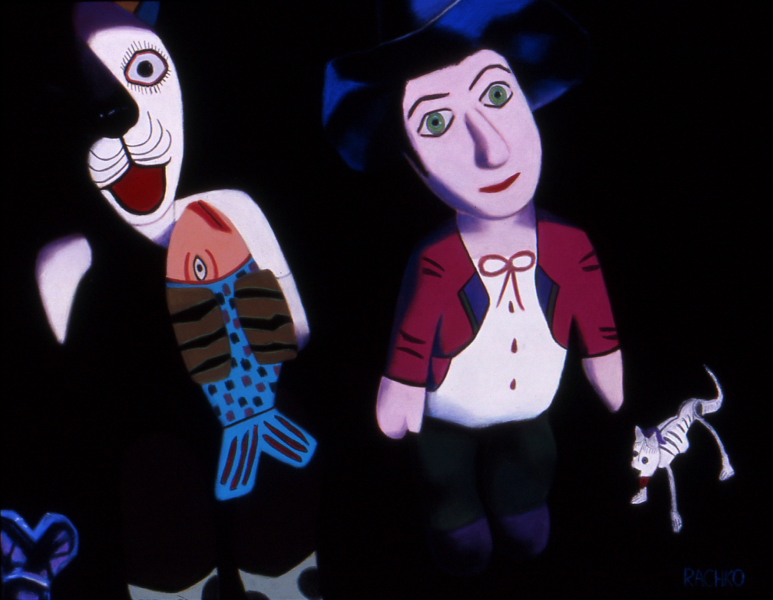
“Offering,” soft pastel on sandpaper, 20″ x 26″
*an ongoing series of quotations – mostly from artists, to artists – that offers wisdom, inspiration, and advice for the sometimes lonely road we are on.
Art breaks down the barriers that normally stand between the physical and the psychic, between your soul and the souls of others. “Through art alone are we able to emerge from ourselves, to know what another person sees of a universe which is not the same as our own and of which, without art, the landscapes would remain as unknown to us as those that may exist on the moon.” For the French novelist Marcel Proust, who wrote those words, art is a meeting place in which human beings commune at a level that ordinary language and sign systems do not allow. Without art, connection at this deeper level is impossible.
J.F. Martel in Reclaiming Art in the Age of Artifice: A Treatise, Critique, and Call to Action
Comments are welcome!
Pearls from artists* # 299

“The Storyteller,” soft pastel on sandpaper, 20″ x 26″
*an ongoing series of quotations – mostly from artists, to artists – that offers wisdom, inspiration, and advice for the sometimes lonely road we are on.
The artist is always and for all time a seer, and artistic creation is always and for all time an act of prophecy.
The artist does not choose the prophecy. Rather, the prophetic shines through her work. It comes from elsewhere.
The artist therefore needs enough courage to stay true to the work at hand. Even greater courage is required of those to whom the finshed work is given, for their interests will always recommend dismissing the vision for fear of its implications.
J.F. Martel in Reclaiming Art in the Age of Artifice: A Treatise, Critique, and Call to Action
Comments are welcome!
Pearls from artists* # 297
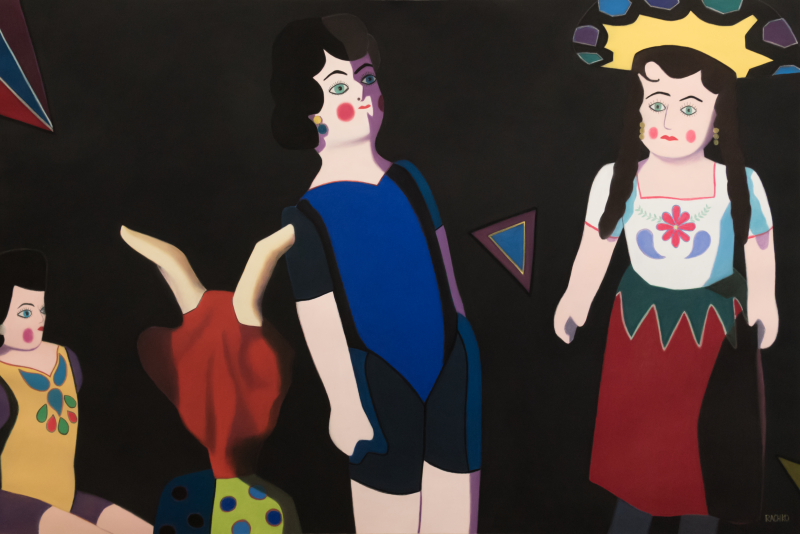
“Conundrum,” soft pastel on sandpaper, 38″ x 58″
*an ongoing series of quotations – mostly from artists, to artists – that offers wisdom, inspiration, and advice for the sometimes lonely road we are on.
The most valuable critic of contemporary work is another artist engaged in the same game. Yet few misunderstandings exceed those between two painters engaged upon different kinds of things. Only long after can an observer resolve the differences between such painters, when their games are all out, and fully available for comparison.
George Kubler in The Shape of Time: Remarks on the History of Things
Comments are welcome!
Pearls from artists* # 292
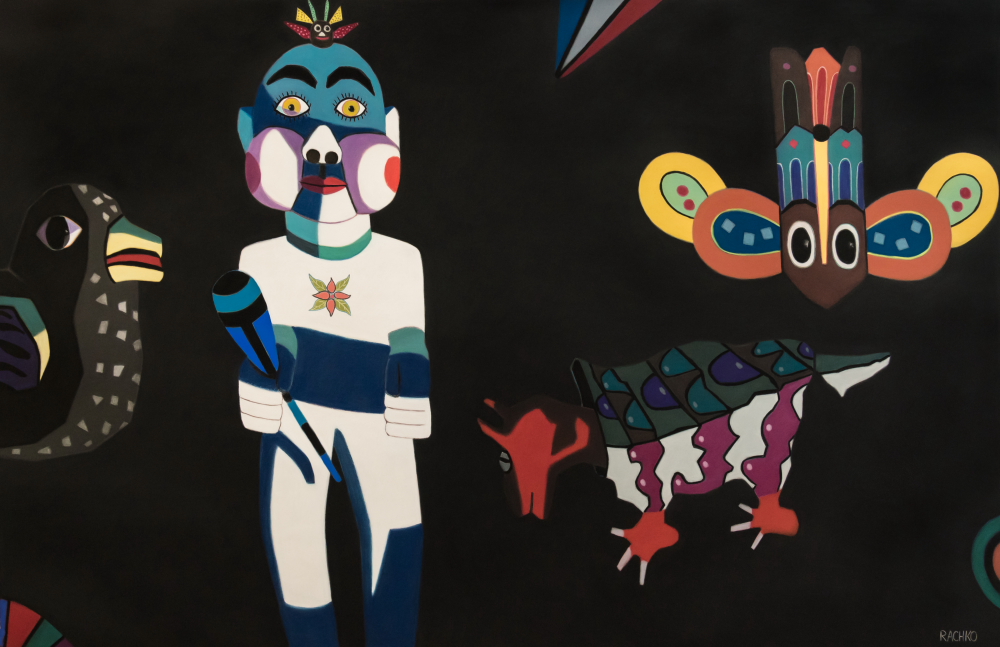
“White Star,” soft pastel on sandpaper, 38″ x 58″
*an ongoing series of quotations – mostly from artists, to artists – that offers wisdom, inspiration, and advice for the sometimes lonely road we are on.
… many tools may share qualities of fine design with works of art. We are in the presence of a work of art only when it has no preponderant instrumental use, and when its technical and rational foundations are not pre-eminent. When the technical organization or the rational order of a thing overwhelms our attention, it is an object of use. On this point Lodoli anticipated the doctrine of functionalists of our century when he declared in the eighteenth century that only the necessary is beautiful. Kant, however, more correctly said on the same point that the necessary cannot be judged beautiful, but only right or consistent. In short, a work of art is as useless as a tool is useful. Works of art are as unique and irreplaceable as tools are common and expendable.
George Kubler in The Shape of Time: Remarks on the History of Things
Comments are welcome!
Pearls from artists* # 291

“The Sovereign,” soft pastel on sandpaper, 58″ x 38″ image, 70″ x 50″ framed
*an ongoing series of quotations – mostly from artists, to artists – that offers wisdom, inspiration, and advice for the sometimes lonely road we are on.
Intuitively, we must be truthful to our vision, our conception. Intellectually, we must concentrate on importance. In other words, let us be no all-eater, no all-reader, no all-believer, let us be selective instead of being curious.
… Quality in art is more permanent than any propaganda associated with it.
Joseph Albers in Truthfulness in Art in Joseph Albers in Mexico, edited by Lauren Hinkson
Comments are welcome!
Q: What’s on the easel today?
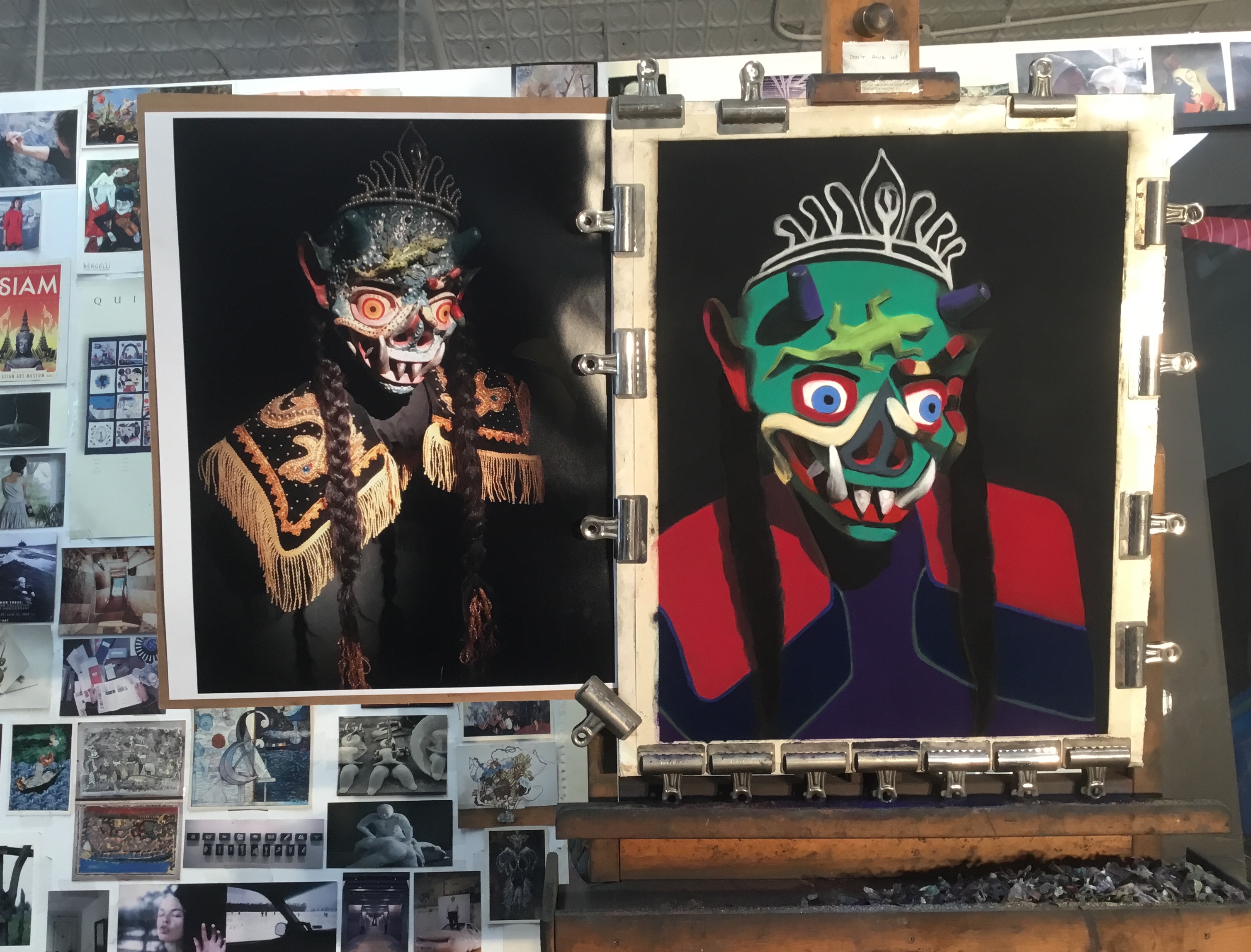
Work in progress
A: I continue slowly working on “Shaman,” soft pastel on sandpaper, 26” x 20”. A long-time aficionado of psychological thrillers, horror, and sci-fi films, I have a high tolerance for the macabre. However, I admit that this one is a little creepy, considering those are snakes curling around the eyes. On a deep level this piece is about facing my own fears. The snakes have become metaphors.
Comments are welcome!
Q: Please speak about how the three pastel paintings series that you have created interrelate.

“The Orator,” soft pastel on sandpaper, 38″ x 58″
A: The Black Paintings series of pastel-on-sandpaper paintings grew directly from an earlier series, Domestic Threats. While both use cultural objects as surrogates for human beings acting in mysterious, highly-charged narratives, in the Black Paintings I replaced all background details of my actual setup (furniture, rugs, etc.) with lush black pastel. In this work the ‘actors’ are front and center.
While traveling in Bolivia last spring, I visited a mask exhibition at the National Museum of Ethnography and Folklore in La Paz. The masks were presented against black walls, were spot-lit, and looked eerily like 3D versions of my Black Paintings. I immediately knew I had stumbled upon a gift. So far I have completed three pastel paintings in the Bolivianos series. Two more are in progress now.
All of my pastel paintings are an example of a style called “contemporary conceptual realism” in which things are not quite as innocent as they seem. Each painting is a Trojan horse. There is plenty of backstory to my images, although I usually prefer not to over-explain them. Much is to be said for mystery in art.
The world I depict is that of the imagination and this realm owes little debt to the natural world. Recently, at an art talk I was reminded how fascinating it is to learn how others respond to my work. As New York art critic Gerrit Henry once remarked, “What we bring to a Rachko… we get back, bountifully.”
Comments are welcome!


 barbararachkoscoloreddust.com