Blog Archives
Pearls from artists* # 576
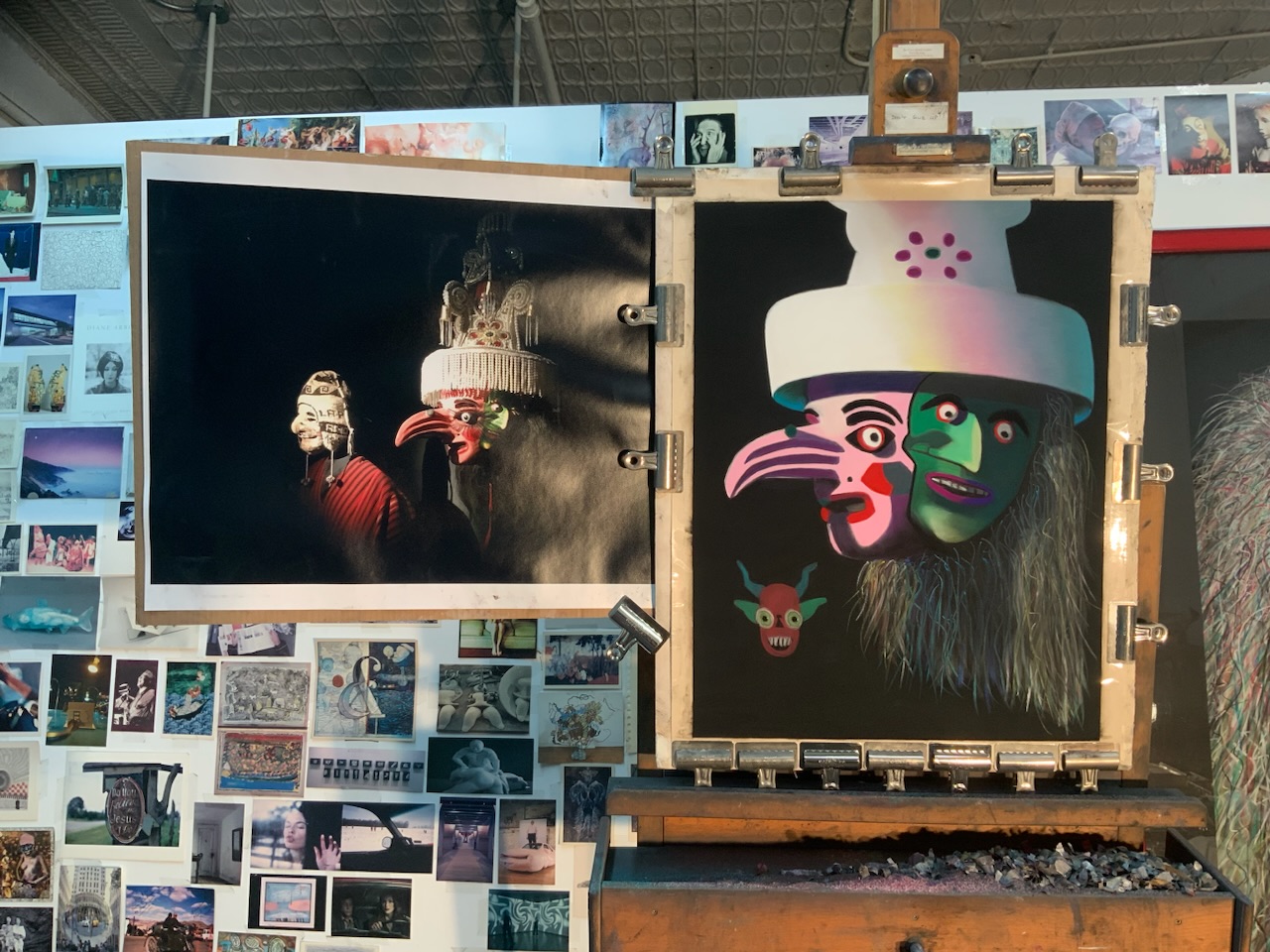
In progress: “Shadow,” soft pastel on sandpaper, 26” x 20”
*an ongoing series of quotations – mostly from artists, to artists – that offers wisdom, inspiration, and advice for the sometimes lonely road we are on.
A word derived from Latin, persona, originally referred to the masks worn by actors in ancient classical theatre. In Jungian psychology, this term refers to the inner character that we use to face the world. Drawn from societal expectations, cultural norms, and natural attributes, it is the person we want others to think we really are. Our persona is our brave face, our false front. It is the ongoing project of building our ideal self.
… the persona is our somewhat embellished view of ourselves, the shiny face that we want the world to see. It’s opposite, everything we reject about ourselves, is called the shadow.
… our shadow is the pain we’ve forgotten about. It is a complex within us, a split-off part our consciousness loaded with emotional weight. Our persona is what we want to be seen to be; shadow is what we least want to be.
Gary Bobroff in Carl Jung: Knowledge in a Nutshell
Comments are welcome!
Pearls from artists* # 385
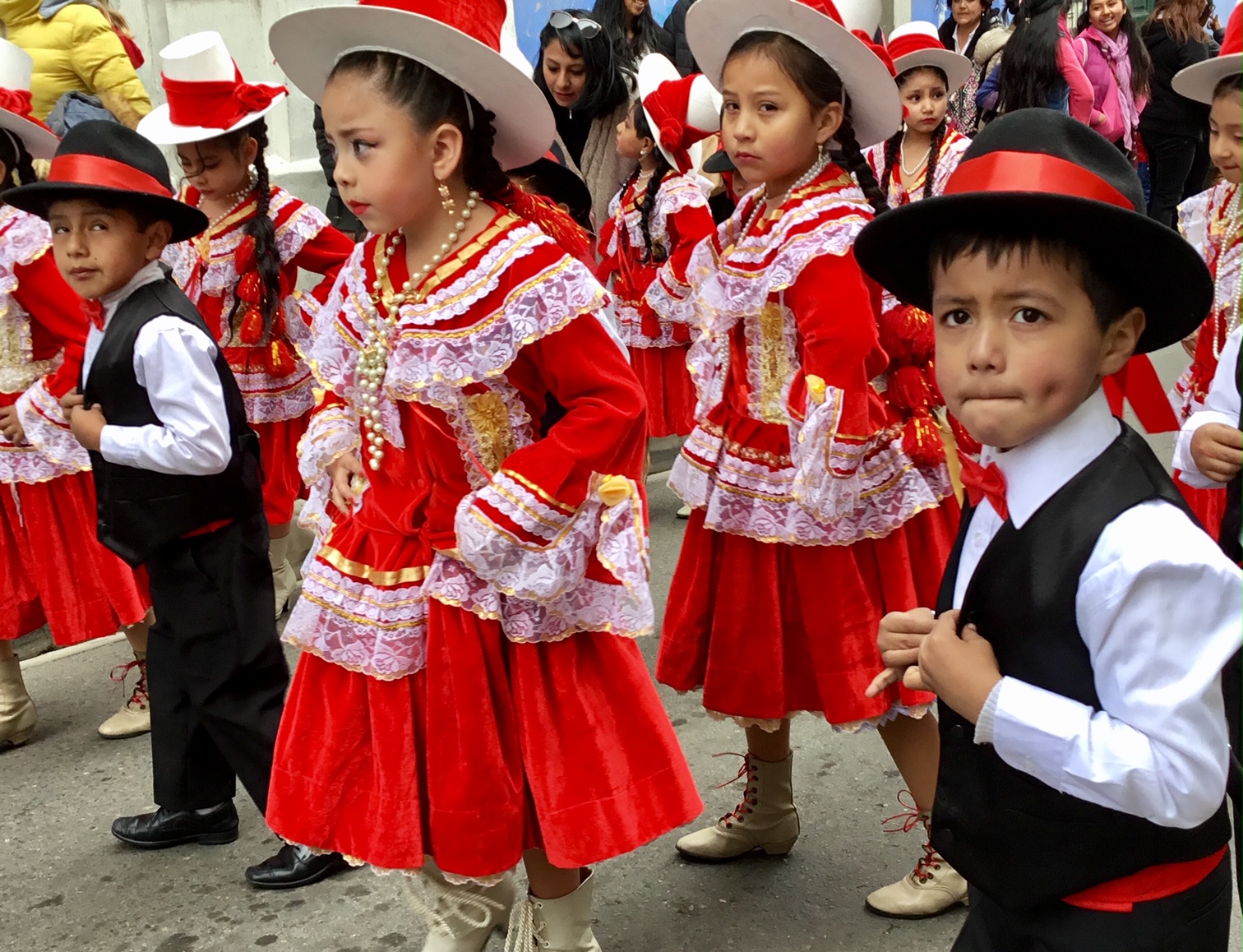
Potosí, Bolivia
* an ongoing series of quotations – mostly from artists, to artists – that offers wisdom, inspiration, and advice for the sometimes lonely road we are on.
Sunday of Carnival, the parade begins. For a whole day of celebration in music and dance, people can express their hope and fears, revive their myths and escape to a reality far from everyday life.
Thousands of spectators arrive from different parts if Bolivia and other countries. Filling the streets, they straddle benches, window ledges, balconies, cats and eve hang from walls or roofs to witness the entrance of the Carnival. Thus is the magnificent parade when Carnival makes its official entry into Oruro. The comparsas (dance troupes) dance to music for20 blocks, nearly eight lies, to the Church of the Virgin of Socavón (Virgin of the Mine). Each tries to out do the next in the brilliance of their costumes, the energy of their dancing and the power of their music. All their efforts are dedicated to the Virgin whose shrine is found on the hill called Pie de Gallo.
If there are thousands of spectators, there are also thousands of dancers from the city and other parts of the country. Among the most remarkable are the Diablos and Morenos which count for eight of the 40 or 50 participating groups. Keeping in mind that the smallest troupes have between 30 and 50 embers and the largest between 200 and 300, it is possible to calculate the number of dancers and imagine the spectacle.
… Each dance recalls a particular aspect of life in the Andes. Lifted from different periods and places, the dances offer a rich interpretation of historical events, creating an imaginative mythology for Oruro.
… Carnival blends indigenous beliefs and rituals with those introduced by the Spaniards. Both systems of belief have undergone transformations, each making allowance for the other, either through necessity or familiarity. The Christianity fought from Europe becomes loaded with new meanings while the myths and customs of the Andes accommodate their language and creativity to the reality of their conquered world. The process can be seen as a struggle culminating in a ‘mestizaje’ or new cultural mix.
El Carnaval de Oruro by Manuel Vargas in Mascaras de los Andes Bolivianos, Editorial Quipus and Banco Mercantil
Comments are welcome!


 barbararachkoscoloreddust.com