Blog Archives
Q: Over your 40-year career as an artist, you have managed to keep presentation, technical, subject matter, conceptual consistencies in your art practice and work. How do you manage to filter out inspirations that might be luring at that moment but do not support your art practice? For example, you master pastel works. There must have been moments when you might have been inspired to make oil works. How do you keep such inspirations aside. (Question from Vedica Art Studios and Gallery)

A: About thirty-five years ago, when my pastel paintings were becoming larger—around 60” x 40”—I had to choose between transitioning to oil on canvas or continuing with pastel. Framing was the main concern. I wasn’t certain large pastels could be framed, and even if they could, the cost might be prohibitive. However, I had already fallen in love with pastel and knew no other medium could offer such vibrant colors or velvety textures. Determined, I resolved the framing issue (art-making is fundamentally problem-solving), committed myself fully to soft pastel, and have continued inventing and refining techniques ever since.
My goal from the beginning has always been improvement as an artist. If an activity doesn’t contribute to my growth—as a person or as an artist—I typically don’t pursue it. Time and energy are finite resources, so I try to use them wisely.
Comments are welcome!
Pearls from artists* # 624

View from New York City
*an ongoing series of quotations – mostly from artists, to artists – that offers wisdom, inspiration, and advice for the sometimes lonely road we are on.
Van Gogh’s drawings show a truly remarkable improvement over the course of the two years he set aside to intensely practice drawing. At the start of that period his sketches look clumsy and amateurish. With great ardor, thoughtfulness, and effort – by manifesting his creativity, in short – at the end of those two years Van Gogh was producing drawings that showed not only that he had mastered elements of technique but also that he had educated himself in ways that moved him far ahead of his classically trained peers.
Van Gogh’s progress excites the artist. It seems to hold the clear implication that by acting creatively the artist may significantly increase his talents or make manifest significant talent he didn’t know he possessed. Maybe a brilliant novel is within his grasp. Maybe he can achieve a breakthrough in the visual arts. Maybe he can play his instrument like a god.
Eric Maisel in A Life in the Arts: Practical Guidance and Inspiration for Creative and Performing Artists
Comments are welcome!
Q: What’s on the easel today?
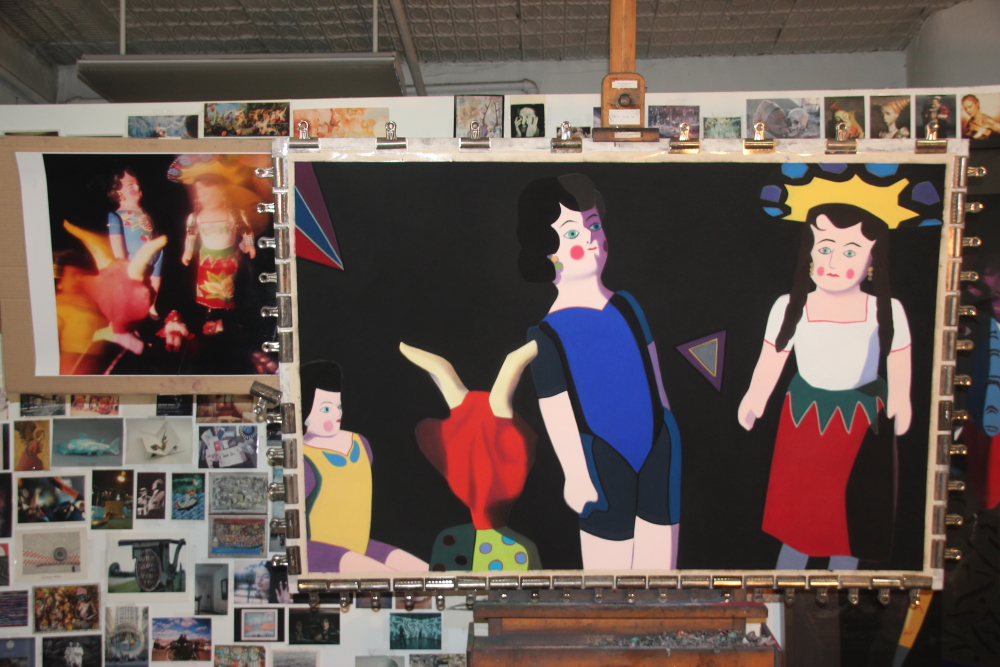
Work in progress
A: I continue working on a large, 38″ x 58″, pastel painting called, “Conundrum” and am happy with how it’s progressing. A few days ago I added the small triangle to the right of the central figure. I felt some compositional element was needed there and believe this is an improvement.
Comments are welcome!
Pearls from artists* # 105

“Blind Faith,” 38″ x 58″, soft pastel on sandpaper
* an ongoing series of quotations – mostly from artists, to artists – that offers wisdom, inspiration, and advice for the sometimes lonely road we are on.
Serendipitously, I read two memoirs in close proximity, Julia Child’s account of her life in France and how she learned to be a first-rate cook, and Renee Fleming’s story of becoming a world-class opera diva. While there were many differences between the women and the skills they set out to master, I was struck in both books by how extraordinarily hard each one worked in private for years and years before going public, certainly before becoming famous, and how each managed shame. Both women loved what they did and thus brought to bear a similar, and I suspect key, willingness to stay with their efforts through eons of study, practice, and improvement. Both had the ability to hear criticism and to make corrections repeatedly without becoming terminally discouraged; to bear the anxiety of their efforts; neither was too proud to learn and keep learning. This willingness to be taught and corrected, without feeling ashamed, sometimes over and over again, is a huge asset when you are seeking to do something very well. And one way shame impedes people is by making them take criticism too personally – as about them rather than about what they’re trying to learn.
Janna Malamud Smith in An Absorbing Errand: How Artists and Craftsmen Make Their Way to Mastery
Comments are welcome!
Pearls from artists* # 6
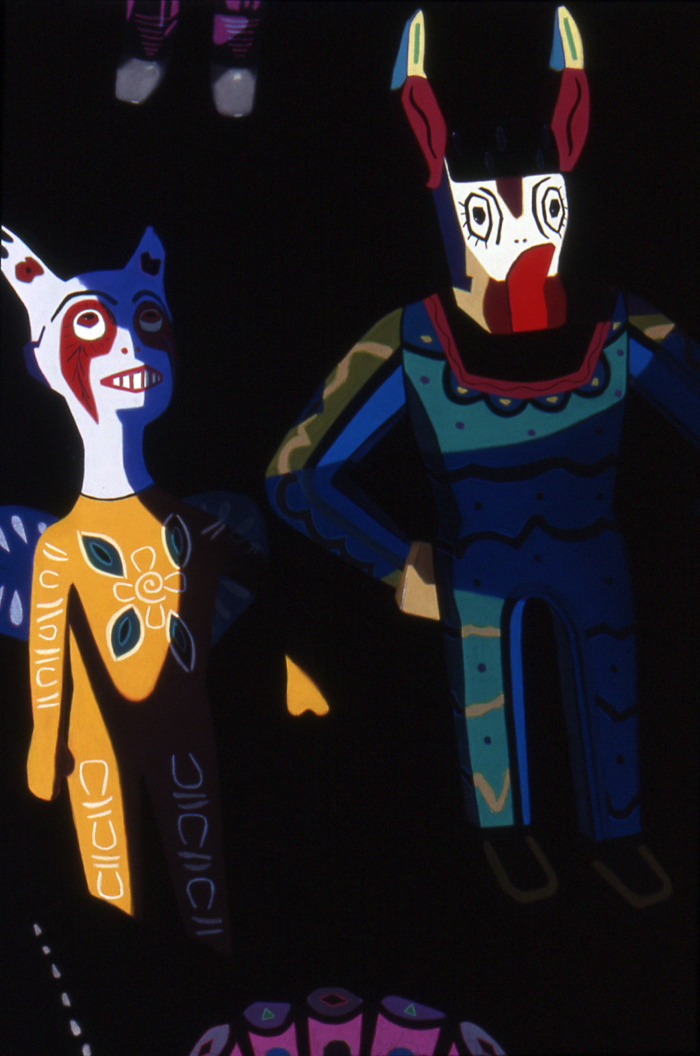
“Quartet,” soft pastel on sandpaper, 58″ x 38″ image, 70″ x 50″ framed
* an ongoing series of quotations – mostly from artists, to artists – that offers wisdom, inspiration, and advice for the sometimes lonely road we are on.
After we have responded to a work of art, we leave it, carrying in our consciousness something which we didn’t have before. This something amounts to more than our memory of the incident represented, and also more than our memory of the shapes and colours and spaces which the artist used and arranged. What we take away with us – on the most profound level – is the memory of the artist’s way of looking at the world. The representation of a recognizable incident (an incident here can simply mean a tree or a head) offers us the chance of relating the artist’s way of looking to our own. The forms he uses are the means by which he expresses his way of looking. The truth of this is confirmed by the fact that we can often recall the experience of a work, having forgotten both its precise subject and its precise formal arrangement.
Yet why should an artist’s way of looking at the world have any meaning for us? Because, I believe, it increases our awareness of our own potentiality. Not of course our awareness of our potentiality as artists ourselves. But a way of looking at the world implies a certain relationship with the world, and every relationship implies action. The kind of actions implied vary a great deal. A classical Greek sculpture increases our awareness of our own potential physical dignity; a Rembrandt of our potential moral courage; a Matisse of our potential sensual awareness. Yet each of these examples is too personal and too narrow to contain the whole truth of the matter. A work can, to some extent, increase an awareness of different potentialities in different people. The important point is that a valid work of art promises in some way or another the possibility of an increase, an improvement. Nor need the work be optimistic to achieve this; indeed, its subject may be tragic. For it is not the subject matter that makes the promise, it is the artist’s way of viewing his subject. Goya’s way of looking at a massacre amounts to the contention that we ought to be able to do without massacres.
John Berger, Selected Essays
Comments are welcome.


 barbararachkoscoloreddust.com