Blog Archives
Pearls from artists* # 625

Downtown Manhattan
*an ongoing series of quotations – mostly from artists, to artists – that offers wisdom, inspiration, and advice for the sometimes lonely road we are on.
Think of one of those rare, truly exceptional outings to the cinema. In the lobby afterward the experience elicits from us a language of paralysis and disappearance: “I forgot myself. It could have gone on forever.” Stepping out onto the street, we feel that somehow nothing is as it was before. The passing cars, the night sky above the glass towers, the streetlights reflected on the wet pavement: everything glows with a strange immediacy and newness. It is as if the film had done something to the world. A similar thing might happen when we put down a great novel or take in a powerful piece of music.
The Book of Revelation contains a memorable line: “Behold, I make all things new.” Reflecting on this ancient text, the critic Northrop Frye defined the Apocalypse as “the way the world looks once the ego has disappeared.” Every great artistic work is a quiet apocalypse. It tears off the veil of ego, replacing old impressions with new ones at once inexorably alien and profoundly meaningful. Great works of art have a unique capacity to arrest the discursive mind, raising it to a level of reality that is more expansive than the egoic dimension we normally inhabit. In this sense, art is the transfiguration of the world.
J.F. Martel in Reclaiming Art in the Age of Artifice: A Treatise,Critique, and Call to Action
Comments are welcome!
Pearls from artists* 564
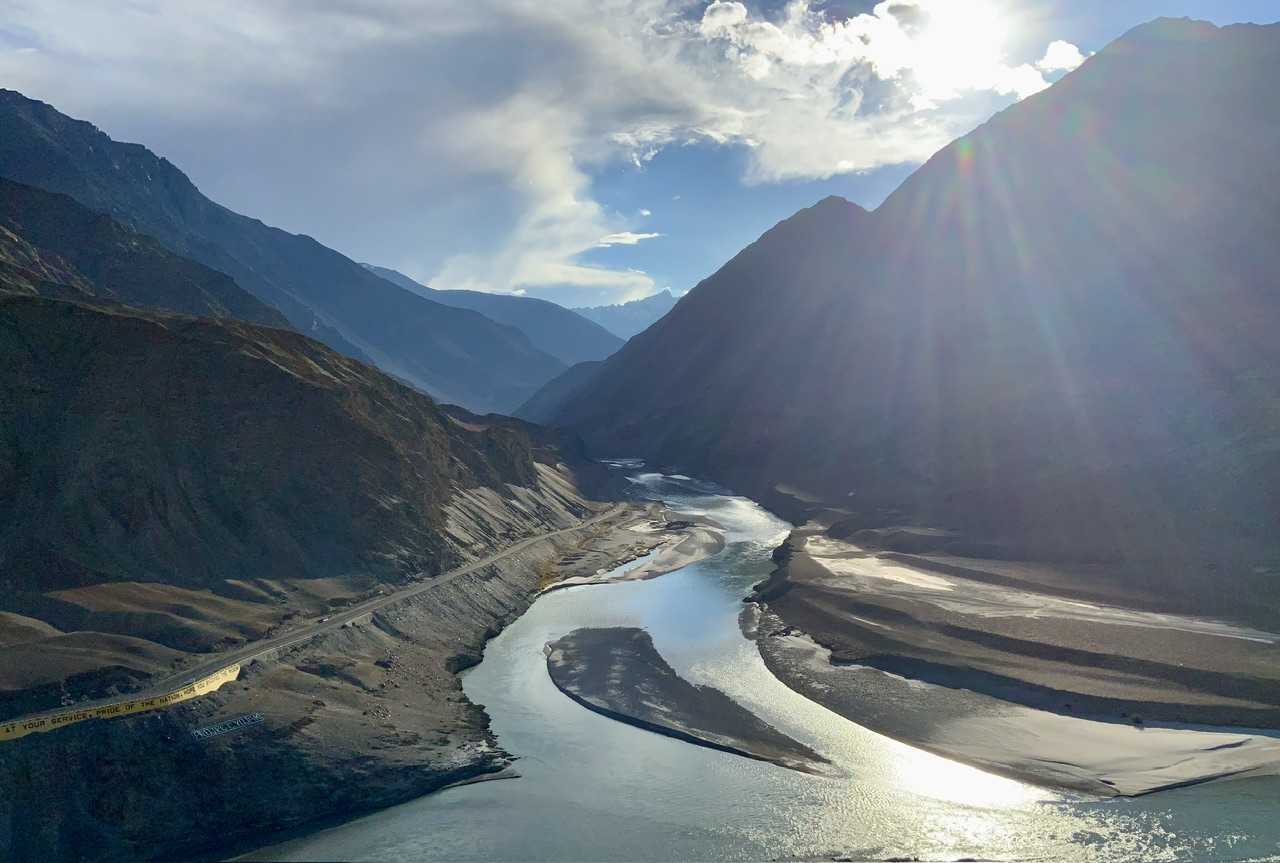
Indus River, Ladakh, India
*an ongoing series of quotations – mostly from artists, to artists – that offers wisdom, inspiration, and advice for the sometimes lonely road we are on.
To travel through the peaks and valleys of Himalayan Buddhism is to become a collector of fragmented images and a teasing array of sense impressions, many of them bound to counter the stereotypes of simplicity and serenity that we expect to define a Buddhist universe. At the end of the journey, the traveler assembles these sense fragments into an individualistic understanding of what has been seen and experienced. Maybe that’s the way it should be, since Buddhism itself teaches us that each person must seek his own way to knowledge and enlightenment in this life or some other.
Barbara Crossette in So Close to Heaven: The Vanishing Buddhist Kingdoms of the Himalayas
Comments are welcome!
Pearls from artists* # 357
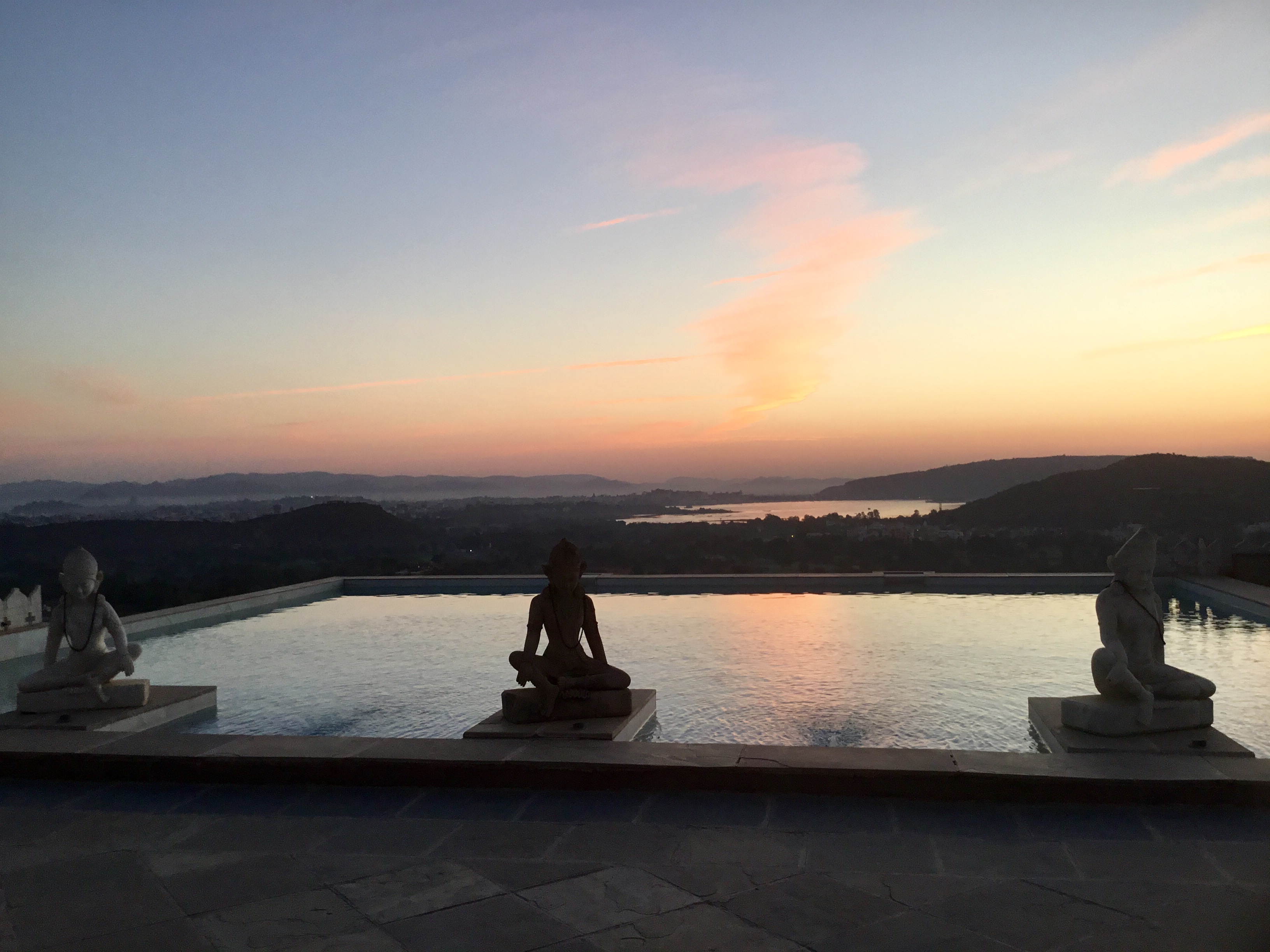
Udaipur, India
*an ongoing series of quotations – mostly from artists, to artists – that offers wisdom, inspiration, and advice for the sometimes lonely road we are on.
The term hermeneutics has been used to describe the task of understanding and interpreting ideas and texts. In a similar way, we need to set for ourselves the task of developing a hermeneutic of the visible, addressing the problem of how we understand and interpret what we see, not only in the classical images and art forms created by the various religious traditions, but in the ordinary images of people’s traditions, rites, and daily activities which are presented to us through the film-image.
Rudolph Arnheim, in his extensive work on visual perception, has shown that the dichotomy between seeing and thinking which runs through much of the Western tradition, is a very problematic one. In Visual Thinking, he contends that visual perception is integrally related to thought. It is not the case, according to Arnheim, that the eyes present a kind of raw data to the mind which, in turn, processes it and refines it by thought. Rather, those visual images are the shapers and bearers of thought. Jan Gonda, in writing on the Vedic notion dhi, sometimes translated as “thought,” finds similarly that the semantic fields of the word in Vedic literature does not correspond as much to our words for “thinking” as it does to our notions of “insight,” “vision,” and “seeing.” Suzanne Langer has also written of the integral relation of thought to the images we see in the “mind’s eye.” The making of all of those images is the fundamental “imaginative” human activity. One might add that it is the fundamental activity of the religious imagination as well. She writes, “Images are, therefore, our readiest instruments for abstracting concepts from the tumbling streams of actual impressions.”
Diana L. Eck in Darsan: Seeing the Divine Image in India
Comments are welcome!
Pearls from artists* # 17

Boat hull
* an ongoing series of quotations – mostly from artists, to artists – that offers wisdom, inspiration, and advice for the sometimes lonely road we are on.
The better you know yourself, the more you will know when you are playing to your strengths and when you are sticking your neck out. Venturing out of your comfort zone may be dangerous, yet you do it anyway because our ability to grow is directly proportional to an ability to entertain the uncomfortable.
… Another thing about knowing who you are is that you know what you should not be doing, which can save you a lot of heartaches and false starts if you catch it early on.
I was giving a lecture to students at Vassar not long ago. Working with the students’ autobiographies, I invited a dance student, a music student who brought his saxophone, and an art student to join me on stage. I asked the dancer to improvise some movement from a tuck position on the floor. I asked the saxophone player to accompany the dancer. And I asked the art student to assign colors to what they were doing. I admit I was constructing a three-ring circus in the lecture hall. But my goal was to bring the three students together by forcing them to work off the same page, and also to free them to discover how far they could go improvising on this simple assignment.
When I asked the art student to read out loud his color impressions, everyone in the hall was taken aback. He droned on and on about himself, feelings he’d had, stories about friends. Not a word about color. Finally I heard “limpid blue” come out of his mouth. I waved my arms, signaling him to stop reading.
“Do you realize,” I said, “that you’ve just recited about five hundred words in an assignment about color? You’ve covered everything under the sun, and ‘limpid blue’ is the first time you’ve mentioned a color. I’m not convinced you want to be a painter.”
As far as I was concerned, this young man was in “DNA denial.” I gave him a painterly exercise and he gave me a text heavy response. A young man with painting in his genes would be rattling off colors immediately. Instead, his vivid use of language – limpid blue does not come in tubes – suggested that he really ought to be a writer.
It would be presumptious of me to think I had him pegged for a writer, not a painter, after that brief encounter. But if I got him to reexamine what he’s built for, then he was a step or two ahead of most people.
Twyla Tharp, The Creative Habit: Learn it and Use it for Life
Comments are welcome.


 barbararachkoscoloreddust.com