Blog Archives
Pearls from artists* # 227

Madurai, India
* an ongoing series of quotations – mostly from artists, to artists – that offers wisdom, inspiration, and advice for the sometimes lonely road we are on.
As George Grosz said, at that last meeting he attended at the National Institute, “How did I come to be a great artist? Endless curiosity, observation, research – and a great amount of joy in the thing.” It is a matter of taking a liking to things. Things that were in accordance with your taste. I think that was it. And we didn’t care how unhomogenous they might seem. Didn’t Aristotle say that it is the mark of a poet to see resemblances between apparently incongruous things? There was any amount of attraction about it.
Ezra Pound in Writers at Work: The Paris Review Interviews Second Series, edited by George Plimpton
Comments are welcome!
Q: What significance do the folk art figures that you collect during your travels have for you?

Barbara’s studio
A: I am drawn to each figure because it possesses a powerful presence that resonates with me. I am not sure exactly how or why, but I know each piece I collect has lessons to teach.
Who made this thing? How? Why? Where? When? I feel connected to each object’s creator and curiosity leads me to become a detective and an archaeologist to find out more about them and to figure out how to best use them in my work.
The best way I can describe it: after nearly three decades of seeking out, collecting, and using these folk art figures as symbols in my work, the entire process has become a rich personal journey towards gaining greater knowledge and wisdom.
Comments are welcome!
Pearls from artists* # 194

“Epiphany,” soft pastel on sandpaper, 38″ x 58″
* an ongoing series of quotations – mostly from artists, to artists – that offers wisdom, inspiration, and advice for the sometimes lonely road we are on.
I did sculpture because what interested me in painting was to bring some order to my brain. It was a change of means. I took to clay as a break from painting; at the time I’d done absolutely everything I could in painting. Which means it was still about organizing. It was to put my sensations in order and look for a method that really suited me. When I’d found it in sculpture, I used it for painting. To come into possession of my own brain: that was always the goal, a sort of hierarchy of all my sensations, so that I could reach a conclusion.
One day, visiting Carriere at his house, I told him that. He replied: “But, my friend, that’s why you work. If you ever managed it, you’d probably stop working. It’s your reason for working.”
In painting – in any oeuvre – the goal is to reconcile the irreconcilable. There are all kinds of qualities in us, contradictory qualities. You have to construct something viable with that, something stable. That’s why you work your whole life long and want to keep on working until the last moment… as long as you haven’t admitted defeat or lost your curiosity, as long as you haven’t settled into a routine.
Chatting with Henri Matisse: The Lost 1941 Interview, Henri Matisse with Pierre Courthion, edited by Serge Guilbaut, translated by Chris Miller
Comments are welcome!
Pearls from artists* # 193
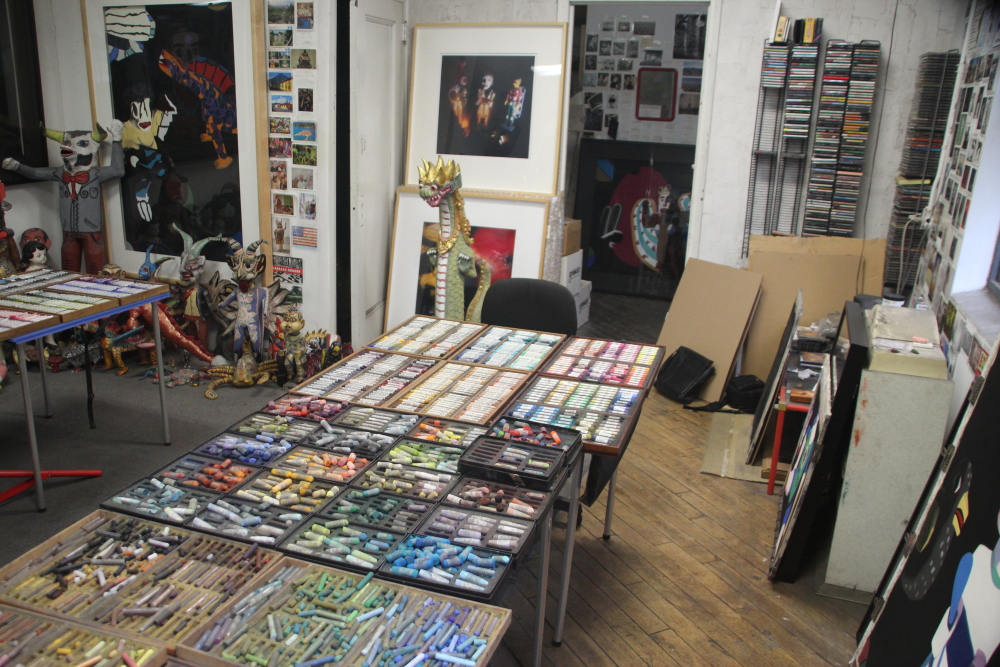
Barbara’s studio
* an ongoing series of quotations – mostly from artists, to artists – that offers wisdom, inspiration, and advice for the sometimes lonely road we are on.
Interviewer: Your work includes a great range of experience, as well as of form. What do you think is the greatest quality a poet can have? Is it formal, or is it a quality of thinking?
Ezra Pound: I don’t know that you can put the needed qualities in hierarchic order, but he must have a continuous curiosity, which of course does not make him a writer. but if he hasn’t got that he will wither. And the question of doing anything about it depends on a persistent energy. A man like Agassiz is never bored, never tired. The transit from the reception of stimuli to the recording, to the correlation, that is what takes the whole energy of a lifetime.
Writers at Work: The Paris Review Interviews Second Series, edited by George Plimpton and introduced by Van Wyck Brooks
Comments are welcome!
Pearls from artists* # 187
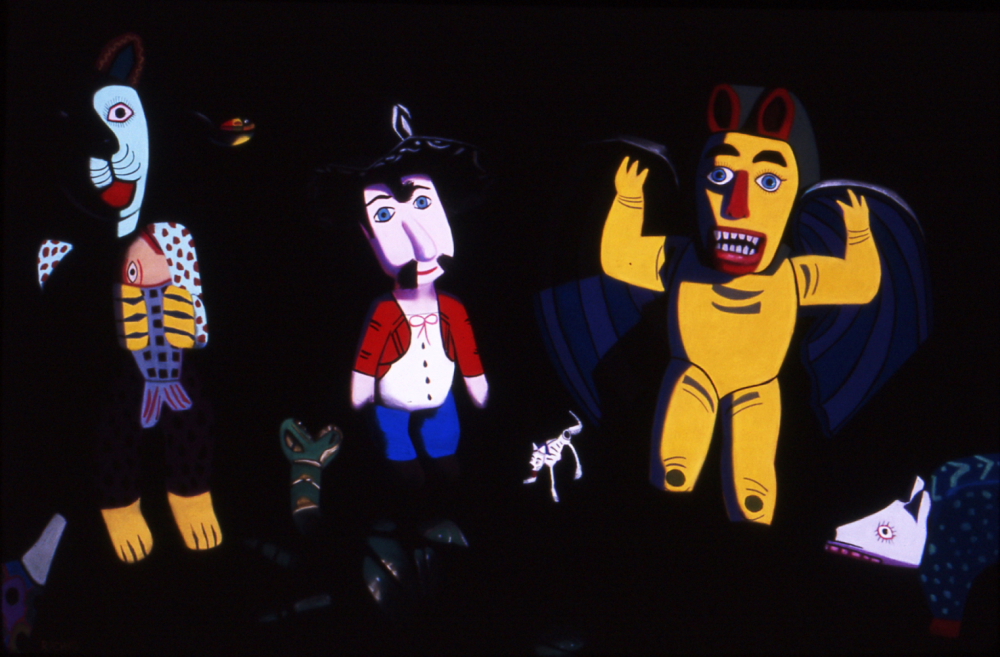
“Big Wow,” soft pastel on sandpaper, 38″ x 58″
* an ongoing series of quotations – mostly from artists, to artists – that offers wisdom, inspiration, and advice for the sometimes lonely road we are on.
As George Grosz said, at that last meeting he attended at the National Institute, “How did I come to be an artist? Endless curiosity, observation, research – and a great amount of joy in the thing.” It was a matter of taking a liking to things. Things that were in accordance with your taste. I think that was it. And we didn’t care how unhomogenous they might seem. Didn’t Aristotle say that it is the mark of a poet to see resemblances between apparently incongruous things? There was any amount of attraction about it.
Marianne Moore in Writers at Work: The Paris Review Interviews Second Series, edited by George Plimpton
Comments are welcome!
Q: What do you think are the most important qualities in an artist?

“Big Deal,” soft pastel on sandpaper, 58″ x 38″
A: Two essentials immediately come to mind. I believe imagination and curiosity are very important qualities, not only for artists, but for anyone who hopes to look back on a well-lived life. As Lauren Bacall famously said, “Imagination is the highest kite one can fly.”
It is curiosity that keeps people laser-focused on a lifetime journey of learning. I’d venture to say that curiosity is the not-so-secret quality of accomplished people in every profession. We humans can never know enough!
Comments are welcome!
Pearls from artists* # 69
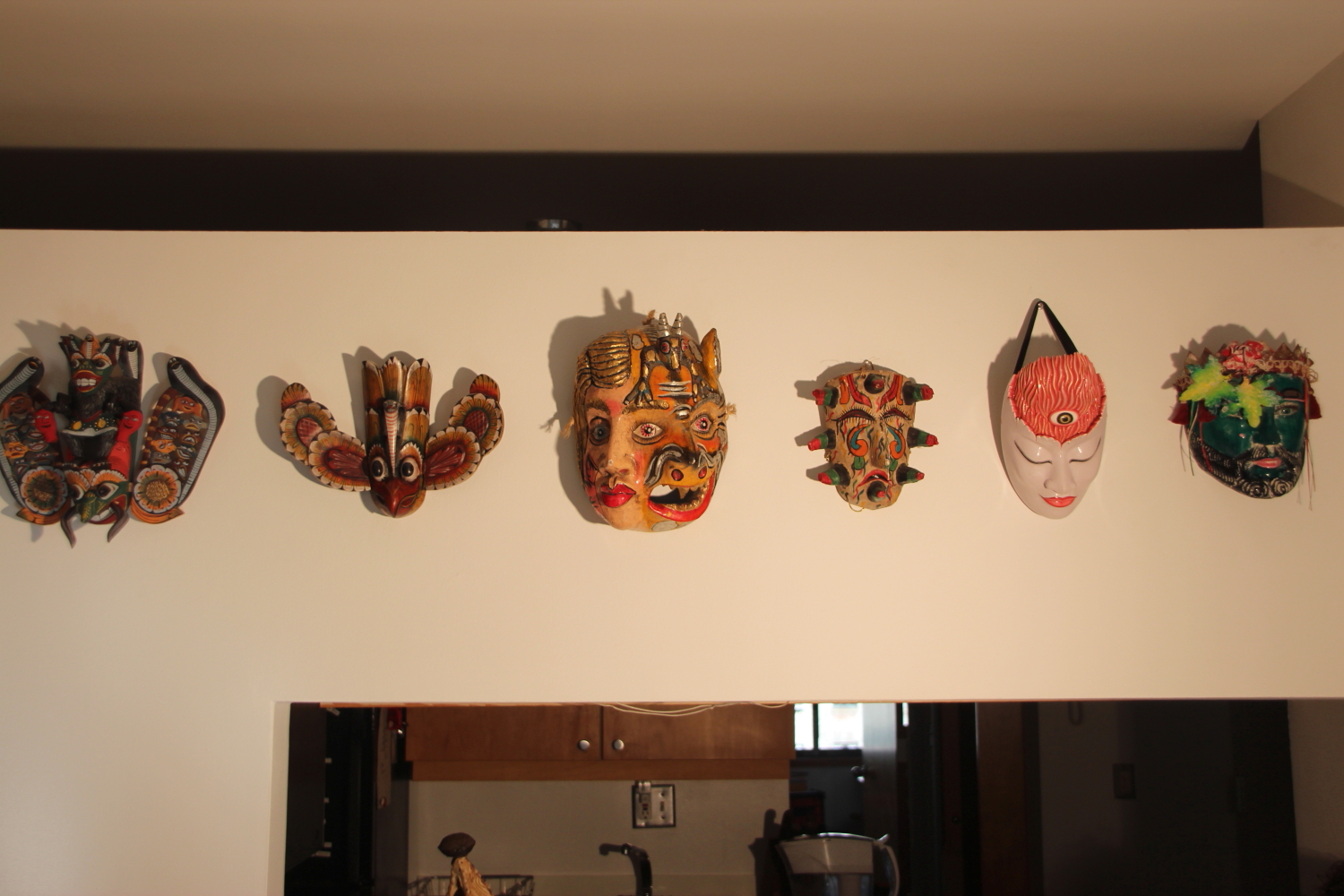
Masks from Sri Lanka, Mexico, and Bali
*
an ongoing series of quotations – mostly from artists, to artists – that offers wisdom, inspiration, and advice for the sometimes lonely road we are on.
The mission is to stay hungry. Once you need to know, you can proceed and draw distinctions. From the heat of this necessity, you reach out to content – the play, the theme, or question – and begin to listen closely, read, taste, and experience it. You learn to differentiate and interpret the sensations received while engaged with content. The perception forms the basis for expression.
Have you ever been so curious about something that the hunger to find out nearly drives you to distraction? The hunger is necessity. As an artist, your entire artistic abilities are shaped by how necessity has entered your life and then how you sustain it. It is imperative to maintain artistic curiosity and necessity. It is our job to maintain in this state of feedforward as long as humanly possible. Without necessity as the fuel for expression, the content remains theoretical. The drive to taste, discover, and express what thrills and chills the soul is the point. Creation must begin with personal necessity rather than conjecture about audience taste or fashion.
Anne Bogart in and then, you act: making art in an unpredictable world
Comments are welcome!


 barbararachkoscoloreddust.com