Blog Archives
Q: How do you feel about the fact that more people view an artist’s work online than ever see it in person?

A: This has been a dilemma for decades. Don’t get me wrong. Artists are indeed fortunate to have alternative ways to share our art, such as on the internet, but there is just no substitute for seeing art in person! I remember friends telling me about a review of a Nan Goldin exhibition that said, “All of the pleasure circuits are fired in looking.” That rarely happens when you view art online. Yet this is how most people experience our work – at a remove and on a small screen.
Nowadays, a global audience will see art on their phones instead of in our studios or in a gallery or museum. My pastel paintings are quite large and very detailed so when people finally see them in person, they are often surprised. They had gotten used to seeing them in a much smaller scale online, where very few of the meticulous and subtle details I incorporate into them are visible.
Comments are welcome!
Pearls from artists* # 568

*an ongoing series of quotations – mostly from artists, to artists – that offers wisdom, inspiration, and advice for the sometimes lonely road we are on.
Some people say they work best under pressure, but working under pressure is a bit of a fallacy. It’s not waiting till the last minute that gives you the good work; it’s the focus that’s required when you wait till the last minute that brings about the good work. So think of it this way: your focus is the center of your brilliance; why not avail yourself of that brilliance on a regular basis? Everyone has her own rhythm, but if you don’t like the fact that you procrastinate, one way to get out of it is to think what the alternative is. The alternative is, instead of trying to do a month’s work in a few intense days in the studio, to give yourself the pleasure of yourself in flow, in focus, on a regular basis.
Anna Deavere Smith in Letters to a Young Artist: Straight-Up Advice on Making a Life in the Arts for Actors, Performers, Writers, and Artists of Every Kind
Comments are welcome!
Q: Do you use a sketchbook?
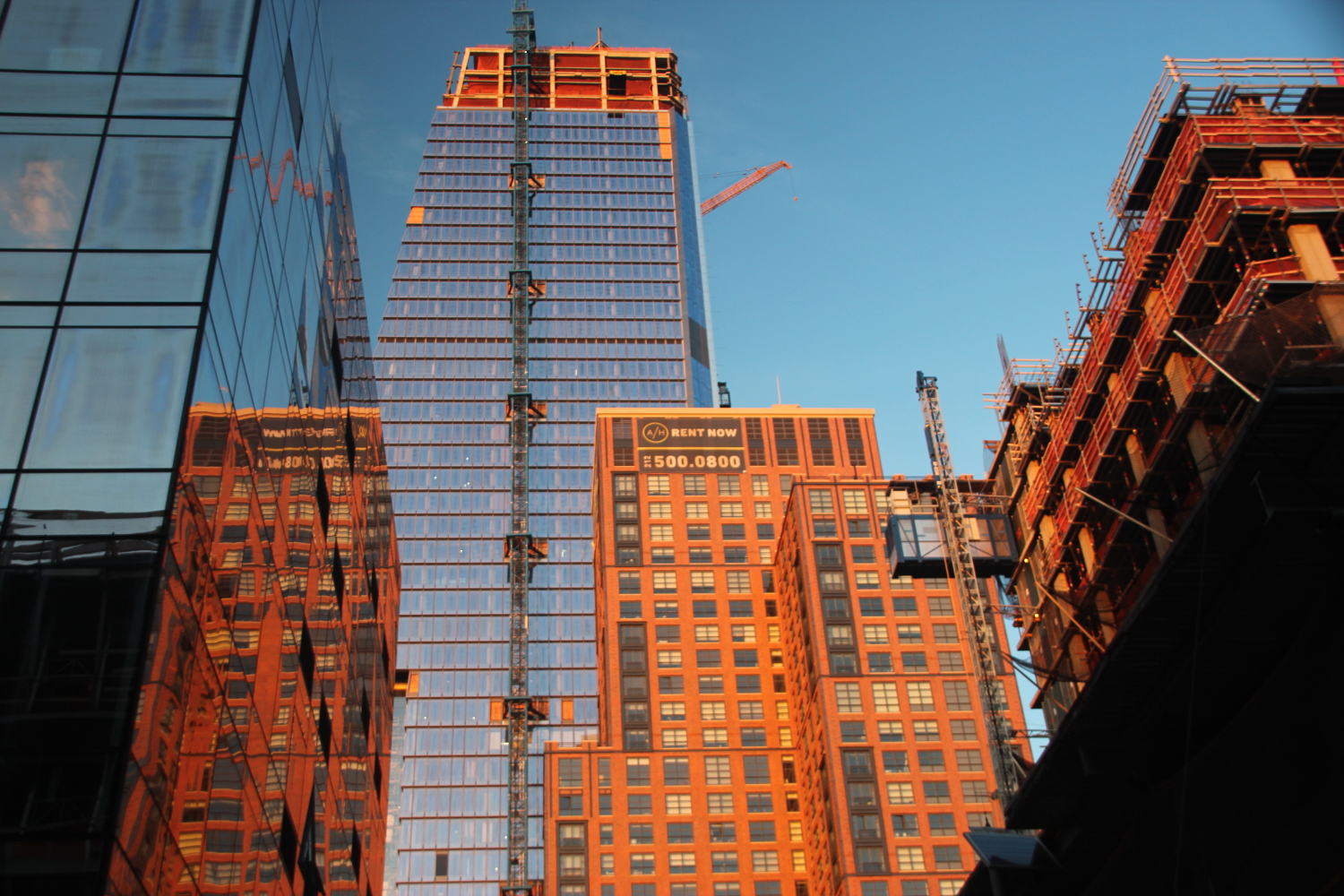
Hudson Yards, NYC
A: I used to use a sketchbook early on, when I was just beginning to find my way as an artist. Sketching on location helped to crystalize my ideas about art, about technique, and about what I hoped to accomplish in the near term. These days I spend so many hours in the studio – it’s my day job – that I often need a mental and physical break from using my eyes and from looking at and composing images.
What I do instead is to walk around New York (and elsewhere) with a camera. Photography for me sometimes serves as an alternative to sketching. It’s a way to continue to think about art, to experiment, and to contemplate what makes an arresting image without actually having to be working in the studio.
Comments are welcome!
Q: Why do you prefer not to explain your titles and imagery?
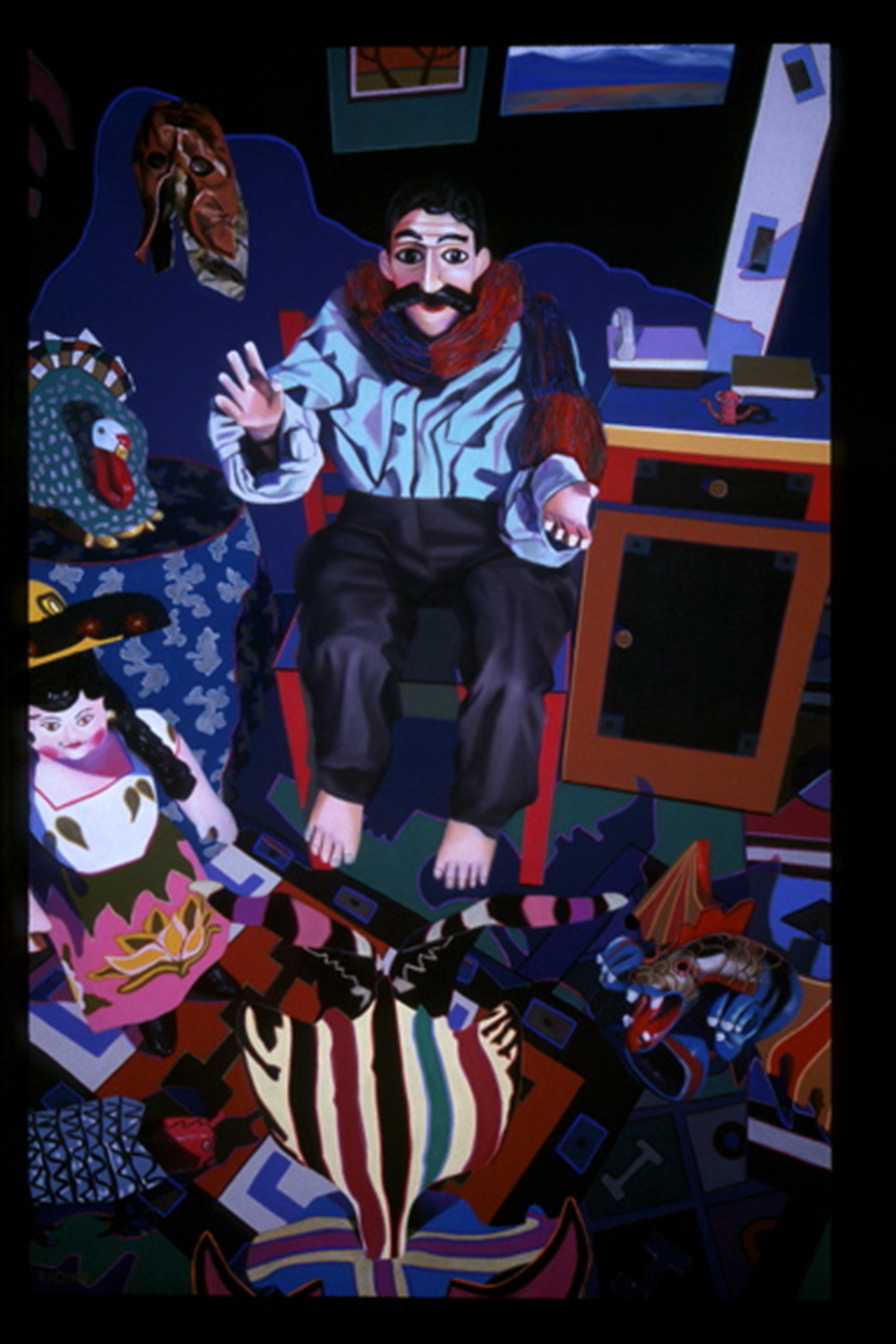
“Truth Betrayed by Innocence,” soft pastel on sandpaper, 58″ x 38″
A: It’s mainly because answers close down imagination and creativity. I enjoy hearing alternative interpretations of my pastel paintings. People are wildly imaginative and each person brings unique insights to their art viewing. By leaving meanings open, conversation is generated. Most artists want viewers to talk about their work.
Once at a public artist’s talk that I attended, I was told by an artist that my interpretation of her title was completely wrong. First of all, how can an interpretation honestly expressed by your audience be “wrong?” Art is as open to interpretation as a Rorschach test (art IS a kind of Rorshach test). Then she explained the thinking behind her title and succeeded in cutting off all further conversation. I felt belittled. Later several people told me that my interpretation was much more compelling. Still, the experience was mortifying and I hope to never do that to anyone.
Comments are welcome!
Q: How did you happen to have a photograph published in The Wall Street Journal?

Sun Tunnels by Nancy Holt
A. That is a long story. To get far away from New York for the ten-year anniversary of 9/11, my friend, Donna Tang, and I planned a two-week road trip to see land art sites in Arizona, New Mexico, Utah, and Colorado. (Donna did excellent research).
We hoped for a private tour of Roden Crater with James Turrell, which is not easy to arrange. I had also invited my friend Ann Landi, an art critic and arts writer, to join us, hoping she might get an interview with Turrell and write an article for Artnews. Turrell has been working on Roden Crater for 30+ years so Ann was interested in seeing it too! Ann contacted Turrell’s gallery – Gagosian – but they later relayed Turrell’s refusal.
We were planning to see other land art sites. As an alternative to Roden Crater and Turrell, Ann pitched a story to The Wall Street Journal about Sun Tunnels and Nancy Holt (Robert Smithson’s wife, who as the only woman in the land art movement, has never been given her due). The Journal said yes, so Ann made plans to join Donna and me in Salt Lake City.
The three of us visited Sun Tunnels, Spiral Getty, and other sites together. Ann had a brand new point-and-shoot camera that she hadn’t yet learned how to use. I always take lots of photos whenever I travel. After we returned home, I sent Ann a few images and she asked permission to submit them with her article. I was thrilled when The Wall Street Journal requested JPEGs. It was the first time I’ve had a photograph published in a major newspaper.
Comments are welcome!
Pearls from artists* # 91
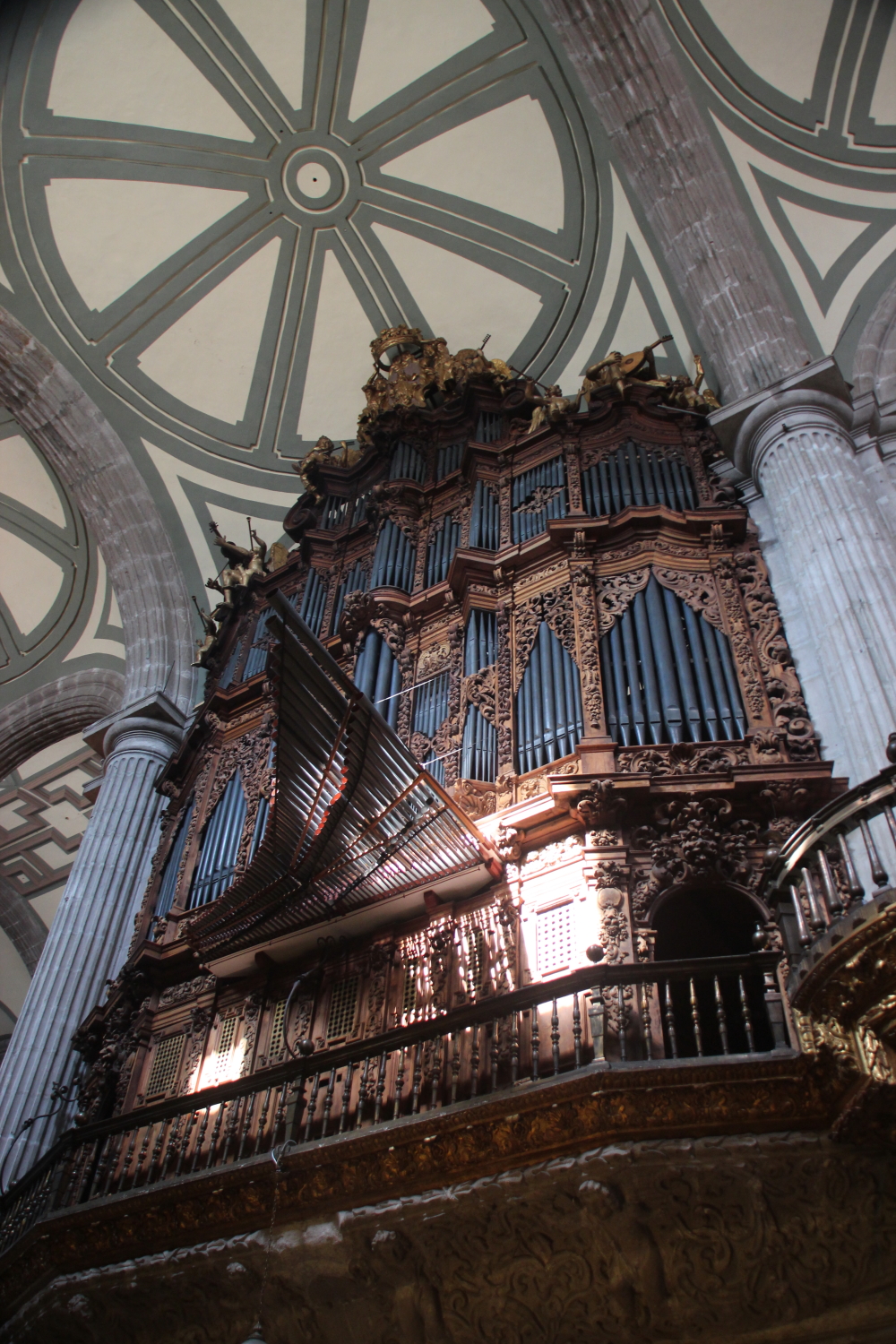
Mexico City
* an ongoing series of quotations – mostly from artists, to artists – that offers wisdom, inspiration, and advice for the sometimes lonely road we are on.
I’m struggling a lot financially, struggling a lot to keep my group going, struggling to keep going in every way, but I feel like I try so hard because every time that I’m able to go to a college or to be with young people they need to know that there is this “anything is possible” idea. They need to at least see that. I intend to continue nevertheless. Somehow that seems very important right now. It isn’t that you go to school just to find out everything you need to get a job or something. We never thought of what we did as a job. We thought of it as our work, our life. Then there was a certain point, I think, in the eighties where people thought of their identity as this and then what you did was a job. There was a separation between the two things.
I pray that now there will be some loosening and we’ll feel this sense of, just as you said so beautifully, space and breath. No one’s breathing. That’s why I feel that doing art is so important. It makes you dig in your heels even more. It’s a life-and-death kind of thing. What is the other alternative? The other alternative is that you’re living in a culture that’s basically trying to distract you from the moment. It’s trying to distract you from your life. It’s trying to distract you from who you are, and it’s trying to numb you, and it’s trying to make you buy things. Now, I don’t really think that that’s what life is about. I’m excited because now I have this real sense that there’s this counterculture, you could say, or counter-impulse. it’s not for-and-against, but there is a kind of dialectic where there’s a kind of resistance you can actually hit against, or at least address in one way or the other.
Meredith Monk quoted in Conversations with Anne: Twenty-four Interviews, by Anne Bogart
Comments are welcome!


 barbararachkoscoloreddust.com