Category Archives: Studio
Pearls from artists* # 249
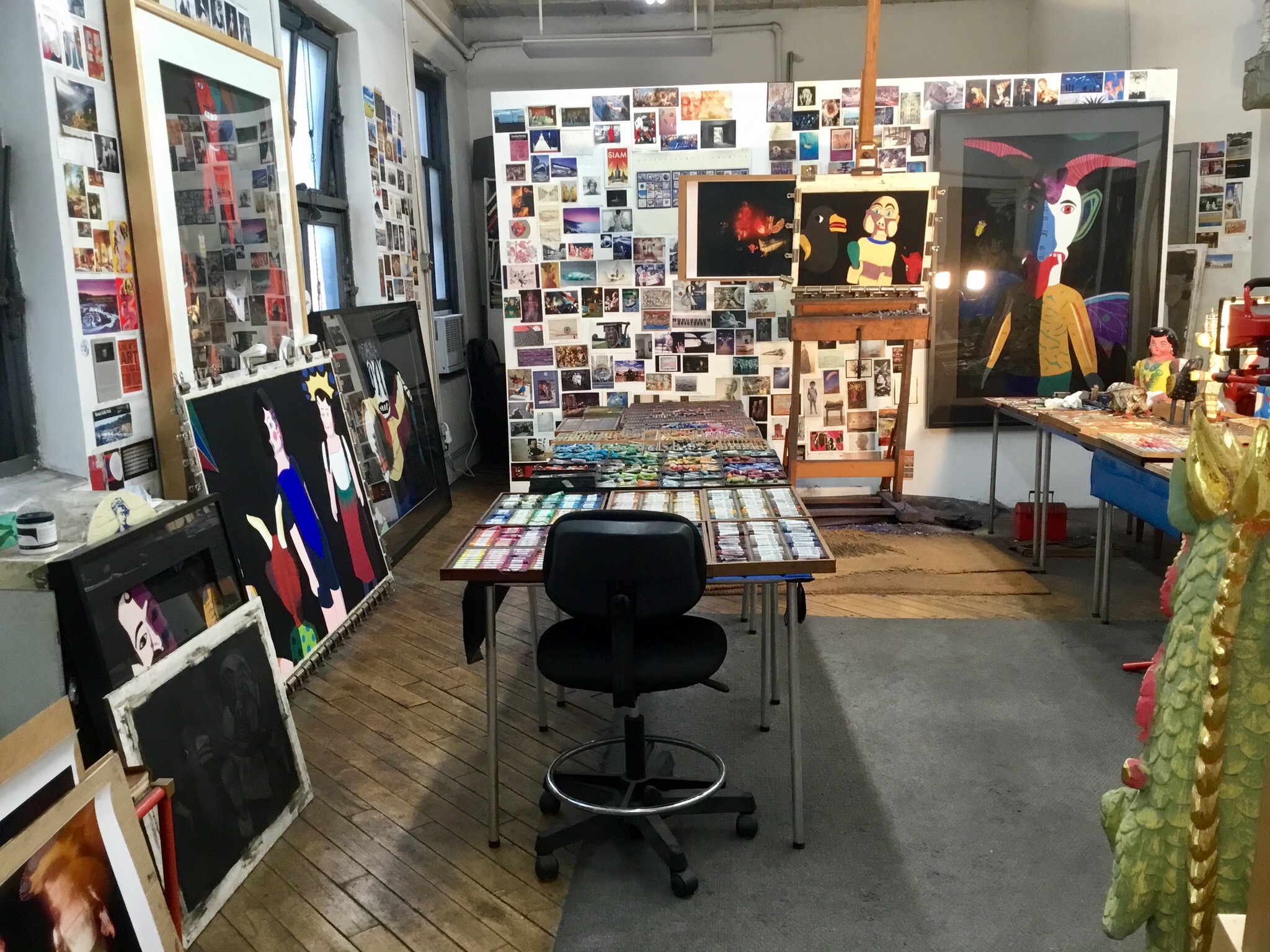
Barbara’s studio
* an ongoing series of quotations – mostly from artists, to artists – that offers wisdom, inspiration, and advice for the sometimes lonely road we are on.
Interviewer: Can a writer learn style?
Capote: No, I don’t think that style is consciously arrived at, any more than one arrives at the color of one’s eyes. After all, your style is you. At the end the personality of a writer has so much to do with the work. The personality has to be humanly there. Personality is a debased word, I know, but it’s what I mean. The writer’s individual humanity, his word or gesture towards the world, has to appear almost like a character that makes contact with the reader. If the personality is vague or confused or merely literary, ca ne va pas. Faulkner, Mc Cullers – they project their personality at once.
Truman Capote in Writers at Work: The Paris Review Interviews First Series, edited, and with an introduction by Malcolm Crowley
Comments are welcome!
Start/Finish of “Provocateur,” soft pastel on sandpaper, 26″ x 20″ image, 35″ x 28 1/2″ framed
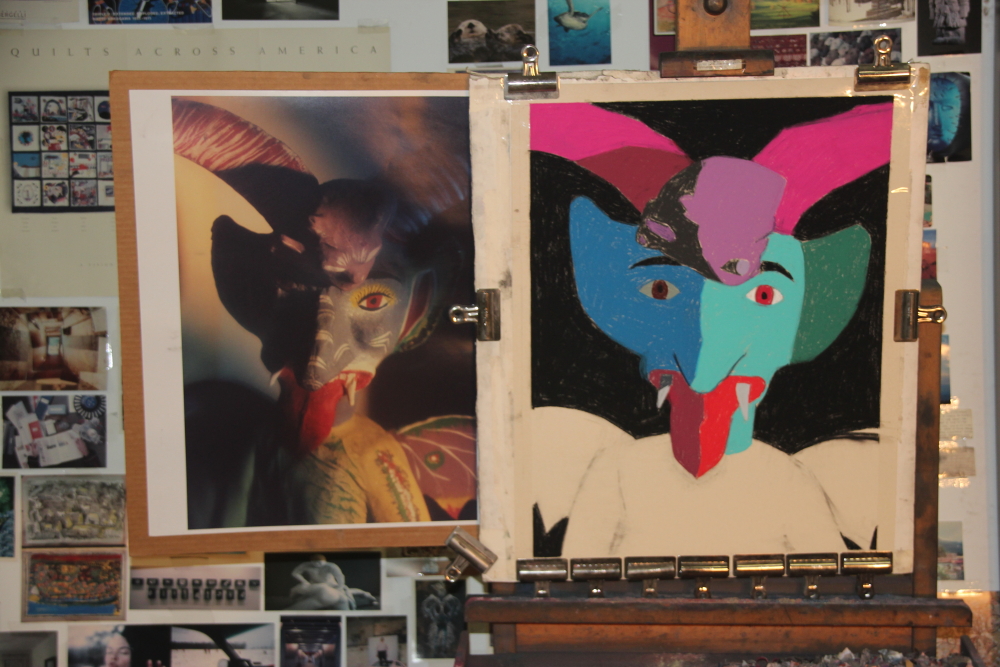
Beginning
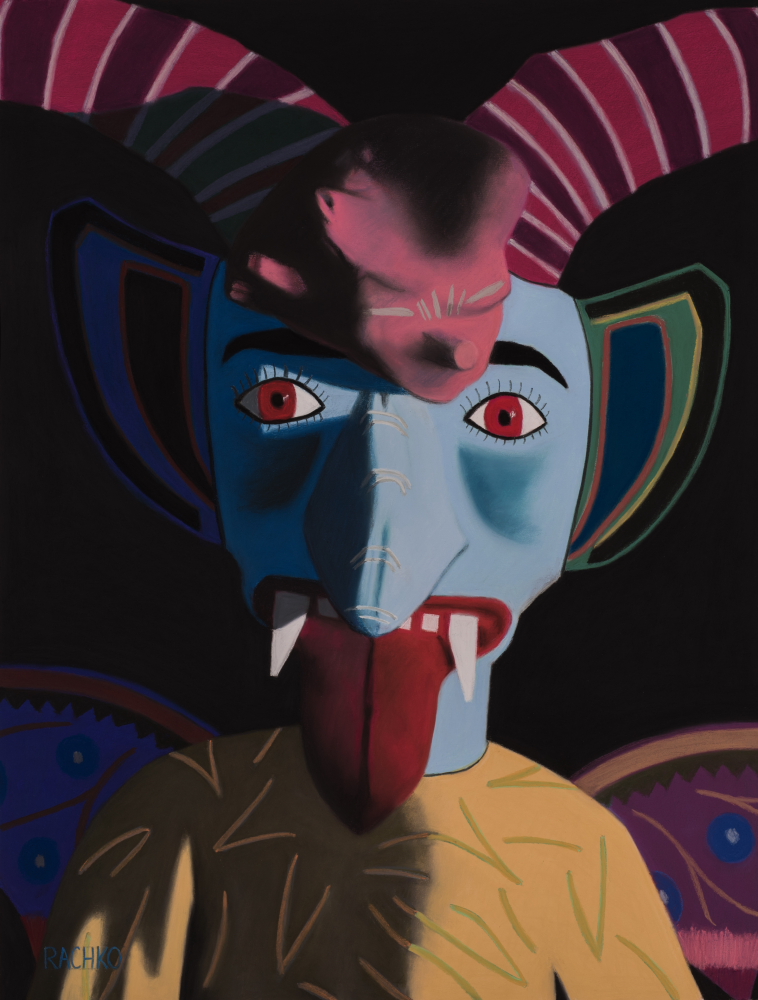
Finished and signed
Comments are welcome!
Q: You use an impressive assortment of soft pastels to create your pastel paintings. Which are your favorite?
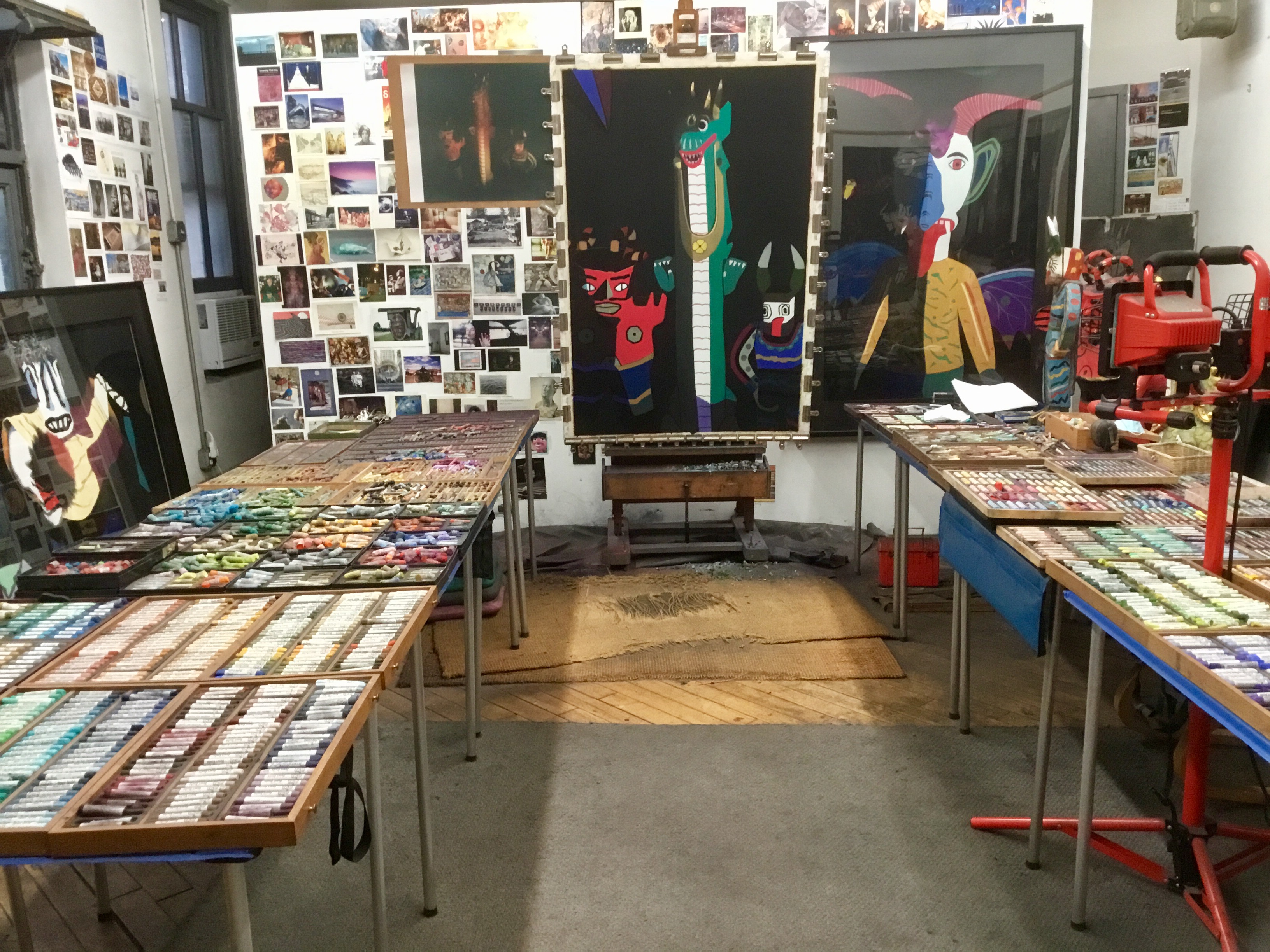
Barbara’s studio
A: My favorite brand of soft pastels is Henri Roché. They offer subtle variations in color and hue since they make more colors than any other company.
As a birthday present a few years ago, I treated myself to a full 750-color set. I mainly use them for finishing touches, rather than letting them get buried under pastel. At nearly $20 a stick, I also don’t want see them reduced to colored dust on the floor beneath my easel. One of my peers calls them, “the Maserati of pastels!”
Isobel Roché told me that her goal is to reach 1000 colors in time for the company’s 300th anniversary in 2020! I hope she makes it.
These pastels have been around so long that Degas and other artists of the era used them. It’s humbling to know that I am working with the same materials and following a long and prestigious art tradition of using soft pastel.
Comments are welcome!
Pearls from artists* # 245
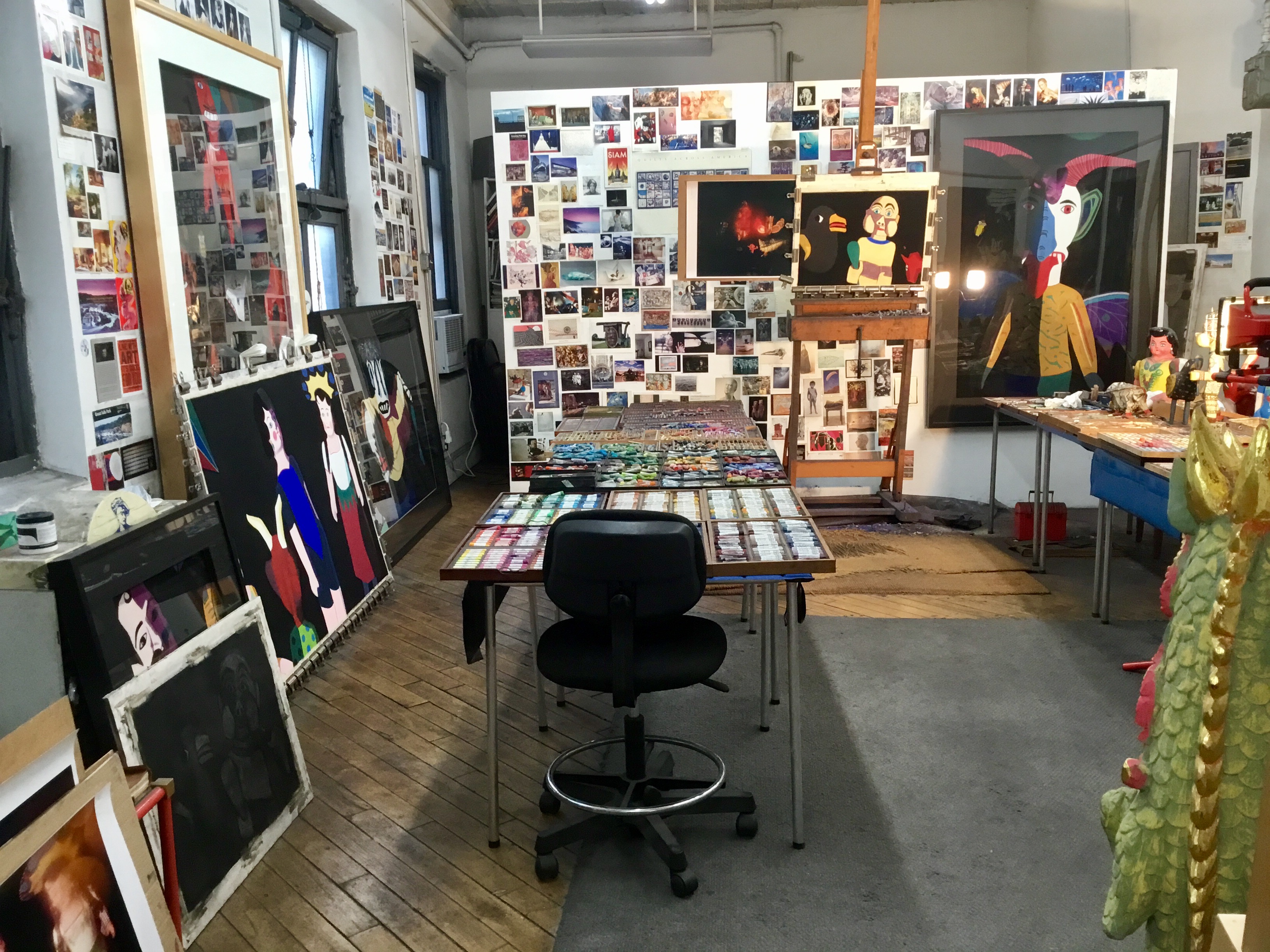
Barbara’s studio with works in progress
* an ongoing series of quotations – mostly from artists, to artists – that offers wisdom, inspiration, and advice for the sometimes lonely road we are on.
Just as a puppy dog strives to become nothing but simply a dog and as thoroughly a dog as possible, one has to grow into art as the mode of existence for which one’s heart and lungs were made, as the only appropriate option. If one chances upon art from the outside, it ends up being nothing but a bad disguise, and life, in its unshakeable honesty, takes it upon itself to tear off this masquerade.
The Poet’s Guide to Life: The Wisdom of Rilke, edited and translated by Ulrich Baer
Comments are welcome!
Q: What’s on the easel today?
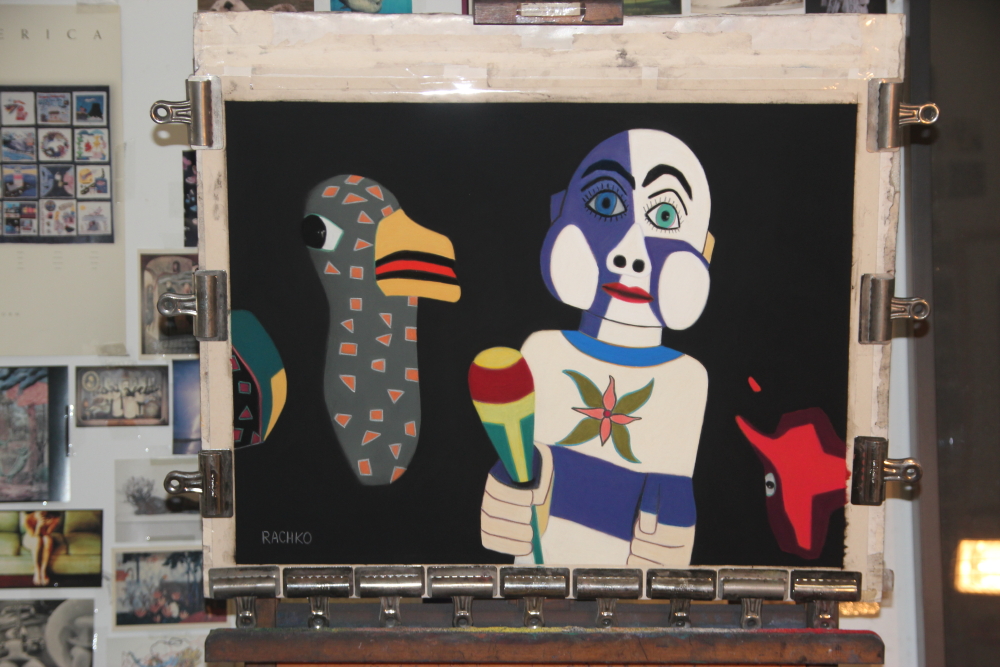
Work in progress
A: I’m putting finishing touches on a small, 20″ x 26,” pastel painting called, “Survivors.”
Comments are welcome!
Start/Finish of “Motley,” 38″ x 58″ image, 50″ x 70″ framed

Beginning

Completed
Comments are welcome!
Q: What’s on the easel today?
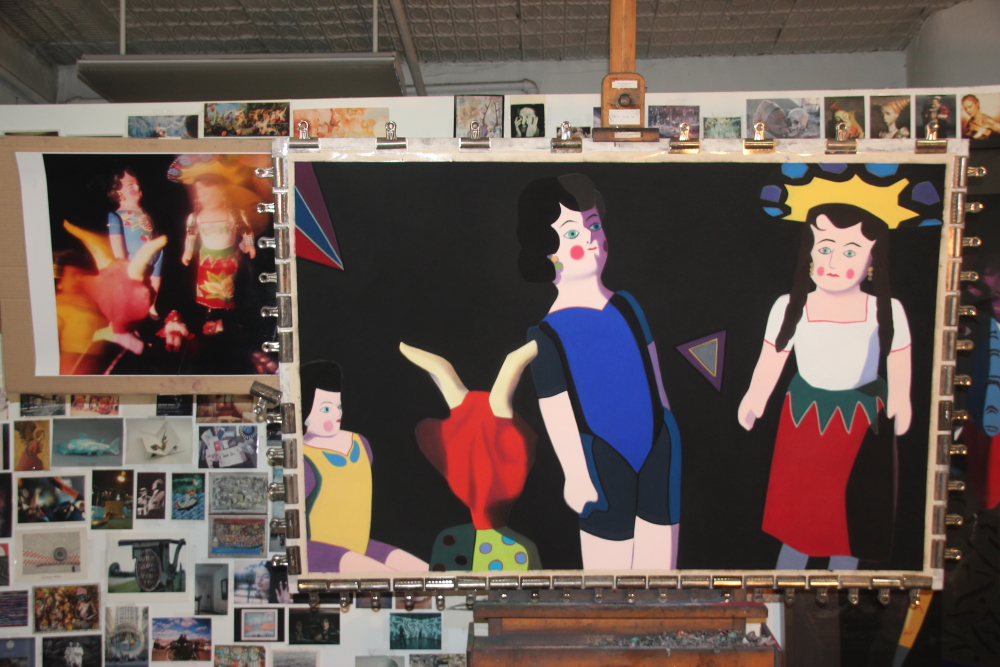
Work in progress
A: I continue working on a large, 38″ x 58″, pastel painting called, “Conundrum” and am happy with how it’s progressing. A few days ago I added the small triangle to the right of the central figure. I felt some compositional element was needed there and believe this is an improvement.
Comments are welcome!
Q: Pastel painting is the cornerstone of your practice. What attracted you to this medium?
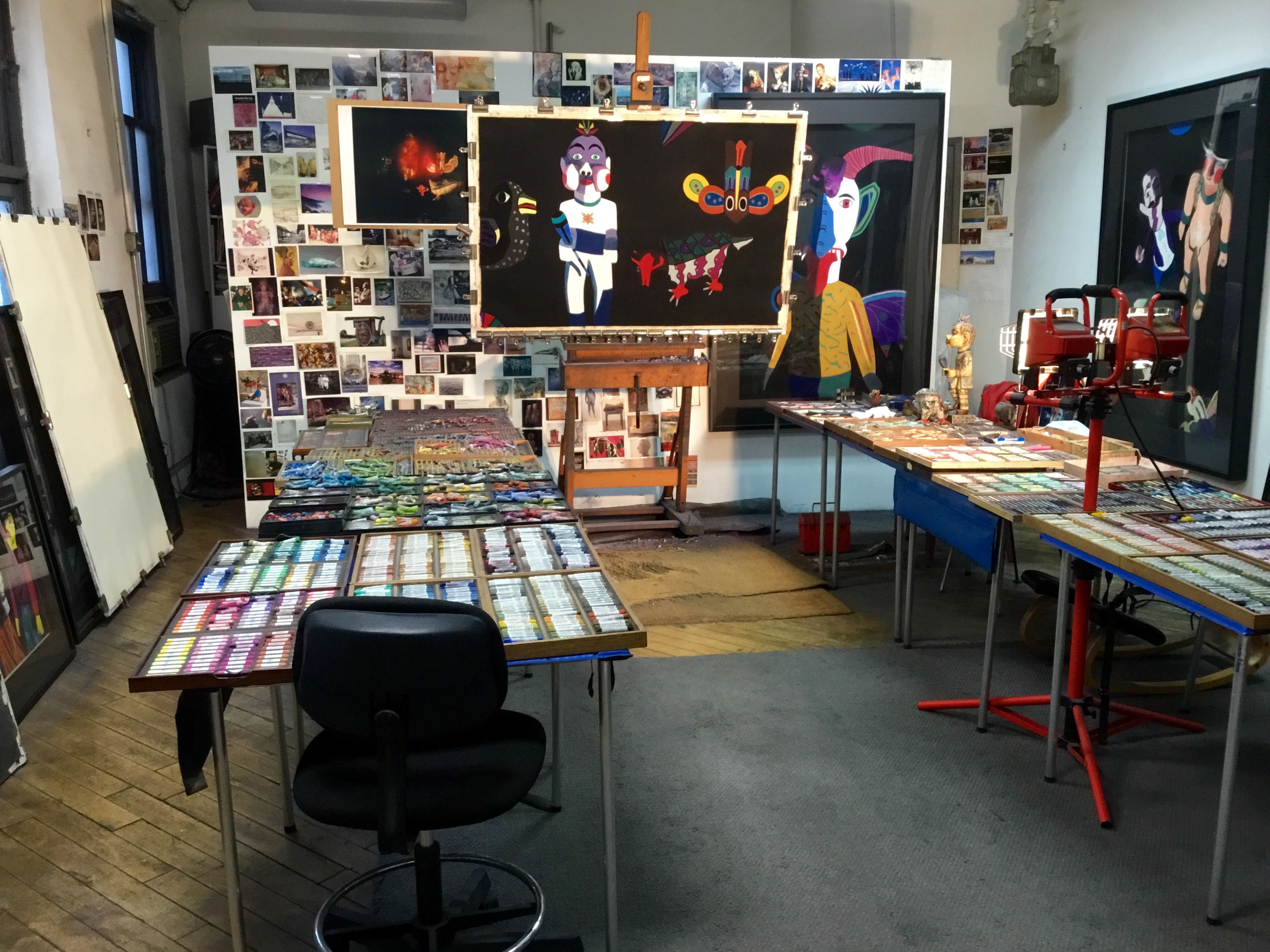
Barbara’s studio with “White Star” in progress
A: For starters soft pastel is the medium that I fell in love with many years ago. I am fond of this article, “What is Pastel?” by Mike Mahon, and quote it here because it neatly sums up what I love about working with pastel.
Pastel is the most permanent of all media when applied to conservation ground and properly framed. Pastel has no liquid binder that may cause it to oxidize with the passage of time as oftentimes happens with other media.
In this instance, Pastel does not refer to pale colors, as the word is commonly used in cosmetic and fashion terminology. The pure, powdered pigment is ground into a paste with a minimum amount of gum binder, rolled into sticks and dried. The infinite variety of colors in the Pastel palette range from soft and subtle to hard and brilliant.
An artwork is created by stroking the stick of dry pigment across an abrasive ground, embedding the color in the “tooth” of the ground. If the ground is completely covered with Pastel, the work is considered a Pastel painting; whereas, leaving much of the ground exposed produces a Pastel sketch. Techniques vary with individual artists. The Pastel medium is favored by many artists because it allows a spontaneous approach. There is no drying time, therefore, no change in color occurs after drying as it does in other media.
Did you know that a particle of Pastel pigment seen under a microscope looks like a diamond with many facets? It does! Therefore, Pastel paintings reflect light like a prism. No other medium has the same power of color or stability.
Historically, Pastel can be traced back to the 16th century. Its invention is attributed to the German painter, Johann Thiele. A Venetian woman, Rosalba Camera, was the first to make consistent use of Pastel. Chardin did portraits with an open stroke, while La Tour preferred the blended finish. Thereafter, a galaxy of famous artists—Watteau, Copley, Delacroix, Millet, Manet, Renoir, Toulouse Lautrec, Vuillard, Bonnard, Glackens, Whistler, Hassam, William Merritt Chase—used Pastel for a finished work rather than for preliminary sketches.
Pastels from the 16th century exist today, as fresh as the day they were painted. Edgar Degas was the most prolific user of Pastel and its champion. His protégé, Mary Cassat, introduced Pastel to her friends in Philadelphia and Washington, and thus to the United States. In the Spring of 1983, Sotheby Parke Bernet sold at auction, two Degas Pastels for more than $3,000,000 each! Both Pastels were painted about 1880.
Note: Do not confuse Pastel with “colored chalk.” Chalk is a porous, limestone substance impregnated with dyes, whereas, Pastel is pure pigment—the same as is used in other permanent painting media. Today, Pastel paintings have the stature of oil and watercolor as a major fine art medium. Many of our most renowned, living artists have distinguished themselves in Pastel and have enriched the art world with this beautiful medium.
So knowing all this, I often wonder, why don’t more artists use pastel? Is it because framing is a big expense?
Works on paper need to be framed and pastel paintings do have some unique problems. Third after the cost of maintaining a studio in New York City and marketing, frames are my single largest business expense. Sometimes I am grateful that pastel is a very slow medium. I typically finish 4 or 5 paintings in a year, which means I only have to pay for 4 or 5 frames.
Comments are welcome!
Pearls from artists* #239

At work on “False Friends”; photo by Diana Feit
* an ongoing series of quotations – mostly from artists, to artists – that offers wisdom, inspiration, and advice for the sometimes lonely road we are on.
It is a silver morning like any other. I am at my desk. Then the phone rings, or someone raps at the door. I am deep in the machinery of my wits. Reluctantly I rise, I answer the phone or I open the door. And the thought which I had in hand, or almost in hand, is gone.
Creative work needs solitude. It needs concentration, without interruptions. It needs the whole sky to fly in, and no eye watching until it comes to that certainty which it aspires to, but does not necessarily have at once. Privacy, then. A place apart – to pace, to chew pencils, to scribble and erase and scribble again.
Mary Oliver in Upstream: Selected Essays
Comments are welcome!
Start/Finish of “The Storyteller,” 20″ x 26″ image, 28 1/2″ x 35″ framed

Charcoal underdrawing
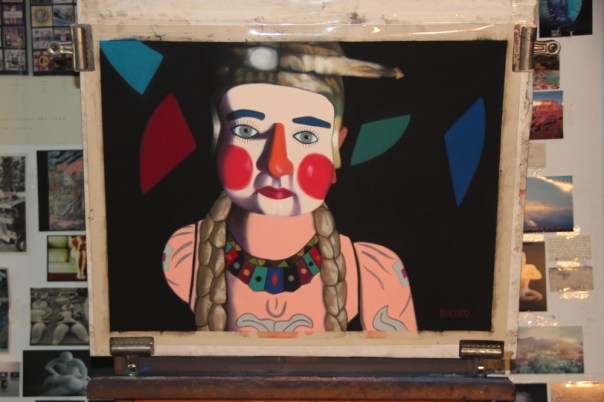
Completed and signed
Comments are welcome!



