Category Archives: Studio
Q: Would you describe your current work in a few sentences?
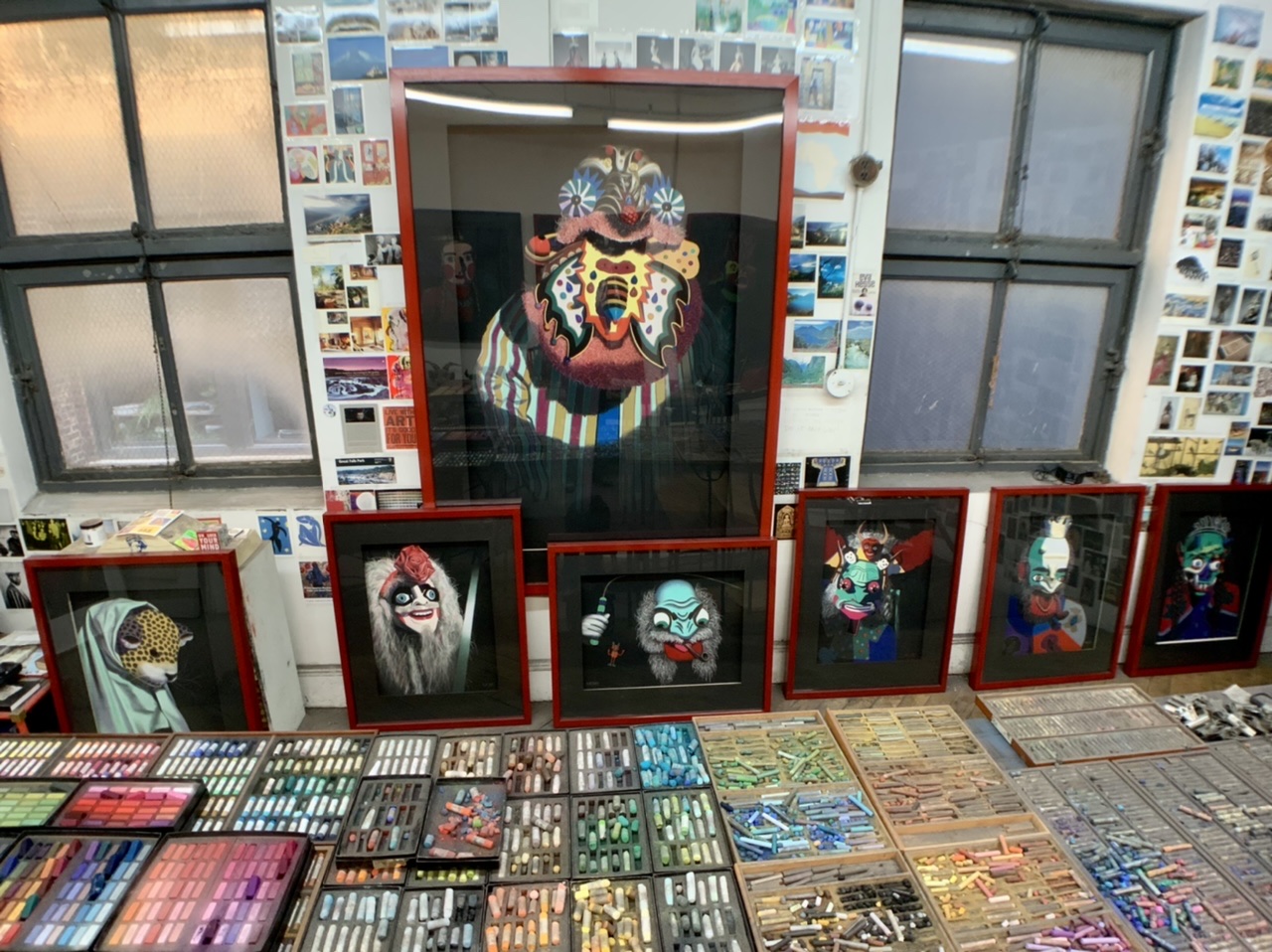
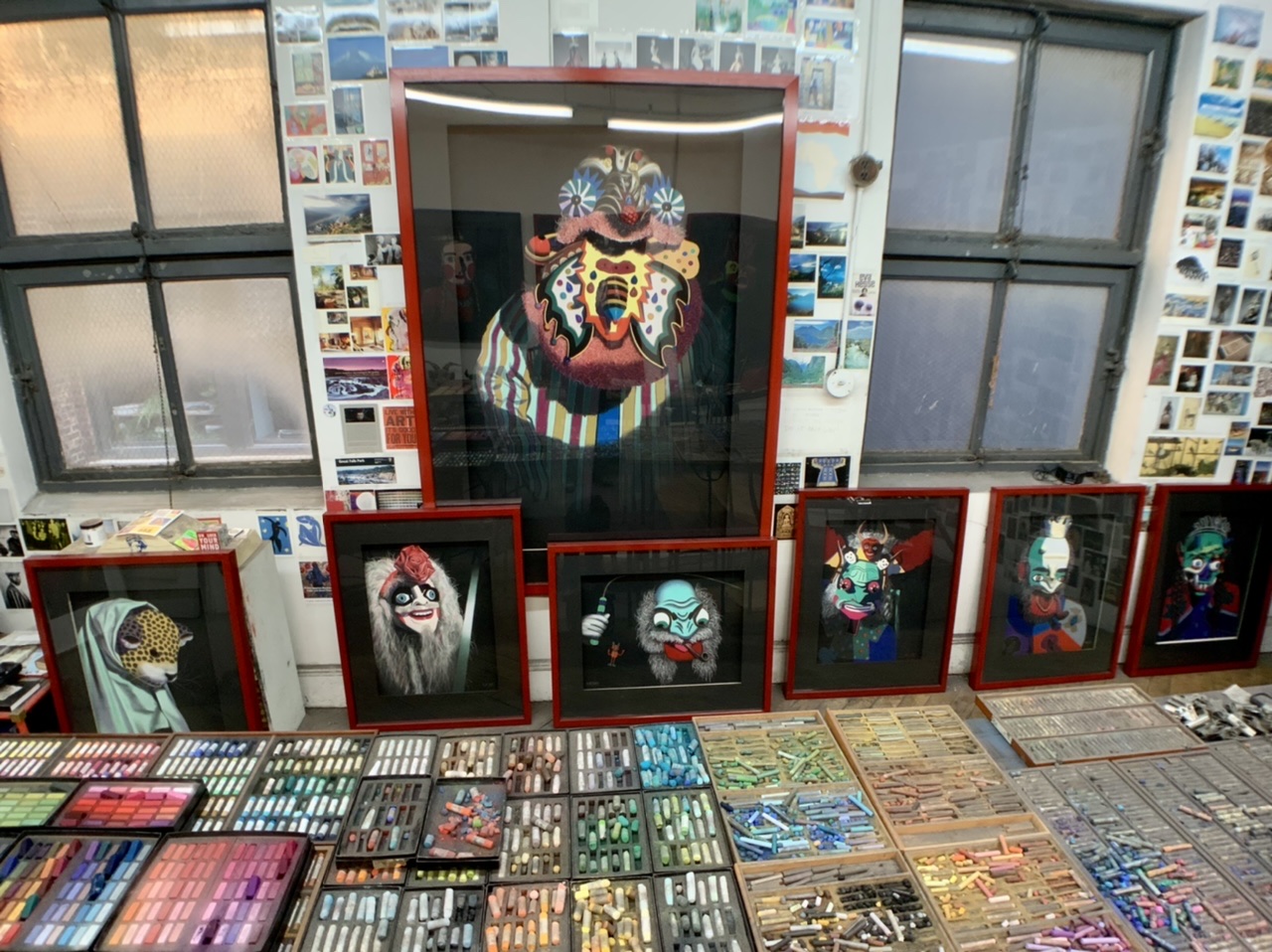
A: Of course, my art practice continually evolves and so does my thinking about its meaning. Using my own iPad photographs of Bolivian Carnival masks from Oruro as source material, for the past five years I have been slowly building a rogue’s gallery of beautiful, if somewhat misunderstood, characters probably best described as oddballs and misfits. For me, the paintings have a deeper meaning as archetypes of the collective unconscious. Creating this series is an act of genuine love. It is my hope that the ”Bolivianos” pastel paintings convey my deep respect and compassion for people around the world.
Comments are welcome!
Start/Finish of ”Overlord,” soft pastel on sandpaper, 58” x 38” image, 70” x 50” framed
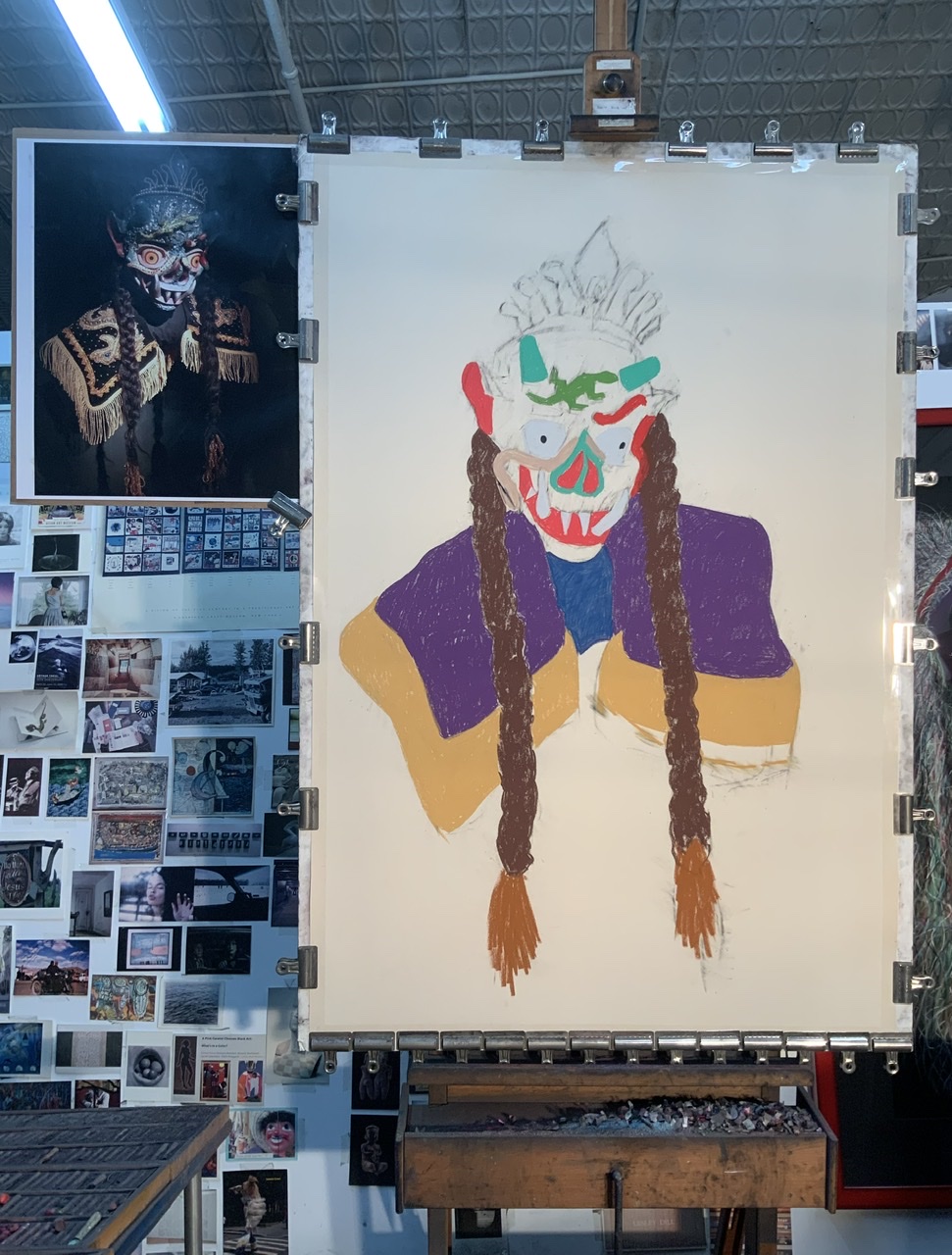
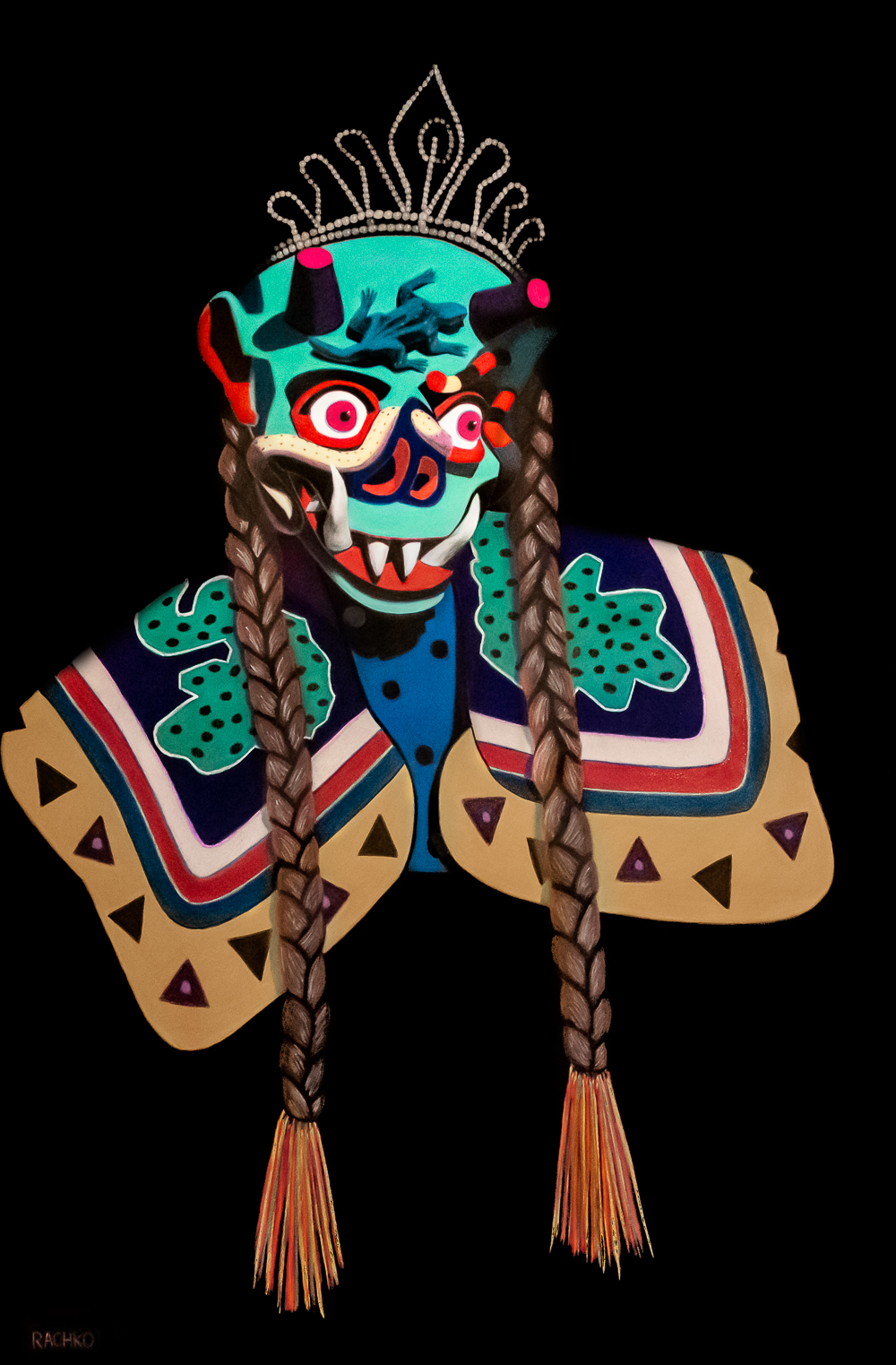
Comments are welcome!
Q: What’s on the easel today?
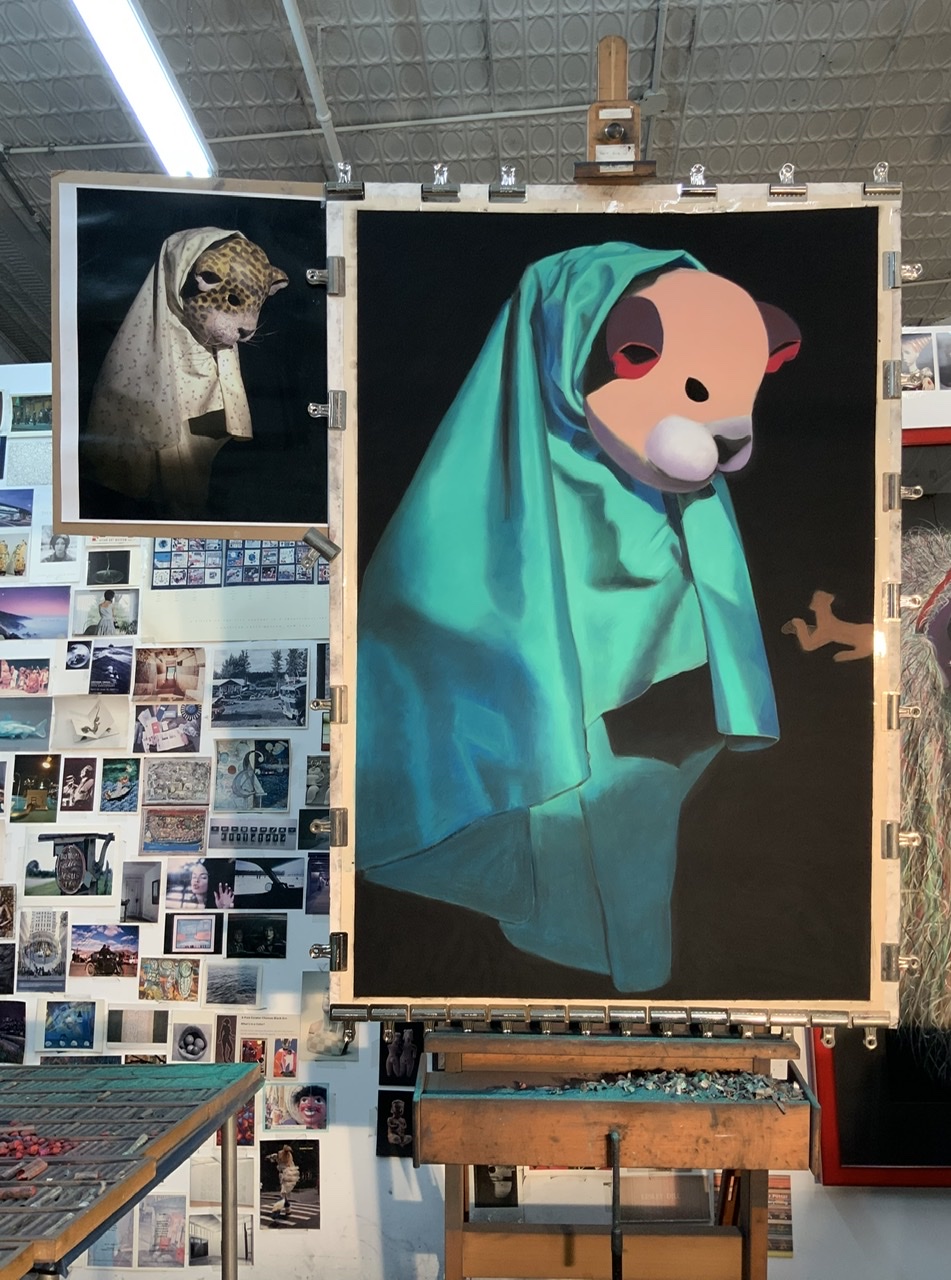
A: I continue working on “Wise One,” soft pastel on sandpaper, 58” x 38.”
Comments are welcome!
Q: To what extent will the world of art change in the post-COVID period – both in terms of what is created and also the business of art? (Question from artamour)
A: We all still wonder how the art world will change post-COVID. (Will there ever be a time when we can say we are post-COVID?). I know that I will continue refining and developing my art practice and seeking out new business opportunities. I have been an artist long enough to know that I will always follow my own path (each pastel painting points to the next one) regardless of what is going on in the larger world. How could I not do so? In large part due to an extensive social media program carried out by my two able assistants, the COVID period has been a personal boon. I completed a short documentary film about my life and work. It is in post-production now. I gained representation with three new international galleries. My blog is attracting approximately 1,000 – 2,000 new subscribers every month and I continue receiving requests for interviews from around the world.
Comments are welcome!
Q: What’s on the easel today?
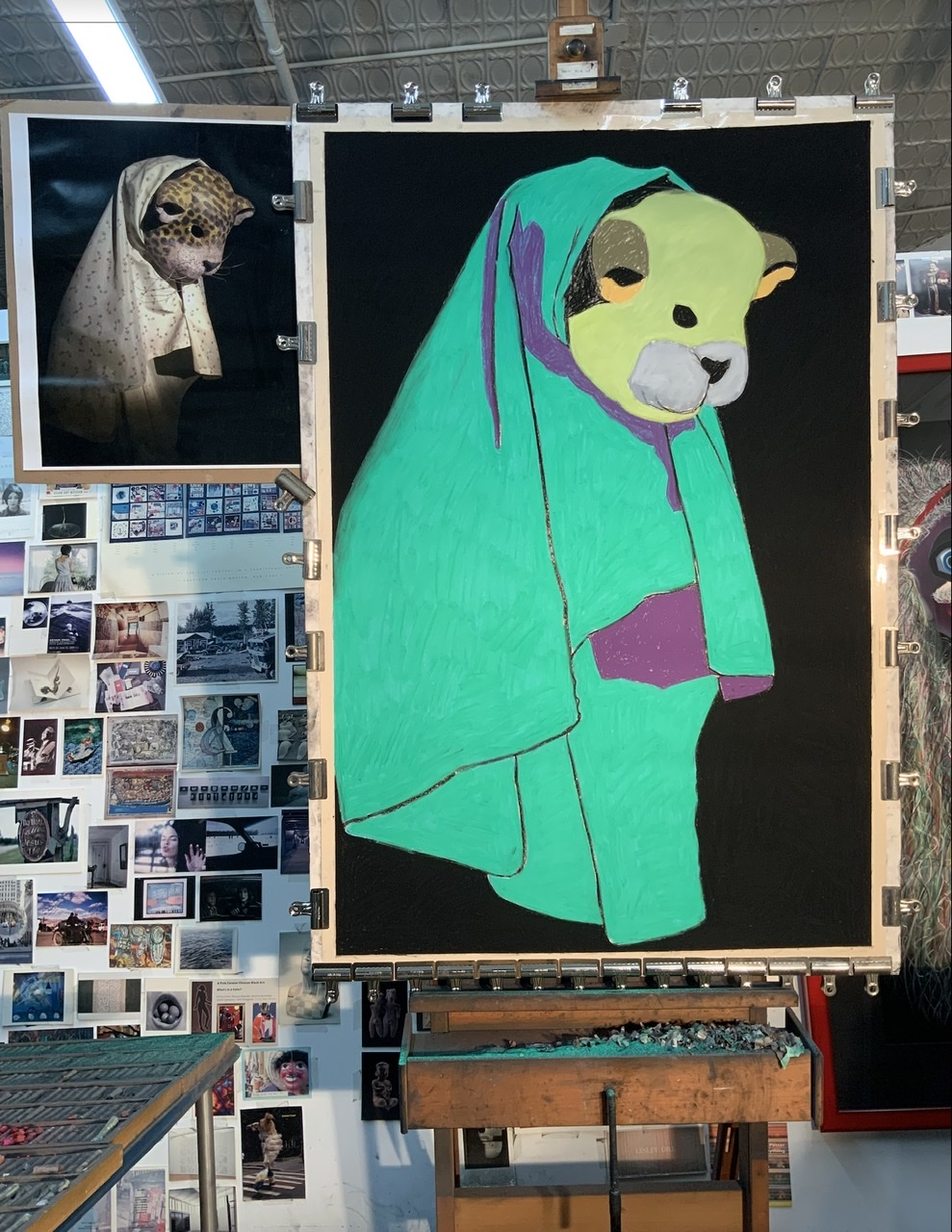
A: I started a new 58” x38” pastel painting. This is how it looks after the first day.
Comments are welcome!
Q: What is your process? (Question from artamour)
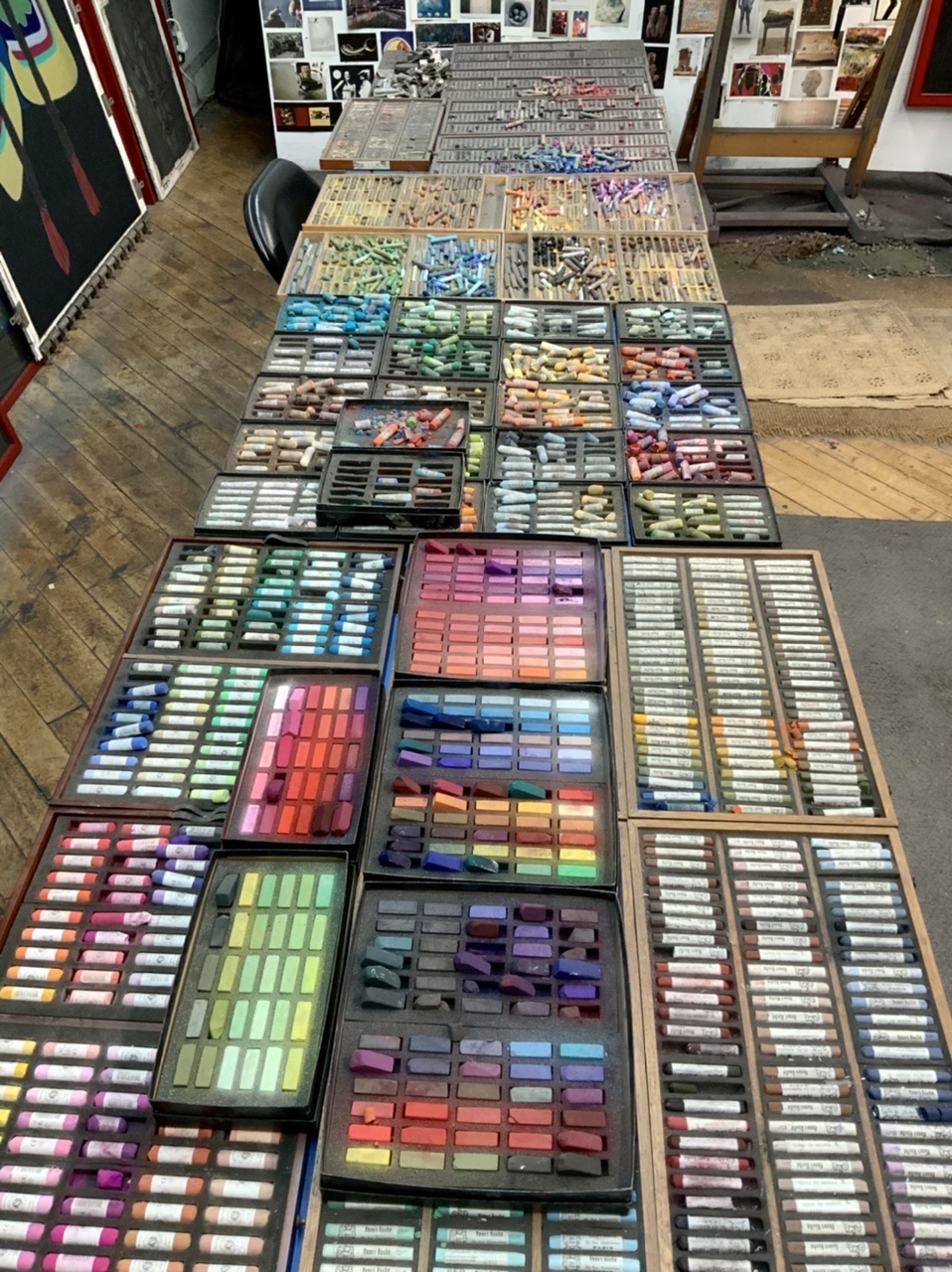
A: For thirty-six years I have worked exclusively in soft pastel on sandpaper. Pastel, which is pigment and a binder to hold it together, is as close to unadulterated color as an artist can get. It allows for very saturated color, especially employing the self-invented techniques I have developed and mastered. I believe my “science of color” is unique, completely unlike how any other artist works. I spend three to four months on each painting, applying pastel and blending the layers together to mix new colors on the paper.
The acid-free sandpaper support allows the buildup of 25 to 30 layers of pastel as I slowly and meticulously work for hundreds of hours to complete a painting. The paper is extremely forgiving. I can change my mind, correct, refine, etc. as much as I want until a painting is the best I can create at that moment in time.
My techniques for using soft pastel achieve rich velvety textures and exceptionally vibrant color. Blending with my fingers, I painstakingly apply dozens of layers of pastel onto the sandpaper. In addition to the thousands of pastels that I have to choose from, I make new colors directly on the paper. Regardless of size, each pastel painting takes three to four months and hundreds of hours to complete.
I have been devoted to soft pastel from the beginning. In my blog and in numerous interviews online and elsewhere, I continue to expound on its merits. For me no other fine art medium comes close.
My subject matter is unique. I am drawn to Mexican, Guatemalan, and Bolivian cultural objects—masks, carved wooden animals, papier mâché figures, and toys. On trips to these countries and elsewhere I frequent local mask shops, markets, and bazaars searching for the figures that will populate my pastel paintings. How, why, when, and where these objects come into my life is an important part of the creative process. Each pastel painting is a highly personal blend of reality, fantasy, and autobiography.
Comments are welcome!
Q: What’s on the easel today?


A: Here is a preliminary charcoal drawing in preparation for my next ”Bolivianos” pastel painting. With the most recent works I have been experimenting with scale. This will be a 58” x 38” version of ”Schemer,” 2019, 26” x 20.”
Comments are welcome!
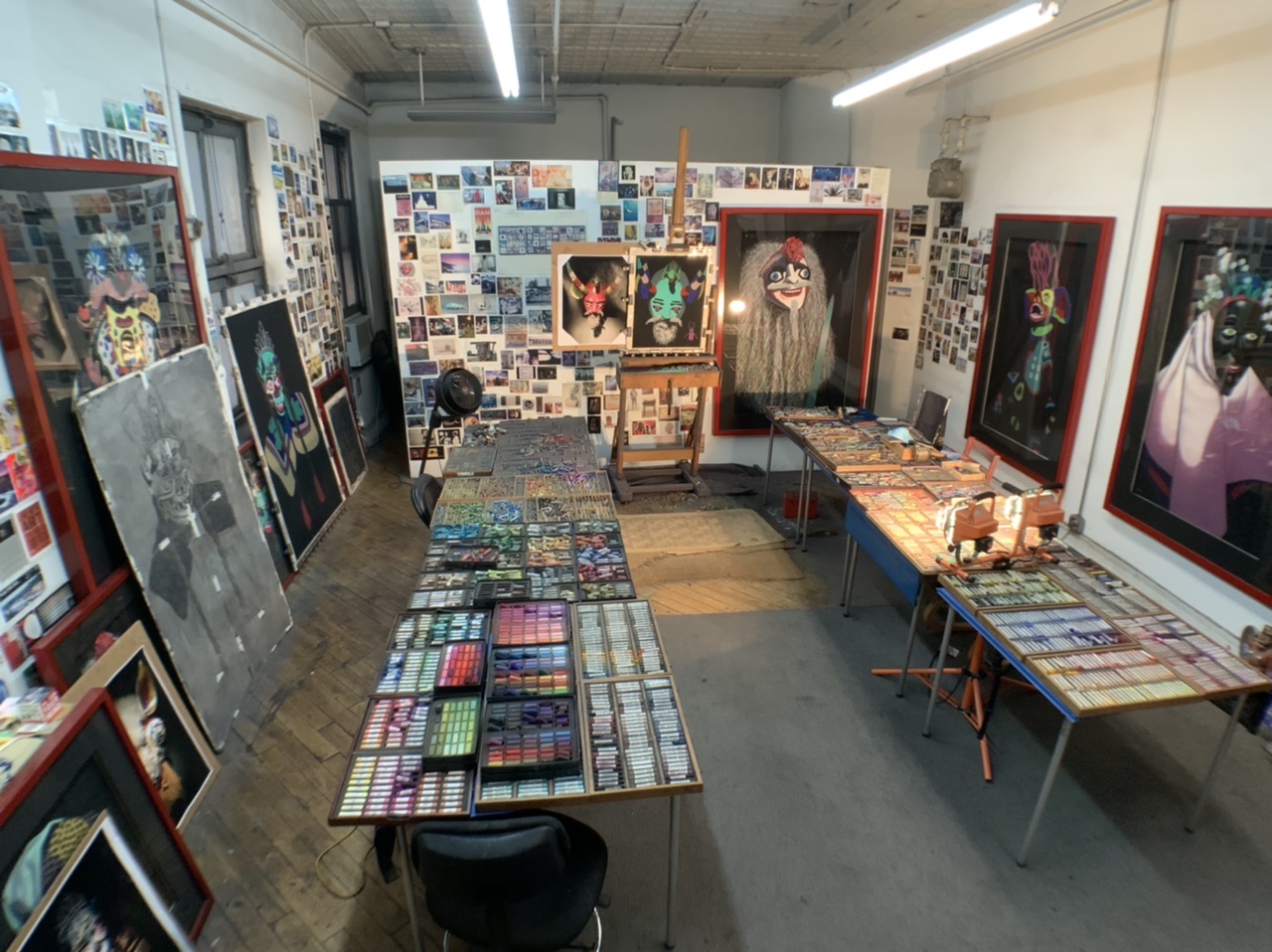
Q: Where do you create your art? (Question from artamour)

A: In April 1997 an opportunity to move to New York City arose and I didn’t look back. By then I was showing in a good 57th Street gallery, Brewster Gallery (they focused exclusively on Latin American Masters so I was in the company of Leonora Carrington, Rufino Tamayo, Diego Rivera, etc.). Also, I had managed to find an excellent New York artists/agent, Leah Poller, with whom to collaborate. (Leah and I are still dear friends).
I looked at only one other space before finding my West 29th Street studio and knew instantly it was the one! An old friend of Bryan’s from Cal Tech rented the space next door and he had told us it was available. Initially the studio was a sublet. The lease-holder was a painter headed to northern California to work temporarily for George Lucas at the Lucas Ranch. After several years she decided to stay so I was able to take over the lease. I feel extremely fortunate to have been in my West 29th Street, New York City space now for twenty-five years. In a city where old buildings are knocked down to make way for new ones this is rare.
My studio is an oasis in a chaotic city, a place to make art, to read, and to think. I love to walk in the door every morning and I feel calmer the moment I arrive. It is still my absolute favorite place in New York! Sometimes I think of it as my best creation.
Comments are welcome!
Q: Contemporary art has become very diverse and multidisciplinary in the last few decades. Do you welcome this trend? Is this trend part of your art practice? (Question from artamour)
A: By definition trends in art come and go and I don’t see how any self-respecting artist can or should pay much attention to them. I continue to do my own thing, refining my soft pastel techniques, following wherever my interests, inspiration, and subject matter lead, all the while striving to become a better artist.
Comments are welcome!
Q: What’s on the easel today?
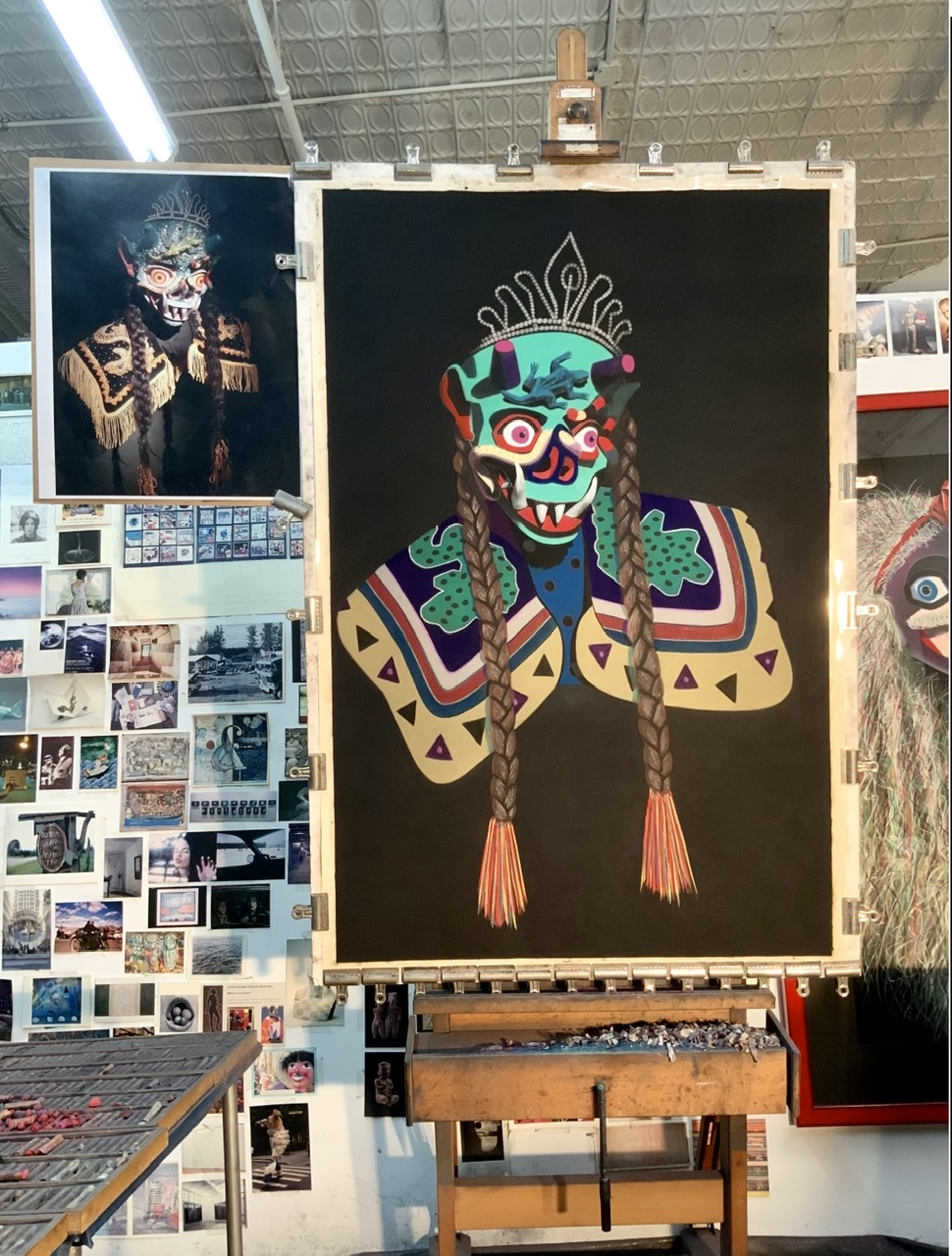
A: “Overlord,” soft pastel on sandpaper, 58” x 38” awaits some finishing touches.
Comments are welcome!



