Category Archives: New York, NY
Pearls from artists* # 340

Lower Manhattan
* an ongoing series of quotations – mostly from artists, to artists – that offers wisdom, inspiration, and advice for the sometimes lonely road we are on.
What, do you suppose, are the lives of those who raise themselves above the level of the common herd? A continual struggle. A writer, for instance, must struggle against the laziness which he shares with the ordinary man when it comes to writing, because his genius demands to be heard, it is not merely of an empty desire for fame that he obeys, it is a matter of conscience. Let those who work coldly and calmly keep silence, for they have no conception of what it means to work under the spur of inspiration – the dread, the terror of rousing the sleeping lion whose roaring moves us to the very depth of our being. To sum up: be strong, simple, and true; here is an aim for every moment of the day, and it is always useful.
The Journal of Eugene Delacroix, edited by Hubert Wellington
Comments are welcome!
Pearls from artists* # 306

New York, NY
* an ongoing series of quotations – mostly from artists, to artists – that offers wisdom, inspiration, and advice for the sometimes lonely road we are on.
It is the responsibility of artists to pay attention to the world, pleasant or otherwise, and to help us live respectfully in it.
Artists do this by keeping their curiosity and moral sense alive, and by sharing with us their gift for metaphor. Often this means finding similarities between observable fact and inner experience – between birds in a vacant lot, say, and an intuition worthy of Genesis.
More than anything else, beauty is what distinguishes art. Beauty is never less than mystery, but it has within it a promise.
In this way, art encourages us to gratitude and engagement, and is of both personal and civic consequence.
Robert Adams in Art Can Help
Comments are welcome!
A: Would you agree that there are more opportunities for women artists these days?
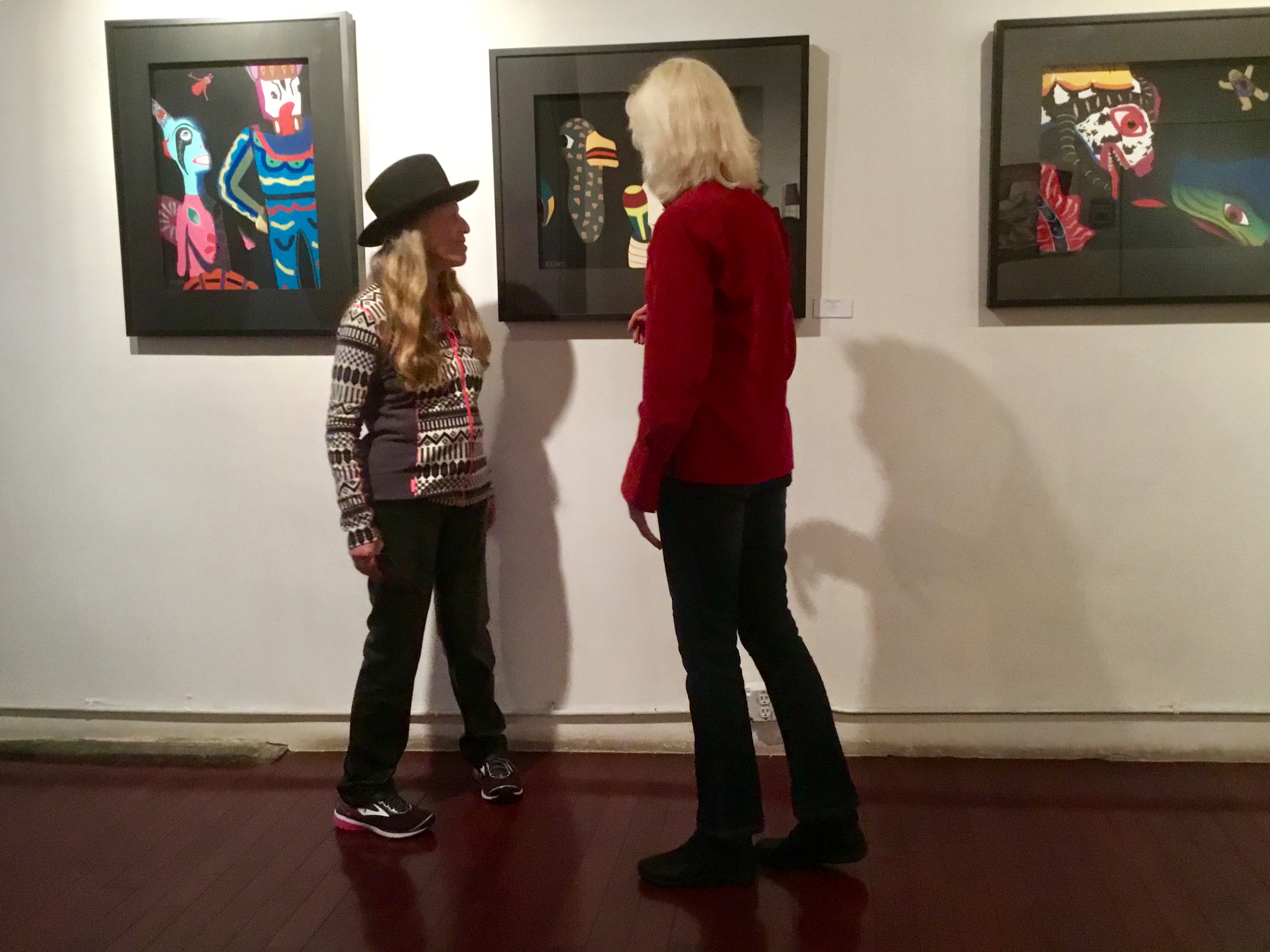
At Salomon Arts in Tribeca
A: It’s true that there are more opportunities now for women artists. Indeed, there are more opportunities for ALL artists. Social media has helped immensely in that it allows artists to take charge of our own careers, making us less dependent on the approval, largesse, and/or validation of art world gatekeepers.
However, at the highest levels of our profession, there are many inequities. As more women become art museum directors, collectors of contemporary art, and leaders whose taste matters, the status of all female artists is bound to improve to become more aligned with that of males.
Comments are welcome!
Q: What is more important to you, the subject of the painting or the way it is executed?

“Sam and Bobo,”soft pastel on sandpaper, 36″ x 31”, 1989
A: In a sense my subject matter – folk art, masks, carved wooden animals, papier mâché figures, toys – chose me. With it I have complete freedom to experiment with color, pattern, design, and other formal properties. In other words, although I am a representational artist, I can do whatever I want since the depicted objects need not look like real things. Execution is everything now.
This was not always the case. I started out in the 1980s as a traditional photorealist, except I worked in pastel on sandpaper. (For example, see the detail in Sam’s sweater above). As I slowly learned and mastered my craft, depicting three-dimensional people and objects hyper-realistically in two dimensions on a piece of sandpaper was thrilling… until one day it wasn’t.
My personal brand of photorealism became too easy, too limiting, too repetitive, and SO boring to execute! In 1989 I had at last extricated myself from a dull career as a Naval officer working in Virginia at the Pentagon. Then after much planning, in 1997 I was a full-time professional artist working in New York.
Certainly I was not going to throw away this opportunity by making boring photorealist art. I wanted to do so much more as an artist: to experiment with techniques, with composition, to see what I could make pastel do, to let my imagination play a larger role in the paintings I made. I was ready to devote the time and do whatever it took to push my art further.
After spending the early creative years perfecting my technical skills, I built on what I had learned. I began breaking rules – slowly at first – in order to push myself onward. And I continue to do so, never knowing what’s next. Hopefully, in 2018 my art is richer for it.
Comments are welcome!
Pearls from artists* # 294

Barbara at work
*an ongoing series of quotations – mostly from artists, to artists – that offers wisdom, inspiration, and advice for the sometimes lonely road we are on.
Interviewer: Well, to begin – do you feel that you were born in a place and a time, and to a family all of which combined favorably to shape you for what you were to do?
Wilder: Comparisons of one’s lot with others’ teaches us nothing and enfeebles the will. Many born in an environment of poverty, disease, and stupidity, in an age of chaos, have put us in their debt. By the standards of many people, and by my own, these dispositions were favorable – but what are our judgments in such matters? Everyone is born with an array of handicaps – even Mozart, even Sophocles – and acquires new ones. In a famous passage, Shakespeare ruefully complains that he was not endowed with another’s “scope”! We are all equally distant from the sun, but we all have a share in it. The most valuable thing I inherited was a temperament that does not revolt against Necessity and that is constantly renewed in Hope. (I am alluding to Goethe’s great poem about the problem of each man’s “lot” – the Orphische Worte).
Thornton Wilder in Writers at Work: The Paris Review Interviews First Series, edited, and with an introduction by Malcolm Crowley
Comments are welcome!
Pearls from artists* # 276
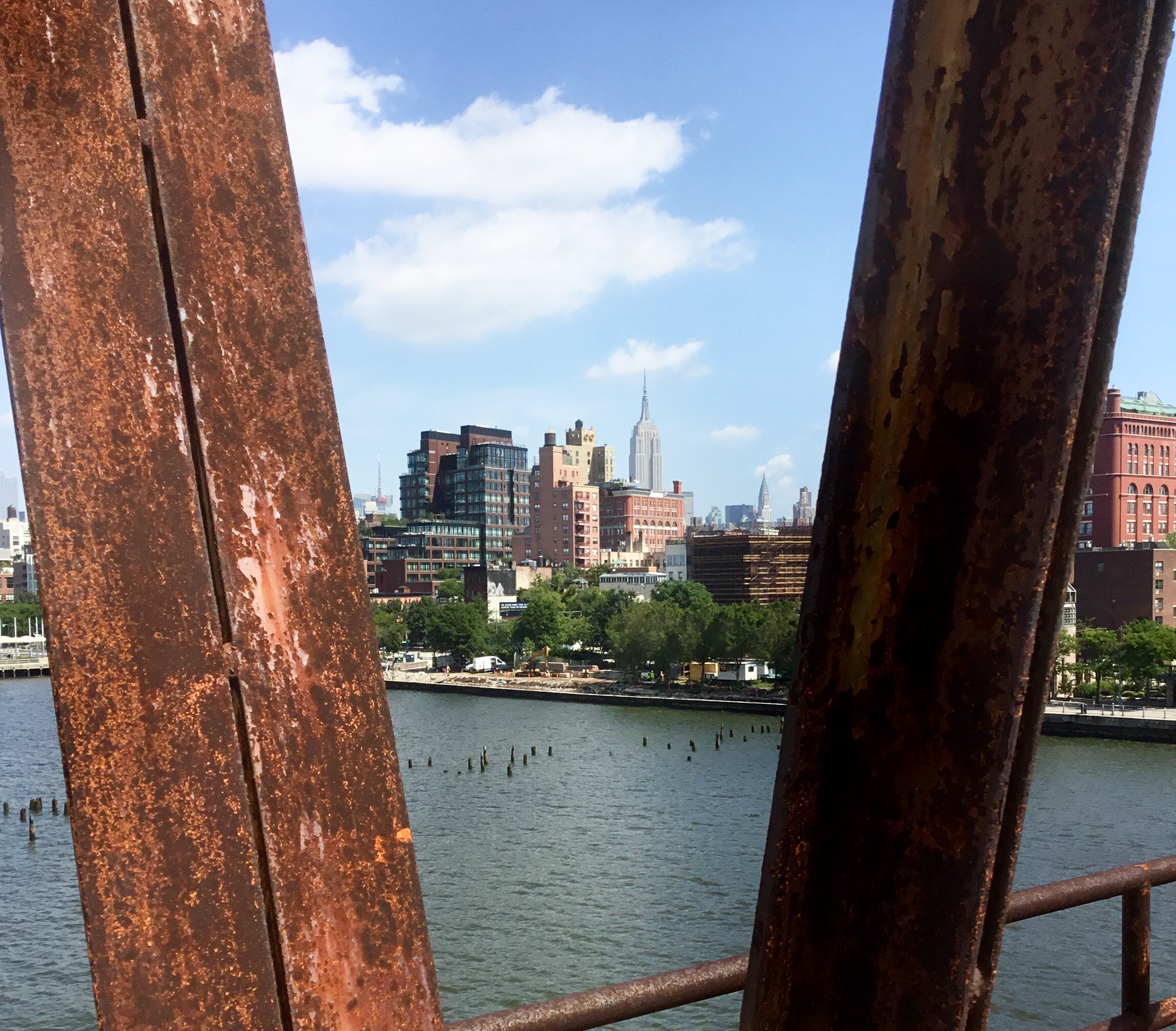
The West Village
* an ongoing series of quotations – mostly from artists, to artists – that offers wisdom, inspiration, and advice for the sometimes lonely road we are on.
A long time later, after I became a novelist, I realized that the ambiguities of the human mind are what give fiction and perhaps all art its power. A good novel gets under our skin, provokes us and haunts us long after the first reading, because we never fully understand the characters. We sweep through the narrative over and over again, searching for meaning. Good characters must retain a certain mystery and unfathomable depth, even for the author. Once we see to the bottom of their hearts, the novel is dead for us.
Eventually, I learned to appreciate both certainty and uncertainty. Both are necessary in the world. Both are part of being human.
Alan Lightman in A Sense of the Mysterious: Science and the Human Spirit
Comments are welcome!
Q: On an average day in the studio, how much of your time is spent in the physical act of making art?
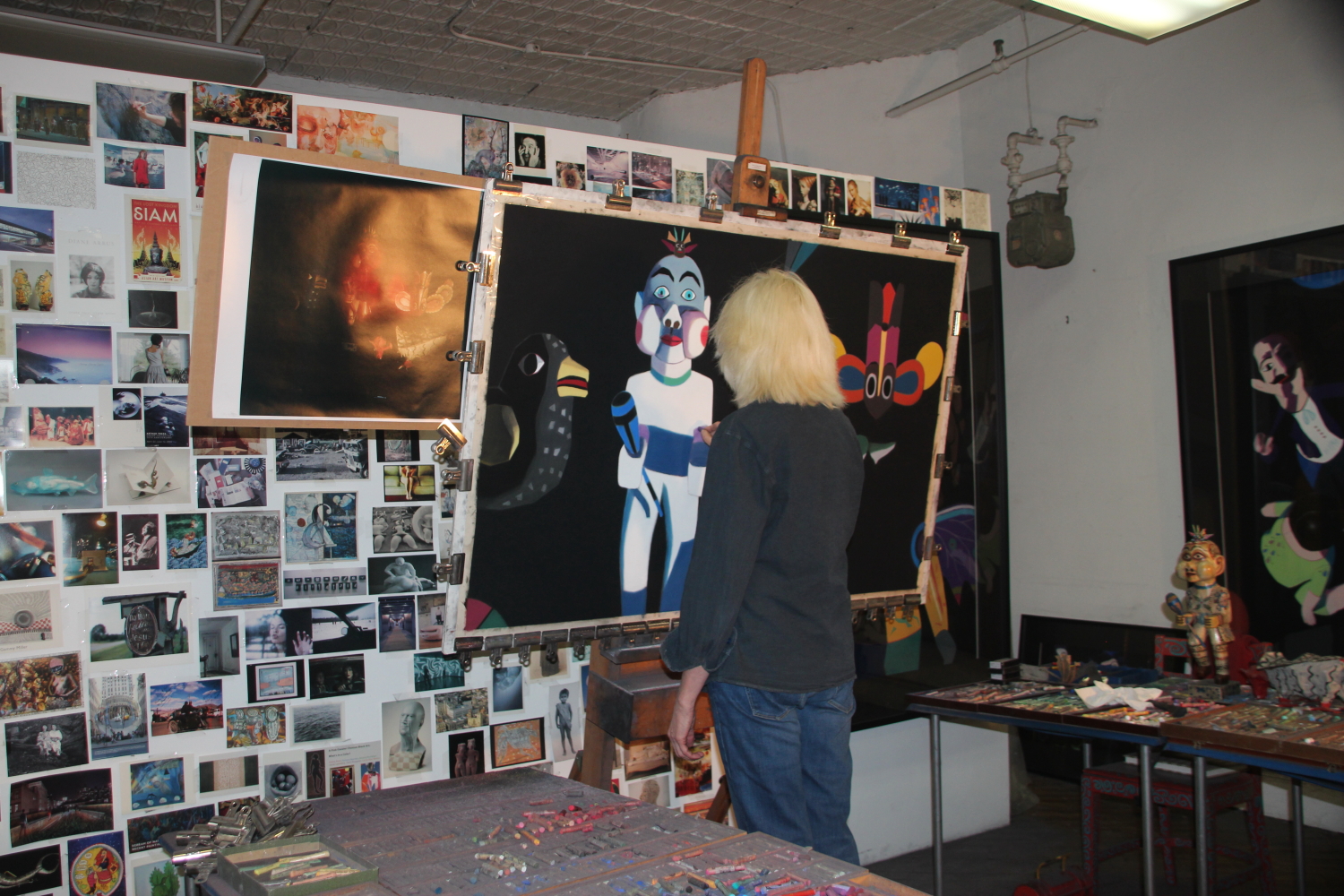
Working
A: My typical studio day is from 10:00 to 5:00. When I arrive, I often read for half an hour. Reading helps me relax and focus and get into the mindset I need to do my work. While I read, I look at the painting on my easel, assess it’s current state, and decide where to begin working.
Then I work until lunch time, generally around 1:00. After lunch I work for another five hours or so, taking a break whenever I want.
This has been more or less my schedule for five days a week for years. At an earlier point as I was developing my craft, I would work 9- or 10-hour days and six days a week.
My creative process is relatively slow. In a typical year I create five new pastel paintings. This year I am right on schedule. I have completed four and am working on a fifth.
Comments are welcome!
Pearls from artists* # 272
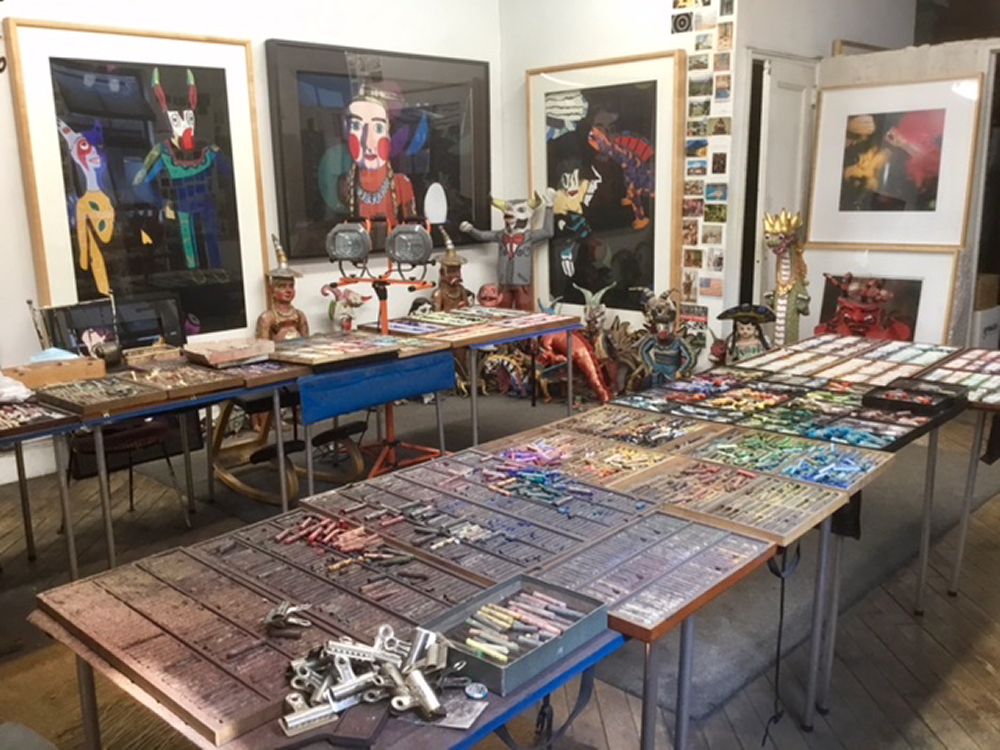
Barbara’s studio
* an ongoing series of quotations – mostly from artists, to artists – that offers wisdom, inspiration, and advice for the sometimes lonely road we are on.
One important distinction that can be made between physicists and novelists, and between the scientific and artistic communities in general, is what I shall call “naming.” Roughly speaking, the scientist tries to name things and the artist tries to avoid naming things.
To name a thing, one needs to have gathered it, distilled and purified it, attempted to identify it with clarity and precision. One puts a box around the thing and says what’s in the box is the thing and what’s not is not…
… The objects and concepts of the novelist cannot be named. The novelist might use the words love and fear, but these names do not summarize or convey much to the reader. For one thing, there are a thousand different kinds of love…
… Every electron is identical, but every love is different.
The novelist doesn’t want to eliminate these differences, doesn’t want to clarify and distill the meaning of love so that there is only a single meaning… because no such distillation exists. And any attempt at such a distillation would undermine the authenticity of readers’ reactions, destroying the delicate, participatory creative experience of a good reader reading a good book. In sense, a novel is not complete until it is read. And each reader completes the novel in a different way.
Alan Lightman in A Sense of the Mysterious: Science and the Human Spirit
Comments are welcome!
Q: How do you deal with the loneliness of working in a studio?
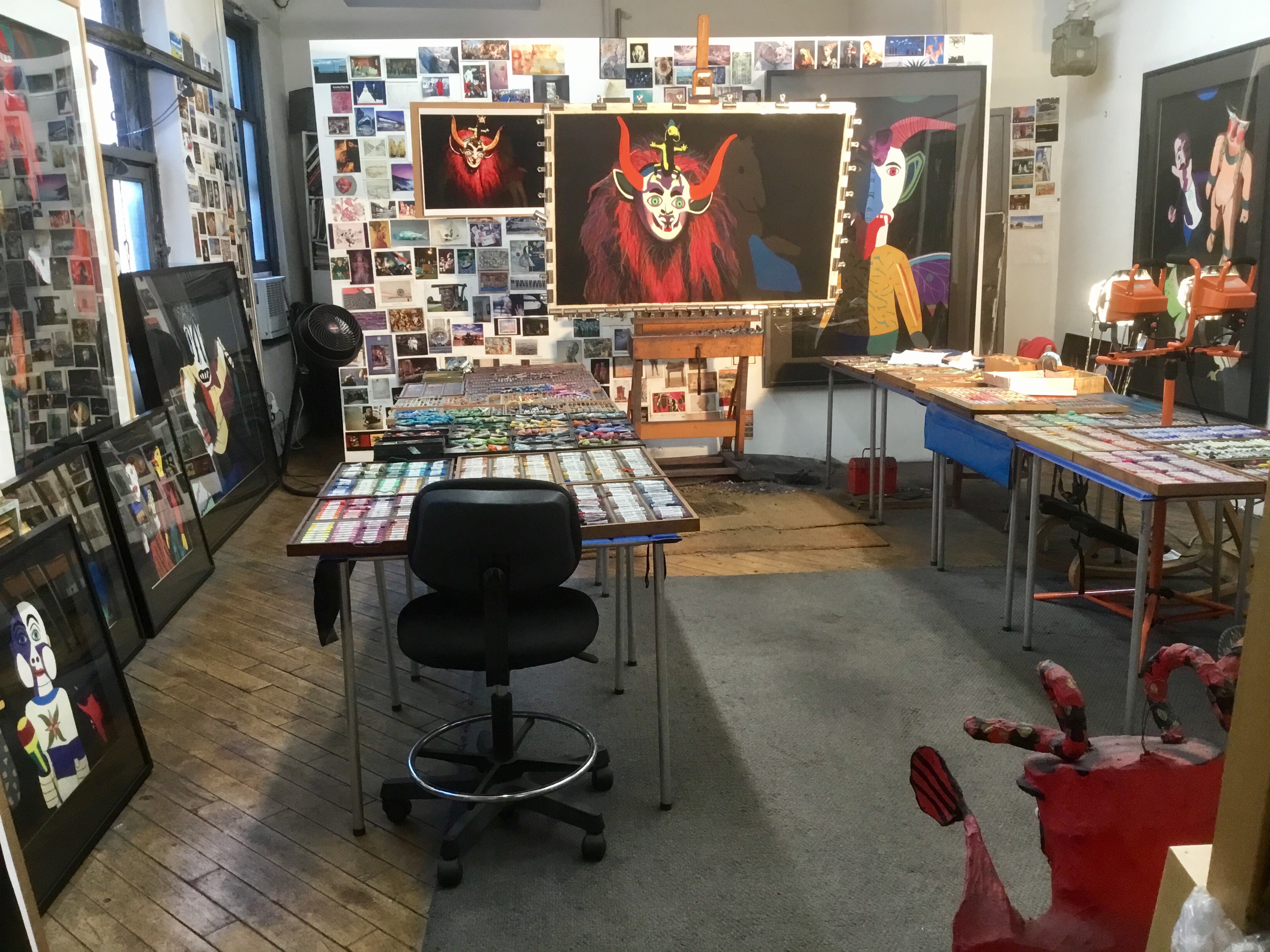
Barbara’s studio
A: I never feel lonely when I’m working. I love being in my studio and even after thirty years, still find the whole process of making a pastel painting completely engaging.
Painting is the one activity that not only uses all of my mental and physical abilities, but challenges me to push further. I am at my best in the studio.
Because there is always more to learn and process into the work, creating art is endlessly fascinating! Most artists probably feel the same way. It’s one of the reasons we persist.
Comments are welcome!


 barbararachkoscoloreddust.com