Category Archives: New York, NY
Pearls from artists* # 272
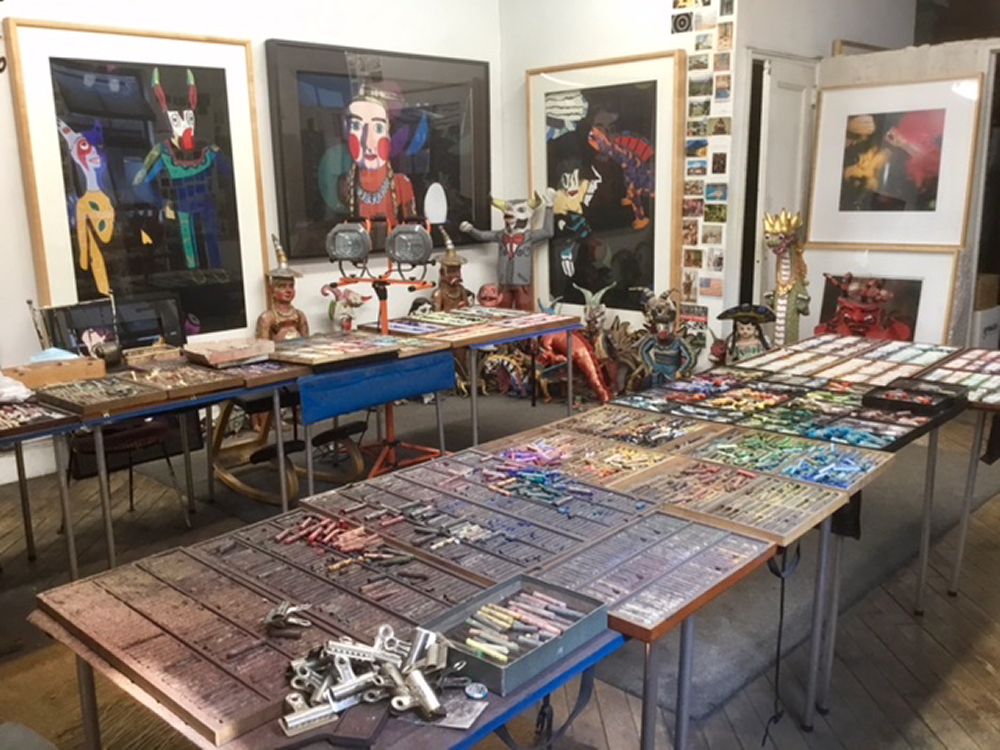
Barbara’s studio
* an ongoing series of quotations – mostly from artists, to artists – that offers wisdom, inspiration, and advice for the sometimes lonely road we are on.
One important distinction that can be made between physicists and novelists, and between the scientific and artistic communities in general, is what I shall call “naming.” Roughly speaking, the scientist tries to name things and the artist tries to avoid naming things.
To name a thing, one needs to have gathered it, distilled and purified it, attempted to identify it with clarity and precision. One puts a box around the thing and says what’s in the box is the thing and what’s not is not…
… The objects and concepts of the novelist cannot be named. The novelist might use the words love and fear, but these names do not summarize or convey much to the reader. For one thing, there are a thousand different kinds of love…
… Every electron is identical, but every love is different.
The novelist doesn’t want to eliminate these differences, doesn’t want to clarify and distill the meaning of love so that there is only a single meaning… because no such distillation exists. And any attempt at such a distillation would undermine the authenticity of readers’ reactions, destroying the delicate, participatory creative experience of a good reader reading a good book. In sense, a novel is not complete until it is read. And each reader completes the novel in a different way.
Alan Lightman in A Sense of the Mysterious: Science and the Human Spirit
Comments are welcome!
Q: How do you deal with the loneliness of working in a studio?
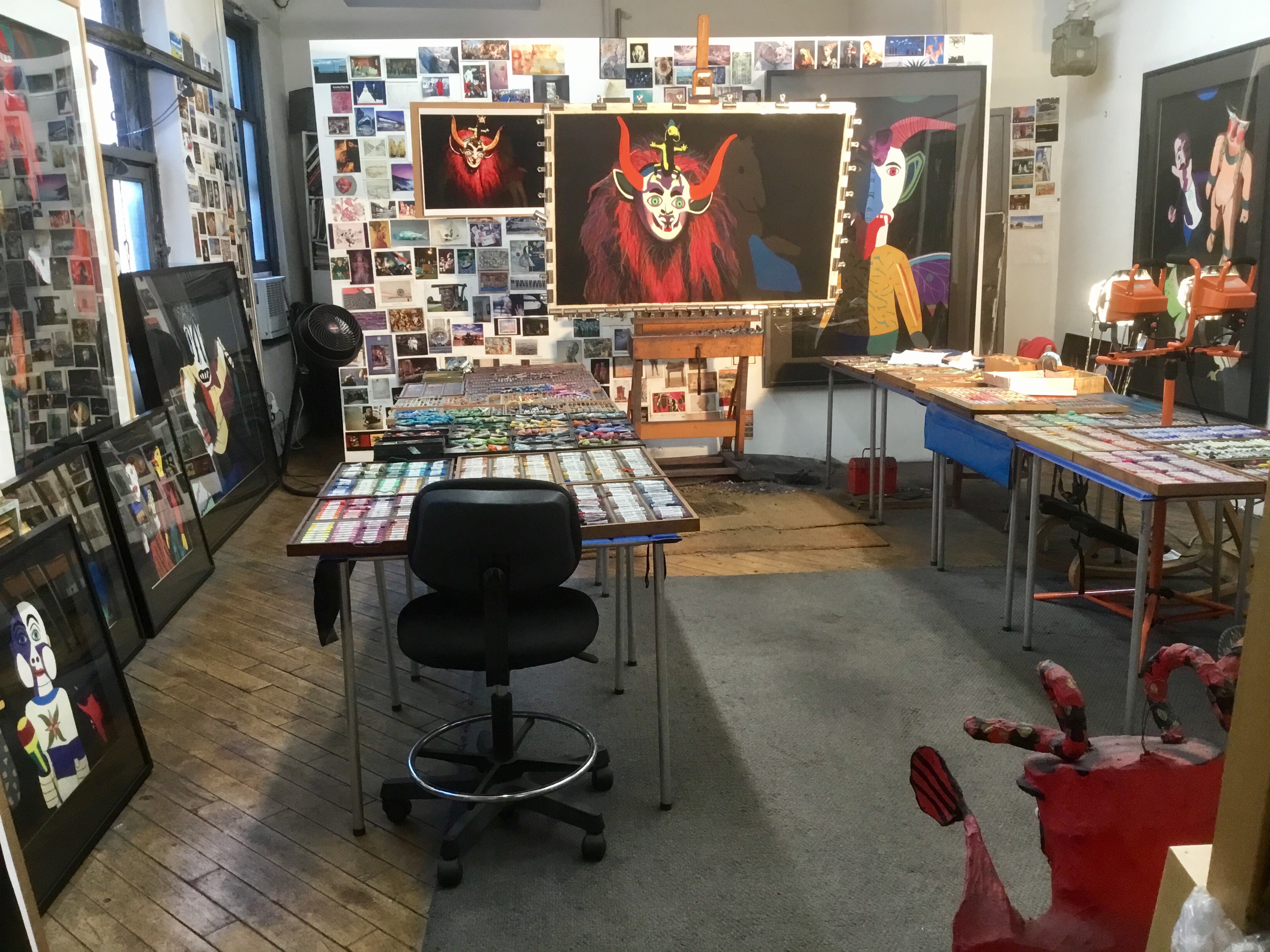
Barbara’s studio
A: I never feel lonely when I’m working. I love being in my studio and even after thirty years, still find the whole process of making a pastel painting completely engaging.
Painting is the one activity that not only uses all of my mental and physical abilities, but challenges me to push further. I am at my best in the studio.
Because there is always more to learn and process into the work, creating art is endlessly fascinating! Most artists probably feel the same way. It’s one of the reasons we persist.
Comments are welcome!
Start/Finish of “Incognito,” soft pastel on sandpaper, 38″ x 58″ image, 50″ x 70″ framed
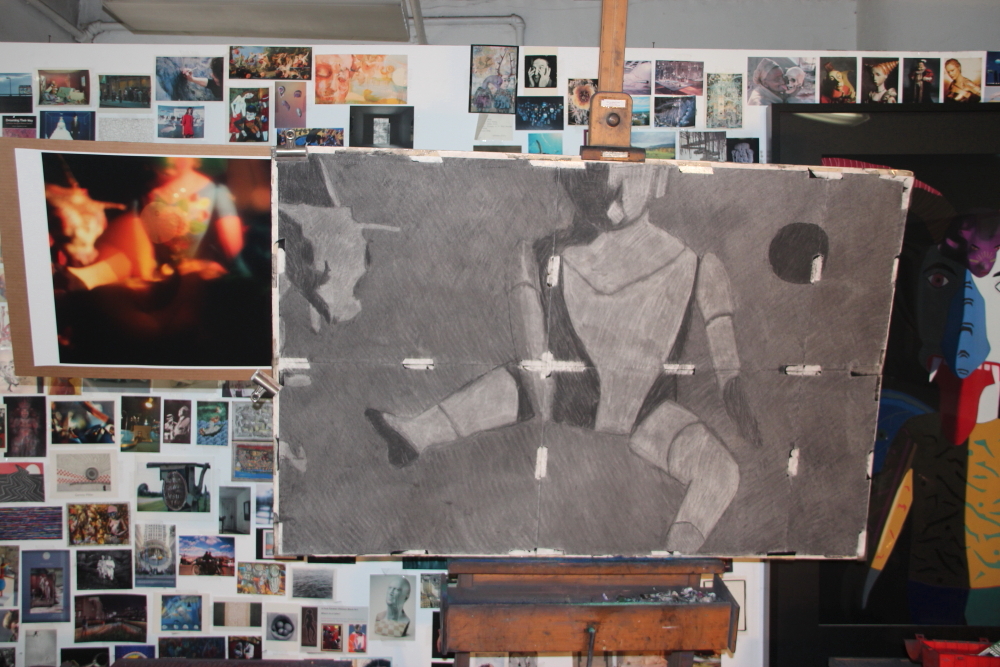
C-print and preliminary charcoal sketch
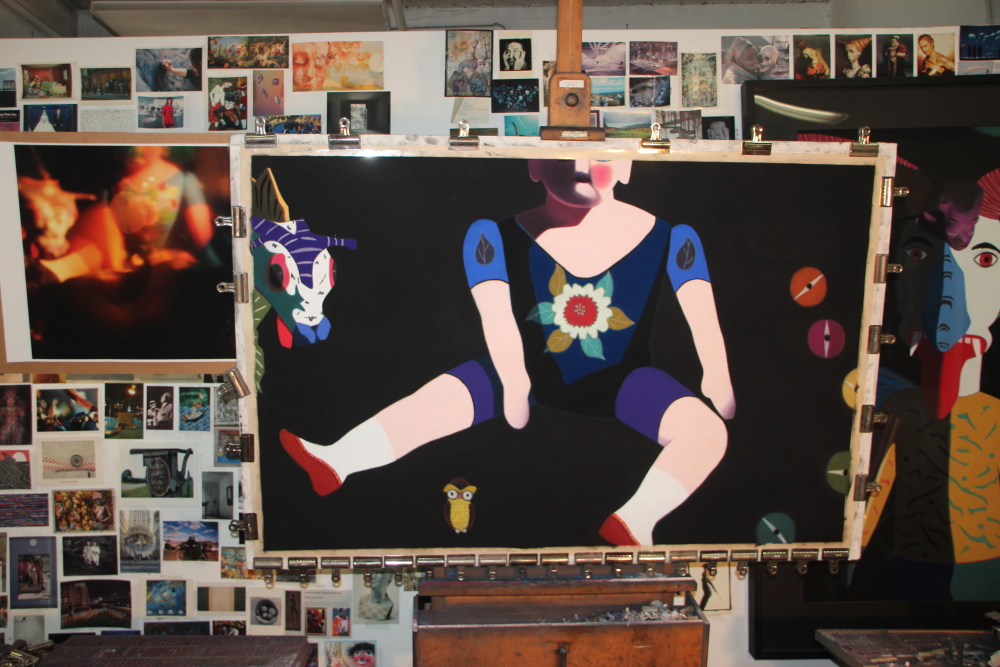
Finished
Comments are welcome!
Start/Finish of “Blind Faith,” soft pastel on sandpaper, 38″ x 58″ image, 50″ x 70″ framed

Beginnings

Finished and signed (lower left)
Comments are welcome!
Pearls from artists* # 208
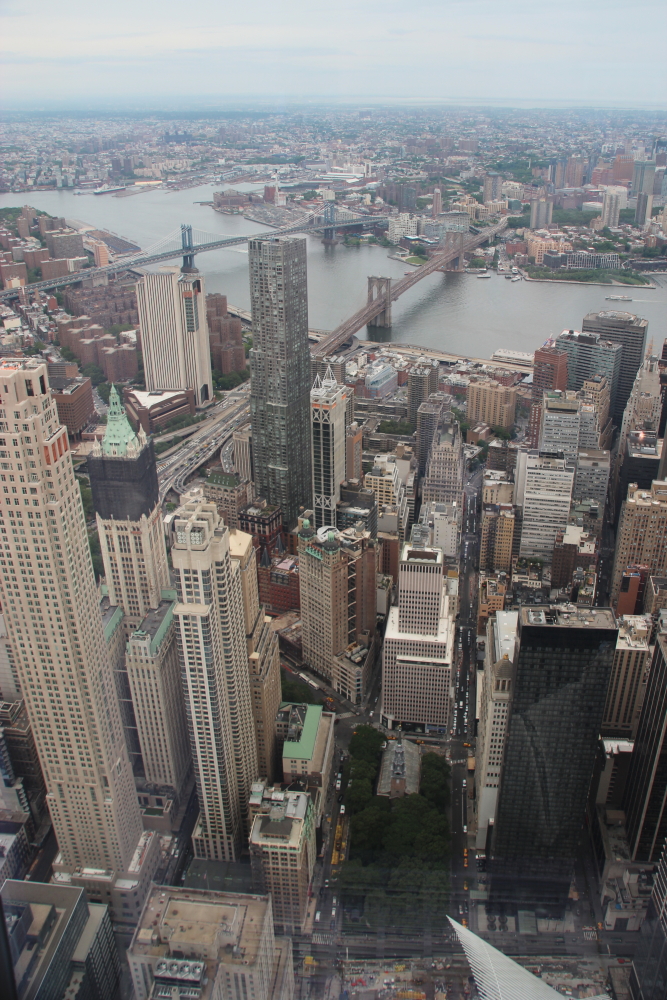
View from One World Trade Center
* an ongoing series of quotations – mostly from artists, to artists – that offers wisdom, inspiration, and advice for the sometimes lonely road we are on.
PC: In your painting, you’ve always kept this speed of movement. One senses that you work something out slowly, deep down, that it’s hard work, but there’s always something fresh about its expression.
HM: That’s because I revise my notion several times over. People often add or superpose – completing things without changing their plan, whereas I rework my plan every time. I never get tired. I always start again, working from the previous state. I try to work in a contemplative state, which is very difficult: contemplation is inaction, and I act in contemplation.
In all the studies I’ve made from my own ideas, there’s never been a faux pas because I’ve always unconsciously had a feeling for the goal; I’ve made my way toward it the way one heads north, following the compass. What I’ve done, I’ve done by instinct, always with my sights on a goal I still hope to reach today. I’ve completed my apprenticeship now. All I ask is four or five years to realize that goal.
PC: Delacroix said that too. Great artists never look back.
HM: Delacroix also said – ten years after he’d left the place – “I’m just beginning to see Morocco.” Rodin said to an artist, “You need to stand back a long way for sculpture.” To which the student replied, “Master, my studio is only ten meters wide.”
Chatting with Henri Matisse: The Lost 1941 Interview, Henri Matisse with Pierre Courthion, edited by Serge Guilbaut, translated by Chris Miller
Comments are welcome!
Q: What significance do the folk art figures that you collect during your travels have for you?

Barbara’s studio
A: I am drawn to each figure because it possesses a powerful presence that resonates with me. I am not sure exactly how or why, but I know each piece I collect has lessons to teach.
Who made this thing? How? Why? Where? When? I feel connected to each object’s creator and curiosity leads me to become a detective and an archaeologist to find out more about them and to figure out how to best use them in my work.
The best way I can describe it: after nearly three decades of seeking out, collecting, and using these folk art figures as symbols in my work, the entire process has become a rich personal journey towards gaining greater knowledge and wisdom.
Comments are welcome!
Pearls from artists* # 207

Barbara’s studio
* an ongoing series of quotations – mostly from artists, to artists – that offers wisdom, inspiration, and advice for the sometimes lonely road we are on.
More than in any other vocation, being an artist means always starting from nothing. Our work as artists is courageous and scary. There is no brief that comes along with it, no problem solving that’s given as a task… An artist’s work is almost entirely inquiry based and self-regulated. It is a fragile process of teaching oneself to work alone, and focusing on how to hone your quirky creative obsessions so that they eventually become so oddly specific that they can only be your own.
“What It Really Takes to Be an Artist: MacArthur Genius Teresita Fernandez’s Magnificent Commencement Address,” by Maria Popova in “brainpickings”
Comments are welcome!
Start/Finish of “Broken,” soft pastel on sandpaper, 38″ x 58″
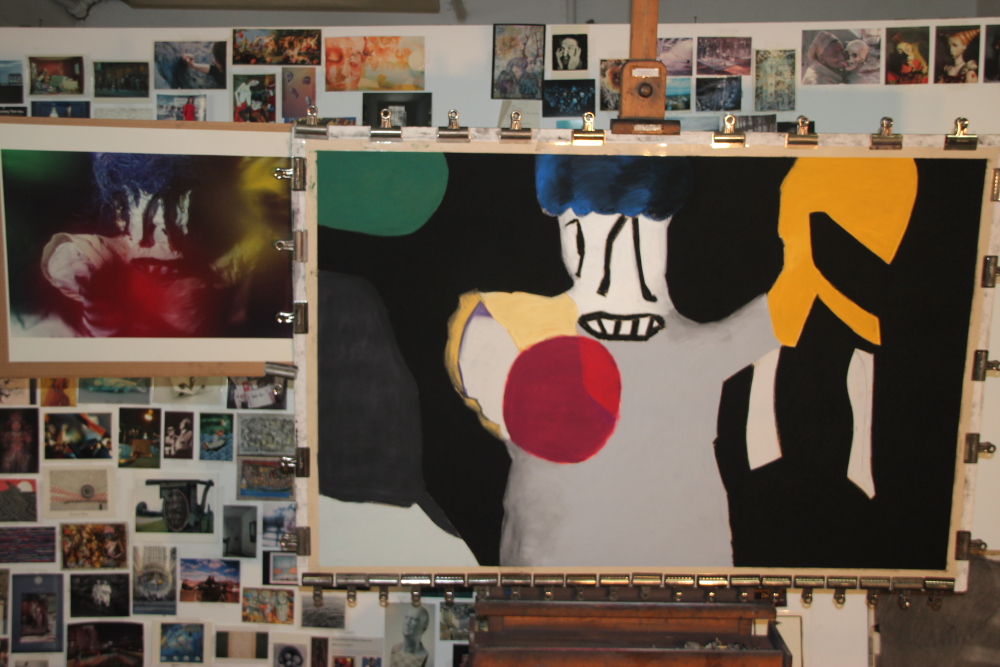
First day’s work on “Broken”
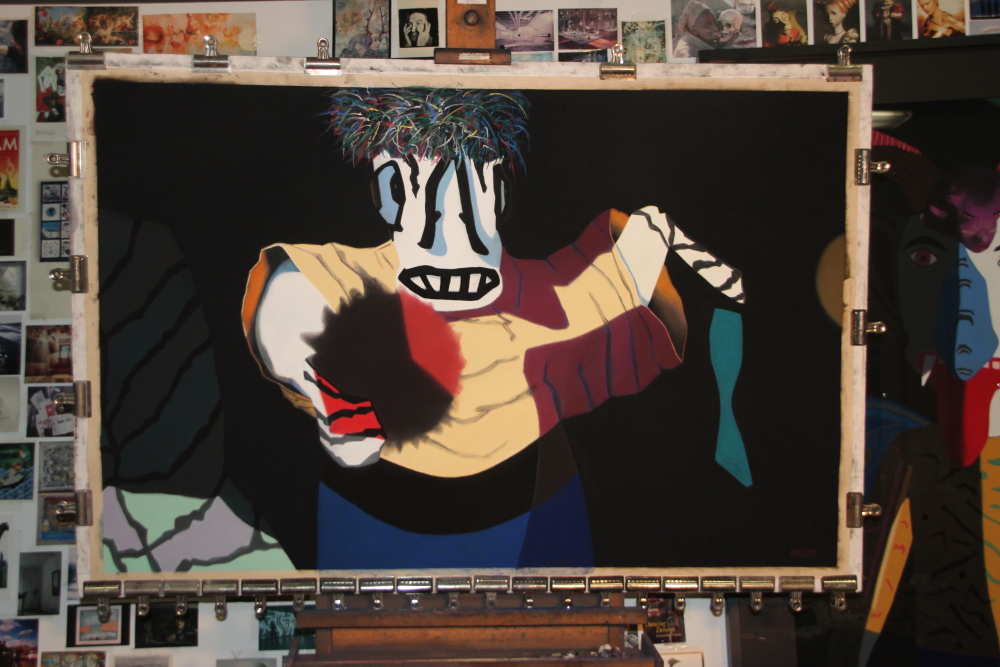
“Broken,” completed but unsigned
Comments are welcome!
Q: What’s on the easel today?
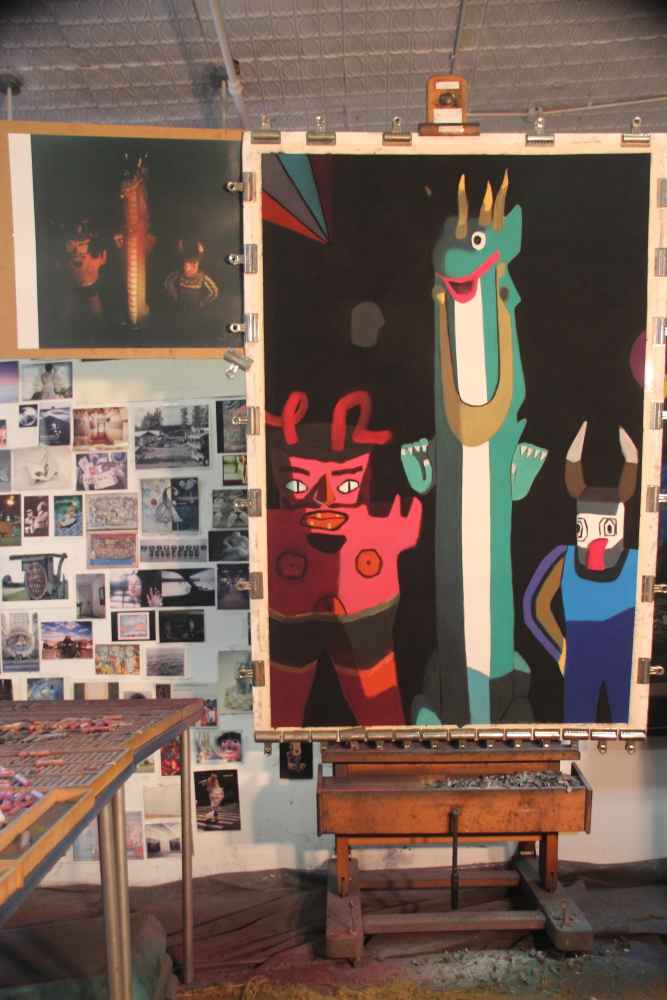
Work in progress
A: I am still in the early stages of a large pastel painting. After visiting Peru and Miami for three weeks, it has taken a few days to readjust and get back into my work routine.
In case you’re wondering, the undistinguished gray shape, roughly center left, is a placeholder for a stone figure found at a shaman’s shop in Chinchero, Peru. When I took this photo, the figure was at my apartment instead of in the studio (and I need to see the figure to paint it).
Comments are welcome!


 barbararachkoscoloreddust.com