Category Archives: Creative Process
Q: What does it feel like when you dop off a pastel painting at your Virginia framer’s shop? Are you sorry to see it go? (Question from Caroline Golden)
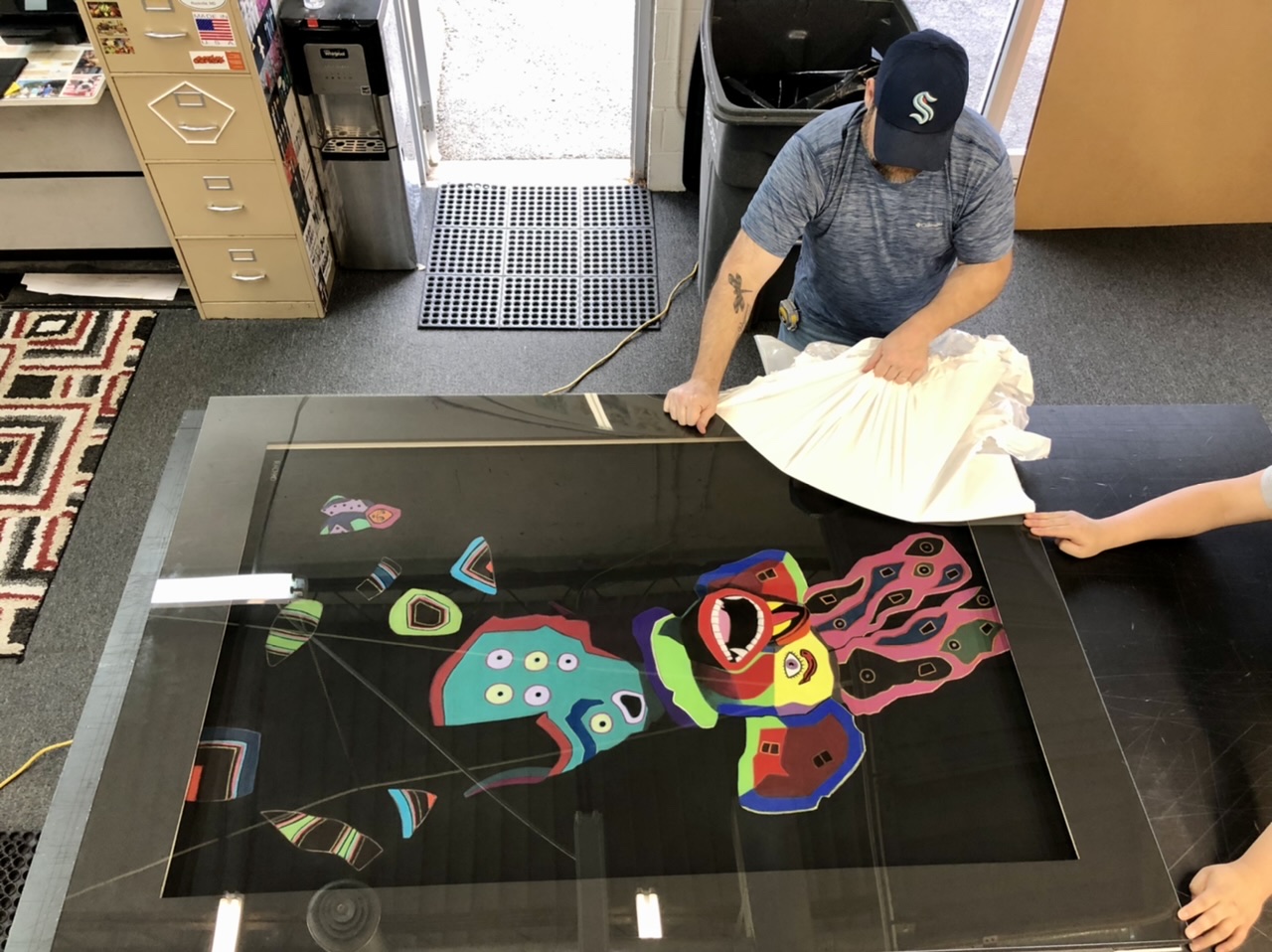
A: Actually, just the opposite since I have been looking at it on my easel for more than three months. Typically, I’m glad to say goodbye – temporarily – because I know when I pick it up in a month, I will have gained some distance and can begin to see and think about it more objectively. I can start reflecting on how this pastel painting relates to my overall body of work.
Comments are welcome!
Q: What’s on the easel today?
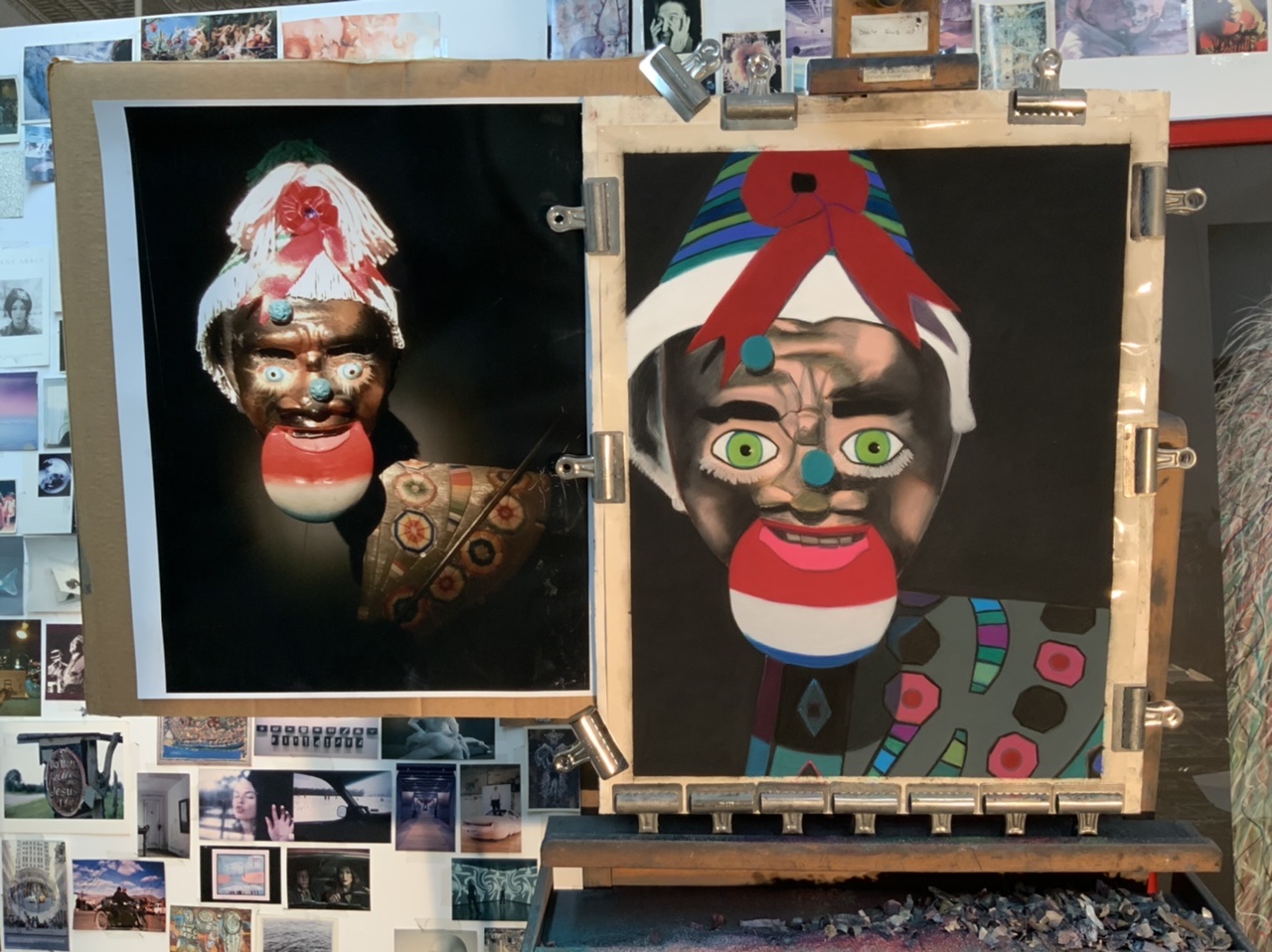
Work in progress
A. I continue refining and adding more details to “Disruptor,” soft pastel on sandpaper, 26” x 20.”
Comments are welcome!
Q: There are so many instances in the art world where paintings are discovered to be fakes. Do you think this is a potential problem where your work is concerned? Can your pastel paintings be forged?


A: For the record, a little-appreciated fact about my pastel-on-sandpaper paintings is that they can never be forged. To detect a fake, you would only need to x-ray them. If dozens of layers of revisions are not visible under the final pastel painting, you are not looking at an original Rachko, period.
My completed paintings are the results of thousands of decisions. They are the product of an extremely meticulous, labor-intensive, and self-invented process. This is the difference between spending months thinking about and creating a painting, as I do, or a single day. It’s highly doubtful that my rigorous creative process can EVER be duplicated.
Comments are welcome!
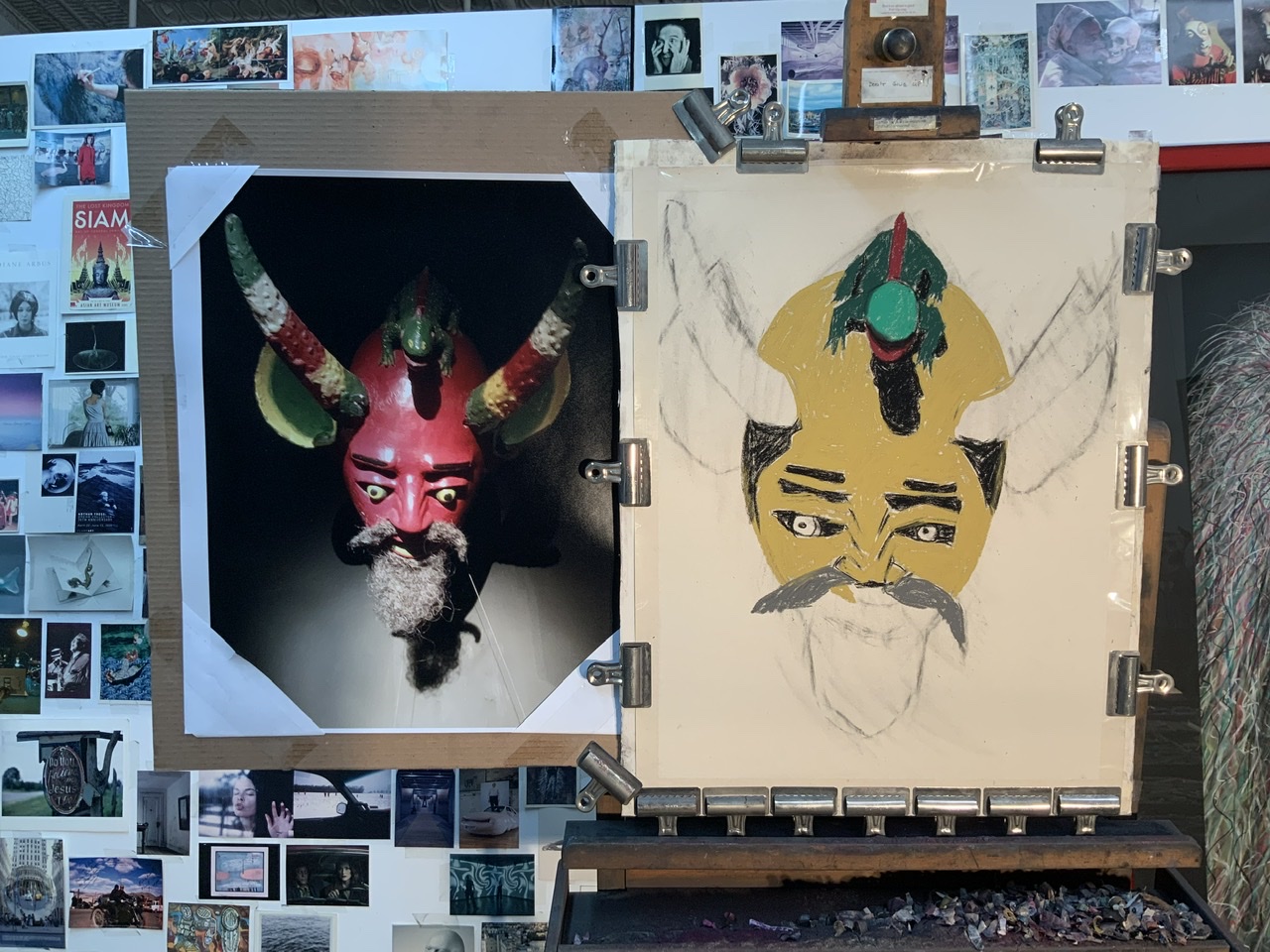
Start/Finish of ”The Mentalist,” soft pastel on sandpaper, 26” x 20” image, 35” x 28.5” framed

Comments are welcome!
Q: What makes you feel most alive?

A: Making art makes me feel alive, using all my gifts, my brain, my heart, and my hands to create something that never existed before and that can never be duplicated; knowing I’m the only person, ever, who could or would make this particular thing, as I strive to push my pastel techniques further each time out. Whether it’s a painting or a photograph, I enjoy making something from nothing… art that is well-crafted and has never been seen before.
Travel is the other activity that excites me. I thrive on adventure and I especially love new vistas. When I am in a country I have never visited before, with every step and around every bend there is something new to see. I am an explorer at heart!
Comments are welcome!
Q: How do you account for your intense compositions? (Question from Robin Plati via Facebook)
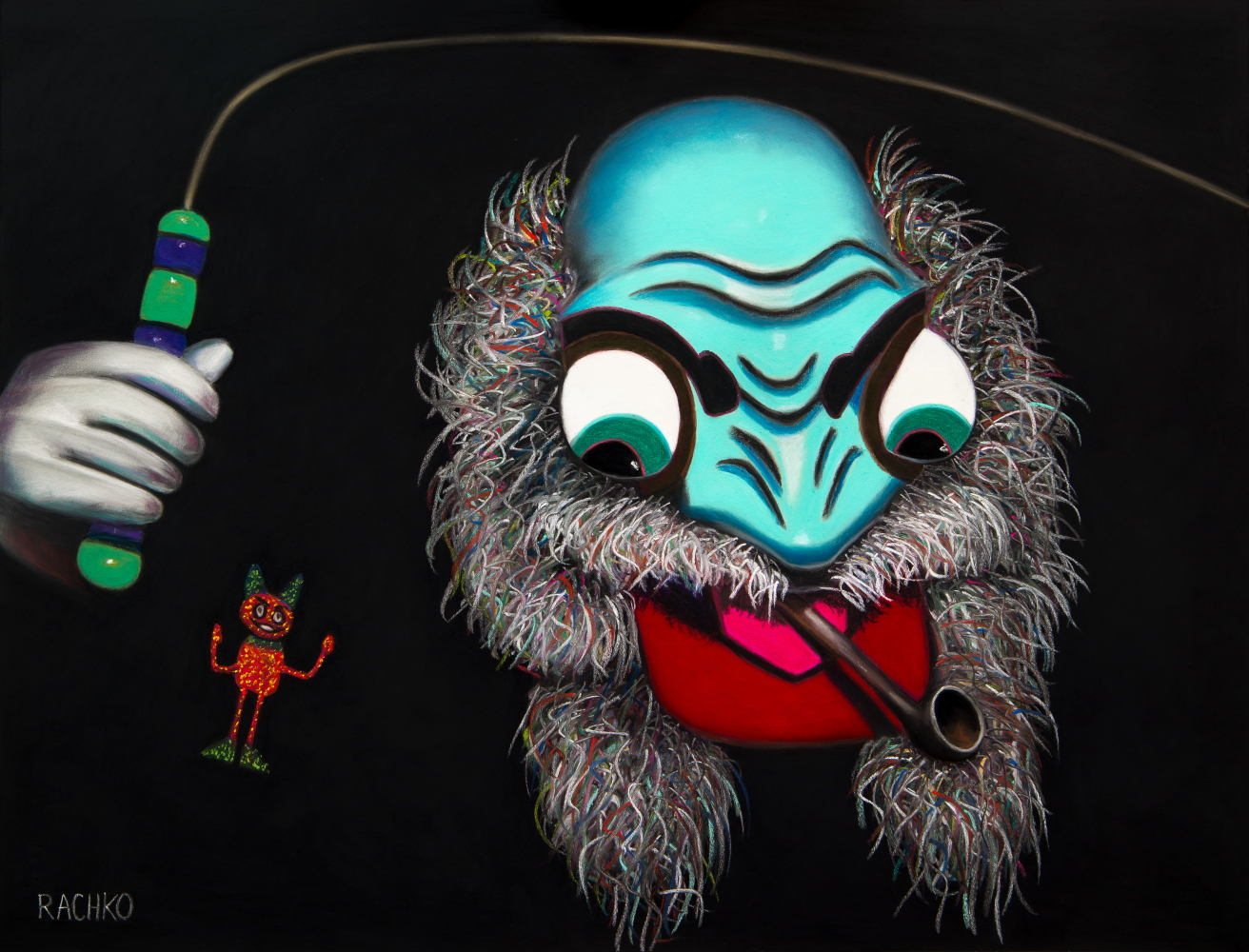
A: If I do say so, composition is something I’m known for. During the months I work on them, I devote many hours to looking at the painting on my easel and figuring out how to move the viewer’s eyes around in interesting ways. Everything you see is carefully worked out after hundreds of studio hours. Finished pastel paintings always have an inevitability about them. Change one detail and the entire composition is thrown off.
Comments are welcome!
Q: What’s on the easel today?
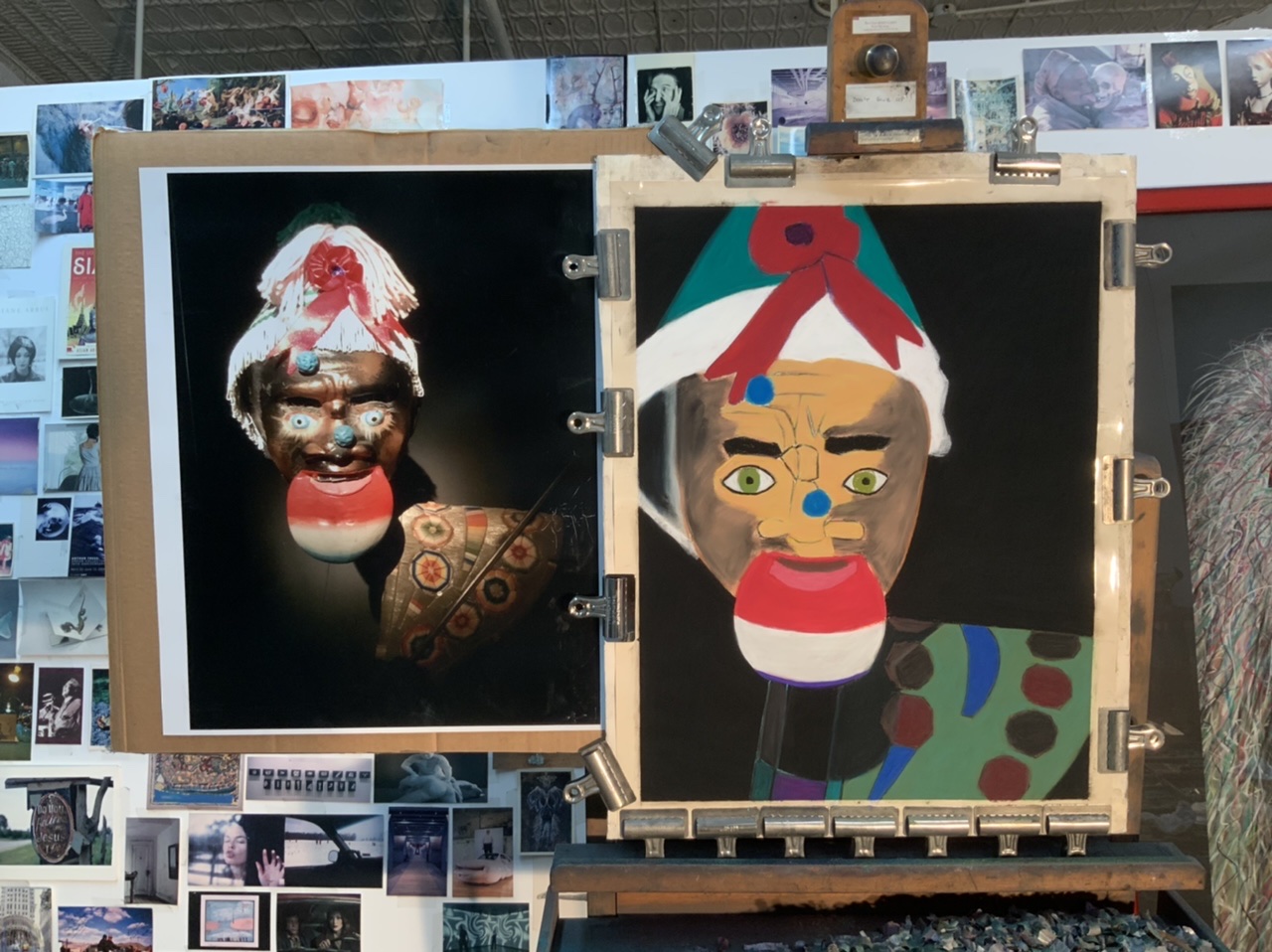
A: I began a new 26” x 20” “Bolivianos” pastel-on-sandpaper painting a few days ago.
Comments are welcome!
Pearls from artists* # 523
*an ongoing series of quotations – mostly from artists, to artists – that offers wisdom, inspiration, and advice for the sometimes lonely road we are on.
How strange the human mind is! When I first began, I think I should have been willing to work at it from the top of a church steeple, whereas now, even to think of finishing requires a real effort. And all this, simply because I have been away from it for so long. It is the same with my picture and with everything else I do. There is always a thick crust to be broken before I can give my whole heart to anything; a stubborn piece of ground, as it were, that resists the attack of plough and hoe. But with a little perseverance the hardness suddenly gives and it becomes so rich in fruit and flowers that I am quite unable to gather them all.
The Journal of Eugene Delacroix edited by Hubert Wellington
Comments are welcome!
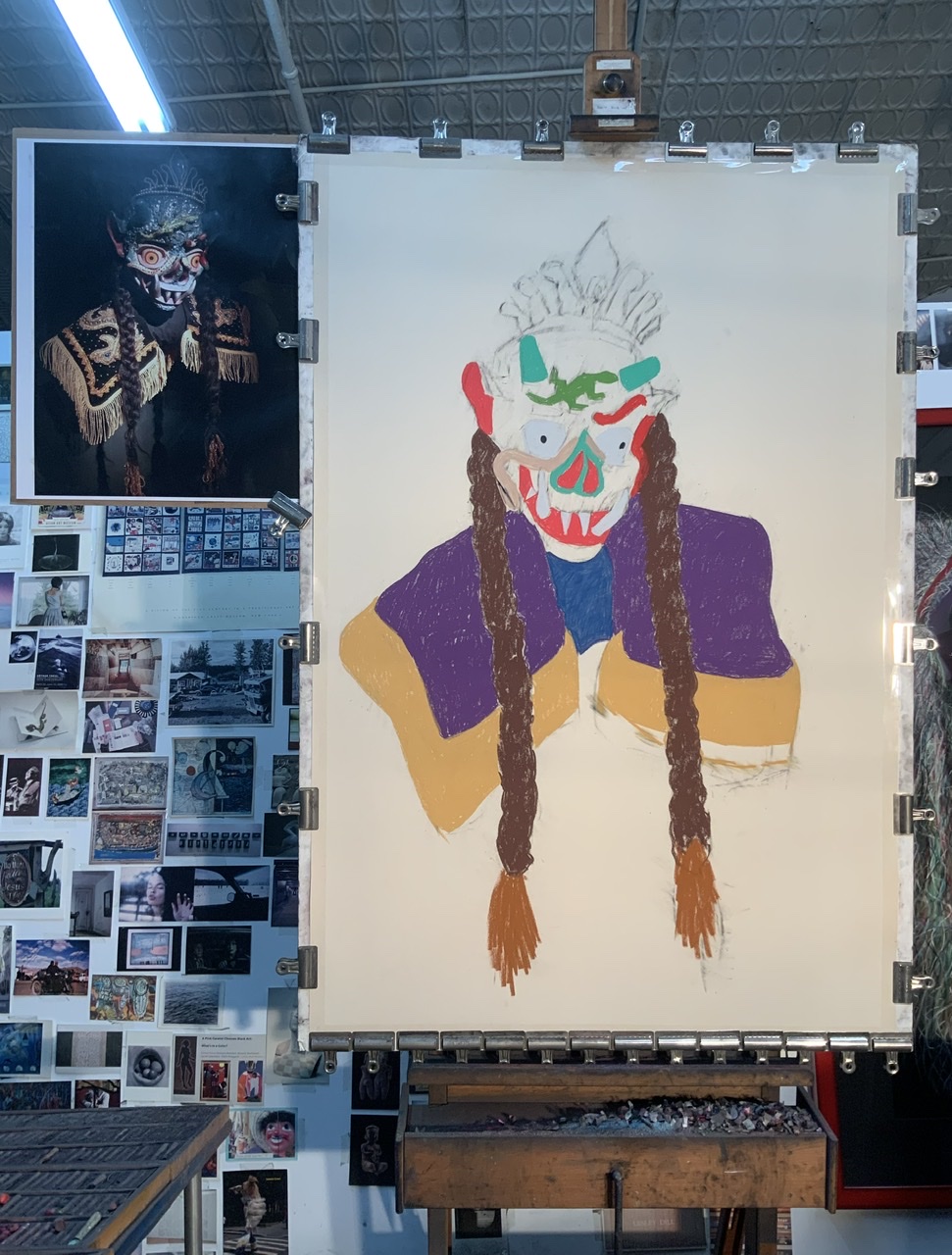
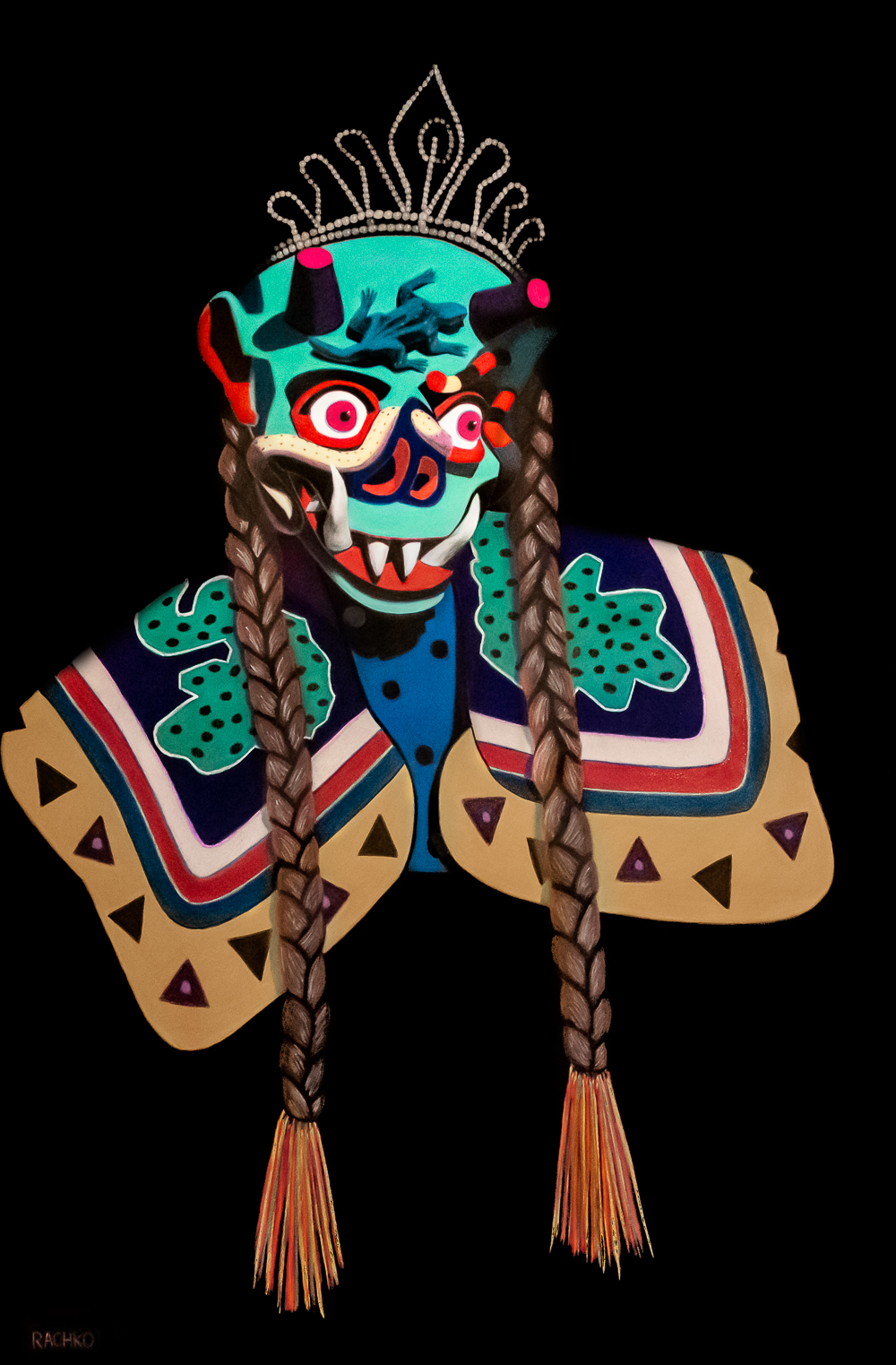
Start/Finish of ”Overlord,” soft pastel on sandpaper, 58” x 38” image, 70” x 50” framed
Comments are welcome!
Pearls from artists* # 521

*an ongoing series of quotations – mostly from artists, to artists – that offers wisdom, inspiration, and advice for the sometimes lonely road we are on.
But on the whole, I’m taking into consideration, at the point of the cut, where the audience’s eye is and what direction it’s moving, and with what speed. The editor has to imagine the audience’s point of attention when the film is projected, and has to be able to predict where ninety-nine percent of the audience is looking at any moment… I have to be able to say with some certainty that at such-and-such a moment ninety-nine percent of the audience will be looking at this point on the screen, and in the next second they will be looking here. That means that their eye is travelling, say, left to right, to the upper corner of the frame, at a certain speed. If I choose to cut at this point – at frame 17 – I know that at that moment their eye is right here, in the Cartesian grid of the screen.
That’s a very valuable piece of information. When I select the next shot, I choose a frame that has an interesting visual at exactly that point, where the audience’s eye is at the moment of the cut, to catch and redirect their attention somewhere else. Every shot has its own dynamic. One of the editor’s obligations is to carry, like a sacred vessel, the focus of attention of the audience and move it in interesting ways around the surface of the screen.
This is exactly what I do as I work to compose my pastel paintings! – BR
In The Conversations: Walter Murch and the Art of Editing Film by Michael Ondaatje
Comments are welcome!


 barbararachkoscoloreddust.com