Blog Archives
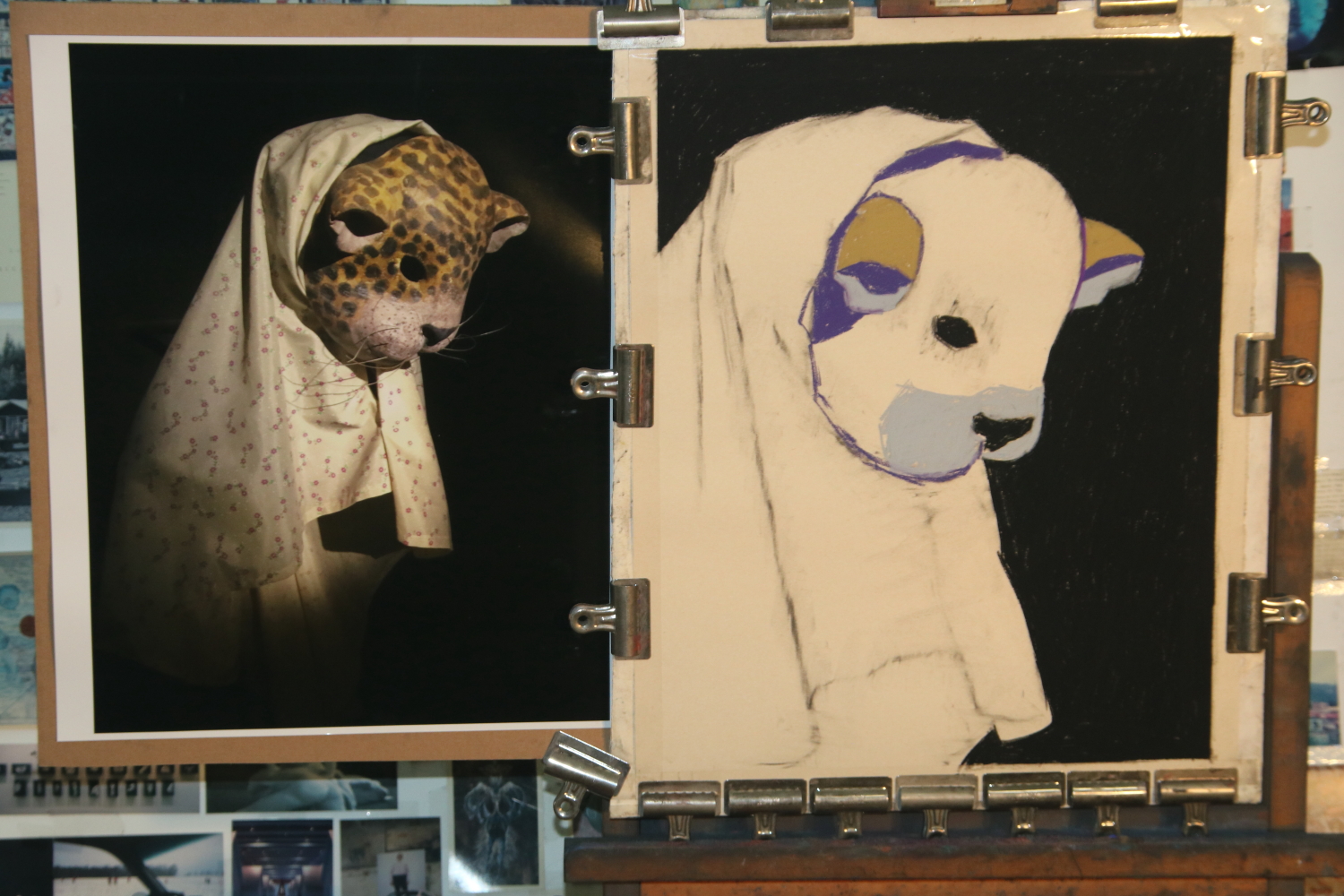
Start/Finish of “Avenger,” Soft Pastel on Sandpaper, 58″ x 38″
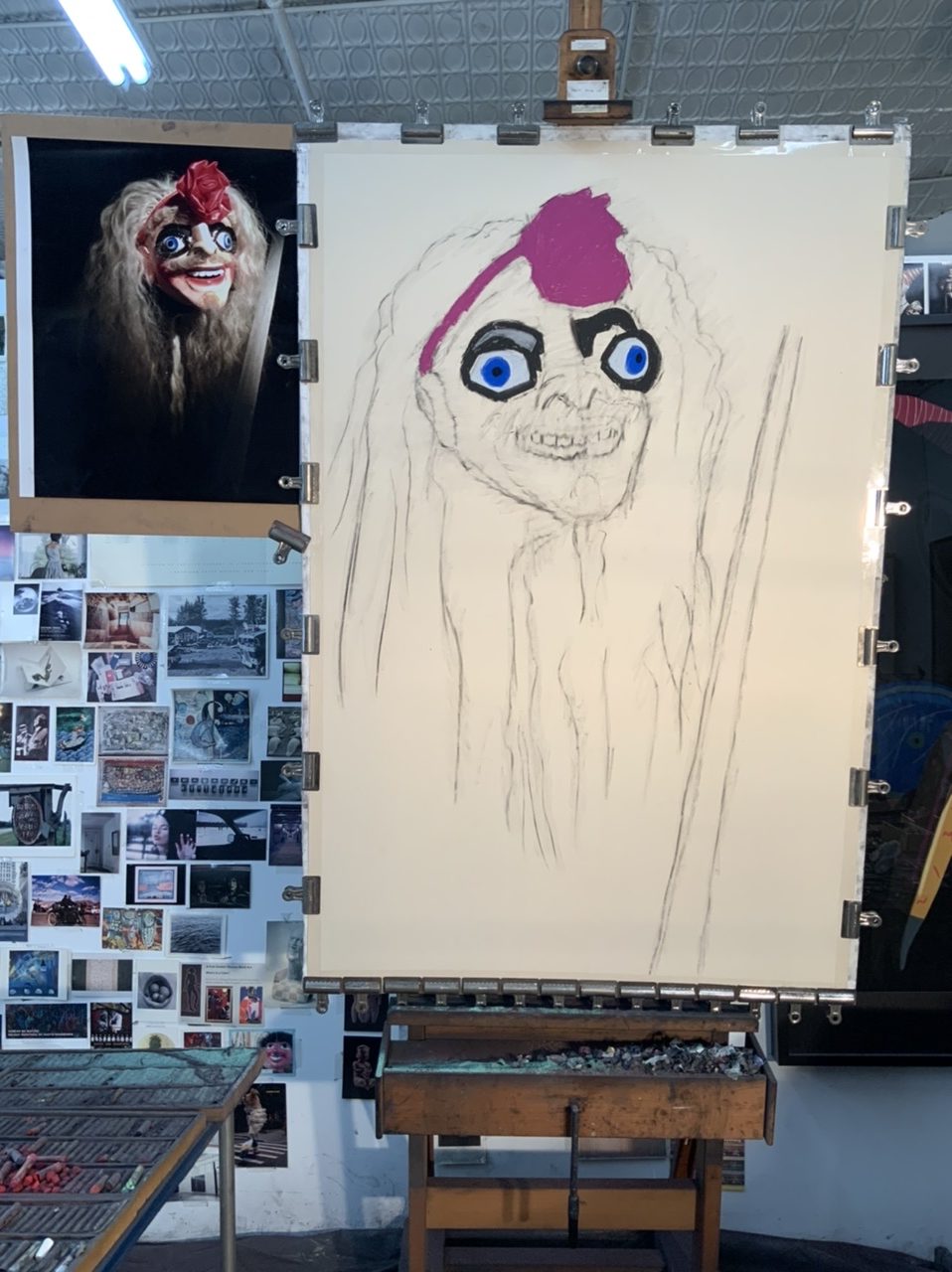
Start
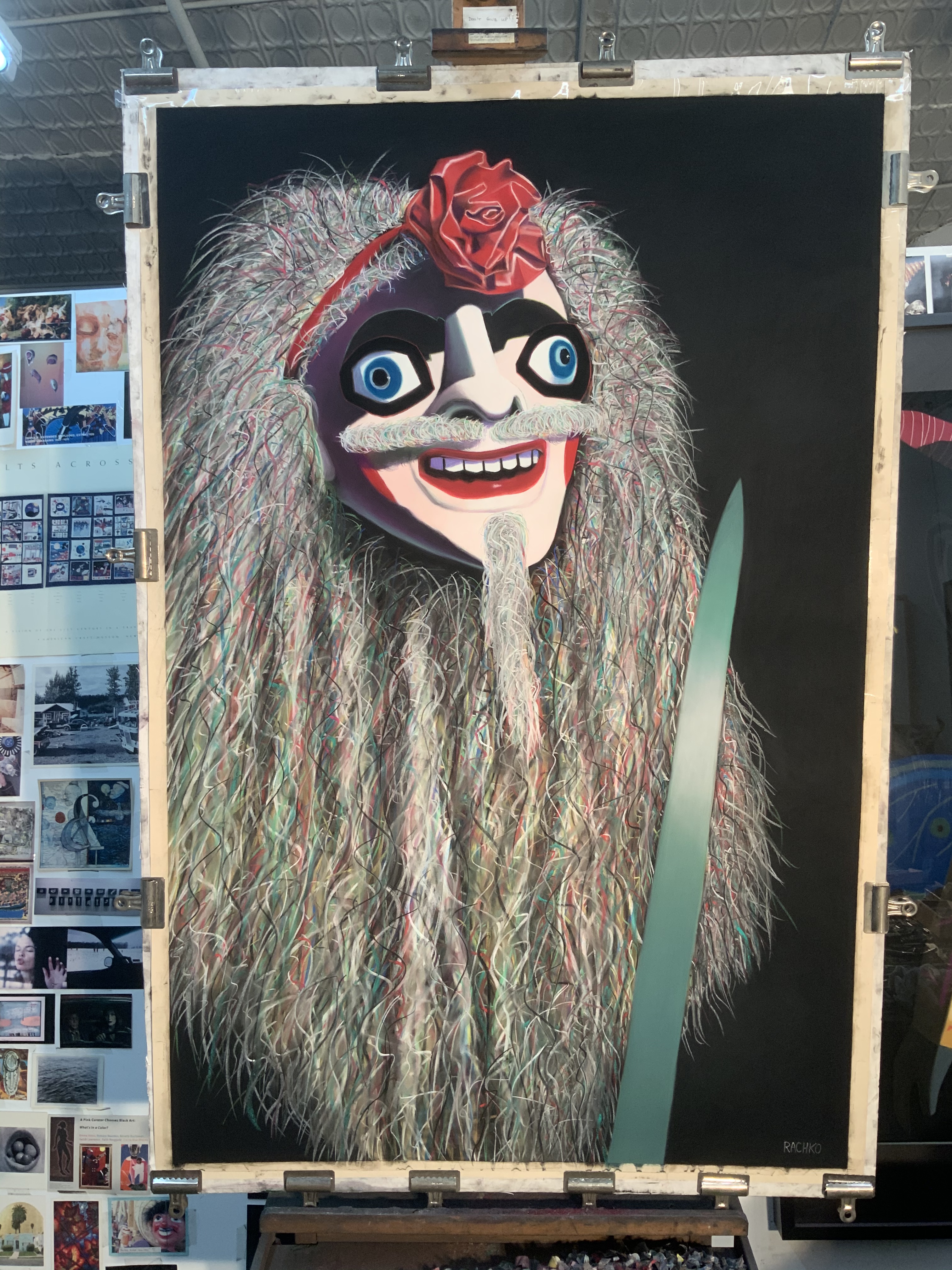
Finished and signed lower right
Comments are welcome!
Q: What do you enjoy most about being an artist?
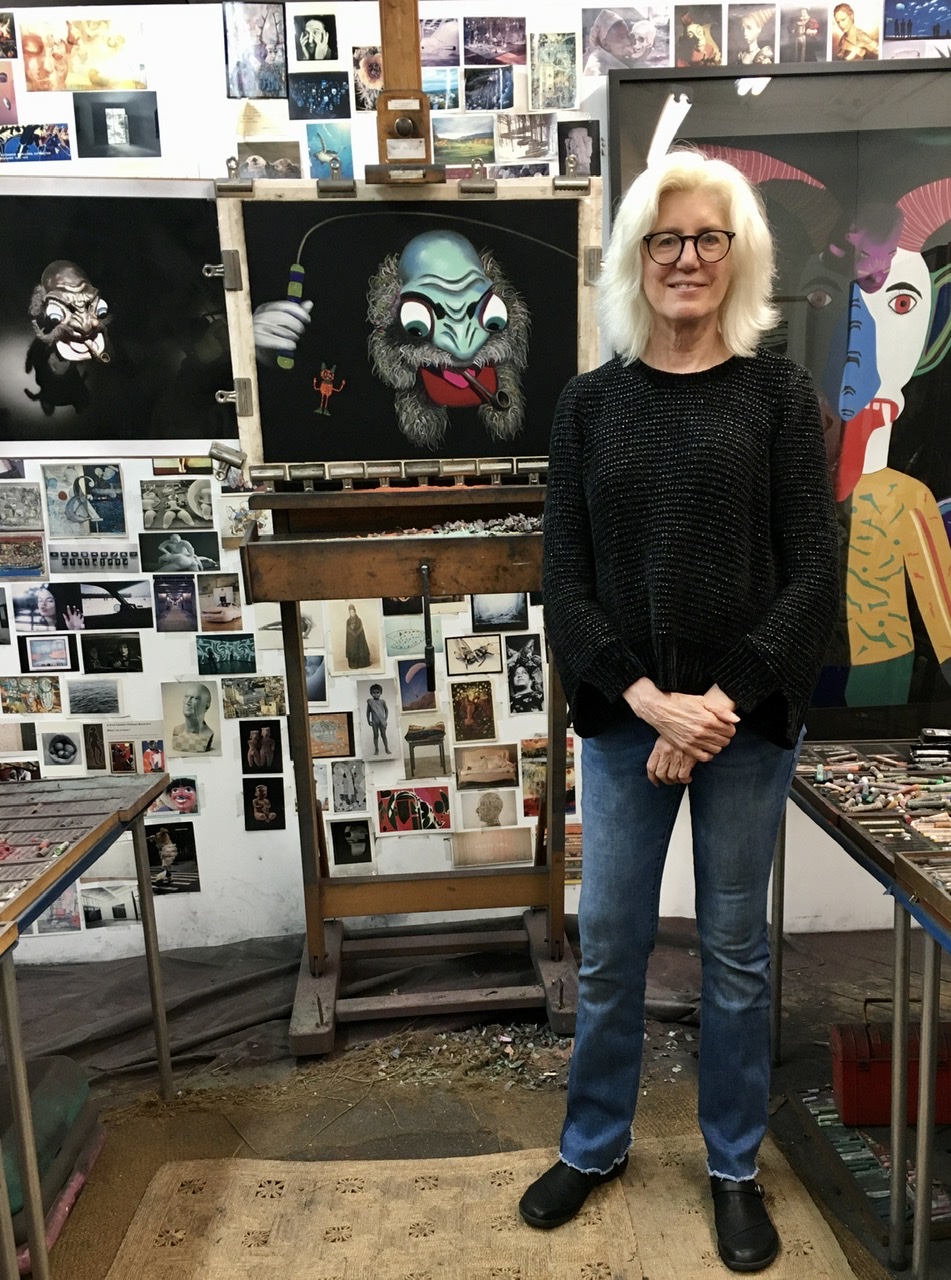
With “Majordomo,” soft pastel on sandpaper, 20” x 26”
A: This is a question I enjoy revisiting every so often because life as an artist does not get easier; just the opposite, in fact. Visual artists tend to be “one man bands.” We do it all notwithstanding the fact that everything gets harder as we get older. So it’s good to be reminded about what makes all the sacrifice and hard work worthwhile.
There are so many things to enjoy! I make my own schedule, set my own tasks, and follow new interests wherever they may lead. I am curious about everything and am rarely bored. I continually push my pastel technique and strive to become a better artist. There is still so much to learn!
My relationship with collectors is another perk. I love to see pastel paintings hanging on collectors’ walls, especially when they’re newly installed and the owners are excited to take possession. This means that the piece has found a good home, that years of hard work have come full circle! And it’s often the start of a long friendship. After living with my pastel paintings for years, collectors tell me they see new details never noticed before and they appreciate the work more than ever. It’s extremely gratifying to have built a network of supportive art-loving friends around the country. I’m sure most artists would say the same!
Comments are welcome!
Q: What’s on the easel today?
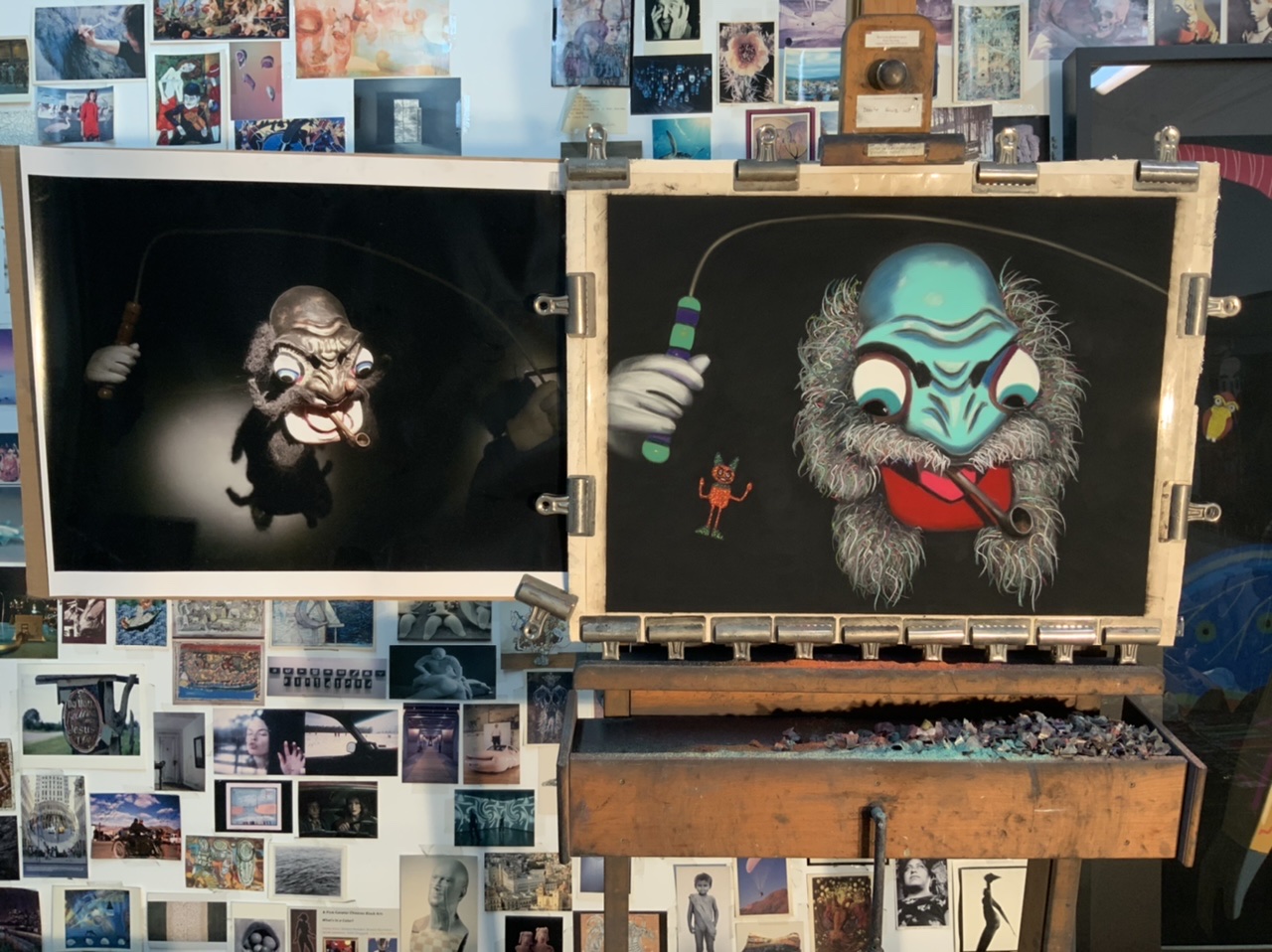
Work in progress
A: “Majordomo,” 20” x 26,” soft pastel on sandpaper, is coming along. After today’s studio session, I will put it aside and add finishing details when I am able to see it fresh again. I‘ve been looking at this piece too long to know what else it needs now.
Comments are welcome!
Q: You have worked with twenty-plus galleries during your career. Which ones do you consider the best?

“Myth Meets Dream,” 1993, soft pastel on sandpaper, the earliest painting that includes Mexican figures
A: Probably the most prestigious gallery that represented my work was Brewster Fine Arts on West 57th Street in Manhattan. Brewster was my first New York gallery. In the summer of 1996 I mailed the gallery a sheet of slides, as we did in those days. I was living in Virginia and had been a working artist for ten years. In July while traveling around Mexico, I decided to check the phone messages at home in Virginia. I was thrilled to receive an invitation from Mia Kim, the gallery director, to exhibit pastel paintings in October! And she had not yet even seen my work in person.
Beginning that fall, I gained representation with Brewster Fine Arts, an elegant gallery specializing in Latin American Masters like Rufino Tamayo, Diego Rivera, and others. I am not Latina, of course, but I showed there due to my subject matter. At my October opening, I remember Mia declaring to the attendees, “Barbara has the soul of a Latina!” That night I met fellow gallery artist Leonora Carrington. She and I were the only non-Latina artists respresented. I knew I was on my way!
The gallery continued to present my work in group exhibitions and the staff gave brilliant talks about me and my creative process. For many years whenever I introduced myself to a new art aficionado, they already knew my work from having seen it at Brewster. I continued to be represented there until the gallery closed years later.
Also, Gallery Bergelli in Larkspur, CA did an excellent job of representing my work. I applied for one of their juried exhibitions, was accepted, and afterwards, they offered permanent representation. Soon they introduced me to one of my best collectors, with whom I am still friends.
I have worked with many galleries, some good, some not, for various reasons. Ours is an extremely tough business. Unfortunately, many of the best and formerly-great galleries are gone forever.
Comments are welcome!
Pearls from artists* # 391

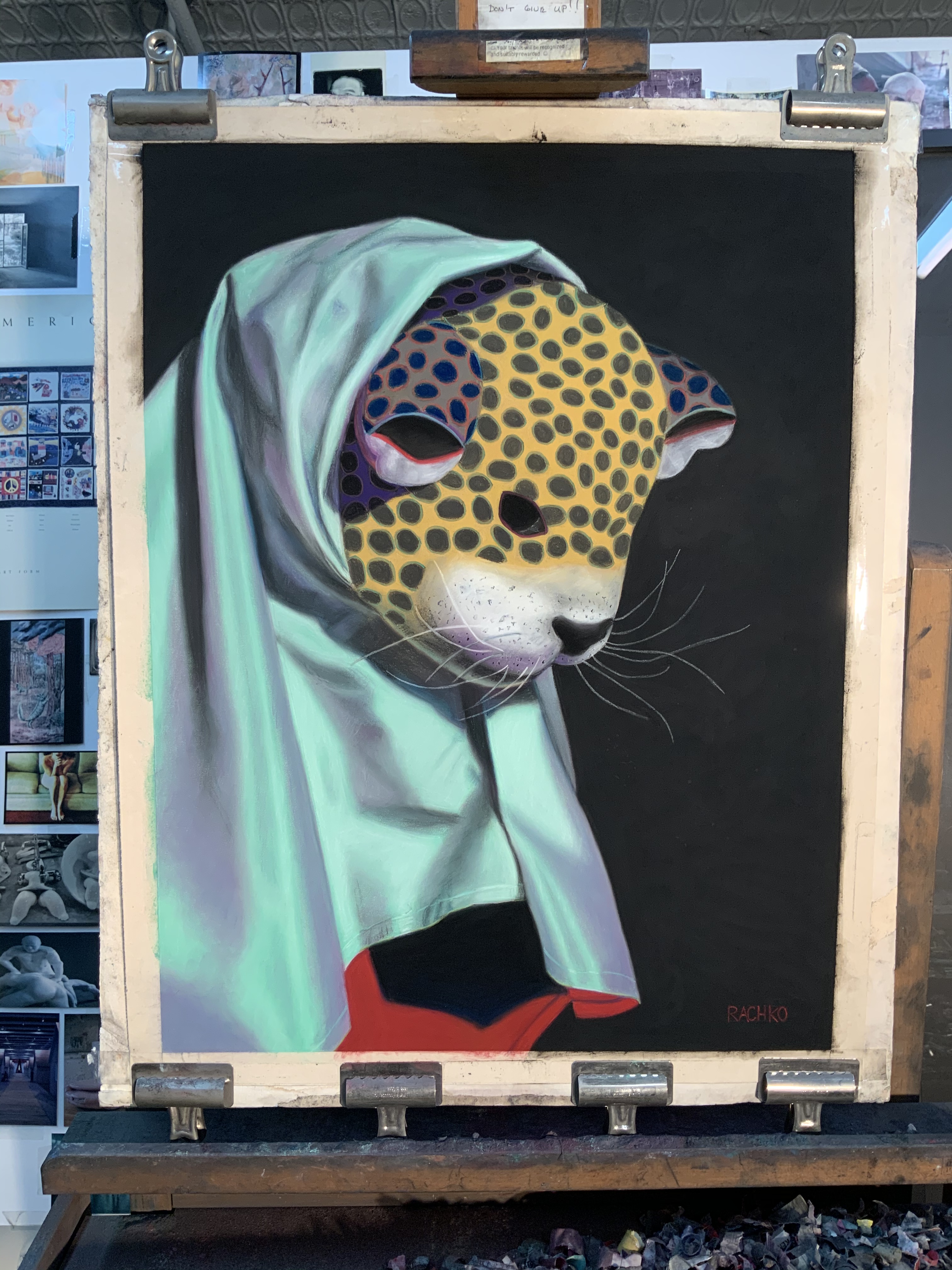
“Schemer,” Soft Pastel on Sandpaper, 26” x 20,” packed up for transport to the framer
*an ongoing series of quotations – mostly from artists, to artists – that offers wisdom, inspiration, and advice for the sometimes lonely road we are on.
Charles Baudelaire once wrote that the frenzy of the artist
is the fear of not going fast enough, of letting the phantom escape before the synthesis has been extracted and pinned down; it is that terrible fear which takes possession of all great artists and gives them such a passionate desire to become masters of every means of expression so that the orders of the brain may never be perverted by the hesitations of the hand and that finally… ideal execution, may become as unconscious and spontaneous as is digestion for a healthy man after dinner.
Mary Gabriel in Ninth Street Women
Comments are welcome!
Pearls from artists* # 387

Barbara at work on “Schemer,” Soft Pastel on Sandpaper, 26” x 20”
* an ongoing series of quotations – mostly from artists, to artists – that offers wisdom, inspiration, and advice for the sometimes lonely road we are on.
You know, you don’t go into the studio and say, “Oh, here I am this marvelous heroine, this wonderful woman doing my marvelous painting so all these marvelous women artists can come after me and do their marvelous painting.” There you are alone in this huge space and you are not conscious of the fact that you have breasts and a vagina. You are inside yourself, looking at a damned piece of rag on the wall that you are supposed to make a world out of. That is all you are conscious of. I simply cannot believe that a man feels differently… Inside yourself, you are looking at this terrifying unknown and trying to feel, to pull everything you can out of all your experience, to make something. I think a woman or a man creating feels very much the same way. I bring my experience, which is different from a man’s, yes, and I put it where I can. But once that is done, I don’t know if it is a woman’s experience I’m looking at.
Grace Hartigan quoted in Ninth Street Women by Mary Gabriel
Comments are welcome!
Pearls from artists* # 383
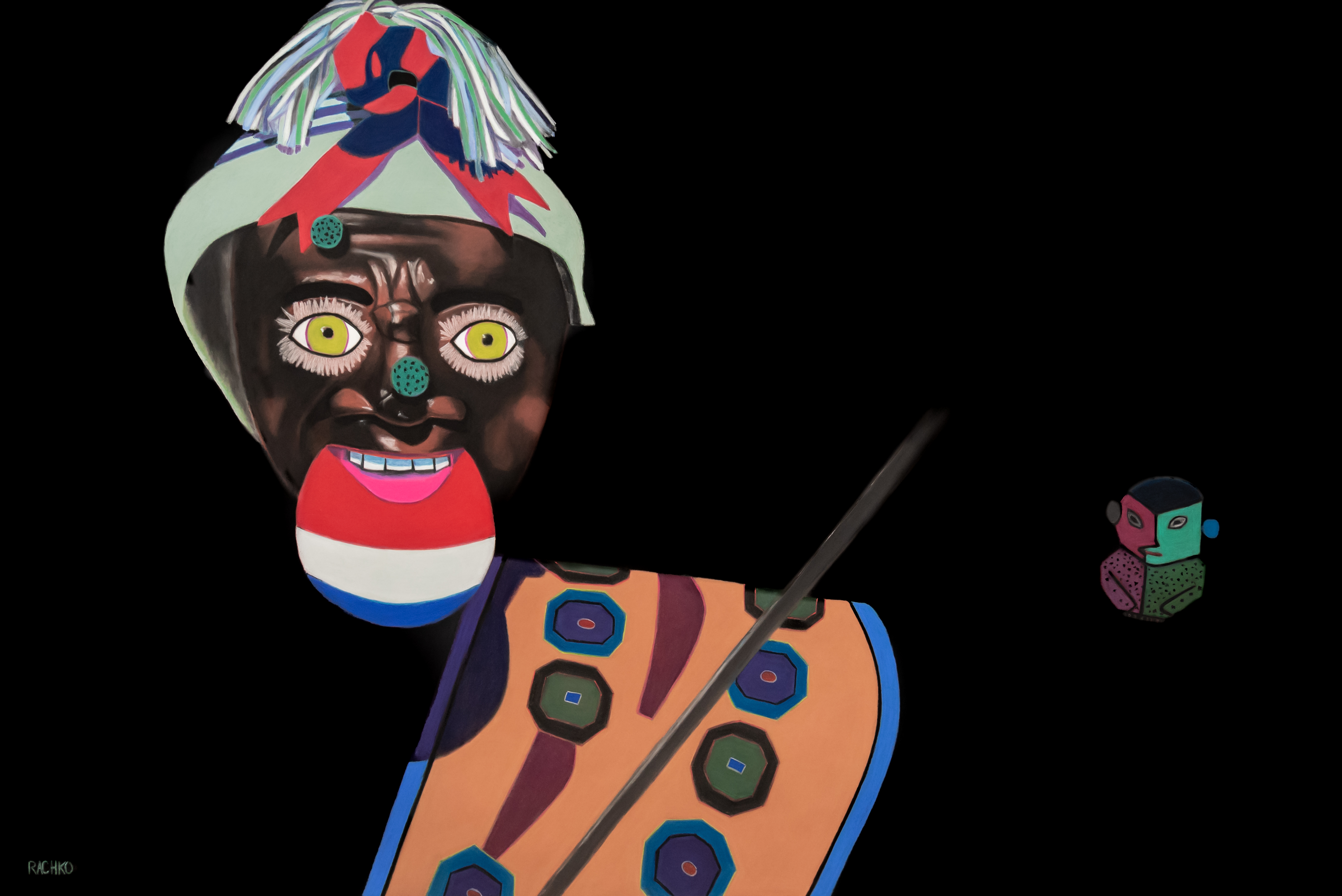
“Sentinels,” Soft Pastel on Sandpaper, 38” x 58” image, 50” x 70” framed
* an ongoing series of quotations – mostly from artists, to artists – that offers wisdom, inspiration, and advice for the sometimes lonely road we are on.
… I mean to say that a work of art is a gift. The gifted artist contains the vitality of his gift within the work, and thereby makes it valuable to others. Furthermore, works we come to treasure are those which transmit that vitality and revive the soul. Such works circulate among us as reservoirs of available life, what Whitman calls “the tasteless water of souls.”
Lewis Hyde in The Gift: Imagination and the Erotic Life of Property
Comments are welcome!
Q: What’s on the easel today?
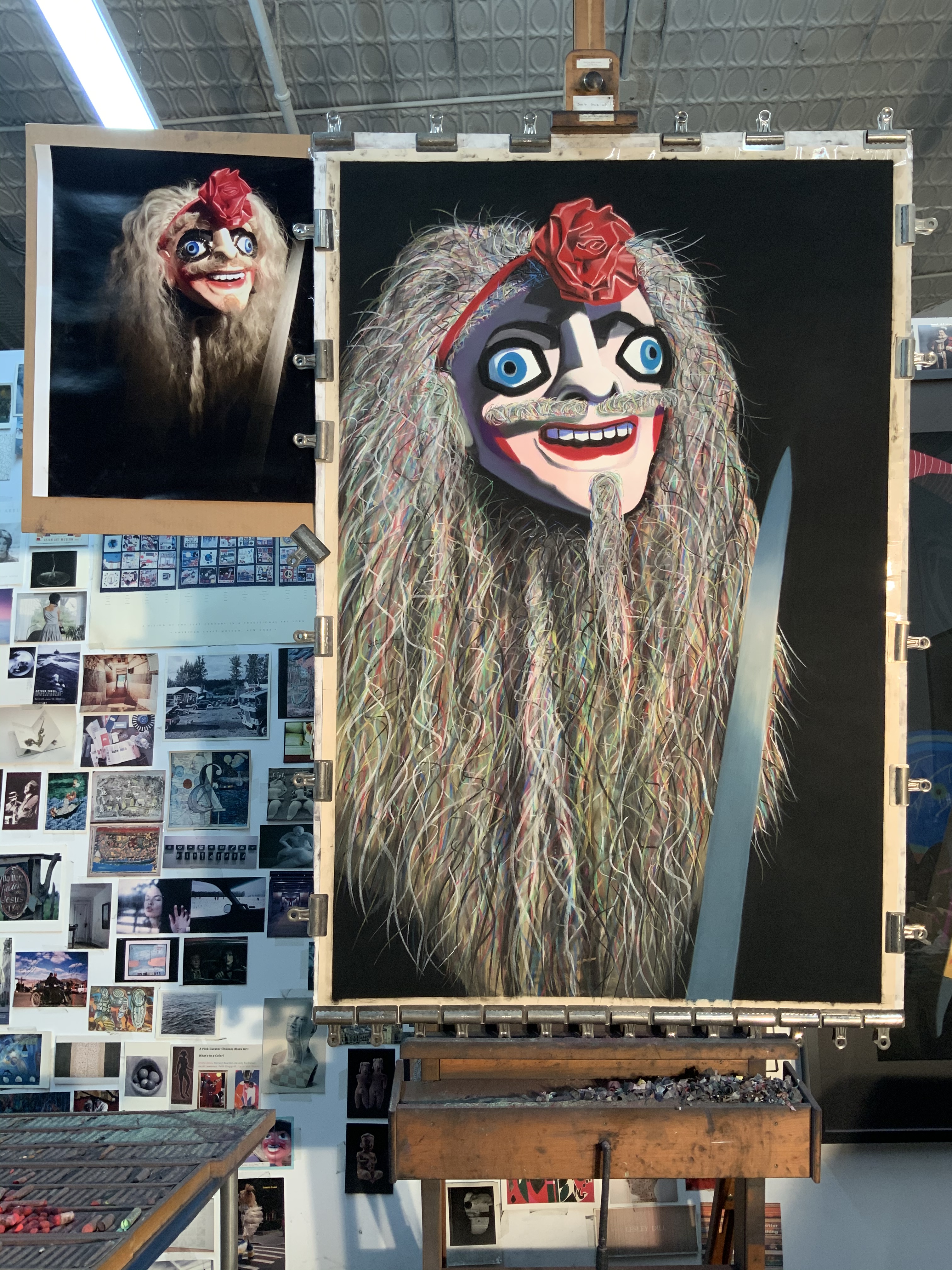
Work in progress
A: “Avenger,” soft pastel on sandpaper, 58” x 38” awaits finishing touches.
Comments are welcome!
Pearls from artists* # 380
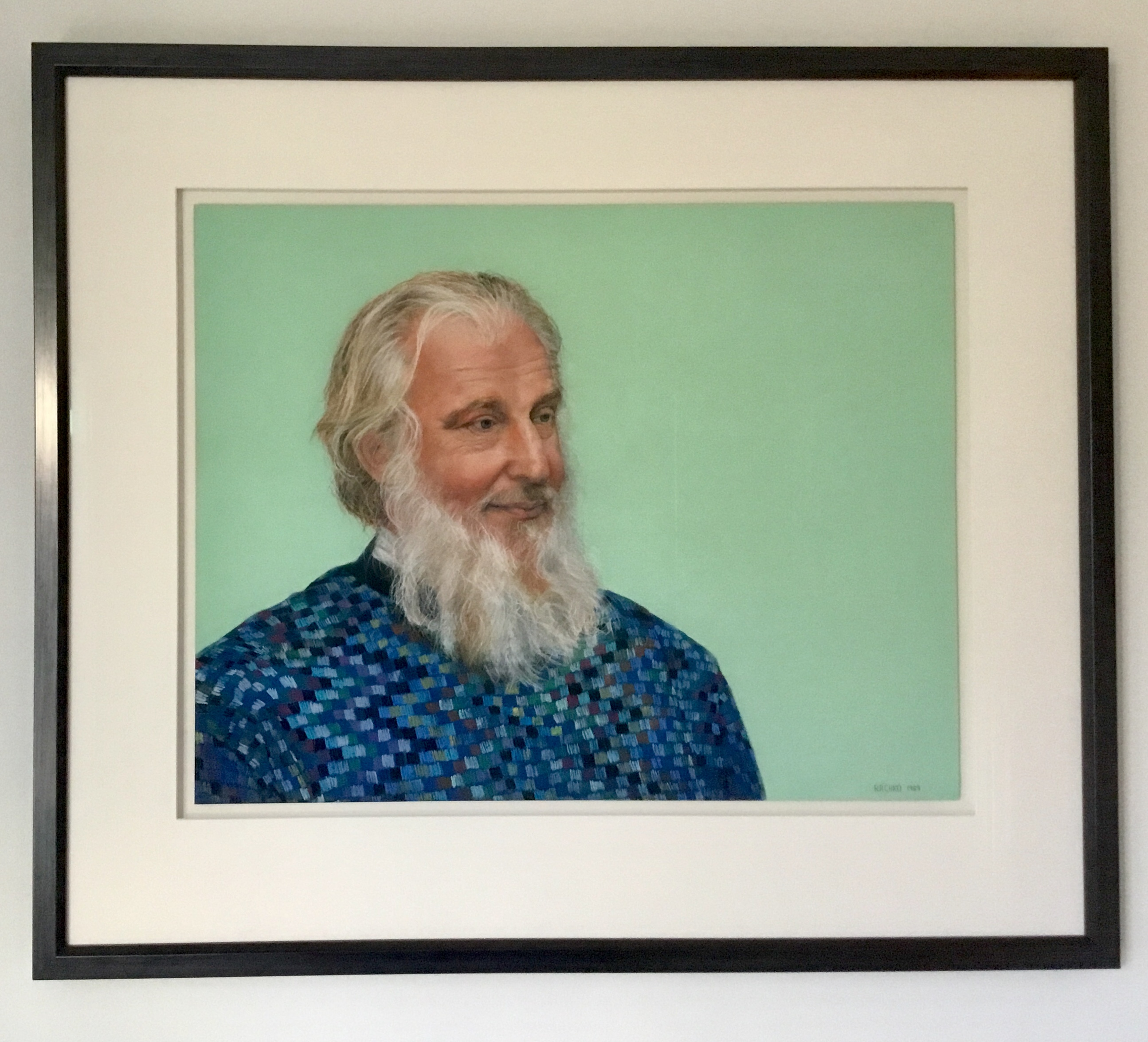
“John,” Soft Pastel on Sandpaper, 22” x 28” (image), 1989.
* an ongoing series of quotations – mostly from artists, to artists – that offers wisdom, inspiration, and advice for the sometimes lonely road we are on.
The freedom he enjoyed came at a cost. But those fears and irritations evaporated amid the support the artists gave one another immediately after the war. A community developed that sustained them and gave them courage. “You have to have confidence amounting to arrogance, because particularly at the beginning, you’re making something that nobody asked you to make,” Elaine [de Kooning] said. “And you have to have total confidence in yourself, and in the necessity of what you’re doing.” That was much easier done in a group of like-minded individuals.
Mary Gabriel in Ninth Street Women
Comments are welcome!


 barbararachkoscoloreddust.com