Blog Archives
Pearls from artists* # 644

Barbara’s Studio
*an ongoing series of quotations – mostly from artists, to artists – that offers wisdom, inspiration, and advice for the sometimes lonely road we are on.
Making the work you were born to make is a radical act of resistance in the current social climate. It refuses to hold money or power as its highest value. It takes as much time as it needs. It demands quiet and stillness. It involves deep reflection and reverence. It prioritizes uncool traits of curiosity, wonder, and earnestness. It shuns the superficial, contorting to reach far beyond it for the significant. It answers to no one but itself and has not been diluted by corporate committee. It doesn’t pander. It can tell stories that make people uncomfortable. And, despite all attempts to frame it as such, unlike most other activities, art is not a competitive sport.
Kate Kretz in Art From Your Core: A Holistic Guide to Visual Voice
Comments are welcome!
Pearls from artists* # 642

New York City
*an ongoing series of quotations – mostly from artists, to artists – that offers wisdom, inspiration, and advice for the sometimes lonely road we are on.
Radical changes in our culture threaten to undermine the potency of art and artists alike. Disparate forces conspire to lower the bar for how we expect art to function. As decades go by, we are educating and evolving to value left-brain strengths over holistic right-brain thought, with disastrous consequences for humanity… Deep contemplation has been hijacked by addictive technology. Rising authoritarianism strives to squash dissenting and diverse voices, as well as historical truths and critical thinking skills. Social media approval affects the art that is produced, shared, and validated. Easily digested work is promoted, while the most compelling work (the kind that could transform the trajectory of art, or affect real social change) is left behind. Critics are coining terms like ‘Zombie Formalism’ … and ‘Zombie Figuration’ … in response to the sterility and stultifying sameness of much contemporary work. It’s as if artists were absorbing online algorithms into their bloodstreams. This empty, safe sensibility riffs and rehashes a vacuous culture, generating a perpetual cycle of well-branded insignificance.
Kate Kretz in Art From Your Core: A Holistic Guide to Visual Voice
Comments are welcome!
Pearls from artists* # 597

Barbara’s Studio
*an ongoing series of quotations – mostly from artists, to artists – that offers wisdom, inspiration, and advice for the sometimes lonely road we are on.
From earliest childhood, the boys had been treated differently from their sister. They were allowed more freedom, encouraged to play outdoors and to engage in rough and tumble, and their lives were expanded early on when, at the age of seven, each was sent to St. Mary’s, the prep school of Stonyhurst College. It seemed as if the boys were being readied for adventure and excitement, but while their horizons were opening up, Leonora [Carrington] felt hers were being closed down – or more specifically, never explored. Her role, which was clear even when she was in the nursery, was to keep safe: not to rock any boats, not to take any chances. What they sought to teach her was that she should sit a certain way and behave a certain way: she should be supportive, helpful, polite. She should listen, especially to men, she should have traditional skills, such as playing music and speaking French. Drawing and painting, for which she showed altitude from an early age, were fine within reason. What harm could there be in Prim [Lenora] creating pictures? Especially if those pictures were of flowers and trees, family members and characters from fairy stories.
But art was Leonora’s secret weapon – and she hid it in plain sight, because her parents did not have the faintest idea where her talents might lead. Art, for them, was unthreatening and pretty. They had no idea that this skill their daughter was developing would be one the key to another life entirely; still less that art could never be a validation of the status quo, but meant a radical reappraisal of everything in the artists sight.
So what Leonora practiced in the nursery at Crookhey was the subversive silence of smoldering rebellion. Spared by the inherent unfairness that gave Pat, Gerard, and Arthur so much freedom; stoked by the growing realization that she had a talent that would lead, eventually, to Liberty. “I always painted, and I always knew it was what I would do,” she said many years later. As the Jesuits who educated her brothers at Stonyhurst might have said (but didn’t): show me a girl aged seven, and I will show you the woman.
Joanna Moorhead in Surreal Spaces: The Life and Art of Leonora Carrington
Comments are welcome!
Pearls from artists* # 519
*an ongoing series of quotations – mostly from artists, to artists – that offers wisdom, inspiration, and advice for the sometimes lonely road we are on.
Because the arts are the products of a process that stands apart from so much of our social, economic, and political life, they move us and excite us unlike anything else in our lives. When we rush to label them – as radical, conservative, liberal, gay,straight, feminist, Black, or white – we may describe a part of what they are, but we’ve failed to account for their freestanding value. And without that the arts are nothing. The artist in the act of creation – working through particular words, sounds, colors, shapes, and their infinite combinations – almost inevitably risks irrelevance. But the decision to reject doing in favor of making, which some have described as a retreat into self-absorption and narcissism, is in fact an act of courage. Artists reenter the world by sending the work that they’ve made back into the world, where it lives on – independent, inviolable – in what Auden called ”the valley of its making.” That is a place apart – paradoxically, triumphantly apart.
Jed Perl in Authority and Freedom: A Defense of the Arts
Comments are welcome!
Pearls from artists* # 399
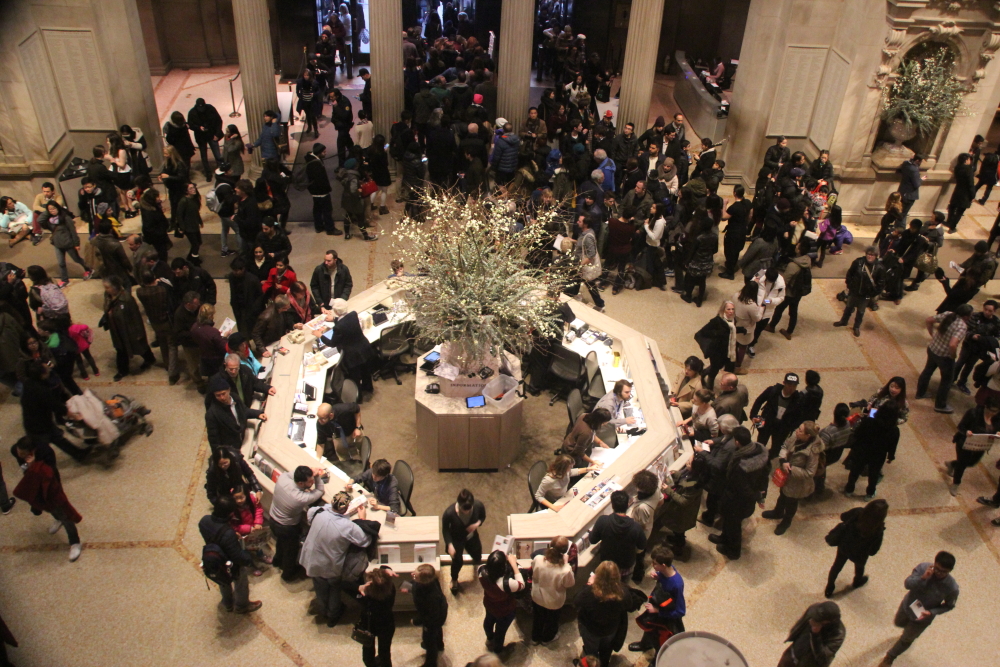
The Great Hall at the Met
* an ongoing series of quotations – mostly from artists, to artists – that offers wisdom, inspiration, and advice for the sometimes lonely road we are on.
Science is concerned with the general, the abstract, and the knowable. In contrast, art deals with the particular, the unknowable, the singular. This applies not just to the content of artistic works but also to the way this content is received. Even in the case of a film or concert attended by large numbers of people, the artistic experience remains fundamentally a solitary one. Each one of us lives the work alone. Whatever sense of togetherness accompanies the experience comes precisely from the fact that, faced with the singularity of the aesthetic moment, each percipient feels his aloneness before the radical mystery that enfolds us all. Wherever an act of creation is shared with others, then, there is individuation – not just for the author of the work but for the audience too. The singularity of art awakens us to our own singularity, and through it to the singularity in the Other. I have argued that artifice unifies by imposing an univocal image that replicates itself identically in each spectator. True art tears the spectator out of the mass of sameness, calling forth from the numberless crowd a new people and a new communion.
J.F. Martel in Reclaiming Art in the Age of Artifice: A Treatise, Critique, and Call to Action
Comments are welcome!
Pearls from artists* # 356
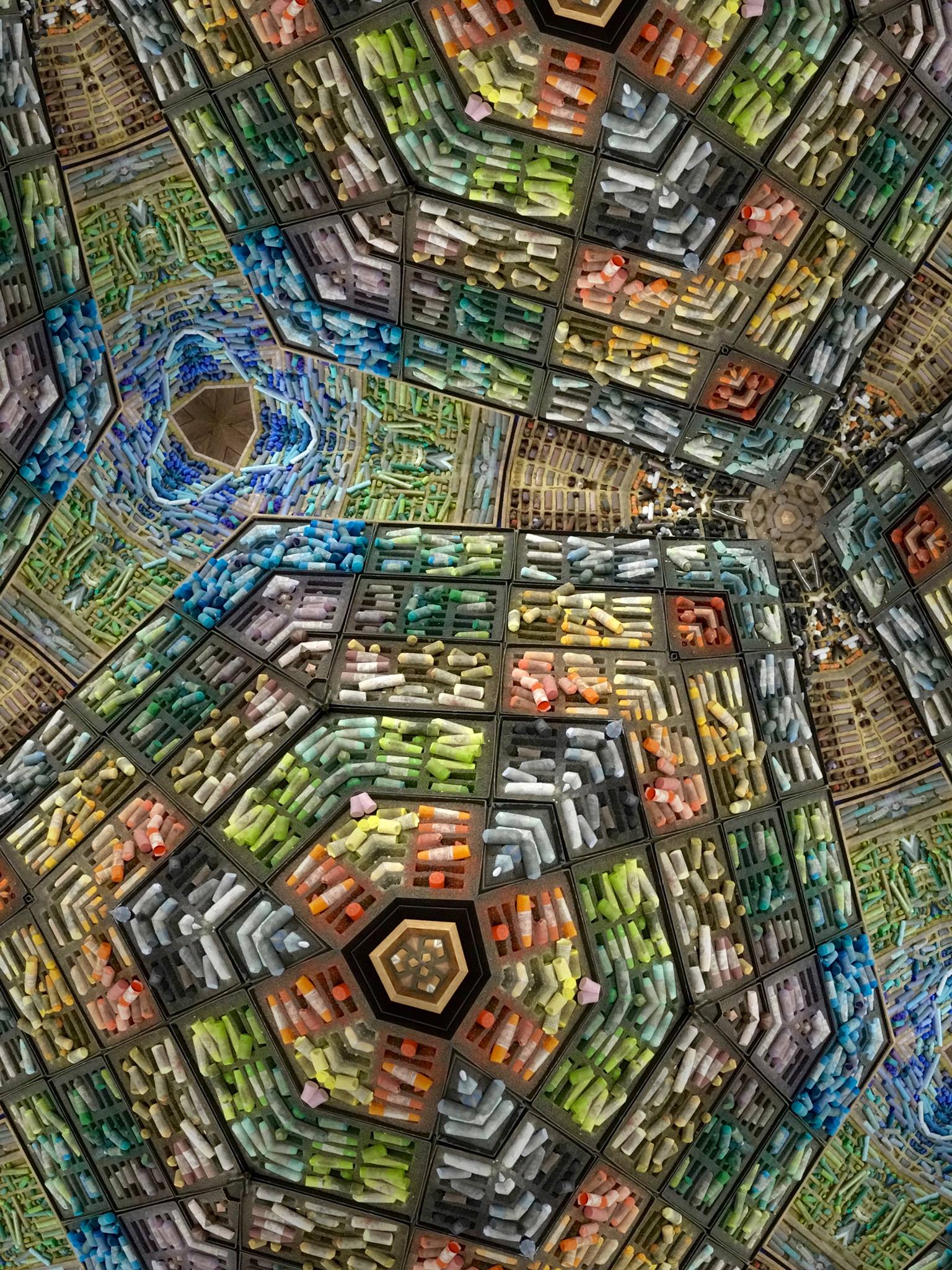
Some of Barbara’s pastels
*an ongoing series of quotations – mostly from artists, to artists – that offers wisdom, inspiration, and advice for the sometimes lonely road we are on.
Science is concerned with the general, the abstract, and the knowable. In contrast, art deals with the particular, the unknowable, the singular. This applies not just to the content of artistic works but also to the way this content is received. Even in the case of a film or concert attended by large numbers of people, the artistic experience remains a fundamentally solitary one. Each one of us lives the work from the work alone. Whatever sense of togetherness accompanies the experience comes precisely from the fact that, faced with the singularity of the aesthetic moment, each percipient feels his aloneness before the radical mystery that enfolds us all. Wherever an act of creation is shared with others, then, there is individuation – not just for the author of the work but for the audience too. The singularity of art awakens us to our own singularity, and through it to the singularity in the Other. I have argued that artifice unifies by imposing a univocal image that replicates itself indefinitely in each spectator. True art tears the spectral out of the mass of sameness, calling forth from the numberless crowd a new people and a new communion.
Reclaiming Art in the Age of Artifice: A treatise, Critique, and Call to Action
Comments are welcome!


 barbararachkoscoloreddust.com