Blog Archives
Q: Many artists can’t bear to face “a blank canvas.” How do you feel about starting a new piece?

A: That’s an interesting question because I happen to be reading The War of Art by Steven Pressfield and this morning I saw this:
You know, Hitler wanted to be an artist. At eighteen he took his inheritance, seven hundred kronen, and moved to Vienna to live and study. He applied to the Academy of Fine Arts and later to the school of architecture. Ever see one of his paintings? Neither have I. Resistance beat him. Call it overstatement but I’ll say it anyway: it was easier for Hitler to start World War II than it was for him to face a blank square of canvas.
I’ve never understood this fear of “the blank canvas” because I am always excited about beginning a new painting. When you think about it, every professional artist can say, “In the history of the planet no one has ever made what I am about to make!” Once again I am looking at something new on my easel, even if it is only a blank 40” x 60” piece of sandpaper clipped to a slightly larger piece of foam core. Unlike artists who are paralyzed before “a blank canvas,” I am energized by the imagined possibilities of all that empty space! I spend up to three months on a painting so this experience of looking at a blank piece of paper on my easel happens four or five times a year at most. Excluding travel to remote places, which is essential to my work and endlessly fascinating, the first day I get to spend blocking in a new painting is the most exhilarating part of my whole creative process. This is art-making at its freest! I select the pastel colors quickly, without thinking about them, first imagining them, then feeling, looking, and reacting intuitively to what I’ve done, always correcting and trying to make the painting look better.
Comments are welcome.
Q: When did you begin drawing and painting? (Question from “Cultured Focus Magazine”)

A: This is a long story because my path to becoming a professional artist has been unusually circuitous.
I grew up in a blue collar family in suburban New Jersey. My parents were both first-generation Americans and no one in my family had gone to college. I was a smart kid, who showed some artistic talent in kindergarten and earlier. At the age of 6, my sister, my cousin, and I enrolled in Saturday morning painting classes at the studio of a local artist. I continued the classes for about 8 years and became a fairly adept oil painter.
At the age of 15 my father decided that art was not a serious pursuit – he called it a hobby, not a profession – and abruptly stopped paying for my Saturday morning lessons. Unfortunately, there were no artists or suitable role models in my family. So with neither financial nor moral support to pursue art, I turned my attention to very different interests.
Cut to ten years later. When I was 25, I earned my private pilot’s license and spent the next two years amassing other flying licenses and ratings, culminating in a Boeing-727 flight engineer’s certificate.
At 29, I joined the Navy. By then I was an accomplished civilian pilot with thousands of flight hours so I expected to fly jets. However, in the early 1980s women were not allowed in combat. There were very few women Navy pilots and those few were restricted to training male pilots. There were no women pilots landing on aircraft carriers.
In the mid-1980s I was in my early 30s, a lieutenant on active duty in the Navy, working a soul-crushing job as a computer analyst on the midnight shift in a Pentagon basement. It was literally and figuratively the lowest point of my life. I was completely bored and miserable.
Remembering the joyful Saturdays of my youth when I had taken art classes with a local New Jersey painter, I enrolled in a drawing class at the Art League School in Alexandria, Virginia. Initially I wasn’t very good, but it was wonderful to be around other women and a world away from the mentality of the Pentagon. I was having fun again! I enrolled in more classes and became a very motivated full-time art student who worked nights at the Pentagon. As I studied and improved my skills, I quickly discovered my preferred medium – soft pastel on sandpaper.
Although I knew I had found my calling, for more than a year I agonized over whether or not to leave the financial security of a Navy paycheck. Finally I did make up my mind and resigned my commission, effective on September 30, 1989. With Bryan’s (my then boyfriend’s) support, I left the Navy to devote my time to making art.
I’m probably one of the few people who can name THE day I became a professional artist! That day was October 1, 1989. Fortunately, I have never needed another job. I remained in the Navy Reserve for the next 14 years, working primarily at the Pentagon for two days each month and two weeks each year. I commuted by train to Washington, DC after I moved to Manhattan in 1997. Finally on November 1, 2003, I officially retired as a Navy Commander.
Life as a self-employed professional artist is endlessly varied, fulfilling, and interesting. I have never regretted my decision to pursue art full-time.
Comments are welcome!
Q: What is your earliest memory of wanting to be an artist? (Question from “Arts Illustrated”).
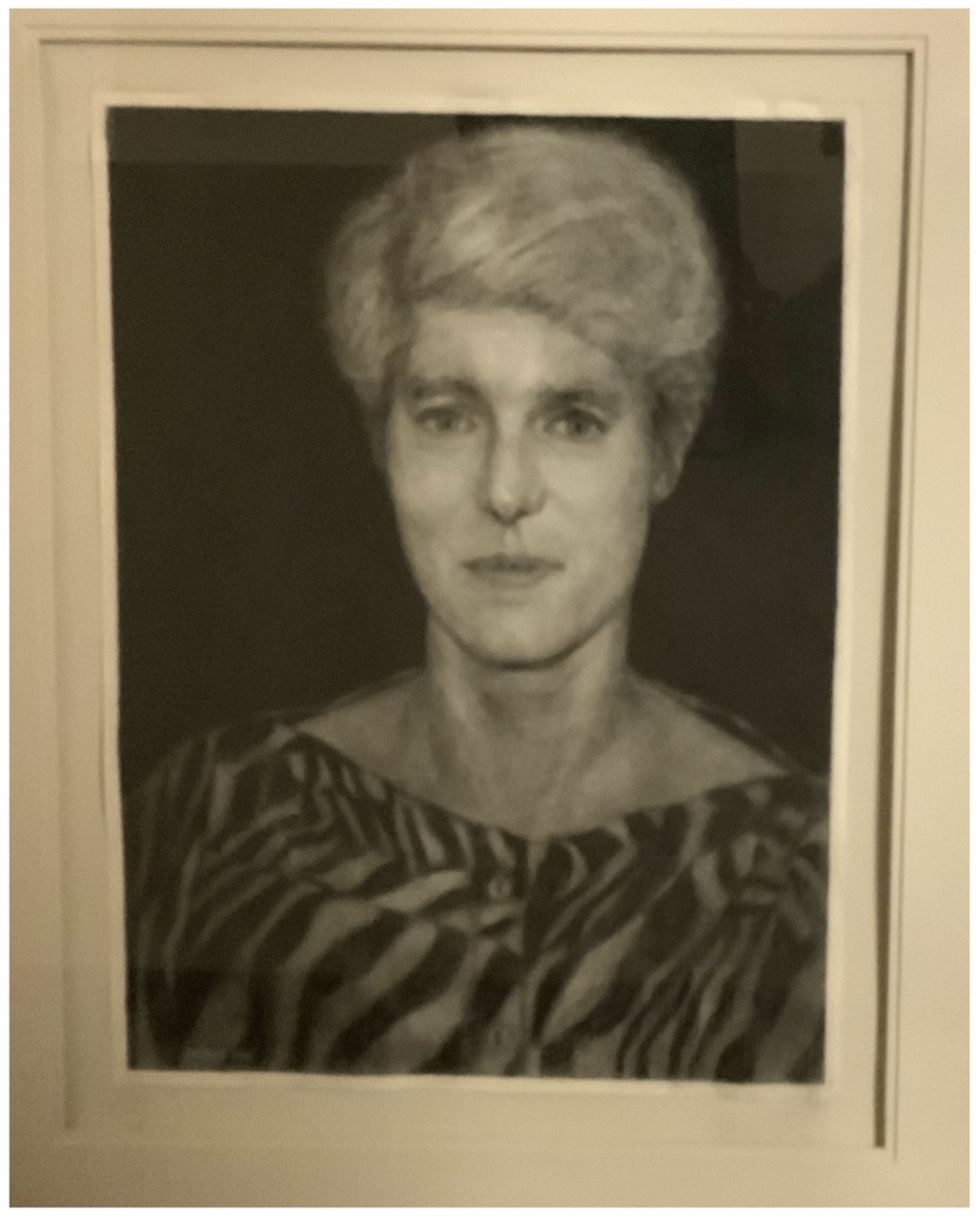
A: I don’t believe I have any such ‘early memories.’ I came to art late and my journey to becoming an artist was circuitous, to say the least.
In the mid-1980s I was a thirty-something Navy lieutenant. I worked a soul-crushing job as a computer analyst on the midnight shift in a Pentagon basement. We were open 24/7 and supported the Joint Chiefs of Staff.
Remembering the joyful Saturdays of my youth in New Jersey, when I had studied with a local painter, I enrolled in a drawing class at the Art League School in Alexandria, Virginia. I loved it! I took more classes and became a highly motivated, full-time art student who worked nights at the Pentagon. After two years and as my skills improved, I discovered my preferred medium – soft pastel on sandpaper.
I knew I had found my calling, submitted my resignation, and left active duty. On October 1, 1989 I became a professional artist. However, I remained in the Navy Reserve for another fourteen years, working at the Pentagon one weekend a month. On November 1, 2003, I retired as a Navy Commander.
Please also see Art Market (barbararachko.art)
Comments are welcome!
Q: When and where did you start your career in the visual arts?
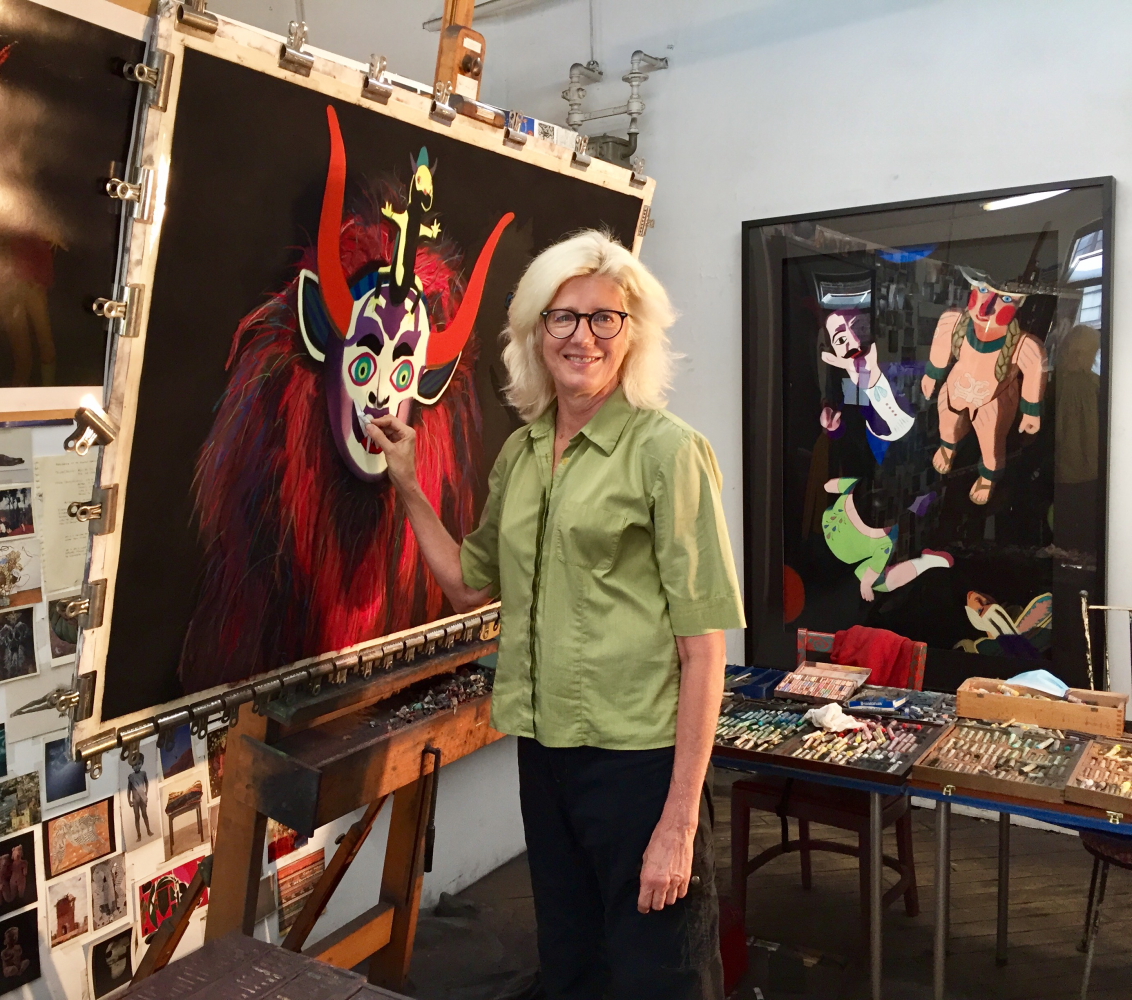
In the studio, Photo: Maria Cox
A: My journey to becoming an artist was circuitous. In the mid-1980s I was a thirty-something Navy lieutenant. I worked a soul-crushing job as a computer analyst on the midnight shift in a Pentagon basement. We were open 24/7 and supported the Joint Chiefs of Staff.
Remembering the joyful Saturdays of my youth in New Jersey, when I had studied with a local painter, I enrolled in a drawing class at the Art League School in Alexandria, Virginia. I loved it! I took more classes and became a highly motivated, full-time art student who worked nights at the Pentagon. After two years and as my skills improved, I discovered my preferred medium – soft pastel on sandpaper.
I knew I had found my calling, submitted my resignation, and left active duty. On October 1, 1989 I became a professional artist. However, I remained in the Navy Reserve for another fourteen years, working at the Pentagon one weekend a month. On November 1, 2003, I retired as a Navy Commander.
Comments are welcome!
Q: Your path into the arts was less than conventional. For many years you were an active duty Naval officer before you retired as a Commander. Oh, and not forgetting the pilot’s licenses you hold! Tell us more about yourself and why you decided to continue your journey into the arts.
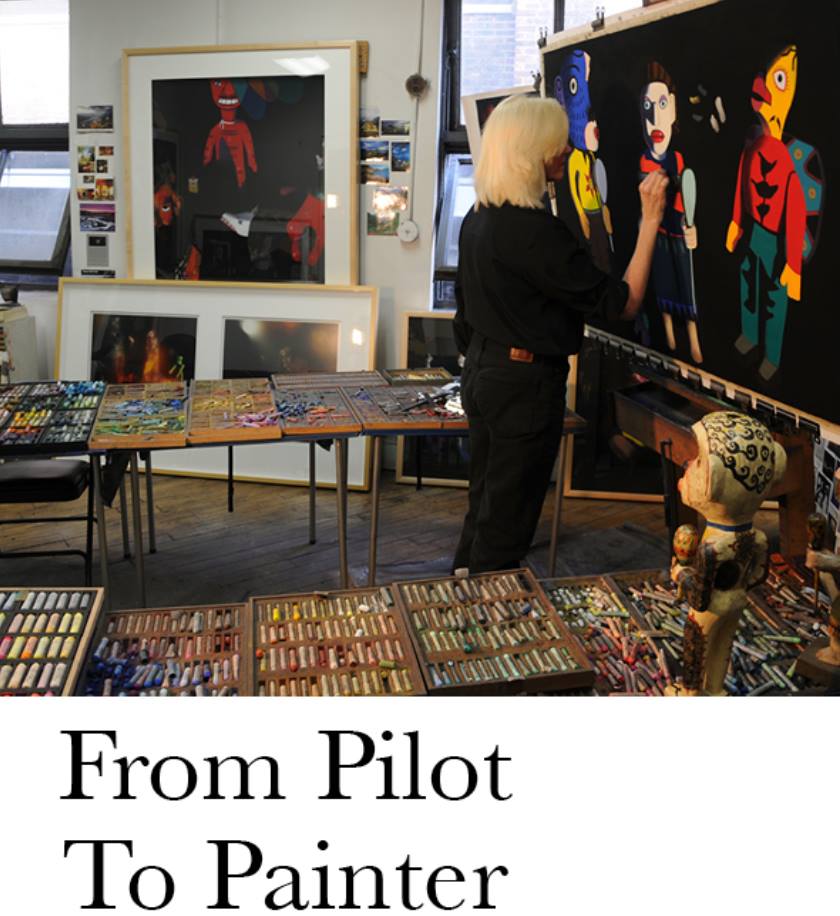
Barbara’s eBook cover
A: When I was 25 I earned my private pilot’s license and spent the next two years amassing other licenses and ratings, culminating in a Boeing-727 flight engineer’s certificate. Two years later I joined the Navy. As an accomplished civilian pilot with thousands of flight hours, I expected to fly jets. However, there were few women Navy pilots at the time and they were restricted to training male pilots. There were no women pilots on aircraft carriers and there were no female Blue Angels (the latter is still true).
So in the mid-1980s I was in my early 30s, a lieutenant on active duty in the Navy, working a soul-crushing job as a computer analyst on the midnight shift in a Pentagon basement. It was literally and figuratively the lowest point of my life. Remembering the joyful Saturdays of my youth when I had taken art classes with a local New Jersey painter, I enrolled in a drawing class at the Art League School in Alexandria, Virginia. Initially I wasn’t very good, but it was wonderful to be around other women and a world away from the “warrior mentality” of the Pentagon. And, I was having fun! Soon I enrolled in more classes and became a very motivated full-time art student who worked nights at the Pentagon. As I studied and improved my skills, I discovered my preferred medium – soft pastel on sandpaper.
Although I knew I had found my calling, for more than a year I agonized over whether or not to leave the financial security of the Navy. Once I did decide, there was a long delay. The Navy was experiencing a manpower shortage so Congress had enacted a stop-loss order, which prevented officers from resigning. I could only do what was allowed under the order. I submitted my resignation effective exactly one year later: on September 30, 1989. With Bryan’s (my late husband’s) support, I left the Navy.
I designate October 1, 1989 as the day I became a professional artist. Fortunately, I have never again needed a day job. However, I remained in the Navy Reserve for the next 14 years, working primarily at the Pentagon for two days every month and two weeks each year. I commuted to Washington, DC after I moved to Manhattan in 1997. Finally on November 1, 2003, I officially retired as a Navy Commander.
Comments are welcome!
Q: What do you dislike most about being an artist?

Barbara’s studio
A: I am not the only artist who would say this, certainly, but the low pay is a continual frustration.
The expenses of doing business continually increase and most other professionals get to pass these on to their clients. But for artists it’s different: it’s just tough to pass along costs to collectors. One of the reasons I spend so much time educating people about the process involved in making my pastel paintings, is to provide some understanding of the serious amounts of time, effort, travel, thought, education, money, etc. that are essential to creating them.
It always surprises me when non-artists don’t appreciate the unswerving devotion and plain hard work that are required of professional artists. It makes me wonder what people imagine artists do all day.
Comments are welcome!
Q; When did you start pursuing art as a serious profession?
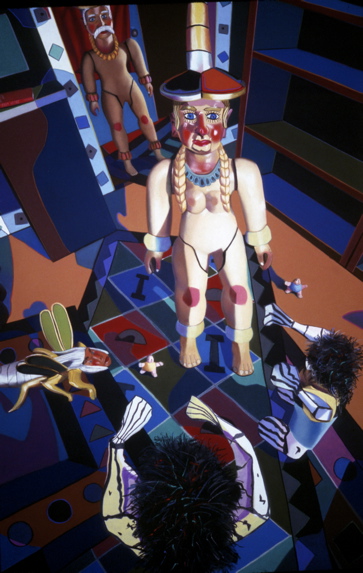
“Answering the Call,” 58″ x 38,” soft pastel on sandpaper
A: In the mid-1980s I was in my early 30s, a lieutenant on active duty in the Navy, working a soul-crushing job as a computer analyst on the midnight shift in a Pentagon basement. It was literally and figuratively the lowest point of my life. Remembering the joyful Saturdays of my youth when I had studied with a local New Jersey painter, I enrolled in a drawing class at the Art League School in Alexandria, Virginia. Initially I wasn’t very good, but it was wonderful to be around other women and a world away from the “warrior mentality” of the Pentagon. I was having fun! Soon I enrolled in more classes and became a very motivated full-time art student who worked nights at the Pentagon. As I studied and improved my skills, I discovered my preferred medium – soft pastel on sandpaper. Although I knew I had found my calling, for more than a year I agonized over whether or not to leave the Navy. Once I did decide, there was another delay. The Navy was experiencing a manpower shortage so Congress had enacted a stop-loss order, which prevented officers from resigning. I could only do what was allowed under the order. I submitted my resignation effective exactly one year later: on September 30, 1989. With Bryan’s (my late husband) support, I left the Navy that day. So I think of myself as having been a professional artist beginning on October 1, 1989. I should mention that I remained in the Navy Reserve for the next 14 years, working mainly at the Pentagon two days every month and two weeks each year (commuting between New York and Washington, DC after I moved in 1997). Finally on November 1, 2003, I officially retired as a Navy Commander.
Comments are welcome!


 barbararachkoscoloreddust.com