Blog Archives
Q: What’s on the easel today?

Ready to begin
A: I’m ready to begin a large – 38” x 58” – pastel-on-sandpaper painting, the sixth in my “Bolivianos” series. I love beginnings because I am looking at something new on my easel and there are so many possibilities!
Comments are welcome!
Pearls from artists* #295

Barbara at work, Photo: Marianne Barcellona
* an ongoing series of quotations – mostly from artists, to artists – that offers wisdom, inspiration, and advice for the sometimes lonely road we are on.
Interviewer: Are there devices one can learn in improving one’s style?
Capote: Work is the only device I know of. Writing has laws of perspective, of light and shade, just as painting does, or music. If you are born knowing them, fine. If not, learn them. Then rearrange the rules to suit yourself.
Truman Capote in Writers at Work: The Paris Review Interviews First Series, edited, and with an introduction by Malcolm Crowley
Comments are welcome!
Q: Do you lose yourself in your work?

Barbara at work
A: Of course! When I am having a productive day in the studio, I am completely present and focused, fully immersed in solving technical problems and trying to improve the painting on my easel. I barely notice the time and have to remind myself to take a break or stop for lunch. Nothing else exists except the painting and my relationship with it. The rest of life completely falls away from my consciousness.
I believe most artists regularly experience this feeling of ‘flow.’ It is a state of being that is inherent and necessary to creative work of all kinds.
Comments are welcome!
Q: How do you deal with the loneliness of working in a studio?
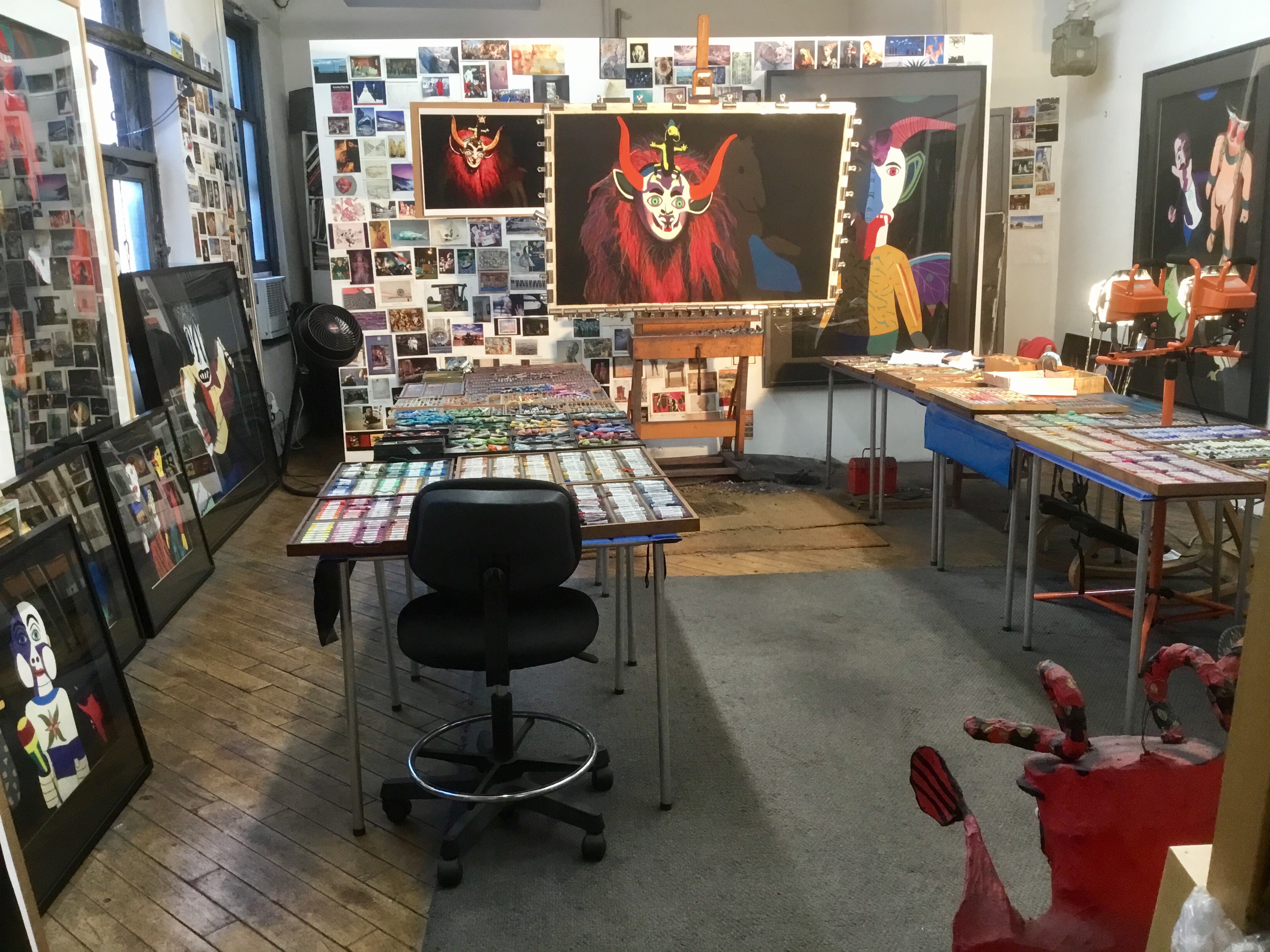
Barbara’s studio
A: I never feel lonely when I’m working. I love being in my studio and even after thirty years, still find the whole process of making a pastel painting completely engaging.
Painting is the one activity that not only uses all of my mental and physical abilities, but challenges me to push further. I am at my best in the studio.
Because there is always more to learn and process into the work, creating art is endlessly fascinating! Most artists probably feel the same way. It’s one of the reasons we persist.
Comments are welcome!
Pearls from artists* # 265
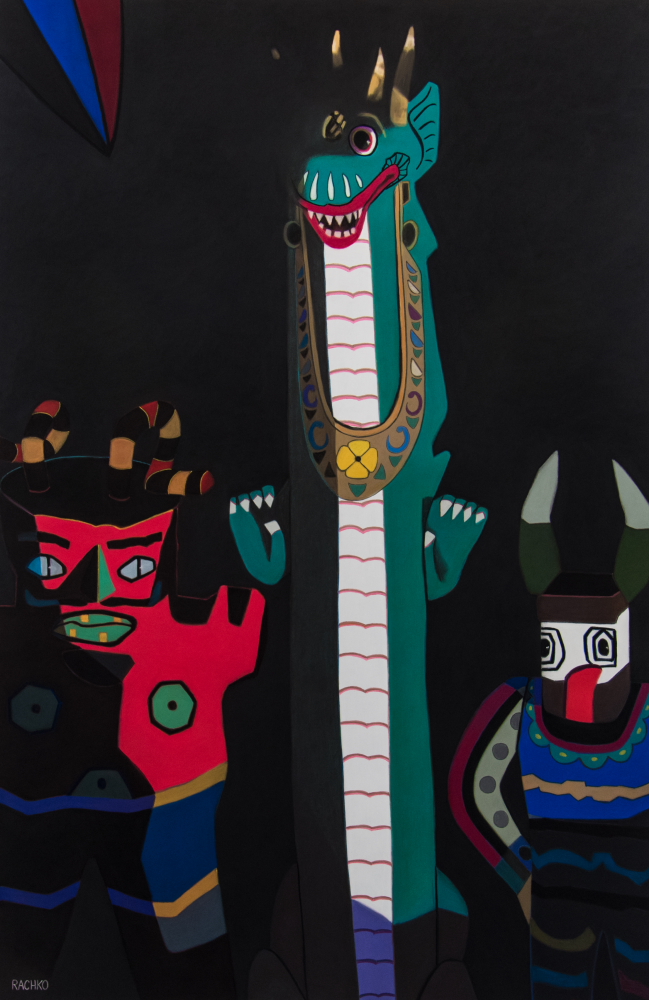
“Colloquium,” soft pastel on sandpaper, 58″ x 38″ image, 70″ x 50″ framed
* an ongoing series of quotations – mostly from artists, to artists – that offers wisdom, inspiration, and advice for the sometimes lonely road we are on.
I remember hearing Adolph Gottlieb on a panel once at NYU, and Adolph said, in effect – I’m not quoting him directly – “I don’t paint for the masses. I paint for the elite. The masses are not interested in what I do. They won’t understand this kind of painting that I do, and it won’t come through to them.”
I understood perfectly what he meant, and I was totally sympathetic. But the audience, which was not quite an audience of proletariat workers, but an audience of school of education, art teachers, or art teachers to be, were going out of their heads with rage just at the mention of the elite.
I think there is an elite, and there always was an elite for painting or good music or for good literature. For a long time there has been, and I don’t see anything wrong with it. What it means to a lot of people, the elite is the wealthy or something like that. Adolph, I don’t think, was referring to an elite of the wealthy, where the people run the government or something like that, but to those people who are concerned and interested in the most sophisticated, meaningful painting there is.
The Art Life: On Creativity and Career by Stuart Horodner
Comments are welcome!
Q: What’s on the easel today?
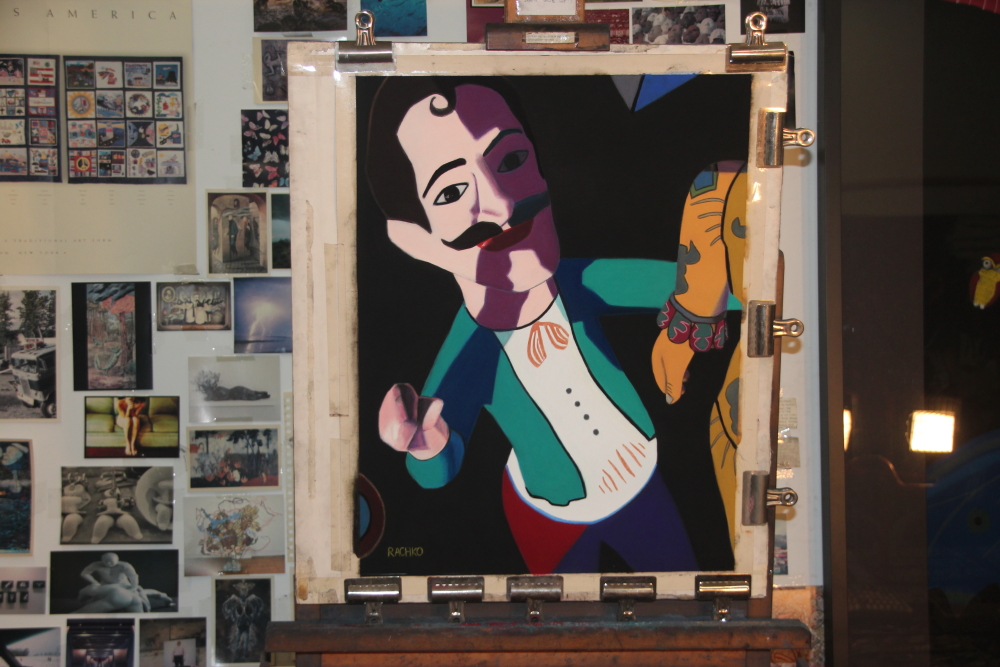
“A Long Goodbye,” soft pastel on sandpaper, 26″ x 20″
A: I am putting finishing touches on a small pastel painting called, “A Long Goodbye.” It’s a smaller, cropped version of a larger piece completed in 2013 called, “The Ancestors” (below).
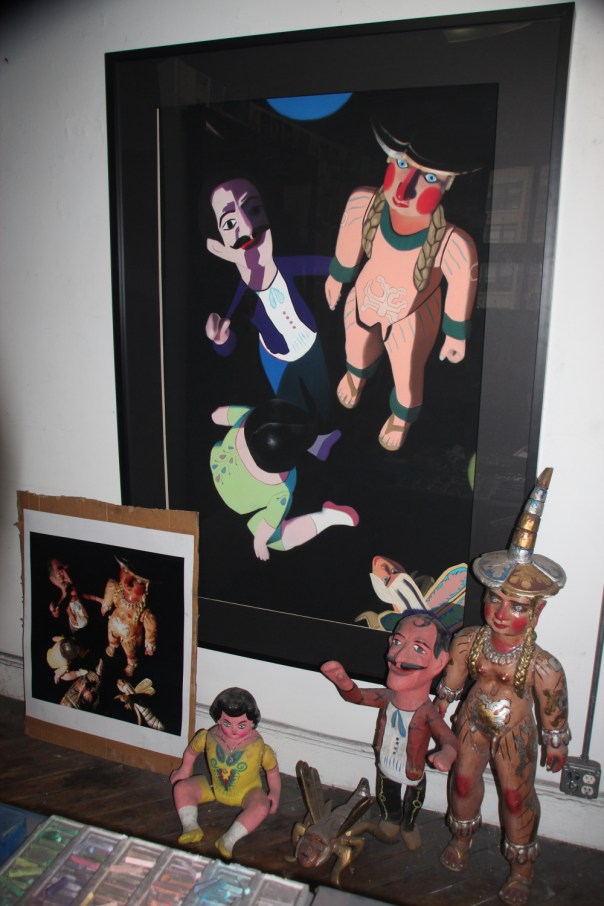
“The Ancestors” in Barbara’s studio
Comments are welcome!
Q: What’s on the easel today?
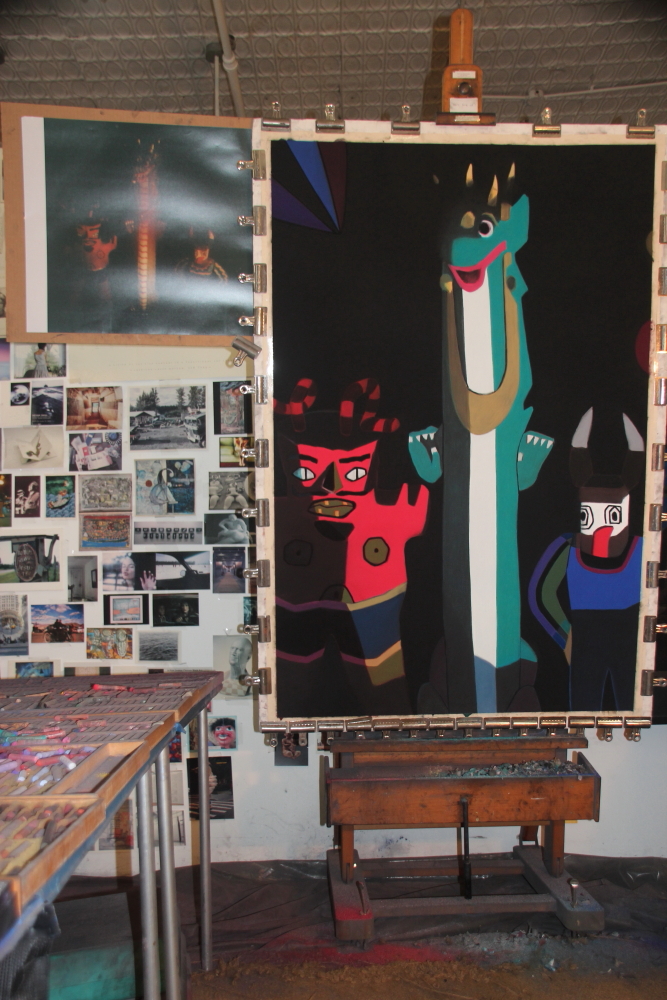
Work in progress
A: I am continuing work on a large (58″ x 38″) pastel painting tentatively titled, “Blocked.”
Comments are welcome!
Pearls from artists* # 213
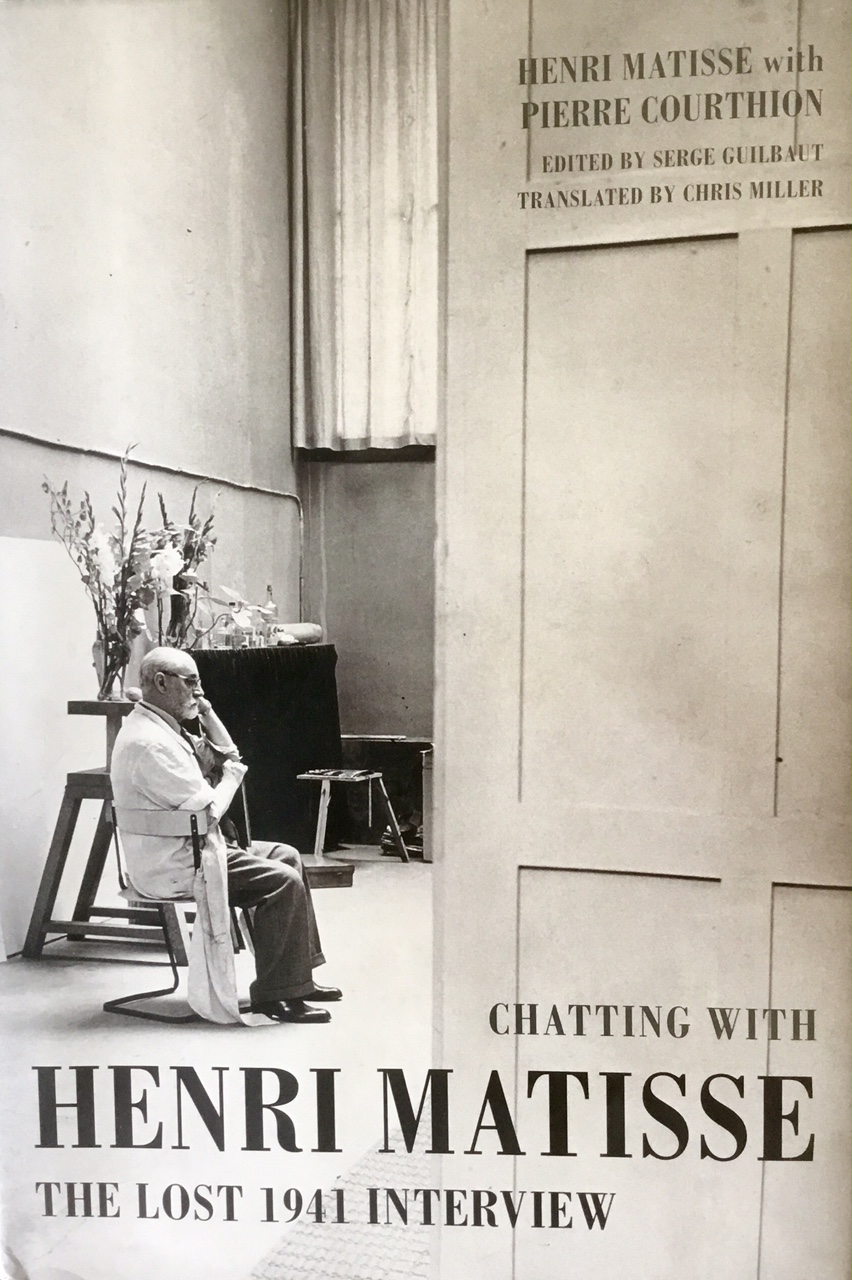
Matisse Book Cover
* an ongoing series of quotations – mostly from artists, to artists – that offers wisdom, inspiration, and advice for the sometimes lonely road we are on.
I am astonished by the accuracy with which Matisse remembers the most trifling facts; he describes a room that he went into forty years ago and gives you the measurements, where every piece of furniture stood, how the light fell. He is a man of astounding precision and has little time for anything that he has not confirmed for himself. In art matters, he is not the sort to go looking for a profile fortuitously created by cracks in the wall. Elie Faure writes that Matisse is perhaps the only one of his contemporaries (in particular Marquet and Bonnard) to know exactly where he comes from and the only one who never allows it to show “because his inveterate, invincible, vigilant willpower is always focused on being himself and nothing but.”
Matisse neglects nothing. He seems to know as much about the art market as about painting.
So many stratagems to sell a painting, from intimidating the purchaser to seeming to avoid him: Vollard used them all and used them successfully. Not least the lies that he told to reassure the client. “It works like this,” says Matisse: “To make a sale, you invent lies that have somehow disappeared into thin air by the time the deal is done.”
We talk of the difficulties faced by dealers hoping to gain access to Renoir in his Cagnes residence. Renoir didn’t like having people talk to him about selling his work,” says Matisse: “It bored him. About the only one who got a foot in the door was Paul Guillaume; he dressed up as a young worker with a floppy necktie: “You see, I’m a local. I’ve always loved your painting. I’ve just inherited a little money; I’d like to buy something.”
Chatting with Henri Matisse: The Lost 1941 Interview, Henri Matisse with Pierre Courthion, edited by Serge Guilbaut, translated by Chris Miller
Comments are welcome!
Pearls from artists* # 209

“So What?”, soft pastel on sandpaper, 20″ x 26″
* an ongoing series of quotations – mostly from artists, to artists – that offers wisdom, inspiration, and advice for the sometimes lonely road we are on.
For a young painter, life is difficult. If he’s sincere, if he’s entirely taken up with what he’s researching, he can’t do painting that flatters art lovers. If he’s concerned with success, he works with just the one idea: pleasing people and selling. He loses the support of his own conscience and is dependent on how others are feeling. He neglects his gifts and eventually loses them.
For us, the problem was simple: the buyer simply didn’t exist. We were working for ourselves. We were in a trade that offered no hope at all. So we had fun with any little thing. I suppose people shipwrecked on a desert island must find it very jolly – all their problems have ceased to exist. Nothing left to do but have a laugh, tell jokes, and play jokes. Painters? How could they ever expect to sell anything?
Chatting with Henri Matisse: The Lost 1941 Interview, Henri Matisse with Pierre Courthion, edited by Serge Guilbaut, translated by Chris Miller
Comments are welcome!
Pearls from artists* # 208

View from One World Trade Center
* an ongoing series of quotations – mostly from artists, to artists – that offers wisdom, inspiration, and advice for the sometimes lonely road we are on.
PC: In your painting, you’ve always kept this speed of movement. One senses that you work something out slowly, deep down, that it’s hard work, but there’s always something fresh about its expression.
HM: That’s because I revise my notion several times over. People often add or superpose – completing things without changing their plan, whereas I rework my plan every time. I never get tired. I always start again, working from the previous state. I try to work in a contemplative state, which is very difficult: contemplation is inaction, and I act in contemplation.
In all the studies I’ve made from my own ideas, there’s never been a faux pas because I’ve always unconsciously had a feeling for the goal; I’ve made my way toward it the way one heads north, following the compass. What I’ve done, I’ve done by instinct, always with my sights on a goal I still hope to reach today. I’ve completed my apprenticeship now. All I ask is four or five years to realize that goal.
PC: Delacroix said that too. Great artists never look back.
HM: Delacroix also said – ten years after he’d left the place – “I’m just beginning to see Morocco.” Rodin said to an artist, “You need to stand back a long way for sculpture.” To which the student replied, “Master, my studio is only ten meters wide.”
Chatting with Henri Matisse: The Lost 1941 Interview, Henri Matisse with Pierre Courthion, edited by Serge Guilbaut, translated by Chris Miller
Comments are welcome!


 barbararachkoscoloreddust.com