Blog Archives
Q; When did you start pursuing art as a serious profession?
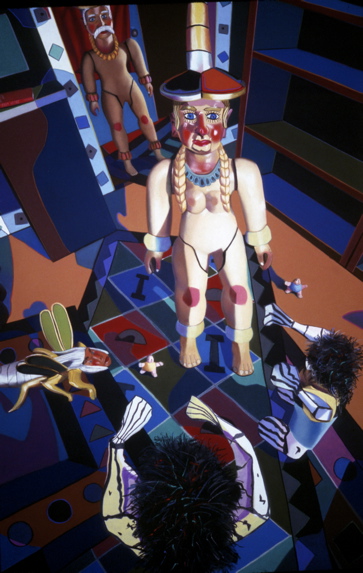
“Answering the Call,” 58″ x 38,” soft pastel on sandpaper
A: In the mid-1980s I was in my early 30s, a lieutenant on active duty in the Navy, working a soul-crushing job as a computer analyst on the midnight shift in a Pentagon basement. It was literally and figuratively the lowest point of my life. Remembering the joyful Saturdays of my youth when I had studied with a local New Jersey painter, I enrolled in a drawing class at the Art League School in Alexandria, Virginia. Initially I wasn’t very good, but it was wonderful to be around other women and a world away from the “warrior mentality” of the Pentagon. I was having fun! Soon I enrolled in more classes and became a very motivated full-time art student who worked nights at the Pentagon. As I studied and improved my skills, I discovered my preferred medium – soft pastel on sandpaper. Although I knew I had found my calling, for more than a year I agonized over whether or not to leave the Navy. Once I did decide, there was another delay. The Navy was experiencing a manpower shortage so Congress had enacted a stop-loss order, which prevented officers from resigning. I could only do what was allowed under the order. I submitted my resignation effective exactly one year later: on September 30, 1989. With Bryan’s (my late husband) support, I left the Navy that day. So I think of myself as having been a professional artist beginning on October 1, 1989. I should mention that I remained in the Navy Reserve for the next 14 years, working mainly at the Pentagon two days every month and two weeks each year (commuting between New York and Washington, DC after I moved in 1997). Finally on November 1, 2003, I officially retired as a Navy Commander.
Comments are welcome!
Q: Why do you work in series?
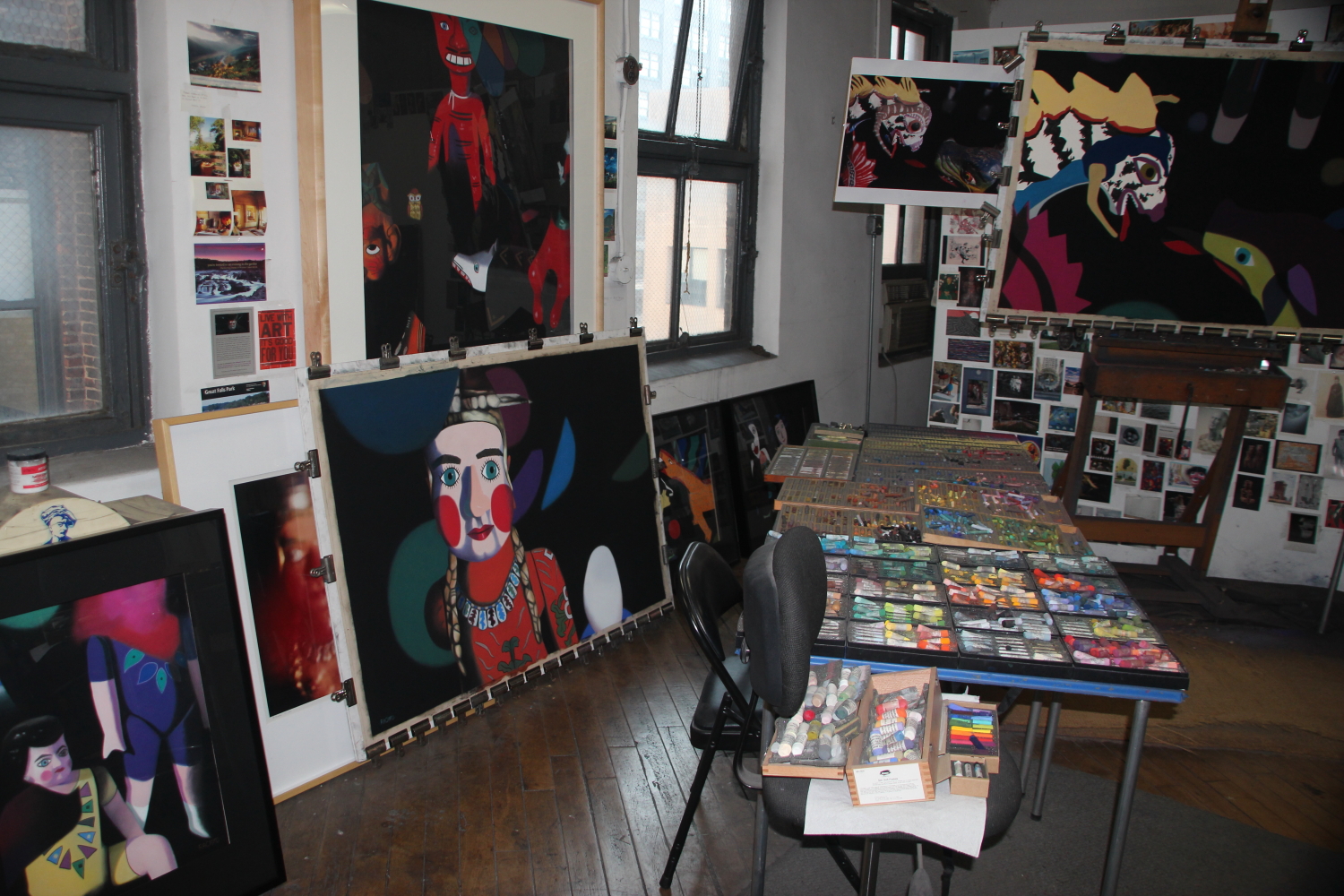
The studio recently
A: I don’t really have any choice in the matter. It’s more or less the way I have always worked so it feels natural. Art-making comes from a deep place. In keeping with the aphorism ars longa, vita brevis, it’s a way of making one’s time on earth matter. Working in series mimics the more or less gradual way that our lives unfold, the way we slowly evolve and change over the years. Life-altering events happen, surely, but seldom do we wake up drastically different – in thinking, in behavior, etc. – from what we were the day before. Working in series feels authentic. It helps me eke out every lesson my paintings have to teach. With each completed piece, my ideas progress a step or two further.
Last week I went to the Metropolitan Museum to see an exhibition called, “Matisse: In Search of True Painting.” It demonstrates how Matisse worked in series, examining a subject over time and producing multiple paintings of it. Matisse is my favorite artist of any period in history. I never tire of seeing his work and this particular exhibition is very enlightening. In fact, it’s a must-see and I plan to return, something I rarely do because there is always so much to see and do in New York. As I studied the masterpieces on the wall, I recognized a kindred spirit and thought, “Obviously, working in series was good enough for Matisse!”
Comments are welcome!
Q: Does your work look different to you on days when you are sad, happy, etc.?
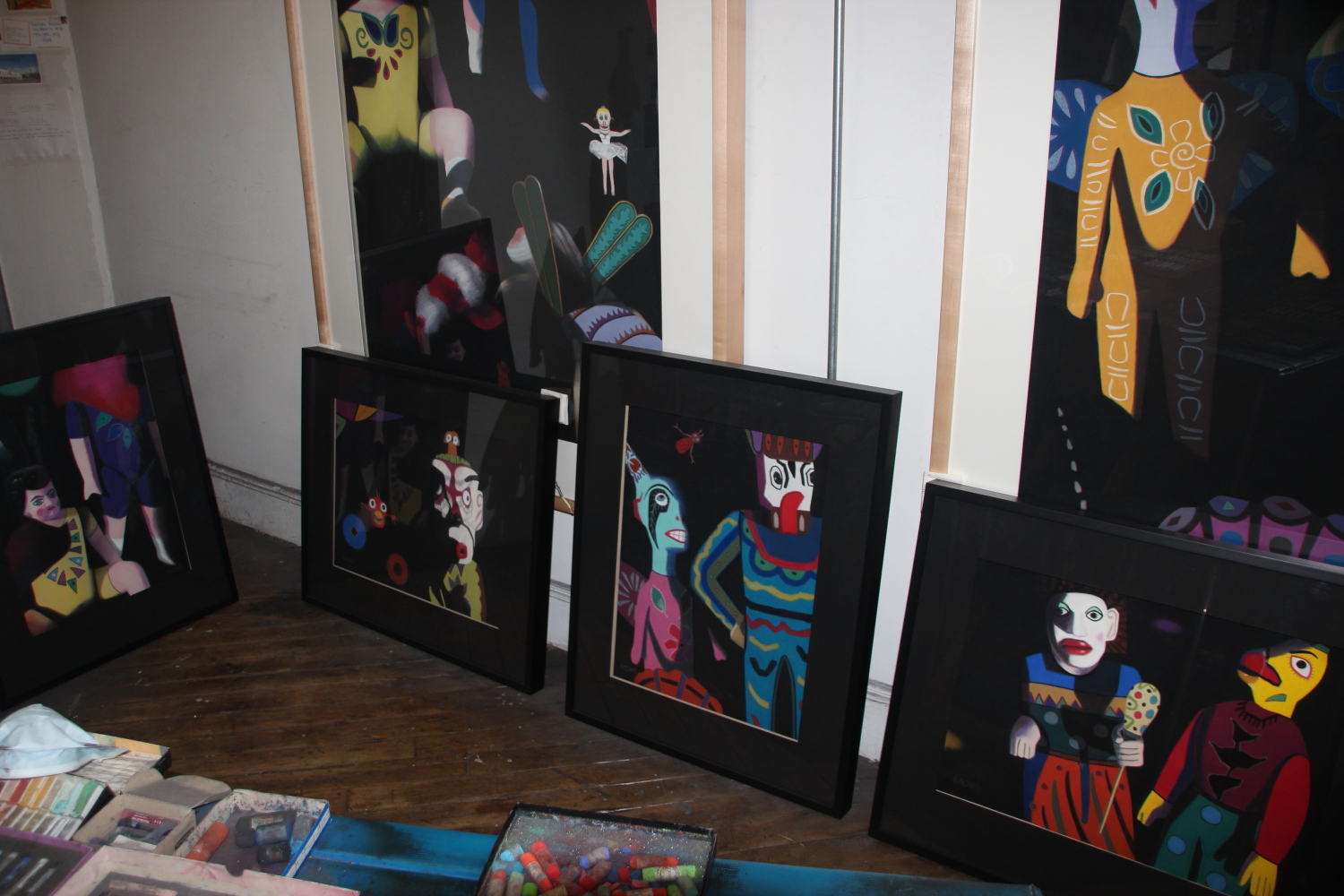
Recent work
A: I’m more critical on days when I am sad so that the faults, imperfections, and things I wish I had done better stand out. Fortunately, all of my work is framed behind plexiglas so I can’t easily go back in to touch up newly-perceived faults. It reminds me of the expression, “Always strive to improve, whenever possible. It is ALWAYS possible!” However, I’ve learned that re-working a painting is a bad idea. You are no longer deeply involved in making it and the zeitgeist has changed. The things you were concerned with are gone: some are forgotten, others are less urgent. For most artists the work is autobiography. Everything is personal. When I look at a completed pastel painting, I usually remember exactly what was happening in my life as I worked on it. Each piece is a snapshot – maybe even a time capsule, if anyone could decode it – that reflects and records a particular moment. When I finally pronounce a piece finished and sign it, that’s it, THE END. It’s as good as I can make it at that point in time. I’ve incorporated everything I was thinking about, what I was reading, how I was feeling, what I valued, art exhibitions I visited, programs that I heard on the radio or watched on television, music that I listened to, what was going on in New york, in the country, in the world, and so on. It is still a mystery how this heady mix finds its way into the work. During the time that I spend on it, each particular painting teaches me everything it has to teach. A painting requires months of looking, reacting, correcting, searching, thinking, re-thinking, revising. Each choice is made for a reason and as an aggregate these decisions dictate what the final piece looks like. On days when I’m sad I tend to forget that. On happier days I remember that the framed pastel paintings that you see have an inevitability to them. If all art is the result of one’s having gone through an experience to the end, as I believe it is, then the paintings could not, and should not, look any differently.
Comments are welcome.
Q: When did you begin seriously studying photography?
Exhibition catalogue, 2009 solo exhibition at HP Garcia Gallery, NYC; click
“Exhibition catalogue” under Blogroll to view inside pages
A: After I lost my husband, Bryan, on 9/11 – as I’ve discussed elsewhere, Bryan photographed most of the setups for my “Domestic Threats” series – I needed to find a way to continue making art. In June 2002 I began studying photography at the International Center of Photography (ICP) in New York. I took a one week 4 x 5 view camera workshop because Bryan had photographed the setups with a Toyo-Omega view camera. I was surprised to discover that I had absorbed quite a bit of technical information just by watching him. Once I completed the workshop, I decided to start over and to learn as much as I could about photography. So I enrolled in Photography I. Over the next several years I completed about a dozen courses at ICP, eventually learning to make my own large-scale chromogenic prints. Around 2007 I began working seriously as a photographer, creating my photographic series, “Gods and Monsters,” with Bryan’s Mamiya 6 camera. In October 2009 HP Garcia Gallery in New York gave me my first solo photography exhibition (see “Exhibition catalogue” under Blogroll).
I’m busy getting ready for my next solo show there in October. This exhibition will be fairly comprehensive and will include recent photographs (diptychs and single images), new work from the “Black Paintings” series, and a selection of Mexican and Guatemalan figures. There will be an exhibition catalogue and later in the fall, the gallery will publish the first book about my work. I am particularly thrilled about the book, a new, but long overdue, career milestone!
Q: In your earlier “Domestic Threats” series, you liken your paintings to scenes in a movie. Is there an audition process? What qualities must a figure possess to be cast in one of your paintings?

Negotiating with Tomas in Panajachel, Guatemala; photo by Donna Tang
A: There’s not an audition process, but I do feel like the masks and figures call out to me when I’m searching the markets of Mexico and Guatemala. Color is very important – the brighter and the more eye-catching the better – plus they must have lots of “personality.” I try not to buy anything mass-produced or obviously made for tourists. How and where these objects come into my life is an important part of the process. Getting them back to the U.S. is always an adventure. For example, in 2010 I was in Panajachel on the shores of Lake Atitlan in Guatemala. After returning from a boat ride across the lake, my friends and I were walking back to our hotel when we noticed a mask store. This store contained many beautiful things so I spent a long time looking around. Finally, I made my selections and was ready to buy five standing wooden figures, when I learned that Tomas, the store owner, did not accept credit cards. Not having enough cash, I was heart-broken and thought, “Oh, no. I can’t bring these home.” However, thanks to my friend, Donna, whose Spanish was much more fluent than mine, Tomas and she came up with a plan. I would pay for the figures at a nearby hotel and once the owner was paid by the credit card company, he would pay Tomas. Fabulous! Tomas, Donna, and I walked to the hotel, where the transaction was completed. Packing materials are not so easy to find in remote parts of Guatemala so the packing and shipping arrangements took another hour. During the negotiations Tomas and I became friends. We exchanged telephone numbers (he didn’t have a telephone so he gave me the phone number of the post office next door, saying that when I called, he could easily run next door). When I returned to New York ten days later, the package was waiting for me.
While setting up a scene for a painting, I work very intuitively so how the objects are actually “cast” is difficult to say. Looks count a lot – I select an object and put it in a particular place, move it around, and develop a storyline. I spend time arranging lights and looking for interesting cast shadows. I shoot two exposures with a 4 x 5 view camera and order a 20″ x 24″ photograph to use for reference. I also work from the “live” objects. My series, “Domestic Threats,” was initially set in my Virginia house, but in 1997, I moved to a six floor walk-up in New York. For the next few years the paintings were set there, until 2001 when I moved to my current apartment. In a sense the series is a visual autobiography that hints at what my domestic surroundings were like.



