Category Archives: 2018
Pearls from artists* # 287
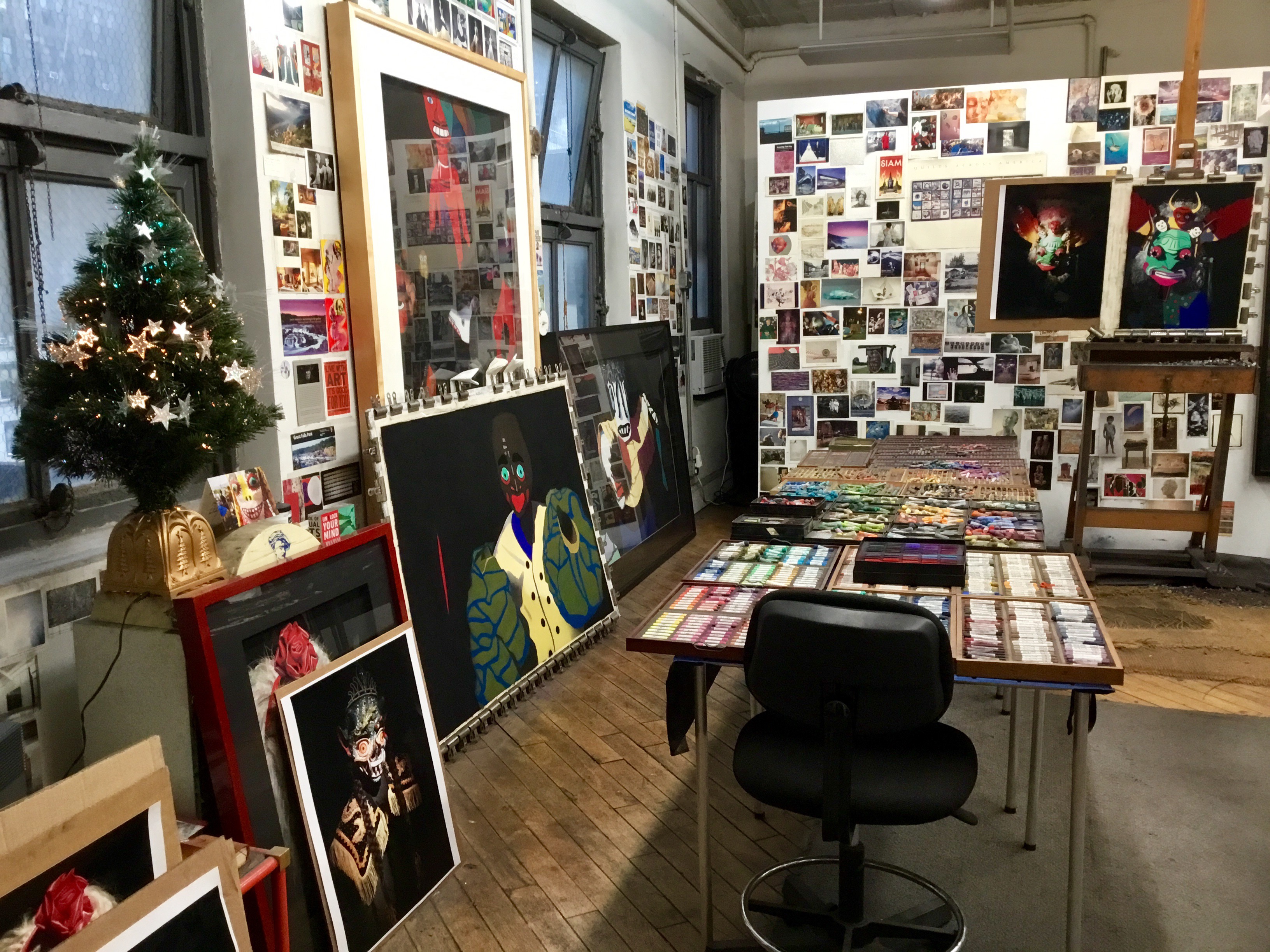
Barbara’s studio
*an ongoing series of quotations – mostly from artists, to artists – that offers wisdom, inspiration, and advice for the sometimes lonely road we are on.
“To go back and introduce into all the schools art, to cut down on sports but bring arts, philosophy back into all educational systems,” he said. “And that’s what’s being cut everywhere. And I think that’s one of the sad and tragic parts of where we are. Education is the resistance to everything that is bad today.”
Jonas Mekas quoted in Want to Be Happy? Think Like an Old Person, by John Leland, The New York Times, Dec. 29, 2017.
Comments are welcome!
Q: What’s on the easel today?
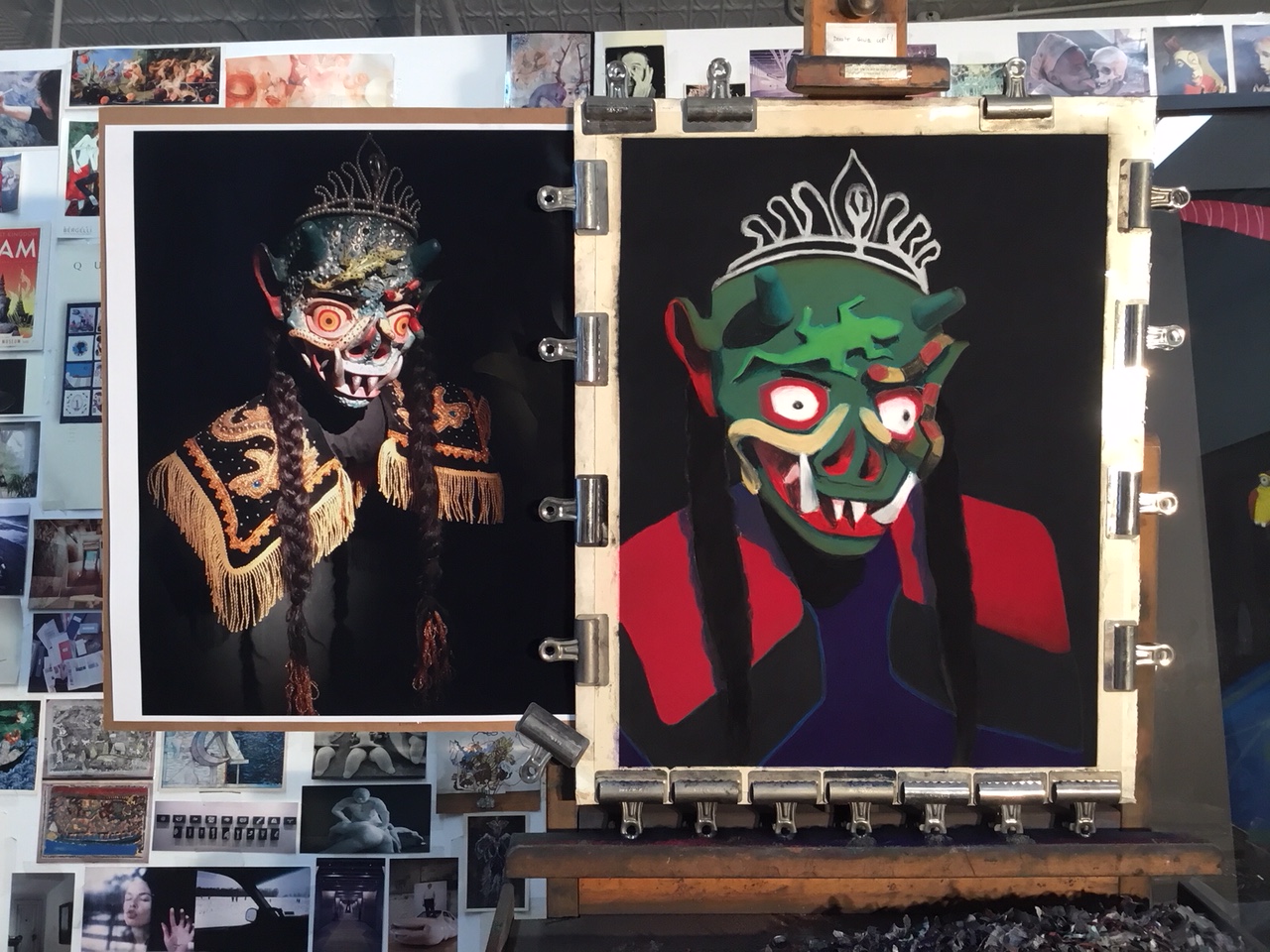
Work in progress
A. I have just started working on a small pastel painting. Although the mask looks Tibetan, surprisingly, it is from Bolivia. It’s one I encountered at a mask exhibition at the Museum of Ethnography and Folklore in La Paz. This is another in my “Bolivianos” series.
Comments are welcome!
Pearls from artists* # 286
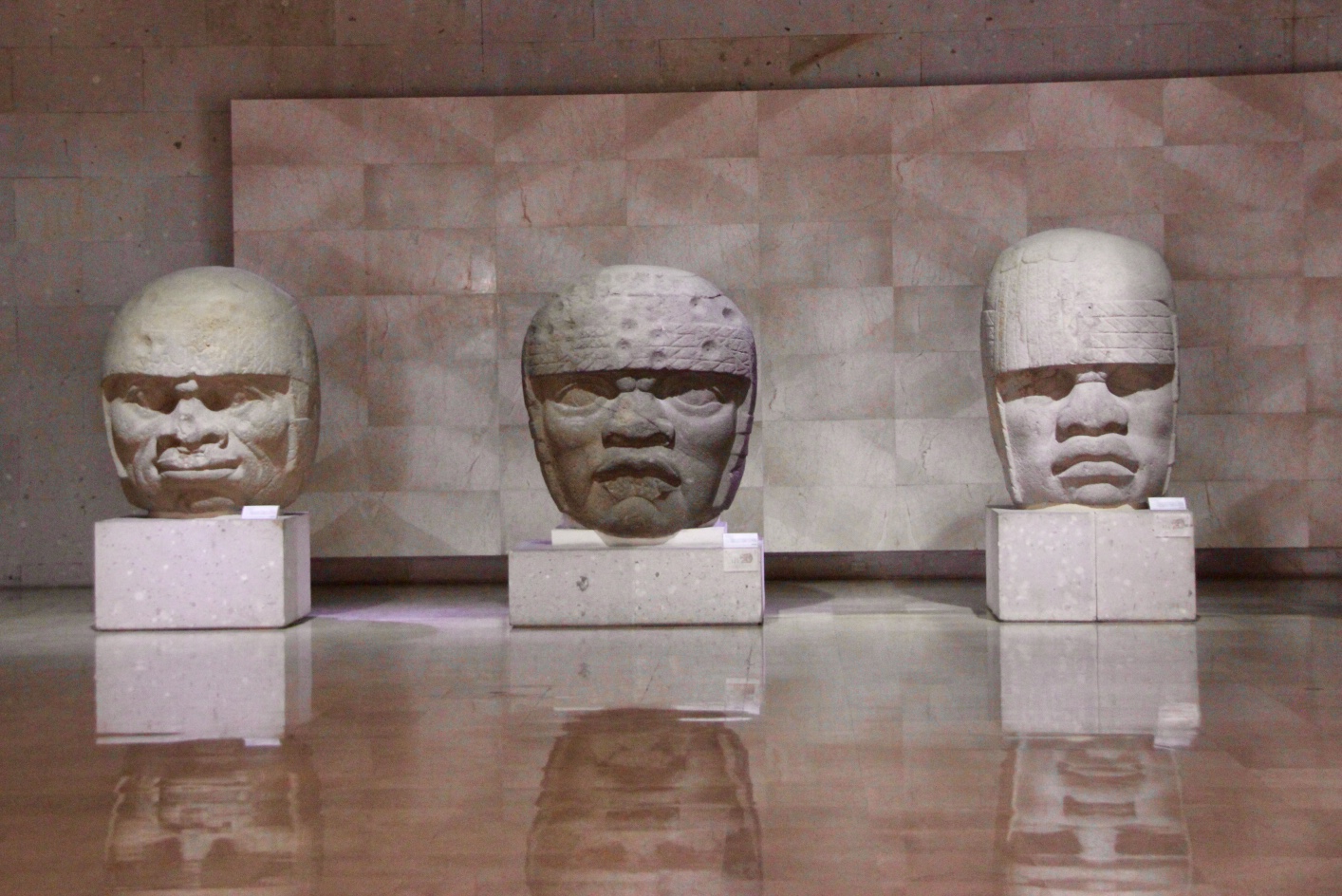
Museo de Antropología de Xalapa
*an ongoing series of quotations – mostly from artists, to artists – that offers wisdom, inspiration, and advice for the sometimes lonely road we are on.
All real art is or was modern in its time,
daring and new,
demonstrating a constant change in seeing and feeling.
If revival had been a perpetual virtue,
we would still live in caves and earth pits.
In art, tradition is to create,
not to revive.
Joseph Albers quoted in Ruins in Reverse by Lauren Hinkson in Joseph Albers in Mexico
Comments are welcome!
Q: How do you stay motivated to create new work?
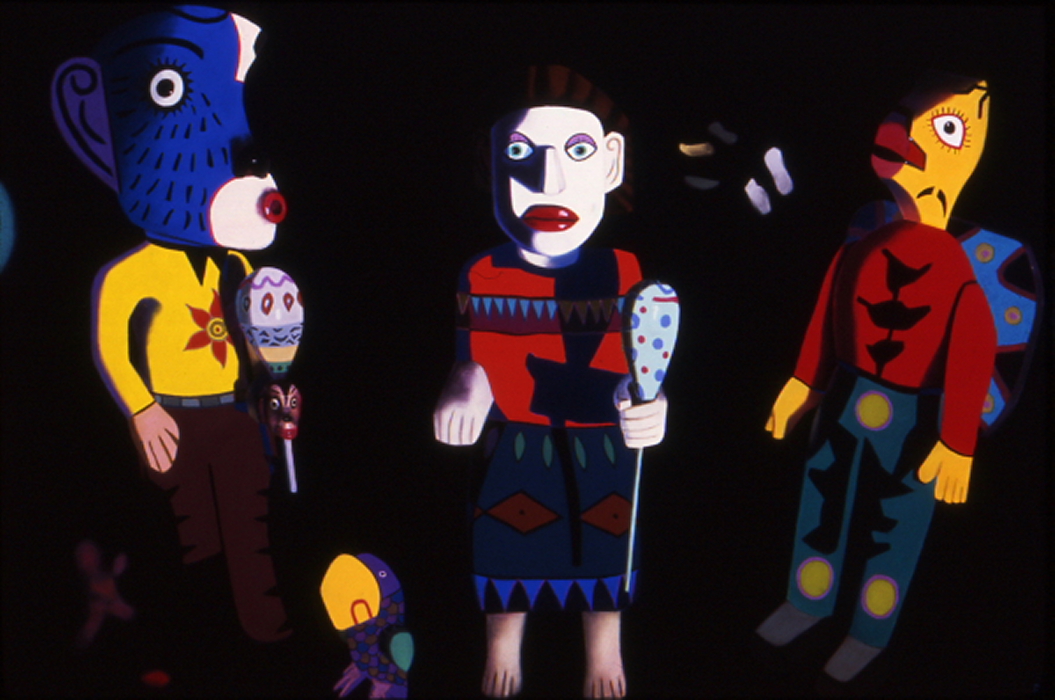
“False Friends,” 50” x 70,” one of Cheryll and John’s pastel paintings
A: There are many reasons to continue to make art. First, I am fascinated by my months- if not years-long creative process. It begins with travel to remote destinations and ends in framed pastel paintings in my studio, hanging in galleries, at art fairs, in collectors’ homes, etc. Each new pastel painting is another thread in an expanding tapestry that is my entire body of work. It’s fascinating to never know where the process, or the paintings, will end up nor who will be touched by the work.
My pastel paintings continue to garner appreciation among a growing list of collectors. Here’s a recent email from a couple that has been collecting my work from the beginning.
hello barbara,
merry christmas!
we are thrilled and thrilled and thrilled for your good news from miami and naples.
. . . “tense peace, a tumultuous stillness” . . .
we know we love you and we love your work.
how lucky are we to live with your work in our home, in our lives.
we love to read how others describe it.
thanks for sharing.
happy us to have you and your art in our lives,
love to you,
john & cheryll
your work stopped me in my tracks decades ago.
the sight of your work never left me.
i knew that i had to have it near me at some time, no matter what the cost.
i began immediately to negotiate with john.
you know the story . . .
i promised that i would not buy a single thing for five years if i could have one piece of your art.
i held true for the five years and beyond, adding three more pieces of your work.
if we had the wherewithal, your work would be on every floor.
there is never a day that goes by without thinking how brilliant that work is and how it has enriched our deepest sense of visual joy.
we see the rain pouring down, the snow falling, the clouds scudding by, in false friends.
i admit, we don’t allow the sun to shine on them. i couldn’t bear for her to be damaged.
your thoughtful, brilliant words kept us from changing the highly-reflective plexi to something that would have dulled the drama of us walking in front of and being a part of the work.
we still have those words.
it took about one-half of one second for my thinking to change.
and, man, are we grateful.
it never occurred to us that your work wouldn’t be sought after.
always, we walk into a museum and see your work on the walls.
on the walls of the hemi-cycle at the corcoran.
on the walls of the whitney.
on the walls of the met breurer.
on any large white space that would allow each piece to breathe.
we have always known, deep in our marrow that your work is singular.
you have always had our hearts . . . since the second i walked into the torpedo factory, a first-grade teacher with a first-grade teacher’s salary, and knew that i’d sell my honda civic and walk rather than not have in reality, the frogs thought they were men (i know that the title of the piece is something like that . . . the decades have blurred the words).
so, we waited and then . . .
sigh . . .
all the best to you.
we are excited out of our ever-loving minds for you.
but . . . we’ve always known . . .
love,
c & j
Comments are welcome!
Pearls from artists* # 285
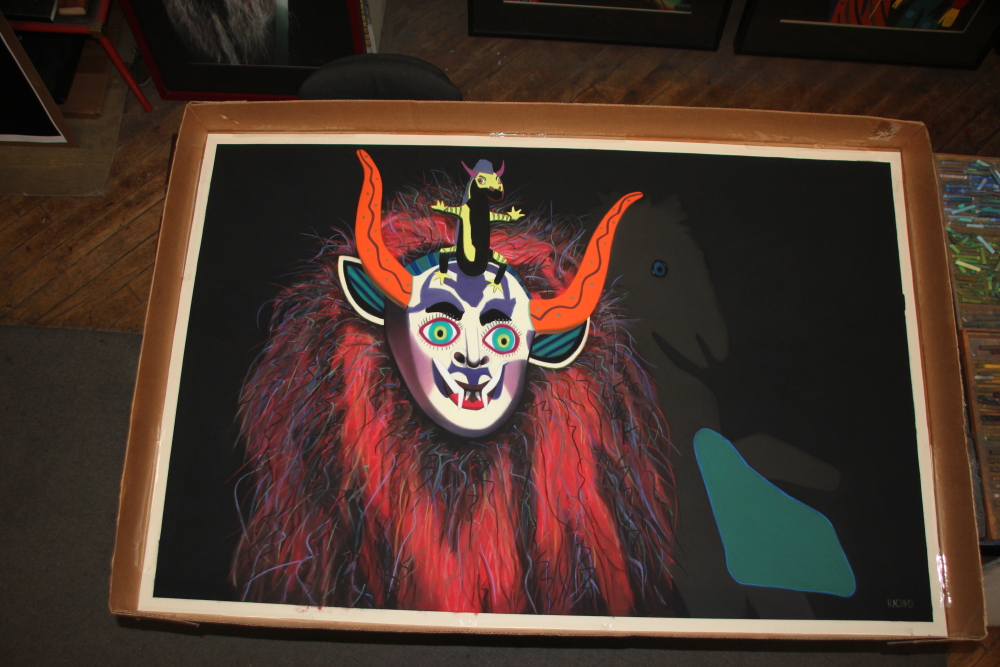
“The Orator,” 38″ x 58,” boxed to go to the framer
*an ongoing series of quotations – mostly from artists, to artists – that offers wisdom, inspiration, and advice for the sometimes lonely road we are on.
So much of the writing life is mundane. Buying printer ink and paper, doing dishes, arranging the pens in the cup, smoke breaks on the phone, taking baths or going for walks or sitting blankly on the couch wondering if the day will end before one makes a discovery or a decision. These habits of day-to-day tedium are what can’t be seen on the surface of a writer’s face when we meet her at a book signing – the time and effort spent living in her own head. Writing is a lonesome art.
Women at Work: Interviews from the Paris Review, preface by Ottessa Moshfegh
Comments are welcome!
Travel photo of the month*
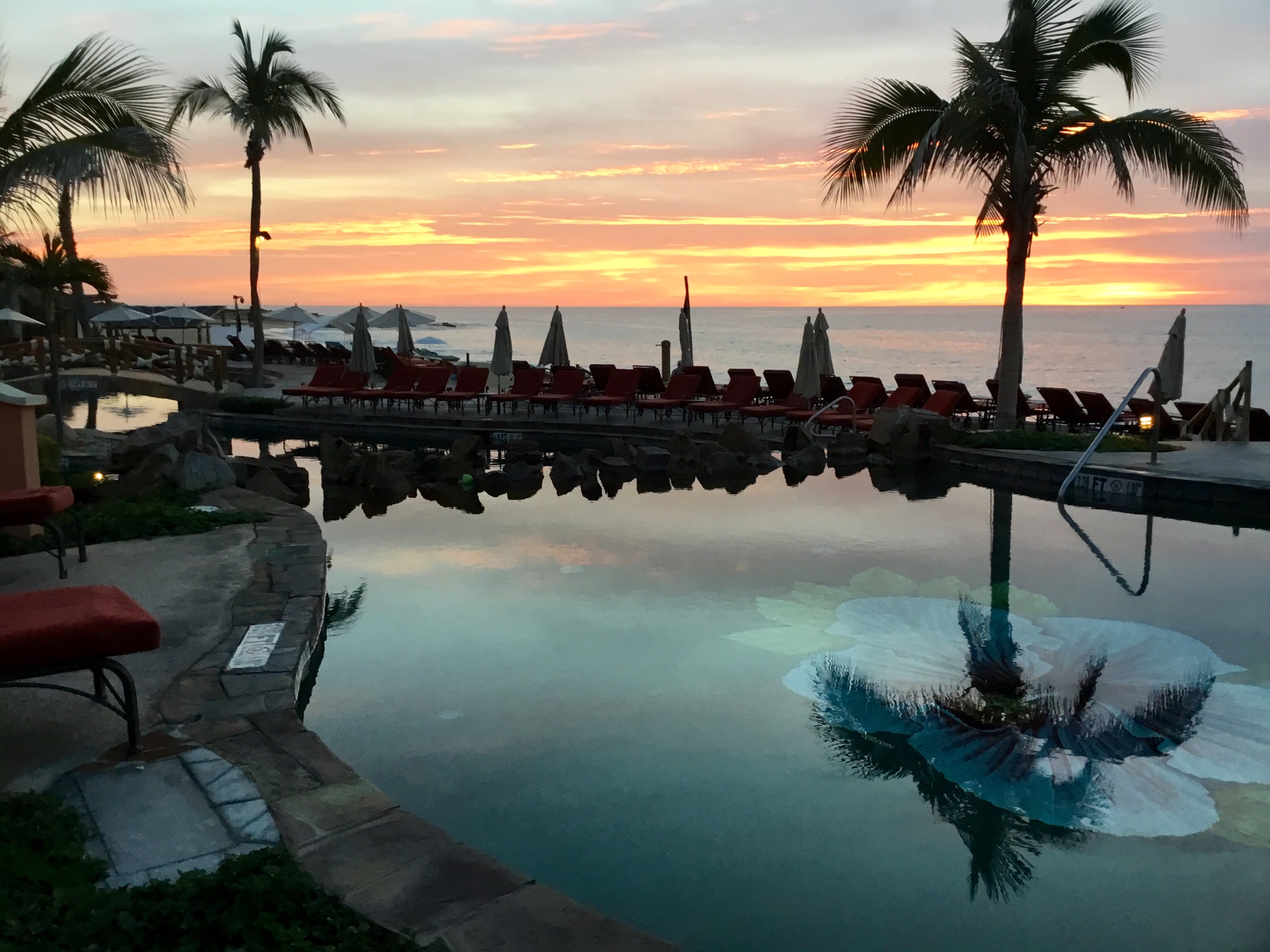
Morning in Los Cabos, Mexico
*Favorite travel photographs that have not yet appeared in this blog.
Comments are welcome!
Pearls from artists* # 284
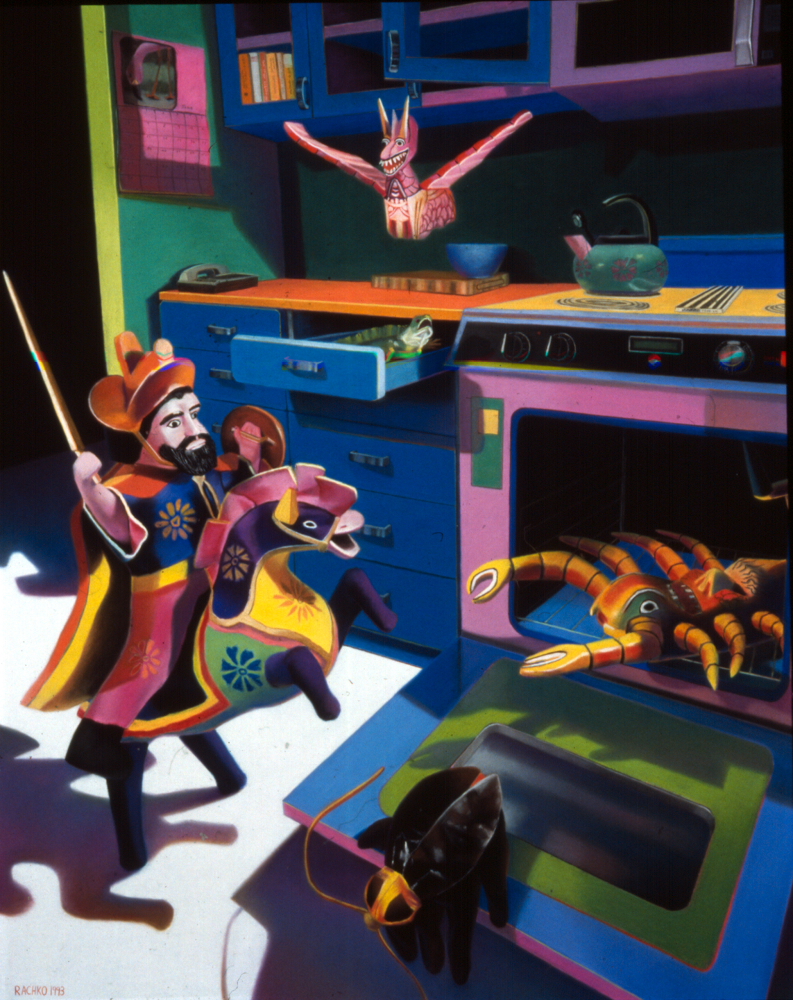
“The Magical Other,” soft pastel on sandpaper, 48″ x 38″
*an ongoing series of quotations – mostly from artists, to artists – that offers wisdom, inspiration, and advice for the sometimes lonely road we are on.
We can do anything, or almost, but how balanced, magnanimous, and modest one has to be to do anything! And also how patient. It is as true in the arts as anywhere else.
So… to work. It is not a non sequitur. I shall never be one of those directly active (except as a teacher, occasionally), but now and then I am made aware that my work, odd though it seems, does help people. But it is only in these last years at Nelson that I have known that for sure.
May Sarton in Journal of a Solitude: The intimate diary of a year in the life of a creative woman
Comments are welcome!
Q: Would you share your artist’s statement for the “Bolivianos” series?

Museum of Ethnography and Folklore, La Paz, Bolivia
A: Here it is.
My long-standing fascination with traditional masks took a leap forward in the spring of 2017 when I visited the National Museum of Ethnography and Folklore in La Paz, Bolivia. One particular exhibition on view, with more than fifty festival masks, was completely spell-binding.
The masks were old and had been crafted in Oruro, a former tin-mining center about 140 miles south of La Paz on the cold Altiplano (elevation 12,000’). Depicting important figures from Bolivian folklore traditions, the masks were created for use in Carnival celebrations that happen each year in late February or early March.
Carnival in Oruro revolves around three great dances. The dance of “The Incas” records the conquest and death of Atahualpa, the Inca emperor when the Spanish arrived in 1532. “The Morenada” dance was once assumed to represent black slaves who worked in the mines, but the truth is more complicated (and uncertain) since only mitayo Indians were permitted to do this work. The dance of “The Diablada” depicts Saint Michael fighting against Lucifer and the seven deadly sins. The latter were originally disguised in seven different masks derived from medieval Christian symbols and mostly devoid of pre-Columbian elements (except for totemic animals that became attached to Christianity after the Conquest). Typically, in these dances the cock represents Pride, the dog Envy, the pig Greed, the female devil Lust, etc.
The exhibition in La Paz was stunning and dramatic. Each mask was meticulously installed against a dark black wall and strategically spotlighted so that it became alive. The whole effect was uncanny. The masks looked like 3D versions of my “Black Paintings,” a pastel paintings series I have been creating for ten years. This experience was a gift… I could hardly believe my good fortune!
Knowing I was looking at the birth of a new painting series – I said as much to my companions as I remained behind while they explored other parts of the museum – I spent considerable time composing photographs. Consequently, I have enough reference material to create new pastel paintings in the studio for several years. The series, entitled “Bolivianos,” is arguably my strongest and most striking work to date.
Comments are welcome!
Pearls from artists* # 283

Wintry day in DC
*an ongoing series of quotations – mostly from artists, to artists – that offers wisdom, inspiration, and advice for the sometimes lonely road we are on.
I live alone, perhaps for no good reason, for the reason that I am an impossible creature, set apart by a temperament I have never learned to use as it could be used, thrown off by a word, a glance, a rainy day, or one drink too many. My need to be alone is balanced against my fear of what will happen when suddenly I enter the huge empty silence if I cannot find support there. I go up to Heaven and down to Hell in an hour, and keep alive only by imposing upon myself inexorable routines. I write too many letters and too few poems. It may be outwardly silent here but in the back of my mind is a clamor of human voices, too many needs, hopes, fears. I hardly ever sit still without being haunted by the “undone” and the “unsent.” I often feel exhausted, but it is not my work that tires (work is a rest); it is the effort of pushing away the lives and needs of others before I can come to work with any freshness and zest.
May Sarton in Journal of a Solitude: The intimate diary of a year in the life of a creative woman
Comments are welcome!
Q: What’s on the easel today?

Finished and signed
A: I have finally finished “Oracle,” soft pastel on sandpaper, 26” x 20.” It’s the third piece in my “Bolivianos” series.
Comments are welcome!


 barbararachkoscoloreddust.com