Category Archives: 2016
Pearls from artists* # 198

“Troublemaker,” soft pastel on sandpaper, 20″ x 26″
* an ongoing series of quotations – mostly from artists, to artists – that offers wisdom, inspiration, and advice for the sometimes lonely road we are on.
The writer doesn’t need economic freedom. All he needs is a pencil and some paper. I’ve never known anything good in writing to come from having accepted any free gift of money. The good writer never applies to a foundation. He’s too busy writing something. If he isn’t first rate he fools himself by saying he hasn’t got time or economic freedom. Good art can come out of thieves, bootleggers, or horse swipes. People really are afraid to find out just how much hardship and poverty they can stand. They are afraid to find out how tough they are. Nothing can destroy the good writer. The only thing that can alter the good writer is death. Good ones don’t have time to bother with success or getting rich…
Nothing can injure a man’s writing if he’s a first-rate writer. If a man is not a first-rate writer, there’s not anything that can help it much. The problem does not apply if he is not first-rate, because he has already sold his soul for a swimming pool.
William Faulkner in Writers at Work: The Paris Review Interviews First Series, edited and with an introduction by Malcolm Cowley
Comments are welcome!
Q: What is your favorite art museum?
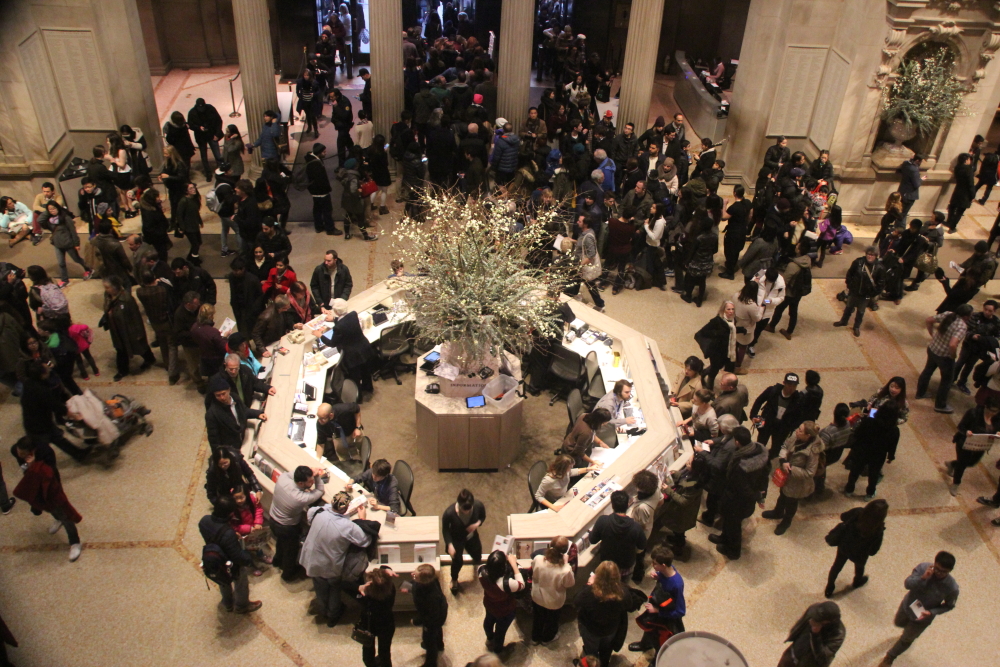
The Great Hall at the Met
A: My favorite art museum is the Metropolitan Museum of Art in New York. The Met is peerless! The breadth and quality of the collection is nearly inexhaustible. It’s my library, the place I go to for inspiration and to deepen and broaden my knowledge of art. The Met is a treasure for every working artist.
Comments are welcome!
Pearls from artists* # 197
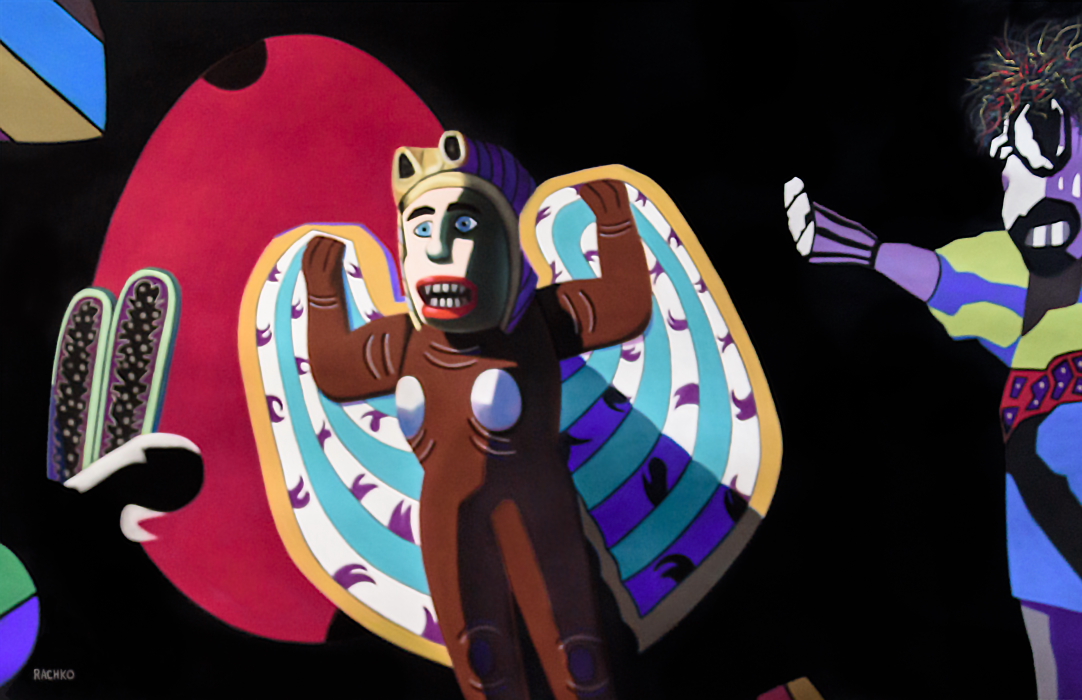
“Charade,” soft pastel on sandpaper, 38″ x 58″
* an ongoing series of quotations – mostly from artists, to artists – that offers wisdom, inspiration, and advice for the sometimes lonely road we are on.
As Kenneth Burke says in ‘Counter-Statement:’ “[Great] artists feel as opportunity what others feel as menace. This ability does not, I believe, derive from exceptional strength, it probably arises purely from professional interest the artist may take in his difficulties.”
Marianne Moore in Writers at Work: The Paris Review Interviews Second Series, edited by George Plimpton
Comments are welcome!
Q: What’s on the easel today?
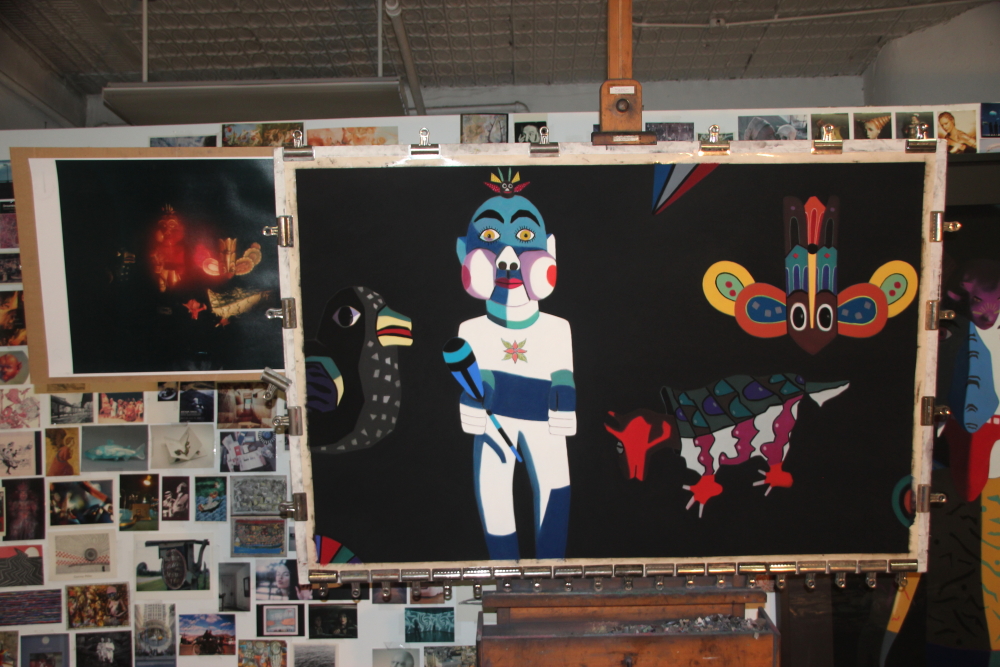
Work in progress
A: “White Star,” soft pastel on sandpaper, 38″ x 58,” is awaiting its finishing touches.
Comments are welcome!
Pearls from artists* # 196

“The Sovereign,” soft pastel on sandpaper, 58″ x 38″
* an ongoing series of quotations – mostly from artists, to artists – that offers wisdom, inspiration, and advice for the sometimes lonely road we are on.
…for me, there’s nothing gratuitous about the least drawing. Every part of me has to be reaching toward that goal: exteriorizing the shock of events and external life.
Chatting with Henri Matisse: The Lost 1941 Interview, Henri Matisse with Pierre Courthion, edited by Serge Guilbaut, translated by Chris Miller
Comments are welcome!
Q: Do you remember the first pastel painting that you ever made?
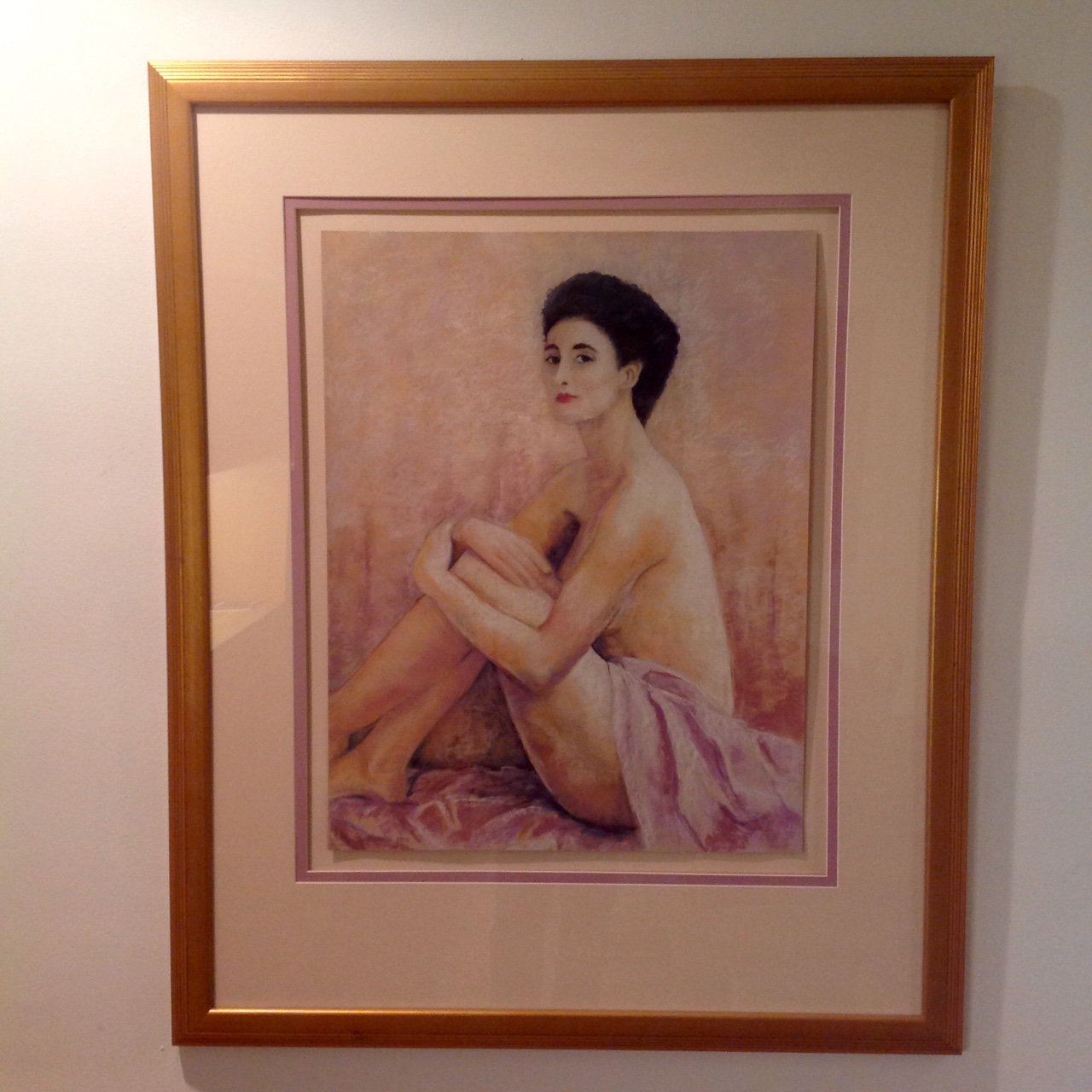
First framed pastel painting, 1988
A: Yes, it was a small head-and-neck portrait of a live model in a figure drawing class at The Art League School in Alexandria, VA. I don’t know what became of it.
I also remember the first pastel painting that I ever framed because it is still hanging in my Alexandria house. It is dated 1988 (see photo) and was made in a one-week workshop with Diane Tesler at The Art League. The workshop was specifically to teach artists how to paint from photographs and it was my first time studying with Diane. I made the mistake of bringing, as reference material, a magazine photograph that was originally a perfume ad in the The Sunday Times Magazine. Diane tactfully explained that it was wrong to use someone else’s photograph instead of my own, but let me do it this one time.
So many years later walking by my painting I still think of Diane. She taught me a valuable lesson: do not use anyone else’s photographs, ever!
Comments are welcome!
Pearls from artists* # 195
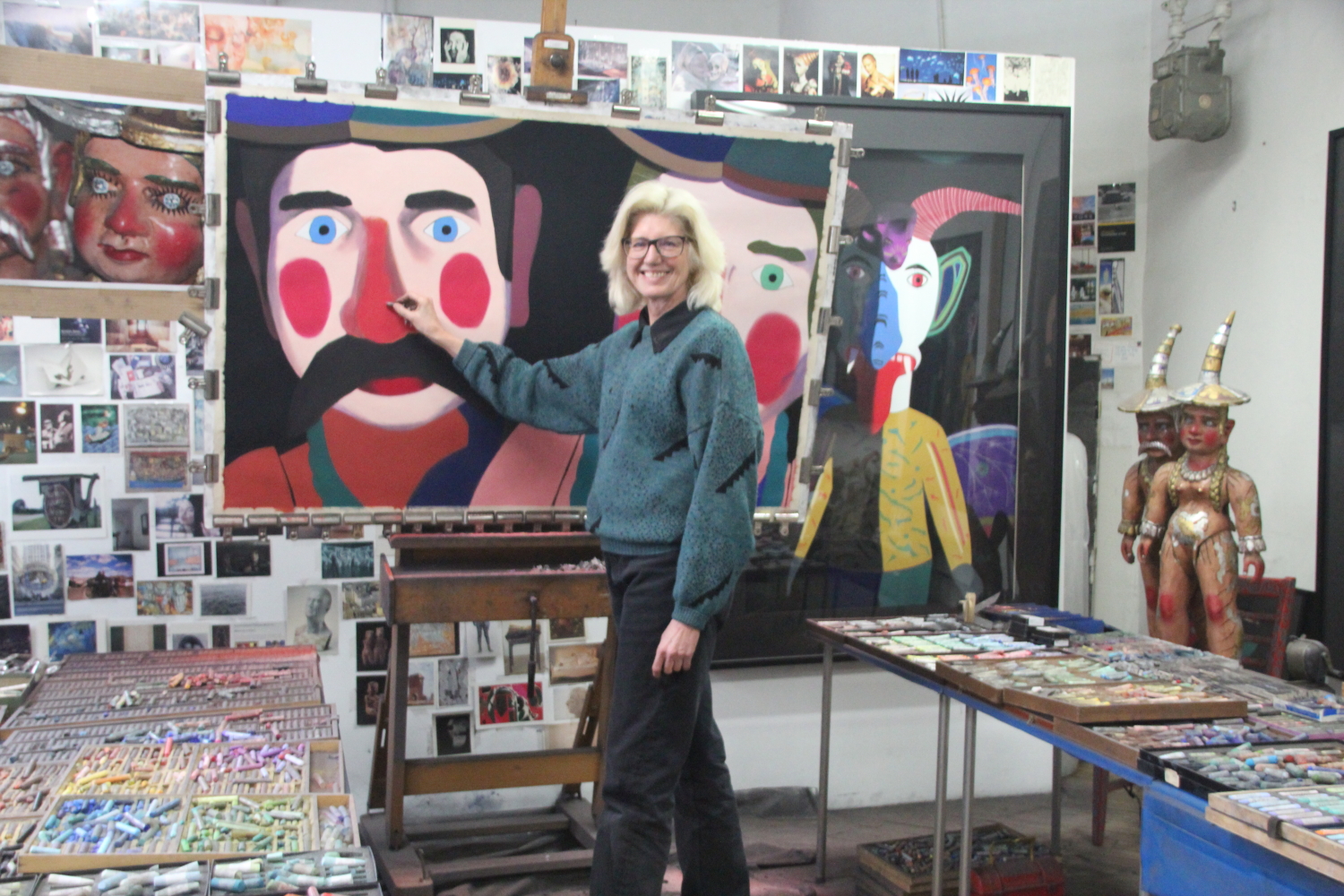
Barbara at work
* an ongoing series of quotations – mostly from artists, to artists – that offers wisdom, inspiration, and advice for the sometimes lonely road we are on.
There is no list of rules.
There is one rule: there are no rules.
Happiness comes from living as you need to, as you want to. Happiness comes from being who you actually are instead of who you think you are supposed to be.
Being traditional is not traditional anymore.
Normalize your lives, people.
You don’t want a baby? Don’t have one.
I don’t want to get married? I won’t.
You want to live alone? Enjoy it.
You want to love someone? Love someone.
Don’t apologize. Don’t explain. Don’t ever feel less than.
When you feel the need to apologize or explain who you are, it means the voice in your head is telling you the wrong story. Wipe the slate clean. And rewrite it.
No fairy tales.
Be your own narrator.
And go for a happy ending.
One foot in front of the other.
You will make it.
Shonda Rhimes in Year of Yes: How to Dance It Out, Stand in the Sun and Be Your Own Person
Comments are welcome!
Start/Finish of “Dichotomy,” soft pastel on sandpaper, 38″ x 58″
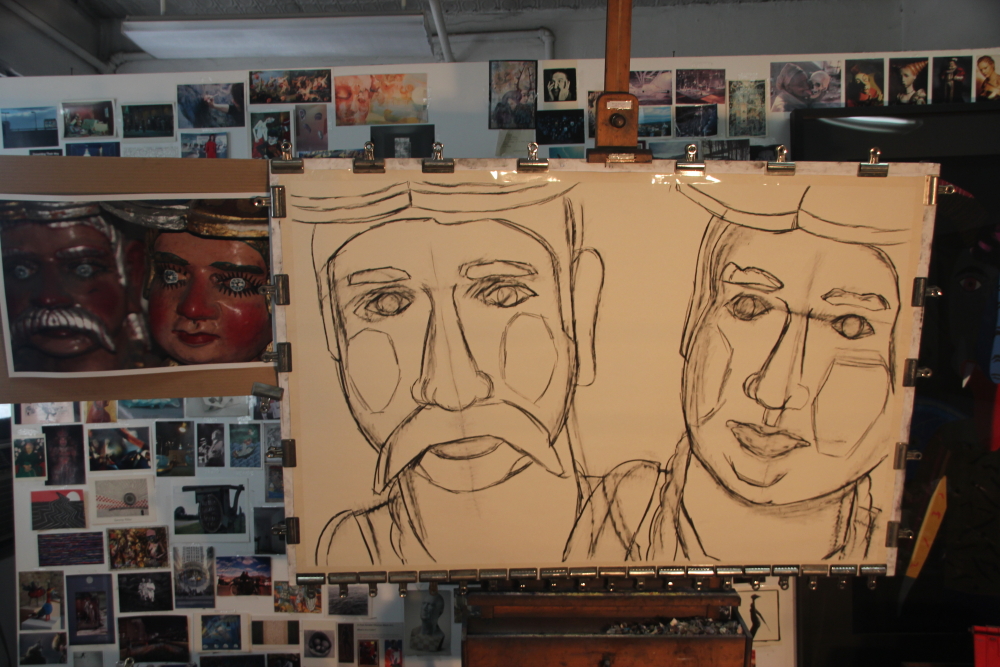
Initial charcoal sketch on sandpaper
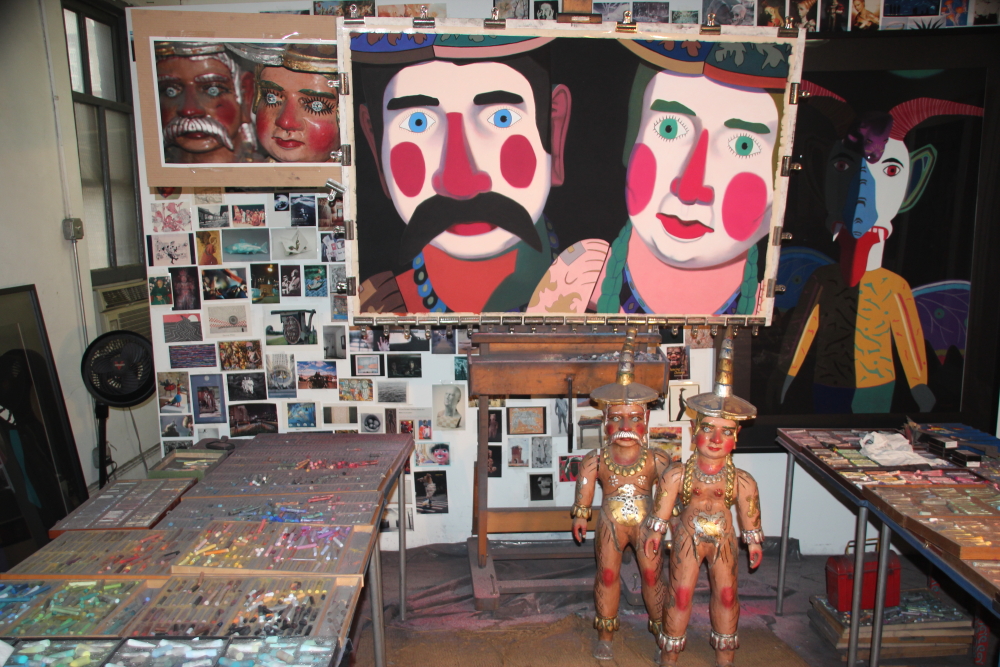
Finished painting
Comments are welcome!
Pearls from artists* # 194

“Epiphany,” soft pastel on sandpaper, 38″ x 58″
* an ongoing series of quotations – mostly from artists, to artists – that offers wisdom, inspiration, and advice for the sometimes lonely road we are on.
I did sculpture because what interested me in painting was to bring some order to my brain. It was a change of means. I took to clay as a break from painting; at the time I’d done absolutely everything I could in painting. Which means it was still about organizing. It was to put my sensations in order and look for a method that really suited me. When I’d found it in sculpture, I used it for painting. To come into possession of my own brain: that was always the goal, a sort of hierarchy of all my sensations, so that I could reach a conclusion.
One day, visiting Carriere at his house, I told him that. He replied: “But, my friend, that’s why you work. If you ever managed it, you’d probably stop working. It’s your reason for working.”
In painting – in any oeuvre – the goal is to reconcile the irreconcilable. There are all kinds of qualities in us, contradictory qualities. You have to construct something viable with that, something stable. That’s why you work your whole life long and want to keep on working until the last moment… as long as you haven’t admitted defeat or lost your curiosity, as long as you haven’t settled into a routine.
Chatting with Henri Matisse: The Lost 1941 Interview, Henri Matisse with Pierre Courthion, edited by Serge Guilbaut, translated by Chris Miller
Comments are welcome!
Q: How many studios have you had since you’ve been a professional artist?

Barbara’s studio
A: I am on my third, and probably last, studio. I say ‘probably’ because I love my space and have no desire to move. Plus, it would be a tremendous amount of work to relocate, considering that I have been in my West 29th Street studio since 1997.
My very first studio, in the late 1980s, was the spare bedroom of my house in Alexandria, Virginia. I set up a studio there while I was on active duty in the Navy. When I resigned my commission, I was required to give the President an entire year’s advance notice. Towards the end of that year I remember calling in sick so I could stay home and make art.
In the early 1990s I rented a studio on the third floor of the Torpedo Factory in Alexandria. For a while I enjoyed working there, but the constant interruptions – in an art center that is open to the public – became tiresome.
In 1997 I had the opportunity to move to New York. I desperately craved solitary hours to work in peace, without interruption, so at first I didn’t have a telephone. I still don’t have WiFi there because my studio is reserved strictly for creative work.
Moving from Virginia to New York in 1997 was relatively easy. My aunt, who planned to be in California to continue her Buddhist studies, offered me her rent-controlled sixth-floor walkup on West 13th Street. I looked at just one other studio before signing a sublease for my space at 208 West 29th Street. I had heard about the vacancy through a college friend of my husband, Bryan. Karen, the lease-holder, was relocating to northern California to work on “Star Wars” with George Lucas. After several years, she decided not to return to New York and I have been the lease-holder ever since.
Comments are welcome!


 barbararachkoscoloreddust.com