Blog Archives
Q: What’s on the easel today?
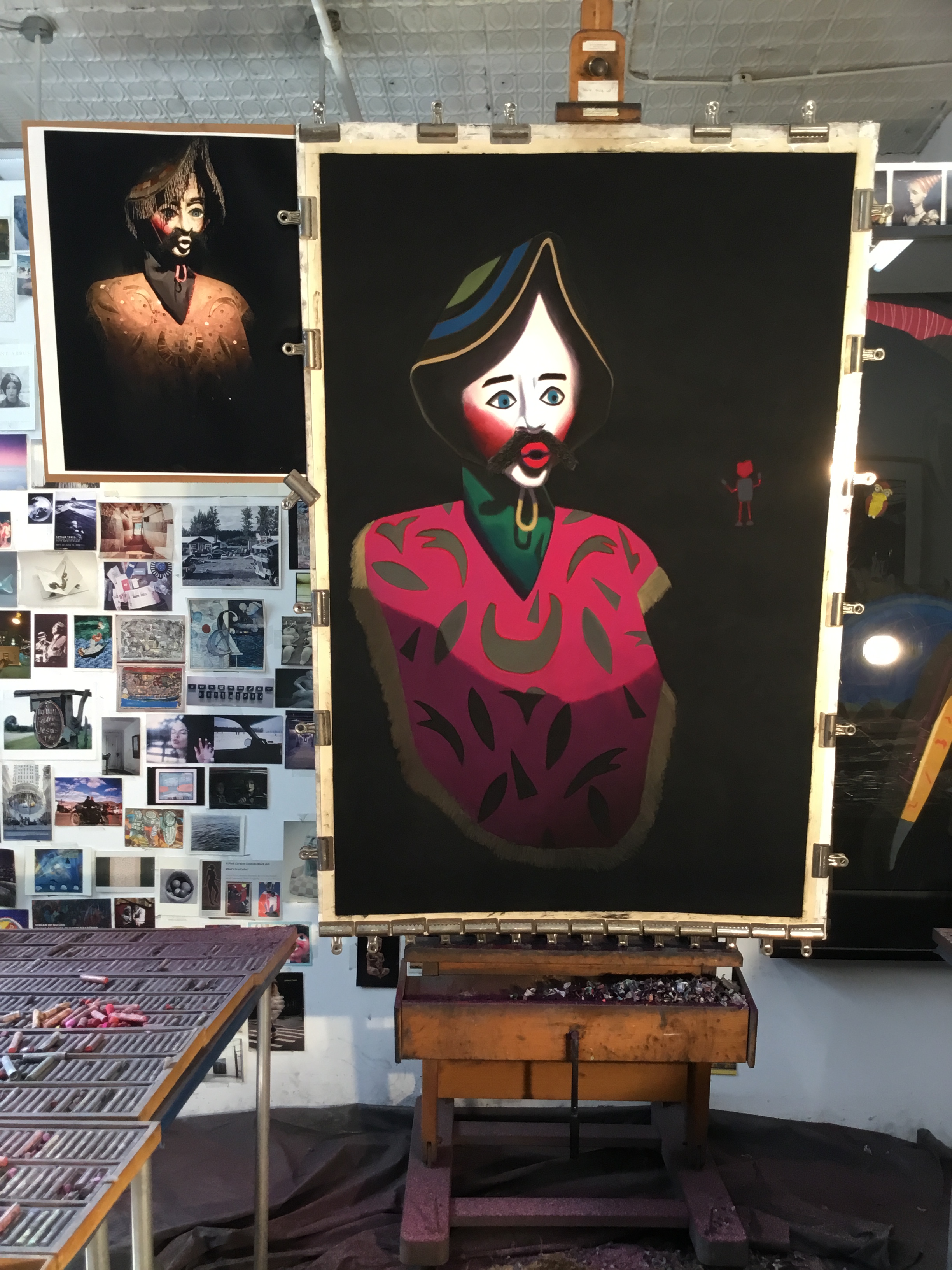
Work in progress
A: I continue slowly working on a 58” x 38” pastel painting. For now I’ve added a small figure on the right. I’m not sure yet whether I’ll keep it.
Comments are welcome!
Q: What’s on the easel today?
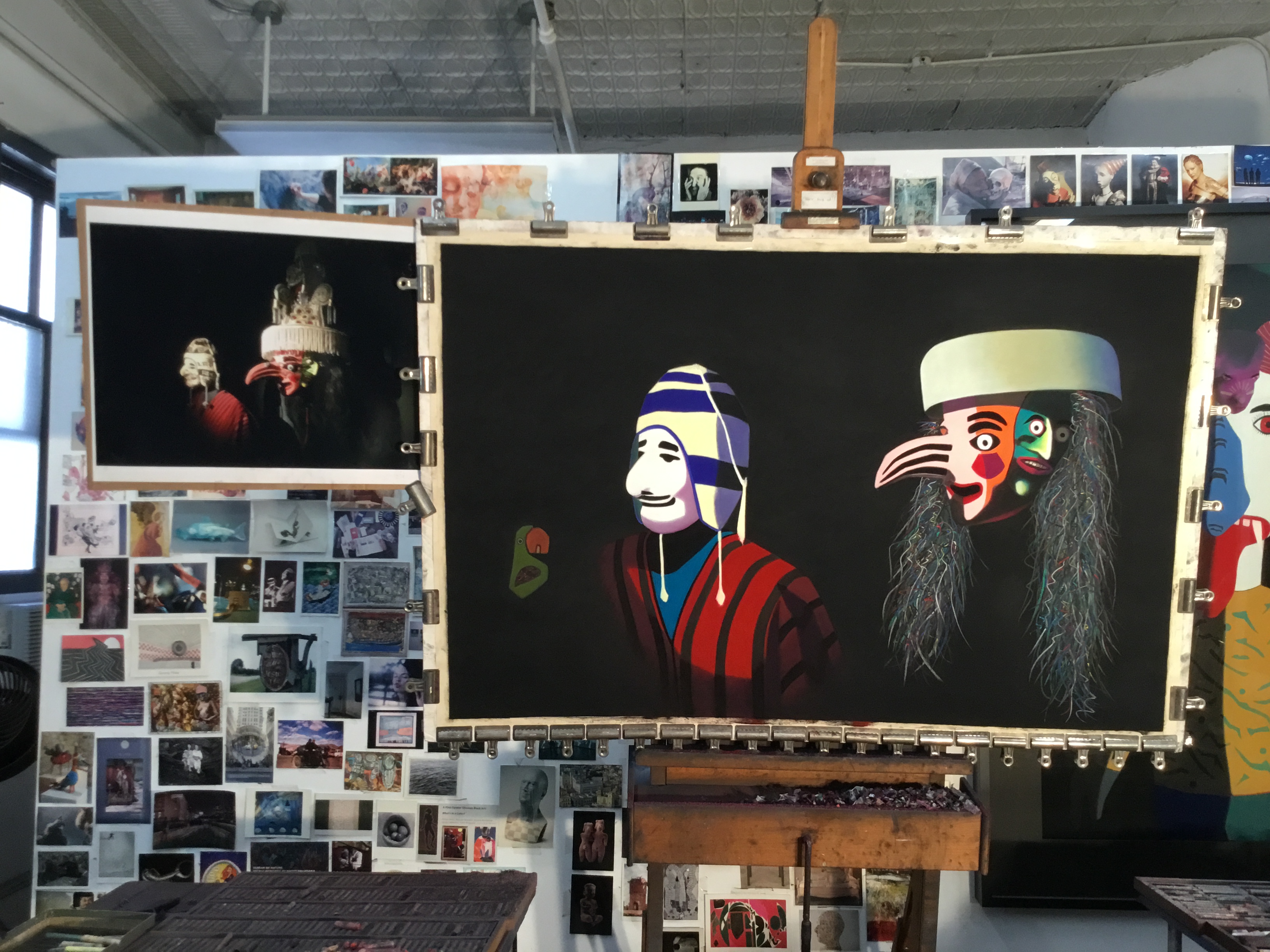
Work in progress
A: I continue working on “Acolytes,” soft pastel on sandpaper, 38” x 58.” It’s slow going at this stage as I refine my drawing and bring everything to a high state of finish. My work is all about details.
Comments are welcome!
Q: What’s on the easel today?
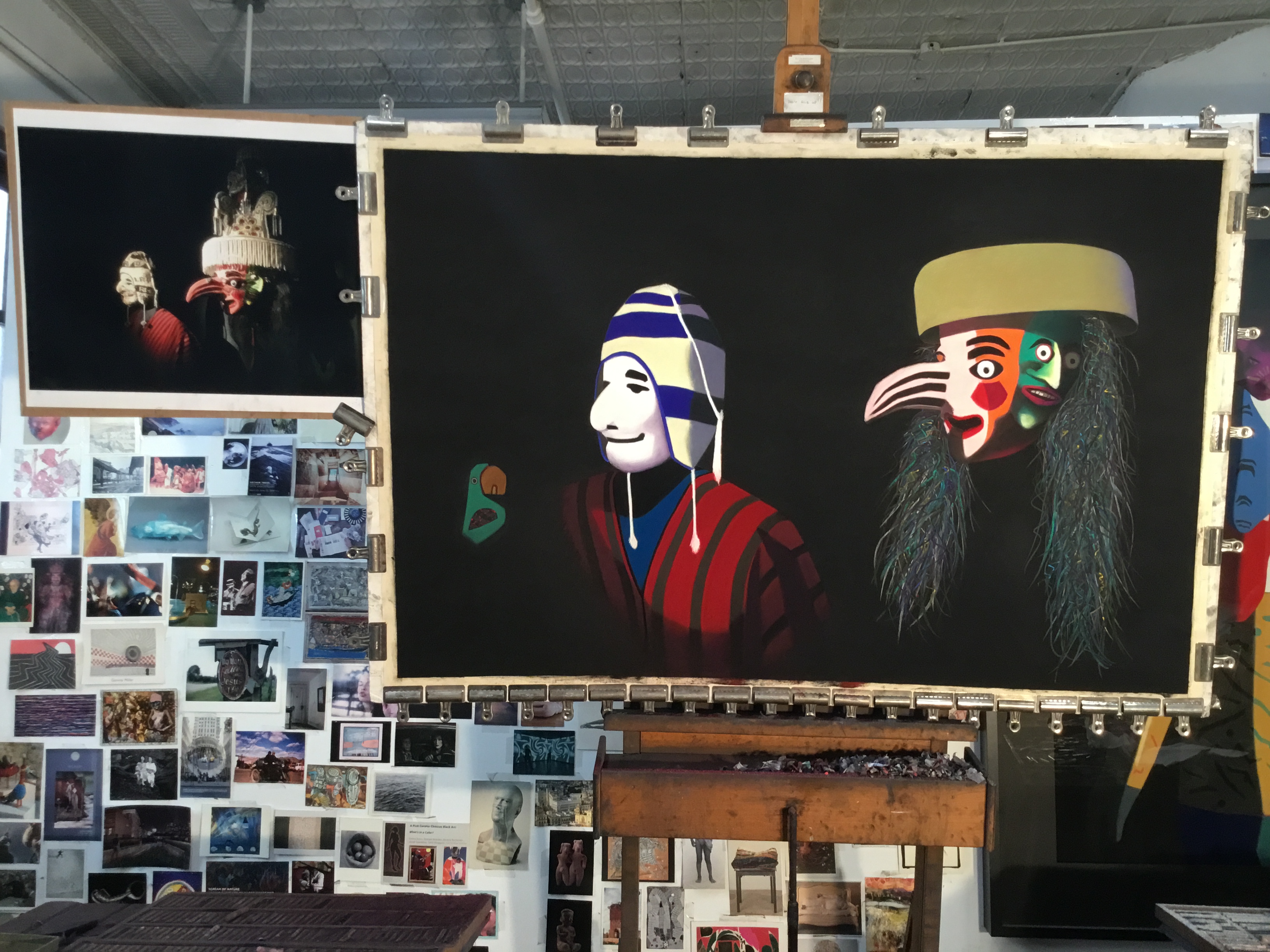
Work in progress
A: I continue working on “Acolytes,” soft pastel on sandpaper, 38” x 58.”
Comments are welcome!
Q: What’s on the easel today?
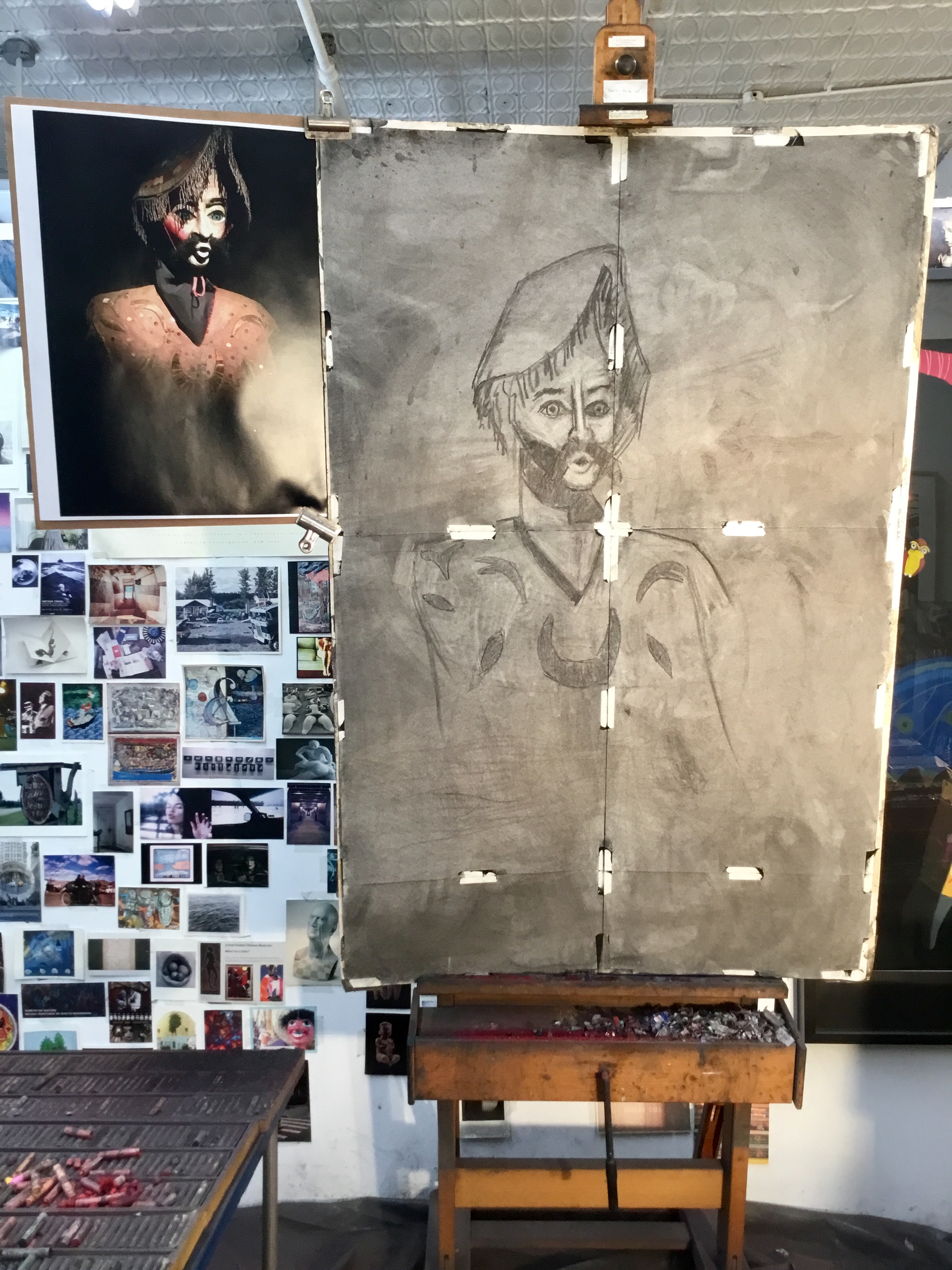
Preliminary sketch
A: I’m working on a preliminary charcoal drawing for my next large pastel painting. It will be number seven in the “Bolivianos” series.
Comments are welcome!
Q: What is more important to you, the subject of the painting or the way it is executed?

“Sam and Bobo,”soft pastel on sandpaper, 36″ x 31”, 1989
A: In a sense my subject matter – folk art, masks, carved wooden animals, papier mâché figures, toys – chose me. With it I have complete freedom to experiment with color, pattern, design, and other formal properties. In other words, although I am a representational artist, I can do whatever I want since the depicted objects need not look like real things. Execution is everything now.
This was not always the case. I started out in the 1980s as a traditional photorealist, except I worked in pastel on sandpaper. (For example, see the detail in Sam’s sweater above). As I slowly learned and mastered my craft, depicting three-dimensional people and objects hyper-realistically in two dimensions on a piece of sandpaper was thrilling… until one day it wasn’t.
My personal brand of photorealism became too easy, too limiting, too repetitive, and SO boring to execute! In 1989 I had at last extricated myself from a dull career as a Naval officer working in Virginia at the Pentagon. Then after much planning, in 1997 I was a full-time professional artist working in New York.
Certainly I was not going to throw away this opportunity by making boring photorealist art. I wanted to do so much more as an artist: to experiment with techniques, with composition, to see what I could make pastel do, to let my imagination play a larger role in the paintings I made. I was ready to devote the time and do whatever it took to push my art further.
After spending the early creative years perfecting my technical skills, I built on what I had learned. I began breaking rules – slowly at first – in order to push myself onward. And I continue to do so, never knowing what’s next. Hopefully, in 2018 my art is richer for it.
Comments are welcome!
Q: What’s on the easel today?
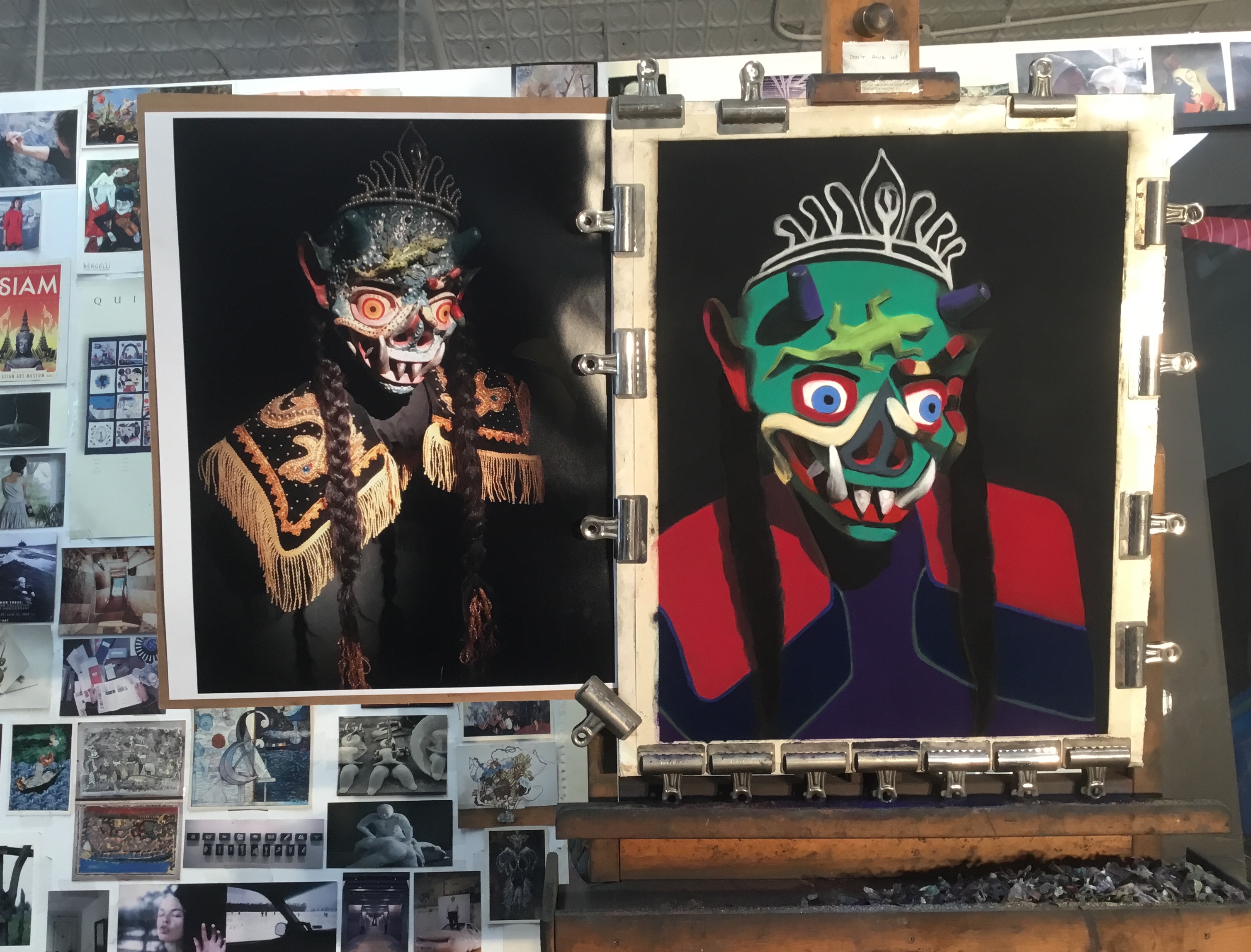
Work in progress
A: I continue slowly working on “Shaman,” soft pastel on sandpaper, 26” x 20”. A long-time aficionado of psychological thrillers, horror, and sci-fi films, I have a high tolerance for the macabre. However, I admit that this one is a little creepy, considering those are snakes curling around the eyes. On a deep level this piece is about facing my own fears. The snakes have become metaphors.
Comments are welcome!
Q: What’s on the easel today?
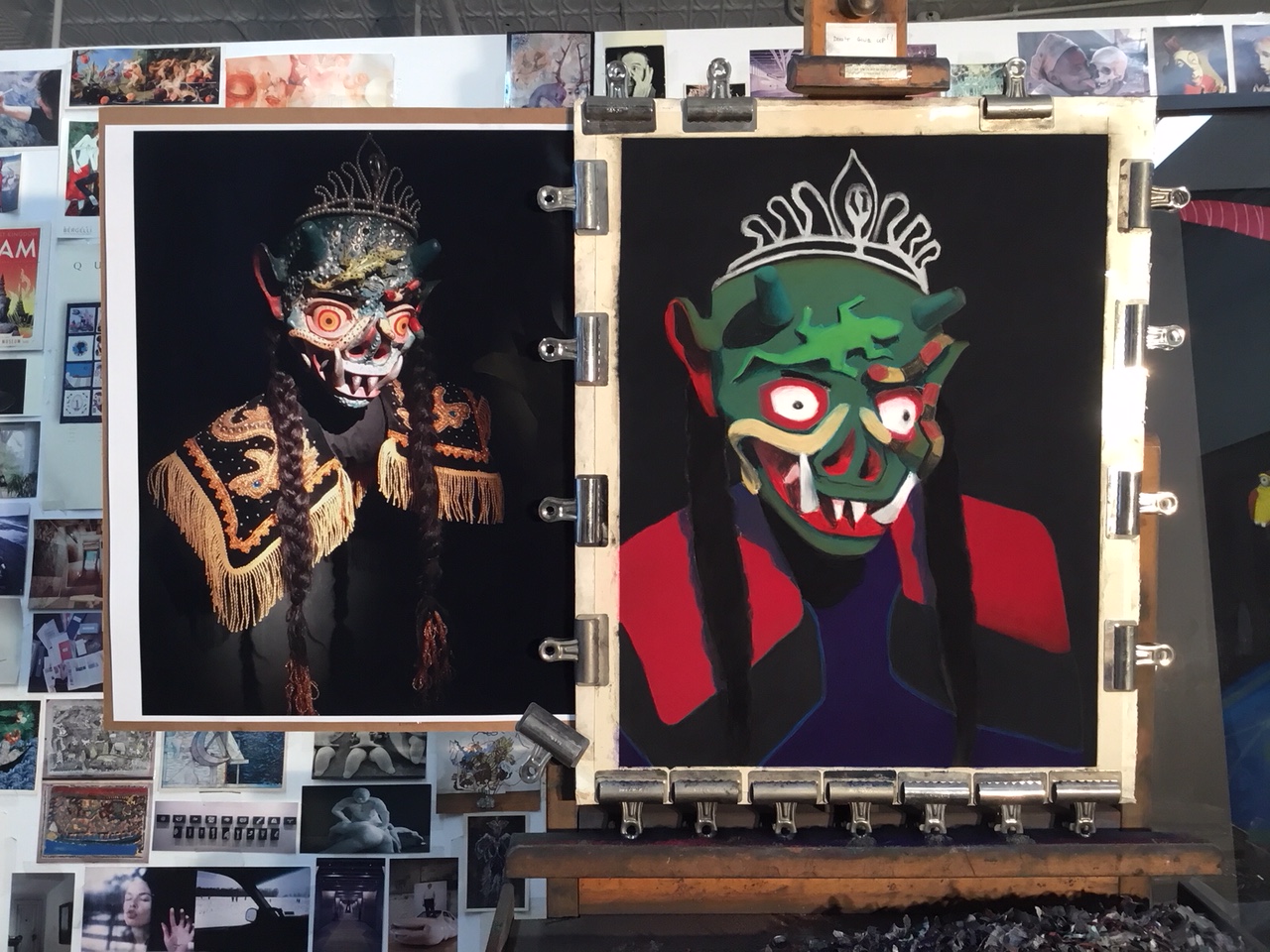
Work in progress
A. I have just started working on a small pastel painting. Although the mask looks Tibetan, surprisingly, it is from Bolivia. It’s one I encountered at a mask exhibition at the Museum of Ethnography and Folklore in La Paz. This is another in my “Bolivianos” series.
Comments are welcome!
Q: On an average day in the studio, how much of your time is spent in the physical act of making art?
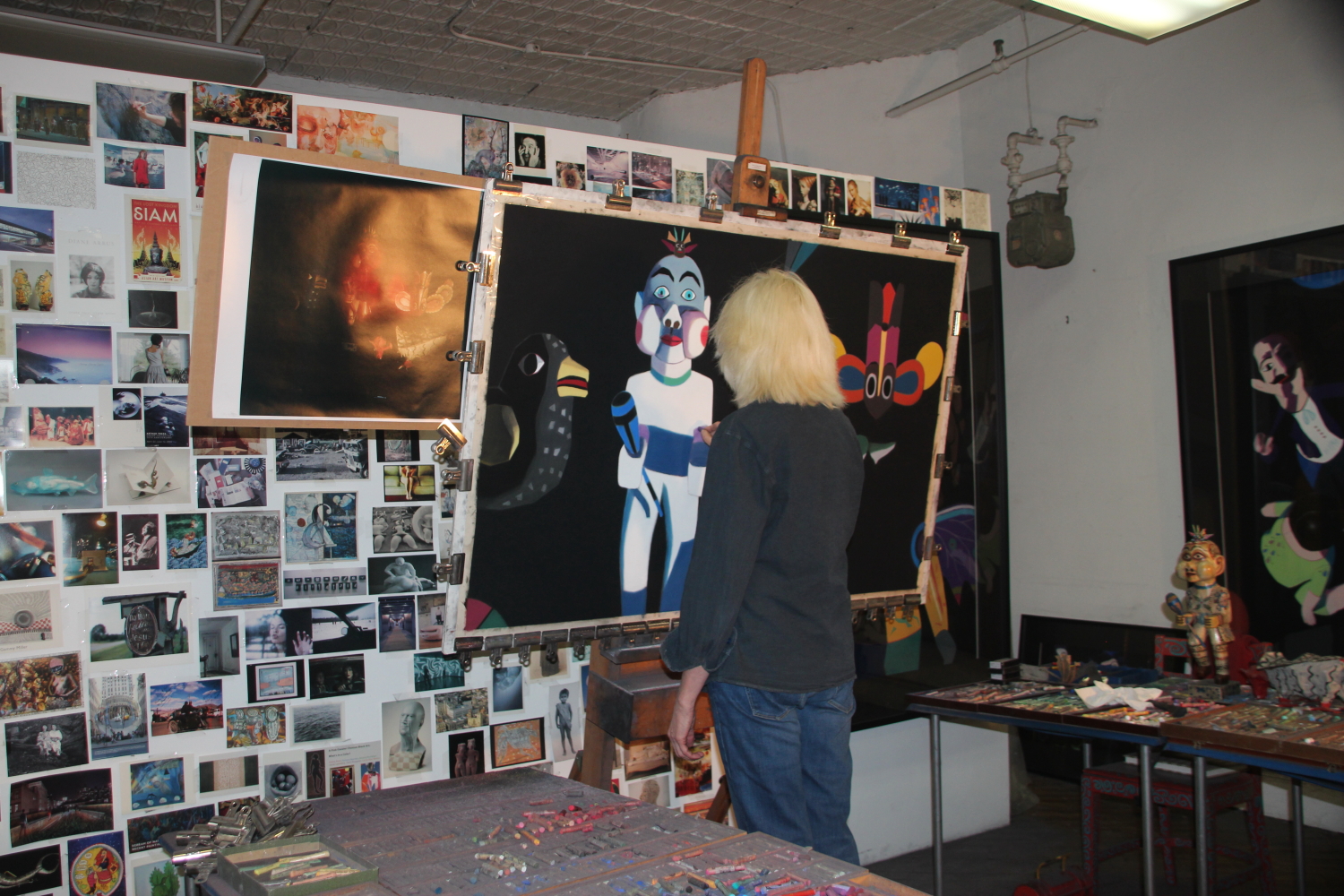
Working
A: My typical studio day is from 10:00 to 5:00. When I arrive, I often read for half an hour. Reading helps me relax and focus and get into the mindset I need to do my work. While I read, I look at the painting on my easel, assess it’s current state, and decide where to begin working.
Then I work until lunch time, generally around 1:00. After lunch I work for another five hours or so, taking a break whenever I want.
This has been more or less my schedule for five days a week for years. At an earlier point as I was developing my craft, I would work 9- or 10-hour days and six days a week.
My creative process is relatively slow. In a typical year I create five new pastel paintings. This year I am right on schedule. I have completed four and am working on a fifth.
Comments are welcome!
Q: What’s on the easel today?
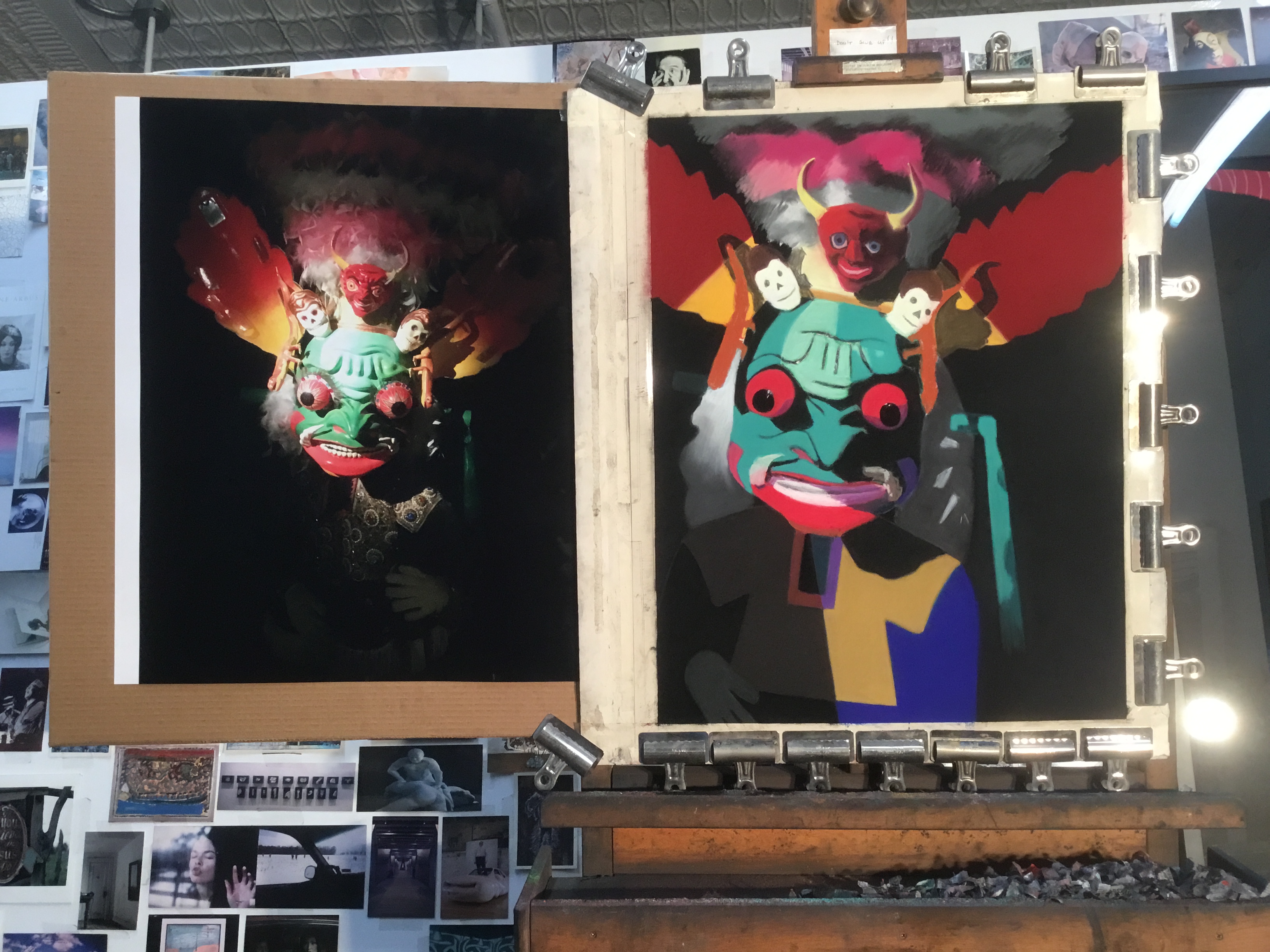
Work in progress
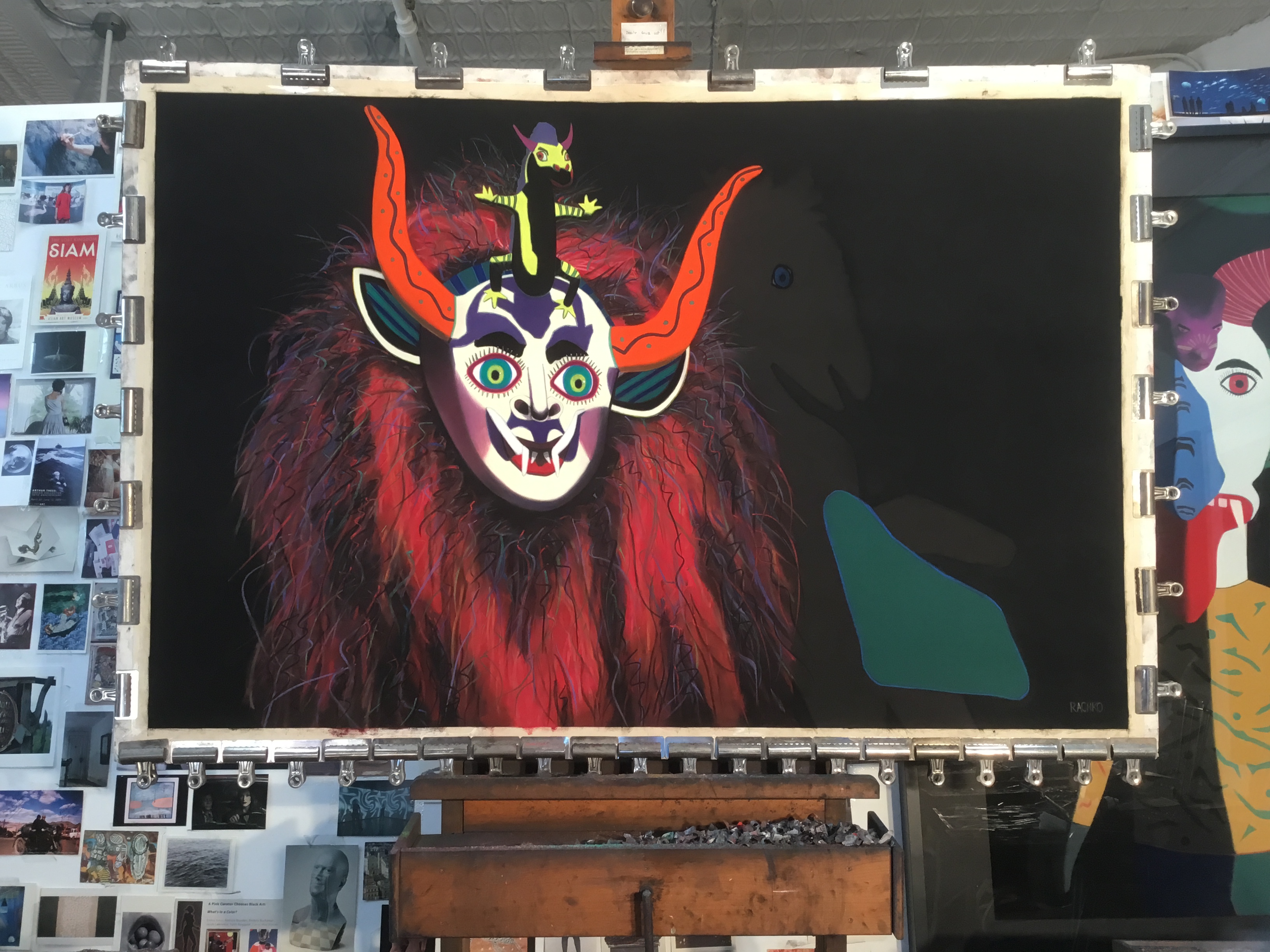
“The Orator,” soft pastel on sandpaper, 38” x 58”
A: Having finally finished “The Orator” (bottom), I continue working on a small pastel painting that does not have a title yet (top). The latter is the third piece in my “Bolivianos” series.
Comments are welcome!
Q: When you are in your studio working on a pastel painting and pause to consider what you have done, do you ask yourself, “Is it good?”
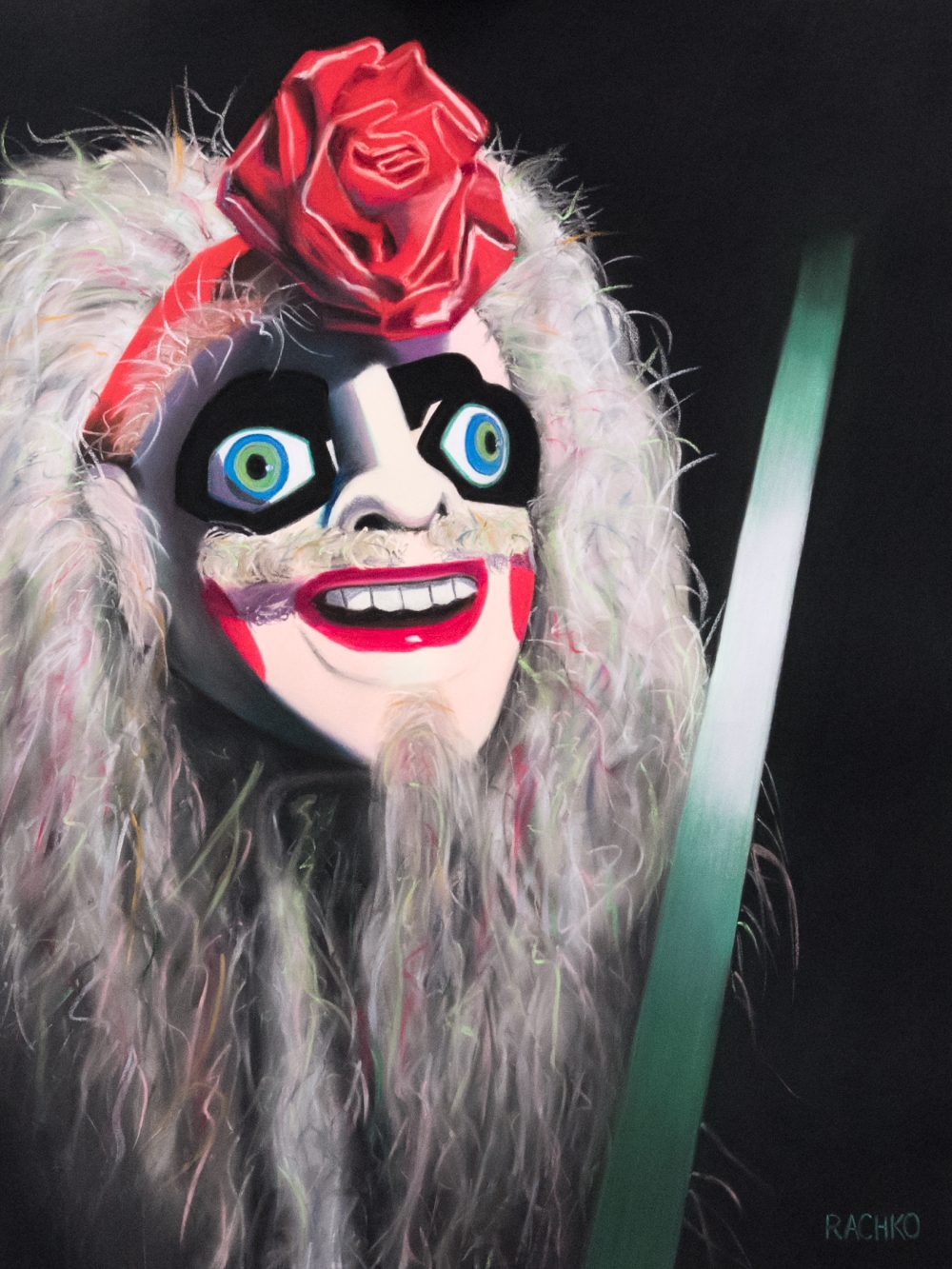
“The Champ,” soft pastel on sandpaper, 26″ x 20″ image, 35″ x 28 1/2″ framed
A: Certainly, I do. In addition, I ask myself some other important questions:
Is it the best I can do?
Is it exciting?
Is it surprising?
Is it idiosyncratic and unique to me?
Is there anything I can do to improve it?
Does it meet (or hopefully exceed) the exacting technical and formal standards I have set for my work?
Will I be proud to finally see my signature on it?
Comments are welcome!



