Blog Archives
Q: What historical art movement do you most identify with?

Barbara’s studio
A: I’d have to say that I identify most with surrealism, although my work does not exactly fit into any particular art historical movement. When I was first finding my way as an artist, I read everything I could find about surrealism in art and in literature. This research still res0nates deeply and is a tremendous influence on my studio practice. Elements of surrealism DO fit my work. Here’s an excerpt from Wikipedia:
Surrealism is a cultural movement that began in the early 20s and is best known for its visual artworks and writings. The aim was to “resolve the previously contradictory conditions of dream and reality.” Artists painted unnerving, illogical scenes with photographic precision, created strange creatures from everyday objects and developed painting techniques that allowed the unconscious to express itself.
Surrealist works feature the element of surprise, unexpected juxtapositions and non sequitur; however, many Surrealist artists and writers regard their work as an expression of the philosophical movement first and foremost, with the works being an artifact. Leader Andre Breton was explicit in his assertion that Surrealism was, above all, a revolutionary movement.
I hope to expand on this in a future post.
Comments are welcome!
Start/Finish of “Judasing,” soft pastel on sandpaper, 58″ x 38″
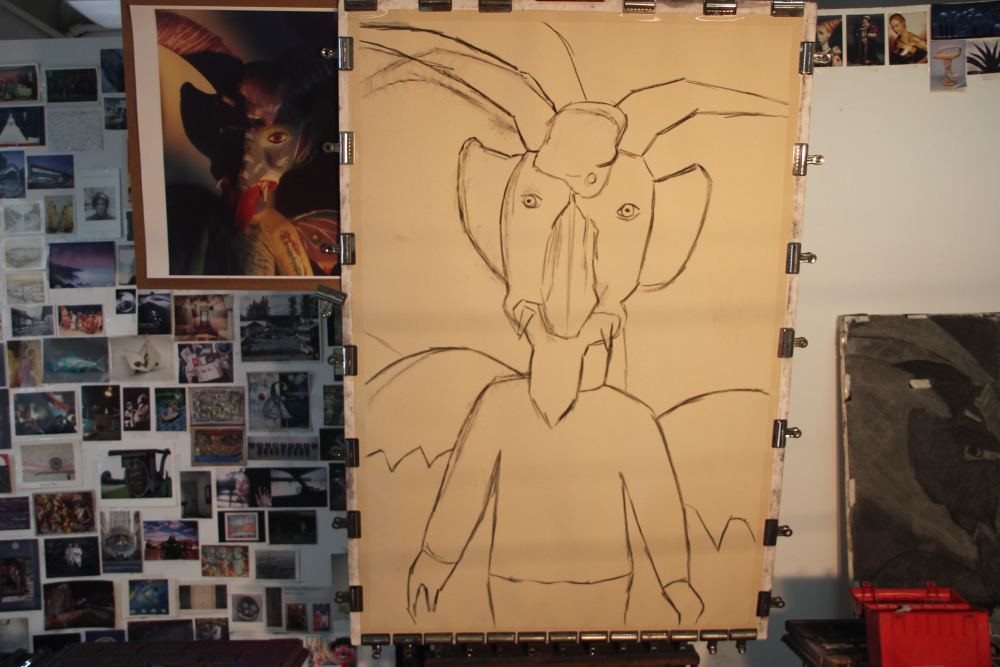
Preliminary charcoal sketch on sandpaper
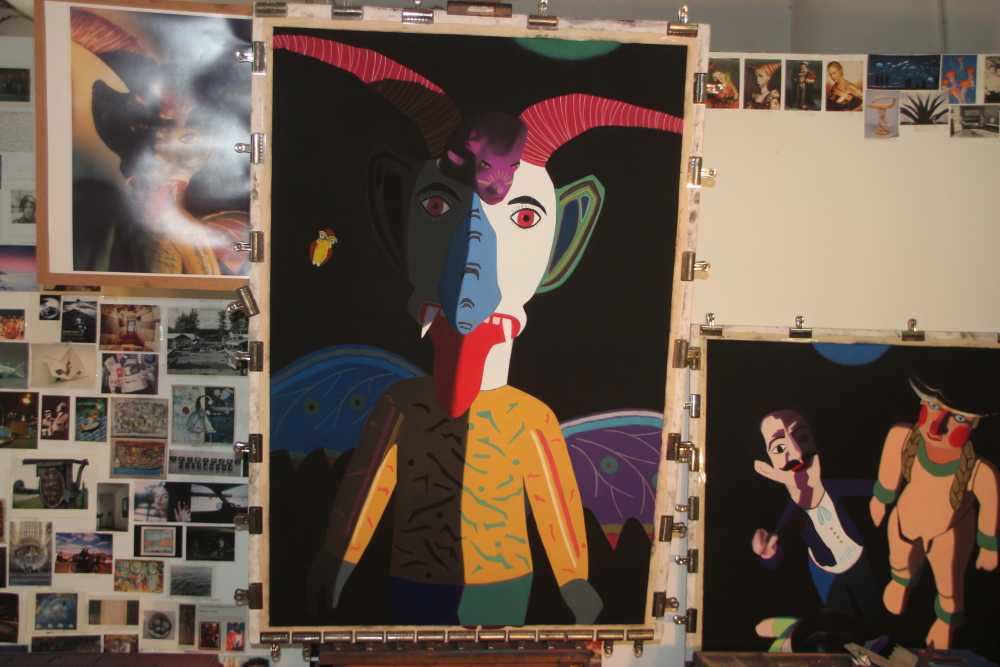
Finished painting, before signing
Comments are welcome!
Q: Do you remember the first pastel painting that you ever made?
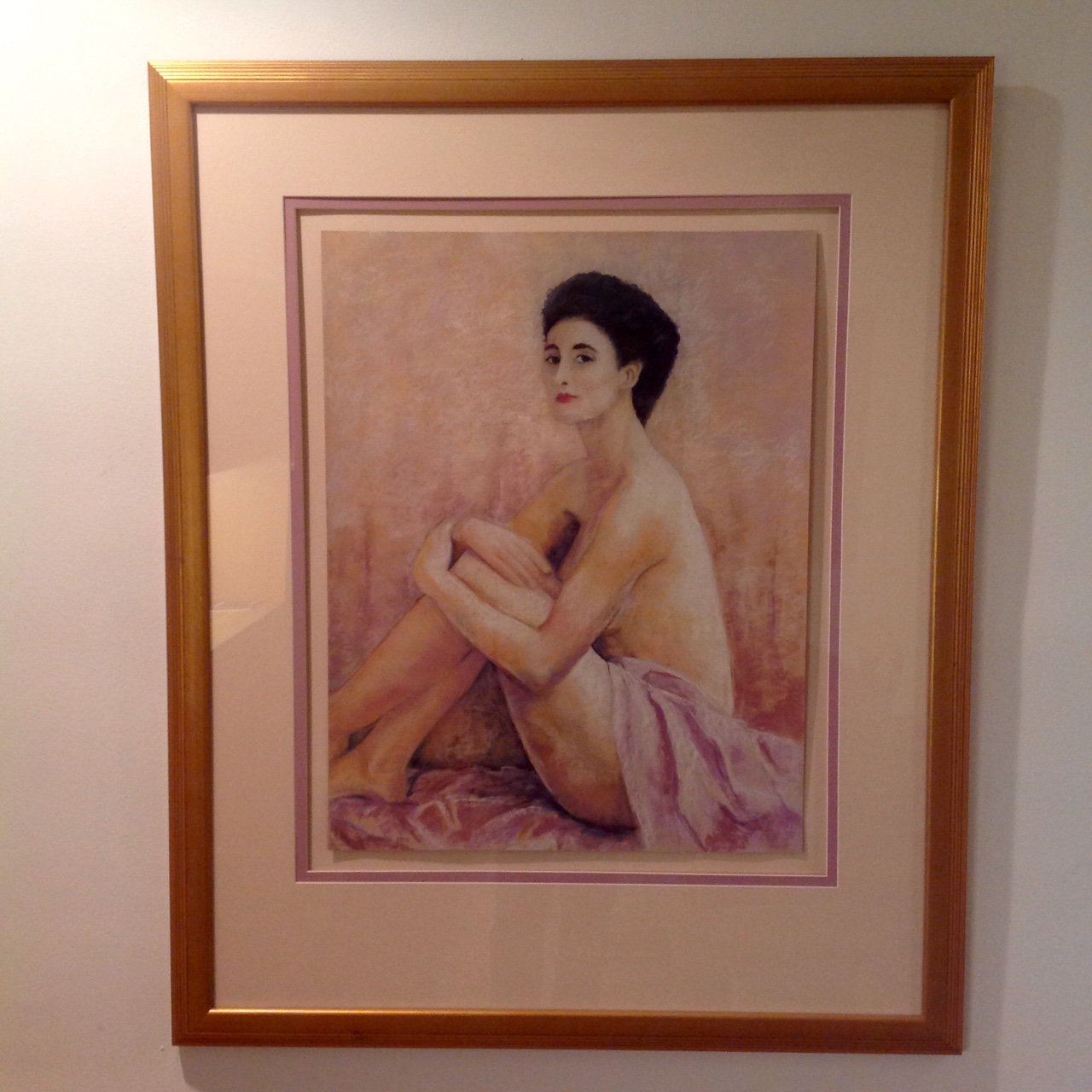
First framed pastel painting, 1988
A: Yes, it was a small head-and-neck portrait of a live model in a figure drawing class at The Art League School in Alexandria, VA. I don’t know what became of it.
I also remember the first pastel painting that I ever framed because it is still hanging in my Alexandria house. It is dated 1988 (see photo) and was made in a one-week workshop with Diane Tesler at The Art League. The workshop was specifically to teach artists how to paint from photographs and it was my first time studying with Diane. I made the mistake of bringing, as reference material, a magazine photograph that was originally a perfume ad in the The Sunday Times Magazine. Diane tactfully explained that it was wrong to use someone else’s photograph instead of my own, but let me do it this one time.
So many years later walking by my painting I still think of Diane. She taught me a valuable lesson: do not use anyone else’s photographs, ever!
Comments are welcome!
Pearls from artists* # 194

“Epiphany,” soft pastel on sandpaper, 38″ x 58″
* an ongoing series of quotations – mostly from artists, to artists – that offers wisdom, inspiration, and advice for the sometimes lonely road we are on.
I did sculpture because what interested me in painting was to bring some order to my brain. It was a change of means. I took to clay as a break from painting; at the time I’d done absolutely everything I could in painting. Which means it was still about organizing. It was to put my sensations in order and look for a method that really suited me. When I’d found it in sculpture, I used it for painting. To come into possession of my own brain: that was always the goal, a sort of hierarchy of all my sensations, so that I could reach a conclusion.
One day, visiting Carriere at his house, I told him that. He replied: “But, my friend, that’s why you work. If you ever managed it, you’d probably stop working. It’s your reason for working.”
In painting – in any oeuvre – the goal is to reconcile the irreconcilable. There are all kinds of qualities in us, contradictory qualities. You have to construct something viable with that, something stable. That’s why you work your whole life long and want to keep on working until the last moment… as long as you haven’t admitted defeat or lost your curiosity, as long as you haven’t settled into a routine.
Chatting with Henri Matisse: The Lost 1941 Interview, Henri Matisse with Pierre Courthion, edited by Serge Guilbaut, translated by Chris Miller
Comments are welcome!
Q: What’s on the easel today?
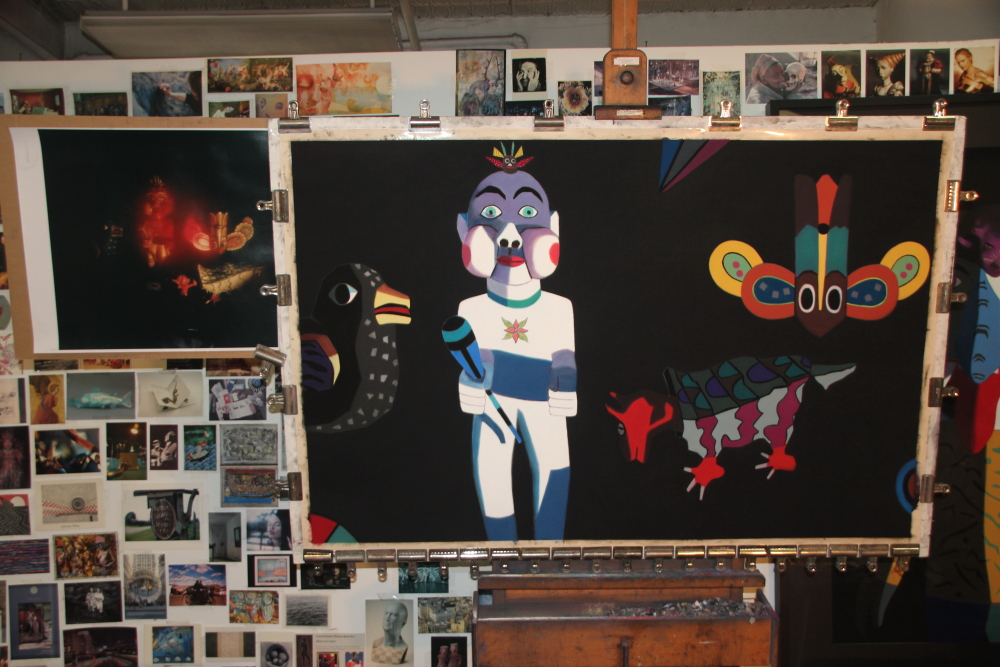
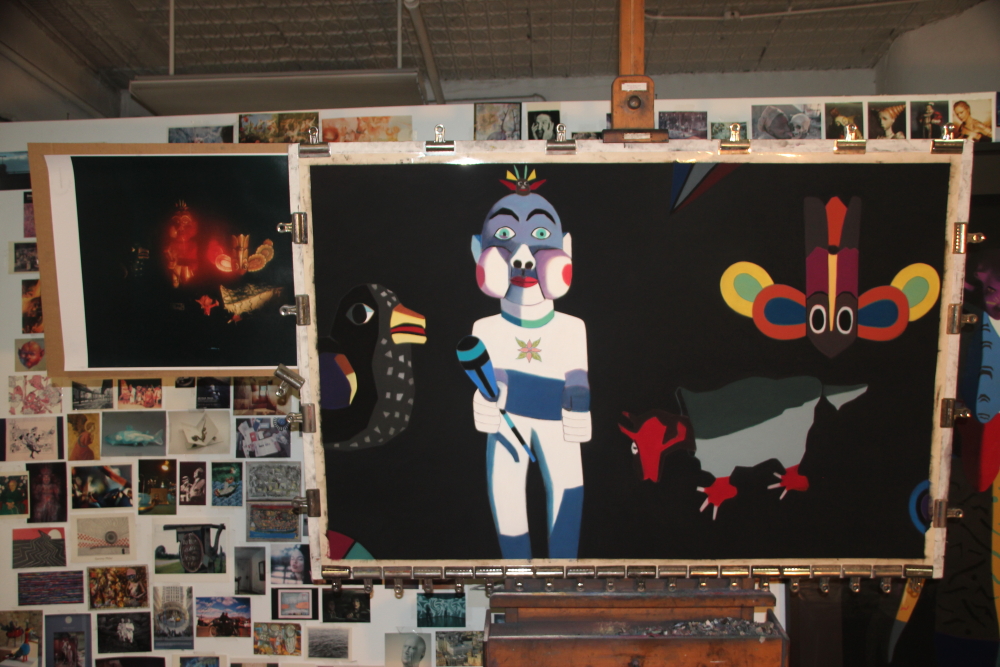
Work in progress
A: “White Star,” 38″ x 58″ is slowly progressing. The title of this painting alludes to David Bowie’s last album, “Dark Star” and is my somewhat more optimistic take on that phrase.
The white Guatemalan figure and the Sri Lankan mask on the top right still could use more details. Over time the “Black Paintings” series is becoming more about what is left out. So how much detail to add is an open question.
Comments are welcome!
Pearls from artists* # 191
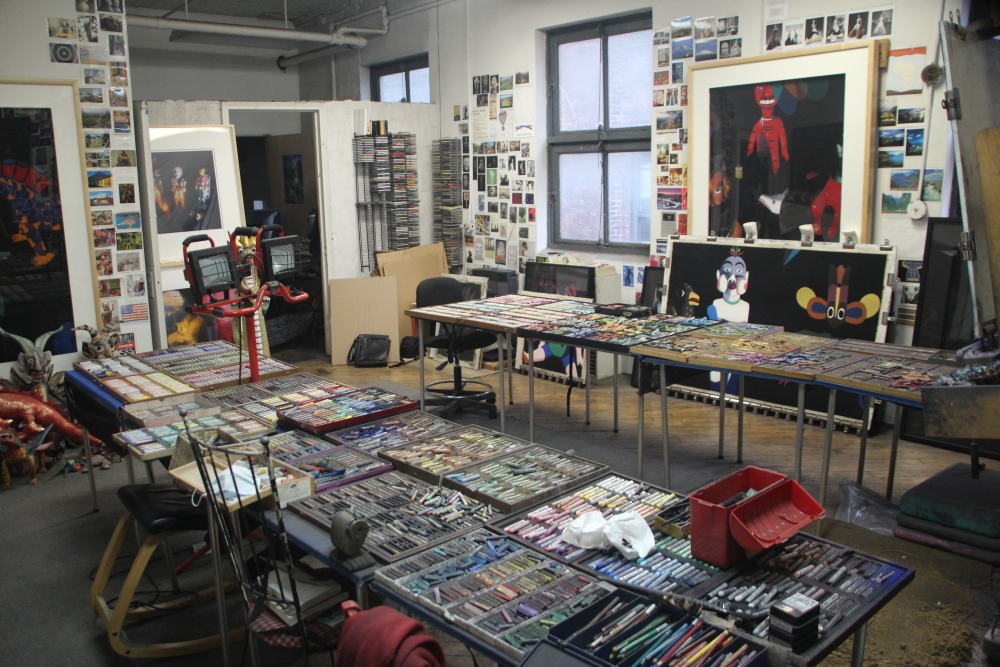
Barbara’s studio
* an ongoing series of quotations – mostly from artists, to artists – that offers wisdom, inspiration, and advice for the sometimes lonely road we are on.
“Do you understand what this is? Jacob Kahn asked me, his strong voice rising. “Do you begin to understand what you are going to be doing to yourself? You understand now what Picasso did, yes? Even Picasso, the pagan, had to do this. At times there is no other way. Do you understand me, Asher Lev? This is not a toy. This is not a child scrawling on a wall. This is a tradition; it is a religion, Asher Lev. You are entering a religion called painting. It has its fanatics and rebels. And I will force you to master it. Do you hear me? No one will listen to what you have to say unless they are convinced you have mastered it. Only one who has mastered a tradition has a right to attempt to add to it or rebel against it. Do you understand me, Asher Lev?”
My Name is Asher Lev by Chaim Potok
Comments are welcome!
Start/Finish of “The Ancestors,” soft pastel on sandpaper, 58″ x 38″
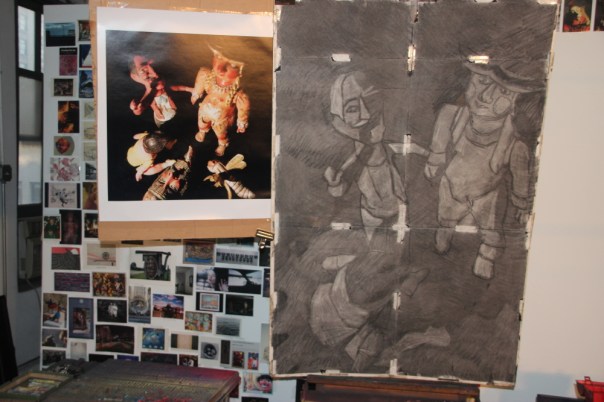
Preliminary charcoal sketch on white drawing paper. The white bits are masking tape joining small sheets of paper together to make one that’s 60″ x 40″.
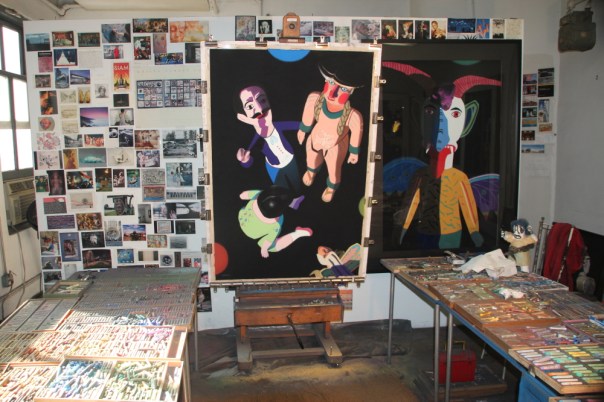
Finished and signed, lower left
Comments are welcome!
Q: Do you have any unfinished pastel paintings?
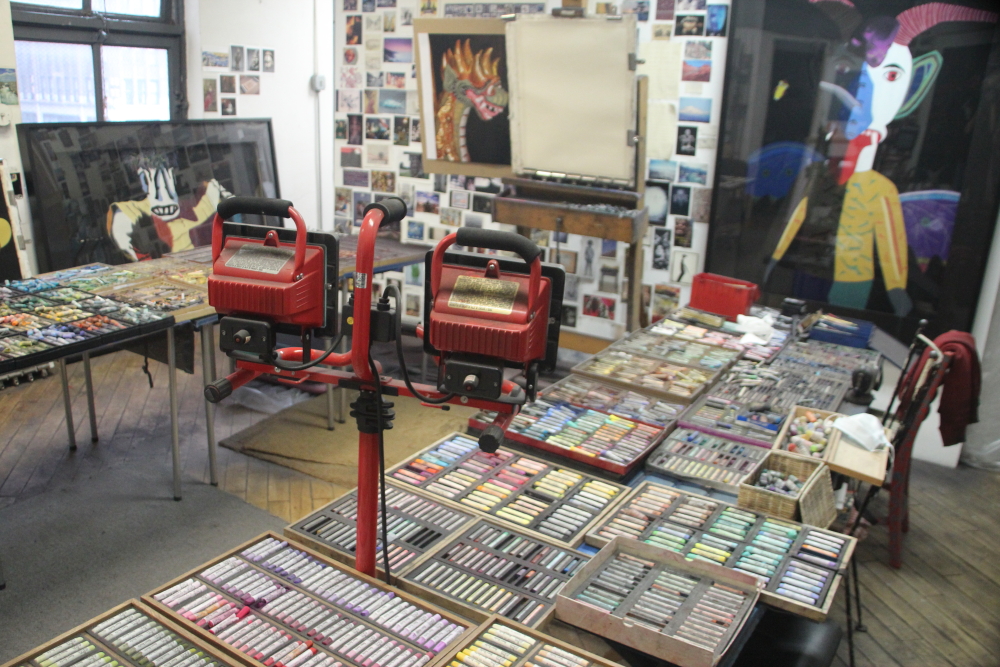
Barbara’s studio
A: It has been roughly 20 years since I started a painting that I couldn’t resolve and finish. This may or may not be a good thing. It could mean that I am not experimenting or pushing myself enough. On the other hand, having worked as a professional artist for nearly thirty years, I am confident of my ability to think through and find solutions for finishing each painting, regardless of the difficulties encountered along the way.
Comments are welcome!
Q: What’s on the easel today?
Work in progress
A: I am continuing with “White Star,” a 38″ x 58″ pastel painting I started some months ago.
Comments are welcome!
Start/Finish of “Troublemaker,” 20″ x 26″, soft pastel on sandpaper
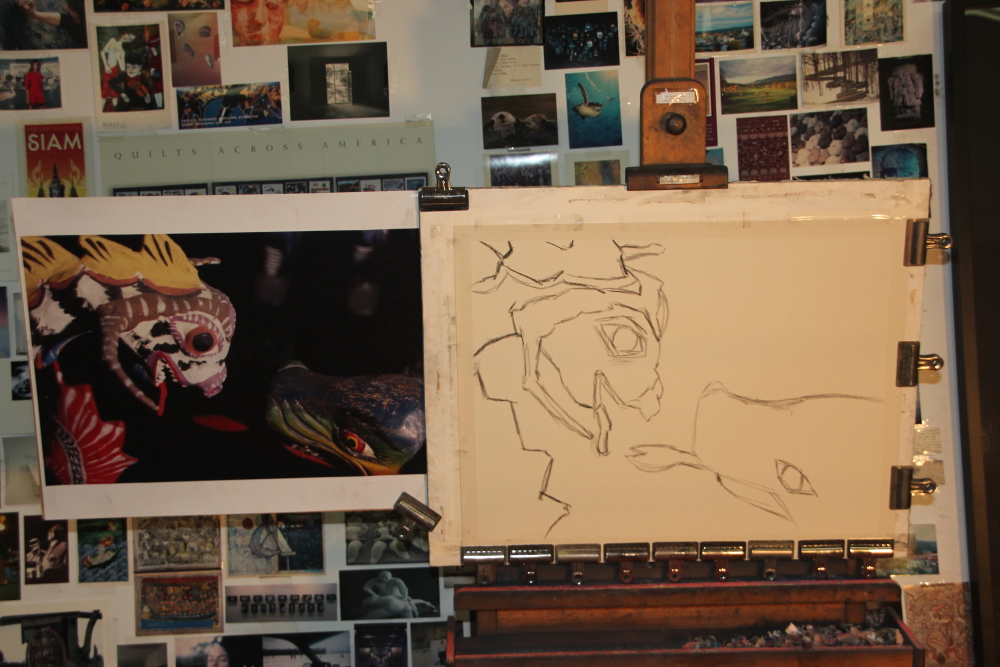
Initial charcoal sketch on sandpaper
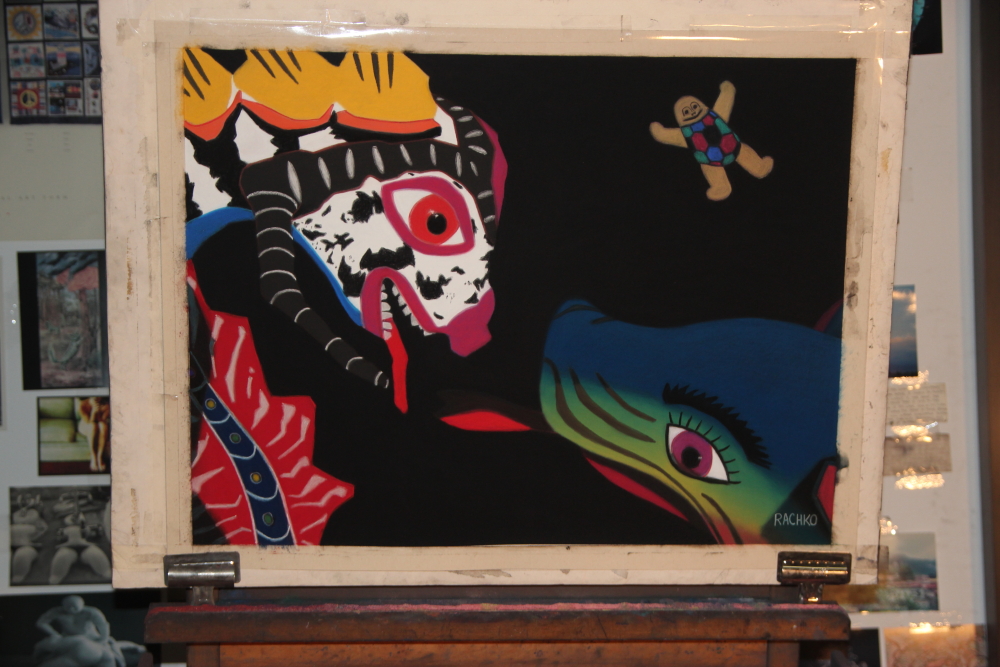
Finished painting
Comments are welcome!


 barbararachkoscoloreddust.com