Blog Archives
Pearls from artists* # 613
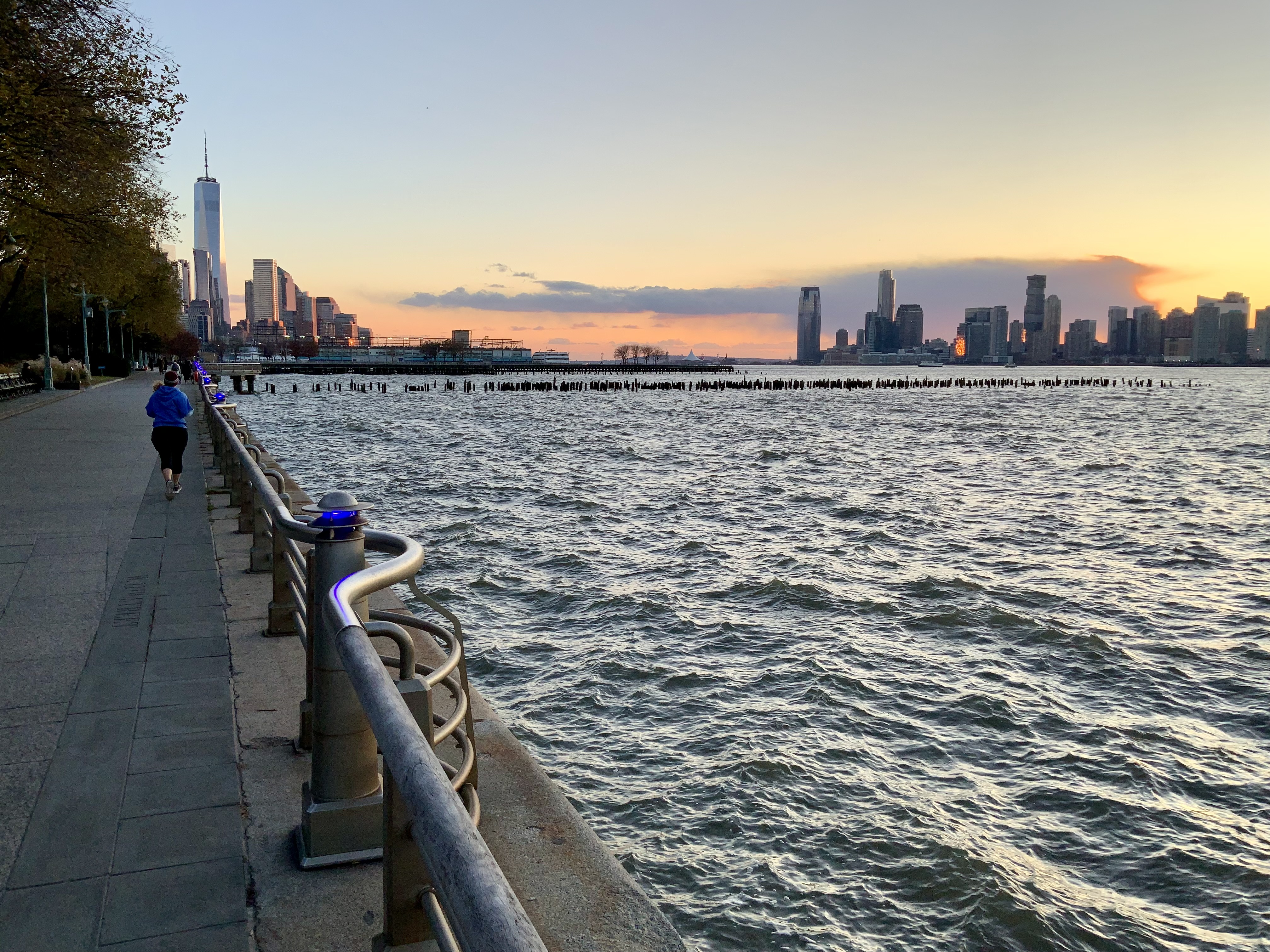
New York NY
*an ongoing series of quotations – mostly from artists, to artists – that offers wisdom, inspiration, and advice for the sometimes lonely road we are on.
A painting is a statement of the artist’s notions of reality in terms of plastic speech. In that sense the painter must be likened to the philosopher rather than to the scientist. For science is a statement of the laws that govern a specific phenomenon or category of matter or energy within the specified units and conditions of its operation. Philosophy, however, must combine all these specialized truths within a single system. It is because of this broad scope that Aristotle gives preeminence to the philosopher in the introduction to his Metaphysics, for he tells us that every man except the philosopher is an authority within his specific field, whereas the philosopher must have the acute knowledge that each man has in his own field plus the ability to relate all these fields to the operations of universality and eternity.
Therefore art, like philosophy, is of its own age; for the partial truths of each age differ from those of other ages, and the artist, like the philosopher, must constantly adjust eternity, as it were, to all the specifications of the moment. Art, too, creates at different times the notions of reality that the artist, as a man of the age, must inherit and develop and consider real along with the other intellectually conscious men of his time. His language, which is his plastic means, will also adjust itself to the possibility of making these notions manifest in their most coherent possibilities. The reality of the artist, therefore, reflects the understanding of his times, even as his creations shape those understandings. We posit this without wishing to attempt to untangle here the series of causes and effects, a process which would probably obscure more than it certified.
Mark Rothko in The Artist’s Reality: Philosophies of Art
Comments are welcome!
Pearls from artists* # 577

In the Studio
*an ongoing series of quotations – mostly from artists, to artists – that offers wisdom, inspiration, and advice for the sometimes lonely road we are on.
What is the popular conception of the artist? Gather a thousand descriptions and the resulting composite is the portrait of a moron: he is held to be childish, irresponsible, and ignorant or stupid in everyday affairs.
The picture does not necessarily involve censure or unkindness. These definitions are attributed to the artist’s preoccupation with his particular kind of fantasy and to the unworldly nature of the fantastic itself. The bantering tolerance granted to the absentminded professor is extended to the artist. Biographers contrast the artless news of his judgments with the high attainment of his art, and while his naïveté or rascality are gossiped about, they are viewed as signs of Simplicity and Inspiration, which are the Handmaidens of Art. And if the artist is inarticulate and lacking in the usual repositories of fact and information, how fortunate, it is said, that nature has contrived to divert him from all worldly distractions so he may be single-minded in regards to his special office.
Mark Rothko in The Artist’s Reality: Philosophies of Art, edited and with an introduction by Christopher Rothko
Comments are welcome!
Pearls from artists* # 499

*an ongoing series of quotations – mostly from artists, to artists – that offers wisdom, inspiration, and advice for the sometimes lonely road we are on.
Life is a journey back to where you started from, Le Guin always said. True voyage is return. When you get there, you might know a little more than when you began.
Isn’t the real question this: Is the work worth doing? Am I, a human being, working for what I really need and want – or for what the State or the advertisers tell me I want? Do I choose? I think that’s what anarchism comes down to. Do I let my choices be made for me, and so go along with the power game, or do I choose? In other words, am I going to be a machine-part, or a human being?
Ursula K. Le Guin: The Last Interview and Other Conversations edited and with an introduction by David Streitfeld
Comments are welcome!
Pearls from artists* #498

*an ongoing series of quotations – mostly from artists, to artists – that offers wisdom, inspiration, and advice for the sometimes lonely road we are on.
“The first time I ever went to a meeting where they discussed any of my books academically,” she chuckled, “a Canadian Scholar was going to discuss The Left Hand of Darkness. He didn’t know that I was going to be there. When I walked in, he was appalled. He looked at me with a savage look on his face and said, ‘Just don’t tell me you didn’t know what you were doing.’ That’s a basic thing, actually, between scholars and artists. I think, ‘Oh, is that what I was doing? Or Is that why I did that? and it’s very revealing. But the fact is, you cannot know that while you’re doing it. The dancer can’t think, Now I’m going to take a step to the left. That ain’t the way you dance.”
Ursula K. Le Guin: The Last Interview and other Conversations, edited and with an introduction by David Streitfeld
Comments are welcome!
Pearls from artists* # 497
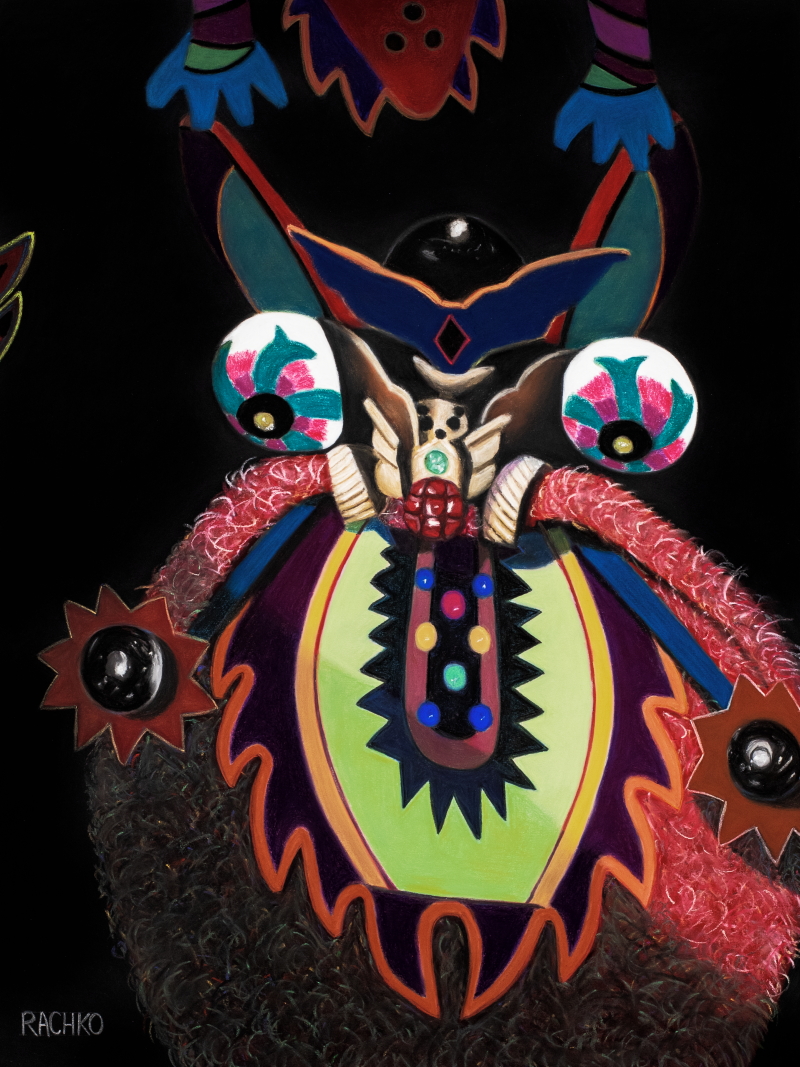
*an ongoing series of quotations – mostly from artists, to artists – that offers wisdom, inspiration, and advice for the sometimes lonely road we are on.
Peter Jensen: Would you say there’s any kind of statement you’re making in the things which you write?
Ursula K. LeGuin: Of course, I suppose in everything I write I am making some sort of statement, but I don’t know just what the statement is. Which I can’t say I feel guilty about. If you can say exactly what you mean by a story, then why not just say it in so many words? Why go to all the fuss and feathers and make up a plot and characters? You say it that way, because it’s the only way you can say it.
Ursula K. LeGuin: The Last Interview and Other Conversations, edited and with an introduction by David Streitfeld
Comments are welcome!
Pearls from artists* # 199
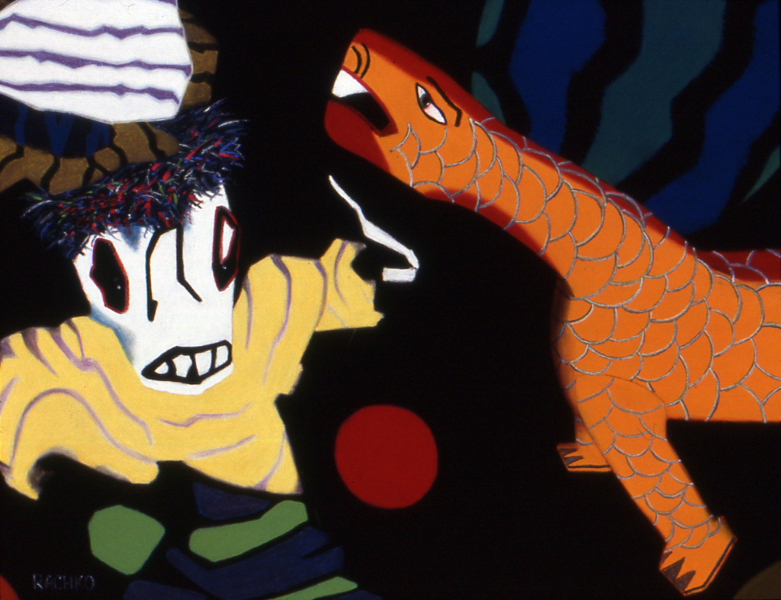
“Trio,” soft pastel on sandpaper, 20″ x 26″
* an ongoing series of quotations – mostly from artists, to artists – that offers wisdom, inspiration, and advice for the sometimes lonely road we are on.
Writers, like all artists, are concerned to represent reality, to create a more absolute and complete reality than reality itself. They must, if they are to accomplish this, assume a moral position, a clearly conceived political, social, and philosophical attitude; in consequence, their beliefs are, of course, going to find their way into their work. What artists believe, however, is of secondary importance, ancillary to the work itself. A writer survives in spite of his beliefs. Lawrence will be read whatever one thinks of his notions on sex. Dante is read in the Soviet Union.
A work of art, on the other hand, has a representative and expressive function. In this representation the author’s ideas, his judgments, the author himself, are engaged with reality.
Alberto Moravia in Writers at Work: The Paris Review Interviews First Series, edited and with an introduction by Malcolm Cowley
Comments are welcome!
Pearls from artists* # 198

“Troublemaker,” soft pastel on sandpaper, 20″ x 26″
* an ongoing series of quotations – mostly from artists, to artists – that offers wisdom, inspiration, and advice for the sometimes lonely road we are on.
The writer doesn’t need economic freedom. All he needs is a pencil and some paper. I’ve never known anything good in writing to come from having accepted any free gift of money. The good writer never applies to a foundation. He’s too busy writing something. If he isn’t first rate he fools himself by saying he hasn’t got time or economic freedom. Good art can come out of thieves, bootleggers, or horse swipes. People really are afraid to find out just how much hardship and poverty they can stand. They are afraid to find out how tough they are. Nothing can destroy the good writer. The only thing that can alter the good writer is death. Good ones don’t have time to bother with success or getting rich…
Nothing can injure a man’s writing if he’s a first-rate writer. If a man is not a first-rate writer, there’s not anything that can help it much. The problem does not apply if he is not first-rate, because he has already sold his soul for a swimming pool.
William Faulkner in Writers at Work: The Paris Review Interviews First Series, edited and with an introduction by Malcolm Cowley
Comments are welcome!
Pearls from artists* # 170
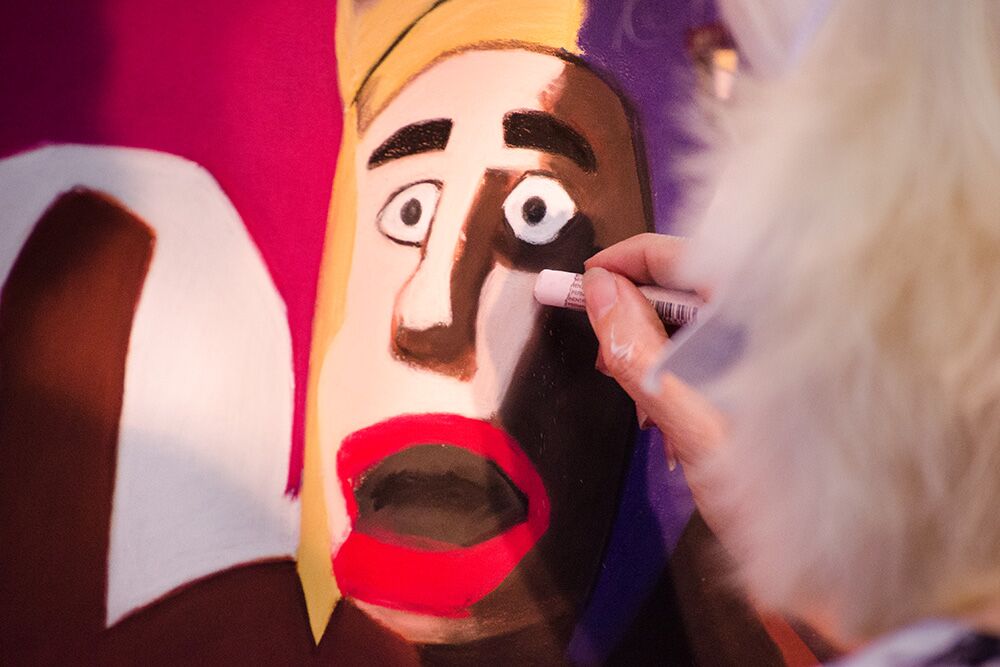
Barbara at work, Photo: Marianne Barcellona
* an ongoing series of quotations – mostly from artists, to artists – that offers wisdom, inspiration, and advice for the sometimes lonely road we are on.
Every novelist ought to invent his own technique, that is the fact of the matter. Every novel worthy of the name is like another planet, whether large or small, which has its own laws just as it has its own flora and fauna. Thus, Faulkner’s technique is certainly the best one with which to produce Faulkner’s world, and Kafka’s nightmare has produced its own myths that make it communicable. Benjamin Constant, Stendahl, Eugene Fromentin, Jaques Riviere, Radiquet, all used different techniques, took different liberties, and set themselves different tasks. The work of art itself, whether its title is Adolphe, Lucien Leuwen, Dominique, Le Diable au corps or A la Recherché du temps perdu, is the solution to the problem of technique.
Francois Mauriac in The Paris Review Interviews: Writers at Work 1st Series, edited and with an Introduction by Malcolm Cowley
Comments are welcome!


 barbararachkoscoloreddust.com