Blog Archives
Pearls from artists* # 378
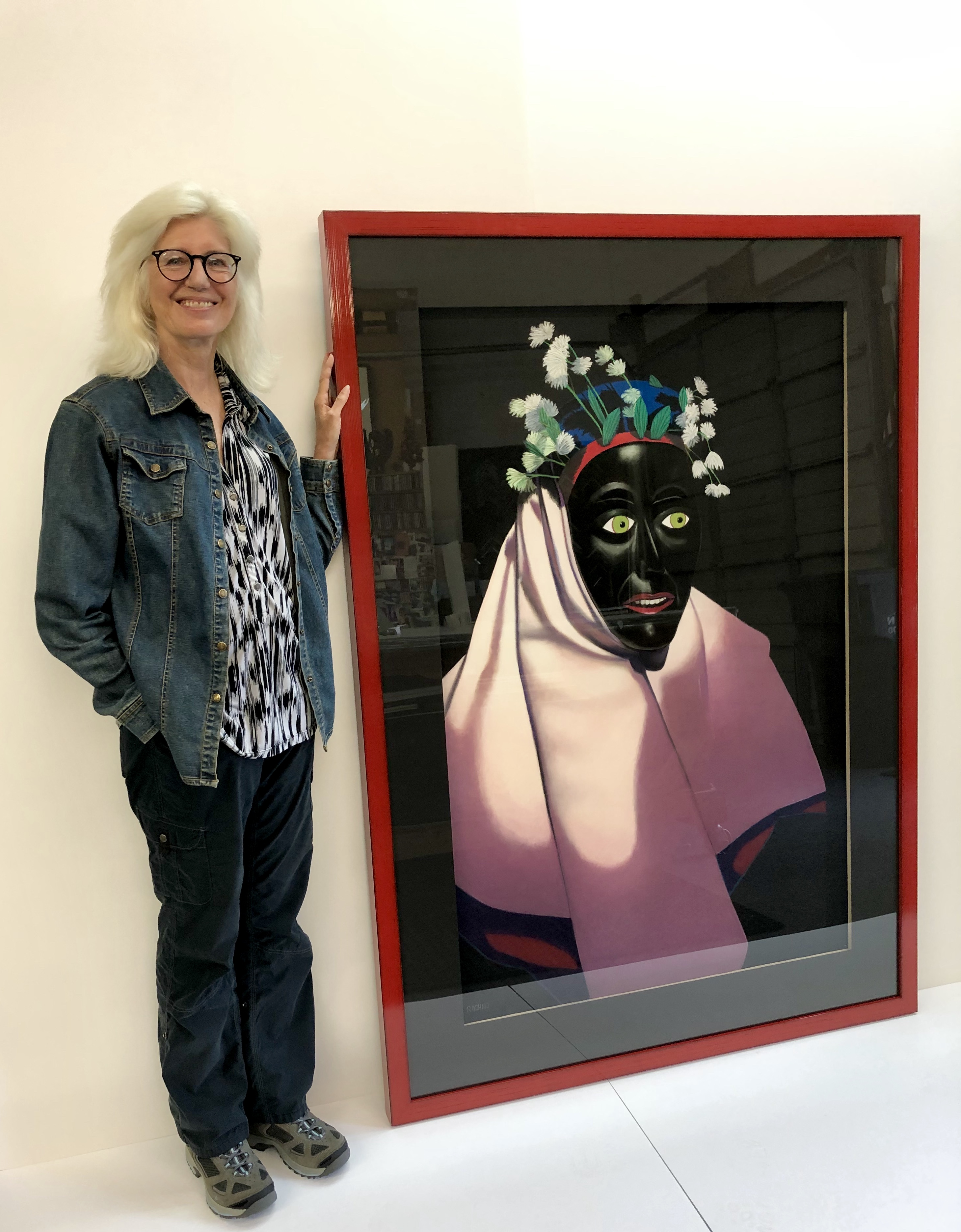
With “Poseur,” Soft Pastel on Sandpaper, 70” x 50,” 2019
* an ongoing series of quotations – mostly from artists, to artists – that offers wisdom, inspiration, and advice for the sometimes lonely road we are on.
[John] Graham told Lee [Krasner] and Jackson [Pollock] they were at the most wonderful part of their artistic journey because they were unknown and therefore free, and that there was only one thing they had to dread: fame.
How many men of great talent on their way to remarkable achievement in the present day are ruthlessly destroyed by critics, dealers, and public while mediocre, insensitive hacks, who by intrigue and industrious commercial effort have gained recognition and success, will go down in history with their inane creations. Success, fame, and greatness coincide very seldom. The great are not recognized during their life-time… Poe, Van Gogh,Rembrandt, Cezanne, Gauguin, Modigliani, Pushkin, Rimbaud, Baudelaire, and others could not make even a miserable living out of their art.
As Graham described it, true art could never be of the world because it was always steps, decades, light-years ahead of it. Artists, therefore, had no need to be part of the world, either. Their only duty was to persevere. Humanity, he said, depended on it.
Mary Gabriel in Ninth Street Women
Comments are welcome!
Pearls from artists* # 352
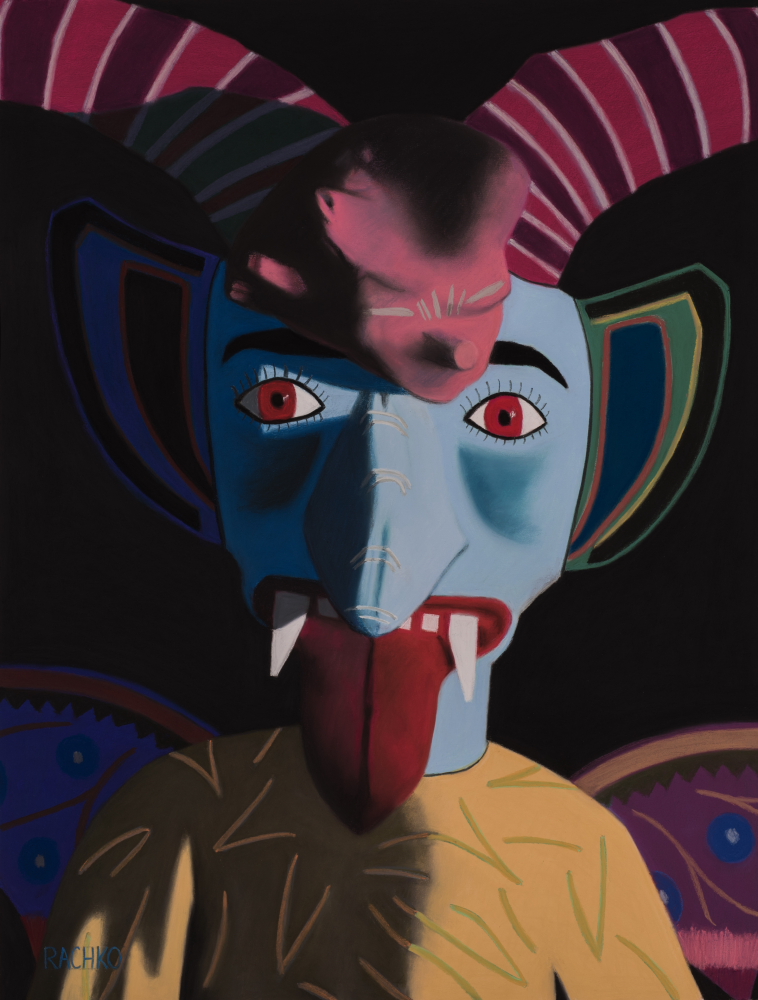
“Provocateur,” soft pastel on sandpaper, 26″ x 20″
*an ongoing series of quotations – mostly from artists, to artists – that offers wisdom, inspiration, and advice for the sometimes lonely road we are on.
The jester was certainly a key player in medieval court politics. His power, however, was commensurate with his acknowledged irrelevance to the state apparatus. As the eternal outsider, ridiculed or at best ignored by the elite unless he was actually entertaining them, he acquired the right to speak truths that others would speak at their peril. Yet if the imprudent king simply saw the Fool as a source of amusement, the wise king saw in his antics and wordplay the pattern of the past, present, and future. In the same way, art is the joker in the hand that was dealt to humanity. Nothing is easier than dismissing it as a frivolity, and yet those who meet it on its own ground gain access to the hidden facets of their situation. It is by virtue of its very separateness, its position outside the realm of the useful and the practical, that art reveals the Real. Paradoxically, art has political value only when appraised outside of any political framework.
J.F. Martel in Reclaiming Art in the Age of Artifice: A Treatise, Critique, and Call to Action
Comments are welcome!
Pearls from artists* #309
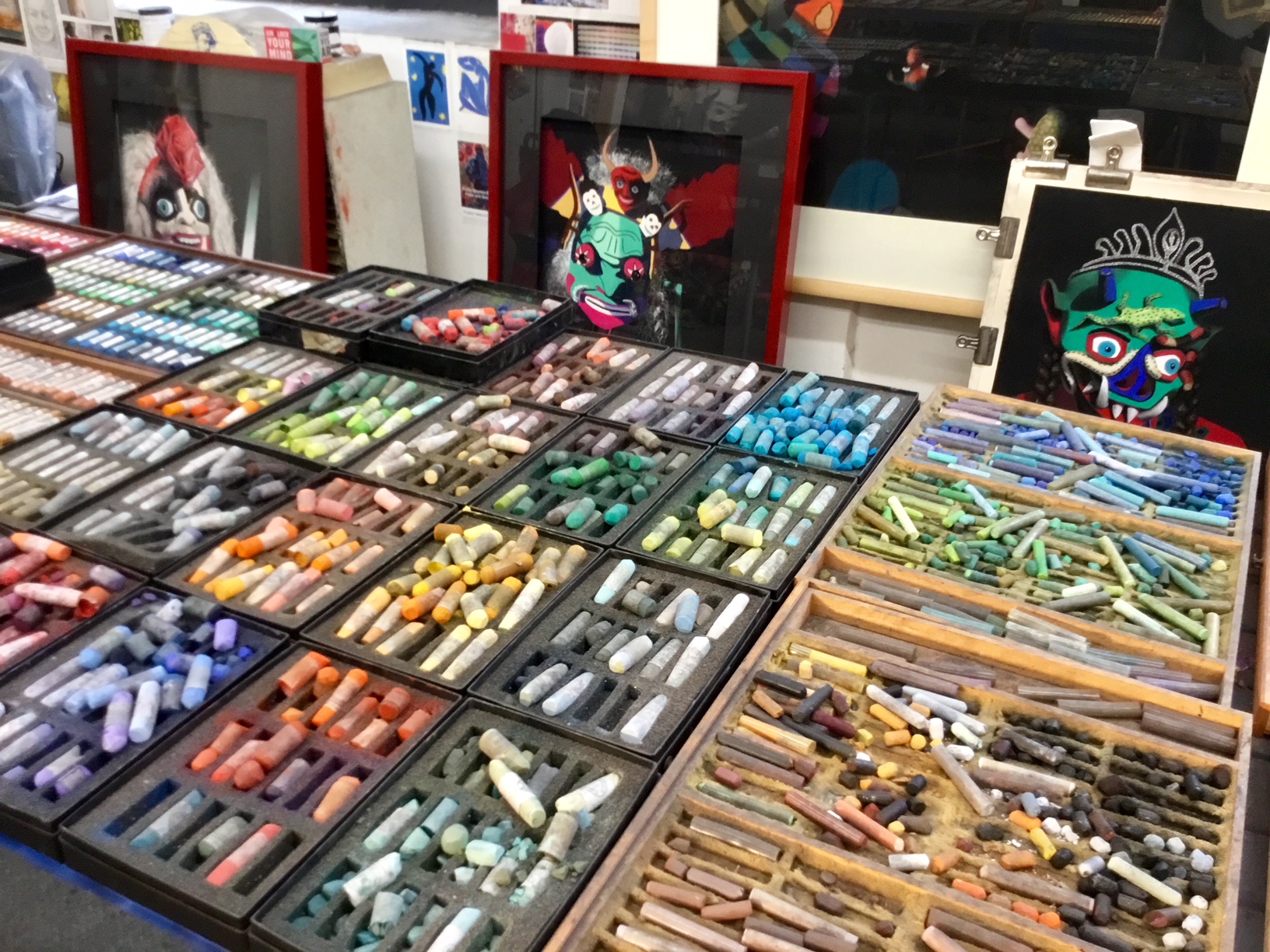
Barbara’s studio
*an ongoing series of quotations – mostly from artists, to artists – that offers wisdom, inspiration, and advice for the sometimes lonely road we are on.
It is a strange thing to catalog the conflicting theories as to what the first artists thought they were doing down there in the caves, because the truth is that, to this day, we do not know why we make art. In the end, art may not have been our invention at all. It may well have appeared in history as it does in the life of many individual artists: as an outside call, a sudden flash of inspiration, an inner wanderlust exerting such a powerful pull that ultimately we would have to say that Picasso got it wrong: the early humans did not invent art. Art invented humanity.
J.F. Martel in Reclaiming Art in the Age of Artifice: A Treatise, Critique, and Call to Action
Comments are welcome!
Pearls from artists* # 249
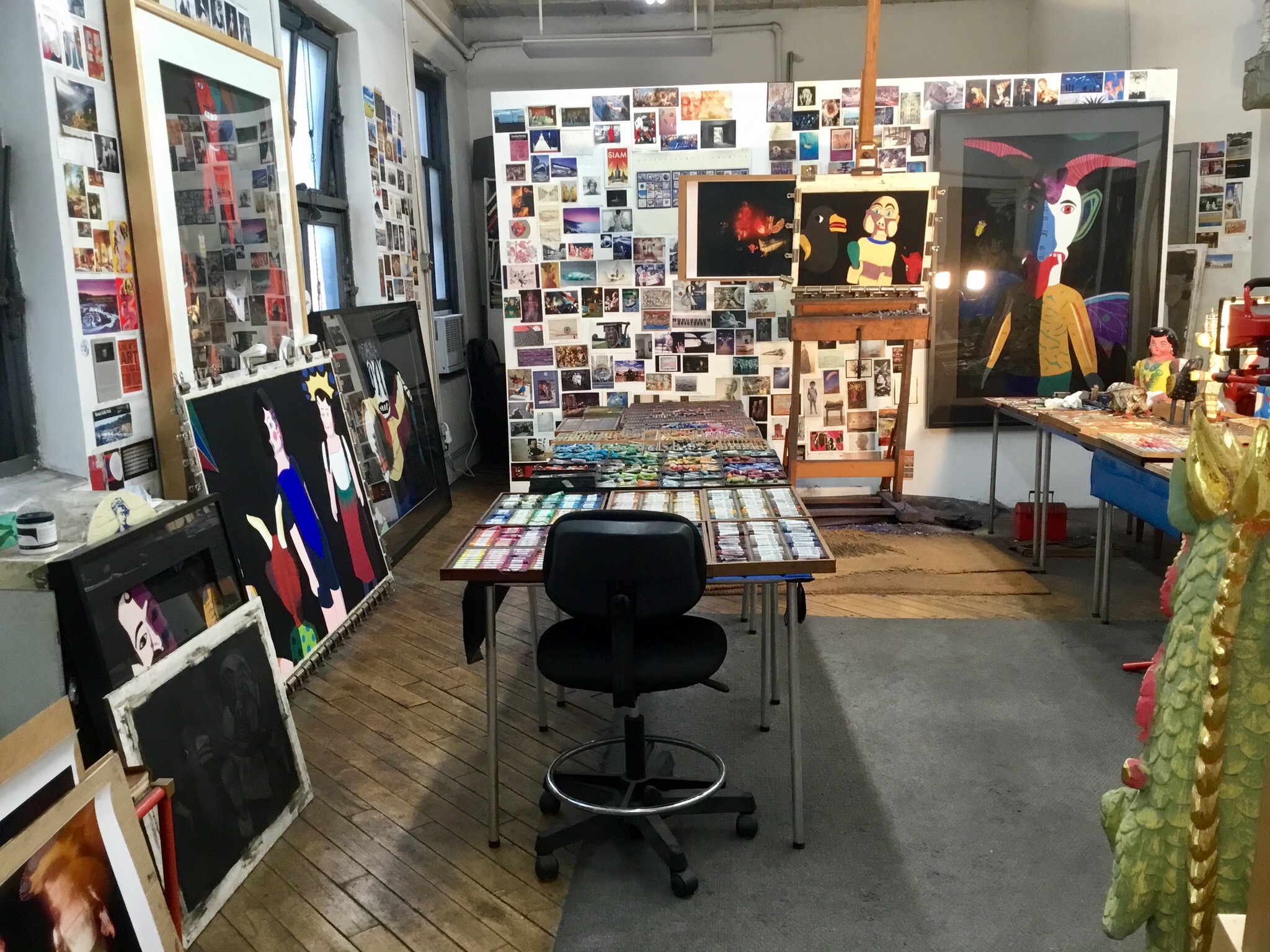
Barbara’s studio
* an ongoing series of quotations – mostly from artists, to artists – that offers wisdom, inspiration, and advice for the sometimes lonely road we are on.
Interviewer: Can a writer learn style?
Capote: No, I don’t think that style is consciously arrived at, any more than one arrives at the color of one’s eyes. After all, your style is you. At the end the personality of a writer has so much to do with the work. The personality has to be humanly there. Personality is a debased word, I know, but it’s what I mean. The writer’s individual humanity, his word or gesture towards the world, has to appear almost like a character that makes contact with the reader. If the personality is vague or confused or merely literary, ca ne va pas. Faulkner, Mc Cullers – they project their personality at once.
Truman Capote in Writers at Work: The Paris Review Interviews First Series, edited, and with an introduction by Malcolm Crowley
Comments are welcome!
Pearls from artists* # 122
Sanur, Bali
* an ongoing series of quotations – mostly from artists, to artists – that offers wisdom, inspiration, and advice for the sometimes lonely road we are on.
Most significant growth in my life has been the direct result of errors, mistakes, accidents, faulty assumptions and wrong moves. I have generally learned more from my mistakes and my so-called failures than any successes or instances of “being right.” I would venture to propose that this equation is also true in the world at large. Error is a powerful animating ingredient in political, scientific and historical evolution as well as in art and mythology. Error is a necessity. The question I had to ask myself was: how can I cultivate a tolerance and an appetite for being wrong, for error?
In the face of an exceedingly complicated world, there are too many people who are invested in “being right.” These people are dangerous. Their authority is based on their sense of certainty. But innovation and invention do not only happen with smart people who have all of the answers. Innovation results from trial and error. The task is to make good mistakes, good errors, in the right direction.
There are many reasons that we get things as wrong as often as we do. Failures of perception, the cause of most error, are far more common in our daily lives than we like to think. We make errors because of inattention, because of poor preparation and because of haste. We err as a result of hardened prejudices about how things are. We err because we neglect to think things through. Our senses betray us constantly. But the chaos caused by being wrong also awakens energy and consciousness in us. In the moments that we realize our faults of perception, we are jerked into an awareness of our humanity. The Slovenian philosopher Slavoj Zizek wrote, “Consciousness originates with something going terribly wrong.”
Anne Bogart in “What’s the Story: Essays about art, theater, and storytelling
Comments are welcome!
Pearls from artists* # 63

Untitled, chromogenic print, 24″ x 24,” edition of 5
* an ongoing series of quotations – mostly from artists, to artists – that offers wisdom, inspiration, and advice for the sometimes lonely road we are on.
The artist’s job is to get in touch with the dark places of the soul and then shed light there. Sharing the process with others is the point. Within the context of our post-Cold War, post-9/11 climate, shedding light in newly fecund dark places is a valuable activity. The dark places of the soul that haunt our dreams are understandably matched by a tendency to shut out the issues with the busy work of the daylight hours. But without looking into those dark places, as Carl Jung suggested, we will lose touch with our essential humanity.
Anne Bogart, and then, you act: making art in an unpredictable world
Comments are welcome!



 barbararachkoscoloreddust.com