Blog Archives
Pearls from artists* # 304

“Palaver,” soft pastel on sandpaper, 26″ x 20″
* an ongoing series of quotations – mostly from artists, to artists – that offers wisdom, inspiration, and advice for the sometimes lonely road we are on.
… my job as a fiction writer is to write fiction, not to review it. Art isn’t explanation. Art is what an artist does, not what an artist explains. (Or so it seems to me, which is why I have a problem with the kind of modern museum art that involves reading what the artist says about a work in order to find out why one should look at it or “how to experience” it).
Ursula K. Le Guin in No Time to Spare: Thinking About What Matters
Comments are welcome!
Pearls from artists* # 303
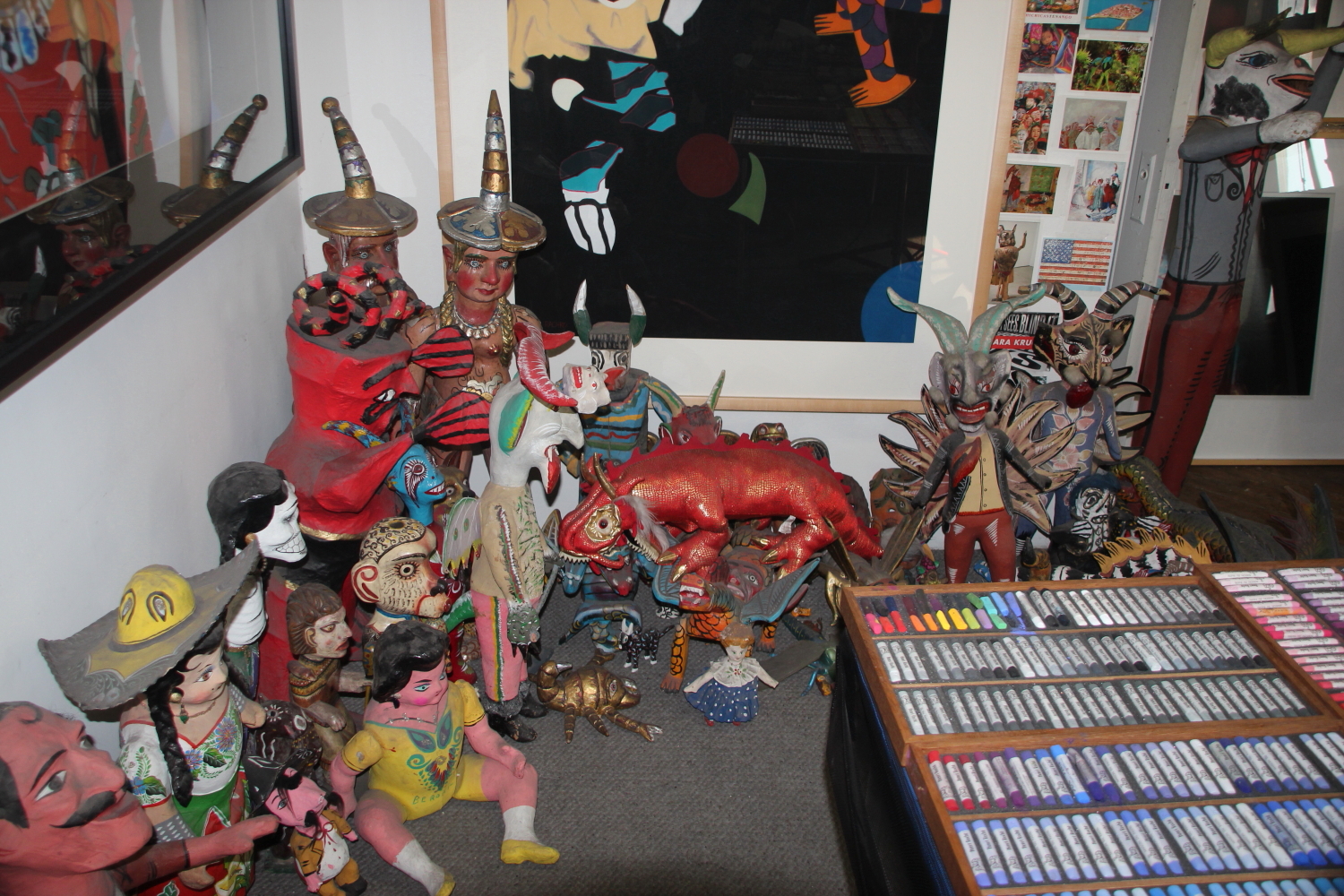
Barbara’s Studio
*an ongoing series of quotations – mostly from artists, to artists – that offers wisdom, inspiration, and advice for the sometimes lonely road we are on.
If the majority of aesthetic works fail to astonish us, then. it may have something to do with the ingrained insensitivity that is part and parcel of contemporary life. It may also have something to do with the fact that art, as Solzhenitsyn said so eloquently, is constantly being put to uses that are at odds with its essence. Indeed, the moment a work of art appears, all kinds of other factors come into play. Cultural institutions, social pressures, laws, customs, fashions, and trends pull it in every direction. Fame, money, conformism, attention-seeking, and knee-jerk rebellion can lure artists to abandon their own vision in order to emulate those of others, to adhere to formulas and paint by numbers, or to value external convention over vision. The inevitable result is a lot of bad art that couldn’t astonish anyone. It should come as no surprise, when looking over the glut of aesthetic objects that proliferate around us, if we feel the need to distinguish between authentic and inauthentic art – which is to say, art that astonishes us by attuning us to the radical mystery of being, and art that attempts to reinforce our shared illusions, comforting or intimidating us with the notion that there is nothing to wonder at since everything has been figured out.
J.F. Martel in Reclaiming Art in the Age of Artifice: A Treatise, Critique, and Call to Action
Comments are welcome!
Pearls from artists* # 298

Untitled c-print, 24″ x 24″ edition of 5
*an ongoing series of quotations – mostly from artists, to artists – that offers wisdom, inspiration, and advice for the sometimes lonely road we are on.
Interviewer: What do you think about the artist being supported by the state?
Parker: Naturally, when penniless, I think it’s superb. I think that the art of the country so immeasurably adds to its prestige that if you want to have writers and artists – persons who live precariously in our country – the state must help. I do not think that any kind of artist thrives under charity, by which I mean one person or organization giving him money, here and there, this and that – that’s no good. The difference between the state giving and the individual patron is that one is charity and one isn’t. Charity is murder and you know it. But I do think that if the government supports its artists, they need have no feeling of gratitude – the meanest and most sniveling attribute in the world – or baskets being brought to them, or apple polishing. Working for the state, for Christ’s sake, are you grateful to your employers? Let the state see what its artists are trying to do – like France and the Academie Francaise. The artists are a part of their country and their country should recognize this, so both it and the artists can take pride in their efforts. Now I mean that, my dear.
Dorothy Parker in Women at Work: Interviews From the Paris Review
Comments are welcome!
Q: For many artists the hardest thing is getting to work in the morning. Do you have any rituals that get you started?
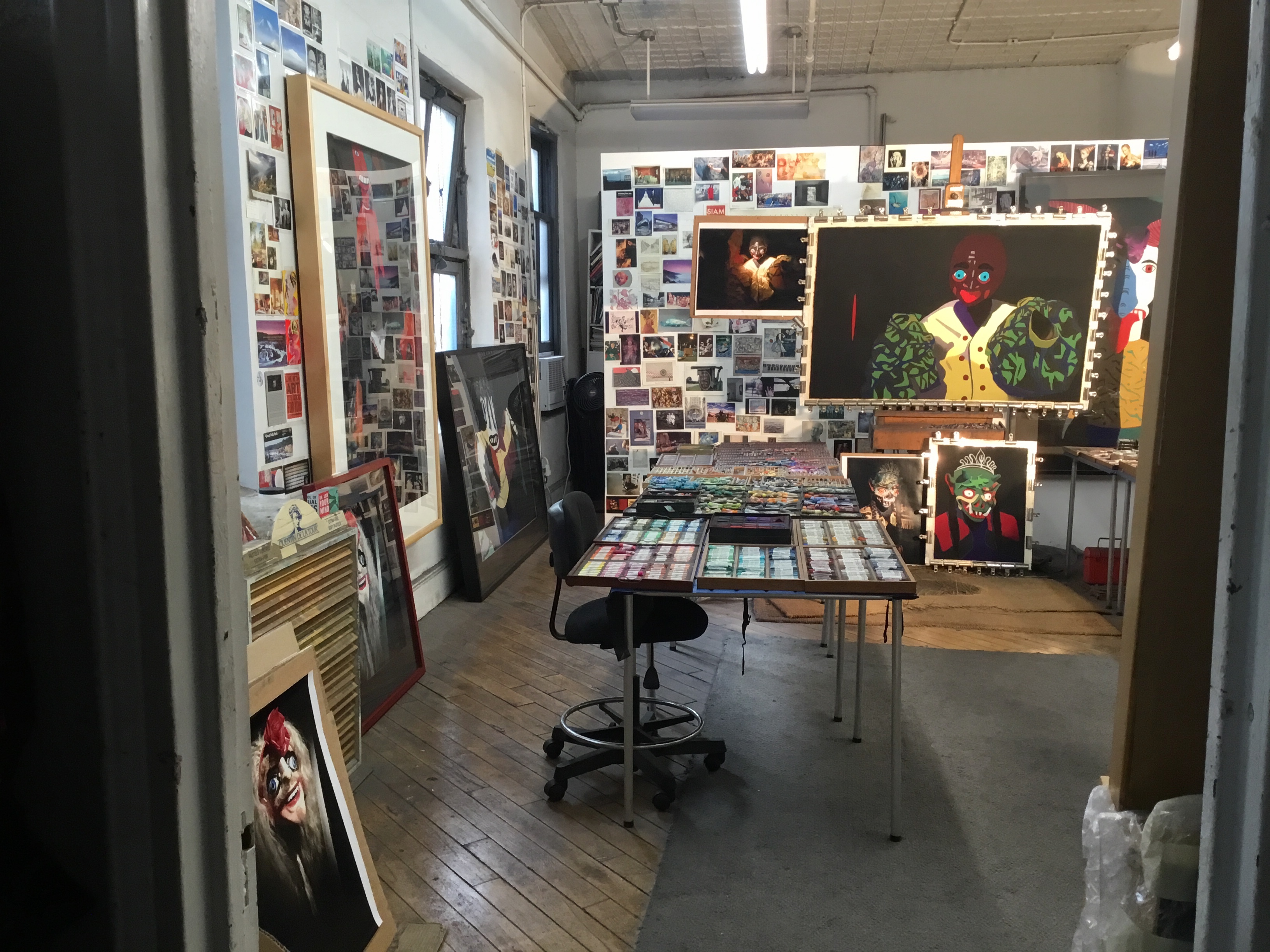
Entering Barbara’s studio
A: That has rarely been a problem because I love to work. The highlight of my day is time spent in the studio. After arriving, I begin working immediately or I read about art for a short time. When I pick up a pastel, it’s to begin working on something left unfinished from the day before.
Generally, I keep regular hours and strive to use studio time well. As a professional artist, one absolutely must be a self-starter! No one else cares about our work the way we do. Really why would they, when only the maker has invested so much love, knowledge, craftsmanship, experience, devotion, insight, money, etc. in the effort to evolve and improve.
Comments are welcome!
Q: What do you dislike most about being an artist?
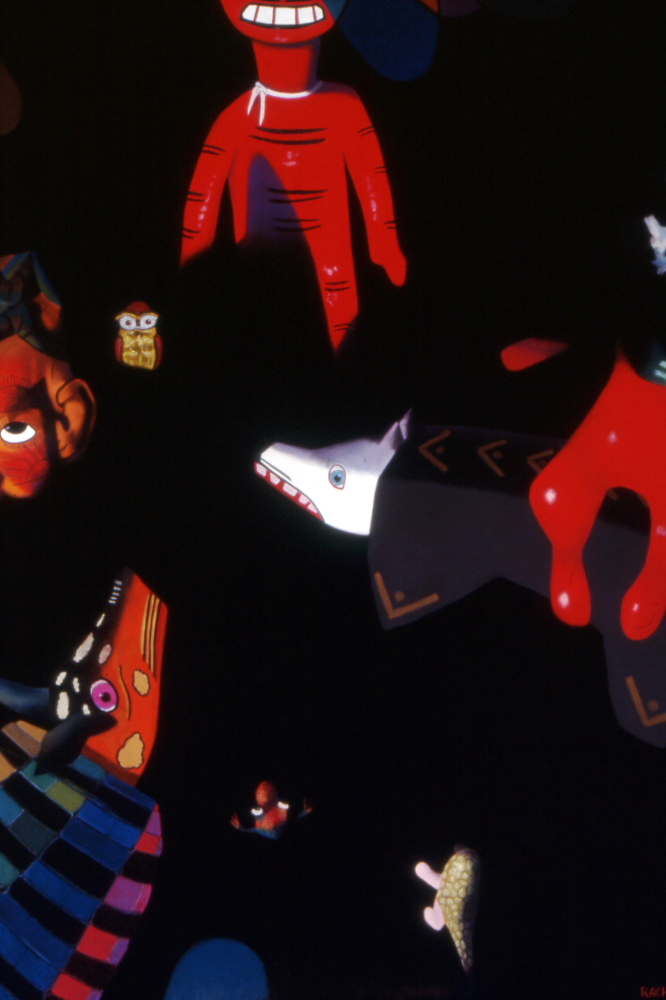
“Some Things We Regret,” soft pastel on sandpaper, 58″ x 38″
A: It’s the fact that too often artists remain unappreciated while they are alive and/or do not share in the rewards after long years of struggle against numbing odds. They/we do whatever is necessary to keep creating new work even as it is ignored and misunderstood.
This unfortunate situation has repeated itself throughout the history of art. As Hilary Spurling stated in the preface to her two-volume biography, Matisse The Master, even Henri Matisse was misunderstood, his work regarded as “merely decorative” during his lifetime and long after.
At this time I have few illusions about the difficulties of being an artist. Somehow I still tell myself, ignore the setbacks and work like there’s no tomorrow.
Comments are welcome!
Q: Do you lose yourself in your work?

Barbara at work
A: Of course! When I am having a productive day in the studio, I am completely present and focused, fully immersed in solving technical problems and trying to improve the painting on my easel. I barely notice the time and have to remind myself to take a break or stop for lunch. Nothing else exists except the painting and my relationship with it. The rest of life completely falls away from my consciousness.
I believe most artists regularly experience this feeling of ‘flow.’ It is a state of being that is inherent and necessary to creative work of all kinds.
Comments are welcome!
Q: What do you dislike most about being an artist?

Barbara’s studio
A: I am not the only artist who would say this, certainly, but the low pay is a continual frustration.
The expenses of doing business continually increase and most other professionals get to pass these on to their clients. But for artists it’s different: it’s just tough to pass along costs to collectors. One of the reasons I spend so much time educating people about the process involved in making my pastel paintings, is to provide some understanding of the serious amounts of time, effort, travel, thought, education, money, etc. that are essential to creating them.
It always surprises me when non-artists don’t appreciate the unswerving devotion and plain hard work that are required of professional artists. It makes me wonder what people imagine artists do all day.
Comments are welcome!
Pearls from artists* # 223

“Epiphany,” soft pastel on sandpaper, 38″ x 58″
* an ongoing series of quotations – mostly from artists, to artists – that offers wisdom, inspiration, and advice for the sometimes lonely road we are on.
This is precisely the time when artists get to work. There is no time for despair, no place for self-pity, no need for silence, no room for fear. We speak, we write, we do language. That is how civilizations heal.
I know the world is bruised and bleeding, and though it is important not to ignore its pain, it is also critical to refuse to succumb to its malevolence. Like failure, chaos contains information that can lead to knowledge – even wisdom. Like art.
Toni Morrison quoted in Brainpickings, Nov. 20, 2016
Comments are welcome!
Pearls from artists* # 208
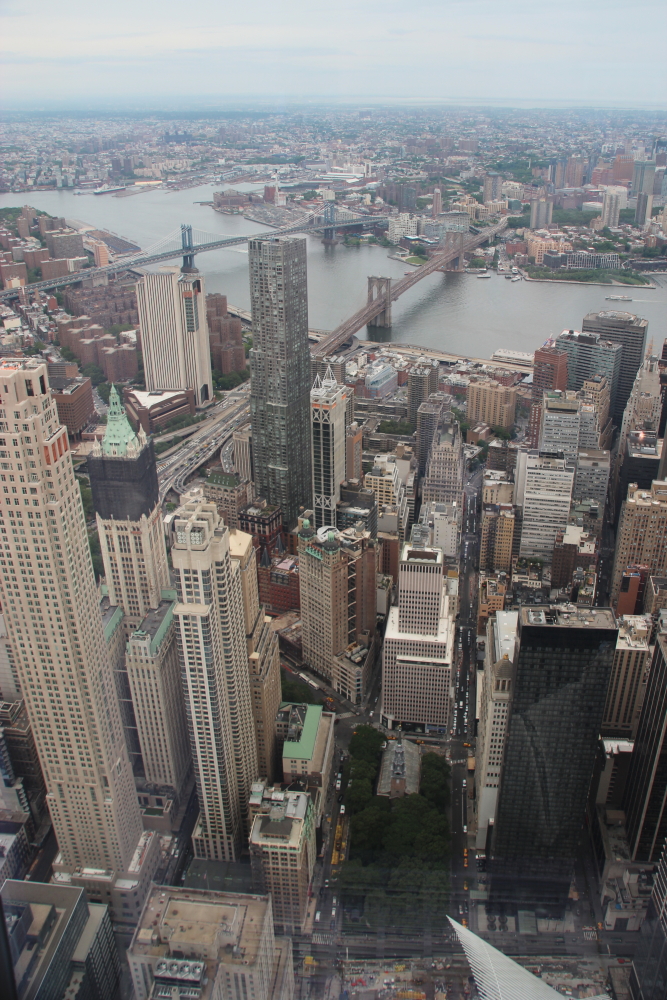
View from One World Trade Center
* an ongoing series of quotations – mostly from artists, to artists – that offers wisdom, inspiration, and advice for the sometimes lonely road we are on.
PC: In your painting, you’ve always kept this speed of movement. One senses that you work something out slowly, deep down, that it’s hard work, but there’s always something fresh about its expression.
HM: That’s because I revise my notion several times over. People often add or superpose – completing things without changing their plan, whereas I rework my plan every time. I never get tired. I always start again, working from the previous state. I try to work in a contemplative state, which is very difficult: contemplation is inaction, and I act in contemplation.
In all the studies I’ve made from my own ideas, there’s never been a faux pas because I’ve always unconsciously had a feeling for the goal; I’ve made my way toward it the way one heads north, following the compass. What I’ve done, I’ve done by instinct, always with my sights on a goal I still hope to reach today. I’ve completed my apprenticeship now. All I ask is four or five years to realize that goal.
PC: Delacroix said that too. Great artists never look back.
HM: Delacroix also said – ten years after he’d left the place – “I’m just beginning to see Morocco.” Rodin said to an artist, “You need to stand back a long way for sculpture.” To which the student replied, “Master, my studio is only ten meters wide.”
Chatting with Henri Matisse: The Lost 1941 Interview, Henri Matisse with Pierre Courthion, edited by Serge Guilbaut, translated by Chris Miller
Comments are welcome!
Pearls from artists* # 205
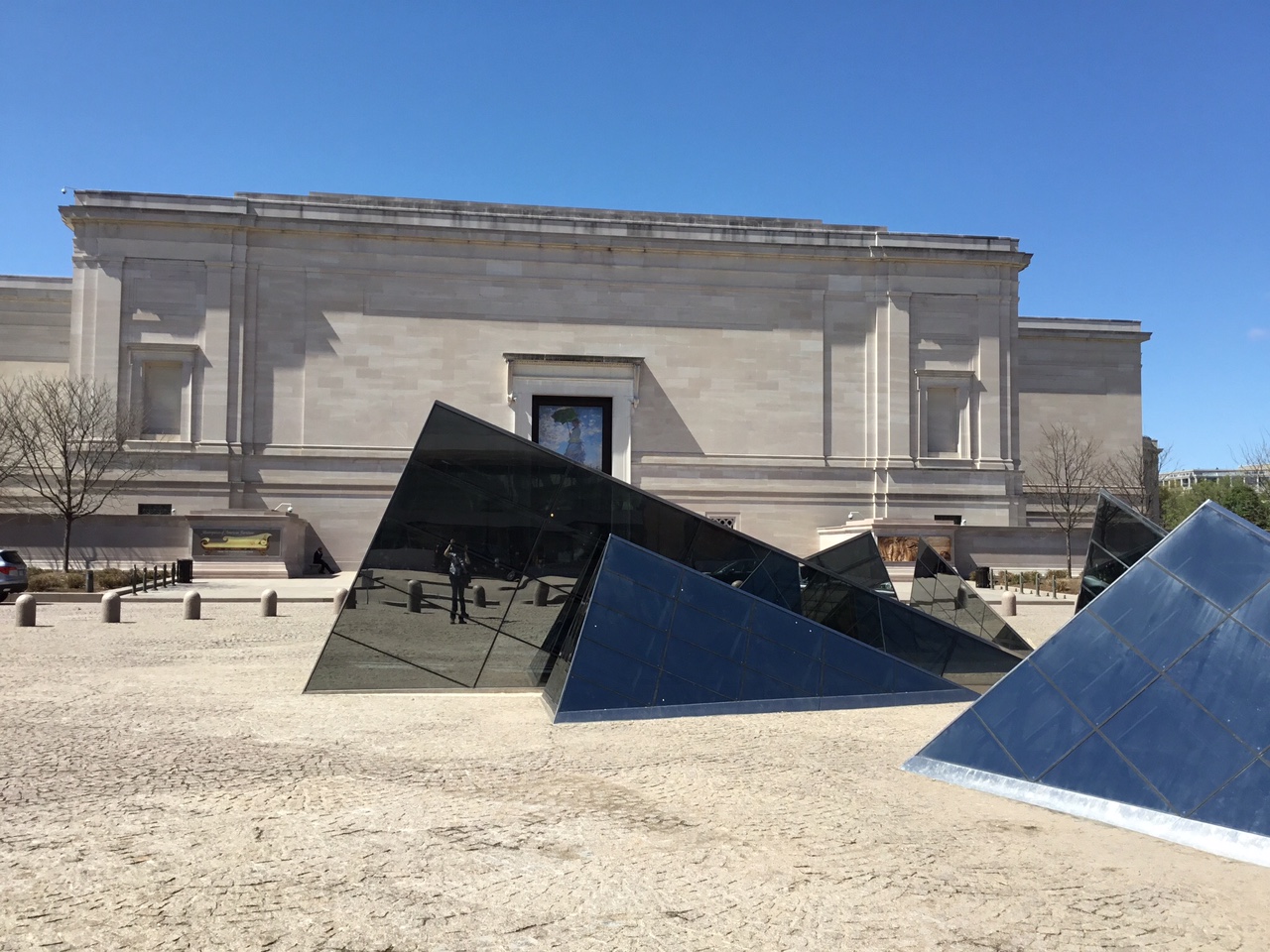
National Gallery of Art with self-portrait
* an ongoing series of quotations – mostly from artists, to artists – that offers wisdom, inspiration, and advice for the sometimes lonely road we are on.
Museums empower people when they are patrons for artists and thinkers; when they amplify civic discourse, accelerate cultural change and contribute to cultural intelligence among the great diversity of city dwellers, visitors, policy makers and leaders… Museums present beautiful, accessible and meaningful spaces in which communities and individuals can meet, exchange ideas and solve problems.
David J. Skorton, Director of the Smithsonian Institution in “What Do We Value?” Museum, May/June 2016
Comments are welcome!


 barbararachkoscoloreddust.com