Pearls from artists* # 523
*an ongoing series of quotations – mostly from artists, to artists – that offers wisdom, inspiration, and advice for the sometimes lonely road we are on.
How strange the human mind is! When I first began, I think I should have been willing to work at it from the top of a church steeple, whereas now, even to think of finishing requires a real effort. And all this, simply because I have been away from it for so long. It is the same with my picture and with everything else I do. There is always a thick crust to be broken before I can give my whole heart to anything; a stubborn piece of ground, as it were, that resists the attack of plough and hoe. But with a little perseverance the hardness suddenly gives and it becomes so rich in fruit and flowers that I am quite unable to gather them all.
The Journal of Eugene Delacroix edited by Hubert Wellington
Comments are welcome!
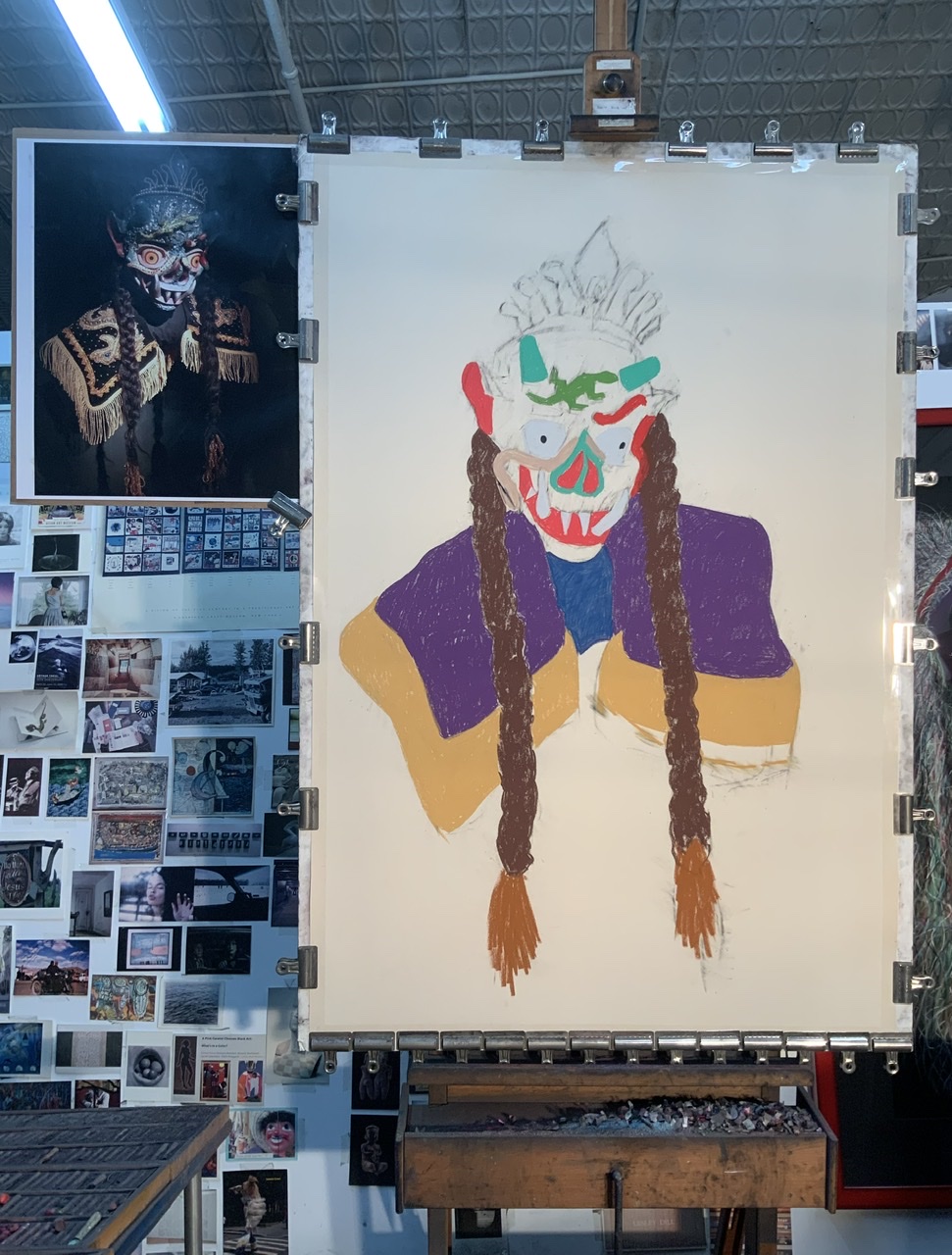
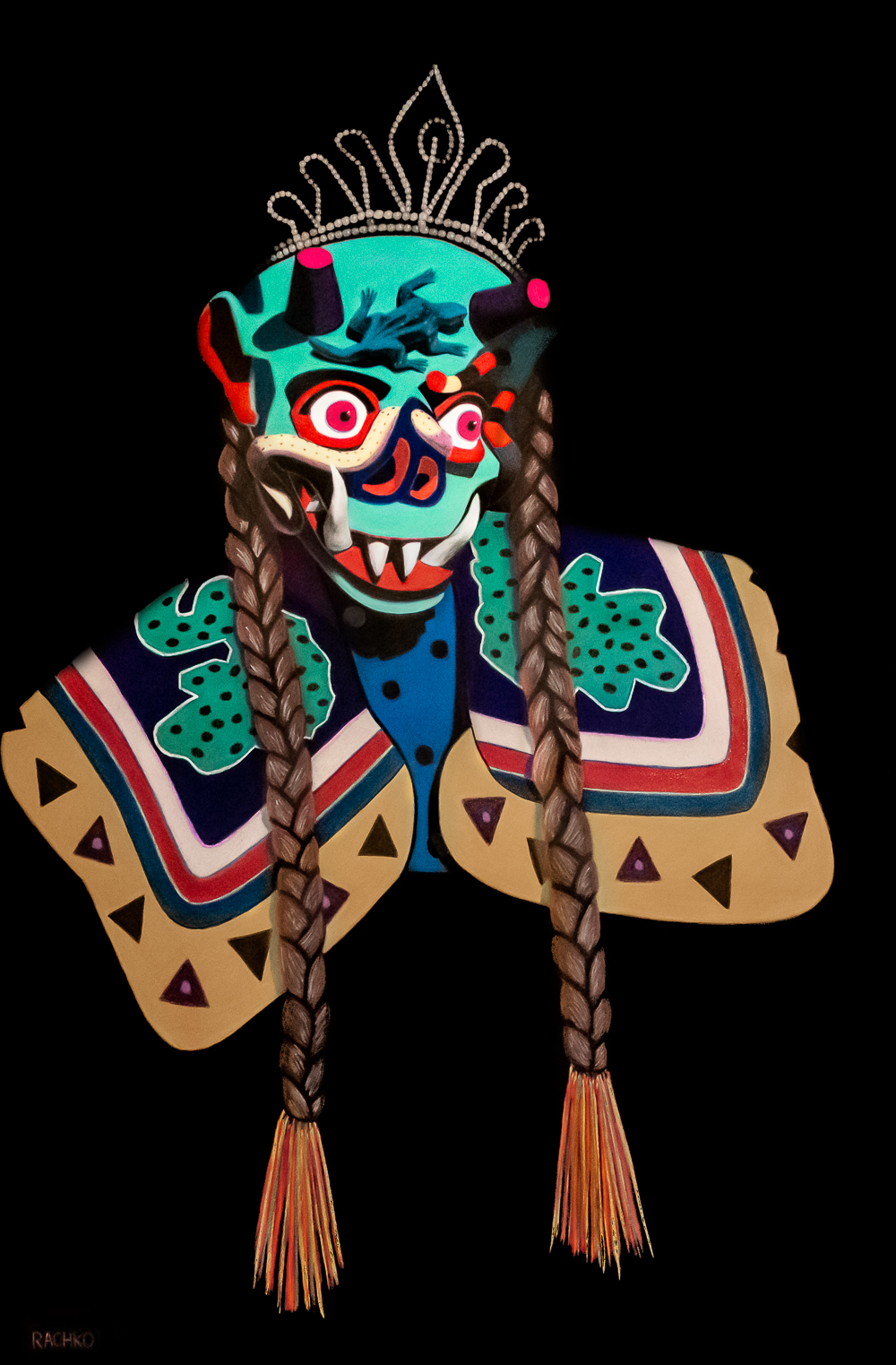
Start/Finish of ”Overlord,” soft pastel on sandpaper, 58” x 38” image, 70” x 50” framed
Comments are welcome!
Pearls from artists* # 522

* an ongoing series of quotations – mostly from artists, to artists – that offers wisdom, inspiration, and advice for the sometimes lonely road we are on.
What moves men of genius, or rather, what inspires their work, is not new ideas, but their obsession with the idea that what has already been said is still not enough.
The Journal of Eugene Delacroix, edited by Hubert Wellington
Comments are welcome!
Travel photo of the month*

* favorite travel photos that have not yet appeared in this blog
Comments are welcome!
Pearls from artists* # 521

*an ongoing series of quotations – mostly from artists, to artists – that offers wisdom, inspiration, and advice for the sometimes lonely road we are on.
But on the whole, I’m taking into consideration, at the point of the cut, where the audience’s eye is and what direction it’s moving, and with what speed. The editor has to imagine the audience’s point of attention when the film is projected, and has to be able to predict where ninety-nine percent of the audience is looking at any moment… I have to be able to say with some certainty that at such-and-such a moment ninety-nine percent of the audience will be looking at this point on the screen, and in the next second they will be looking here. That means that their eye is travelling, say, left to right, to the upper corner of the frame, at a certain speed. If I choose to cut at this point – at frame 17 – I know that at that moment their eye is right here, in the Cartesian grid of the screen.
That’s a very valuable piece of information. When I select the next shot, I choose a frame that has an interesting visual at exactly that point, where the audience’s eye is at the moment of the cut, to catch and redirect their attention somewhere else. Every shot has its own dynamic. One of the editor’s obligations is to carry, like a sacred vessel, the focus of attention of the audience and move it in interesting ways around the surface of the screen.
This is exactly what I do as I work to compose my pastel paintings! – BR
In The Conversations: Walter Murch and the Art of Editing Film by Michael Ondaatje
Comments are welcome!
Q: What’s on the easel today?
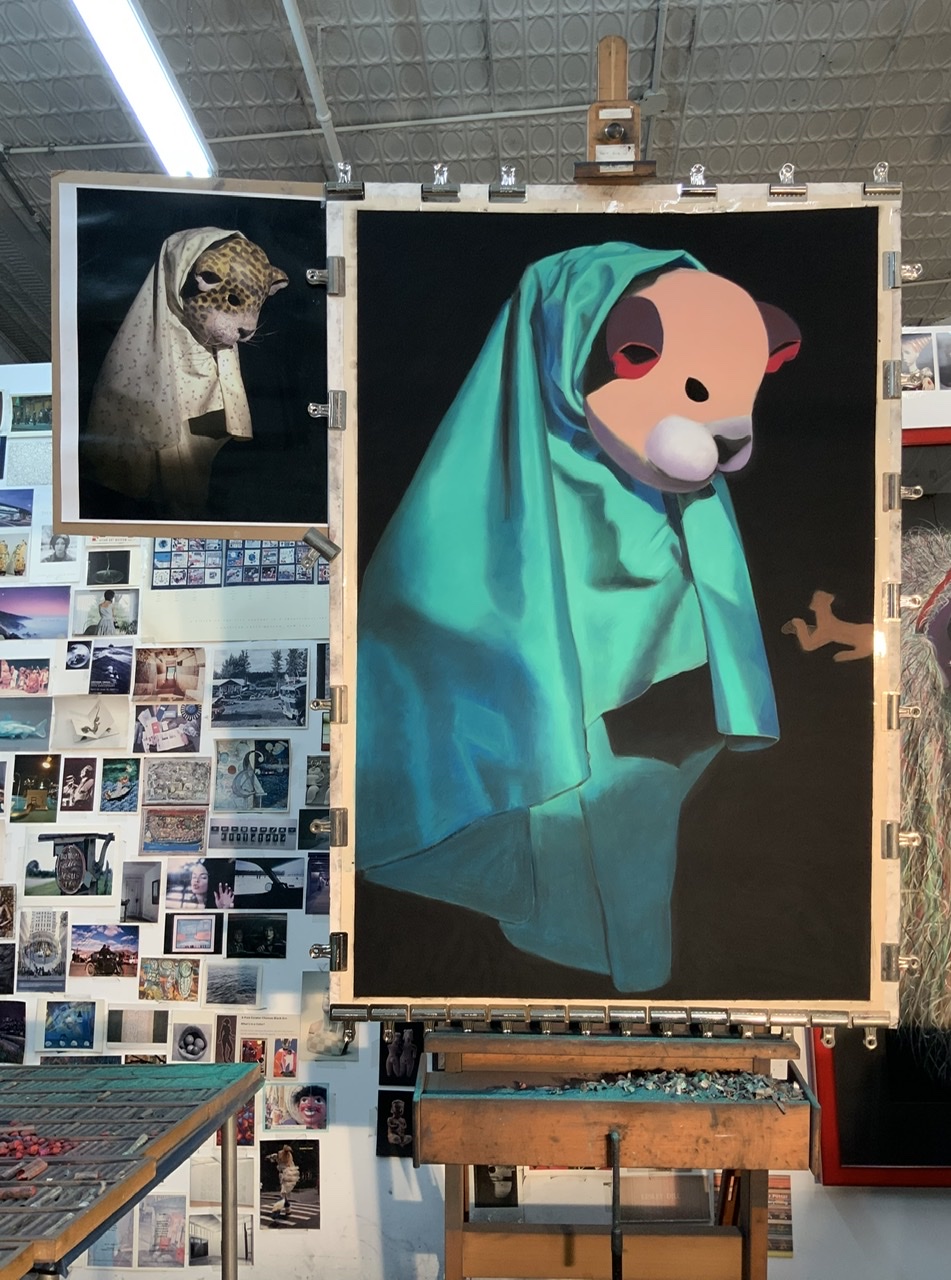
A: I continue working on “Wise One,” soft pastel on sandpaper, 58” x 38.”
Comments are welcome!
Pearls from artists* # 520
*an ongoing series of quotations – mostly from artists, to artists – that offers wisdom, inspiration, and advice for the sometimes lonely road we are on.
Ondaatje: Do you think success and failure can distort the lessons an artist is able to learn?
Murch: There’s that wonderful line of Rilke’s, “The point of life is to fail at greater and greater things.” Recognizing that all of our achievements are doomed, in one sense – the earth will be consumed by the sun in a billion years or so – but in another sense the purpose of our journey is to go farther each time. So you’re trying things out in every film you make, with the potential of failure. I think we’re always failing, in Rilke’s sense – we know there’s more potential that we haven’t realized. But because we’re trying, we develop more and more talent, or muscles, or strategies to improve, each time.
In The Conversation: Walter Murch and the Art of Editing Film by Michael Ondaatje
Comments are welcome!
Q: To what extent will the world of art change in the post-COVID period – both in terms of what is created and also the business of art? (Question from artamour)
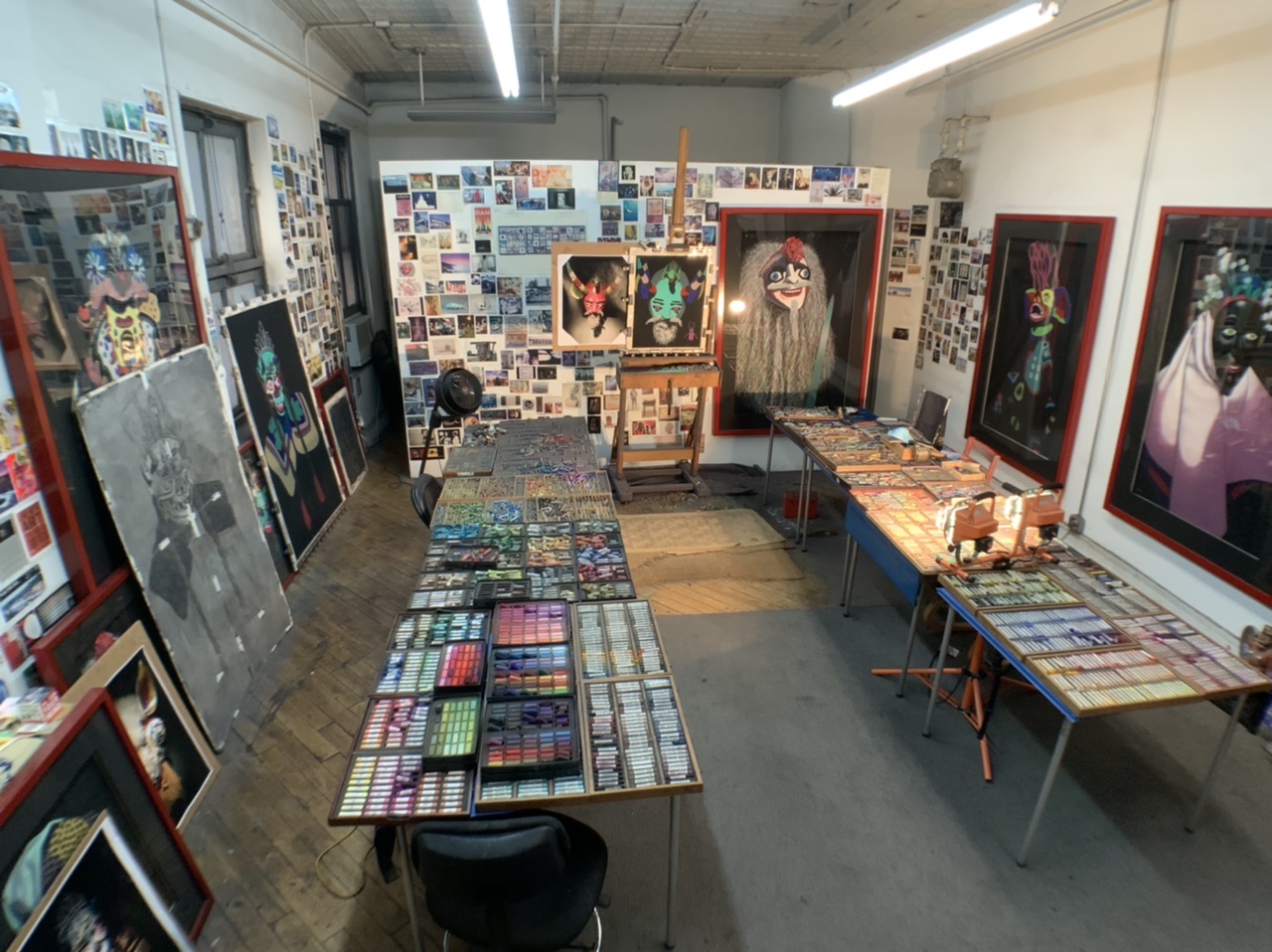
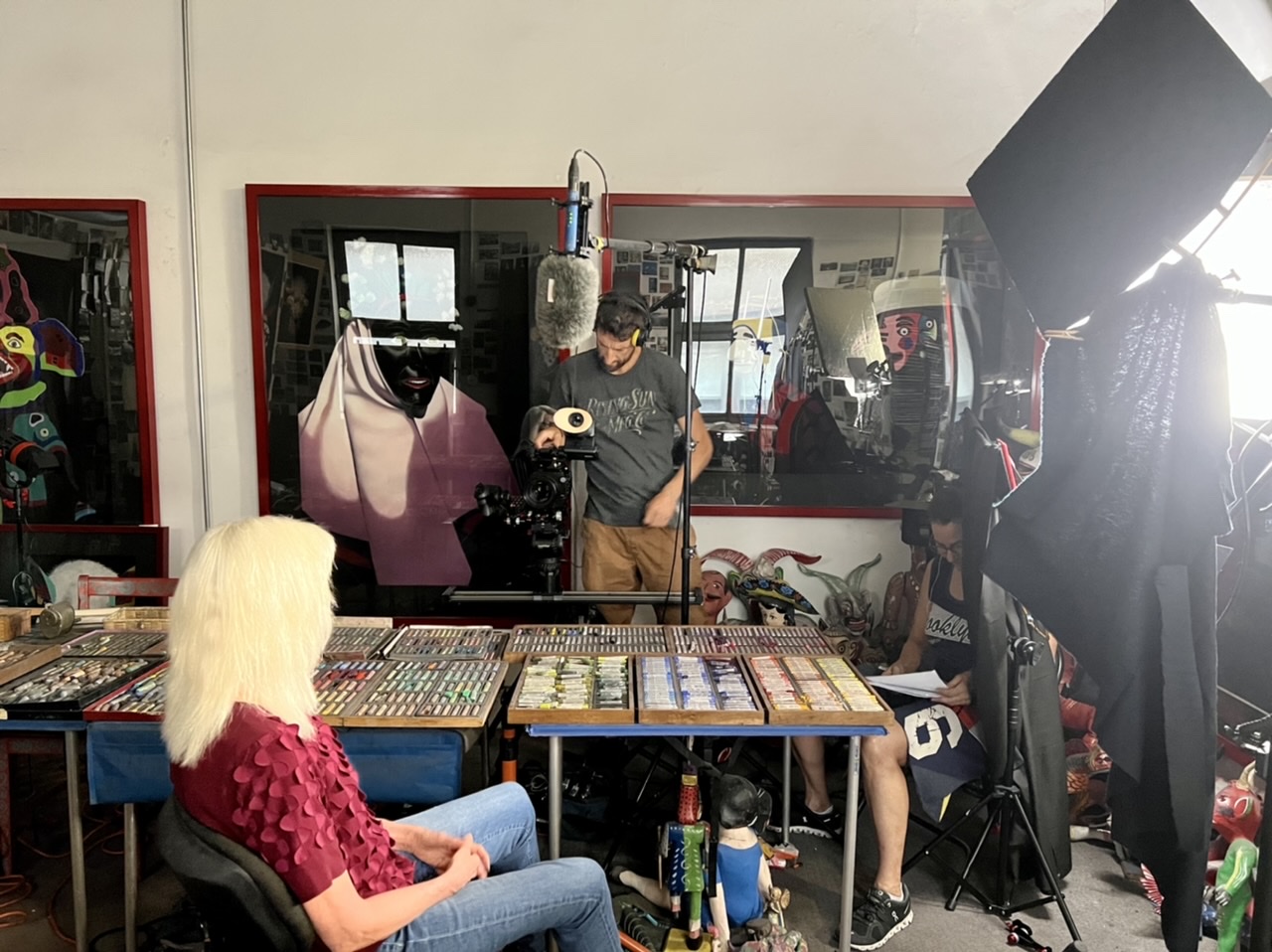
A: We all still wonder how the art world will change post-COVID. (Will there ever be a time when we can say we are post-COVID?). I know that I will continue refining and developing my art practice and seeking out new business opportunities. I have been an artist long enough to know that I will always follow my own path (each pastel painting points to the next one) regardless of what is going on in the larger world. How could I not do so? In large part due to an extensive social media program carried out by my two able assistants, the COVID period has been a personal boon. I completed a short documentary film about my life and work. It is in post-production now. I gained representation with three new international galleries. My blog is attracting approximately 1,000 – 2,000 new subscribers every month and I continue receiving requests for interviews from around the world.
Comments are welcome!
Pearls from artists* # 519
*an ongoing series of quotations – mostly from artists, to artists – that offers wisdom, inspiration, and advice for the sometimes lonely road we are on.
Because the arts are the products of a process that stands apart from so much of our social, economic, and political life, they move us and excite us unlike anything else in our lives. When we rush to label them – as radical, conservative, liberal, gay,straight, feminist, Black, or white – we may describe a part of what they are, but we’ve failed to account for their freestanding value. And without that the arts are nothing. The artist in the act of creation – working through particular words, sounds, colors, shapes, and their infinite combinations – almost inevitably risks irrelevance. But the decision to reject doing in favor of making, which some have described as a retreat into self-absorption and narcissism, is in fact an act of courage. Artists reenter the world by sending the work that they’ve made back into the world, where it lives on – independent, inviolable – in what Auden called ”the valley of its making.” That is a place apart – paradoxically, triumphantly apart.
Jed Perl in Authority and Freedom: A Defense of the Arts
Comments are welcome!
Q: What are your current aspirations?

A: During the pandemic I was fortunate to have added three international galleries – in London, New Delhi, and Sweden – to the growing list of galleries that represent my work. (This is in addition to a gallery in Naples, FL that I have been working with for several years). It is extremely gratifying to discover that finally, after 36 years as a devoted and hard-working professional artist, galleries are seeking me out, instead of the other way around. Next I’d like to find a local home gallery in New York with whom to work. This will be the final piece of my business plan… at least for now!
Comments are welcome!


 barbararachkoscoloreddust.com