Category Archives: Quotes
Pearls from artists* # 386
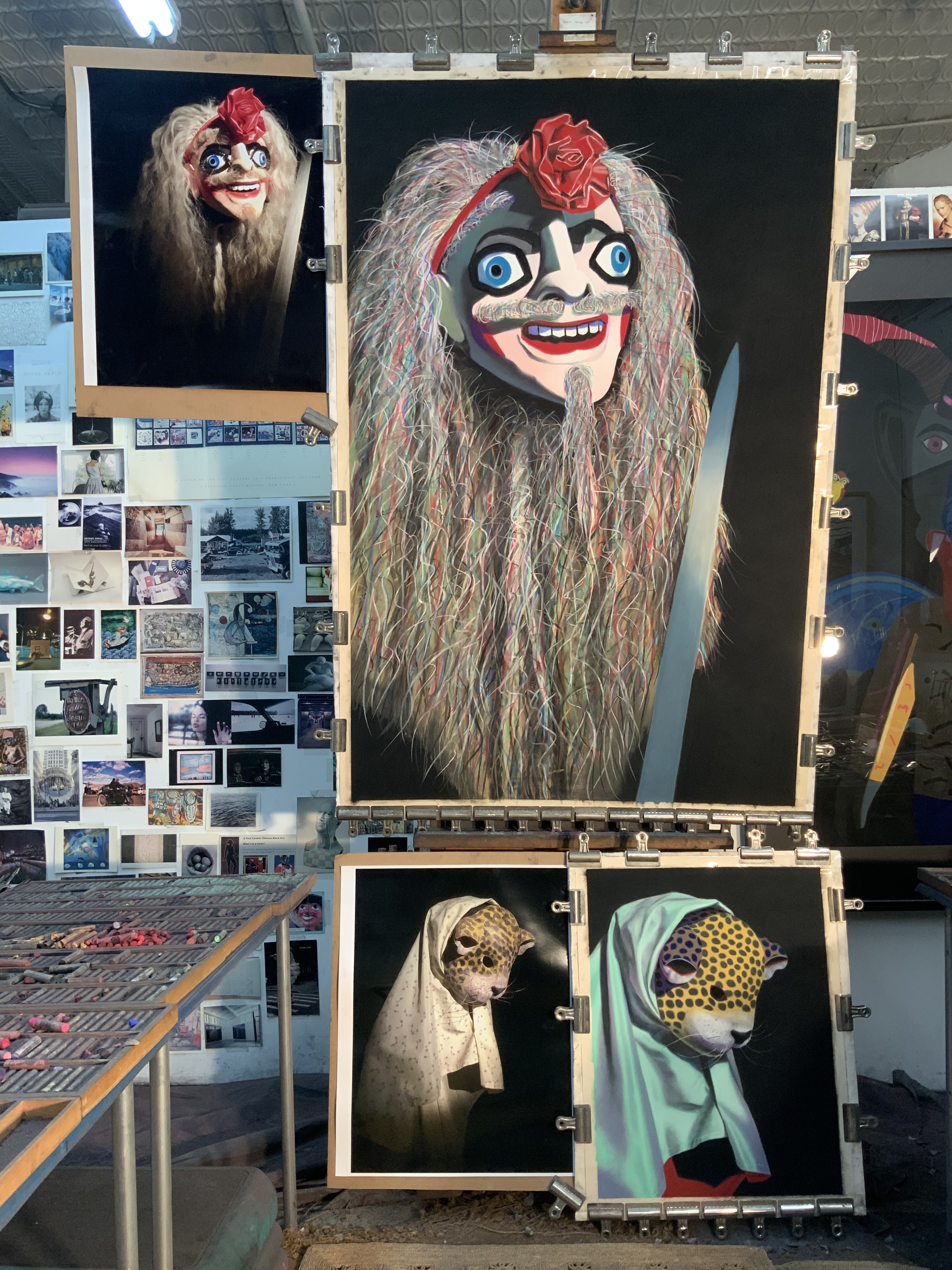
Barbara’s studio with recent works in progress
*an ongoing series of quotations – mostly from artists, to artists – that offers wisdom, inspiration, and advice for the sometimes lonely road we are on.
[Art] is concerned with something that cannot be explained in words or literal description… Art is revelation instead of information, expression instead of description, creation instead of imitation or repetition… Art is concerned with the HOW, not the WHAT; not with literal content… The performance – how it is done – that is the content of art.
Joseph Albers quoted in Ninth Street Women by Mary Gabriel
Comments are welcome!
Pearls from artists* # 385
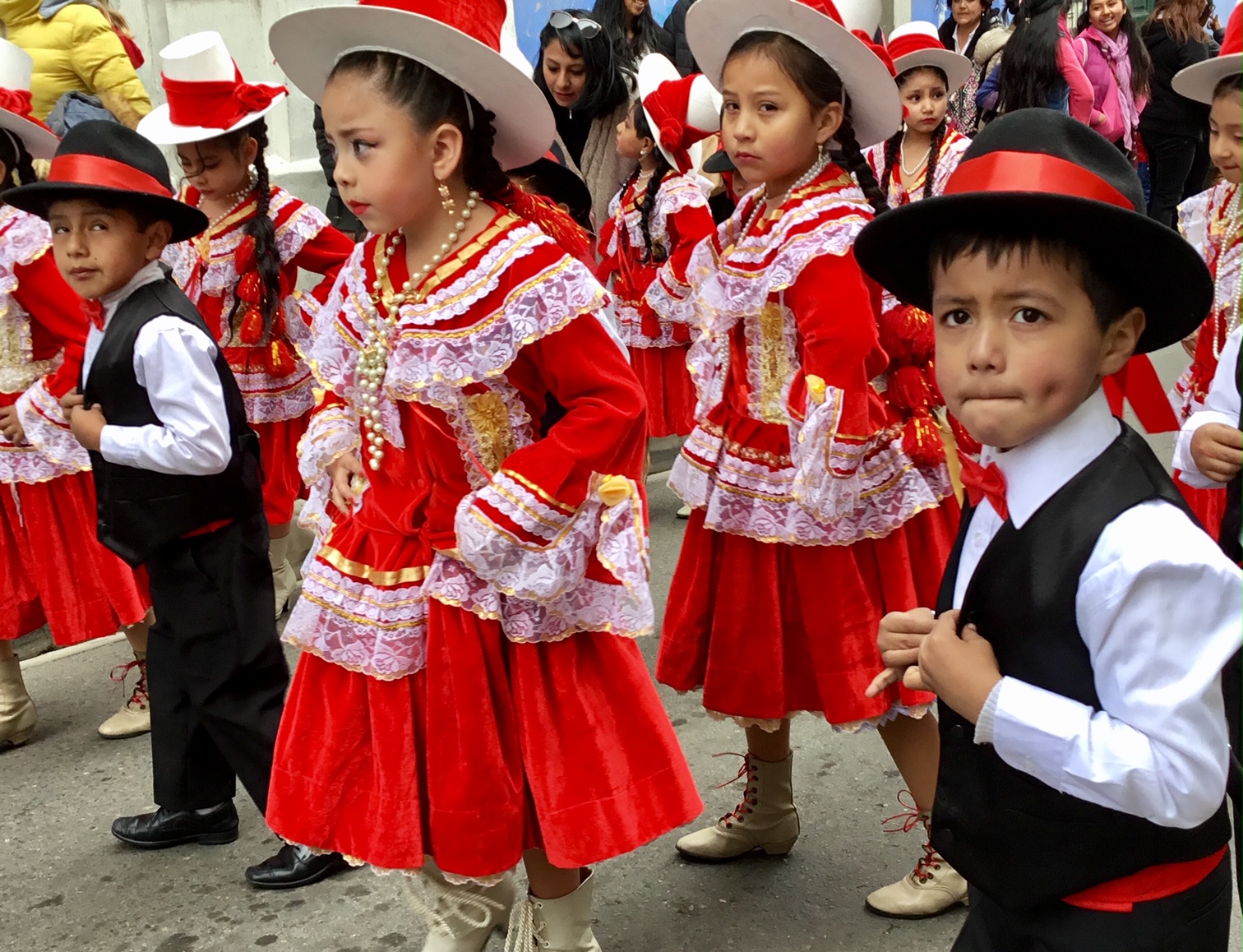
Potosí, Bolivia
* an ongoing series of quotations – mostly from artists, to artists – that offers wisdom, inspiration, and advice for the sometimes lonely road we are on.
Sunday of Carnival, the parade begins. For a whole day of celebration in music and dance, people can express their hope and fears, revive their myths and escape to a reality far from everyday life.
Thousands of spectators arrive from different parts if Bolivia and other countries. Filling the streets, they straddle benches, window ledges, balconies, cats and eve hang from walls or roofs to witness the entrance of the Carnival. Thus is the magnificent parade when Carnival makes its official entry into Oruro. The comparsas (dance troupes) dance to music for20 blocks, nearly eight lies, to the Church of the Virgin of Socavón (Virgin of the Mine). Each tries to out do the next in the brilliance of their costumes, the energy of their dancing and the power of their music. All their efforts are dedicated to the Virgin whose shrine is found on the hill called Pie de Gallo.
If there are thousands of spectators, there are also thousands of dancers from the city and other parts of the country. Among the most remarkable are the Diablos and Morenos which count for eight of the 40 or 50 participating groups. Keeping in mind that the smallest troupes have between 30 and 50 embers and the largest between 200 and 300, it is possible to calculate the number of dancers and imagine the spectacle.
… Each dance recalls a particular aspect of life in the Andes. Lifted from different periods and places, the dances offer a rich interpretation of historical events, creating an imaginative mythology for Oruro.
… Carnival blends indigenous beliefs and rituals with those introduced by the Spaniards. Both systems of belief have undergone transformations, each making allowance for the other, either through necessity or familiarity. The Christianity fought from Europe becomes loaded with new meanings while the myths and customs of the Andes accommodate their language and creativity to the reality of their conquered world. The process can be seen as a struggle culminating in a ‘mestizaje’ or new cultural mix.
El Carnaval de Oruro by Manuel Vargas in Mascaras de los Andes Bolivianos, Editorial Quipus and Banco Mercantil
Comments are welcome!
Pearls from artists* # 384
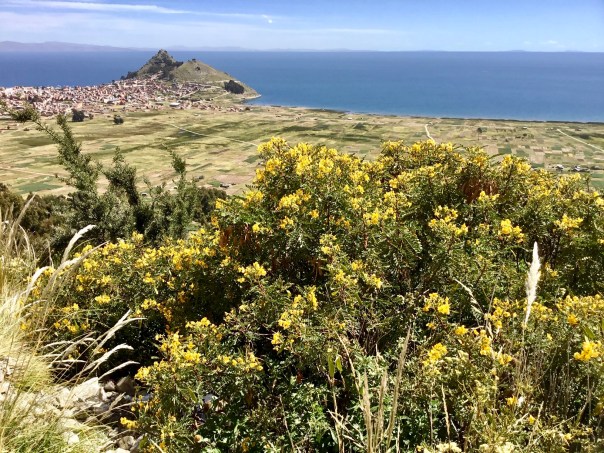
Overlooking Copacabana, Bolivia and Lake Titicaca
* an ongoing series of quotations – mostly from artists, to artists – that offers wisdom, inspiration, and advice for the sometimes lonely road we are on.
Carnival in Oruro [Bolivia] is a glorious spectacle. It’s flash, pomp and brilliance can be enjoyed without understanding its long history and intricate mythologies. Still, the onlooker is left with a thousand questions that are not so easily answered. Behind the glitter of Carnival lie the history, the timeless myths and the distinct traditions of this mining community.
According to the Spanish writer Jean Laude, “The function of the mask is to reaffirm, at regular intervals, the truth and presence of myths in everyday life.” This suggests that masks should be studied in context, noting their association with the individual dancer and the history, myths and traditions of the community that produces them. The mask has to be animated within its ritual, comic or social role.
A first step in appreciating the masks is to understand something of the land and people that crafted them. Oruro is a mining city on the open Altiplano at 3,700 meters (12,144 ft.) above sea level. The sky appears a rarified blue, it is intensely cold and a constant wind lifts dust to the eyes. During the year no more than 125,000 people live in the city. Suddenly in the weeks of Carnival, the population doubles or triples.
Three languages, Quechua, Aymara, and Spanish are spoken in Oruro. Their use reflects an ancient pattern of conquest in the history of this land. It is said that the Urus, whose language is now almost lost, were the first inhabitants. In time they were dominated by the Aymara tribes. Later, Quechua was introduced as the Inca advanced their empire from Cuzco. Ultimately the Spanish arrived and founded the present city in 1601 to exploit rich mineral deposits found in the seven hills.
Today, descendants of the Urus live near Oruro around the shore of Lake Poopo. Elements of their distinctive culture remain but they have no wealth in comparison with the more dominant Aymara and Quechua who surround them. A further change came in the recent past because Oruro has acted as a magnet, attracting many people from the countryside to work in the mines.
On one side were the Urus, ancient owners of all the land which now only carries their name (Uro Uro = Oruro). On the other side were the miners, many of whom were Quechua and Aymara migrants. In the middle is “Carnival.”
El Carnaval de Oruro by Manuel Vargas in Mascaras de los Andes Bolivianos, Editorial Quipus and Banco Mercantil
Comments are welcome!
Pearls from artists* # 383
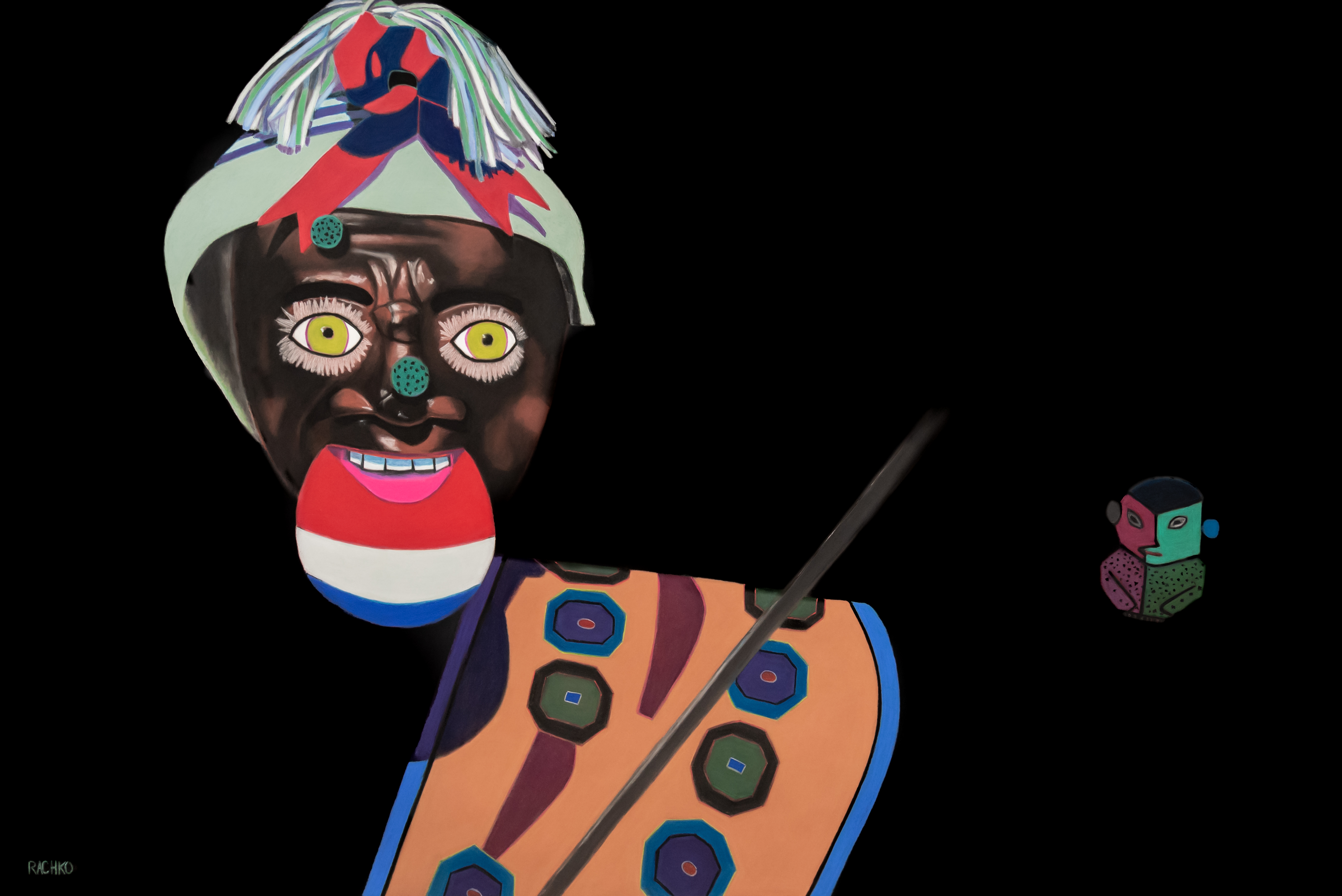
“Sentinels,” Soft Pastel on Sandpaper, 38” x 58” image, 50” x 70” framed
* an ongoing series of quotations – mostly from artists, to artists – that offers wisdom, inspiration, and advice for the sometimes lonely road we are on.
… I mean to say that a work of art is a gift. The gifted artist contains the vitality of his gift within the work, and thereby makes it valuable to others. Furthermore, works we come to treasure are those which transmit that vitality and revive the soul. Such works circulate among us as reservoirs of available life, what Whitman calls “the tasteless water of souls.”
Lewis Hyde in The Gift: Imagination and the Erotic Life of Property
Comments are welcome!
Pearls from artists* # 382

Barbara’s studio
* an ongoing series of quotations – mostly from artists, to artists – that offers wisdom, inspiration, and advice for the sometimes lonely road we are on.
I think a man [sic] spends his whole lifetime painting one picture or working on one piece of sculpture. The question of stopping is really a decision of moral considerations. To what extent are you intimidated by the actual act, so that you are beguiled by it? To what extent are you charmed by its inner life? And to what extent do you then really approach the intention or desire that is really outside it? The decision is always made when the purée has something in it that you wanted.
Barnett Newman quoted in The Unknown Masterpiece by Honore Balzac
Comments are welcome!
Pearls from artists* # 377
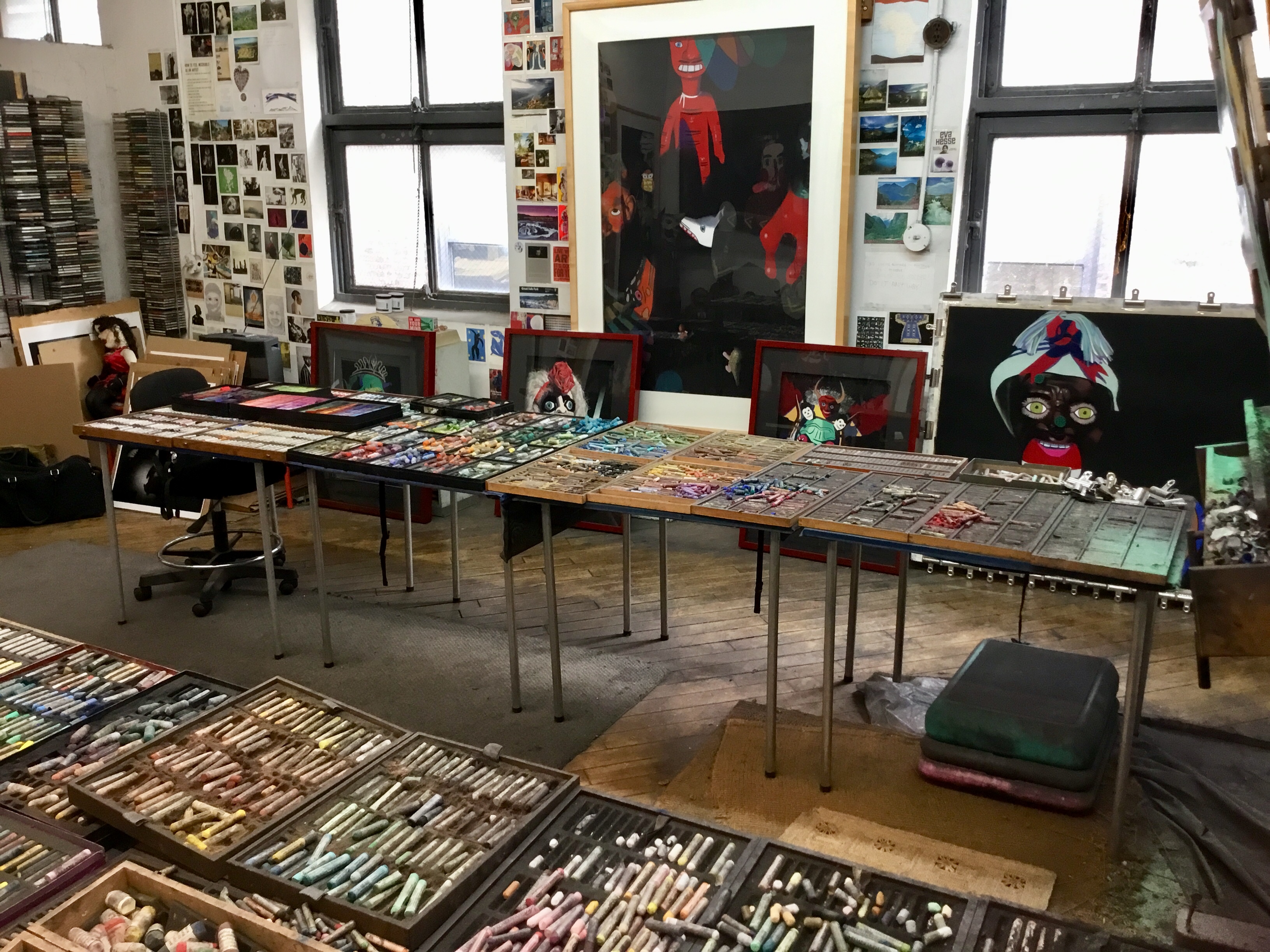
Barbara’s studio
* an ongoing series of quotations – mostly from artists, to artists – that offers wisdom, inspiration, and advice for the sometimes lonely road we are on.
Life for an artist, any artist, was difficult. There were few rewards other than the most important, which was satisfying one’s need to create. But in the art world of galleries, collections, and museums that the avant-garde artists in New York would inherit in the late 1940s, the difficulties experienced by the men who painted and sculpted would be nothing compared to those of the women. Society might mock the men’s work and disparage them for being “bums,” but at least they were awarded the dignity of ridicule. Women had to fight with every fiber of their being not to be completely ignored. In a treatise on men and women in America published at the start of the war, author Pearl S. Buck wrote,
The talented woman… must have, besides their talent, an unusual energy which drives them… to exercise their own powers. Like talented men, they are single-minded creatures, and they can’t sink into idleness nor fritter away life and time, nor endure discontent. They possess that rarest gift, integrity of purpose… Such women sacrifice, without knowing they do, what many other women hold dear – amusement, society, play of one kind or another – to choose solitude and profound thinking and feeling, and at last final expression.
“To what end?” another woman might ask. To the end, perhaps… of art – art which has lifted us out of mental and spiritual savagery.”
Mary Gabriel in Ninth Street Women
Comments are welcome!
Pearls from artists* # 375

Tile worker in South India
* an ongoing series of quotations – mostly from artists, to artists – that offers wisdom, inspiration, and advice for the sometimes lonely road we are on.
With the camera you interpret reality. Photography is not truth. The photographer interprets reality and, above all, constructs his own reality according to his own awareness or his own emotions. Sometimes it’s complicated because it’s a kind of schizophrenic phenomenon. Without the camera, you see the world in one way, with the camera, in another. Through the window, you’re composing, and even dreaming about, this reality as if, through the camera, you were synthesizing what you are with what you’ve learned of a certain place. Then you make your own image, your own interpretation. The same thing happens to a writer as to a photographer. It’s impossible to capture the truth of life.
Graciela Iturbide in Eyes to Fly With: Portraits, Self-Portraits, and Other Photographs
Comments are welcome!
Pearls from artists* # 374
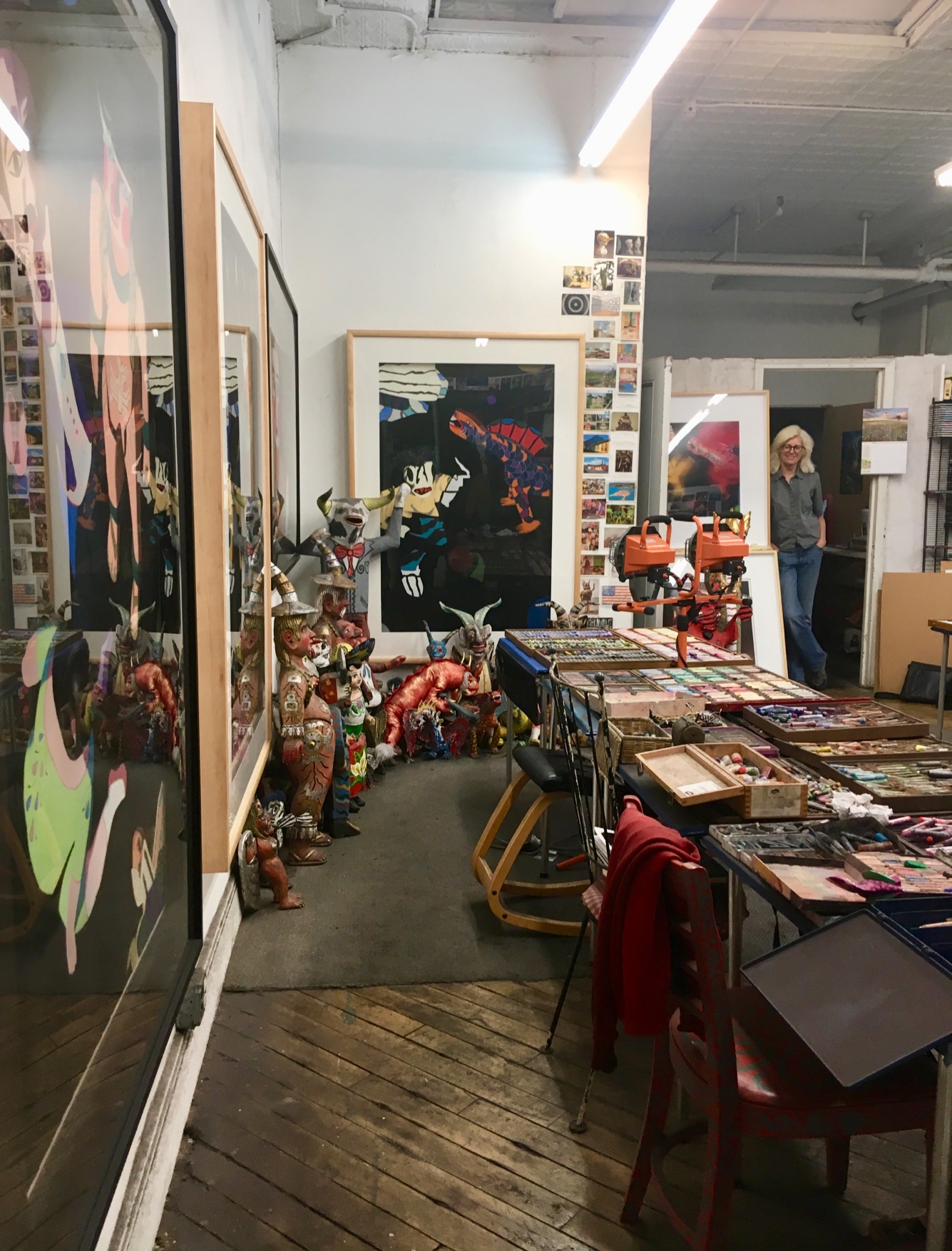
Barbara’a studio
* an ongoing series of quotations – mostly from artists, to artists – that offers wisdom, inspiration, and advice for the sometimes lonely road we are on.
Finally, [John] Graham said, of all the arts, painting was the most difficult because one false move on a canvas could mean the difference between a great painting and a failure. A writer could always resurrect a word, but a line or a shape was so ephemeral that, once changed, it was almost always lost for good. “To create life one has to love. To create a great work of art one has to love truth with the passion of a maniac. If society does not perceive this love, perhaps humanity will.” …The artists… came away… feeling as though they were not aberrations but part of a long tradition of individuals who had ignored fashion to create culture.
Mary Gabriel in Ninth Street Women
Comments are welcome!
Pearls from artists* # 372
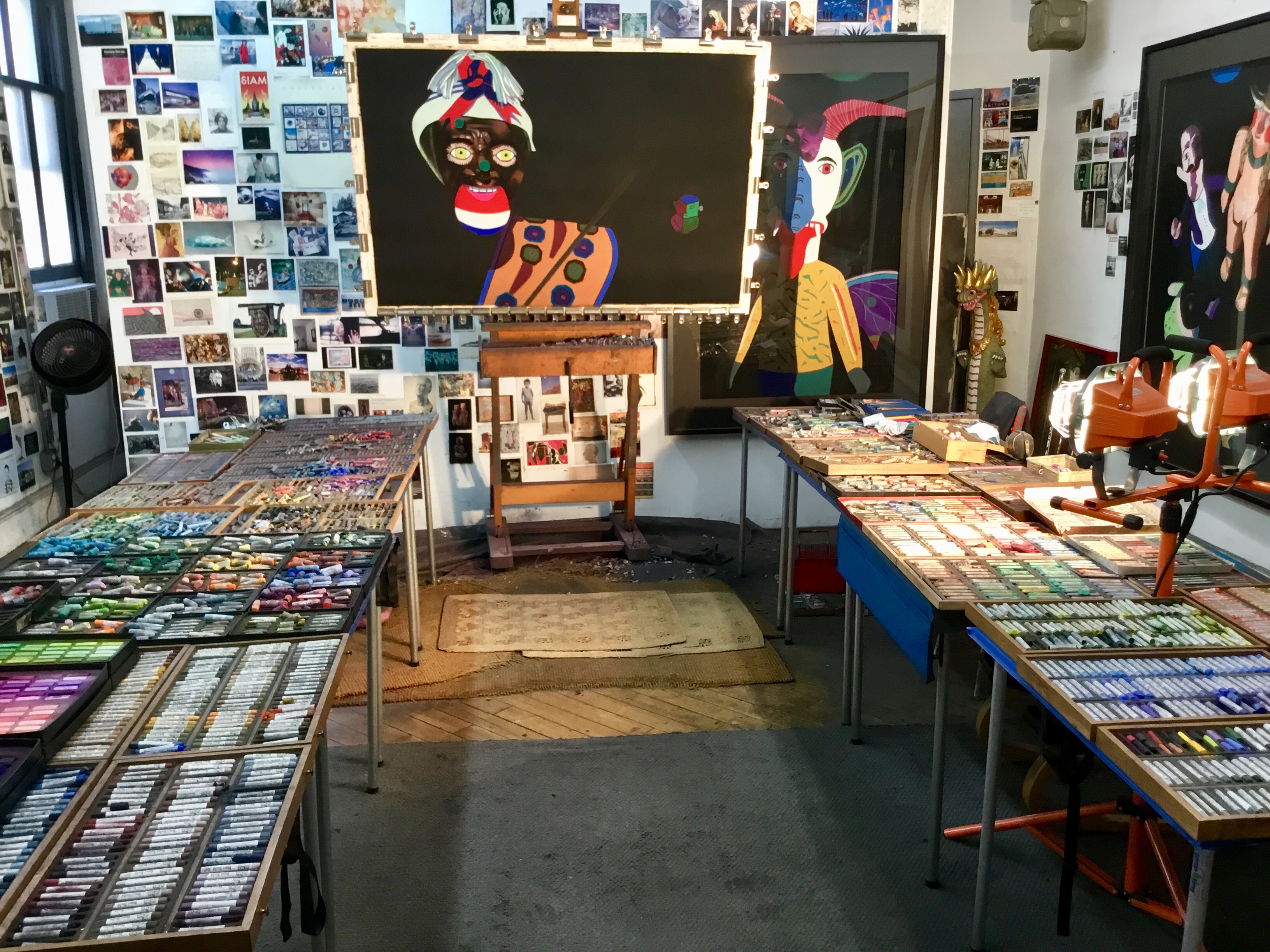
Barbara’s studio
* an ongoing series of quotations – mostly from artists, to artists – that offers wisdom, inspiration, and advice for the sometimes lonely road we are on.
Artists will, in their long education of sifting through what they like and respond to and what they don’t, find they “see” an artist’s work in the environment. They see a Corot or a Hopper. They know then that they have found a good subject because of the similarity of poetic attraction. They see with a set of limits or conventions that speak to them.
But as time goes on and you continue working, you find you do not consider those subjects any longer but they still register. They belong to someone else. You have found other affinities. Or perhaps more importantly you have found your own. You respond now to your own internal song. Art is about art as much as it is about nature. Everything we respond to has passed through our filter of artistic influences.
Ian Roberts in Creative Authenticity: 16 Principles to Clarify and Deepen Your Artistic Vision
Comments are welcome!
Pearls from artists* # 371
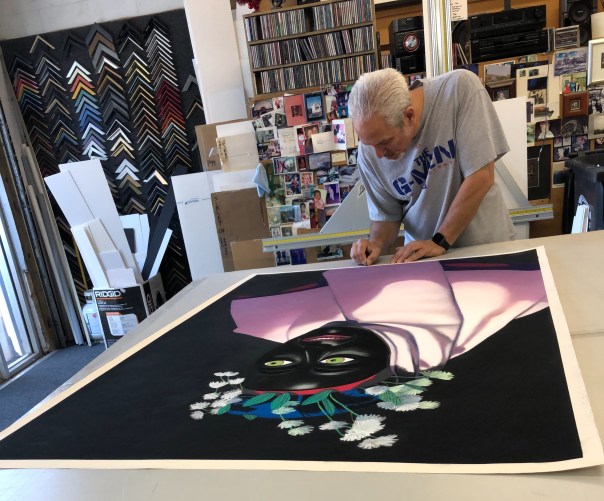
“Poseur,” Soft Pastel on Sandpaper, 58” x 38” at the framer
* an ongoing series of quotations – mostly from artists, to artists – that offers wisdom, inspiration, and advice for the sometimes lonely road we are on.
If you look at the work of an artist over a lifetime there is always transformation. Some hit a lively pace early on and then seem to lose it later. Others find that place progressively throughout their life; others still find it late. But regardless, they are all learning to isolate the poetic within them. That focus on the poetic in our own work increases our appreciation of the beauty around us, increases our growth, and increases our divine connection.
One thing you see in many artists’ work is that as they continue over the decades to translate their experience of the poetic into form, they learn to communicate better. They strip away all the extraneous stuff and artistic baggage they had. They say more with less.
Ian Roberts in Creative Authenticity: 16 Principles to Clarify and Deepen Your Artistic Vision
Comments are welcome!


 barbararachkoscoloreddust.com