Blog Archives
Pearls from artists* # 661

*an ongoing series of quotations – mostly from artists, to artists – that offers wisdom, inspiration, and advice for the sometimes lonely road we are on.
Curiosity and wonder are essential to the art life. Curiosity drives us to look beneath the rocks that others pass by. Wonder helps us recognize the infinite potential of what we find there, so we might spin it into something remarkable. The concepts and visuals that attract me will likely not grab you, but therein lies the beauty. Your job is to keep excavating the things that intrigue you, feeding your head with new ideas. The objective is to build a singular mental stockpile of elements that make up your visual voice. Your brain then makes connections that others would never make because they have assembled a vastly different stockpile of ideas, images, experiences, concepts, beliefs, and concerns.
Kate Kretz in Art From Your Core: A Holistic Guide to Visual Voice
Comments are welcome!
Pearls from artists* # 647

Barbara’s Studio
*an ongoing series of quotations – mostly from artists, to artists – that offers wisdom, inspiration, and advice for the sometimes lonely road we are on.
My life is a collage, with time cutting and rearranging the materials and laying them down, overlapping and contrasting, sometimes with the fresh shock of a surrealist painting. I wonder if traditional perspective is a necessary discipline for the art student, for over the years my life has taken on its own pattern and formed its own rules, adapting events and chronology in the sifting process of memory. As a mature artist, I can take liberties with perspective. We are not made of straight lines. As Picabia said: ‘Our heads are round so that thoughts can change direction.’
Eileen Agar in A Look at My Life
Comments are welcome!
Pearls from artists* # 644

Barbara’s Studio
*an ongoing series of quotations – mostly from artists, to artists – that offers wisdom, inspiration, and advice for the sometimes lonely road we are on.
Making the work you were born to make is a radical act of resistance in the current social climate. It refuses to hold money or power as its highest value. It takes as much time as it needs. It demands quiet and stillness. It involves deep reflection and reverence. It prioritizes uncool traits of curiosity, wonder, and earnestness. It shuns the superficial, contorting to reach far beyond it for the significant. It answers to no one but itself and has not been diluted by corporate committee. It doesn’t pander. It can tell stories that make people uncomfortable. And, despite all attempts to frame it as such, unlike most other activities, art is not a competitive sport.
Kate Kretz in Art From Your Core: A Holistic Guide to Visual Voice
Comments are welcome!
Pearls from artists* # 632

*an ongoing series of quotations – mostly from artists, to artists – that offers wisdom, inspiration, and advice for the sometimes lonely road we are on.
”The mind once stretched by a new idea, never returns to its original dimensions.” – Ralph Waldo Emerson ((1803 – 1882)
Ralph Waldo Emerson was more prescient than he can ever have realized. It was not until the 1960s that neuroscientist Marian Diamond discovered that exposure to enriched environments increased brain matter, specifically in the brain’s outer cortex. Prior to her landmark research, scientists believed that the brain remained static until it started to decline in older age. Diamond was the first to observe the brain’s neuroplasticity, yet her findings were disputed and rejected for many years. Today she is considered one of the founders of modern neuroscience.
Museums are the ultimate enriched environments, or super-enriched spaces, that are good for body, mind, and soul. Museums are dedicated to arousing our curiosity; engaging us in discovery and learning; and evoking our reflection, wonder, and awe. Artists (and Emerson) have known intuitively what scientists are now proving with rigorous research: aesthetic experiences affect us in extraordinary ways. In short, our brains are wired for art.
The Museum and the Mind by Susan Magsamen in Museum, May/June 2024
Comments are welcome!
Q: What inspires you to create? (Question from “Cultured Focus Magazine”)
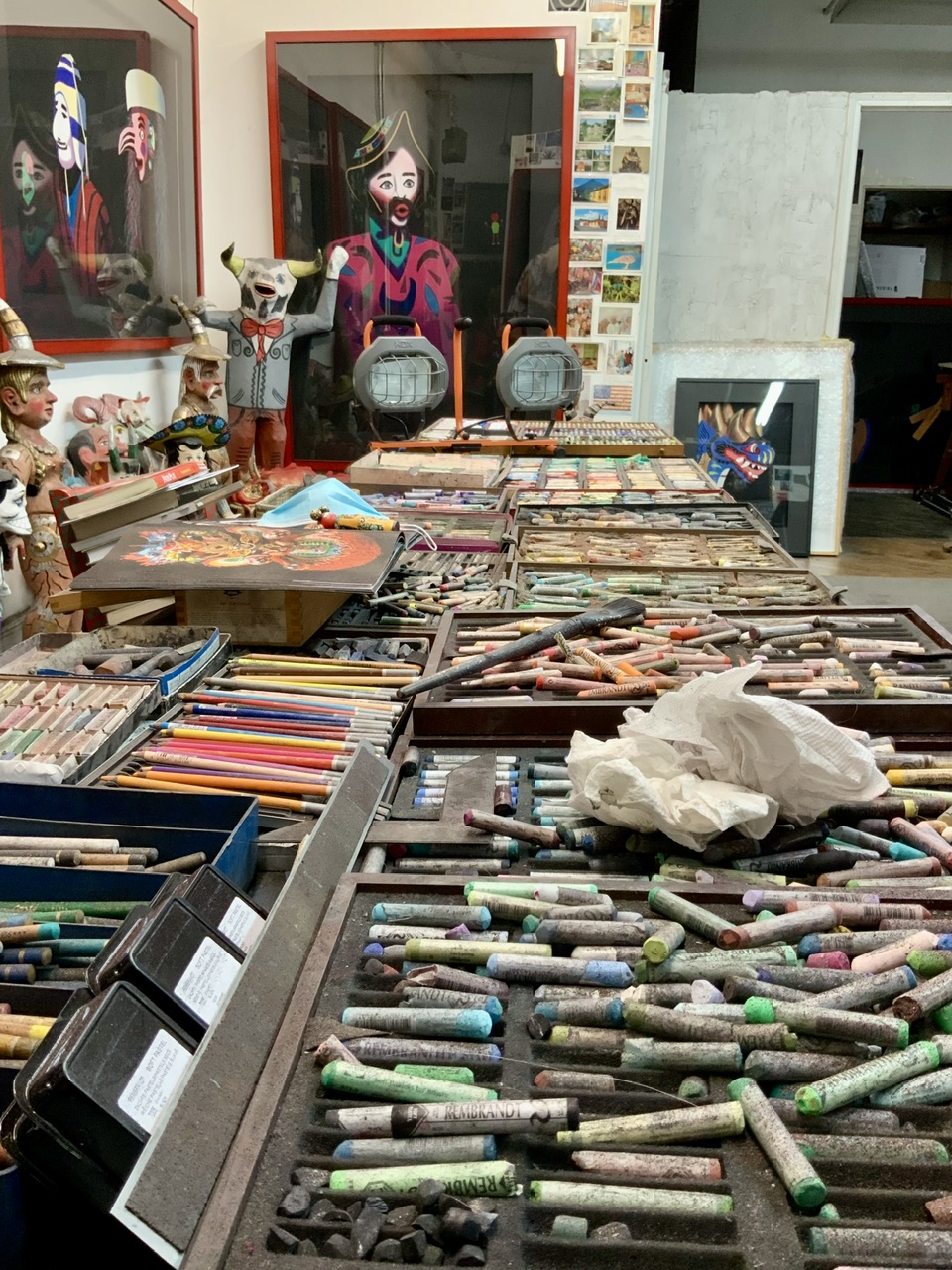
A: You remember the expression, to whom much is given, much is expected? Having discovered around the age of 5 or so that I could draw anything I could see, I know I have been given a tremendous gift. I remember being completely surprised as a kid to realize that not everyone can do this.
Therefore, I feel a kind of sacred obligation to develop my abilities as far as possible, to make the most of my short time on this earth. It is a thrill to see not only what is going to happen next in the studio, but also in my life. For example, I have become a world traveler. I wonder, which new country will I visit next?
Comments are welcome!
Pearls from artists* # 623

*an ongoing series of quotations – mostly from artists, to artists – that offers wisdom, inspiration, and advice for the sometimes lonely road we are on.
At the time [the Renaissance], Bologna was unique in championing the professions of women. The home of Europe’s oldest university, which had supported female students since the thirteenth century, the city considered women artists as integral to its development. Praised by scholars, written about by biographers and adored by the locals, they were also supported by patrons of all social classes (from bankers to barbers), creating a varied culture of artistic patronage. (By contrast, in Florence and Naples, commissioning was reserved for select noble families.). Women were also encouraged to sign their work, as well as to paint self-portraits for the purpose of being known and, most importantly, remembered. No wonder scholars have recorded a staggering sixty-eight women artists working in the city between the fifteenth and sixteenth centuries.
These notable exceptions remind us that women have always been perfectly capable of being artists. But while there could have been an abundance of women working at this time, in reality female artists were an absolute rarity, seen as ‘tokens’ rather than pioneers. (After de Rossi’s death [in 1530], no female sculptor is mentioned in the city’s records for 200 years.). And little knowledge remains of those working during the Renaissance period. Most of what we know has been passed down by male scholars and through legal documents, rarely from the women themselves.
Katy Hessel in The Story of Art Without Men
Comments are welcome!
Pearls from artists* # 630

*an ongoing series of quotations – mostly from artists, to artists – that offers wisdom, inspiration, and advice for the sometimes lonely road we are on.
During the Victorian age, women, with their ‘smaller,’ less ‘creative’ brains, were considered incapable of becoming professional artists and were often restricted to ‘craft’ or ‘design’ (genres not considered ‘fine art’ by the establishment). This perception made it very difficult not only for women to be taken seriously as artists, but for their (and their female predecessors’) work to be sold. In order to get around this, nineteenth-century art dealers were known to scratch out a female artist’s signature and replace it with that of a male contemporary, which explains why many works by women have only just come to light. (No wonder so many of them hid self-portraits among their still lifes).
Katy Hessel in The Story of Art Without Men
Comments are welcome!
Pearls from artists* # 627

In Hanga Roa, Rapa Nui (Easter Island), one of the most remote places on Earth!
*an ongoing series of quotations – mostly from artists, to artists – that offers wisdom, inspiration, and advice for the sometimes lonely road we are on.
We cannot afford to walk sightless among miracles. Nor can we protect ourselves from suffering. We do work that thrusts us into the pulsing heart of this world, whether or not we’re on the mood, whether or not it’s difficult or painful or we’d prefer to divert our eyes. When I think of the wisest people I know, they share one defining trait: curiosity. They turn away from the minutiae of their lives – and focus on the world around them. They are motivated by a desire to explore the unfamiliar. They are drawn toward what they don’t understand. They enjoy surprise. Some of these people are seventy, eighty, close to ninety years old, but they remind me of my son and his friend on the day I sprung them from camp. Courting astonishment. Seeking breathless wonder.
Dani Shapiro in Still Writing: The Perils and Pleasures of a Creative Life
Comments are welcome!
Q: Why do you sometimes depict the same subject matter twice?

“Trickster” (left) and “Sacrificial,” while the latter was in-progress
A: It is fascinating to play around with scale. For starters, it helps demonstrate how my pastel techniques and my approach to the subject matter are evolving. I’ve noticed that I always see and depict more details the second time around.
Typically, I prefer the second pastel painting over the first one depicting the same subject. Man Ray famously said:
“There is no progress in art, any more than there is progress in making love. There are simply different ways of doing it.”
I disagree with him. I am an optimist who believes that artists cannot help but improve over time. It’s one of the things that gets me into my studio: the idea that my creative process and my ways of using pastel are changing for the better. I like to think this represents some sort of creative progress. But still I sometimes have to wonder, is the idea of ‘progress’ just something artists tell ourselves in order to keep going?
Comments are welcome!
Q: To what extent will the world of art change in the post-COVID period – both in terms of what is created and also the business of art? (Question from artamour)
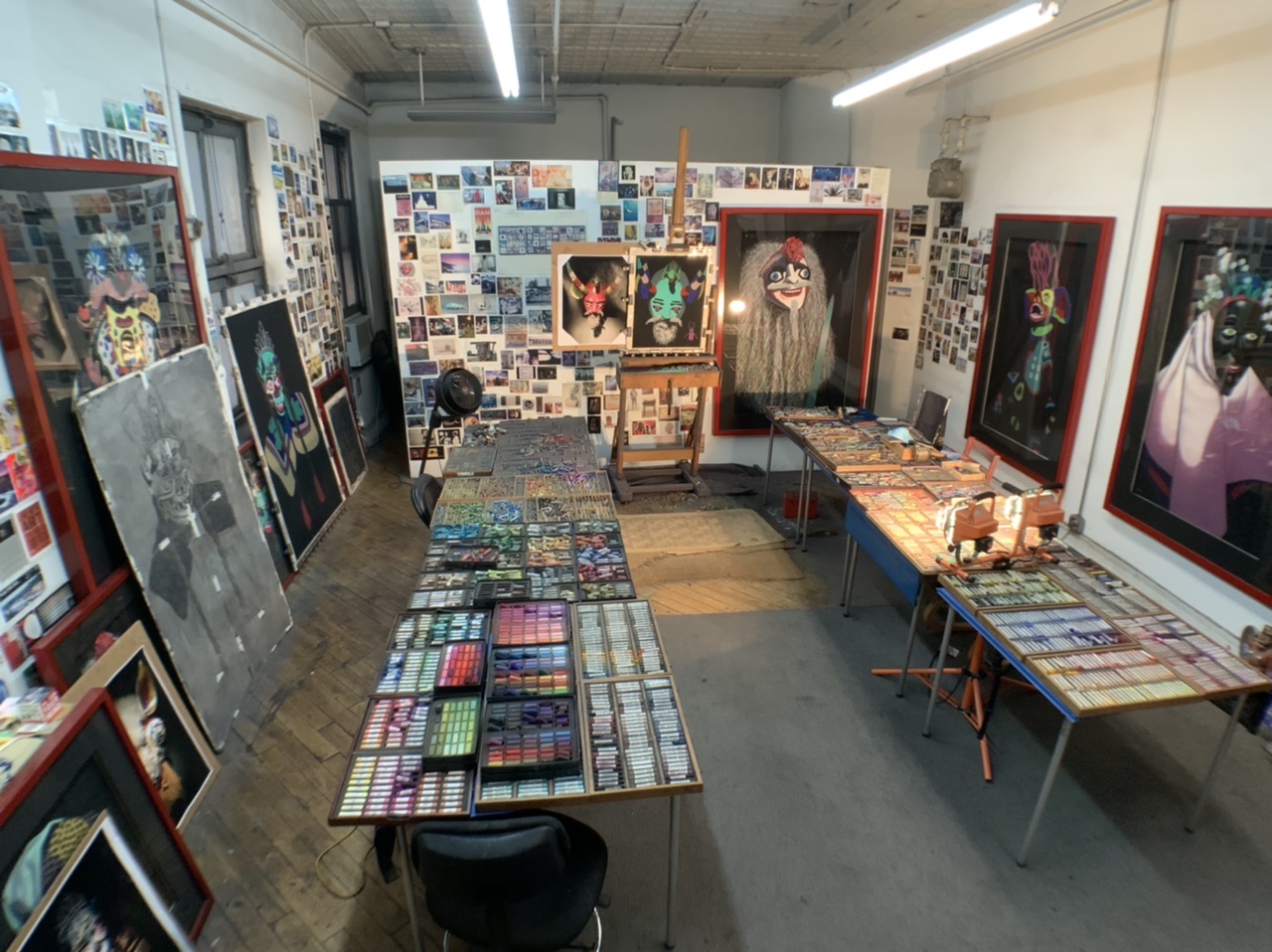
A: We all still wonder how the art world will change post-COVID. (Will there ever be a time when we can say we are post-COVID?). I know that I will continue refining and developing my art practice and seeking out new business opportunities. I have been an artist long enough to know that I will always follow my own path (each pastel painting points to the next one) regardless of what is going on in the larger world. How could I not do so? In large part due to an extensive social media program carried out by my two able assistants, the COVID period has been a personal boon. I completed a short documentary film about my life and work. It is in post-production now. I gained representation with three new international galleries. My blog is attracting approximately 1,000 – 2,000 new subscribers every month and I continue receiving requests for interviews from around the world.
Comments are welcome!


 barbararachkoscoloreddust.com