Blog Archives
Q: Your pastel paintings are immediately recognizable as yours alone. Did you consciously try to develop a signature style in your work?
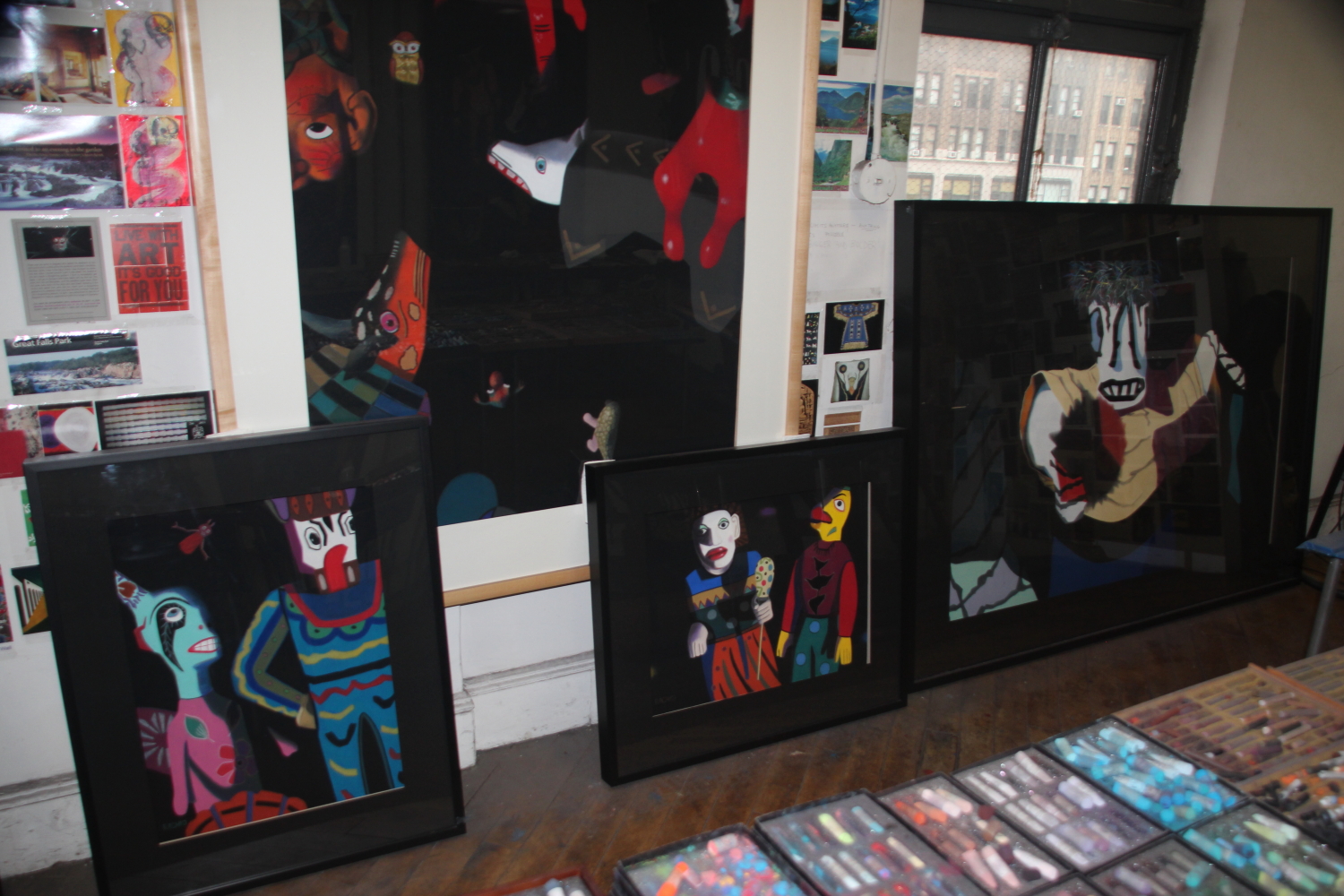
Barbara’s studio
A: I don’t believe that is even possible. An artist’s style is something that evolves with plain hard work and experience, over many years of trial and error, as one finds what techniques work best and discards those that don’t. It is a process of continually experimenting, refining, and clarifying. In other words, style is something that emerges naturally as you gradually strive to improve your art-making.
Style develops in close connection to what an artist is saying as she undergoes a very personal and idiosyncratic journey. Again, it would seem improbable for an artist to strive for any particular style, since style is not something over which an artist can exert much conscious control.
I would even say that each artist’s unique style is inevitable. It would be nearly impossible now to make a pastel painting or photograph that does NOT look like a Rachko.
Comments are welcome!
Q: Would you talk about how the Judas figures you depict in your pastel paintings function in Mexico?
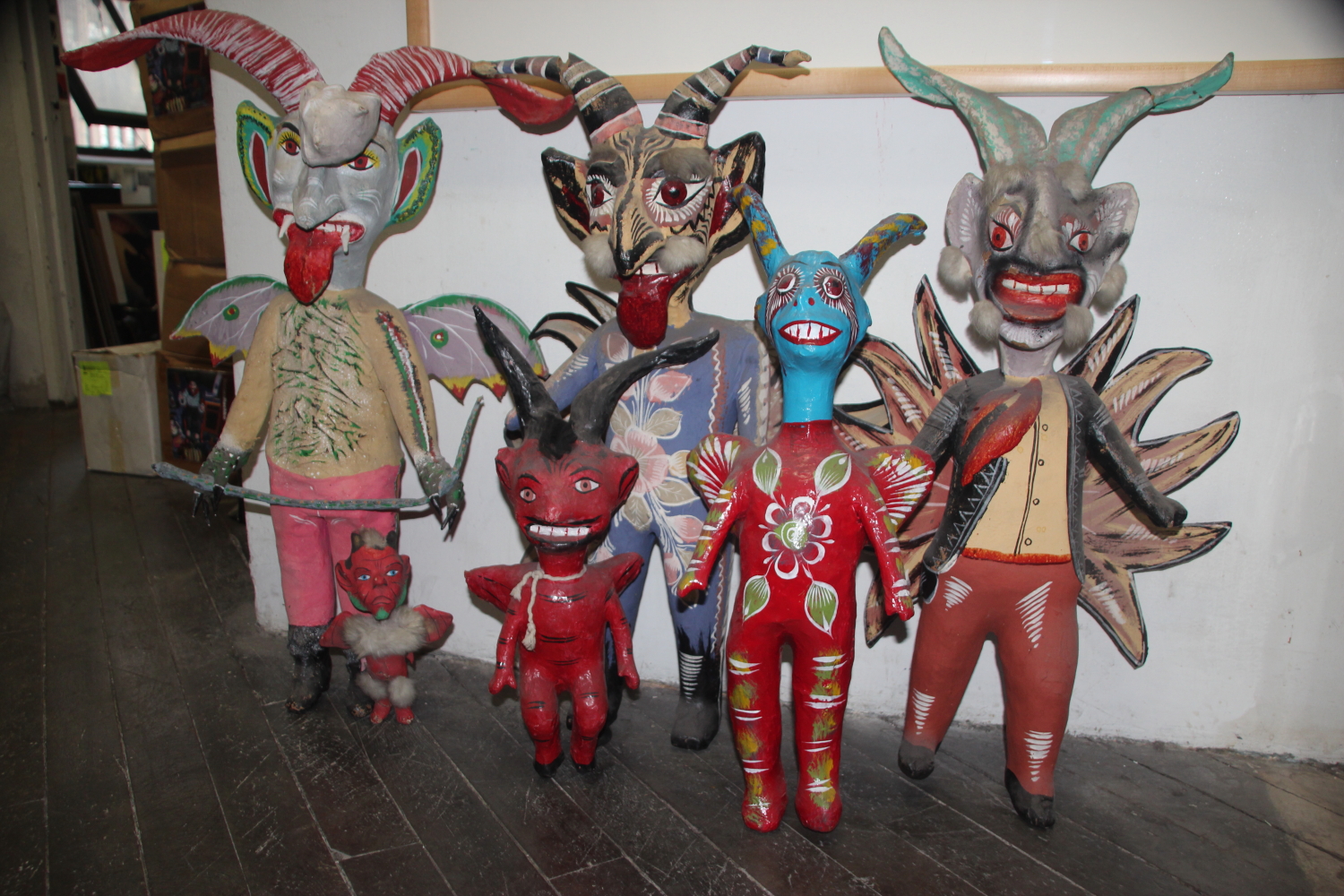
Some Judases
A: Here’s a good explanation from a website called “Mexican Folk Art Guide”:
“La quema de Judas or the Judas burning in Mexico is a celebration held on Sabado de Gloria (Holy Saturday). Papier mache figures symbolizing Judas Iscariot stuffed with fireworks are exploded in local plazas in front of cheerful spectators.
The Judases exploded in public spaces can measure up to 5 meters, while 30 cm ones can be found with a firework in their back to explode at home.
In Mexico la quema de Judas dates from the beginning of the Spanish colony when the Judas effigies were made with hay and rags and burned. Later as paper became available and the fireworks techniques arrived, thanks to the Spanish commerce route from the Philippines, the Judases were made out of cardboard, stuffed with fireworks, and exploded.
After the Independence War the celebration lost its religious character and became a secular activity. The Judas effigies were stuffed with candies, bread, and cigarettes to attract the crowds into the business [establishment] that sponsored the Judas.
Judas was then depicted as a devil and identified with a corrupt official, or any character that would harm people. In 1849 a new law stipulated that it was forbidden to relate a Judas effigy with any person by putting a name on it or dressing it in a certain way to be identified with a particular person.”
This is why whenever I bring home a Judas figure from Mexico, I feel like I have rescued it from a fire-y death!
Comments are welcome!


 barbararachkoscoloreddust.com