Blog Archives
What’s on the easel today?

Work in progress
A: I am in the very early stages of a large pastel painting.
Comments are welcome!
Q: What’s on the easel today?
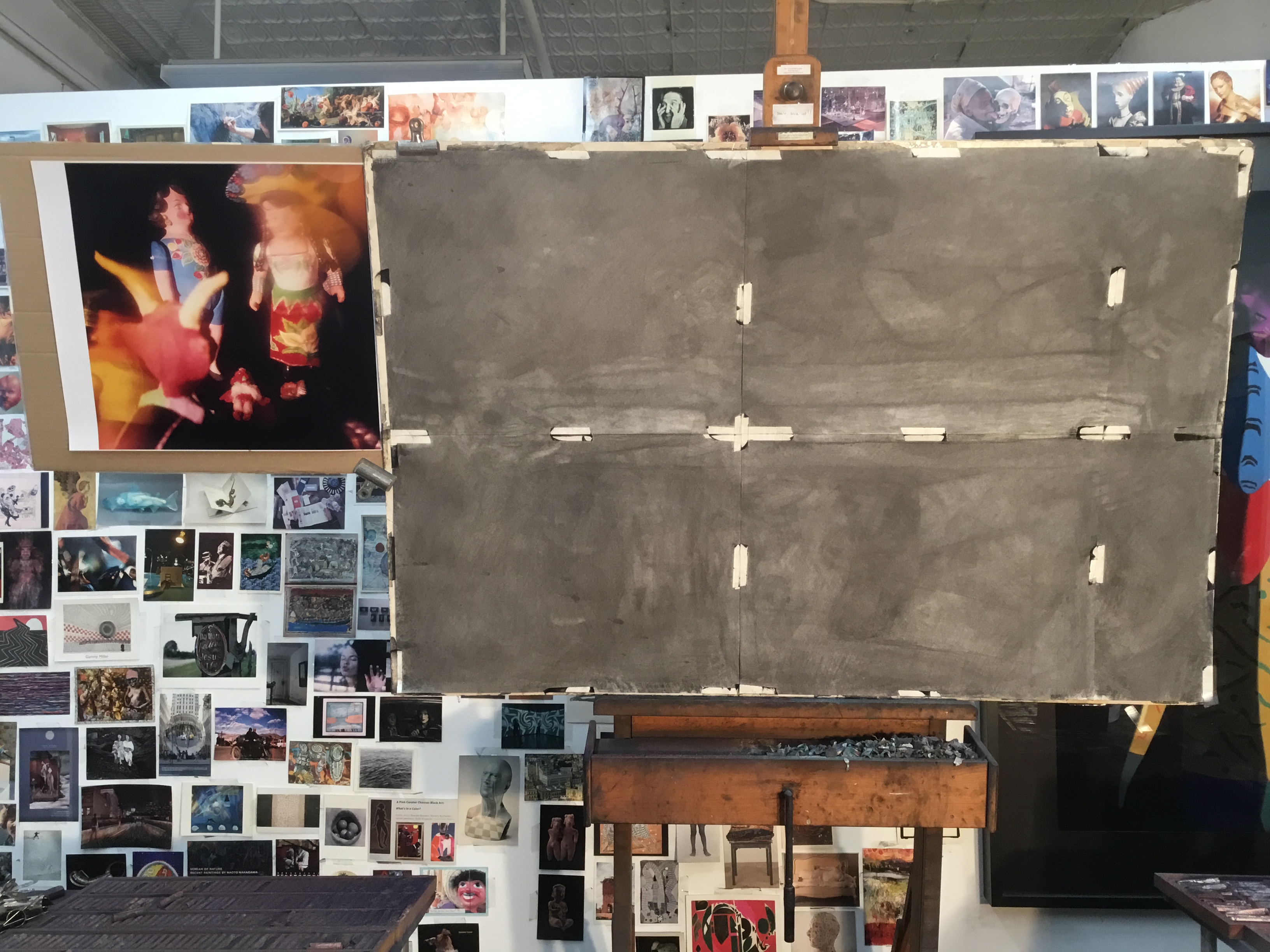
Preliminary drawing
A: I am ready to start a preliminary charcoal drawing as a study for my next pastel painting. It has been a while since I worked with the Mexican figures in the photo on the left. It’s like a reunion with dear friends!
Comments are welcome!
Q: Do you consider your finished pastel works to be drawings or paintings?

“The Sovereign,” soft pastel on sandpaper, 58″ x 38″ image, 70″ x 50″ framed
A: Among artists who work in pastel, these two words, ‘drawings’ and ‘paintings,’ have very specific meanings, somewhat unrelated to the usual distinctions made by art historians and others. For a pastel artist, a ‘drawing’ refers to a work in which the paper or other substrate is allowed to show through. In a pastel ‘painting’ you do not see the substrate at all, i.e. pastel is used much more heavily in a painting than in a drawing. Since I have always spent months creating each piece, covering the entire sandpaper ground with up to 30 layers of pigment, I have considered my work to be pastel painting.
Comments are welcome!
Q: What’s on the easel today?
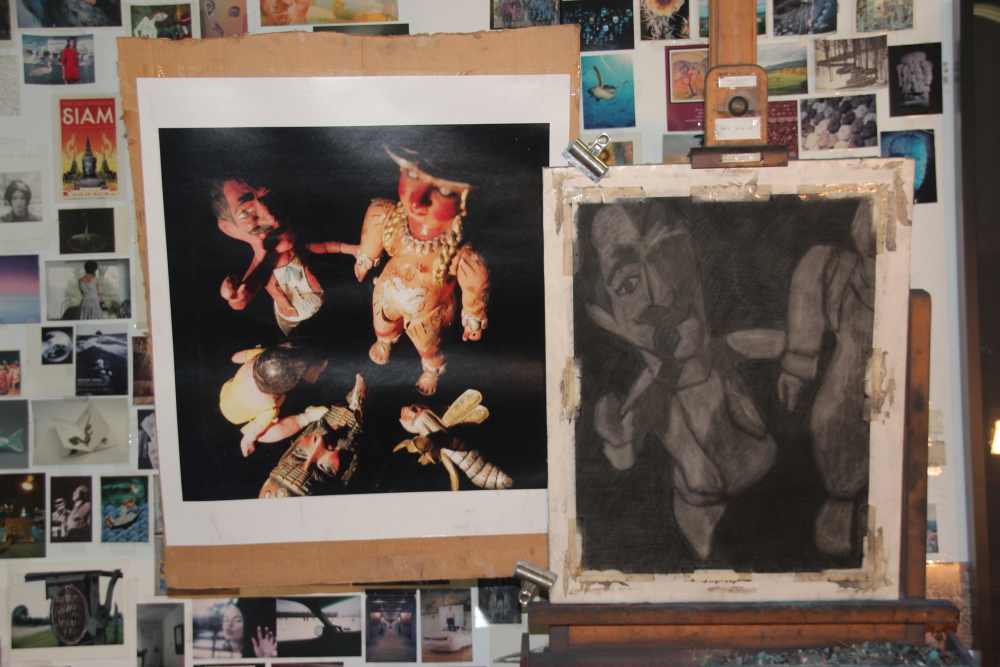
Preliminary sketch
A: I’m working on a preliminary charcoal sketch for my next pastel painting.
Comments are welcome!
Q: What’s on the easel today?
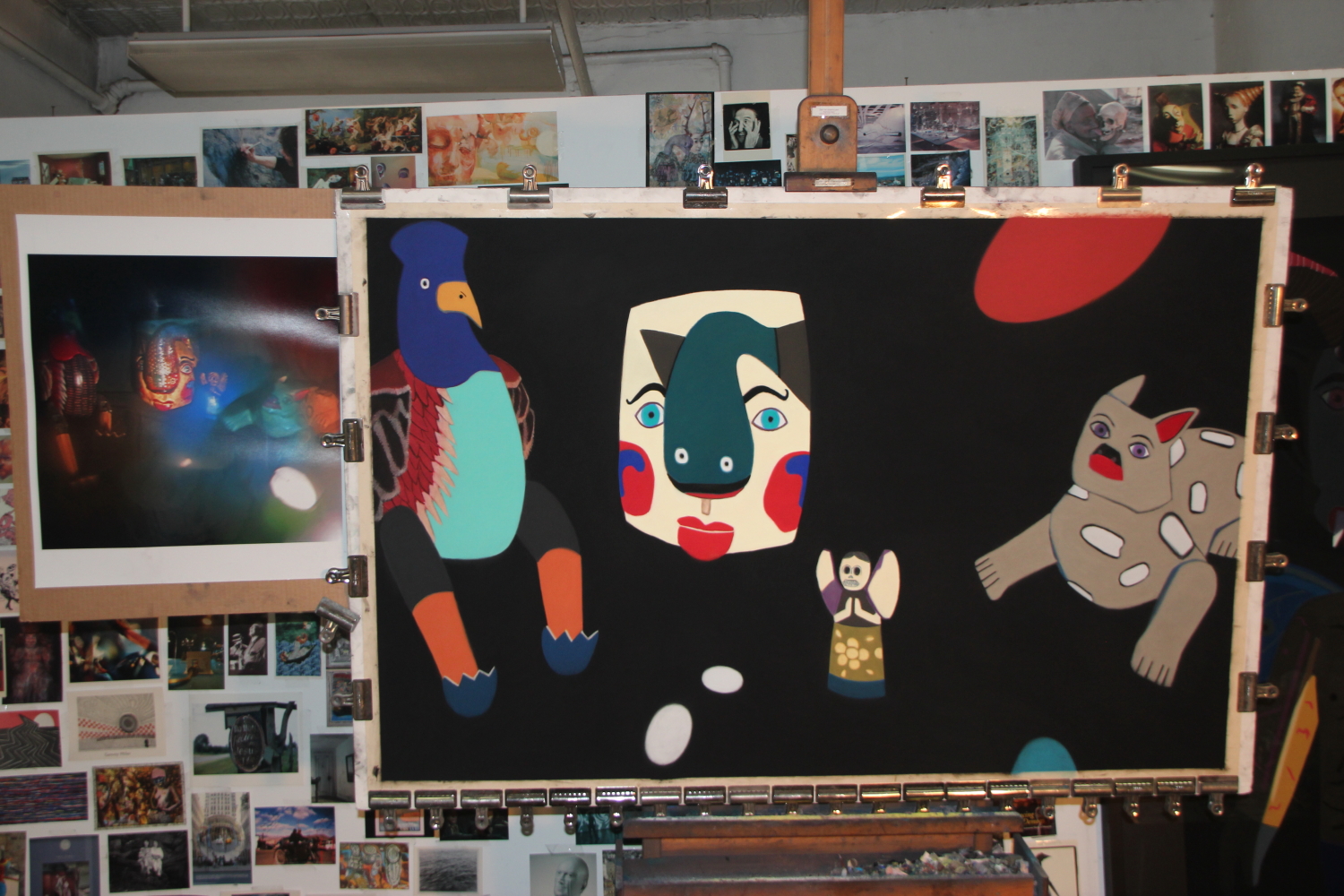
Work in progress
A: I continue working on a large pastel painting called “Motley.”
Comments are welcome!
Pearls from artists* # 117
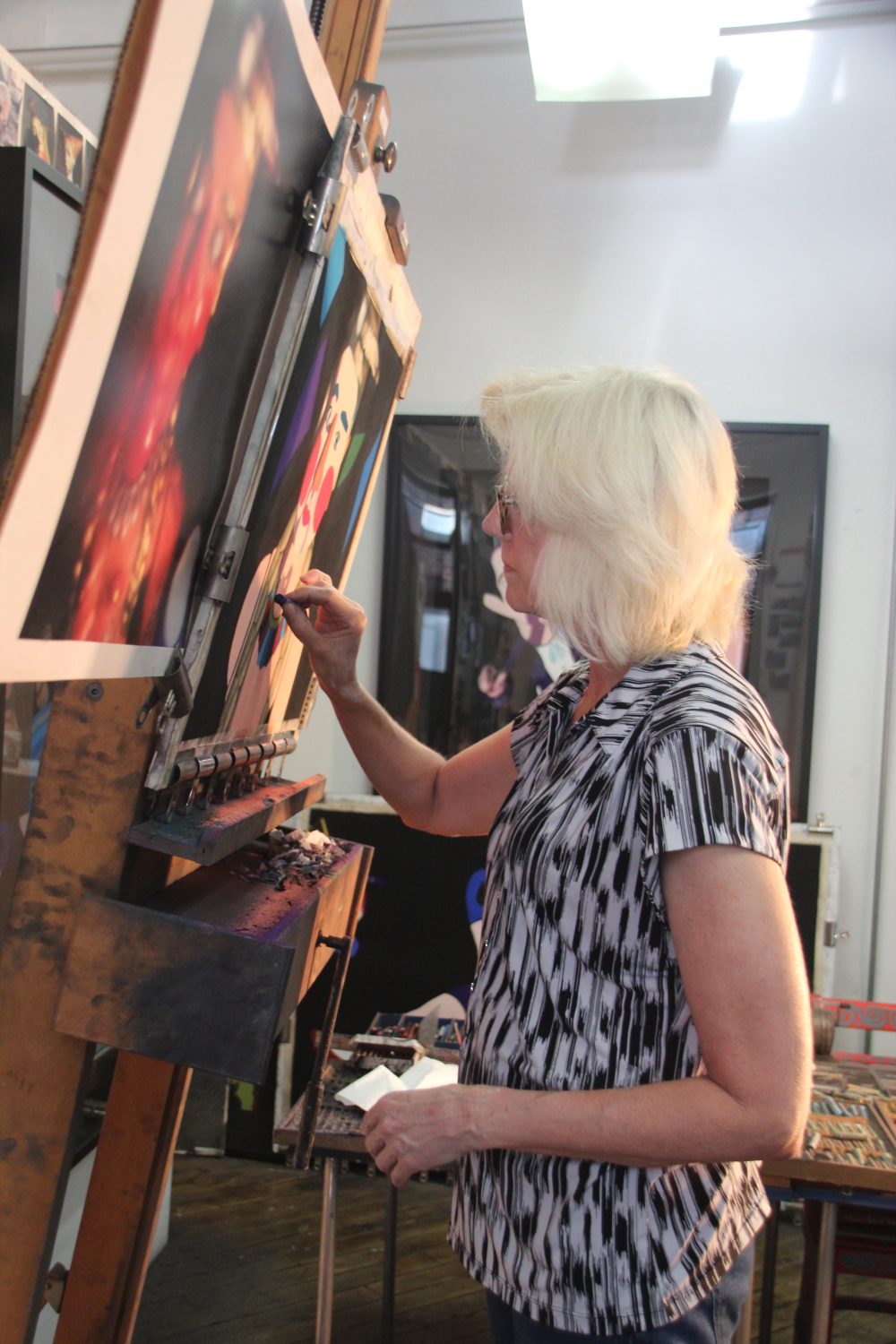
At work on a pastel painting
* an ongoing series of quotations – mostly from artists, to artists – that offers wisdom, inspiration, and advice for the sometimes lonely road we are on.
Rote practice is not deep practice. Deep practice is slow, demanding, and uncomfortable. To practice deeply is to live deliberately in a space that is uncomfortable but with the encouraging sense that progress can happen. Deep practice is not rushed. Constant critical feedback is essential. Over time the effort alters neural pathways and increases skill.
Anne Bogart in What’s the Story: Essays about art, theater, and storytelling
Comments are welcome!
Q: Last week you spoke about what happens before you begin a pastel painting. Would you talk about how you actually make the work?
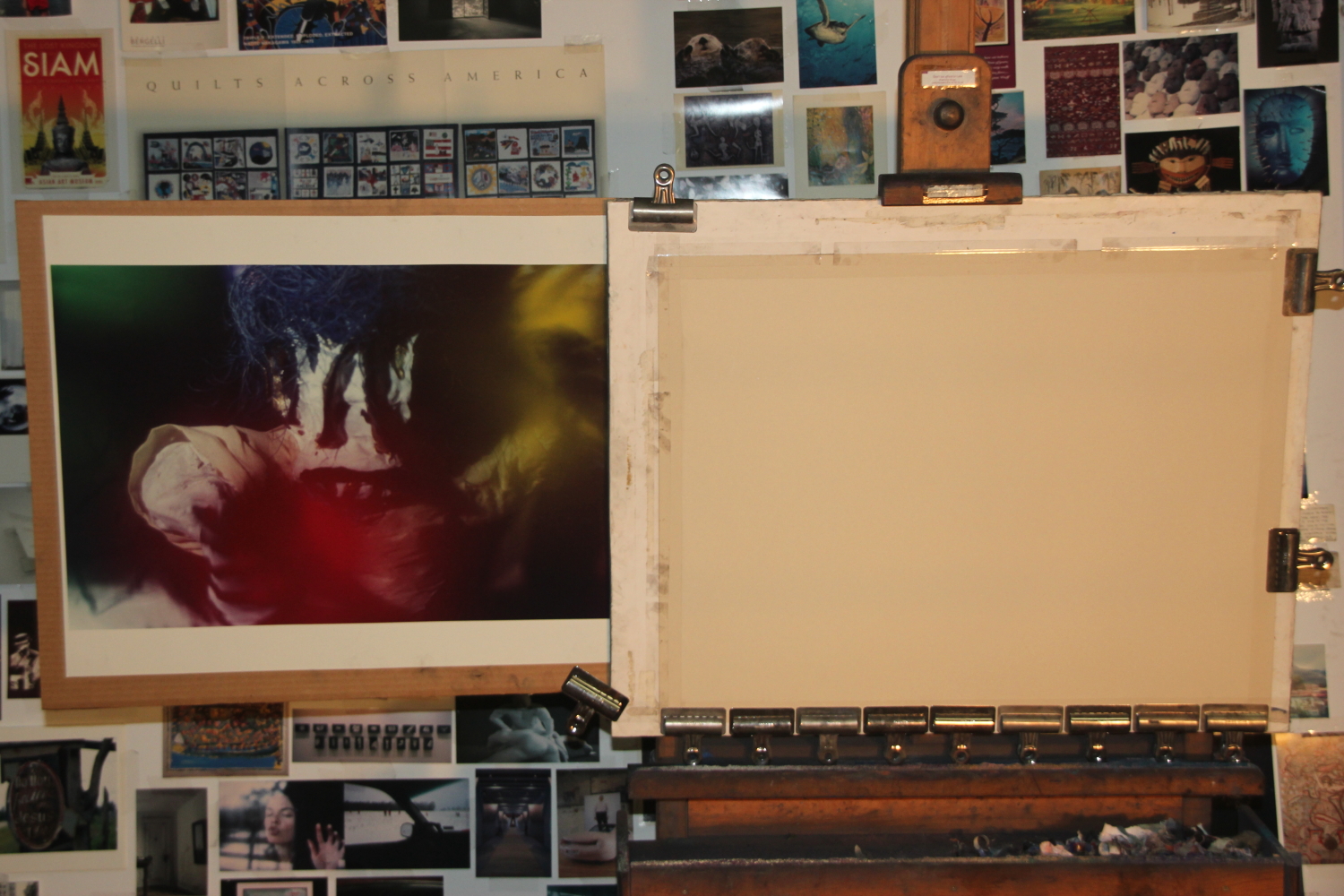
Beginning a new pastel painting
A: I work on each pastel-on-sandpaper painting for approximately three months. I try to be in my studio 7 to 8 hours a day, five days a week.
I make thousands of creative decisions as I apply and layer soft pastels (I have thousands to choose from), blend them with my fingers, and mix new colors directly on the sandpaper. A finished piece consists of up to 30 layers of soft pastel.
My self-invented technique accounts for the vivid, intense color that often leads viewers of my originals to look very closely and ask, “What medium is this?” I believe I am pushing soft pastel to its limits, using it in ways that no other artist has done before.
Comments are welcome!
Q: Can you talk a little bit about your process? What happens before you even begin a pastel painting?

Barbara in Bali (far right)
A: My process is extremely slow and labor-intensive.
First, there is foreign travel – often to Mexico, Guatemala or someplace in Asia – to find the cultural objects – masks, carved wooden animals, paper mâché figures, and toys – that are my subject matter. I search the local markets, bazaars, and mask shops for these folk art objects. I look for things that are old, that look like they have a history, and were probably used in religious festivals of some kind. Typically, they are colorful, one-of-a- kind objects that have lots of inherent personality. How they enter my life and how I get them back to my New York studio is an important part of my art-making practice.
My working methods have changed dramatically over the nearly thirty years that I have been an artist. My current process is a much simplified version of how I used to work. As I pared down my imagery in the current series, “Black Paintings,” my creative process quite naturally pared down, too.
One constant is that I have always worked in series with each pastel painting leading quite naturally to the next. Another is that I always set up a scene, plan exactly how to light and photograph it, and work with a 20″ x 24″ photograph as the primary reference material.
In the setups I look for eye-catching compositions and interesting colors, patterns, and shadows. Sometimes I make up a story about the interaction that is occurring between the “actors,” as I call them.
In the “Domestic Threats” series I photographed the scene with a 4″ x 5″ Toyo Omega view camera. In my “Gods and Monsters” series I shot rolls of 220 film using a Mamiya 6. I still like to use an old analog camera for fine art work, although I have been rethinking this practice.
Nowadays the first step is to decide which photo I want to make into a painting (currently I have a backlog of photographs to choose from) and to order a 19 1/2″ x 19 1/2″ image (my Mamiya 6 shoots square images) printed on 20″ x 24″ paper. They recently closed, but I used to have the prints made at Manhattan Photo on West 20th Street in New York. Now I go to Duggal. Typically I have in mind the next two or three paintings that I want to create.
Once I have the reference photograph in hand, I make a preliminary tonal charcoal sketch on a piece of white drawing paper. The sketch helps me think about how to proceed and points out potential problem areas ahead.
Only then am I ready to start actually making the painting.
Comments are welcome!
Q: What’s on the easel today?
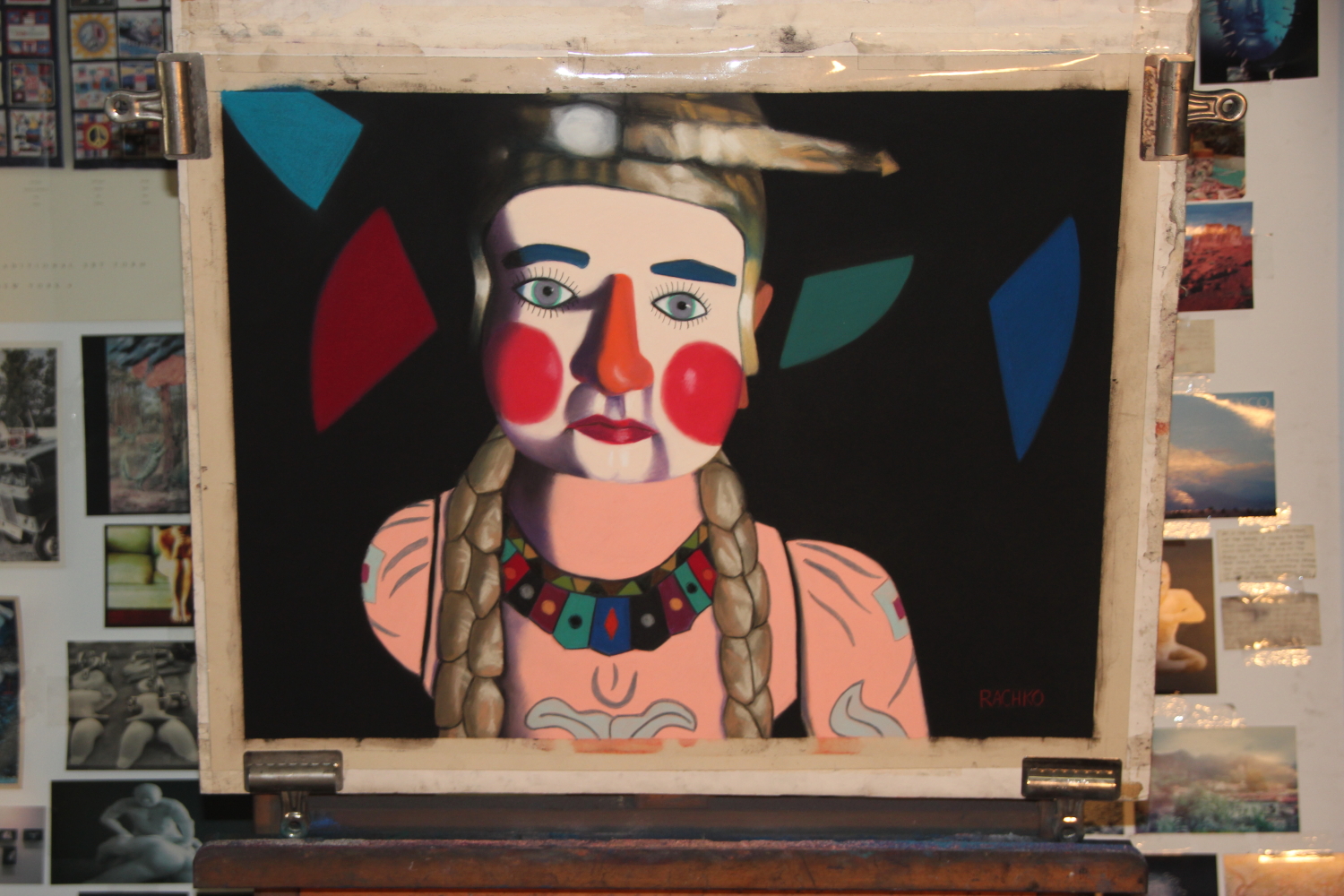
“The Storyteller,” nearly finished
A: I am putting finishing touches on a small pastel painting called, “The Storyteller.”
Comments are welcome!
Q: What’s on the easel today?

Pastel painting in progress
A: I’m working on a pastel painting started a few weeks ago. It has a long way to go.
Comments are welcome!


 barbararachkoscoloreddust.com