Blog Archives
Pearls from artists* # 641

In the Studio
*an ongoing series of quotations – mostly from artists, to artists – that offers wisdom, inspiration, and advice for the sometimes lonely road we are on.
Artistic voice is the most critical aspect of creative practice, yet it is rarely taught…
Some schools teach ‘ideation’ (conceptualizing a work or series), but that is very different from cultivating an essential core that is uniquely your own. Ideation is a Band-Aid to get you through your next few projects, while voice is a consistent, profound, and idiosyncratic wellspring that you own. It is born of your singular fascinations, obsessions, and life experiences, both weighty and mundane. If you make the effort to build and consistently replenish it, this well will deepen, yielding creative riches over the course of your entire life. Cultivating visual voice needs to be a cornerstone of art education, not an afterthought.
Kate Kretz in Art From Your Core: A Holistic Guide to Visual Voice
Comments are welcome!
Q: When you are in your studio working on a pastel painting and pause to consider what you have done, do you ask yourself, “Is it good?”
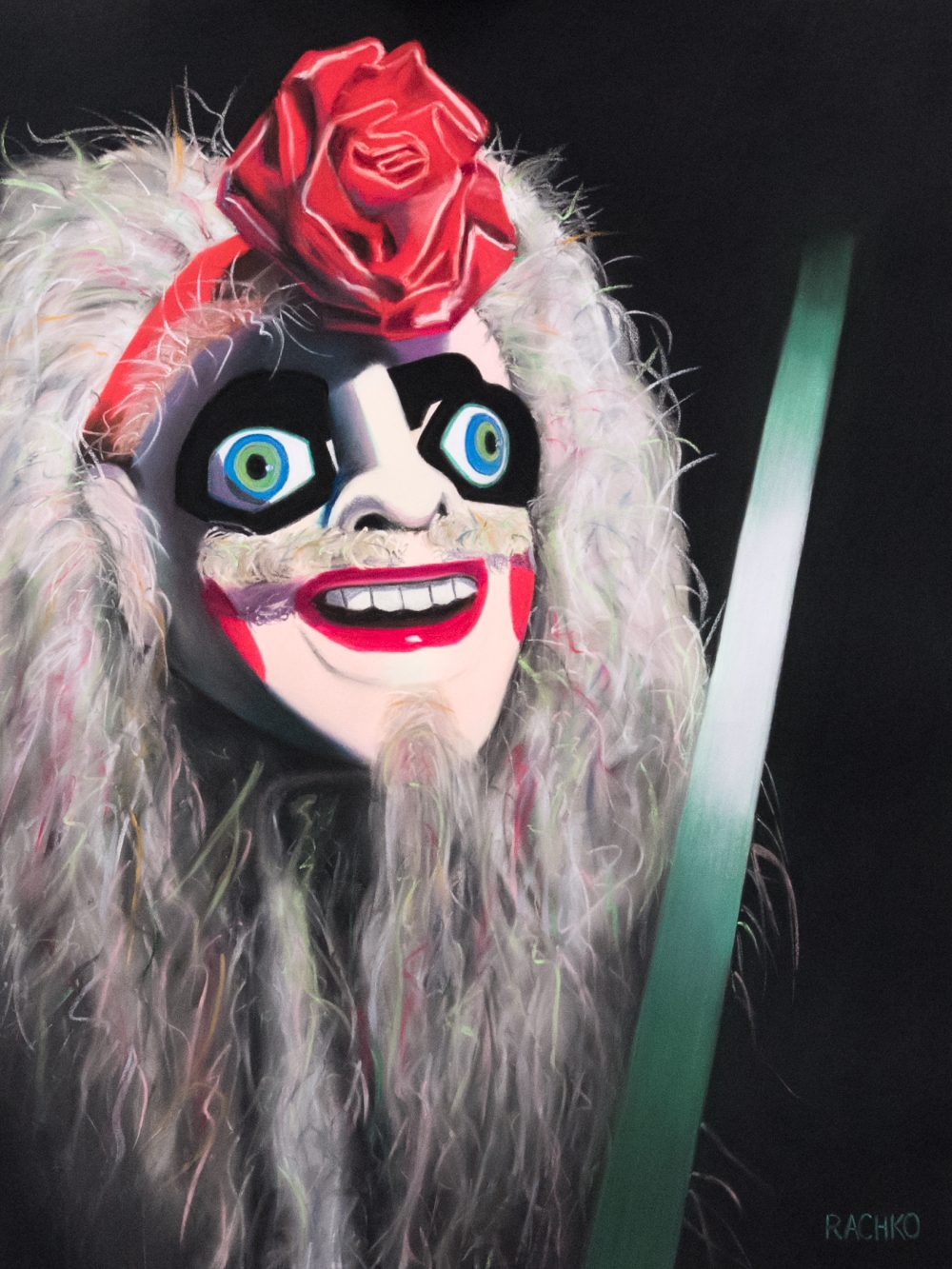
“The Champ,” soft pastel on sandpaper, 26″ x 20″ image, 35″ x 28 1/2″ framed
A: Certainly, I do. In addition, I ask myself some other important questions:
Is it the best I can do?
Is it exciting?
Is it surprising?
Is it idiosyncratic and unique to me?
Is there anything I can do to improve it?
Does it meet (or hopefully exceed) the exacting technical and formal standards I have set for my work?
Will I be proud to finally see my signature on it?
Comments are welcome!
Q: What qualities do you think mark the highest artistic achievement?
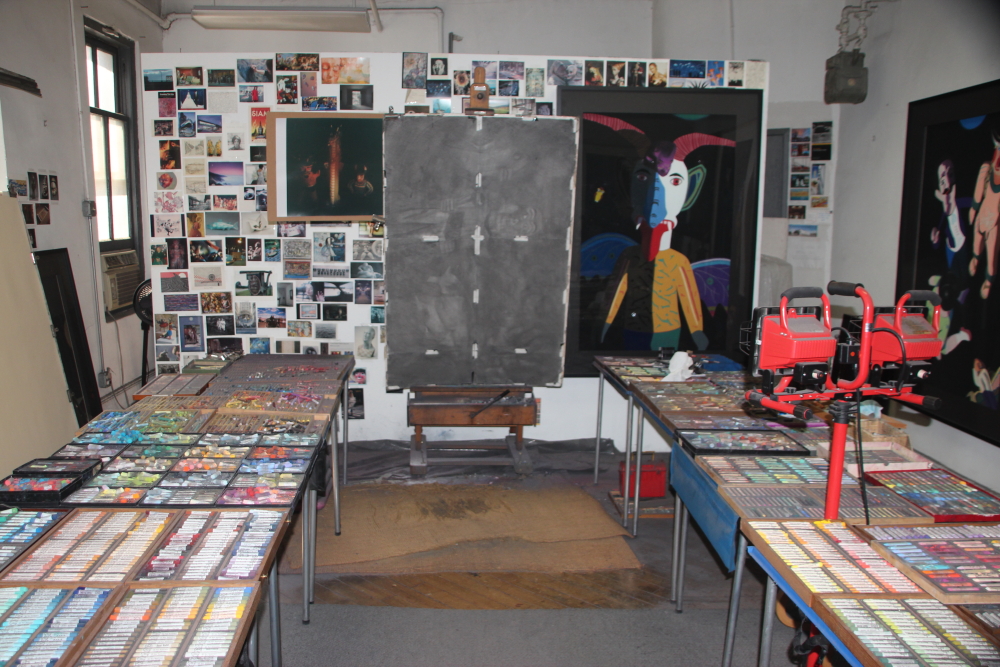
Barbara’s studio
A: If I may speak in the most general terms, several qualities come to mind that, for me, mark real artistic achievement:
- firm artistic control that allows the artist to create works that simultaneously demonstrate formal coherence while responding to inner necessity
- the creation of new forms and techniques that are adapted to expressing the artist’s highly personal vision
- an authentic and balanced fusion of form, method, and idea
- using material from one’s own idiosyncratic experiences and subtly transforming it in a personal inimitable way during the creative process
- the meaning of the thing created is rigorously subordinated to its design, which once established, generates its own internal principles of harmony and coherence
Comments are welcome!
Q: Your pastel paintings are immediately recognizable as yours alone. Did you consciously try to develop a signature style in your work?
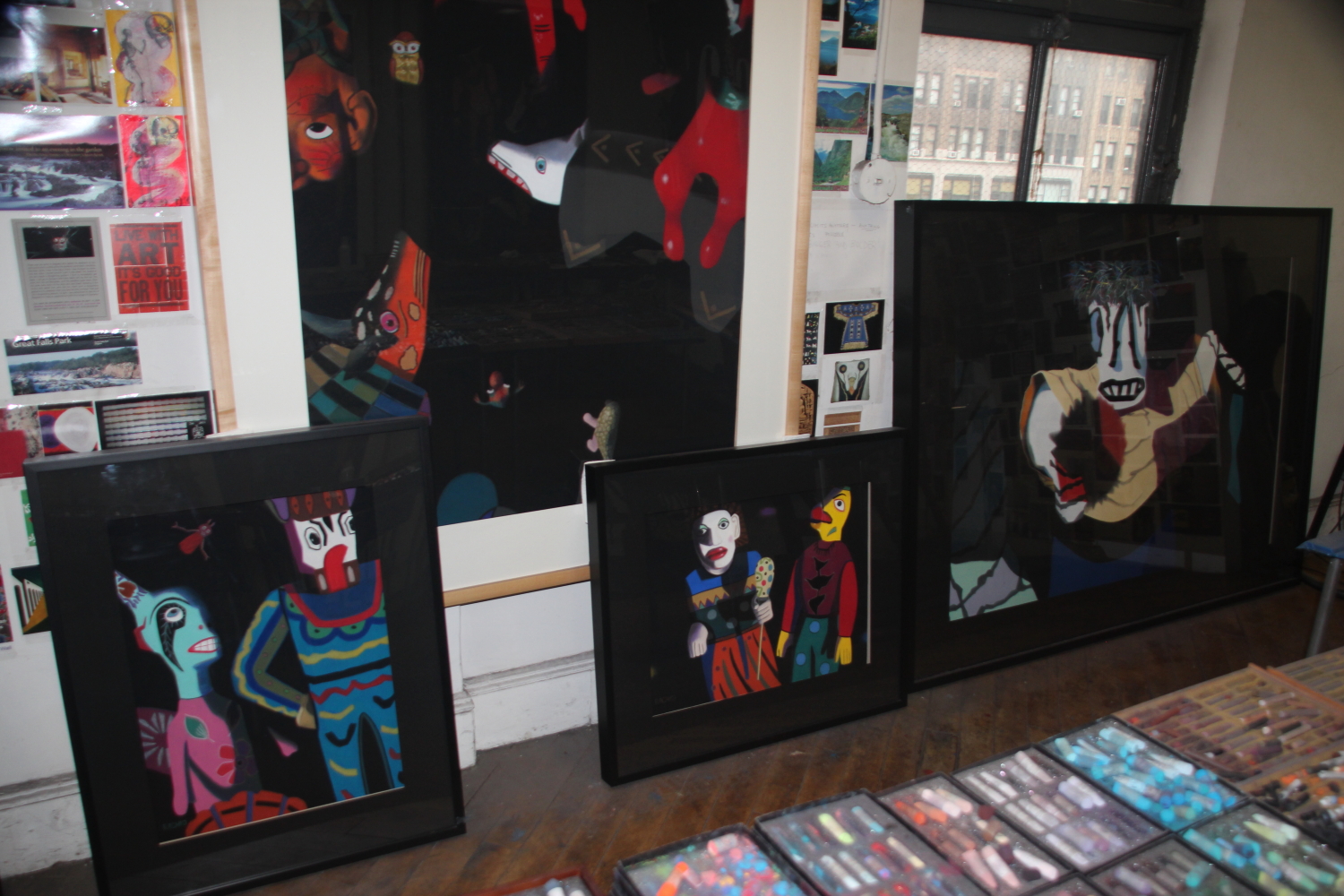
Barbara’s studio
A: I don’t believe that is even possible. An artist’s style is something that evolves with plain hard work and experience, over many years of trial and error, as one finds what techniques work best and discards those that don’t. It is a process of continually experimenting, refining, and clarifying. In other words, style is something that emerges naturally as you gradually strive to improve your art-making.
Style develops in close connection to what an artist is saying as she undergoes a very personal and idiosyncratic journey. Again, it would seem improbable for an artist to strive for any particular style, since style is not something over which an artist can exert much conscious control.
I would even say that each artist’s unique style is inevitable. It would be nearly impossible now to make a pastel painting or photograph that does NOT look like a Rachko.
Comments are welcome!


 barbararachkoscoloreddust.com