Blog Archives

Pearls from artists* # 40
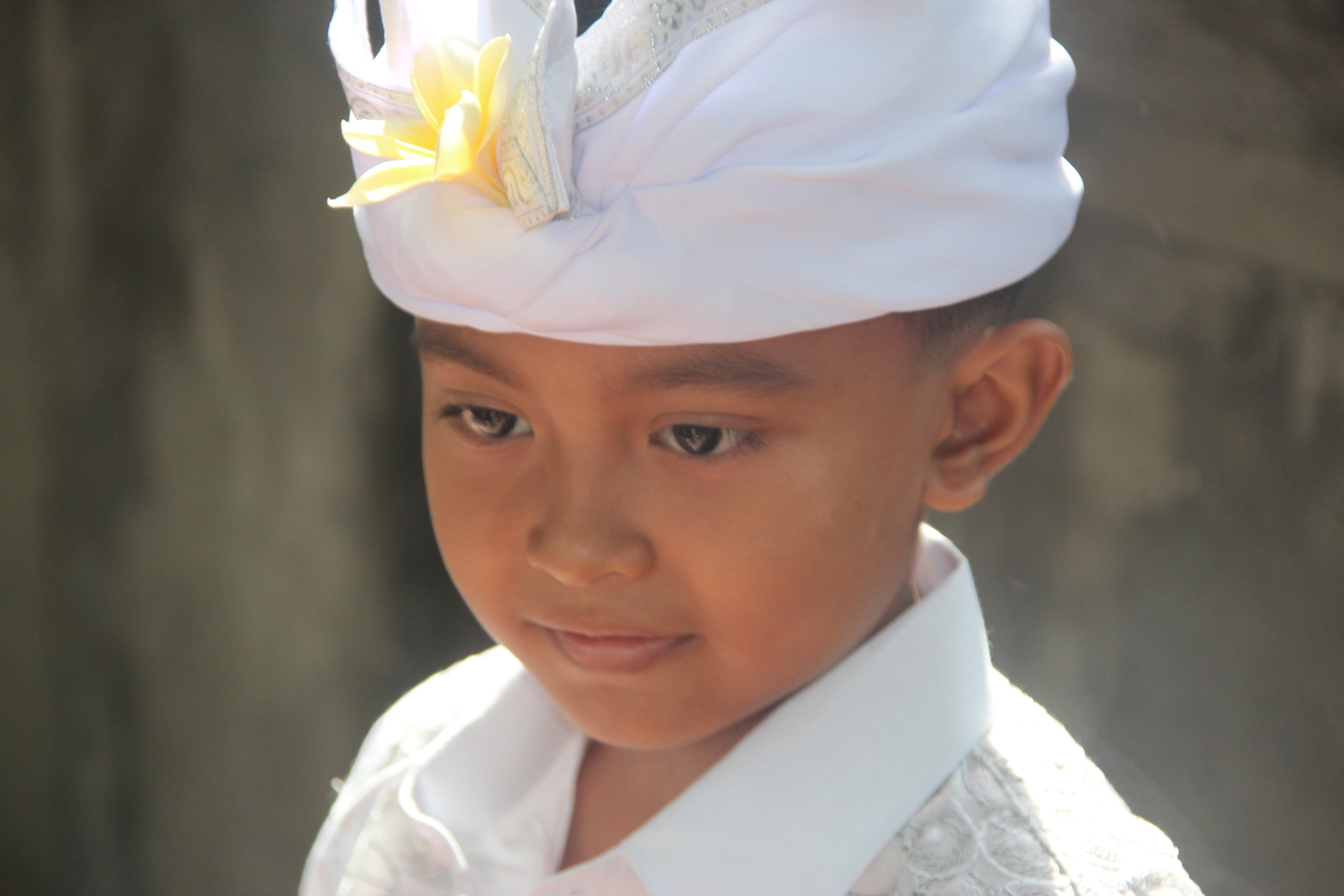
Balinese boy in Hindu dress

Balinese boy in Hindu dress

* an ongoing series of quotations – mostly from artists, to artists – that offers wisdom, inspiration, and advice for the sometimes lonely road we are on.

A film is a succession of snapshots more or less posed, and it only very rarely gives us the illusion of the unexpected and rare.  Ninety films out of a hundred are merely interminable poses.  One doesn’t premeditate a photograph like a murder or a work of art.

Photography is rather like those huge American department stores where you find all you want:  old master paintings, locomotives, playing cards, tempests, gardens, opera glasses, pretty girls.  But steer clear at all costs of the floorwalkers.  They are terrible chatterbox bores who have no idea what they are saying.

A photographer for the Daily Mirror said to me:  “The most beautiful photos I’ve ever taken were on a day I had forgotten my film.”

That photographer is a poet, perhaps, but quite certainly an imbecile.  The photographer’s personality?

Obviously each of them blows his nose in his own fashion.  But the most successful photographs are not those that required the most trouble.

That would be just too easy.

Carlo Rim in On the Snapshot

Comments are welcome! 
Q: To be a professional visual artist is to have two full-time jobs because an artist must continually balance the creative and the business sides of things. How do you manage to be so productive?

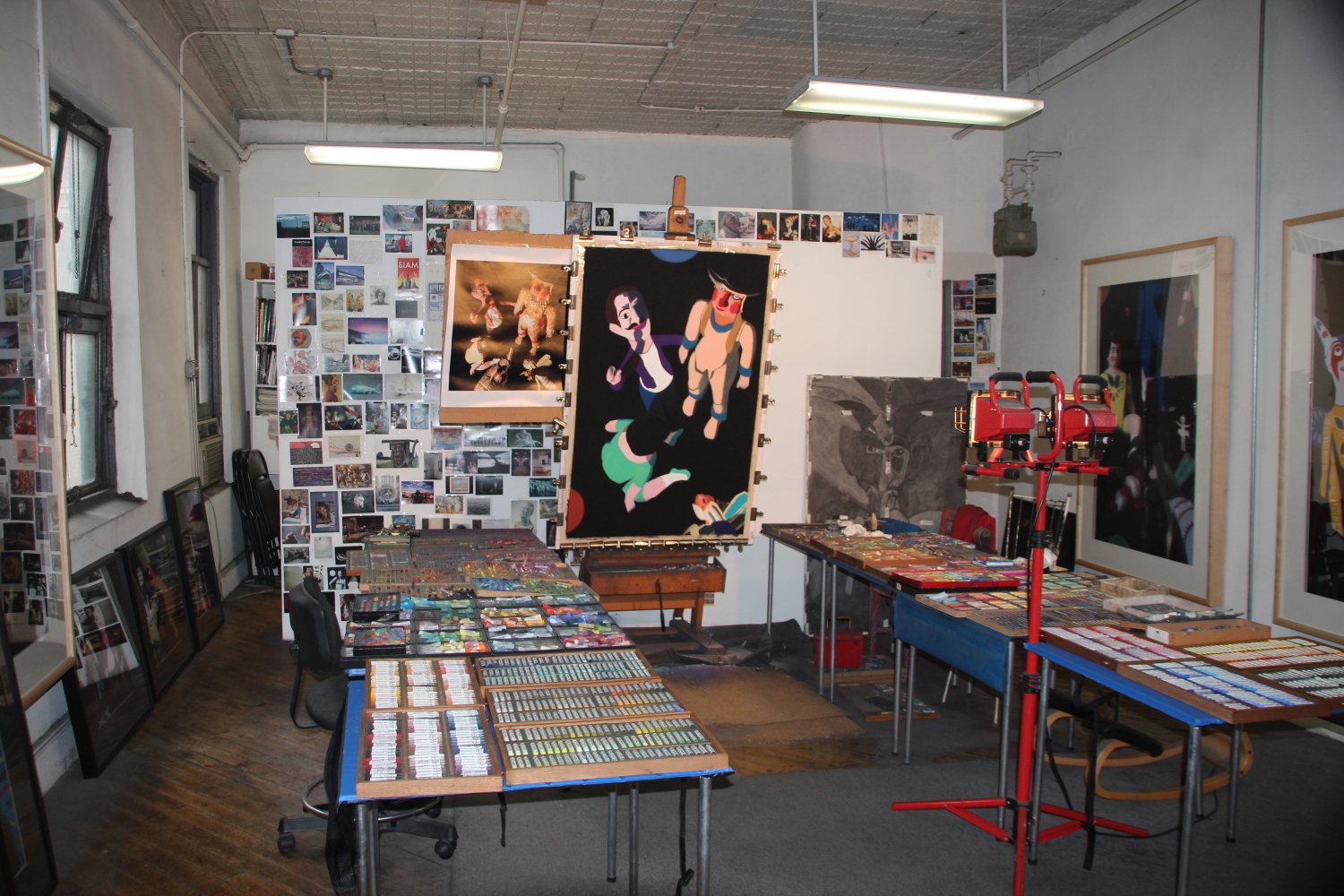
No computer in sight

No computer in sight

A:  With social media and other new ways of doing business, managing it all is getting more difficult every day.  Bear in mind that I say this as someone who does not have the extra time commitment of a day job, nor do I have children or other family members to care for.  I have no idea how other visual artists, who may have these responsibilities and more, keep up with all the tasks that need to be done.  In The Artist’s Guide:  How to Make A Living Doing What You Love, Jackie Battenfield lists a few of them (believe me, there are others):

…being an artist isn’t just about making art.  You have many other responsibilities –  managing a studio, looking for opportunities, identifying an audience for your work, caring for and protecting what you have created, and securing money, time, and space – in addition to whatever is  happening in your personal life.

To begin with I try to maintain regular studio hours.  I generally work on Mondays, Tuesdays, Thursdays, Fridays, and Saturdays, and once I’m at the studio I stay there for a minimum of 7 hours.  To paint I need daylight so in the spring and summer my work day tends to be longer.  My pastel-on-sandpaper paintings are extremely labor-intensive.  I need to put in sufficient hours in order to accomplish anything.  When I was younger I used to work in my studio 6 days a week, 9 hours or more a day.  I have more commitments now, and can no longer work 60+ hours a  week, but I still try to stick to a schedule.  And once I’m at the studio I concentrate on doing the creative work, period.

I am productive when I keep the business and creative sides physically separate., ie., no computers, iPads, etc. are allowed into the studio.  Recently I tried an experiment.  I brought my iPad to the studio, thinking, “Surely I am disciplined enough to use it only during my lunch break.”  But no, I wasted so much time checking email, responding to messages on Facebook, etc., when I should have been focusing on solving problems with the painting that was on my easel.  I learned a good lesson that day and won’t bring my iPad to the studio again.

As has long  been my practice, I concentrate on business tasks when I get home in the evening and on my, so called, days off.  After a day spent working in the studio, I generally spend a minimum of two to three hours more to answer email, apply for exhibitions, work on my blog, email images to people who need them, etc.  At present I  have part-time help with social media – the talented Barbra Drizin, of Start from Scratch Social Media – although my time commitment there is growing, too, as more details need my attention.

No one ever said it would be easy being a professional artist, but then again, I would not choose to spend my days any other way.  As I often say, “Being an artist is a calling.  Contrary to popular belief, it is NOT a life for wimps… or slackers.”

Comments are welcome!

Pearls from artists* # 18

West Village

West Village

* an ongoing series of quotations – mostly from artists, to artists – that offers wisdom, inspiration, and advice for the sometimes lonely road we are on.

Those who would make art might well begin by reflecting on the fate of those who preceded them:  most who began, quit.  It’s a genuine tragedy.  Worse yet, it’s an unnecessary tragedy.  After all, artists who continue and artists who quit share an immense field of common emotional ground.  (Viewed from the outside, in fact, they’re indistinguishable).  We’re all subject to a familiar and universal progression of human troubles – troubles we routinely survive, but which are (oddly enough) routinely fatal to the art-making process.  To survive as an artist requires confronting these troubles.  Basically, those who continue to make art are those who have learned how to continue – or more precisely, have learned how to not quit.

But curiously, while artists always have a myriad of reasons to quit, they consistently wait for a handful of specific moments to quit.  Artists quit when they convince themselves that their next effort is already doomed to fail.  And artists quit when they lose the destination for their work – for the place their work belongs.

Virtually all artists encounter such moments.  Fear that your next work will fail is a normal, recurring, and generally healthy part of the art-making cycle.  It happens all the time:  you focus on some new idea in your work, you try it out, run with it for awhile, reach a point of diminishing returns, and eventually decide it’s not worth pursuing further.  Writers even have a phrase for it – “the pen has run dry” – but all media have their equivalents.  In the normal artistic cycle this just tells you that you’ve come full circle, back to that point where you need to begin cultivating the next new idea.  But in artistic death it marks the last thing that happens:  you play out an idea, it stops working, you put the brush down… and thirty years later you confide to someone over coffee that, well, yes, you had wanted to paint when you were much younger.  Quitting is fundamentally different from stopping.  The latter happens all the time.  Quitting happens once.  Quitting means not starting again – and art is all about starting again.

David Bayles and Ted Orland, Art & Fear

Comments are welcome!  
Pearls from artists* # 15

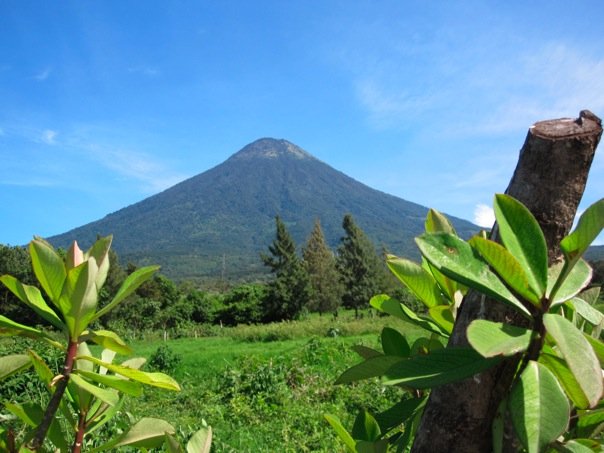
Somewhere in Guatemala

Somewhere in Guatemala

* an ongoing series of quotations – mostly from artists, to artists – that offers wisdom, inspiration, and advice for the sometimes lonely road we are on.

The first steps of a creative act are like groping in the dark: random and chaotic, feverish, and fearful, a lot of busy-ness with no apparent or definable end in sight. There is nothing yet to research. For me, these moments are not pretty. I look like a desperate woman, tortured by the simple message thumping away in my head: “You need an idea.” It’s not enough for me to walk into a studio and start dancing, hoping that something good will come of my aimless cavorting on the floor. Creativity doesn’t generally work that way for me. (The rare times when it has stand out like April blizzards). You can’t just dance or paint or write or sculpt. Those are just verbs. You need a tangible idea to get you going. The idea, however miniscule, is what turns the verb into a noun – paint into painting, sculpt into sculpture, write into writing, dance into a dance.

… I’m often asked, “Where do you get your ideas?” This happens to anyone who is willing to stand in front of an audience and talk about his or her work. The short answer is: everywhere. It’s like asking, “Where do you find the air you breathe?” Ideas are all around you.

I hesitate to wax eloquent about the omnipresence of ideas and how everything we need to make something out of nothing – tell a story, design a building, hum a melody – already resides within us in our experience, memories, taste, judgment, critical demeanor, humanity, purpose, and humor. I hesitate because it is so blindingly obvious. If I’m going to be a cheerleader for the creative urge, let it be for something other than the oft-repeated notion that ideas are everywhere.

What people are really asking, I suppose, is not, “Where do you get your ideas?” but “How do you get them?”

To answer that, you first have to appreciate what an idea is.

Ideas take many forms. There are good ideas and bad ideas. Big ideas and little ideas.

A good idea is one that turns you on rather than shuts you off. It keeps generating more ides and they improve one another. A bad idea closes doors instead of opening them. It’s confining and restrictive. The line between good and bad ideas is very thin. A bad idea in the hands of the right person can easily be tweaked into a good idea.

Twyla Tharp, The Creative Habit: Learn it and Use it for Life: A Practical Guide

Comments are welcome.
