Blog Archives
Pearls from artists* # 595

Film still from “Barbara Rachko: True Grit,” directed by Jennifer Cox, Moto Films LLC
*an ongoing series of quotations – mostly from artists, to artists – that offers wisdom, inspiration, and advice for the sometimes lonely road we are on.
One of the great paradoxes of the writing life is that our words – chosen carefully, so thoughtfully, with deep focus and concentration – those words once on the page go dead on us. Language is ours only when we are forming sentences, moving elements around, grappling with punctuation, speaking words aloud, feeling them on our lips. While we are shaping a scene into something we can hear and touch and see, that scene lives and breathes. We are inside language like painters, we are working in our medium: the tempera, the thin line, the wet oil on canvas, still in process, still alive.
But once we commit – once those words dry like paint, are affixed to the page – it becomes nearly impossible to see them. This? We think to ourselves. Our most loathsome critic emerges with a swirl of her cape. Really? What the hell is this? The sentences appear to have been written in another language – a dark dream language, tucked into some musty, inaccessible corner of our psyche. Attempting to discern its meaning is a bit like looking at our own face in the mirror. It is at once so familiar as to be invisible, and so intimate that we turn away, baffled, ashamed.
Can we ever see ourselves, really? Can we read ourselves?
It is a powerful conundrum because without the ability to see our writing afresh we cannot do the necessary work. How do we know whether a problem lies with the work, or with our inability to enter it? We need clarity, but not coldness. Openness, but not attachment. We want optimism, but that optimism must not go hand in hand with discernment. We’re not looking for a cheerleader, nor a fault-finding judge. We want to read ourselves with equanimity.
Dani Shapiro in Still Writing: The Pleasures and Perils of a Creative Life
Comments are welcome!
Pearls from artists* # 482

*an ongoing series of quotations – mostly from artists, to artists – that offers wisdom, inspiration, and advice for the sometimes lonely road we are on.
Devils’ heads with daring and disturbing eyes, twisted horns, abundant grey hair and hooked noses hang on the blue walls of Antonio Viscarra’s house. Long benches covered with old, multi-colored cushions in Bolivian motifs surround the concrete floor of the small room. Several dozen of these hanging faces, which seem to watch in silence from the darkness, are ready to be used in festivals and traditional dances.
The maskmaker or “maestro” as he is called, lives [deceased now] in the area of Avenida Buenos Aires, far from the political and administrative center of the city of La Paz, but rather at the very center of the other La Paz (Chuquiago in the Aymara language) where many peasant immigrants have settled, and which for that reason, is the center of the city’s popular culture.
Viscarra is the oldest creator of masks in La Paz, and his work has helped to conserve, and at the same time to rejuvenate, the tradition of using masks in Bolivian dances. If economic progress and alienation have contributed to the excessive adornment of new masks with glass and other foreign materials, Viscarra, in an attempt to recover the distinctive, original forms, has gone back to the 100-year-old molds used by his grandfather. His work has been exhibited in Europe, in the United States and in South America, Most important, however, is that Viscarra is transmitting his knowledge to his children, ensuring that this form of authentic Bolivian culture will never die.
…Viscarra inherited the old mask molds from his grandfather and was told to take good care of them because some day he might need them. After keeping them carefully put away for 50 years, the maestro used them again for an exhibition of masks prepared in 1984, slowly recreating the original masks, beautiful in their simplicity, in their delicate craftsmanship and in their cultural value. In this way, the masks which emerged from the old molds are regaining their past prestige and importance.
Antonio Viscarra, The mask Maker by Wendy McFarren in Masks of the Bolivian Andes, Editorial Quipus and Banco Mercantil
Comments are welcome!
Pearls from artists* # 410
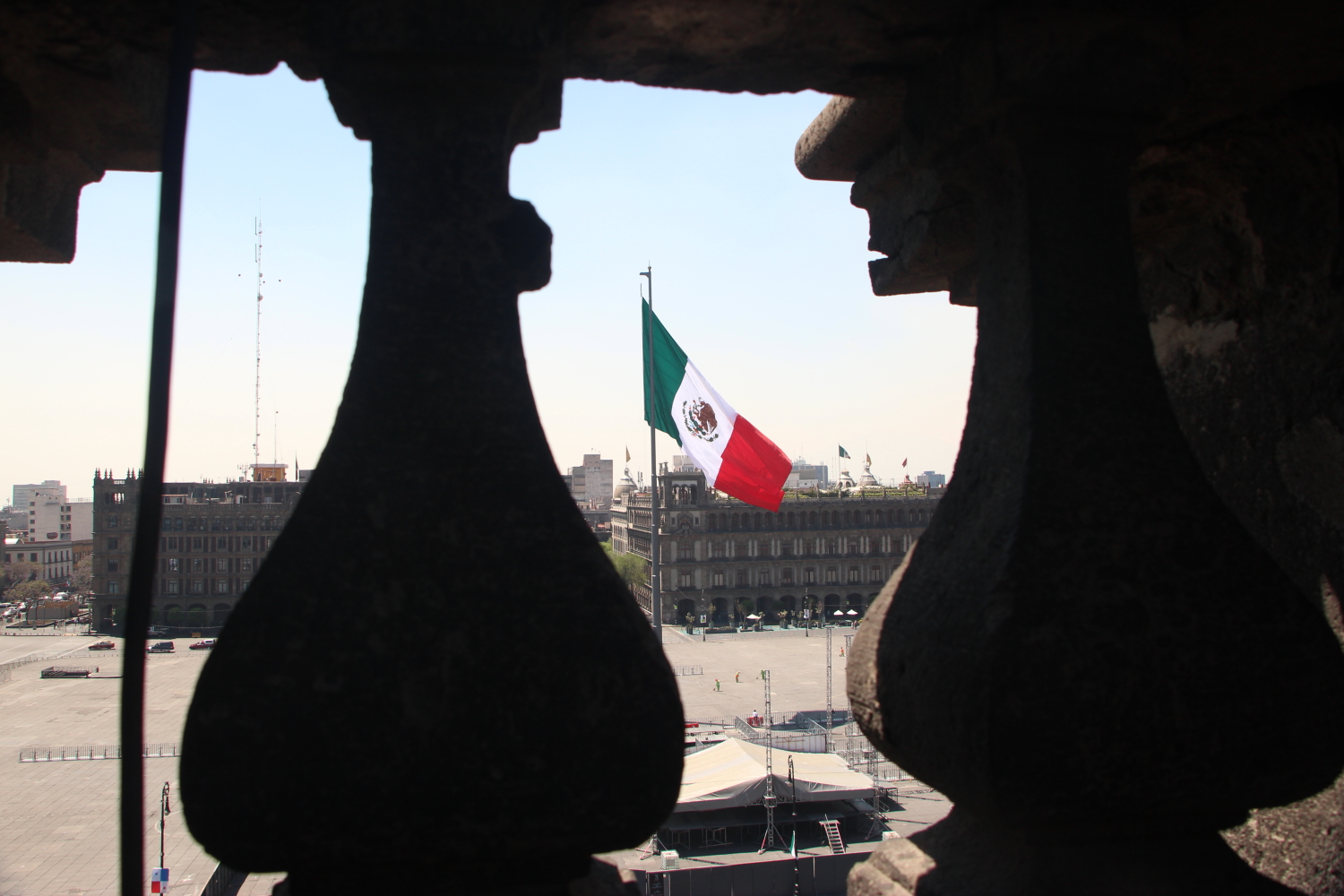
Mexico City
*an ongoing series of quotations – mostly from artists, to artists – that offers wisdom, inspiration, and advice for the sometimes lonely road we are on.
Faced with the disparities between lived reality and America’s professed ideals of inclusion and equity, countless artists have begun embracing the social role of art and using aesthetic means to speak out against all manner of injustice. In such a climate, the Mexican muralists [Jose Clemente Orozco, Diego Rivera, and David Alfaro Siqueiros] have once again emerged as models of how to marry aesthetic rigor and vitality to socially conscious subject matter that addresses the most fundamental questions concerning our collective pursuit of a more just and equitable society. Not withstanding the rich cultural ties and decades of migration that have long existed between the United States and Mexico, the relationship between the two countries has always been fraught, marked as much by mutual wariness and bouts of hostility as by a spirit of camaraderie and cooperation Yet the ugliness and xenophobia of the recent debates on the American side echoes the worst of the past. It thus seems more imperative than ever to acknowledge the profound and enduring influence Mexican muralism has had on artmaking in the United States and to highlight the beauty and power that can emerge from the free and vibrant cultural exchange between the two countries. As much as did American artists decades ago, artists in the United States today stand to benefit from an awareness of how dynamically and inventively the Mexican muralists used their art to project the ideals of compassion, justice, and solidarity. They remain a source of powerful inspiration for their seamless synthesis of ethics, art, and action.
Vida Americana: Mexican Muralists Remake American Art, 1925 – 1945, edited by Barbara Haskell
Comments are welcome!


 barbararachkoscoloreddust.com