Category Archives: Photography
Q: What do you do when you are feeling undervalued and/or misunderstood as a visual artist?

On a favorite walk
A: After more than three decades as a professional artist, I wish I could say this rarely happens, but that’s not the case. People say dumb things to artists all the time and I’m no exception. Often I tune it out, remembering the title of a terrific book by Hugh MacLeod called, “Ignore Everybody and 39 Other Keys to Creativity.” Come to think of it, it’s time for a re-read of Hugh’s wise book.
But ignoring people is not always possible. So I might take a break from the studio, go for a long walk along the Hudson River, compose photographs, think about what’s bothering me, and try to refocus and remember all the positive things that art-making has brought to my life. I always feel better after this simple ritual.
Here’s another helpful quote that I read recently and try to remember:
‘’An artist cannot fail; it is a success to be one.” – Charles Cooley
I wonder, what do you do?
Comments are welcome!
Travel photo of the month*
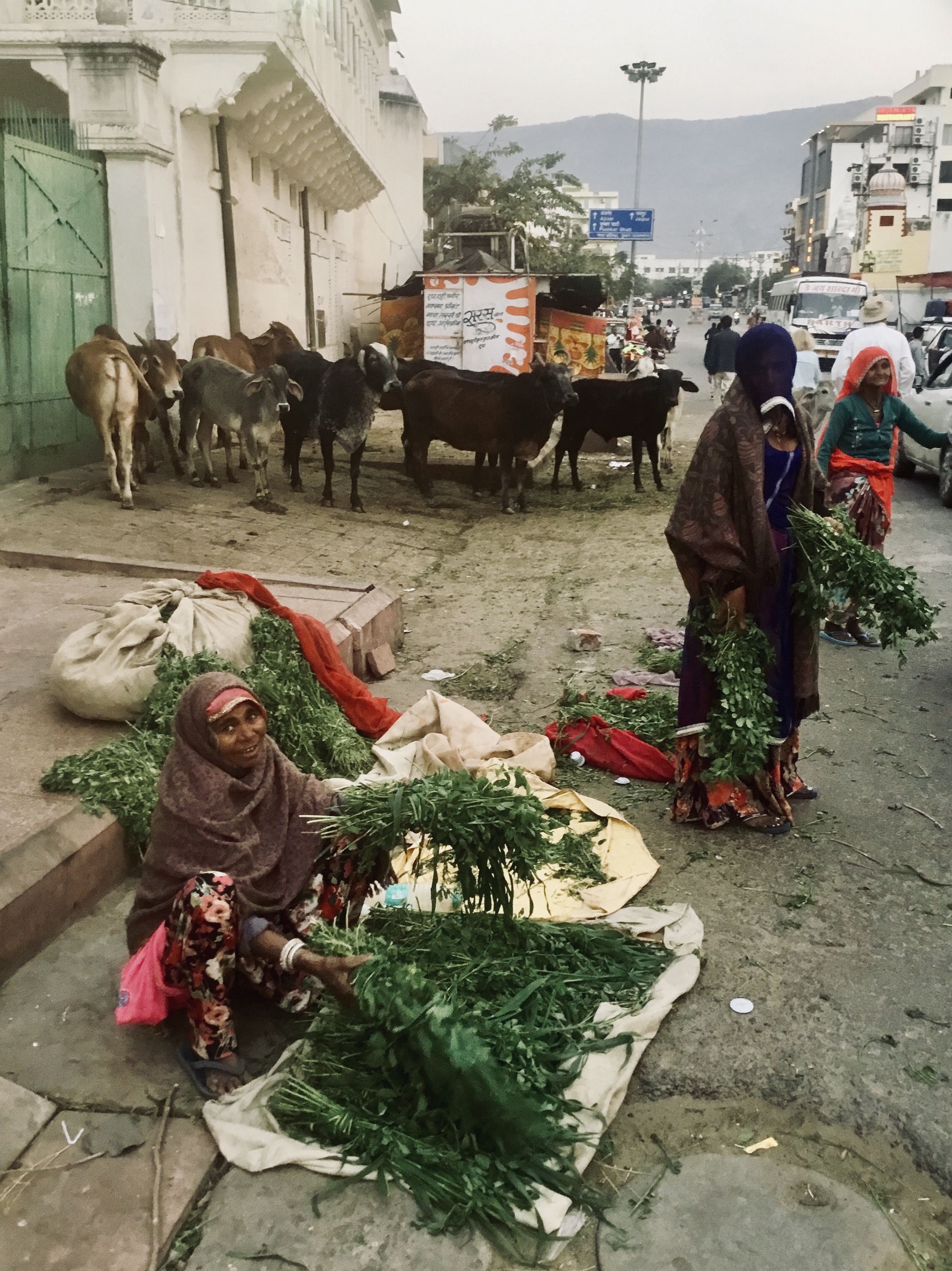
Selling greens to feed to sacred cows, Pushkar, Rajasthan, India
* Favorite travel photos that have not yet appeared in this blog.
Comments are welcome!
Pearls from artists* # 376
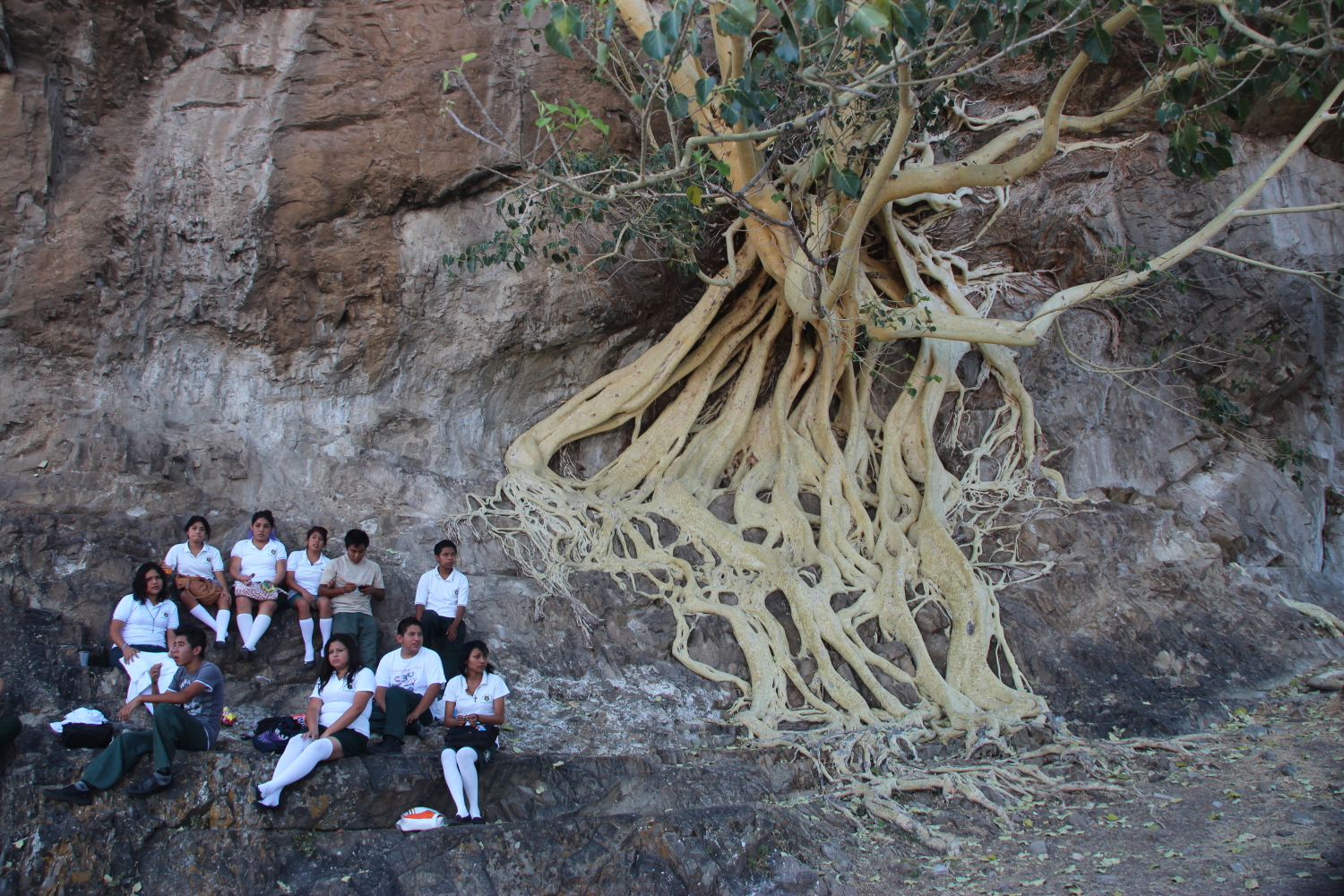
Chalcatzingo, Mexico
* an ongoing series of quotations – mostly from artists, to artists – that offers wisdom, inspiration, and advice for the sometimes lonely road we are on.
In the cemetery all the vultures began to circle, and the sky filled with birds. It was then that I began my series on birds – many of my bird photos came from this moment. All this to say that in life everything is connected: your pain and your imagination, which perhaps can help you forget reality. It’s a way of showing how you connect what you live with what you dream, and what you dream with what you do, and this is what remains on paper.
Graciela Iturbide in Eyes to Fly With: Portraits, Self-Portraits, and Other Photographs
Comments are welcome!
Pearls from artists* # 375

Tile worker in South India
* an ongoing series of quotations – mostly from artists, to artists – that offers wisdom, inspiration, and advice for the sometimes lonely road we are on.
With the camera you interpret reality. Photography is not truth. The photographer interprets reality and, above all, constructs his own reality according to his own awareness or his own emotions. Sometimes it’s complicated because it’s a kind of schizophrenic phenomenon. Without the camera, you see the world in one way, with the camera, in another. Through the window, you’re composing, and even dreaming about, this reality as if, through the camera, you were synthesizing what you are with what you’ve learned of a certain place. Then you make your own image, your own interpretation. The same thing happens to a writer as to a photographer. It’s impossible to capture the truth of life.
Graciela Iturbide in Eyes to Fly With: Portraits, Self-Portraits, and Other Photographs
Comments are welcome!
Q: You are a multi-talented woman! Tell us about your book, “From Pilot to Painter,” and how writing, for you, compares to painting and photography. Which do you prefer?
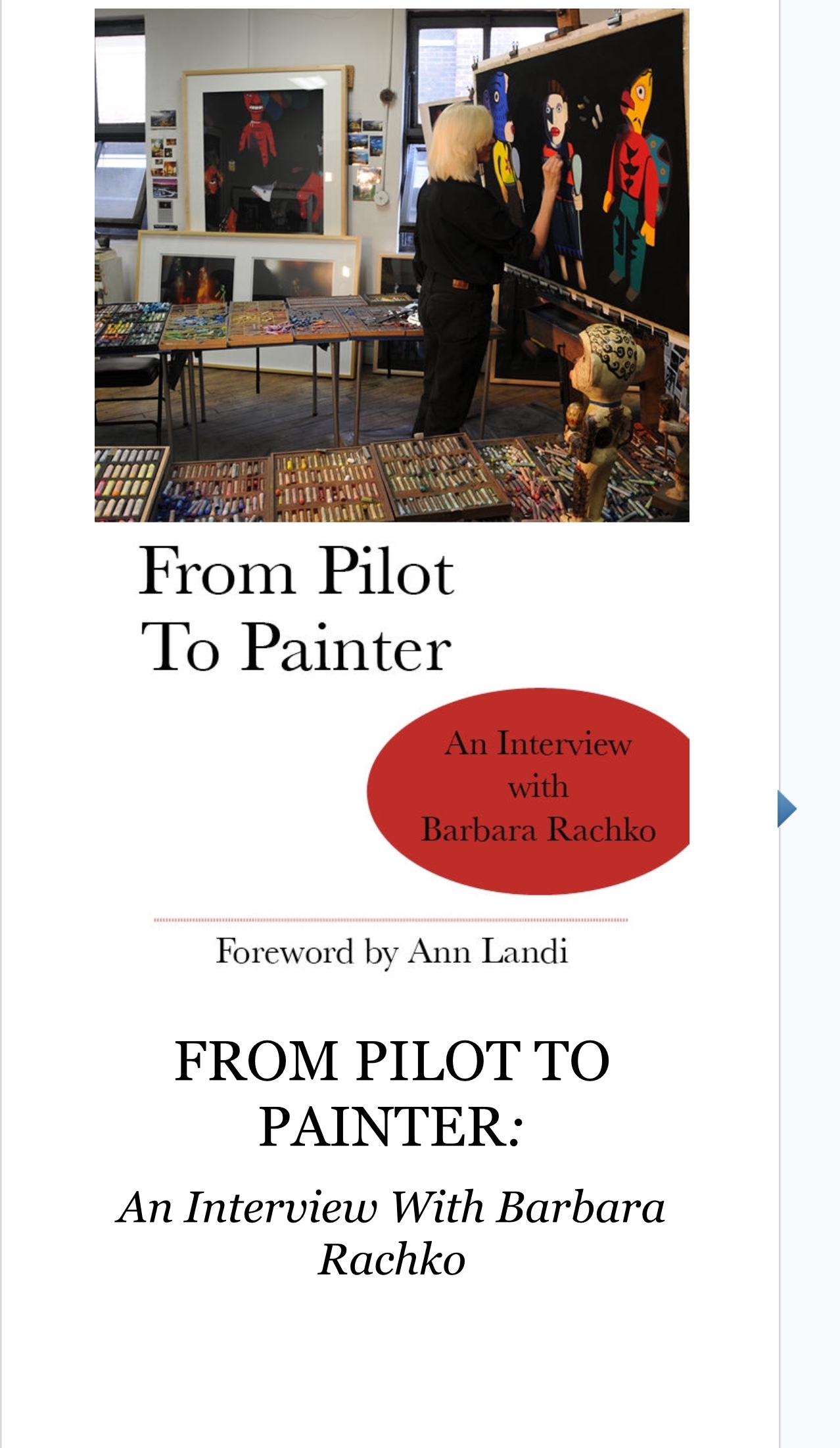
“From Pilot to Painter”
A: I am pleased that my eBook FROM PILOT TO PAINTER is available on Amazon and iTunes. It is based on my blog and is part memoir, including my personal loss on 9/11, insights into my creative practice, and intimate reflections on what it’s like to be an artist living in New York City now. The eBook includes new material not found on the blog, plus 25+ reproductions of my vibrant pastel-on-sandpaper paintings, a Foreword by Ann Landi (who writes for ARTnews and The Wall Street Journal), and more.
“Barbara Rachko’s Colored Dust” (the title of my blog) continues to be a crucial part of my overall art practice. Blogging twice a week forces me to think deeply about my work and to explain it clearly to others. The process has helped me develop a better understanding about why I make art and has encouraged me to become a better writer.
From the beginning in the 1980s I used photographs as reference material and Bryan would shoot 4” x 5” negatives of my elaborate setups with his Toyo-Omega view camera. In those days I rarely picked up a camera except when we were traveling. After Bryan was killed on 9/11, I inherited his extensive camera collection – old Nikons, Leicas, Graphlex cameras, etc. – and I wanted to learn how to use them. In 2002 I enrolled in a series of photography courses (about 10 over 4 years) at the International Center of Photography in New York. I learned how to use all of Bryan’s cameras and how to make my own big color prints in the darkroom. Along the way I discovered that the sense of composition, form, and color I developed over many years as a painter translated well into photography. The camera was just another medium with which to express my ideas. Astonishingly, in 2009 I had my first solo photography exhibition in New York.
It’s wonderful to be both a painter and a photographer. Pastel painting will always be my first love, but photography lets me explore ideas much faster than I ever could as a painter. Paintings take months of work. To me, photographs – from the initial impulse to hanging a framed print on the wall – are instant gratification.
For two years I have been using my iPad Pro to capture thousands of travel photographs. Most recently, I visited Gujarat and Rajasthan in India. I have never been inclined to use a sketchbook so composing photos on my iPad keeps my eye sharp while I’m halfway around the world, far from my studio practice.
Comments are welcome!
Travel photo of the month*

Victoria Station, Mumbai, India, targeted in the November 26, 2008 terrorist attack.
*Favorite travel photos that have not yet appeared in this blog.
Comments are welcome!
Travel photo of the month*
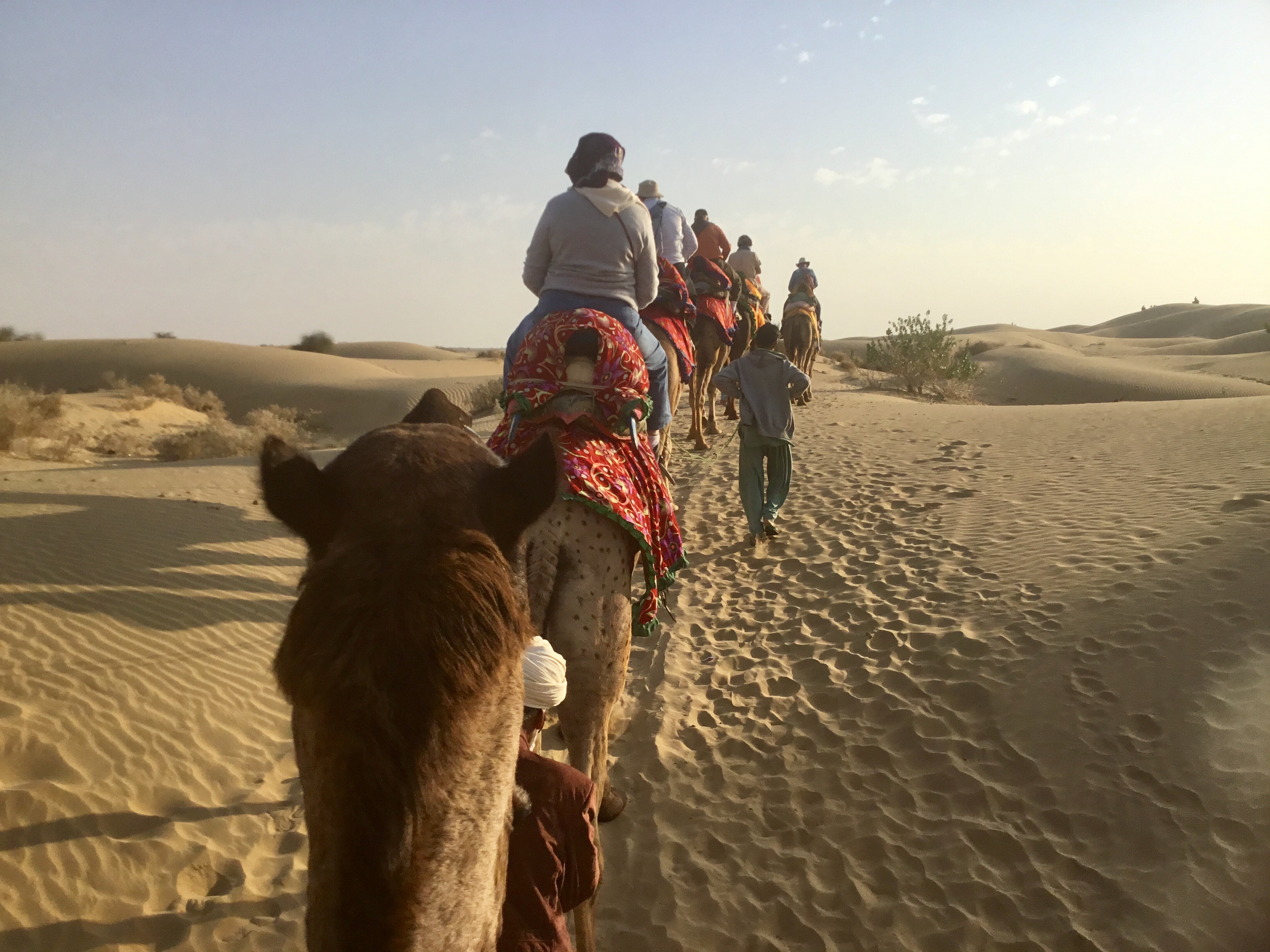
Thar Desert, Rajasthan, India
*Favorite travel photographs that have not yet appeared in this blog
Comments are welcome!
Q: What’s on the easel today?
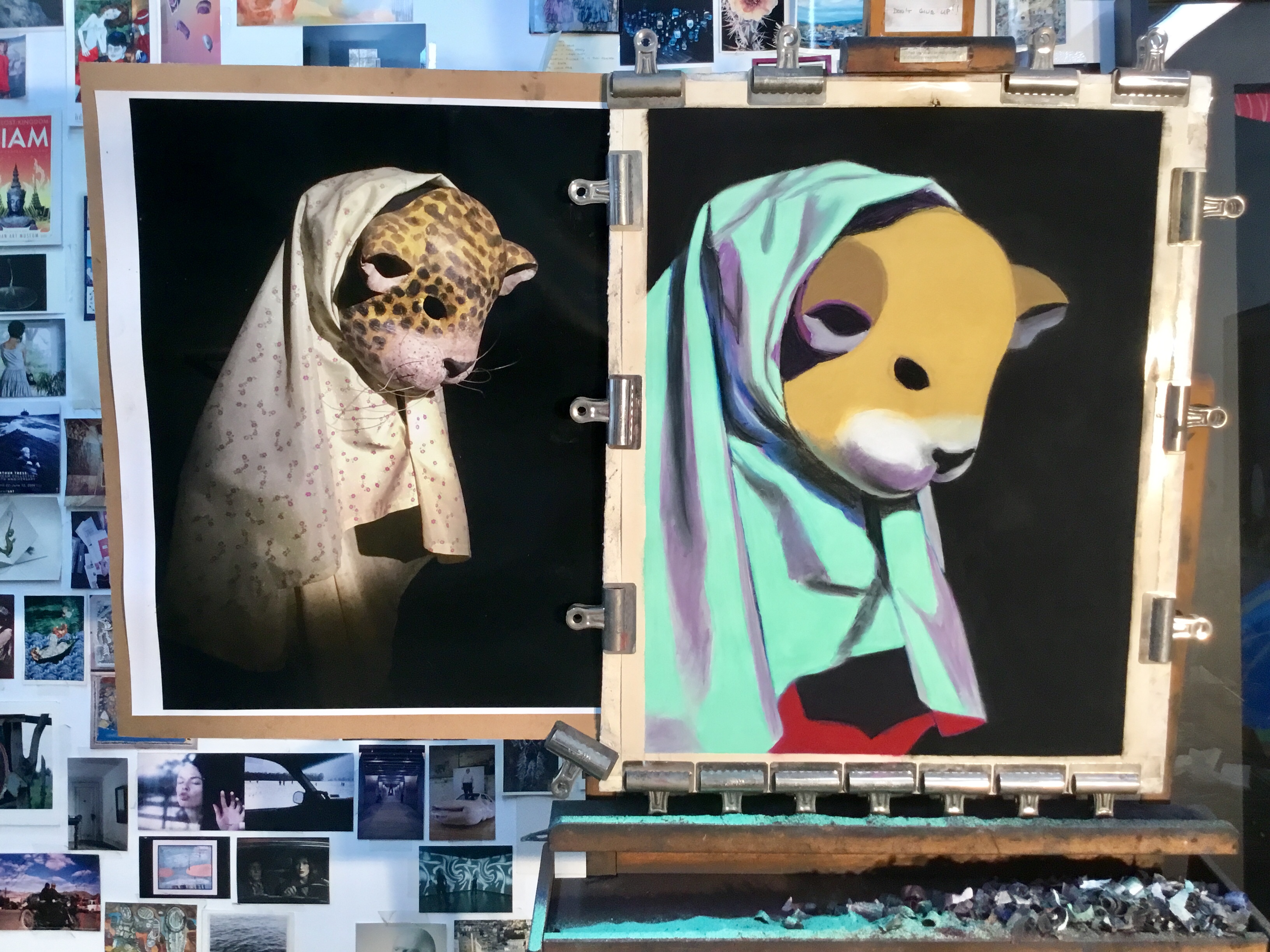
Work in progress
A: I’m at the beginning on a small (26” x 20”) pastel painting. The subject is a jaguar mask I photographed in La Paz. This is painting number eleven in the “Bolivianos” series. Lots of green colored dust now!
Comments are welcome!
Pearls from artists* # 365
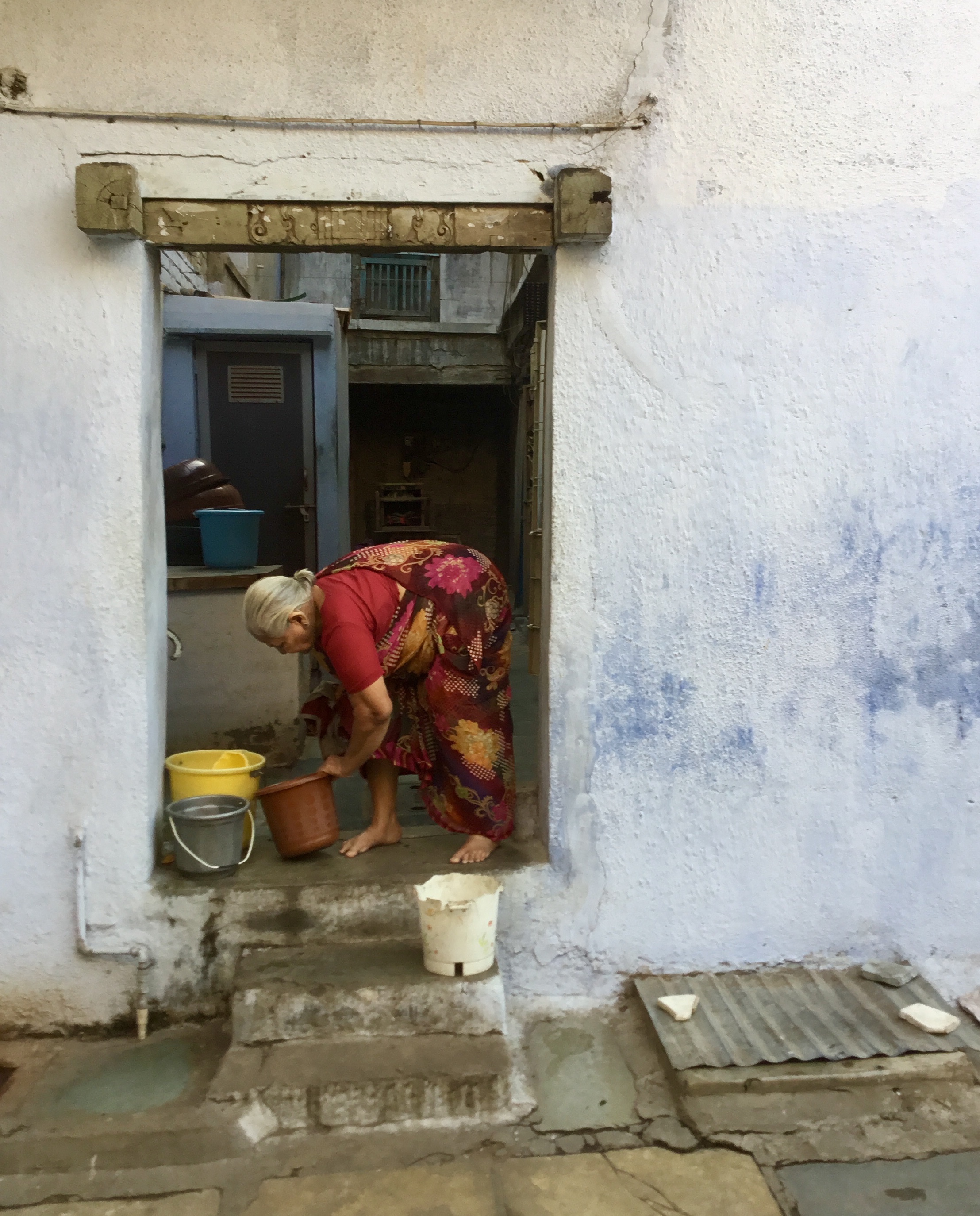
Ahmedabad, India
* an ongoing series of quotations – mostly from artists, to artists – that offers wisdom, inspiration, and advice for the sometimes lonely road we are on.
The important thing is the intersection between intuition and discipline, because you have to be alert and at the same time invisible. The eye has to be alert and capture very quickly everything you have inside you – I don’t know how to explain it. What the eye sees is the synthesis of what you are or what you’ve learned to do, this is the language of photography…
Graciela Iturbide in Eyes to Fly With: Portraits, Self-Portraits, and Other Photographs
Comments are welcome!
Pearls from artists* # 359

Matador mask, La Paz, Bolivia
*an ongoing series of quotations – mostly from artists, to artists – that offers wisdom, inspiration, and advice for the sometimes lonely road we are on.
The Matador, with a black mask made of plaster and stucco, jumps around and teases the pair of bulls. He wears an embroidered cloth on his chest that is draped over his shoulder to cover part of his back. In his hand he carries a saber that was cut out of a barrel or a tin oil can, the way I saw my father and my grandfather make. It has little bells made of beer and other bottle caps, that are flattened into rattles. The matador also wears a colorful diamond shaped montera (cap).
“An Aymara Vision of the Altiplano Masks,” texts and photos by Sixto Choque in Masks of the Bolivian Andes, Editorial Quipos and Banco Mercantil
Comments are welcome!


 barbararachkoscoloreddust.com