Category Archives: New York, NY

Pearls from artists* # 431

New York Harbor

New York Harbor

* an ongoing series of quotations – mostly from artists, to artists – that offers wisdom, inspiration, and advice for the sometimes lonely road we are on.

Writer Stanley Elkin suggested that all books retell the Old Testament story of Job.  Similarly one feels that behind most music there is a struggle with pain.  By the time we are adults, the songs we know by heart are often those that acknowledge grief or celebrate release, and the performers we respect are the ones who sing from need – people like Etta James, of whom it was said that she “always hit the notes with the right amount of hurt and hope.”

A photographer’s subject is his or her score, the given notes on a page.  The way the photographer hits these notes – shows the subject – determines whether we will be newly reconciled with it.          

Robert Adams in Art Can Help

Comments are welcome!

Q: Walk us through your “typical day”?

Barbara at work on “Schemer,” Soft Pastel on Sandpaper, 26” x 20”

Barbara at work on “Schemer,” Soft Pastel on Sandpaper, 26” x 20”

A:  I’ll describe a typical day at the studio.  When I first arrive in the morning, I read for 30 minutes. Reading focuses and quiets my mind and gets me ready to begin the day’s work.  While I read, I look at the pastel painting that’s on my easel to see where to begin.  Then I close the book, turn on some music, plug in the Halogen lamps I use while working, apply a barrier cream to my hands, put on a surgical mask (to avoid breathing pastel dust), pick up a pastel, and start.   

I never sit while working.  I enjoy the physicality of art-making and prefer to stand at my easel so I can back up to see how the pastel painting looks from a distance.  I like being on my feet all day and getting some exercise.  I work for a couple of hours, break for lunch, and then work the rest of the afternoon.

I believe artists need to be disciplined.  I work five days a week, taking Wednesdays and Sundays off, and spend seven hours or more per day in the studio.  Daylight is essential so I work more hours in summer, fewer in winter.  I like to think of art-making as independent of time tables, but I tend to work in roughly two-hour blocks before taking a break.  I typically work until 5:00 or so.

Studio hours are sacrosanct and exclusively for creative work.  I do not have WiFi at my studio and prefer to keep my computer and mobile devices elsewhere (they devour time).  Art business activities – answering email, keeping up with social media, sending jpegs, writing blog posts, doing interviews, etc. – are accomplished at home in the mornings, in the evenings, and on days off from the studio.

Comments are welcome!
Pearls from artists* # 424

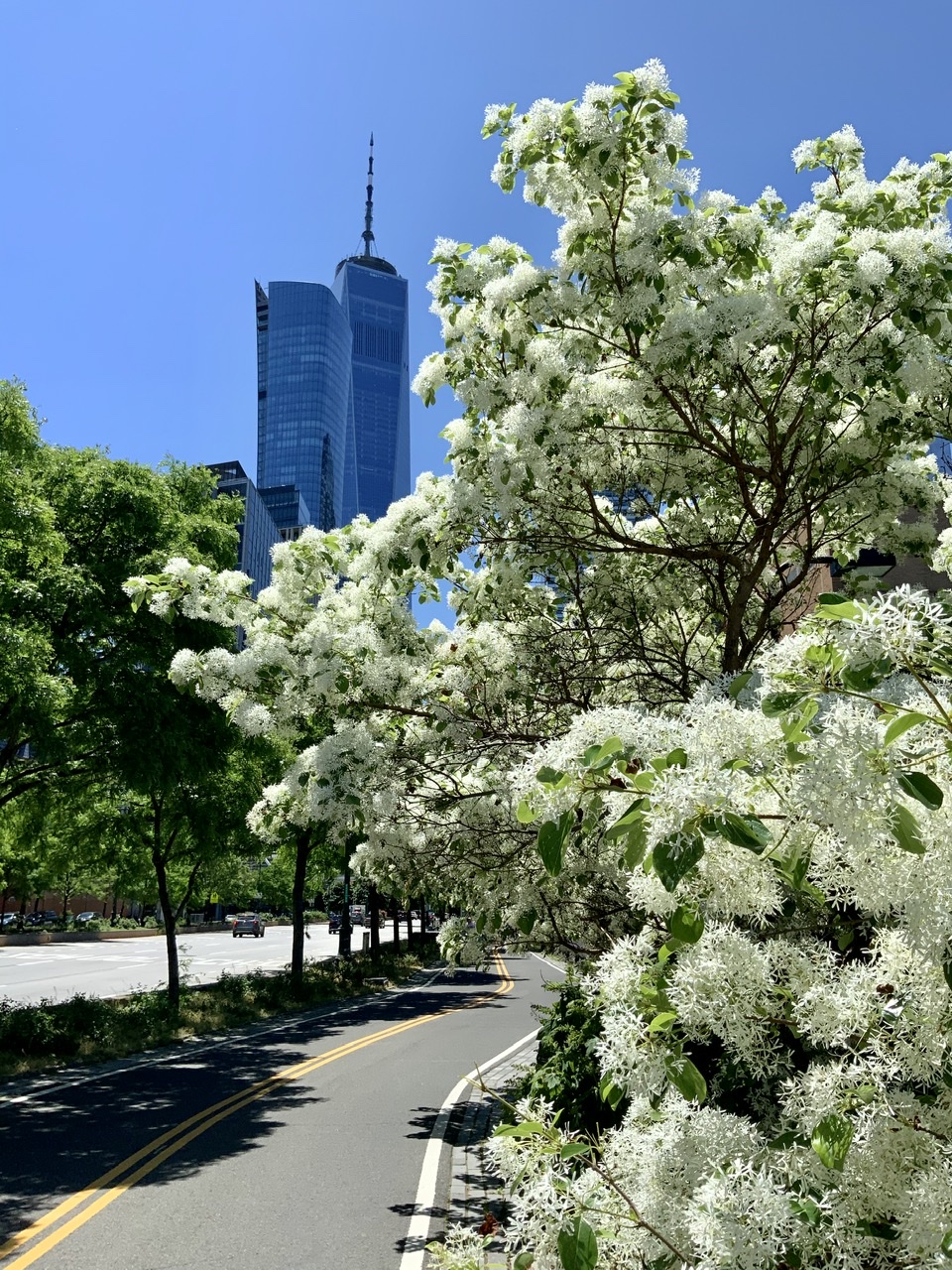
New York, NY

New York, NY

*an ongoing series of quotations – mostly from artists, to artists – that offers wisdom, inspiration, and advice for the sometimes lonely road we are on.

What the unproductive artist describes as his failure of will or insufficient motivation may rather be an absence in his belief system of the meaningfulness of art or of the art-making he’s presently doing. The most salient difference between the regularly blocked artist and the regularly productive artist may not be the greater talent of the latter, but the fact that the productive artist possesses and retains his missionary zeal.

Carlos Santana likened artists to “warriors in the trenches who have the vision of saving us from going over the edge.”  The artist who possesses this vision will pursue his art even if he sometimes blocks.  The artist who is less certain about the sacredness of his profession or the value of his work is hard-pressed to battle for art’s sake.  

Eric Maisel in A Life in the Arts:  Practical Guidance and Inspiration for Creative and Performing Artists

Comments are welcome!

Q: Do you have a home studio or do you go to an outside studio to work? Which do you prefer and why?

At work

At work

A: I have always preferred a separate studio. Pastel creates a lot of dust, it’s toxic to breathe, plus I do not want to live with the mess! I need a place to go in the mornings, someplace where I can focus and work without any distractions. It’s difficult to do that at home.

From the beginning of my time as an artist, in the mid-1980’s, I had a studio. My first one was in the spare bedroom of the Alexandria, Virginia, house that I shared with my late husband, Bryan, and that I still own.

For about three years in the 1990s I had a studio on the third floor of the Torpedo Factory Art Center, a building in Alexandria, VA that is open to the public. People would come in, watch artists at work, and sometimes buy a piece of art.

In April 1997 an opportunity to move to New York arose and I didn’t look back. By then I was showing in a good 57th Street gallery, Brewster Arts Ltd. (the gallery focused exclusively on Latin American artists; I was in the company of Leonora Carrington, Rufino Tamayo, Diego Rivera, etc.), and I had managed to find a New York agent, Leah Poller, with whom to collaborate.

I looked at only one other space before finding my West 29th Street studio and knew instantly it was the one! An old friend of Bryan’s from Cal Tech rented the space next door and he had told us it was available. Initially the studio was a sublet. The lease-holder was a painter headed to northern California to work temporarily for George Lucas at the Lucas Ranch. After several years she decided to stay so I was able to take over the lease. I feel extremely fortunate to have been in my West 29th Street, New York City space now for twenty-three years. In a city where old buildings are perpetually knocked down to make way for new ones this is rare.

My studio is an oasis in a chaotic city, a place to make art, to read, and to think. I love to walk in the door every morning and I feel calmer the moment I arrive. It’s my absolute favorite place in New York! Sometimes I think of it as my best creation. For more about this please see

https://artofcollage.wordpress.com/2020/04/30/artists-and-their-relationship-to-their-studio

Comments are welcome!

Pearls from artists* # 422

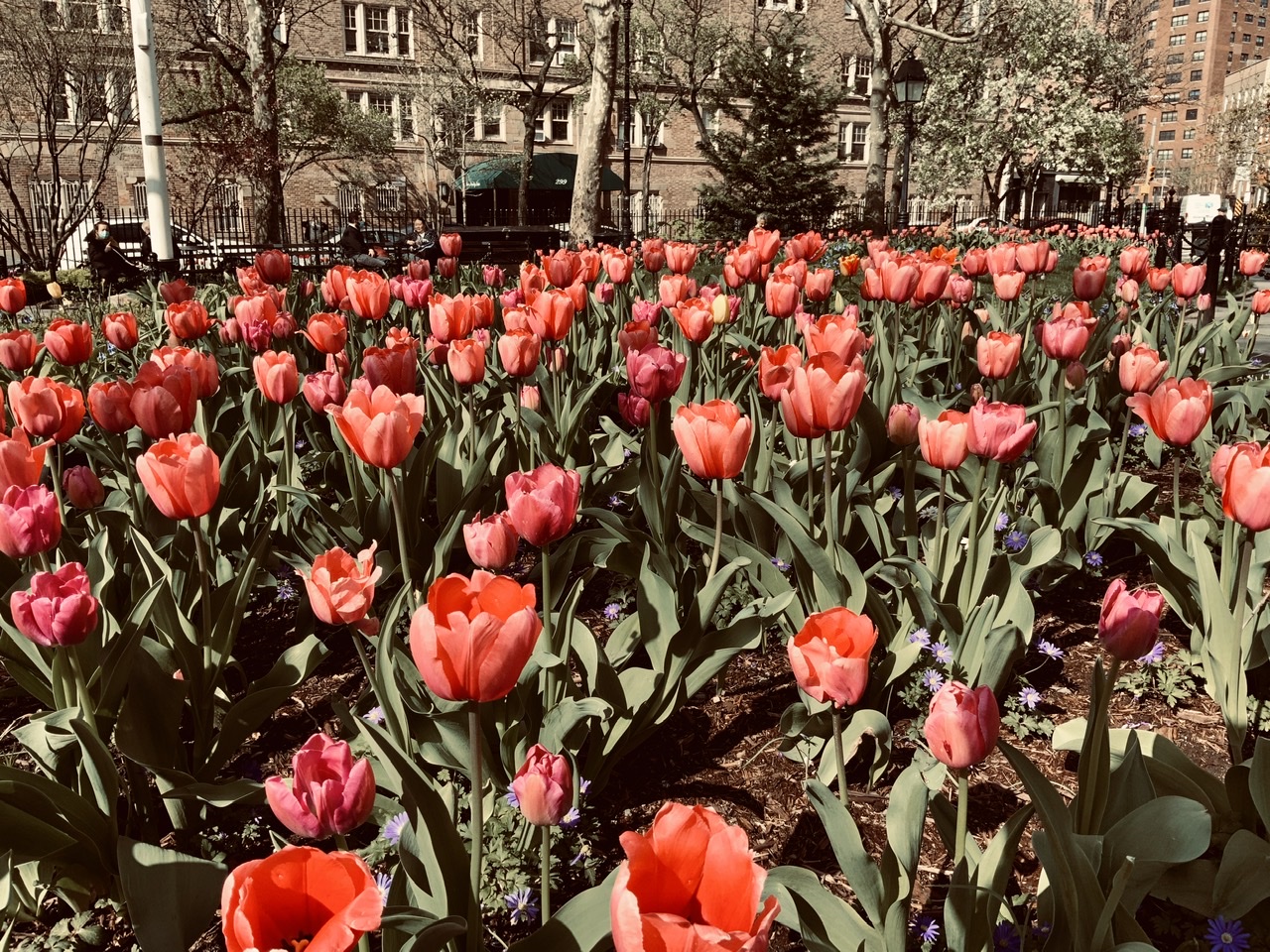
New York, NY

New York, NY

* an ongoing series of quotations – mostly from artists, to artists – that offers wisdom, inspiration, and advice for the sometimes lonely road we are on.

There is always work that is ahead of its time and receives little acknowledgement in its own day.  This is often where an artist follows a line of discovery that is outside a rigid stricture or style or common understanding.  Usually, even if the artist is ahead of public taste, there are a few admirers who recognize what the artist is doing.  If his or her work has truth, eventually the public will catch up.  Even Impressionism, of course, that most bucolic of art forms, which today is the public’s darling, was reviled in its day.    

Ian Roberts in Creative Authenticity:  16 Principles to Clarify and Deepen Your Artistic Vision

Comments are welcome!

Pearls from artists* # 419

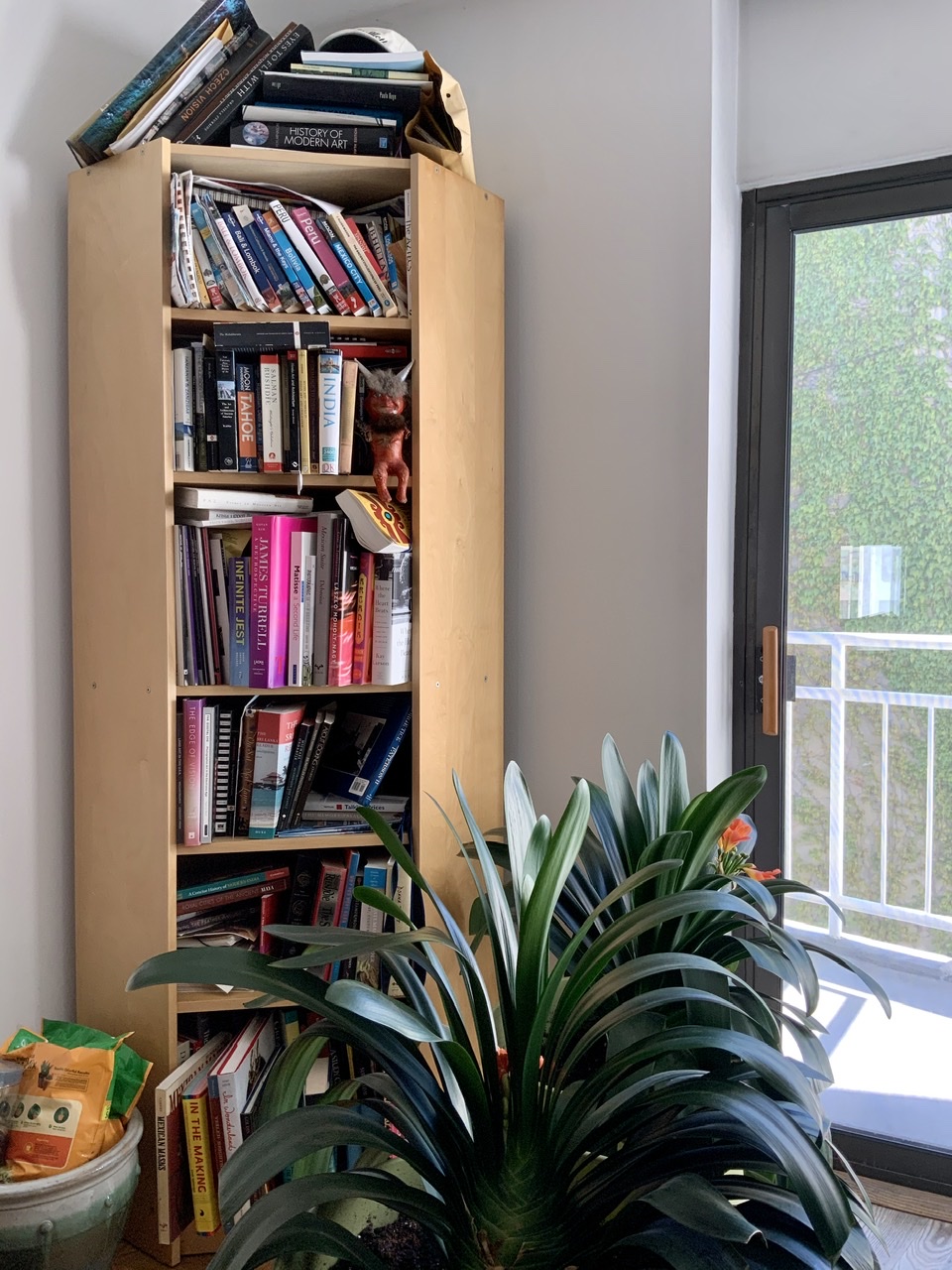
A corner of Barbara’s West Village apartment

A corner of Barbara’s West Village apartment

*an ongoing series of quotations – mostly from artists, to artists – that offers wisdom, inspiration, and advice for the sometimes lonely road we are on.

Dear Reader,

We wouldn’t need books quite so much if everyone around us understood us well.  But they don’t.  Even those who love us get us wrong  They tell us who we are but leave things out.  They claim to know what we need, but forget to ask us properly first.  They can’t understand what we feel – and sometimes, we’re unable to tell them, because we don’t really understand it ourselves.  That’s where books come in.  They explain us to ourselves and to others, and make us feel less strange, less isolated and less alone.  We might have lots of good friends, but even with the best friends in the world, there are things that no one quite gets.  That’s the moment to turn to books.  They are friends waiting for us any time we want them, and they will always speak honestly to us about what really matters.  They are the perfect cure for loneliness.  They can be our very closest friends. 

Yours,

Alain

Alain de Botton in A Velocity of Being:  Letters to a Young Reader edited by Maria Popova and Claudia Bedrick

Comments are welcome!

Pearls from artists* # 415

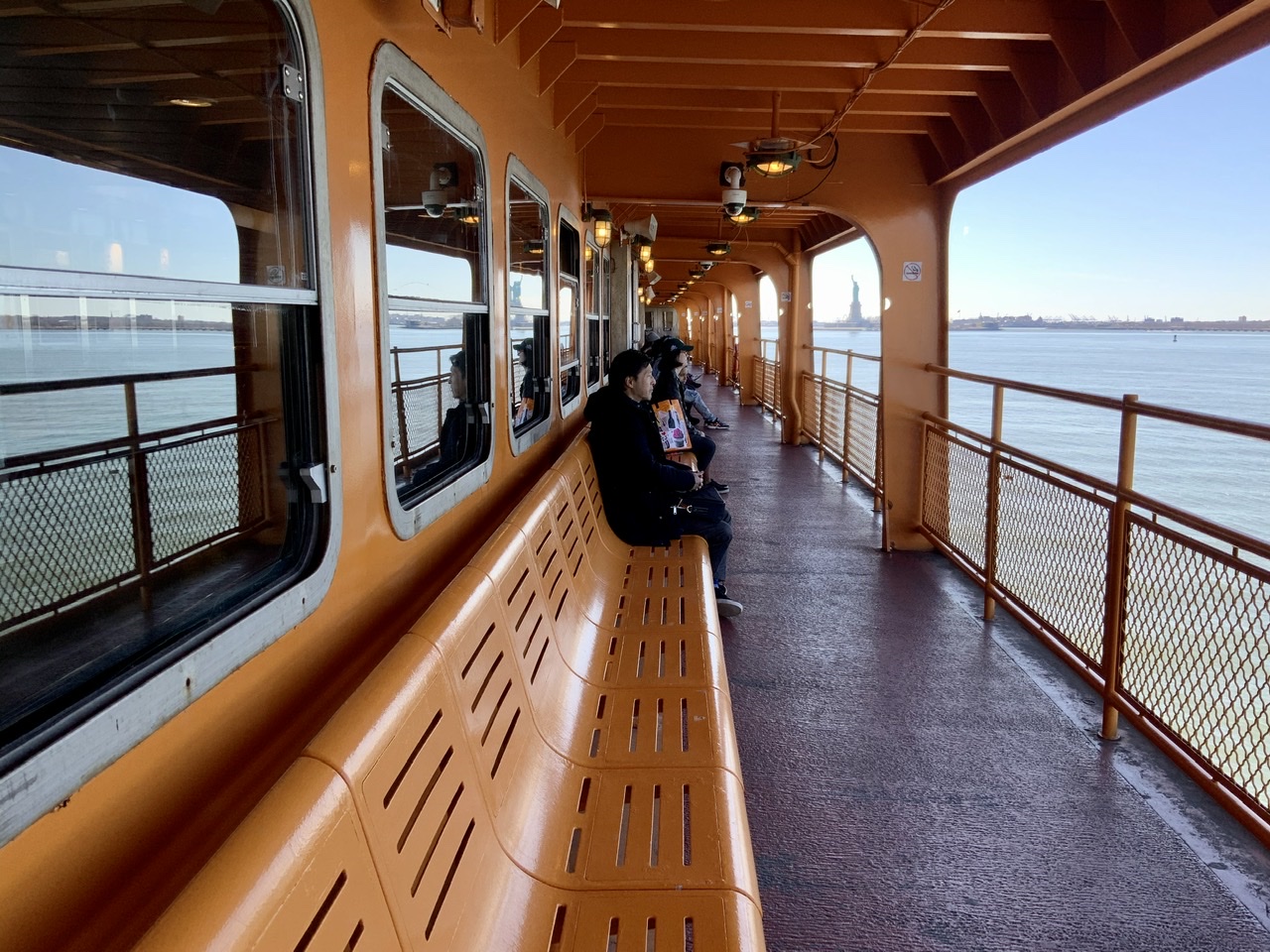
Staten Island Ferry

Staten Island Ferry

*an ongoing series of quotations – mostly from artists, to artists – that offers wisdom, inspiration, and advice for the sometimes lonely road we are on.

I like to think of myself (and each of you) as a high priest of memory protection.  Using our cameras, we protect the memories of our subjects; we protect the memories we have while interacting with those subjects; we help to protect the memories of our audience who sees our work.  This is truly a sacred calling, and one that deserves respect and a thoughtful approach.   

Scott Bourne in Photo Therapy Motivation and Wisdom by Rick Sammon 

Comments are welcome!

Pearls from artists* # 414

New York, NY

New York, NY

*an ongoing series of quotations – mostly from artists, to artists – that offers wisdom, inspiration, and advice for the sometimes lonely road we are on.

As we grow into our true artistic selves, we start to realize that the tools don’t matter, the story does.  Your point of view and the way that you express yourself as a photographer are how you tell the stories that matter to you.  And that, my friends, is therapeutic.

There’s a certain amount of Zen in that act.  Peace and tranquility are hard to come by in today’s world.  But through photography, we all have a chance to find both.

As photographers, we sometimes lose sight of the fact that our ability to use a camera gives us a chance to show everyone else who we are.  Young photographers often obsess over doing something new. Older photographers, like Rick and I, realize that the real goal is in being you.  So focus on being you not on being new for new’s sake.  This is the path to both inner and outer success.

People will ask you what you photograph.  I personally am often described as a bird photographer.  But we are not what we do.  It’s important to note the difference.  And that is because people don’t care what you do.  They care why you do it.  If you are doing what you are meant to do, you will be able to articulate your own why. 

Scott Bourne in Photo Therapy Motivation and Wisdom by Rick Sammon 

Comments are welcome!

Pearls from artists* # 413

New York, NY

New York, NY

*an ongoing series of quotations – mostly from artists, to artists – that offers wisdom, inspiration, and advice for the sometimes lonely road we are on.

We photographers are particularly drawn to light in all of its manifestations.  Who knows why?  We just simply seem to be attracted to light more than other people, even when we’re not taking photos.  We notice little things.  The way a curtain might cut a shadow across the floor.  The way a blue iris might fold light into itself.  The way a child’s skin has a glow without any filters.  And as we all know, beautiful caverns can be created by the manner in which water flows through rock.  I think there is a parallel with us.  The light that flows through us carves our souls.

Rick Sammon in Photo Therapy Motivation and Wisdom   

Comments are welcome!

Q: You have worked with twenty-plus galleries during your career. Which ones do you consider the best?

"Myth Meets Dream," 1993, soft pastel on sandpaper, the earliest painting that includes Mexican figures

“Myth Meets Dream,” 1993, soft pastel on sandpaper, the earliest painting that includes Mexican figures

A:  Probably the most prestigious gallery that represented my work was Brewster Fine Arts on West 57th Street in Manhattan.  Brewster was my first New York gallery.  In the summer of 1996 I mailed the gallery a sheet of slides, as we did in those days.  I was living in Virginia and had been a working artist for ten years.  In July while traveling around Mexico, I decided to check the phone messages at home in Virginia.  I was thrilled to receive an invitation from Mia Kim, the gallery director, to exhibit pastel paintings in October!  And she had not yet even seen my work in person.

Beginning that fall, I gained representation with Brewster Fine Arts, an elegant gallery specializing in Latin American Masters like Rufino Tamayo, Diego Rivera, and others.  I am not Latina, of course, but I showed there due to my subject matter.  At my October opening, I remember Mia declaring to the attendees, “Barbara has the soul of a Latina!”  That night I met fellow gallery artist Leonora Carrington. She and I were the only non-Latina artists respresented.  I knew I was on my way! 

The gallery continued to present my work in group exhibitions and the staff gave brilliant talks about me and my creative process.  For many years whenever I introduced myself to a new art aficionado, they already knew my work from having seen it at Brewster.  I continued to be represented there until the gallery closed years later.

Also, Gallery Bergelli in Larkspur, CA did an excellent job of representing my work.  I applied for one of their juried exhibitions, was accepted, and afterwards, they offered permanent representation.  Soon they introduced me to one of my best collectors, with whom I am still friends.

I have worked with many galleries, some good, some not, for various reasons.  Ours is an extremely tough business.  Unfortunately, many of the best and formerly-great galleries are gone forever.   

Comments are welcome!