Category Archives: Creative Process
Q: (Part I) Would you share your story of how creating art enabled you to heal after losing your husband on 9/11?

“She Embraced It and Grew Stronger,” 2003, 70” x 50” framed, the first pastel painting I completed after Bryan was killed
A: On June 16, 2001, I married Dr. Bryan Jack, my longtime companion and soulmate, during a very private ceremony in the garden of an historic Alexandria, Virginia residence. In attendance were a justice of the peace, me, and Bryan. He and I were 48 years old and this was the first marriage for us both. Sadly, we never celebrated an anniversary. Exactly 87 days later my new husband was the victim of a terrorist attack.
On September 11, 2001, Bryan, a high-ranking federal government employee, a brilliant economist, and a budget analyst at the Pentagon, was en route to Monterey, CA to give his monthly guest lecture for an economics class at the Naval Postgraduate College. He boarded the American Airlines plane out of Dulles Airport that was high-jacked and crashed into the Pentagon, killing 189 people.
To this day I consider how easily I, too, could have been killed on 9/11, if I had just decided to travel with Bryan to California. Plus, the plane crashed directly into my Navy office on the fifth floor E-ring of the Pentagon. (I am a retired Navy Commander and worked at the Pentagon for many years). But for a twist of fate, we both would have died: Bryan on the plane, me either beside Bryan or inside the building.
In September 2001 Bryan and I had been together for fourteen and a half years. Surprisingly, we were happier than we had ever been. At a time when other couples we knew were settling into a certain boredom and routine, our life together was growing richer and more interesting. So losing Bryan – especially then – was heart-breaking, cruel, and devastating beyond comprehension. It was so unfair. I was numb and in shock.
The next six months passed by in a blur. But I had made a decision and pledged that I would not let the 9/11 attackers claim me as one more victim. My life had been spared for a reason so I began to pick up the pieces and worked to make every day count. Even many years later, wasting time still feels like a crime.
The following summer I was ready to – I HAD to – get back to work in my studio. I knew exactly what I must do. More than ever before, learning and painting would become the avenues to my well-being.
Continued next week…
Comments are welcome!
Pearls from artists* # 293
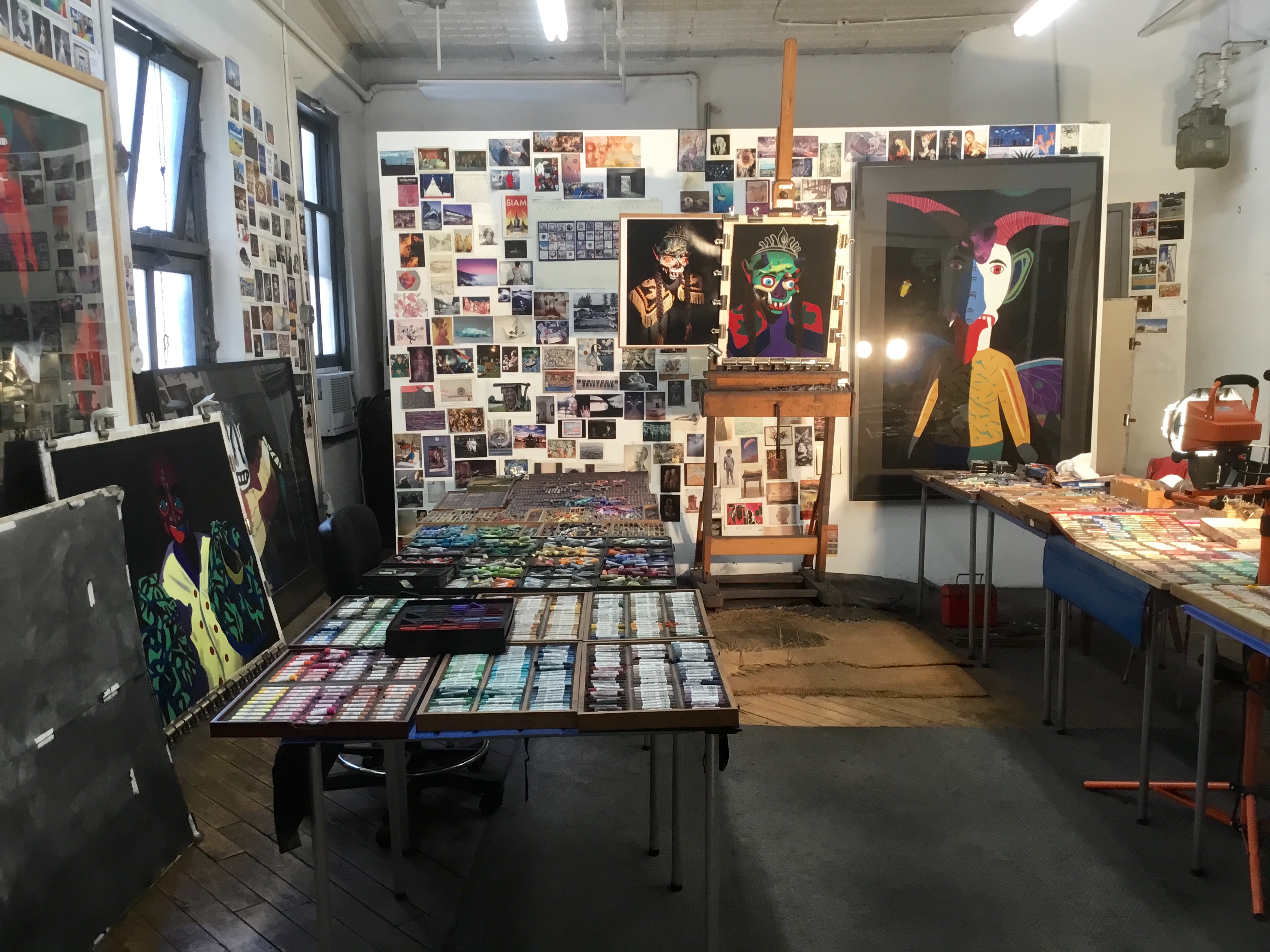
Studio with works in progress
*an ongoing series of quotations – mostly from artists, to artists – that offers wisdom, inspiration, and advice for the sometimes lonely road we are on.
Works of art specify no immediate action or limited use. They are like gateways, where the visitor can enter the space of the painter, or the time of the poet, to experience whatever rich domain the artist has fashioned. But the visitor must come prepared: if he brings a vacant mind or deficient sensibility, he will see nothing. Adherent meaning is therefore largely a matter of conventional shared experience, which it is the artist’s privilege to rearrange and enrich under certain limitations.
George Kubler in The Shape of Time: Remarks on the History of Things
Comments are welcome!
Q: What’s on the easel today?
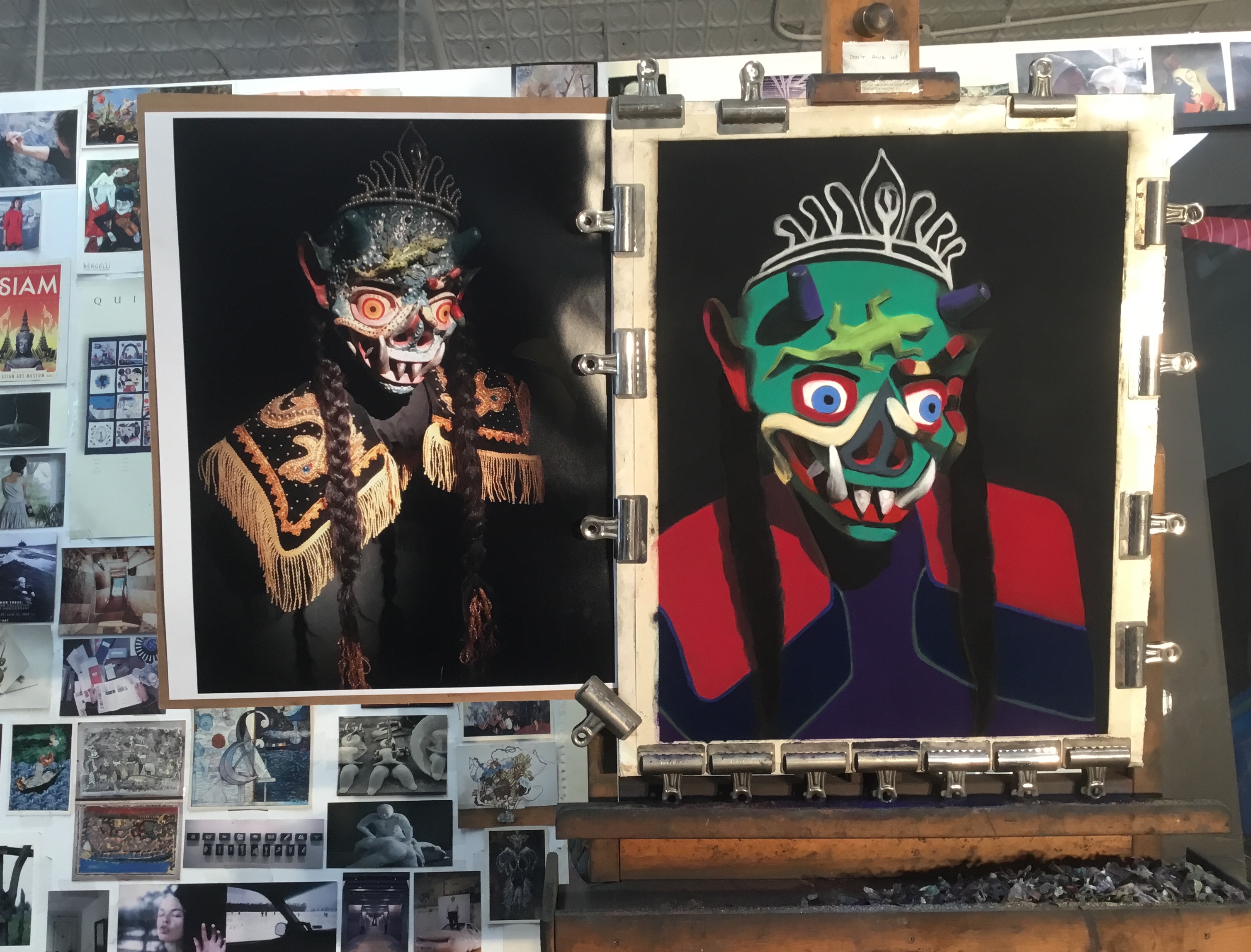
Work in progress
A: I continue slowly working on “Shaman,” soft pastel on sandpaper, 26” x 20”. A long-time aficionado of psychological thrillers, horror, and sci-fi films, I have a high tolerance for the macabre. However, I admit that this one is a little creepy, considering those are snakes curling around the eyes. On a deep level this piece is about facing my own fears. The snakes have become metaphors.
Comments are welcome!
Q: Please speak about how the three pastel paintings series that you have created interrelate.

“The Orator,” soft pastel on sandpaper, 38″ x 58″
A: The Black Paintings series of pastel-on-sandpaper paintings grew directly from an earlier series, Domestic Threats. While both use cultural objects as surrogates for human beings acting in mysterious, highly-charged narratives, in the Black Paintings I replaced all background details of my actual setup (furniture, rugs, etc.) with lush black pastel. In this work the ‘actors’ are front and center.
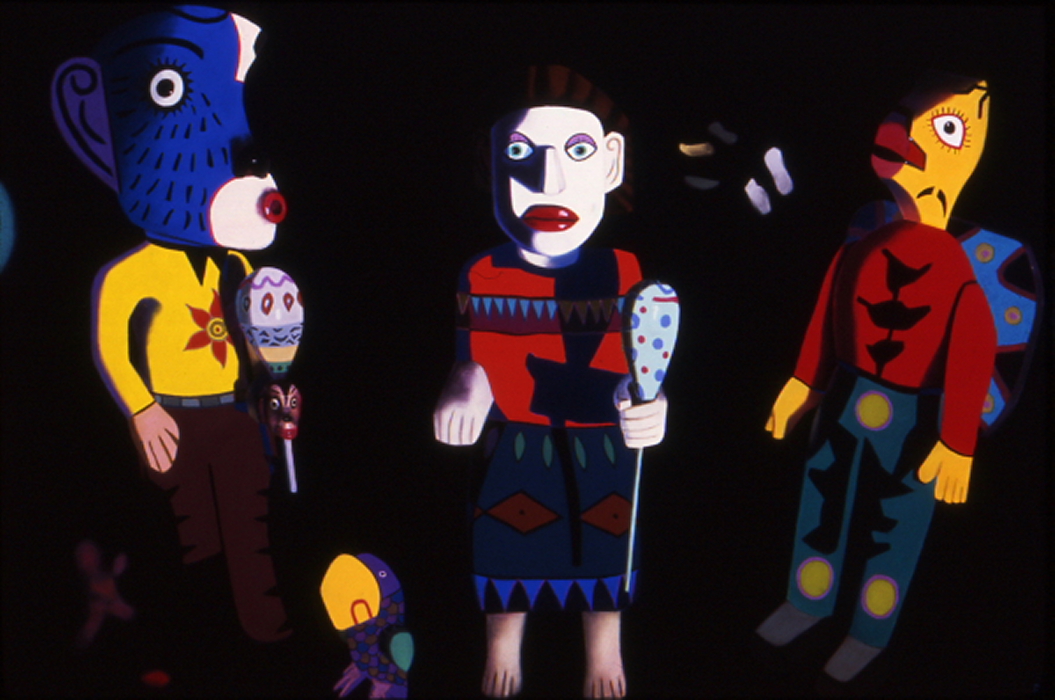
While traveling in Bolivia last spring, I visited a mask exhibition at the National Museum of Ethnography and Folklore in La Paz. The masks were presented against black walls, were spot-lit, and looked eerily like 3D versions of my Black Paintings. I immediately knew I had stumbled upon a gift. So far I have completed three pastel paintings in the Bolivianos series. Two more are in progress now.
All of my pastel paintings are an example of a style called “contemporary conceptual realism” in which things are not quite as innocent as they seem. Each painting is a Trojan horse. There is plenty of backstory to my images, although I usually prefer not to over-explain them. Much is to be said for mystery in art.
The world I depict is that of the imagination and this realm owes little debt to the natural world. Recently, at an art talk I was reminded how fascinating it is to learn how others respond to my work. As New York art critic Gerrit Henry once remarked, “What we bring to a Rachko… we get back, bountifully.”
Comments are welcome!
Pearls from artists* # 289
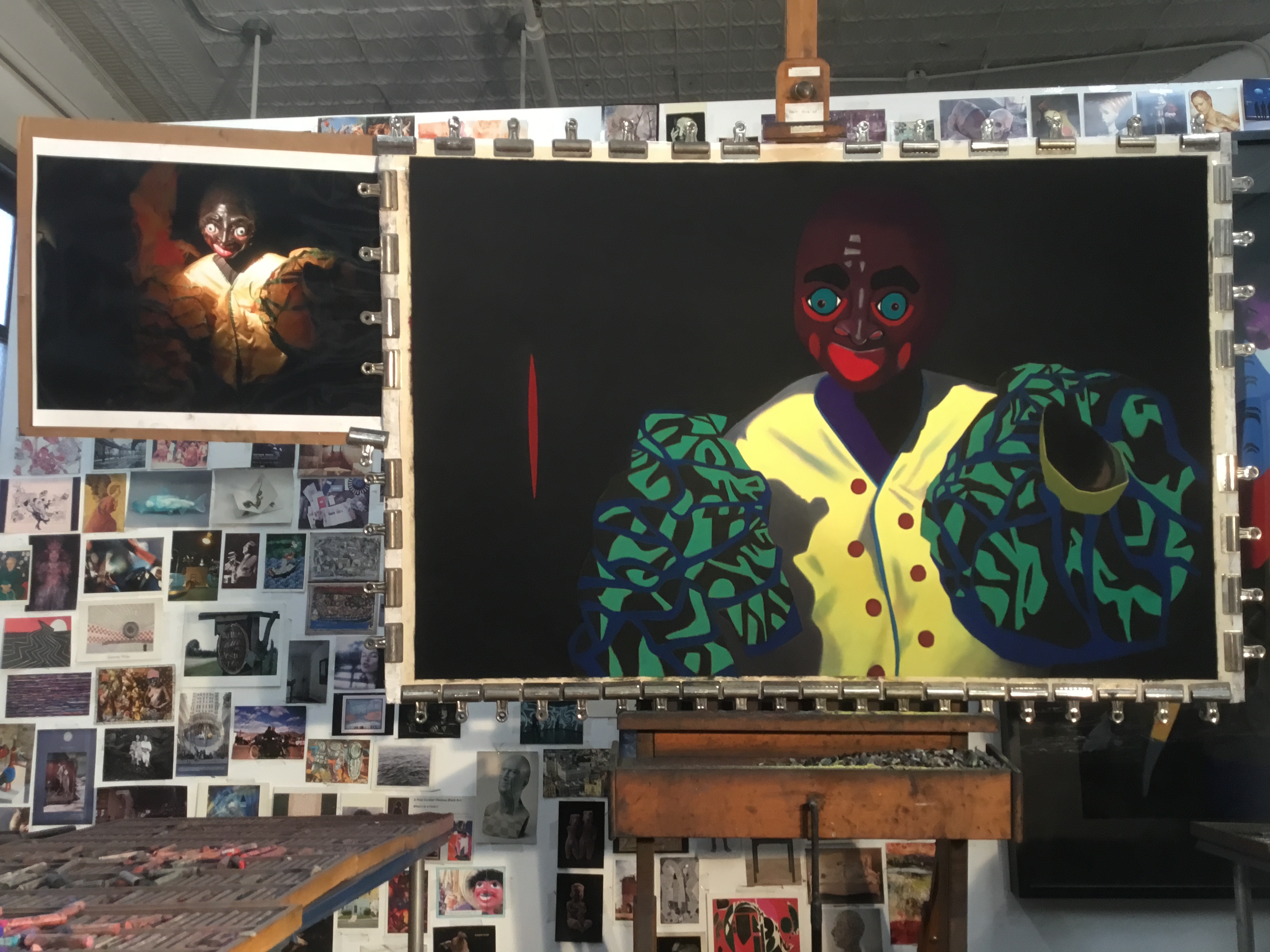
“Danzante,” soft pastel on sandpaper, 38” x 58”, in progress
*an ongoing series of quotations – mostly from artists, to artists – that offers wisdom, inspiration, and advice for the sometimes lonely road we are on.
I do not think it the business of a poet to become a guru. It is his business to write poetry, and to do that he must remain open and vulnerable. We grow through relationships of every kind, but most of all through a relationship that takes the whole person. And it would be pompous and artificial to make an arbitrary decision to shut the door.
The problem is to keep a balance, not to fall to pieces. In keeping her balance in her last years Louise Bogan stopped writing poems, or nearly. It was partly, I feel sure, that the detachment demanded of the critic (and especially his absorption in analyzing the work of others) is diametrically opposed to the kind of detachment demanded of the poet in relationship to his own work. We are permitted to become detached only after the shock of an experience has been taken in, allowed to “happen” in the deepest sense. Detachment comes with examining the experience by means of writing the poem.
May Sarton in Journal of a Solitude: The intimate diary of a year in the life of a creative woman
Comments are welcome!
Pearls from artists* # 288
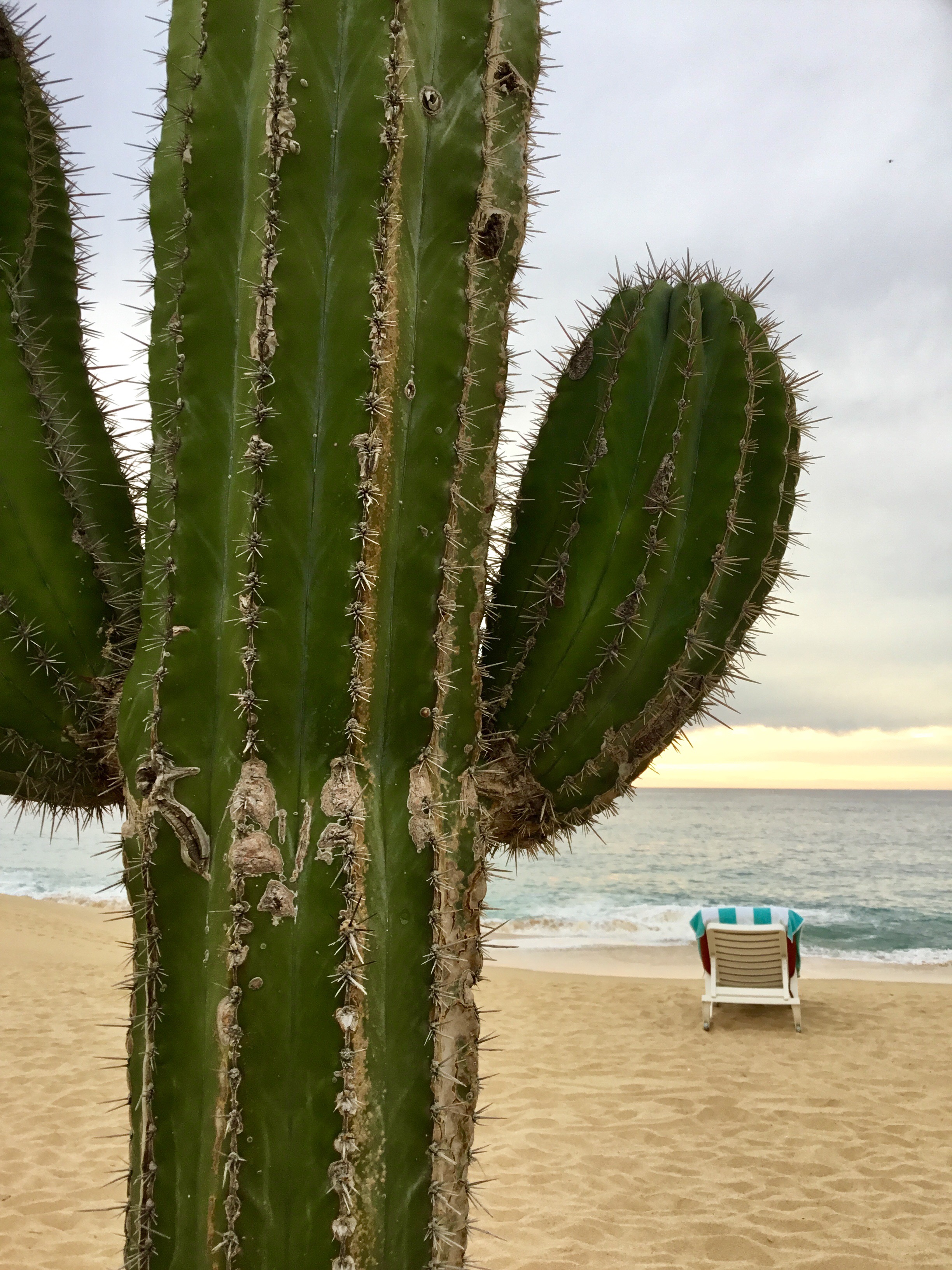
Los Cabos, Mexico
*an ongoing series of quotations – mostly from artists, to artists – that offers wisdom, inspiration, and advice for the sometimes lonely road we are on.
I always forget how important the empty days are, how important it may be sometimes not to expect to produce anything, even a few lines in a journal. I am still pursued by a neurosis about work inherited from my father. A day where one has not pushed oneself to the limit seems a damaged damaging day, a sinful day. Not so! The most valuable thing we can do for the psyche, occasionally, is to let it rest, wander, live in the changing light of a room, not try to be or do anything whatever.
May Sarton in Journal of a Solitude: The intimate diary of a year in the life of a creative woman
Comments are welcome!


Q: How do you stay motivated to create new work?
“False Friends,” 50” x 70,” one of Cheryll and John’s pastel paintings
A: There are many reasons to continue to make art. First, I am fascinated by my months- if not years-long creative process. It begins with travel to remote destinations and ends in framed pastel paintings in my studio, hanging in galleries, at art fairs, in collectors’ homes, etc. Each new pastel painting is another thread in an expanding tapestry that is my entire body of work. It’s fascinating to never know where the process, or the paintings, will end up nor who will be touched by the work.
My pastel paintings continue to garner appreciation among a growing list of collectors. Here’s a recent email from a couple that has been collecting my work from the beginning.
hello barbara,
merry christmas!
we are thrilled and thrilled and thrilled for your good news from miami and naples.
. . . “tense peace, a tumultuous stillness” . . .
we know we love you and we love your work.
how lucky are we to live with your work in our home, in our lives.
we love to read how others describe it.
thanks for sharing.
happy us to have you and your art in our lives,
love to you,
john & cheryll
your work stopped me in my tracks decades ago.
the sight of your work never left me.
i knew that i had to have it near me at some time, no matter what the cost.
i began immediately to negotiate with john.
you know the story . . .
i promised that i would not buy a single thing for five years if i could have one piece of your art.
i held true for the five years and beyond, adding three more pieces of your work.
if we had the wherewithal, your work would be on every floor.
there is never a day that goes by without thinking how brilliant that work is and how it has enriched our deepest sense of visual joy.
we see the rain pouring down, the snow falling, the clouds scudding by, in false friends.
i admit, we don’t allow the sun to shine on them. i couldn’t bear for her to be damaged.
your thoughtful, brilliant words kept us from changing the highly-reflective plexi to something that would have dulled the drama of us walking in front of and being a part of the work.
we still have those words.
it took about one-half of one second for my thinking to change.
and, man, are we grateful.
it never occurred to us that your work wouldn’t be sought after.
always, we walk into a museum and see your work on the walls.
on the walls of the hemi-cycle at the corcoran.
on the walls of the whitney.
on the walls of the met breurer.
on any large white space that would allow each piece to breathe.
we have always known, deep in our marrow that your work is singular.
you have always had our hearts . . . since the second i walked into the torpedo factory, a first-grade teacher with a first-grade teacher’s salary, and knew that i’d sell my honda civic and walk rather than not have in reality, the frogs thought they were men (i know that the title of the piece is something like that . . . the decades have blurred the words).
so, we waited and then . . .
sigh . . .
all the best to you.
we are excited out of our ever-loving minds for you.
but . . . we’ve always known . . .
love,
c & j
Comments are welcome!
Q: Would you share your artist’s statement for the “Bolivianos” series?

Museum of Ethnography and Folklore, La Paz, Bolivia
A: Here it is.
My long-standing fascination with traditional masks took a leap forward in the spring of 2017 when I visited the National Museum of Ethnography and Folklore in La Paz, Bolivia. One particular exhibition on view, with more than fifty festival masks, was completely spell-binding.
The masks were old and had been crafted in Oruro, a former tin-mining center about 140 miles south of La Paz on the cold Altiplano (elevation 12,000’). Depicting important figures from Bolivian folklore traditions, the masks were created for use in Carnival celebrations that happen each year in late February or early March.
Carnival in Oruro revolves around three great dances. The dance of “The Incas” records the conquest and death of Atahualpa, the Inca emperor when the Spanish arrived in 1532. “The Morenada” dance was once assumed to represent black slaves who worked in the mines, but the truth is more complicated (and uncertain) since only mitayo Indians were permitted to do this work. The dance of “The Diablada” depicts Saint Michael fighting against Lucifer and the seven deadly sins. The latter were originally disguised in seven different masks derived from medieval Christian symbols and mostly devoid of pre-Columbian elements (except for totemic animals that became attached to Christianity after the Conquest). Typically, in these dances the cock represents Pride, the dog Envy, the pig Greed, the female devil Lust, etc.
The exhibition in La Paz was stunning and dramatic. Each mask was meticulously installed against a dark black wall and strategically spotlighted so that it became alive. The whole effect was uncanny. The masks looked like 3D versions of my “Black Paintings,” a pastel paintings series I have been creating for ten years. This experience was a gift… I could hardly believe my good fortune!
Knowing I was looking at the birth of a new painting series – I said as much to my companions as I remained behind while they explored other parts of the museum – I spent considerable time composing photographs. Consequently, I have enough reference material to create new pastel paintings in the studio for several years. The series, entitled “Bolivianos,” is arguably my strongest and most striking work to date.
Comments are welcome!
Pearls from artists* # 283

Wintry day in DC
*an ongoing series of quotations – mostly from artists, to artists – that offers wisdom, inspiration, and advice for the sometimes lonely road we are on.
I live alone, perhaps for no good reason, for the reason that I am an impossible creature, set apart by a temperament I have never learned to use as it could be used, thrown off by a word, a glance, a rainy day, or one drink too many. My need to be alone is balanced against my fear of what will happen when suddenly I enter the huge empty silence if I cannot find support there. I go up to Heaven and down to Hell in an hour, and keep alive only by imposing upon myself inexorable routines. I write too many letters and too few poems. It may be outwardly silent here but in the back of my mind is a clamor of human voices, too many needs, hopes, fears. I hardly ever sit still without being haunted by the “undone” and the “unsent.” I often feel exhausted, but it is not my work that tires (work is a rest); it is the effort of pushing away the lives and needs of others before I can come to work with any freshness and zest.
May Sarton in Journal of a Solitude: The intimate diary of a year in the life of a creative woman
Comments are welcome!


 barbararachkoscoloreddust.com