Blog Archives
Pearls from artists* # 323
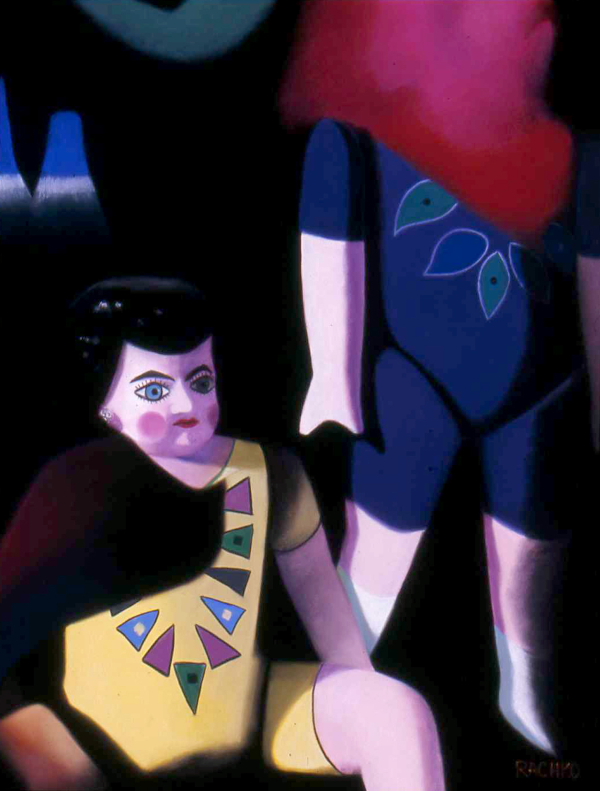
“The Absence,” soft pastel on sandpaper, 26″ x 20″
*an ongoing series of quotations – mostly from artists, to artists – that offers wisdom, inspiration, and advice for the sometimes lonely road we are on.
Art cannot play to the demand because it inheres precisely in bringing forth the unexpected, the New. It unearths what normality buries away. No wonder so many people are afraid of it.
All authentic art, then, is “challenging,” not just the avant-garde. We cannot omit the fact that some great art has an outer layer that makes it more agreeable to popular taste at a particular moment. For example, the work of Vincent van Gogh, one of modernisms prime instigators in the visual arts, seems to be everywhere today even though no one saw much to like in it while he was alive. But while it may be true that on the surface van Gogh’s work is all pretty colors and neat swirls, its immediate appeal is a siren’s song luring us to the depths. There is a chaos lurking in every print of Starry Night (1889) that livens up a suburban bathroom. This chaos isn’t something that van Gogh injected into his painting of an otherwise benign night sky. It is the essence of the starry sky when seen for what it is, that is, when captured outside all comforting clichés that might shield us from its compelling monstrosity.
J.F. Martel in Reclaiming Art in the Age of Artifice: A Treatise, Critique, and Call to Action
Comments are welcome!
Pearls from artists* # 320
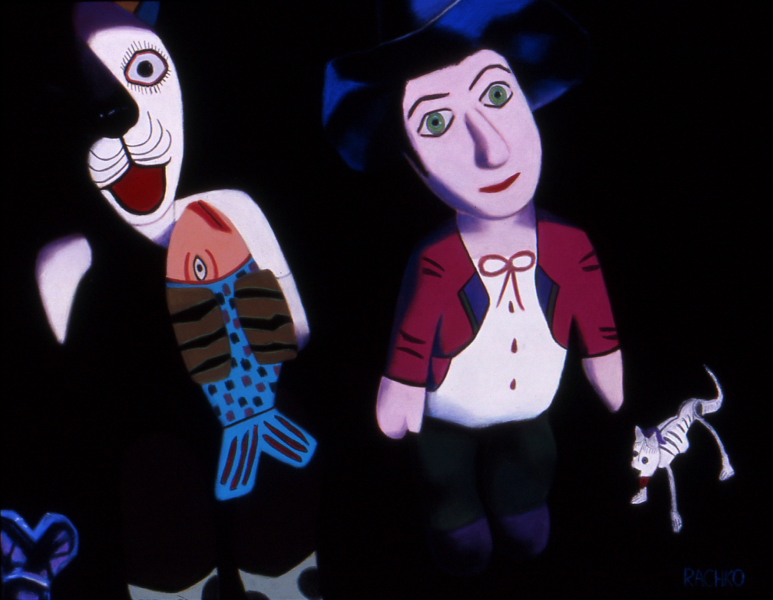
“Offering,” soft pastel on sandpaper, 20″ x 26″
*an ongoing series of quotations – mostly from artists, to artists – that offers wisdom, inspiration, and advice for the sometimes lonely road we are on.
As soon as I use words and actions to convey an emotion, I engage with the world, pitting my feelings against fate in hopes of a desired outcome. If I am angry, my anger is directed at someone or something. If I am in love, my love is for another. Feelings are purposive in ordinary reality, our emotional states tangled in the processes of life. This is what we mean when we refer to ourselves as subjects. But if, instead of acting on a feeling, I make it the basis of a song or a film or a dance, something strange happens. My purposive feeling leaves the closed circle of my personal existence, almost as though I had taken it out of historical time altogether. Transposed into the work of art, it becomes nonpurposive, undirected. It disassociates from its original focus, and from my self as subject, acquires a kind of autonomy. Artistic creation allows for the subjective aspect of our lives normally locked inside our skulls to exist outside us, which is to say that in art, the subjective becomes objective.
J.F. Martel in Reclaiming Art in the Age of Artifice: A Treatise, Critique, and Call to Action
Comments are welcome!
Pearls from artists* # 319

“She Embraced It and Grew Stronger,” soft pastel on sandpaper, 38″ x 58″
*an ongoing series of quotations – mostly from artists, to artists – that offers wisdom, inspiration, and advice for the sometimes lonely road we are on.
Ultimately, whether we judge an artistic work to be enjoyable or not may be immaterial when we consider the effect it has on us. A film might affect us in profound ways even though we found it difficult to watch or failed to grasp the point, if any, that the filmmakers were trying to get across. Most people have experienced artistic works that, although their own egos may have found them lacking in certain respects, continued to work on them long afterward, subtly altering them whether they wished it or not. The crucial factor isn’t whether we have been amused or delighted by a work but whether we have let the forces within it penetrate the closed perimeter of our lives and expand our horizons. True sensibility, real good taste, involves the ability to recognize when such forces are present, and to distinguish between superficial reactions and the deeper affects these forces elicit.
J.F. Martel in Reclaiming Art in the Age of Artifice: A Treatise, Critique, and Call to Action
Comments are welcome!
Pearls from artists* # 318
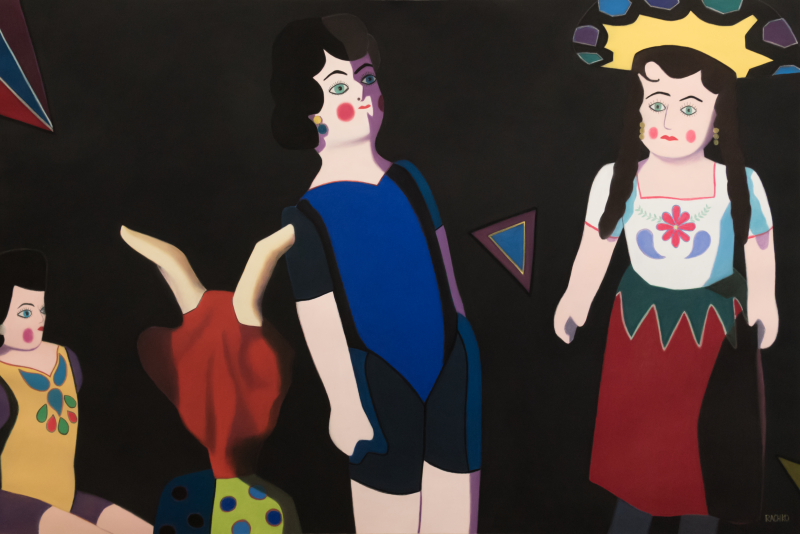
“Conundrum,” soft pastel on sandpaper, 38″ x 58″
*an ongoing series of quotations – mostly from artists, to artists – that offers wisdom, inspiration, and advice for the sometimes lonely road we are on.
We tend to see our “personal tastes” as positive personality traits, whereas they could just as well indicate limitations that we might overcome given the right opportunity, the appropriate context, and a little courage. Each person’s unique take on reality will no doubt favor certain aesthetic experiences over others, but it may be that the world is filled with potential aesthetic experiences that our “tastes” prevent us from having for no good reason.
J.F. Martel in Reclaiming Art in the Age of Artifice: A Treatise, Critique, and Call to Action
Comments are welcome!

Pearls from artists* # 310
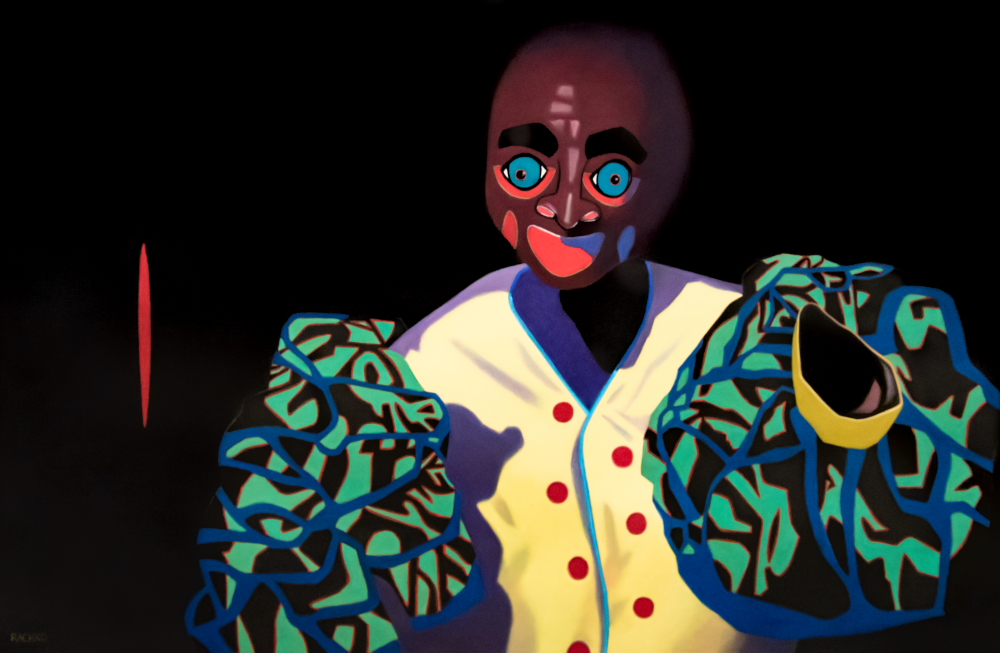
“Danzante,” soft pastel on sandpaper, 38″ x 58″ image, 50″ x 70″ framed
*an ongoing series of quotations – mostly from artists, to artists – that offers wisdom, inspiration, and advice for the sometimes lonely road we are on.
As Immanuel Kant explained, aesthetic rapture is a peculiar kind of subjective phenomenon, since it presents itself as anything but subjective. It asks to be shared with others in hopes that they too might experience this thing that has had such a profound effect upon us. Naturally, the desire to share our astonishment is bound to be frustrated as we meet people who respond to our beloved work with indifference or even revulsion. We then remember that the affective power of works of art varies from person to person, and even from moment to moment within the same person’s life, a fact we usually put down to personal taste, though little consideration is given to what that term might mean. People have their own inclinations, and given that the aesthetic is held, not just by Kant but also by common wisdom, to be a private affair, its variability across the broad spectrum of human personalities can only seem inevitable.
J.F. Martel in Reclaiming Art in the Age of Artifice: A Treatise, Critique, and Call to Action
Comments are welcome!
Pearls from artists* #309
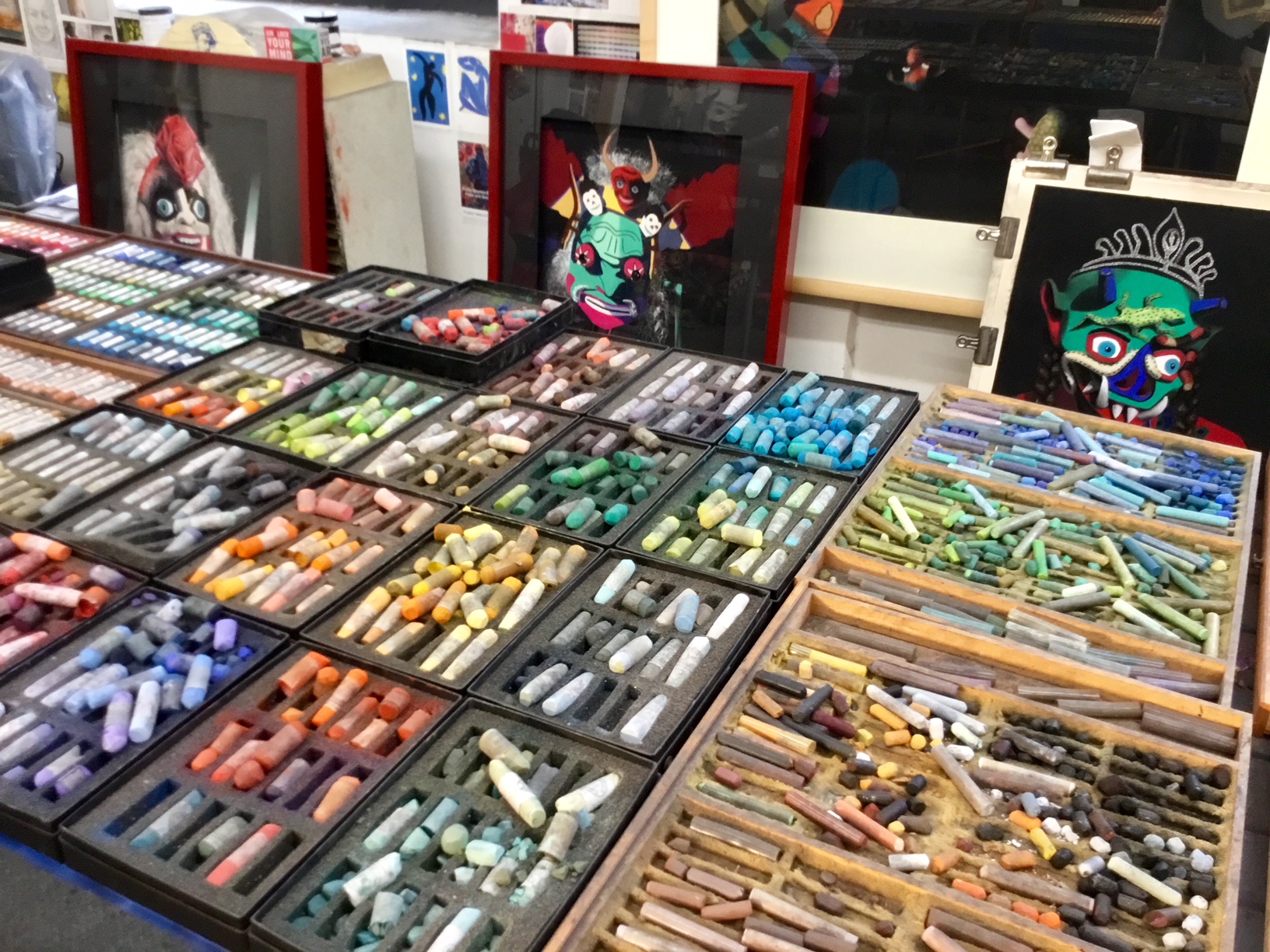
Barbara’s studio
*an ongoing series of quotations – mostly from artists, to artists – that offers wisdom, inspiration, and advice for the sometimes lonely road we are on.
It is a strange thing to catalog the conflicting theories as to what the first artists thought they were doing down there in the caves, because the truth is that, to this day, we do not know why we make art. In the end, art may not have been our invention at all. It may well have appeared in history as it does in the life of many individual artists: as an outside call, a sudden flash of inspiration, an inner wanderlust exerting such a powerful pull that ultimately we would have to say that Picasso got it wrong: the early humans did not invent art. Art invented humanity.
J.F. Martel in Reclaiming Art in the Age of Artifice: A Treatise, Critique, and Call to Action
Comments are welcome!
Pearls from artists* # 308
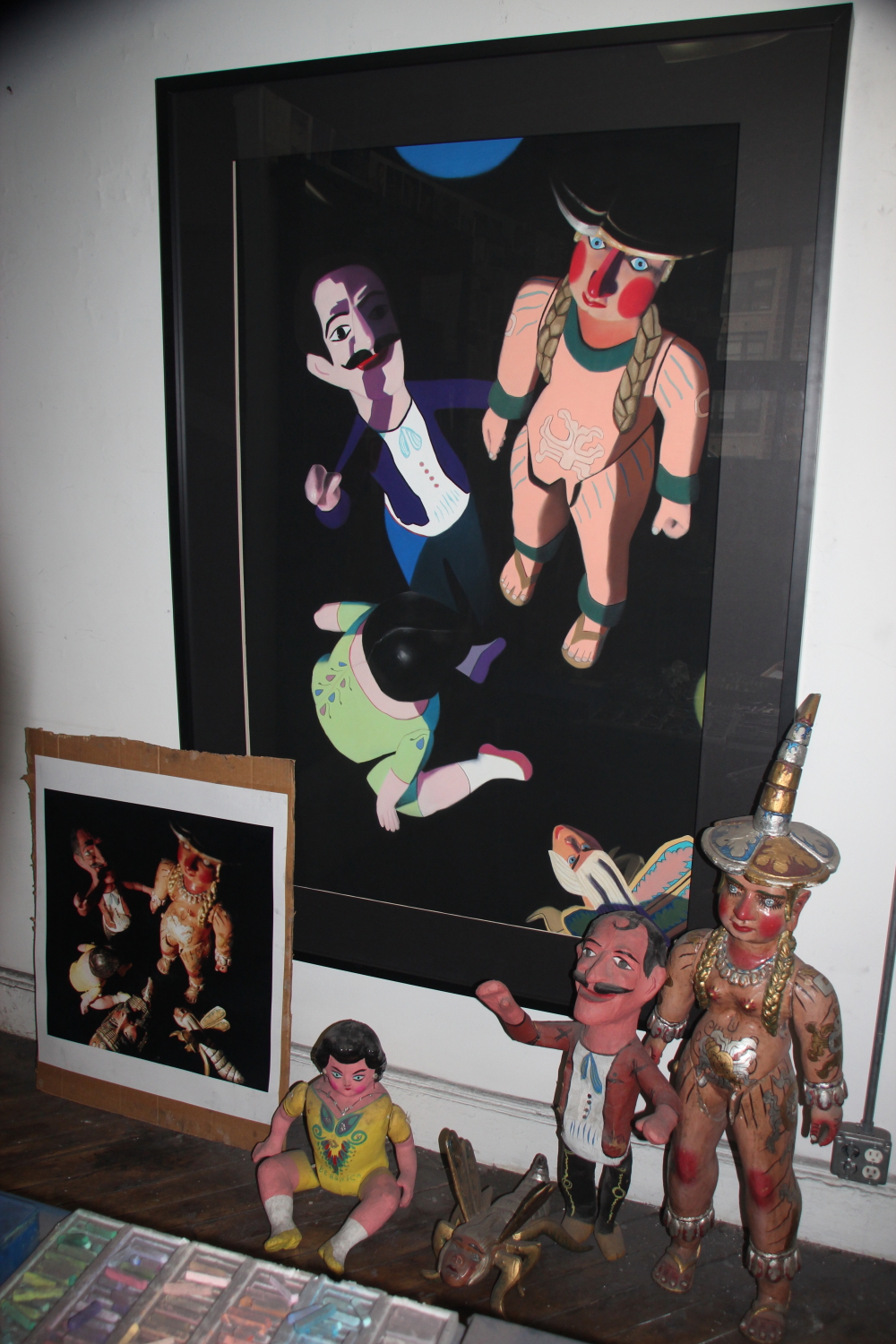
“The Ancestors,” 70” x 50” framed, in Barbara’s studio
*an ongoing series of quotations – mostly from artists, to artists – that offers wisdom, inspiration, and advice for the sometimes lonely road we are on.
Art is mysterious because its purpose is unknown and its effect always exceeds the ends we put it to. If it is true, for instance, that nearly all human societies see the possession of artistic objects as a sign of prestige and power, it may simply be because art’s primary quality makes it a suitable sign for those who want to legitimize their authority. And while it may be the case that art ennobles us by bringing beauty into our lives, or that it conveys complex cultural ideas simply and effectively, or that it preserves the beliefs of one age for the next – again, these functions could very well follow from art’s original, mysterious, irreducible shining. Just as it is the gleam of gold that makes it precious in our eye and not its preciousness that makes it gleam, so the primary quality of art could precede all of its uses and appropriations. In other words art may be something before it becomes all the things we claim it to be.
J.F. Martel in Reclaiming Art in the Age of Artifice: A Treatise, Critique, and Call to Action
Comments are welcome!
Pearls from artists* # 303
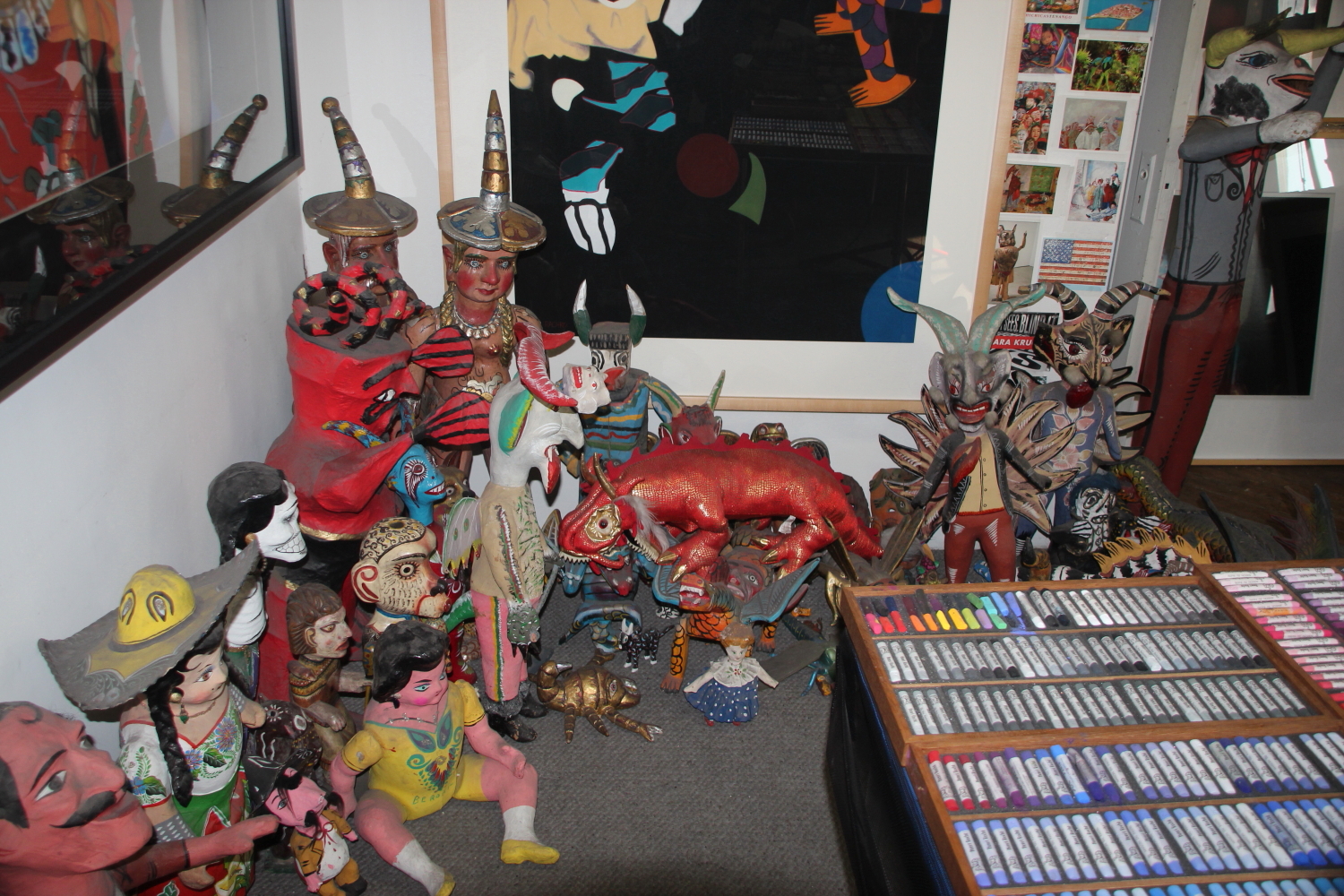
Barbara’s Studio
*an ongoing series of quotations – mostly from artists, to artists – that offers wisdom, inspiration, and advice for the sometimes lonely road we are on.
If the majority of aesthetic works fail to astonish us, then. it may have something to do with the ingrained insensitivity that is part and parcel of contemporary life. It may also have something to do with the fact that art, as Solzhenitsyn said so eloquently, is constantly being put to uses that are at odds with its essence. Indeed, the moment a work of art appears, all kinds of other factors come into play. Cultural institutions, social pressures, laws, customs, fashions, and trends pull it in every direction. Fame, money, conformism, attention-seeking, and knee-jerk rebellion can lure artists to abandon their own vision in order to emulate those of others, to adhere to formulas and paint by numbers, or to value external convention over vision. The inevitable result is a lot of bad art that couldn’t astonish anyone. It should come as no surprise, when looking over the glut of aesthetic objects that proliferate around us, if we feel the need to distinguish between authentic and inauthentic art – which is to say, art that astonishes us by attuning us to the radical mystery of being, and art that attempts to reinforce our shared illusions, comforting or intimidating us with the notion that there is nothing to wonder at since everything has been figured out.
J.F. Martel in Reclaiming Art in the Age of Artifice: A Treatise, Critique, and Call to Action
Comments are welcome!
Pearls from artists* # 302

“Epiphany,” soft pastel on sandpaper, 38″ x 58″
*an ongoing series of quotations – mostly from artists, to artists – that offers wisdom, inspiration, and advice for the sometimes lonely road we are on.
Regardless of personal convictions or professional concerns, an artist’s power comes down to two things: her sensitivity to the radical mystery of existence, and the artistry and craft with which she can channel that mystery into an object or performance. Neither existential awe nor a given metaphysical outlook need to serve as an explicit motivation. Simply, the emergence of artistic vision – and the need to express the vision without distorting or conceptualizing it – is contingent upon the underlying wonderment at being itself, a wonderment without which there would be no art.
J.F. Martel in Reclaiming Art in the Age of Artifice: A Treatise, Critique, and Call to Action
Comments are welcome!


 barbararachkoscoloreddust.com