Blog Archives
Pearls from artists* # 693

*an ongoing series of quotations – mostly from artists, to artists – that offers wisdom, inspiration, and advice for the sometimes lonely road we are on.
Earlier I wrote that I as an artist must concern myself with painting and not waste energy on trying to decipher other people’s intentions or motives. I still believe this to be correct.
(My main purpose in life is to paint, this is my profession. I am most happy when I am alone in the studio working. The other problems of politics exist outside my studio.)
note: I am not sure of this. I am sure of one thing that I am most happy when I am alone working in the studio. The distance between art + politics is one of grey. I have thought of my involvement in art as being one of combat—the paintings are weapons designed to destroy oppressors i.e., the establishment. Art is none of This! Art is Art.
A painting does not represent anything but itself. It shouldn’t look like anything else or make for any allusions. A painting is a painting just as a Rose is a Rose! May God bless Gertrude Stein!
Jack Whitten Notes From the Woodshed
Comments are welcome!
Pearls from artists* #571
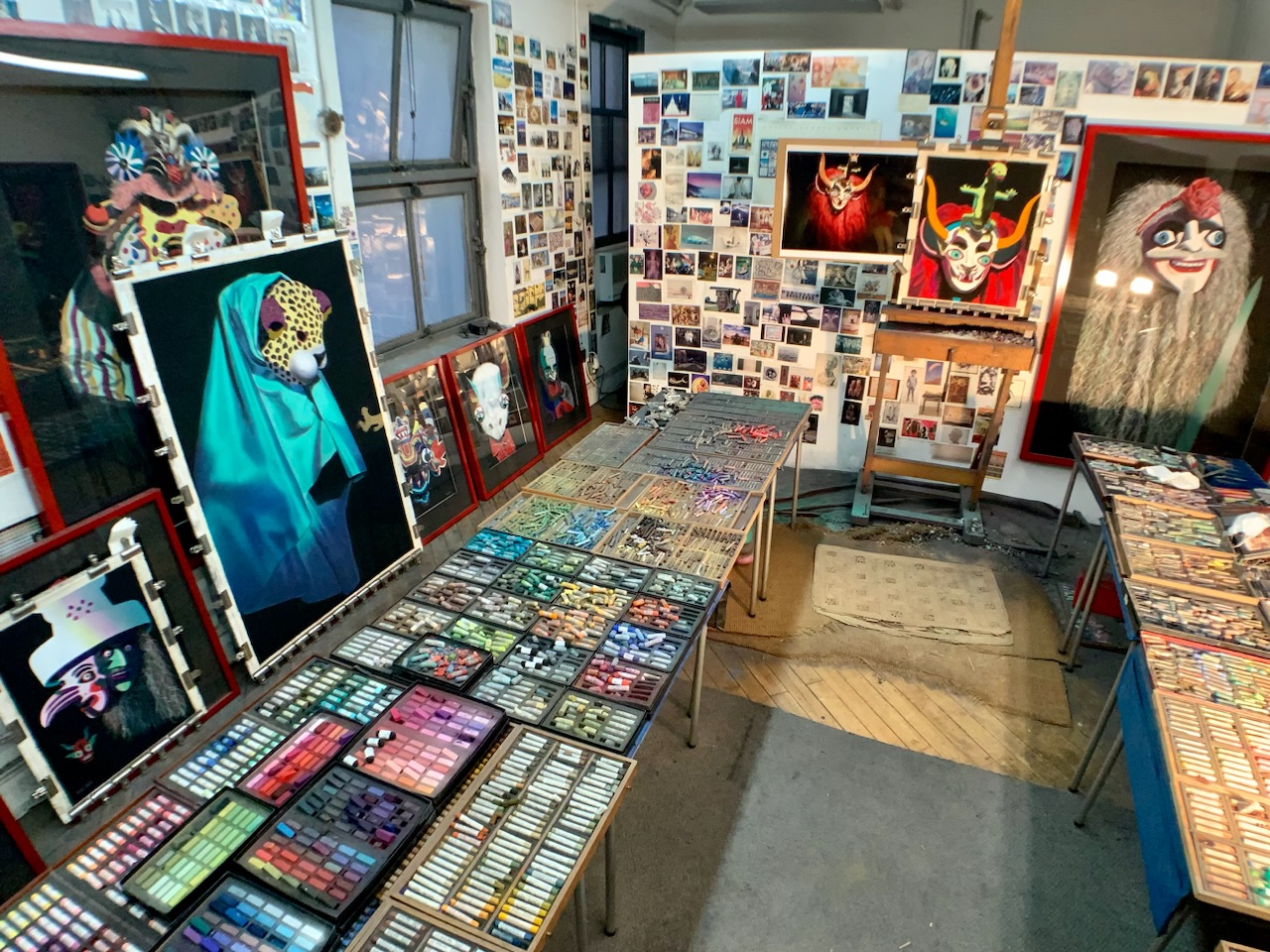
The Studio
*an ongoing series of quotations – mostly from artists, to artists – that offers wisdom, inspiration, and advice for the sometimes lonely road we are on.
To put it simply, but accurately, artists are often lost to the world because of their obsessions with their art. They may be just as lost as they prepare to work or incubate a new idea as in those feverish days when they make their final cuts on a film or race toward a publishing deadline. They may obsess about artistic questions and feel bursts of creative energy day or night, alone or in the company of others, in the middle of the work week or on vacation in the Bahamas.
Lost in time and space, the artist may feel more connected to Picasso, Emily Dickinson, Ingmar Bergman, Gertrude Stein, Handel, or Tennessee Williams than to the people in his immediate world. The living past holds extraordinary meaning for him. He travels elsewhere, removing his spirit and attention from the present. He may reside, as he works on his novel, in the childhood of a character, walking the garden paths and living the household dramas there. He may come upon a Rembrandt drawing and find himself wrenched, not to any particular place or time, but just elsewhere, as he experiences the greatness of his traditions, measures himself anew, and dreams again of his future.
Eric Maisel in A Life in the Arts: Practical Guidance and Inspiration for Creative and Performing Artists
Comments are welcome!


 barbararachkoscoloreddust.com