Blog Archives
Pearls from artists* # 44

Studio view
* an ongoing series of quotations – mostly from artists, to artists – that offers wisdom, inspiration, and advice for the sometimes lonely road we are on.
I cannot even imagine the individual arts sufficiently distinct from one another. This admittedly exaggerated attitude might have its most acute origin in the fact that in my youth, I, quite inclined toward painting, had to decide in favor of another art so as not to be distracted. And thus I made this decision with a certain passionate exclusivity. Based on my experience, incidentally, every artist needs to consider for the sake of intensity his means of expression to be basically the only one possible while he is producing. For otherwise he could not easily suspect that this or that piece of world would not be expressible by his means at all and he would finally fall into that most interior gap between the individual arts, which is surely wide enough and could be genuinely bridged only by the vital tension of the great Renaissance masters. We are faced with the task of deciding purely, each one alone, on his one mode of expression, and for each creation that is meant to be achieved in this one area all support from the other arts is a weakening and a threat.
Ulrich Baer, editor, The Wisdom of Rilke
Comments are welcome!
Pearls from artists* # 35
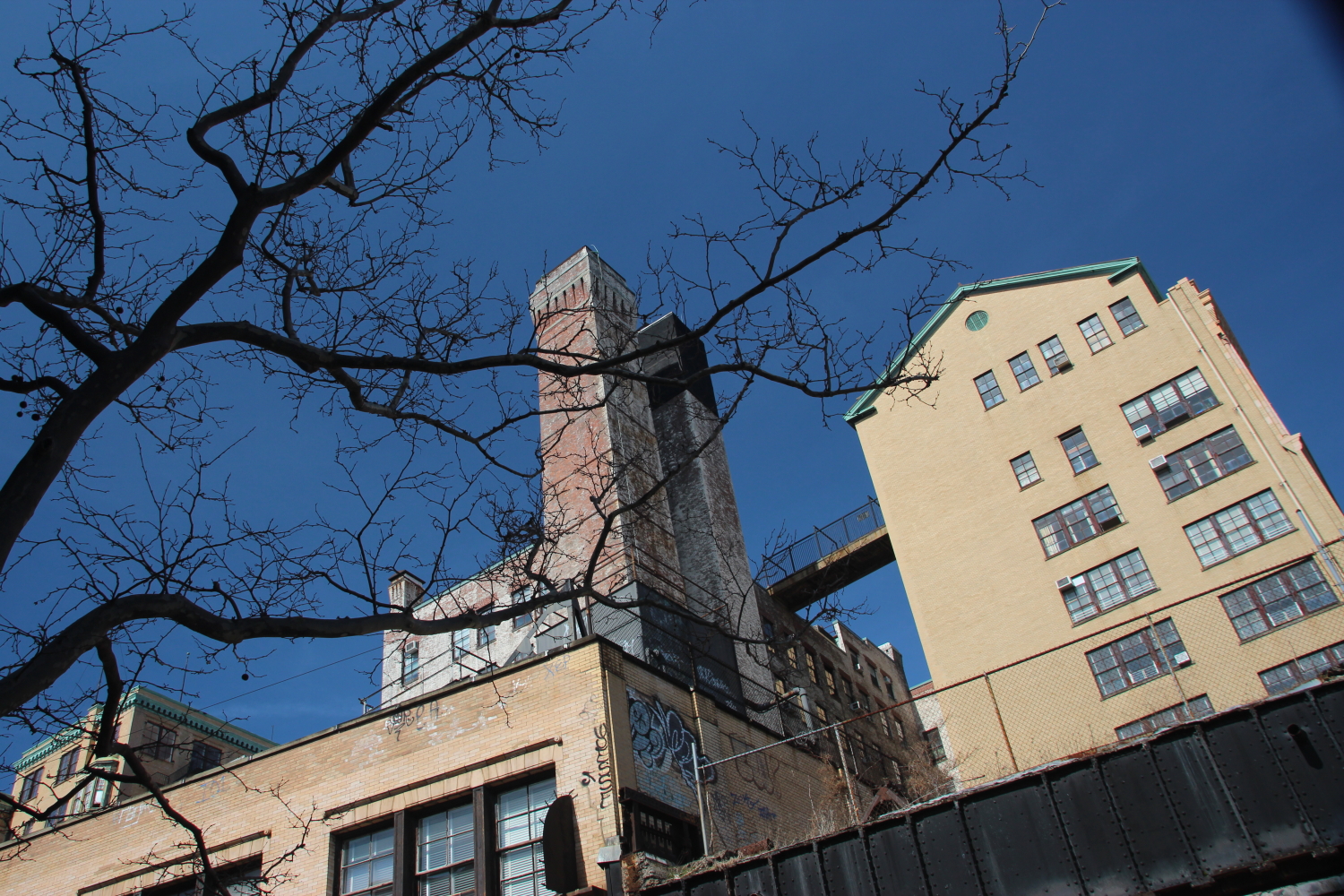
Westbeth, NYC
* an ongoing series of quotations – mostly from artists, to artists – that offers wisdom, inspiration, and advice for the sometimes lonely road we are on.
An individual who has committed himself to art and now wrestles within it, having given up everything else, has also become strict, you see. Such a person is more likely to warn off others rather than to beckon them to enter into a realm of the most tremendous demands and indescribable sacrifices. And for someone sitting at his desk, behind closed doors, matters are still relatively simple: at least he has to deal only with himself. But an actor, even when his work originates in the purest experiences of his being, stands in the open and performs his work in the open where he is exposed to all the influences, detractions, disturbances, and even hostilities that originate in his colleagues and his audience and that interrupt, distract, and split him off. For him things are more difficult than for anyone else; above all, he needs to lure success and to base his actions on it. And yet what misery results if this new alignment leads him to abandon the inner direction that had driven him into art in the first place. He seems to have no self; his job consists in letting others dictate selves to him. And the audience, once it has accepted him, wants to preserve him within the limits where it finds entertainment; and yet his achievement depends entirely upon his capacity to maintain an interior constancy through all kinds of changes, blindly, like a madman. Any momentary weakness toward success is as sure to doom him as giving in and drawing on applause as a precondition for their creation spells doom for the painter or poet.
Ulrich Baer in The Wisdom of Rilke
Comments are welcome!
Pearls from artists* # 32
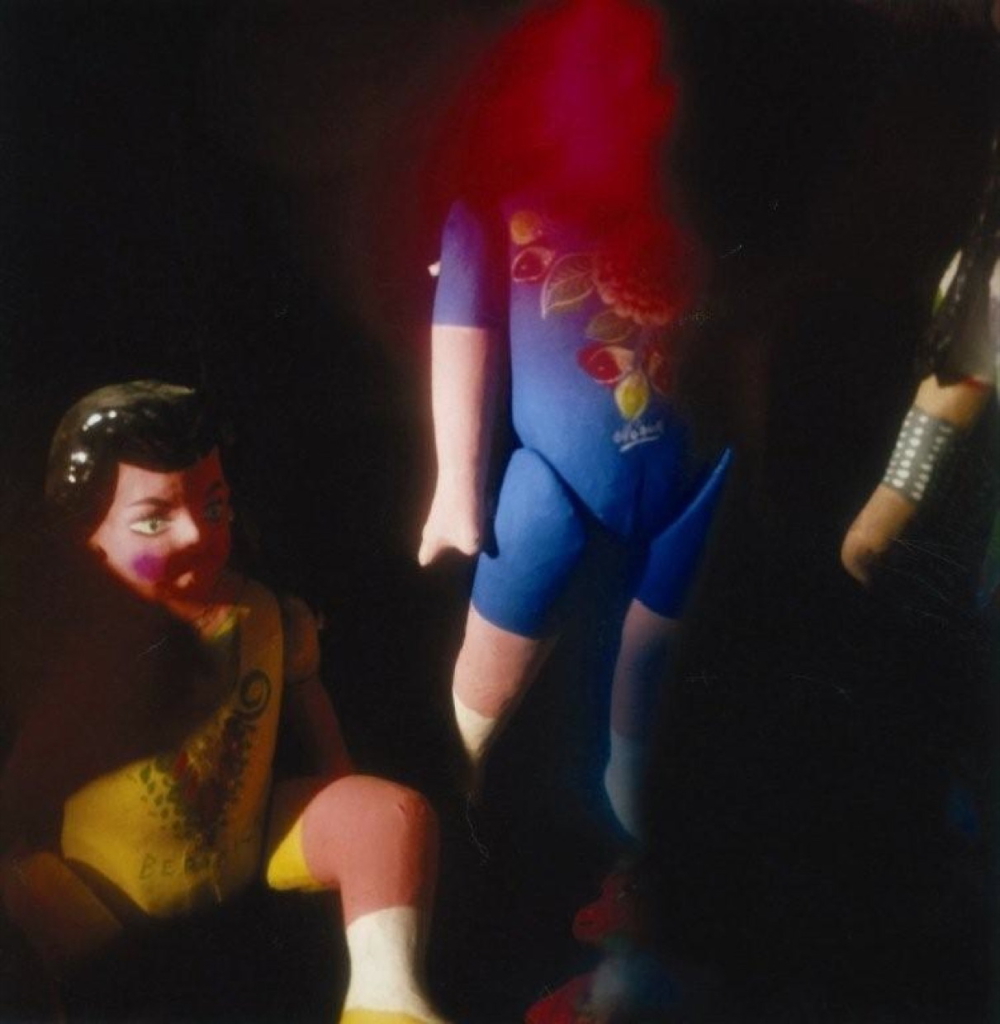
Untitled, 24″ x 24″ chromogenic print, edition of 5
* an ongoing series of quotations – mostly from artists, to artists – that offers wisdom, inspiration, and advice for the sometimes lonely road we are on.
We most certainly need to test ourselves against the most extreme possibilities, just as we are probably obligated not to express, share, and impart the most extreme possibility before it has entered the work of art. As something unique that no other person would and should understand, as one’s personal madness, so to speak, it has to enter into the work to attain its validity and to reveal there an internal law, like primary patterns that become visible only in the transparency of artistic creation. There exist nonetheless two freedoms to express oneself that seem to me the ultimate possibilities: one in the presence of the created object, and the other within one’s actual daily life where one can show another person what one has become through work, and where one may in this way mutually support and help and (here understood humbly) admire one another. In either case, however, it is necessary to show results, and it is neither lack of confidence nor lack of intimacy nor a gesture of exclusion if on does not reveal the tools of one’s personal becoming that are marked by so many confusing and tortuous traits, which are valid only for one’s own use.
Ulrich Baer, editor, The Wisdom of Rilke
Comments are welcome!
Q: What would you be if you were not an artist?
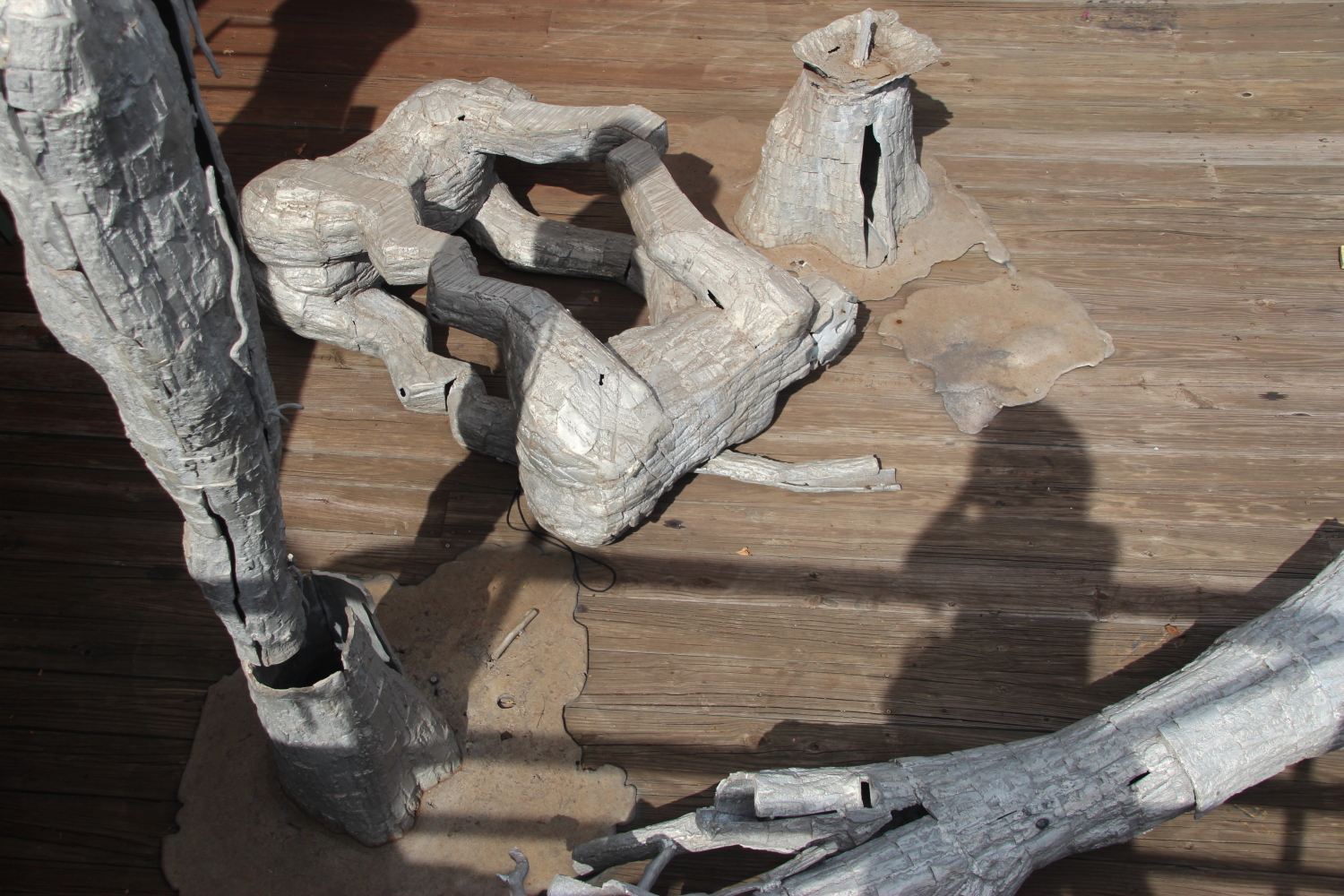
Self-portrait on a Hudson River barge
A: I honestly have no idea, but whatever it might be, there is a good chance that I’d be bored! In my younger days boredom was a strong motivator. I left the active duty Navy out of boredom. I couldn’t bear not being intellectually challenged (most of my jobs consisted of paper-pushing), not using my flying skills (at 27 I was a licensed commercial pilot and Boeing 727 flight engineer), and not developing my artistic talent. In what surely must be a first, by spending a lot of time and money training me for jobs I hated, the Navy turned me into a hard-working artist! And once I left the Navy there was no plan B. There was no time to waste. It was “full speed ahead.”
Art is a calling. You do not need to be told this if you are among those who are called. It’s all about “the work,” that all-consuming focus of an artist’s life. If a particular activity doesn’t make you a better artist, you avoid it. You work hard to nourish and protect your gifts. As artists we invent our own tasks, learn whatever we need in order to progress, and complete projects in our own time. It is life lived at its freest.
My art-making has led me to fascinating places: Mexico, Guatemala, Brazil, Argentina, Uruguay, France, England, Italy, Bali, Java and more; and to in-depth studies of intriguing subjects: drawing, color, composition, art and art history, the art business, film and film history, photography, mythology, literature, music, jazz history, and archaeology, particularly that of ancient Mesoamerica (the Olmec, Zapotec, Mixtec, Aztec, Maya, etc.). And this rich mixture continually grows! For anyone wanting to spend their time on earth learning and meeting new challenges, there is no better life than that of an artist.
I SO agree with this exchange that I read years ago between between Trisha Brown and Mikhail Baryshnikov in the New York Times. I wrote it on a piece of paper and taped it to my studio wall:
Trisha: How do you think we keep going? Are we obsessed?
Mikhail: We do it because there’s nothing better. I’m serious. Because there is nothing more exciting than that. Life is so boring, that’s why we are driven to the mystery of creation.
Comments are welcome.
Pearls from artists* # 10

West 28th Street
* an ongoing series of quotations – mostly from artists, to artists – that offers wisdom, inspiration, and advice for the sometimes lonely road we are on.
That art that matters to us – which moves the heart, or revives the soul,or delights the senses, or offers courage for living, however we choose to describe the experience – that work is received by us as a gift is received. Even if we are touched by a work of art something comes to us which has nothing to do with the piece. I went to see a landscape painter’s works, and that evening, walking among pine trees near my home, I could see the shapes and colors I had not seen the day before. The spirit of an artist’s gifts can wake our own. The work appeals, as Joseph Conrad says, to a part of our being which is itself a gift and not an acquisition. Our sense of harmony can hear the harmonies that Mozart heard. We may not have the power to profess our gifts as the artist does,and yet we come to recognize, and in a sense to receive, the endowments of our being through the agency of his creation. We feel fortunate, even redeemed. The daily commerce of our lives – “sugar for sugar and salt for salt,” as the blues singers say – proceeds at its own constant level, but a gift revives the soul. When we are moved by art we are grateful that the artist lived, grateful that he labored in the service of his gift.
If a work of art is the emanation of its maker’s gift and if it is received by its audience as a gift, then is it, too, a gift? I have framed the question to imply an affirmative answer, but I doubt we can be so categorical. Any object, any item of commerce, becomes one kind of property or another depending on how we use it. Even if a work of art contains the spirit of the artist’s gift, it does not follow that the work itself is a gift. It is what we make of it.
And yet, that said, it must be added that the way we treat a thing can sometimes change its nature. For example, religions often prohibit the sale of sacred objects, the implication being that their sanctity is lost if they are bought and sold. A work of art seems to be a hardier breed; it can be sold in the market and still emerge a work of art. But if it is true that in the essential commerce of art a gift is carried by the work from the artist to his audience, if I am right to say that where there is no gift there is no art, then it is possible to destroy a work of art by converting it into a commodity. Such, at any rate, is my position. I do not maintain that art cannot be bought and sold; I do maintain that the gift portion of the work places a constraint upon our merchandising.
Lewis Hyde, The Gift
Comments are welcome.


 barbararachkoscoloreddust.com