Blog Archives
Pearls from artists* # 107

“The Ancestors,” soft pastel on sandpaper, 38″ x 58″
* an ongoing series of quotations – mostly from artists, to artists – that offers wisdom, inspiration, and advice for the sometimes lonely road we are on.
If the proper goal of art is, as I now believe, Beauty, the Beauty that concerns me is that of Form. Beauty is, in my view, a synonym of the coherence and structure underlying life (not for nothing does Aristotle list plot first in his enumeration of the components of tragedy, a genre of literature that, at least in its classical form, affirms order in life). Beauty is the overriding demonstration of pattern that one observes, for example, in the plays of Sophocles and Shakespeare, the fiction of Joyce, the films of Ozu, the paintings of Cezanne and Matisse and Hopper, and the photographs of Timothy O’Sullivan, Alfred Stieglitz, Edward Weston, and Dorothea Lange.
Why is Form beautiful? Because, I think, it helps us meet our worst fear, the suspicion that life may be chaos and that therefore our suffering is without meaning. James Dickey was right when he asked rhetorically, “What is heaven anyway, but the power of dwelling among objects and actions of consequence.” “Objects of consequence” cannot be created by man alone, nor can “actions of consequence’ happen in a void; they can only be found within a framework that is larger than we are, an encompassing totality invulnerable to our worst behavior and most corrosive anxieties.
… How, more specifically, does art reveal Beauty, or Form? Like philosophy it abstracts. Art simplifies. It is never exactly equal to life. In the visual arts, this careful sorting out in favor of order is called composition, and most artists know its primacy.
Beauty in Photography by Robert Adams
Comments are welcome!
Q: Why do people need art in their daily lives?
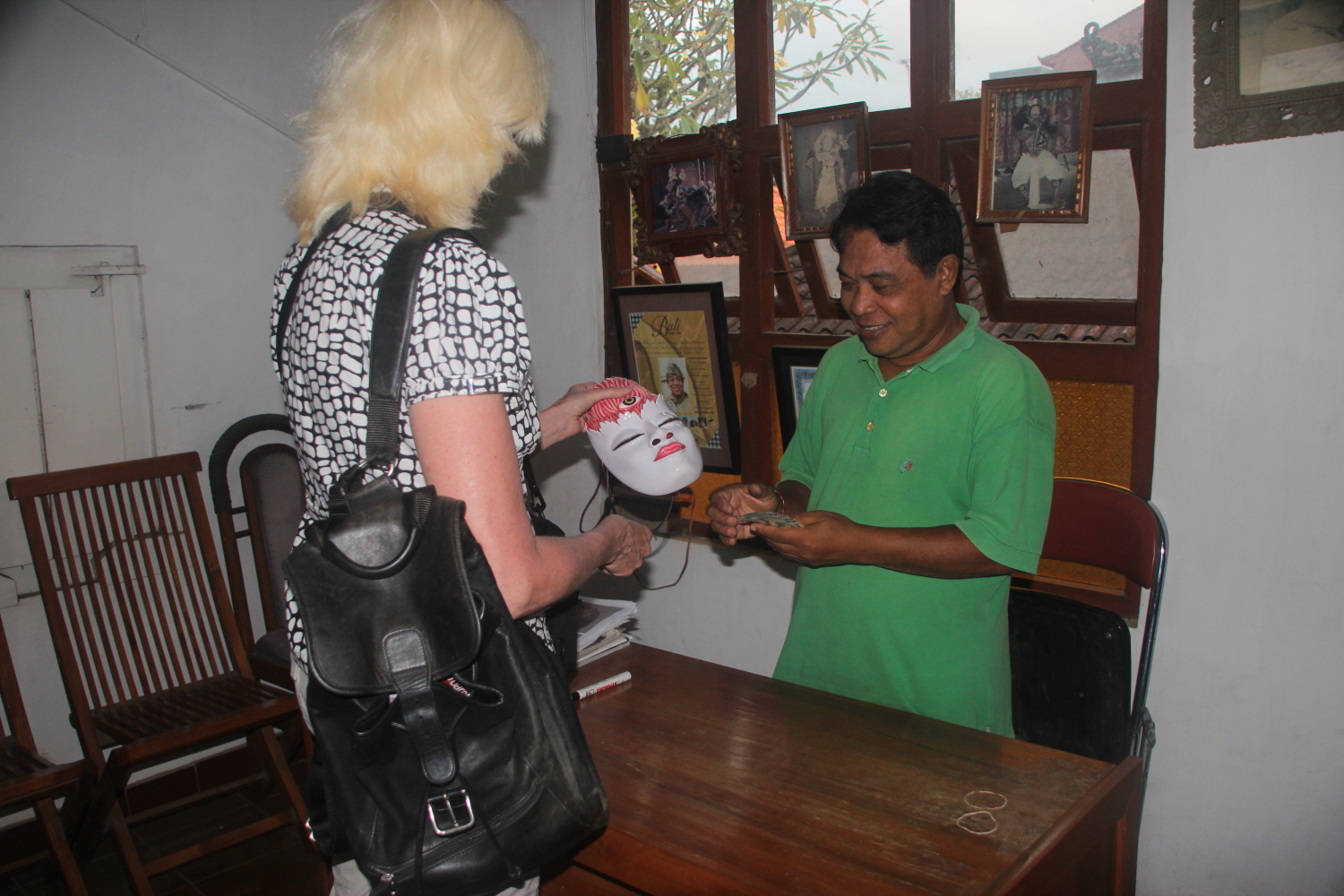
With Ida Bagus Anom, Mas, Bali; Photo: Donna Tang
A: That is for each person to decide, but as someone who devotes every waking moment to my work and to becoming a better artist, I cannot imagine my life without art.
I will tell you a little about what art has done for me. In my younger days boredom was a strong motivator. I left the active duty Navy out of boredom. I couldn’t bear not being intellectually challenged (most of my jobs consisted of paper-pushing), not using my flying skills (at 27 I was a licensed commercial pilot and Boeing-727 flight engineer), and not developing my artistic talents. In what surely must be a first, the Navy turned me into a hard-working and disciplined artist. And once I left the Navy there was no plan B. There was no time to waste. It was “full speed ahead.”
Art is a calling. You do not need to be told this if you are among those who are called. It’s all about “the work,” that all-consuming focus of an artist’s life. If a particular activity doesn’t seem likely to make me a better artist, I tend to avoid it. I work hard to nourish and protect my gifts. As artists we invent our own tasks, learn whatever we need in order to progress, and complete projects in our own time. It is life lived at its freest.
My art-making has led me to fascinating places: Mexico, Guatemala, Brazil, Argentina, Uruguay, France, England, Italy, Bali, Java, Sri Lanka, and more; and to in-depth studies of intriguing subjects: drawing, color, composition, art and art history, the art business, film and film history, photography, mythology, literature, music, jazz and jazz history, and archaeology, particularly that of ancient Mesoamerica (Olmec, Zapotec, Mixtec, Aztec, Maya, etc.). And this rich mixture continually grows! For anyone wanting to spend their time on earth learning and meeting new challenges, there is no better life!
Comments are welcome!
Q: How do you feel about accepting commissions?

“Reunion,” soft pastel on sandpaper, 38″ x 58″, 1990
A: By the time I left the Navy in 1989 to devote myself to making art, I had begun a career as a portrait painter. I needed to make money, this was the only way I could think of to do so, and I had perfected the craft of creating photo-realistic portraits in pastel. It worked for a little while.
A year later I found myself feeling bored and frustrated for many reasons. I didn’t like having to please a client because their concerns generally had little to do with art. Once I ensured that the portrait was a good (and usually flattering) likeness, there was no more room for experimentation, growth, or creativity. I believed (and still do) that I could never learn all there was to know about soft pastel. I wanted to explore color and composition and take this under-appreciated medium as far as possible. It seemed likely that painting portraits would not allow me to accomplish this. Also, I tended to underestimate the amount of time needed to make a portrait and charged too small a fee.
So I decided commissioned portraits were not for me and made the last one in 1990 (above). I feel fortunate to have the freedom to create work that does not answer to external concerns.
Comments are welcome!
Pearls from artists* # 23
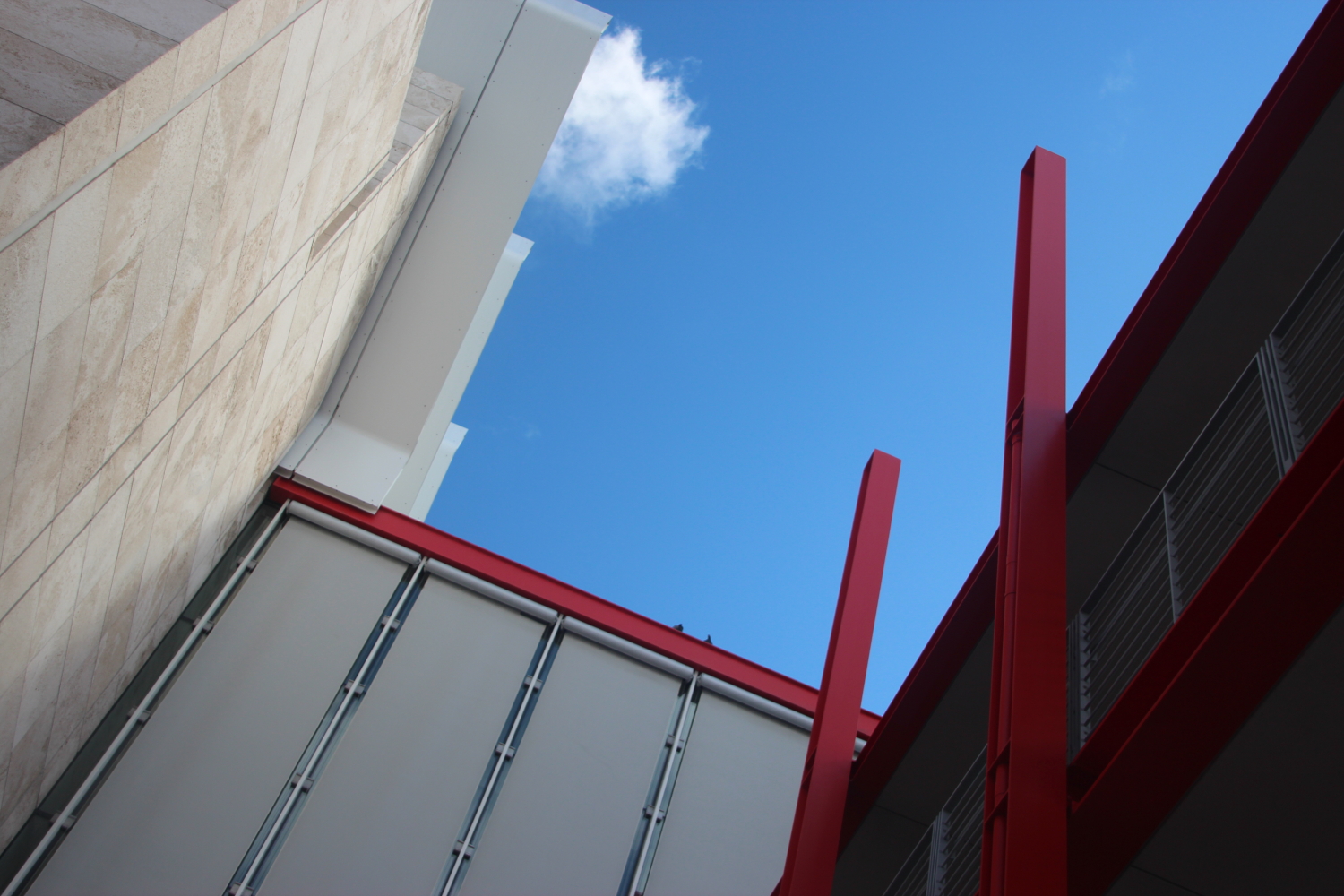
LACMA
* an ongoing series of quotations – mostly from artists, to artists – that offers wisdom, inspiration, and advice for the sometimes lonely road we are on.
My composition arises out of asking questions. I am reminded of a story early on about a class with Schoenberg. He had us go to the blackboard to solve a particular problem in counterpoint (though it was a class in harmony). He said, “When you have a solution, turn around and let me see it.” I did that. He then said, “Now another solution, please.” I gave another and another until finally, having made seven or eight, I reflected a moment and then said with some certainty, “There aren’t any more solutions.” He said, “OK. What is the principle underlying all the solutions?” I couldn’t answer his question; but I had always worshiped the man, and at that point I did even more. He ascended, so to speak. I spent the rest of my life, until recently, hearing him ask that question over and over. And then it occurred to me through the direction that my work has taken, which is renunciation of choices and the substitution of asking questions, that the principle underlying all of the solutions that I had given him was the question that he had asked, because they certainly didn’t come from any other point. He would have accepted that answer, I think. The answers have the questions in common. Therefore the question underlies the answers.
John Cage quoted in Kay Larson, Where the Heart Beats: John Cage, Zen Buddhism, and the Inner Life of Artists
Comments are welcome!
Q: What’s on the easel today?
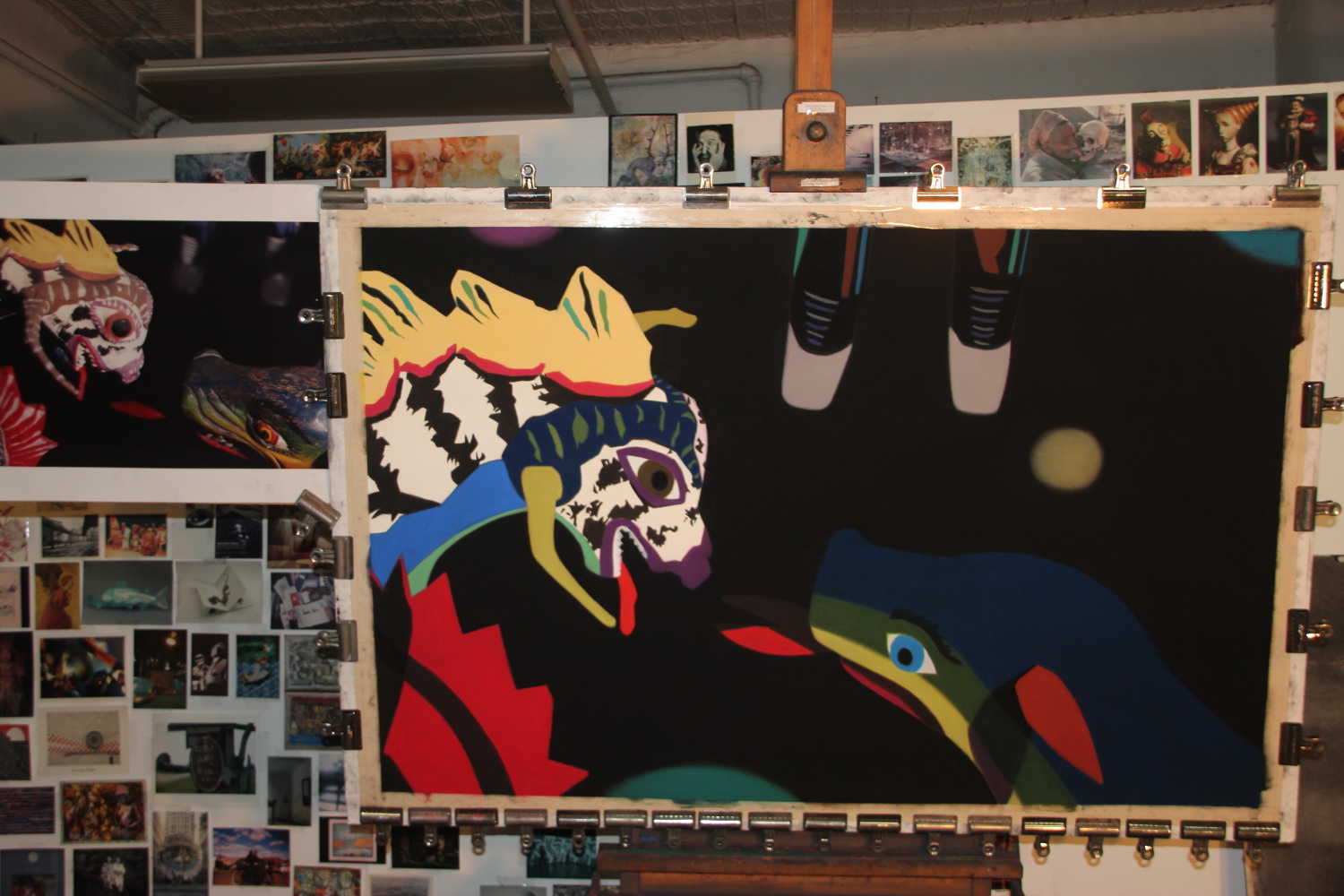
“Stalemate” in progress, soft pastel on sandpaper
A: A large pastel painting with the working title, “Stalemate.” For this one I went back and looked at some of my older 35 mm negatives. I selected one from 2002 and made the photographic print you see above, clipped to the left side of my easel. This piece is unusual because I’m painting the figures much larger than life size. I like what’s happening, but it’s slow going.
The title, “Stalemate,” is one I thought of some twenty-odd years ago, when I worked on a very different pastel painting – a table top still life – by that name. Somehow I couldn’t resolve some problems in the composition so I never finished it. I haven’t seen it in years, but it’s probably sitting in my Alexandria basement someplace.
Comments are welcome!


 barbararachkoscoloreddust.com