Blog Archives
Pearls from artists* # 351

Barbara at work on “The Orator”
*an ongoing series of quotations – mostly from artists, to artists – that offers wisdom, inspiration, and advice for the sometimes lonely road we are on.
That art is apolitical does not mean that artists themselves can be excused from the political responsibilities that fall on others. It means rather that as a manifestation of eternal psychic force, each work of art goes farther and deeper than the limited perspective of any individual mind, including that of its author.
No artist can predict how his work will affect the world… The artist invests his entire personality into the work, but he does so as a means of expressing a vision that is transpersonal. Everything that makes him what he is informs the work, but the final result transcends all personal contingencies.
J.F. Martel in Reclaiming Art in the Age of Artifice: A Treatise, Critique, and Call to Action
Comments are welcome!
Q: Do you have any ”dont’s” for artists that you swear by?
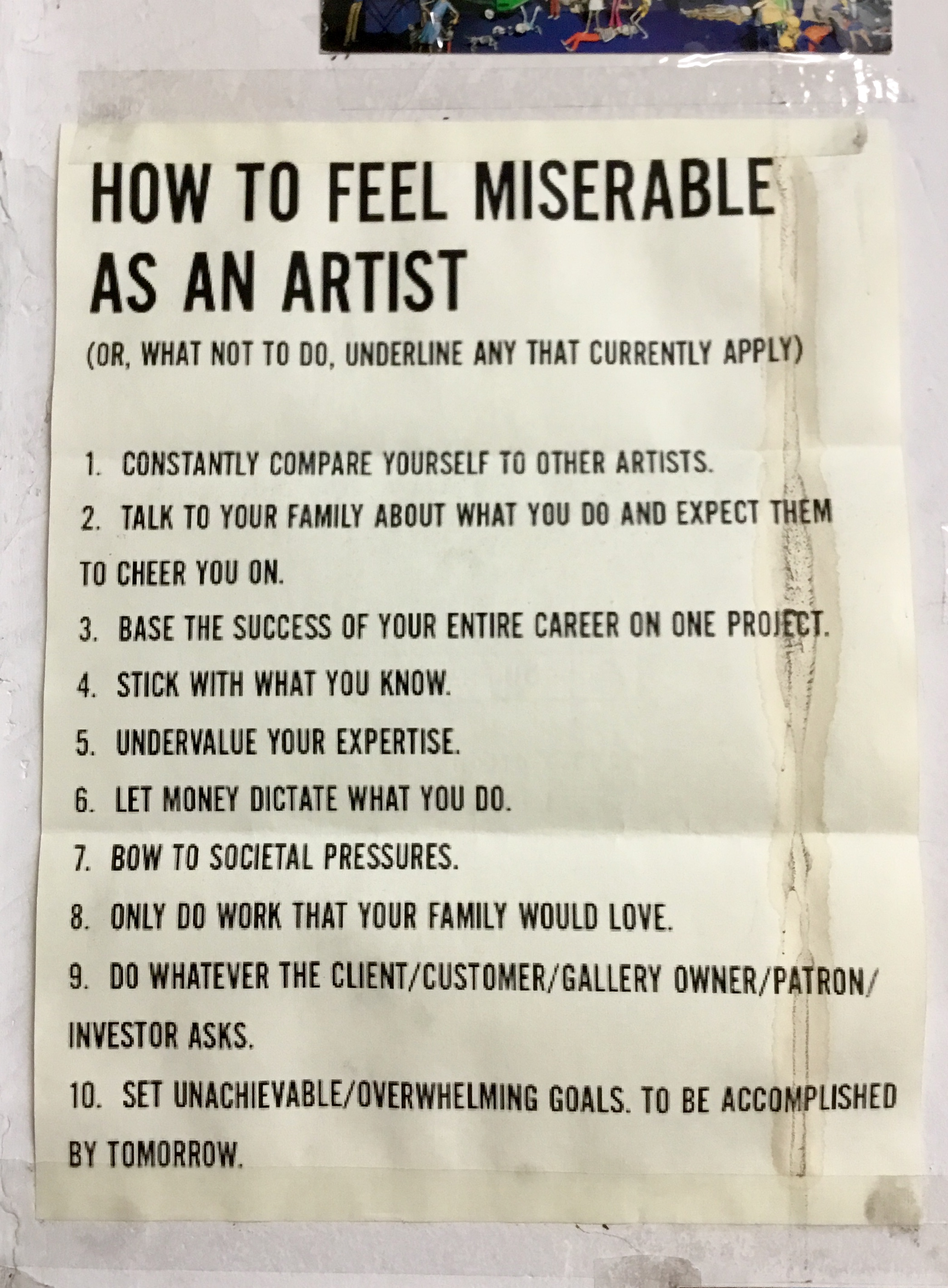
On my studio wall
A: I don’t remember where I found this list, but most artists probably need to be reminded once in awhile. I certainly do!
Comments are welcome!
Pearls from artists* # 349
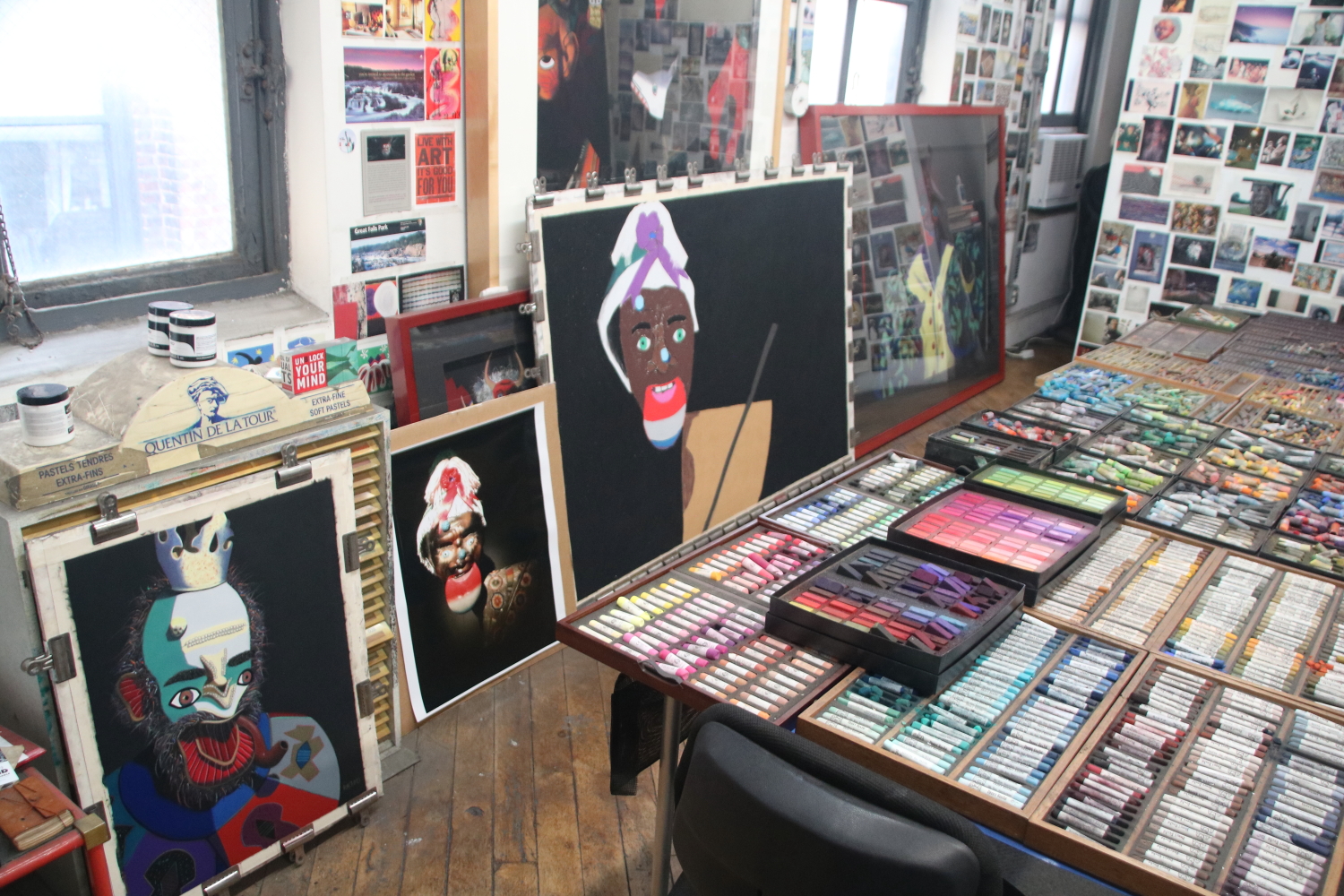
Barbara’s studio
*an ongoing series of quotations – mostly from artists, to artists – that offers wisdom, inspiration, and advice for the sometimes lonely road we are on.
If Dostoyevsky, Flaubert, and so many others were able to create great artistic works, it was because they were able to pull off something few adults can find it in themselves to do: they were able to suspend all final judgments about life and the universe in order to play…
The spirit of work is concerned with self-preservation. It evaluates concepts and ideas in terms of their practical value. Building roads, raising walls, running elections, debating policies, educating the young – all of these are purposive actions ultimately aimed at upholding social structures, changing those structures, or promoting one’s place within society. The spirit of work is the home of the ego, the part of us that has evolved to survive and thrive. One of the conditions of the artistic creation seems to be the ability to move frame this frame of mind into the spirit of play. As many artist have said in varying ways, the trick is to forget everything and create for the sake of creating. No worthwhile play, of course, is without effort. As the painstaking care Flaubert put into every line of his books makes clear, the spirit of play is sometimes the most exciting. Nevertheless, art remains in essence a game, an activity undertaken for its own sake, no matter how difficult. Like all games, it requires the establishment of a perimeter within which things that one might take very seriously in ordinary life are given only relative value. The perimeter suspends all the conventional rules, allowing the artist to turn the world on its head and let the imagination roam freely.
No sooner have we entered the spirit of play than we see things differently.
J.F. Martel in Reclaiming Art in the Age of Artifice: A Treatise, Critique, and Call to Action
Comments are welcome!
Pearls from artists* # 337
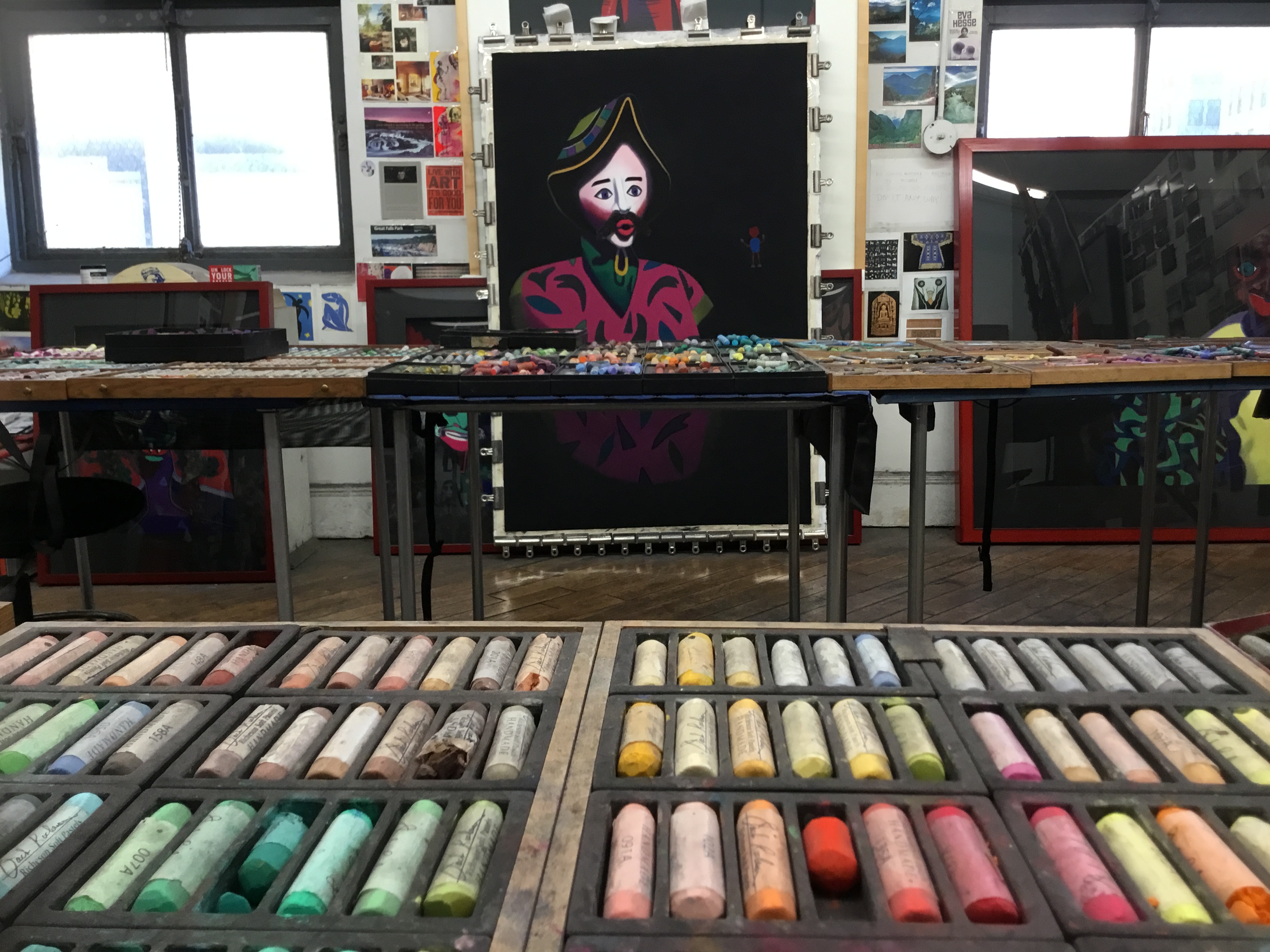
Barbara’s studio
*an ongoing series of quotations – mostly from artists, to artists – that offers wisdom, inspiration, and advice for the sometimes lonely road we are on.
I think society did a great disservice to artists when we started saying they were geniuses, instead of saying they had geniuses. That happened around the Renaissance, with the rise of a more rational and human-centered view of life. The gods and the mysteries fell away, and suddenly we put all credit and blame for creativity on the artists themselves – making the all-too-fragile humans completely responsible for the vagaries of inspiration.
In the process, we also venerated art and artists beyond their appropriate stations. The distinction of “being a genius” (and the rewards and status often associated with it) elevated creators into something like a priestly cast – and perhaps even into minor deities – which I think is a bit too much pressure for mere mortals, no matter how talented. That’s when artists start to really crack, driven mad and broken in half by the weight and weirdness of their gifts.
Elizabeth Gilbert in Big Magic: Creative Living Beyond Fear
Comments are welcome!
Q: Do you believe in “the big break” for artists?
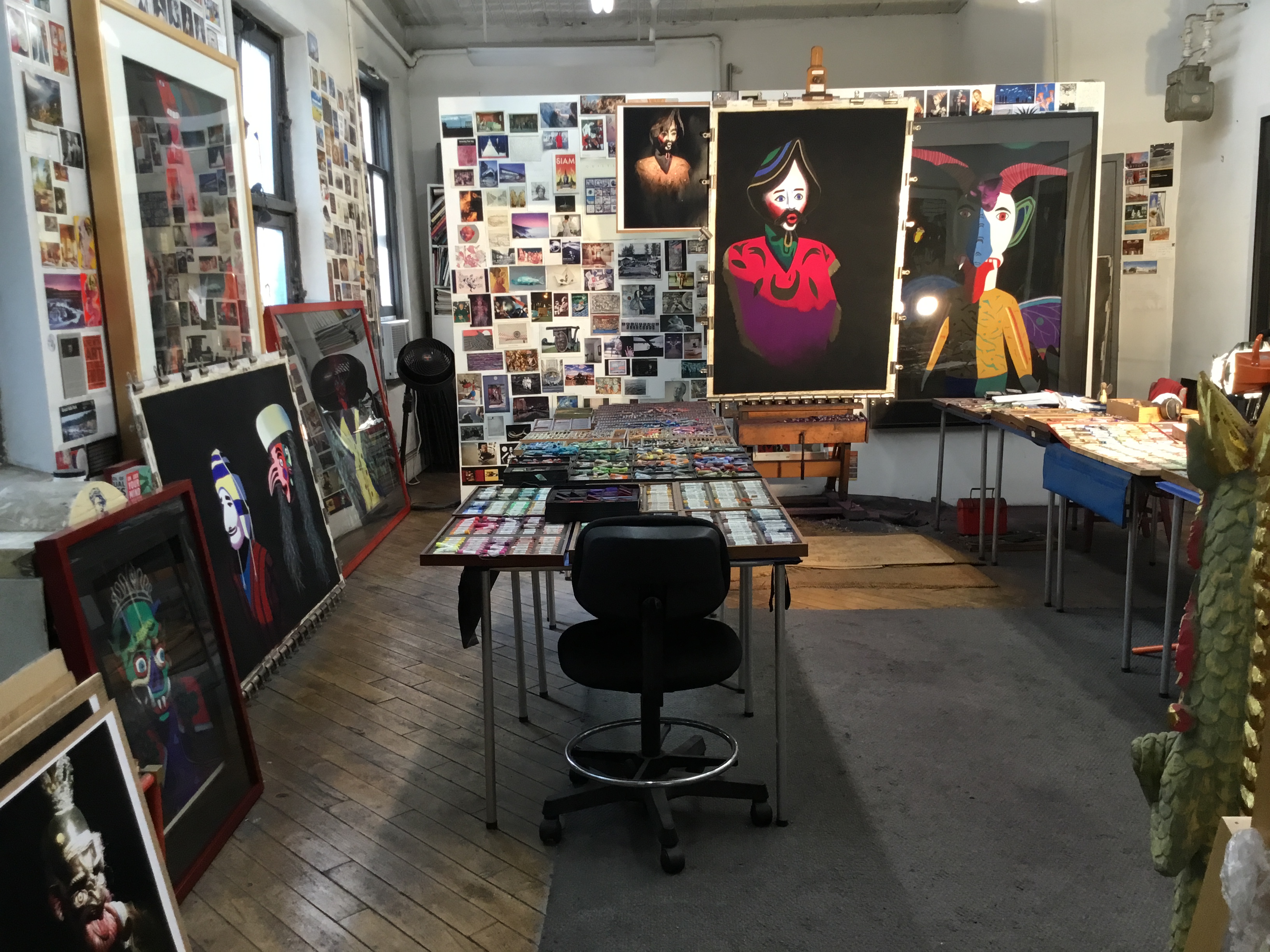
Barbara’s studio
A: Big breaks sometimes happen, but in my experience an artist’s life is made up of single-minded dedication, persistence, hard work, and lots of small breaks. I recently finished reading “Failing Up: How to Take Risks, Aim Higher, and Never stop Learning” by Leslie Odom, Jr. I like what he has to say to artists here:
“The biggest break is the one you give yourself by choosing to believe in your wisdom, in what you love, and in the gifts you have to offer the waiting world.”
Comments are welcome!
Pearls from artists* # 314
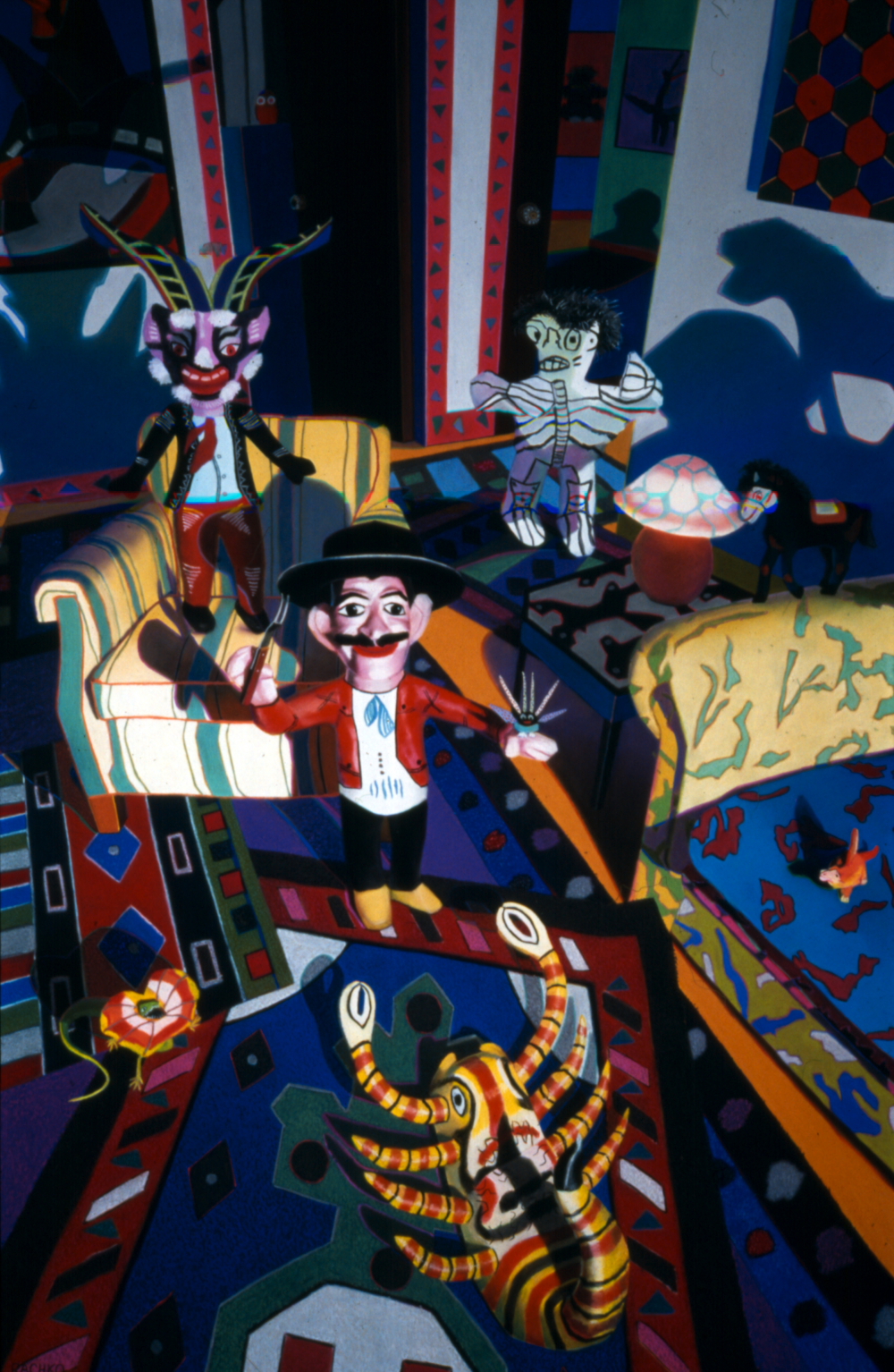
“He Just Stood There Grinning,” soft pastel on sandpaper, 58″ x 38″
*an ongoing series of quotations – mostly from artists, to artists – that offers wisdom, inspiration, and advice for the sometimes lonely road we are on.
For Leonora Carrington and many of her ‘sister’ surrealists, surrealism provided the intellectual, political and artistic milieu that enabled them to come into their own as artists and writers, and to gain recognition for their work in the wider world. Although some of these women had accepted their roles as muses in the lives of male artists, none believed that life as a muse trumped life as an artist. Asked in 1983 how she felt about the male surrealists’ view of women as muses, Leonora offered her testy, if retrospective rejoinder: ‘I thought it was bullshit… I didn’t have time to be anyone’s muse… I was too busy rebelling against my family and learning to be an artist.’ It is as artists and friends that we remember the women of surrealism today.
Whitney Chadwick in The Militant Muse: Love, War, and the Women of Surrealism
Comments are welcome!
Q: How do you feel about donating your work to auctions?
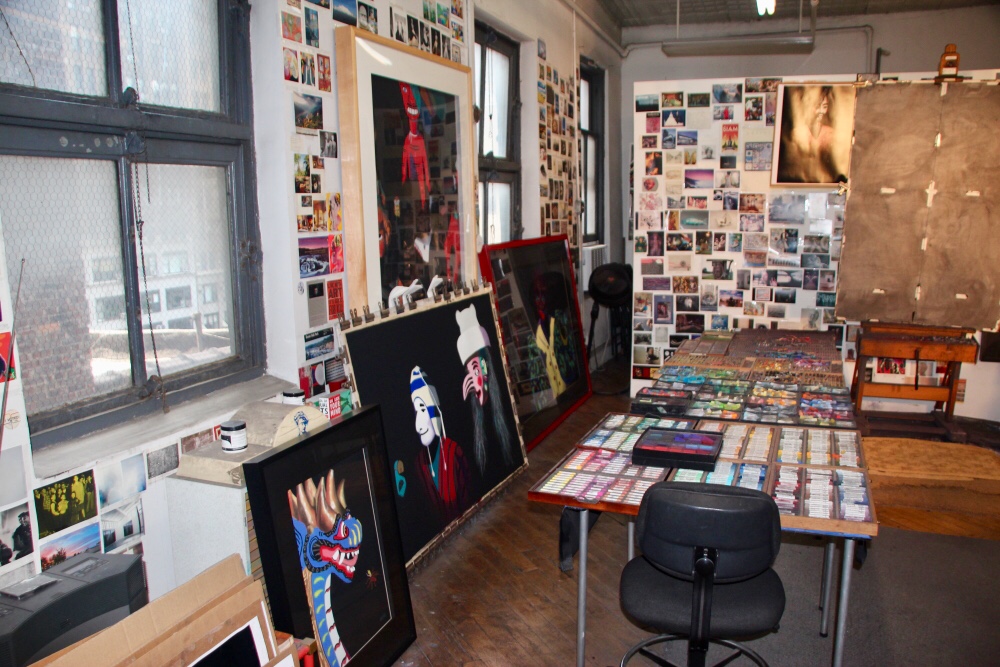
Studio with work in progress
A: Generally, it depends on who is doing the asking. If it’s an organization that has been supportive of my work, I am pleased to help with fundraising. If the organization and I have never connnected before, their out-of-the-blue request sometimes feels disrespectful. Artists invest decades, vast amounts of money, and plenty of blood, sweat, and tears to become the skilled creators that we are. And a New York artist’s overhead is considerable. I know of no artists who create their hard-fought work only to give it away.
Under certain conditions, however, I will participate. Here is my response to a recent donation request.
Dear…
Thank you for contacting me. Certainly your organization sounds worthwhile.
However, you may be unaware that artists may deduct ONLY the cost of materials when we give our work to auctions. I suggest that you ask one of your supporters to buy a pastel painting and donate it next year (there is a one-year waiting period for collectors to take this tax deduction). Then we have a win-win-win! I get paid, the collector/donor gets to enjoy owning my beautiful work for a year AND take a tax deduction for the full amount that he/she paid for it. Plus, your organization gets to sell my painting at next year’s auction.
Don’t you agree this is a better approach for everyone involved?
Sincerely…
Comments are welcome!
Pearls from artists* #309
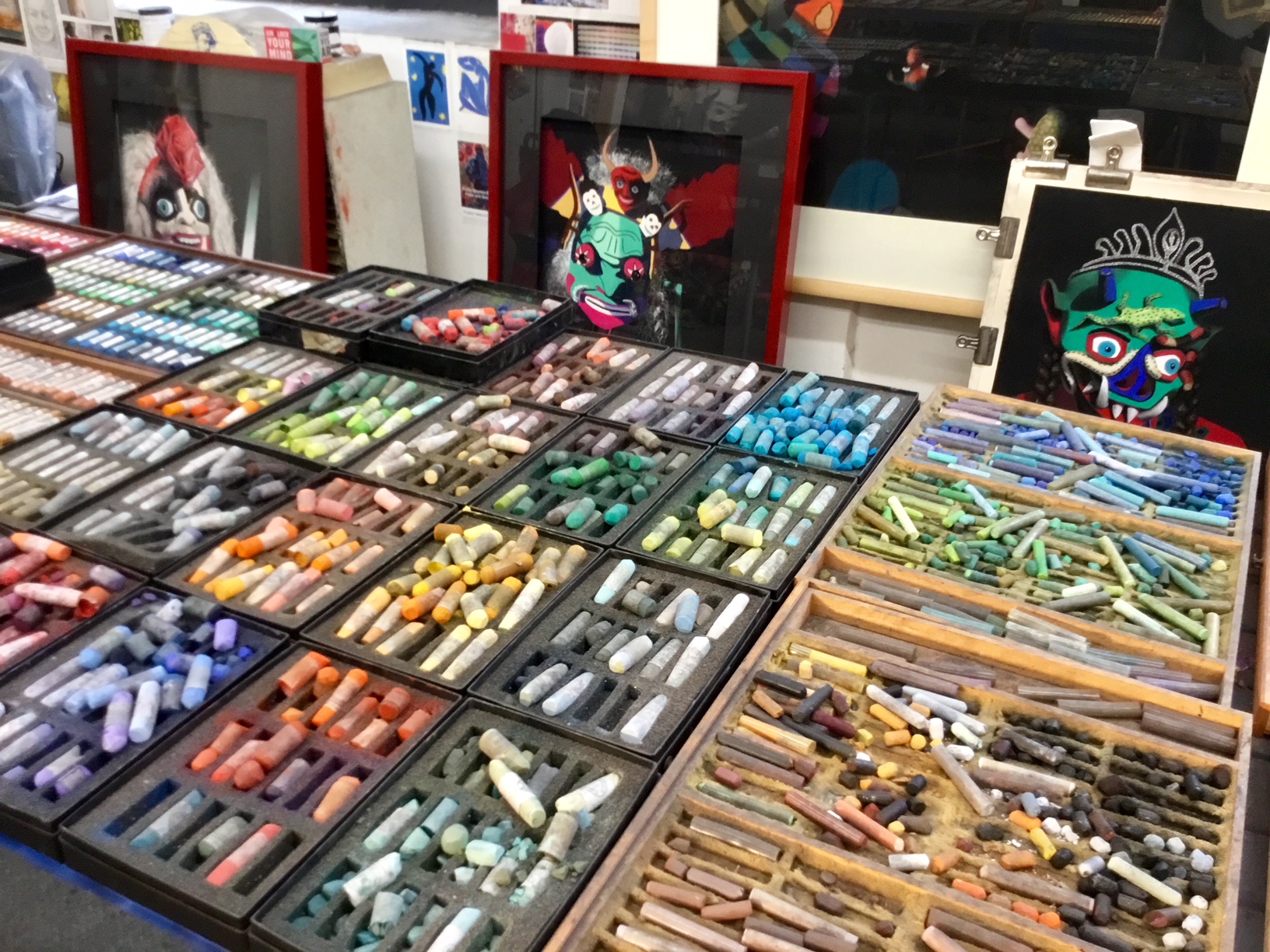
Barbara’s studio
*an ongoing series of quotations – mostly from artists, to artists – that offers wisdom, inspiration, and advice for the sometimes lonely road we are on.
It is a strange thing to catalog the conflicting theories as to what the first artists thought they were doing down there in the caves, because the truth is that, to this day, we do not know why we make art. In the end, art may not have been our invention at all. It may well have appeared in history as it does in the life of many individual artists: as an outside call, a sudden flash of inspiration, an inner wanderlust exerting such a powerful pull that ultimately we would have to say that Picasso got it wrong: the early humans did not invent art. Art invented humanity.
J.F. Martel in Reclaiming Art in the Age of Artifice: A Treatise, Critique, and Call to Action
Comments are welcome!
Pearls from artists* # 306

New York, NY
* an ongoing series of quotations – mostly from artists, to artists – that offers wisdom, inspiration, and advice for the sometimes lonely road we are on.
It is the responsibility of artists to pay attention to the world, pleasant or otherwise, and to help us live respectfully in it.
Artists do this by keeping their curiosity and moral sense alive, and by sharing with us their gift for metaphor. Often this means finding similarities between observable fact and inner experience – between birds in a vacant lot, say, and an intuition worthy of Genesis.
More than anything else, beauty is what distinguishes art. Beauty is never less than mystery, but it has within it a promise.
In this way, art encourages us to gratitude and engagement, and is of both personal and civic consequence.
Robert Adams in Art Can Help
Comments are welcome!
A: Would you agree that there are more opportunities for women artists these days?
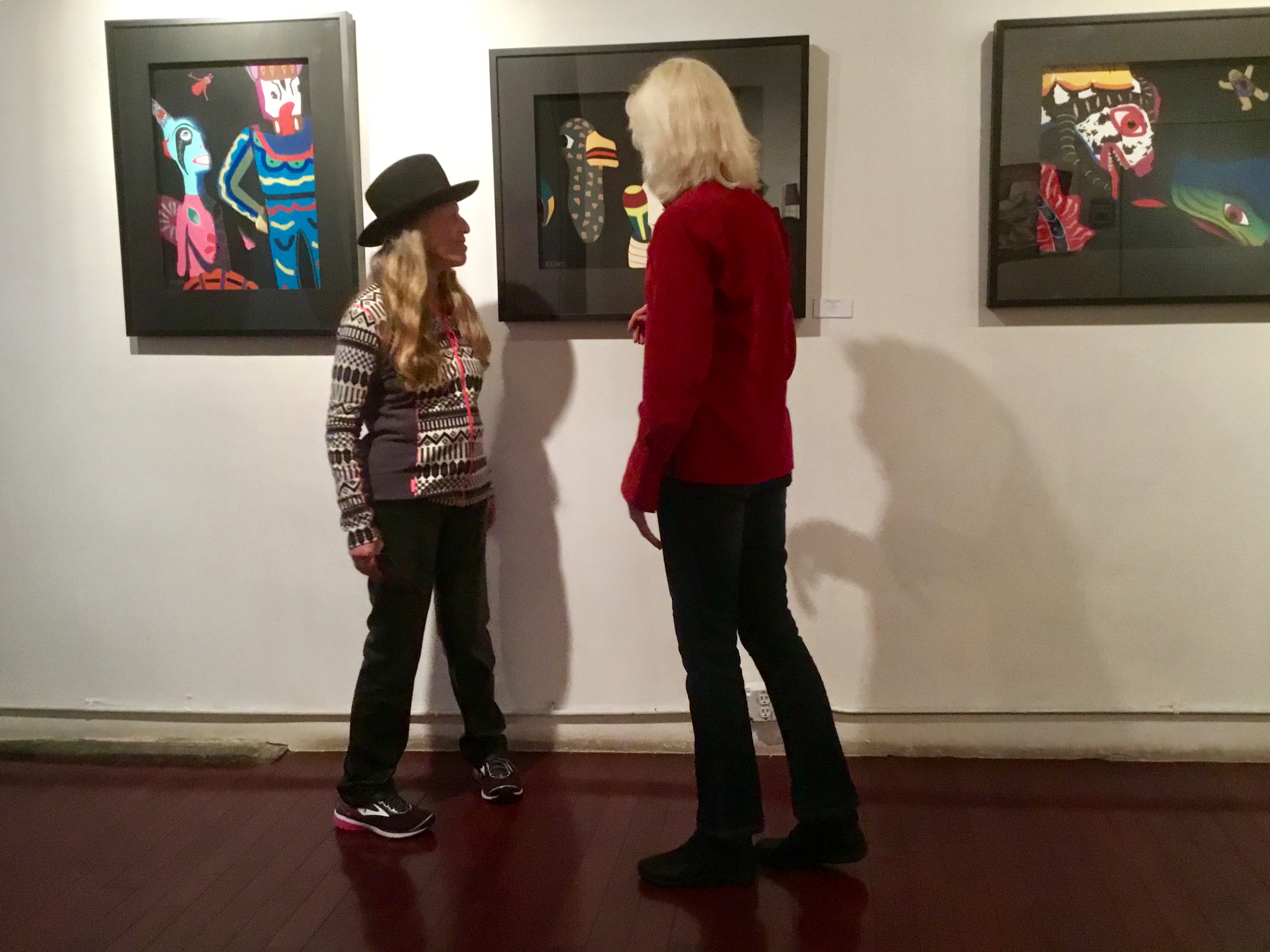
At Salomon Arts in Tribeca
A: It’s true that there are more opportunities now for women artists. Indeed, there are more opportunities for ALL artists. Social media has helped immensely in that it allows artists to take charge of our own careers, making us less dependent on the approval, largesse, and/or validation of art world gatekeepers.
However, at the highest levels of our profession, there are many inequities. As more women become art museum directors, collectors of contemporary art, and leaders whose taste matters, the status of all female artists is bound to improve to become more aligned with that of males.
Comments are welcome!


 barbararachkoscoloreddust.com